

Goal Line Stand: The End of an Era for the Quantico Football Team
By: Kipp HanleyPosted on August 14, 2026
It was Thanksgiving in 1972, and the Quantico football team was flying back from Cincinnati, Ohio, after trouncing the Xavier Musketeers 34-0.
While approaching the runway at Marine Corps Base Quantico, Va., the flight crew of another aircraft in the airspace began to sing “The Marines’ Hymn” on the shared radio frequency. The Quantico team’s coach, Ron Eckert, believes that they had been listening to a broadcast of what turned out to be the team’s final game due to Department of Defense budget cuts. It was a bittersweet welcome home for a team that would never again take the field at Butler Stadium.
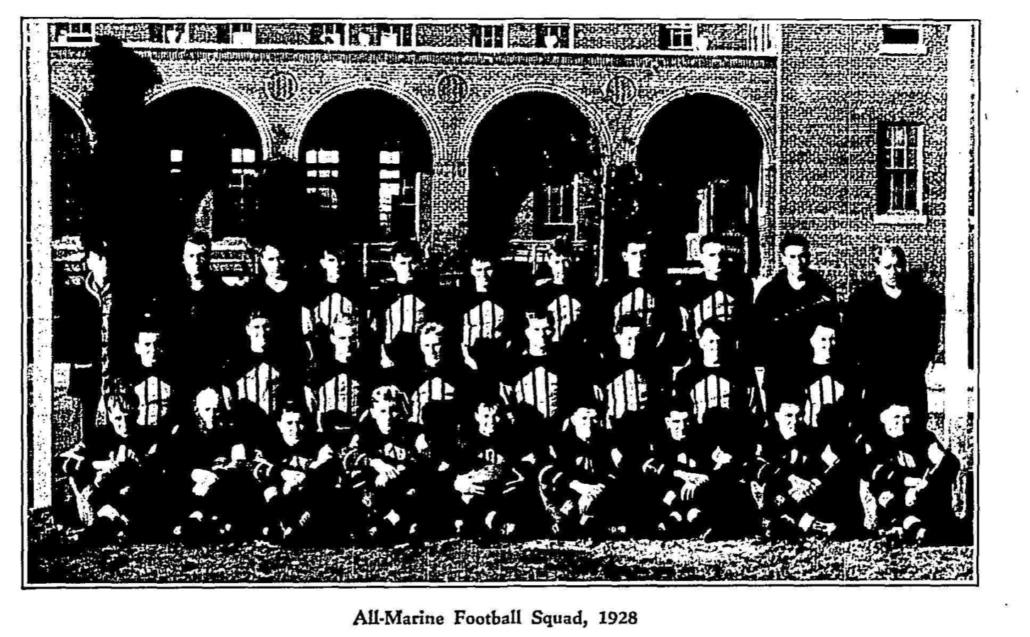
Fifty-four years later, the Quantico football team is mostly a distant memory, a once competitive program, only spoken about by previous generations of Marines. But even as the program was winding down, Quantico was the home to future NFL coaches and college stars, winning eight games in its final season under Eckert. Some of these players and coaches recently shared what it meant to don shoulder pads and helmets at the “Crossroads of the Corps.”
In the 1950s, Ron Eckert’s father was a chief petty officer stationed at Bainbridge Naval Training Center in Maryland. But it was the Marine Corps, not the Navy, which captured much of his son’s attention. During one of his dad’s particularly long workdays, Eckert took a shuttle bus to watch the Bainbridge football team practice. In the foyer, he saw they had a night game against a Marine squad from Parris Island. He attended the contest and walked away impressed.
“It was a helluva game,” Eckert said.
Eckert’s next encounter with leatherneck football came during college in 1958. He was playing for Upsala College in East Orange, N.J., and noticed that Quantico was scheduled to play the 11th ranked Rutgers Scarlet Knights in New Brunswick, N.J. He decided to hitchhike from East Orange to New Brunswick to watch the game. Quantico upset the highly touted Rutgers squad and the next day, Eckert got on the bus for New York City to visit his officer selection officer.
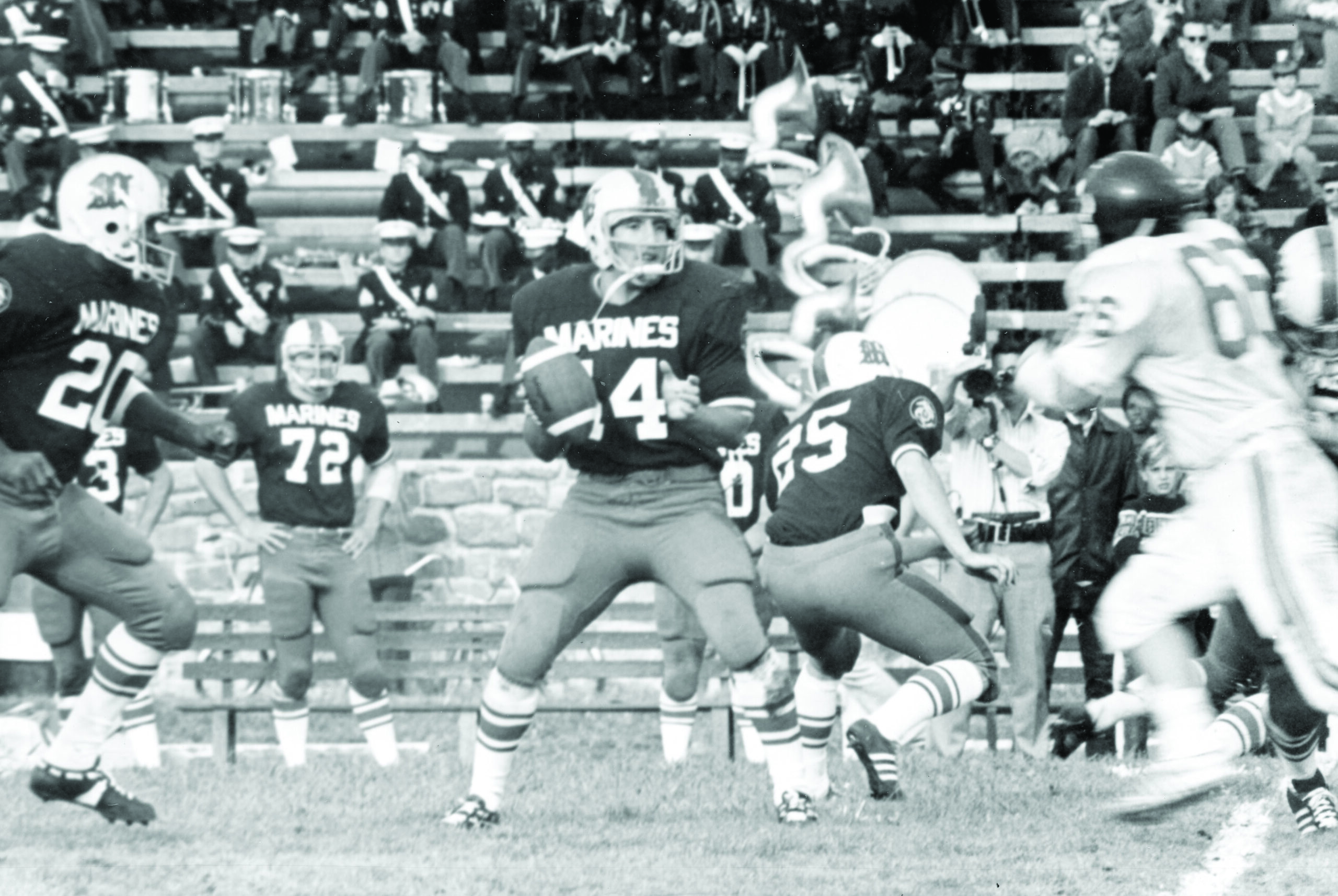
Eckert went through Officer Candidates School before playing for Quantico in 1963 and 1964. His first year in uniform, the team went 10-1 and won the Marines’ last of its five national service championships—a 13-10 victory over the San Diego Marines in the Missile Bowl in Orlando, Fla.
In 1970, Eckert was stationed in Quantico at the Development Center (precursor to Marine Corps Systems Command) when he ran into Ed Heuring, a Marine friend and the Quantico head football coach at the time. Heuring convinced him to join his staff as an assistant coach that fall. A year later, he took over head coaching duties.
Under Eckert, the coaching staff worked tirelessly to find diamonds in the rough that could compete against the likes of NCAA Division I-A teams like Syracuse, which was due to play Quantico in 1973. At the time, the Quantico team was the equivalent of a NCAA Division I-AA school, said Eckert.
In the two years that Eckert coached, approximately 51 percent of his squad was made up of enlisted Marines. Many of those Marine-turned-Quantico footballers earned scholarships from other schools after playing for their country. One such player—Mike Jay—led Texas A&M to a 10-0 start in 1975 after leading the last-ever Quantico team to an 8-4 mark in 1972.
“Thanks to the unfaltering support I got from the Marine Corps, we found some really good football players who were enlisted guys,” Eckert said. “It was brought to my attention that it was the highest influx of enlisted players [at Quantico] since 1951.
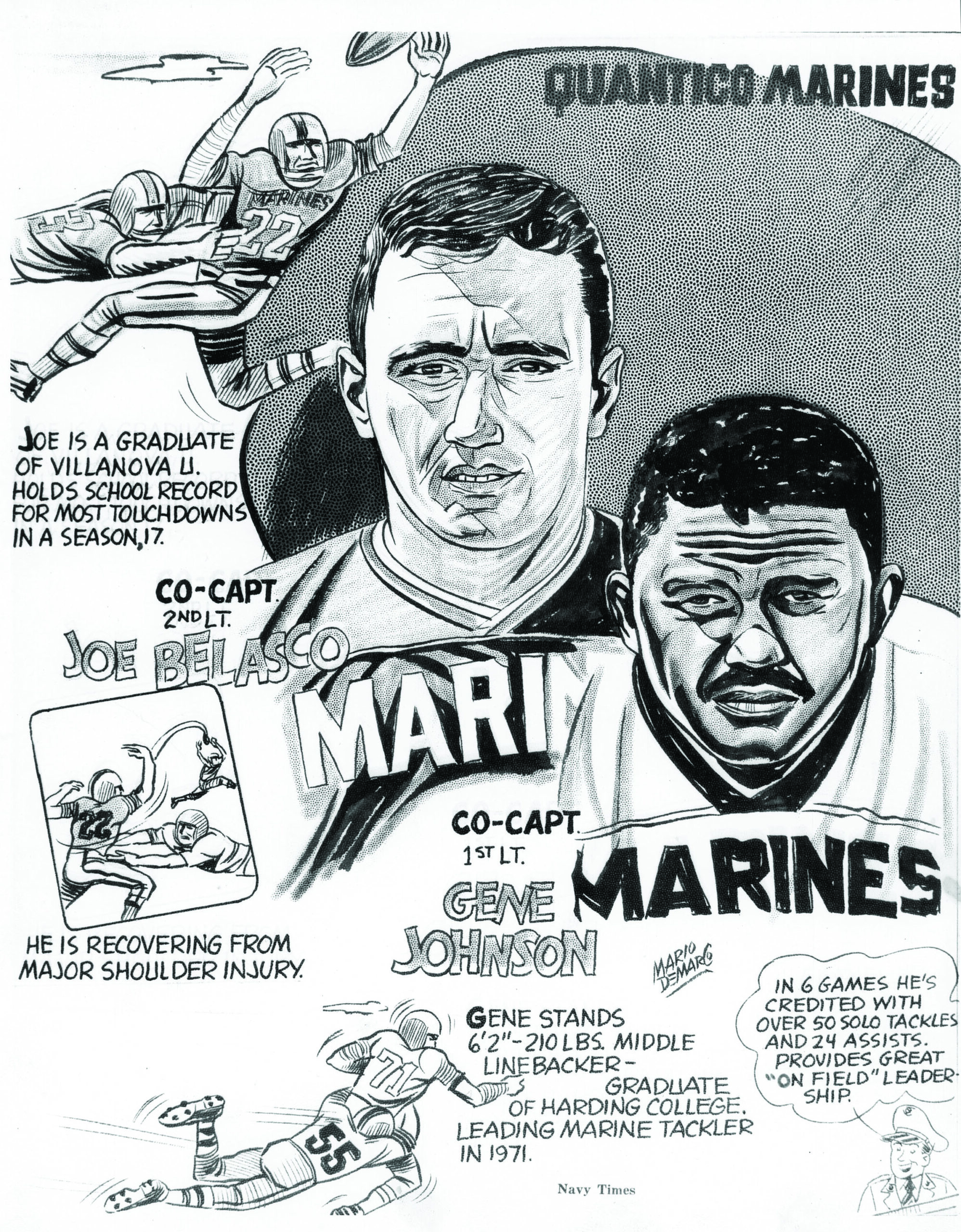
Even at the end of the program amid the backdrop of the Vietnam War, the Quantico footballers were a popular draw for opposing teams’ fans and the local communities. The team would typically fly into the opposing team’s city on a military cargo plane, impeccably attired in their Marine uniforms. Former captain Joe Belasco remembers a road trip where he team was able to take some time when not on the gridiron to visit sick children at the Shriners Children’s Hospital in Kentucky.
“We made an impression on them, and the kids were excited to see us. We did some stuff that was … appreciated by the public.”
Eckert recalled a trip to Philadelphia where an injured Belasco was mobbed by local reporters eager to speak to the former Villanova star after he led Quantico to a 13-7 win over his former team. Hampered by a severe injury to his throwing shoulder, the Quantico team captain had to “shotput” the ball short distances to his receivers, said Eckert.
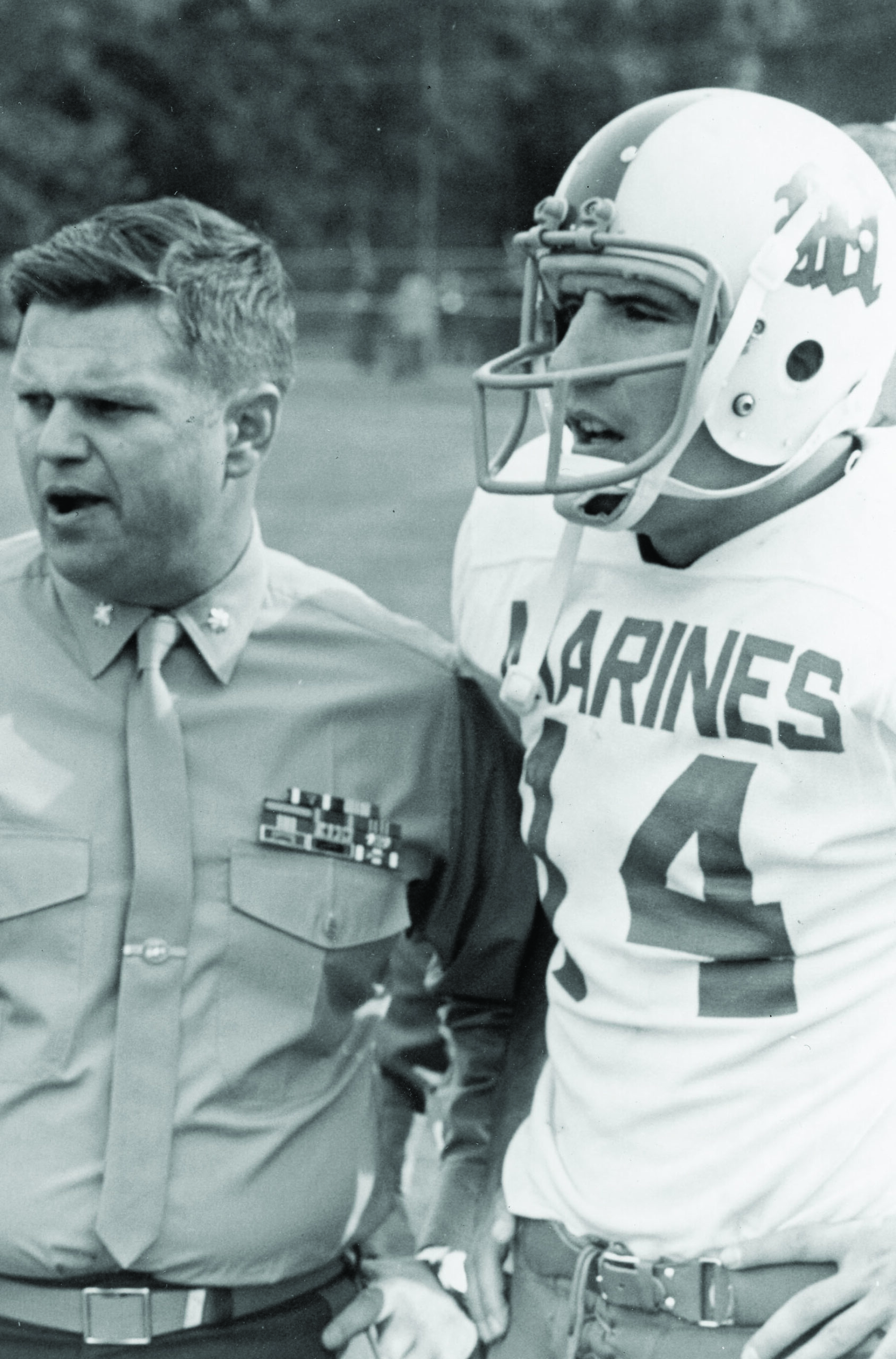
The same camaraderie that existed between Belasco’s teammates at Villanova also existed on the Quantico football team.
“The nice thing about our team was that it didn’t matter whether you were first lieutenant, second lieutenant,” said Belasco, who left the Corps as a first lieutenant. “It didn’t matter if you were a private or a corporal, everybody just blended in. There was no rank involved, there were just teammates.”
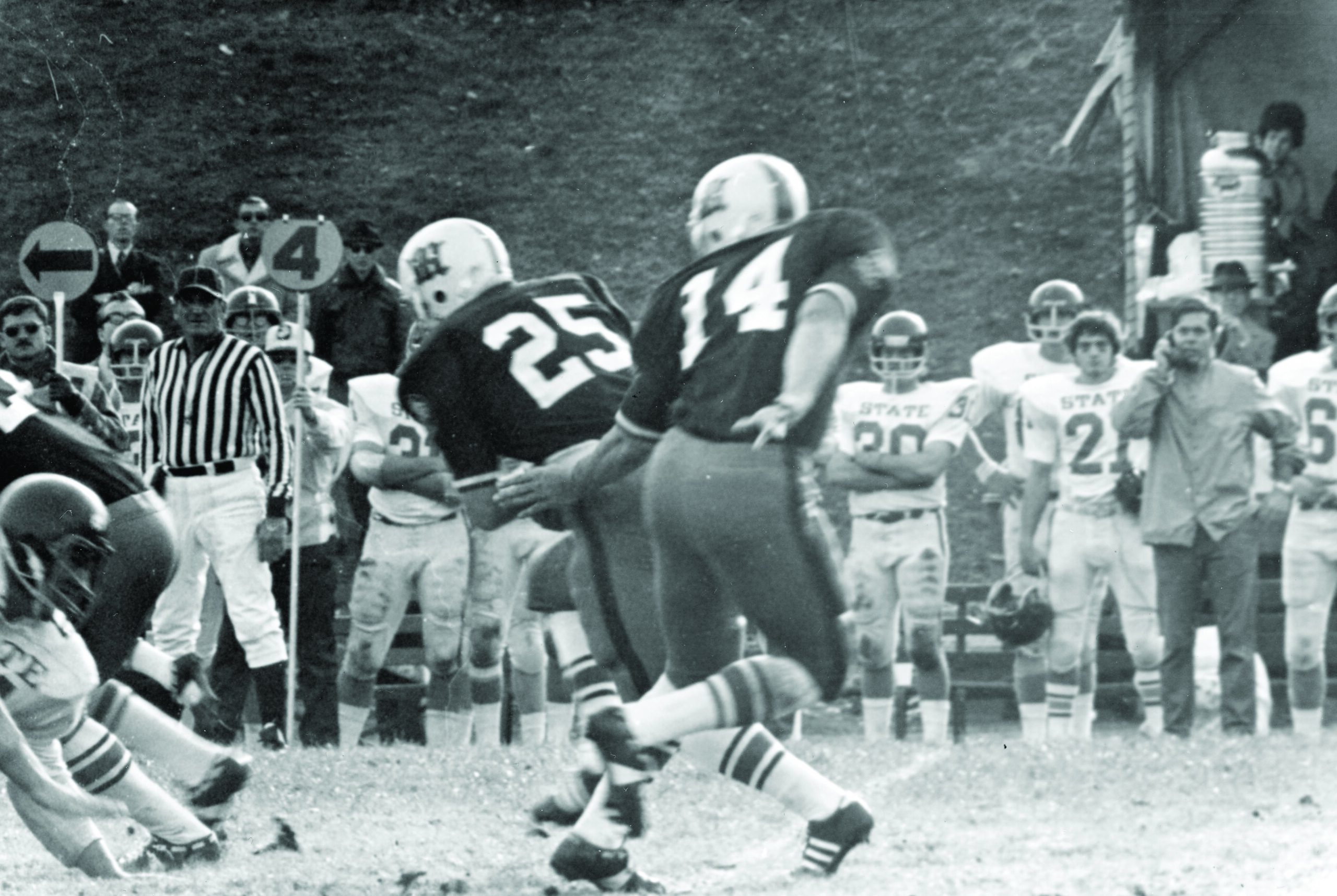
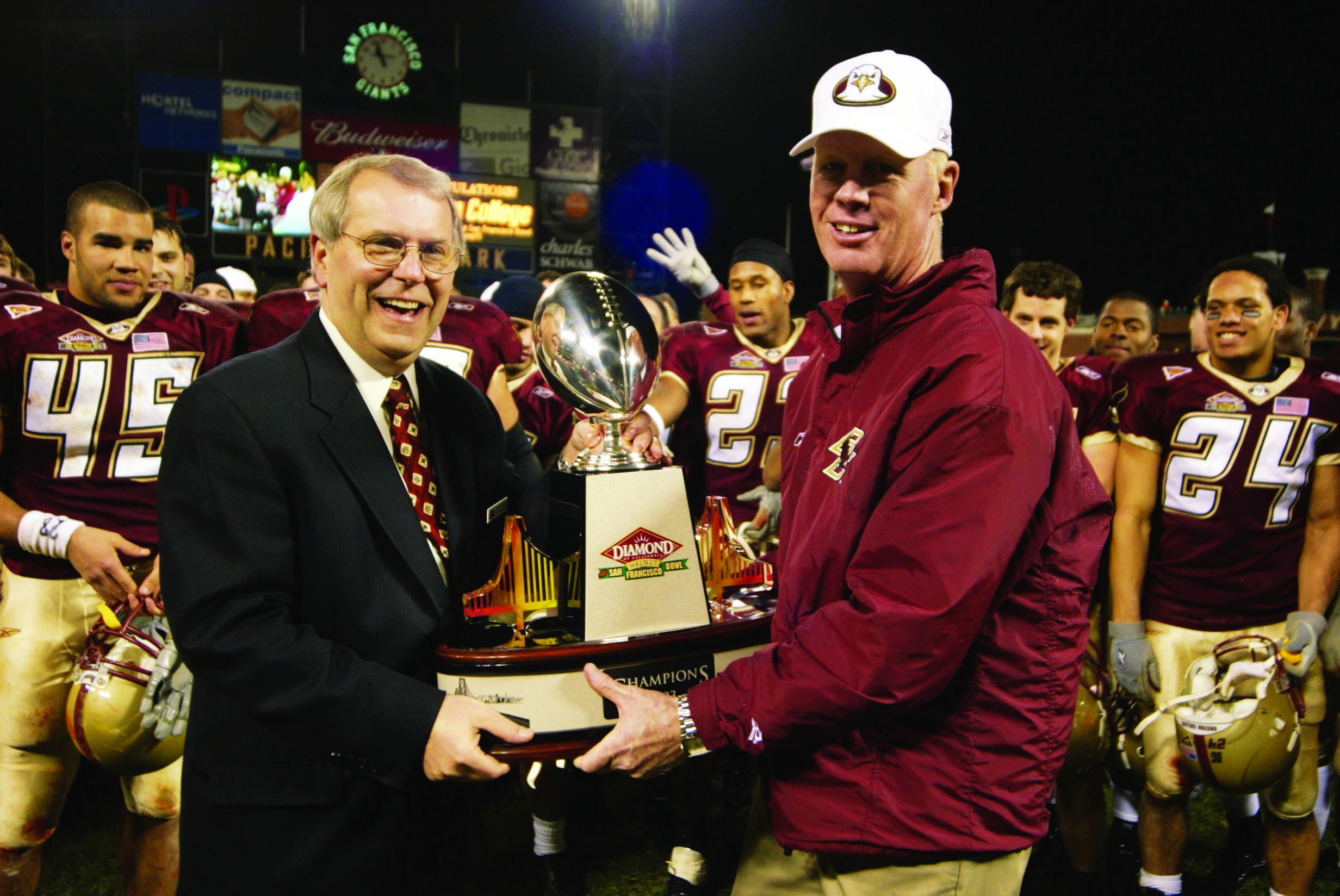
Tom O’Brien, a standout defensive end on the 1972 squad, was a three-year starter for the Naval Academy and went on to a highly successful 40-year collegiate coaching career that included stops at the Naval Academy, University of Virginia, Boston College and North Carolina State. A nine-year Marine veteran, O’Brien recalled his Quantico playing days fondly—even though he never intended on playing or coaching football after he finished The Basic School that summer.
“We had some really good coaches,” said O’Brien, who coached NFL legend Matt Ryan at Boston College. “Coach Eckert was organized, had a plan, he understood what he wanted to do. That was important. The practices were well organized. We didn’t spend hours upon hours out there, but when we were out there, we worked hard.”
Some of the memories had nothing to do with the games. Defensive coordinator and former University of Kansas standout linebacker Mike Sweatman remembers flying over the field in Baltimore that had had a peace sign blazed into it by home team fans opposing the war.
“They couldn’t exactly hide it,” said Sweatman of the scorched grass.
A future NFL special teams coach, Sweatman also recalled during a flight to Springfield College when the football team experienced a series of touch and goes because the co-pilot was being trained on the KC-130 they were on board.
“After we finally landed, I asked the pilot what the deal was, and he said, ‘I was letting my [copilot] practice,’ ” Sweatman said.
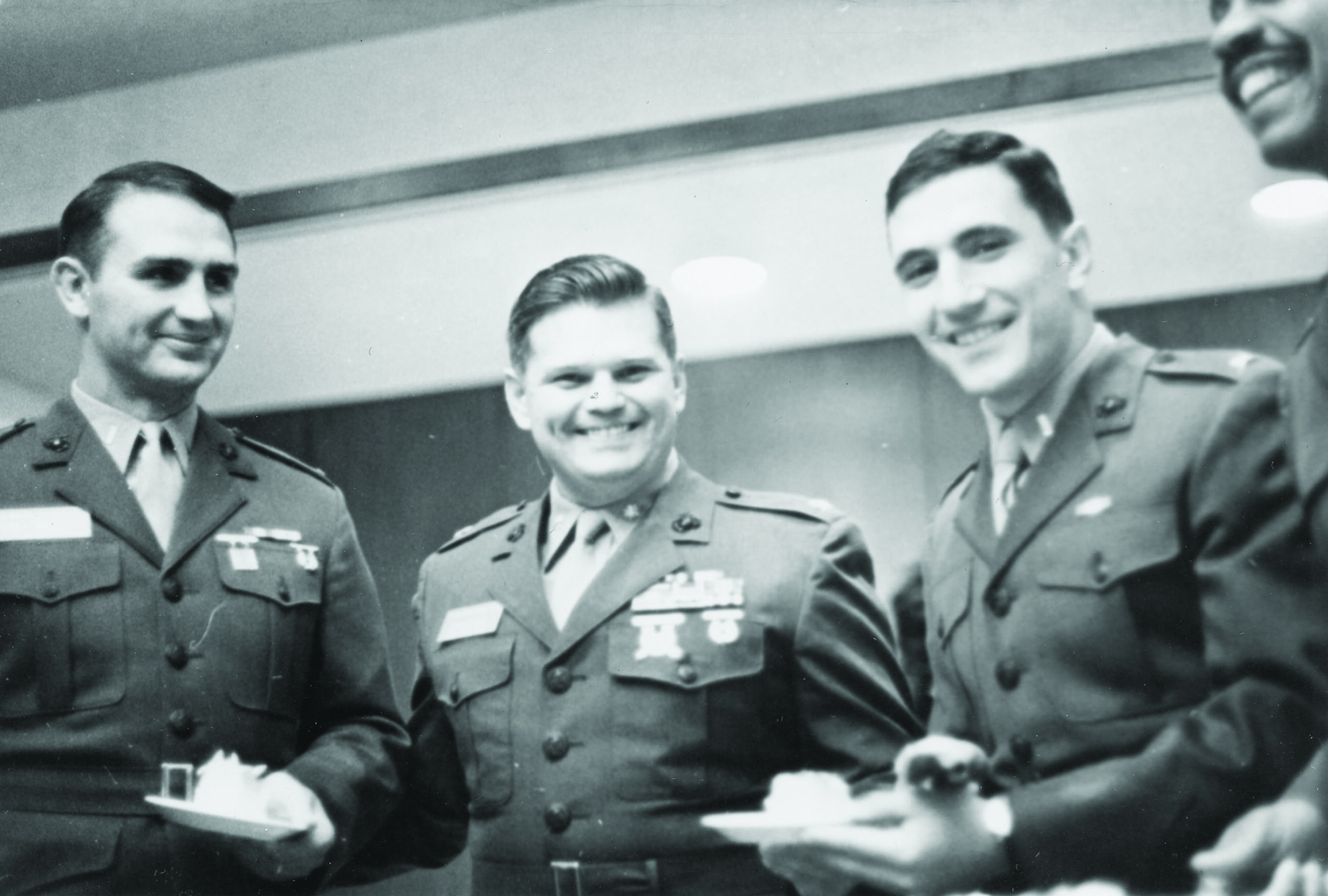
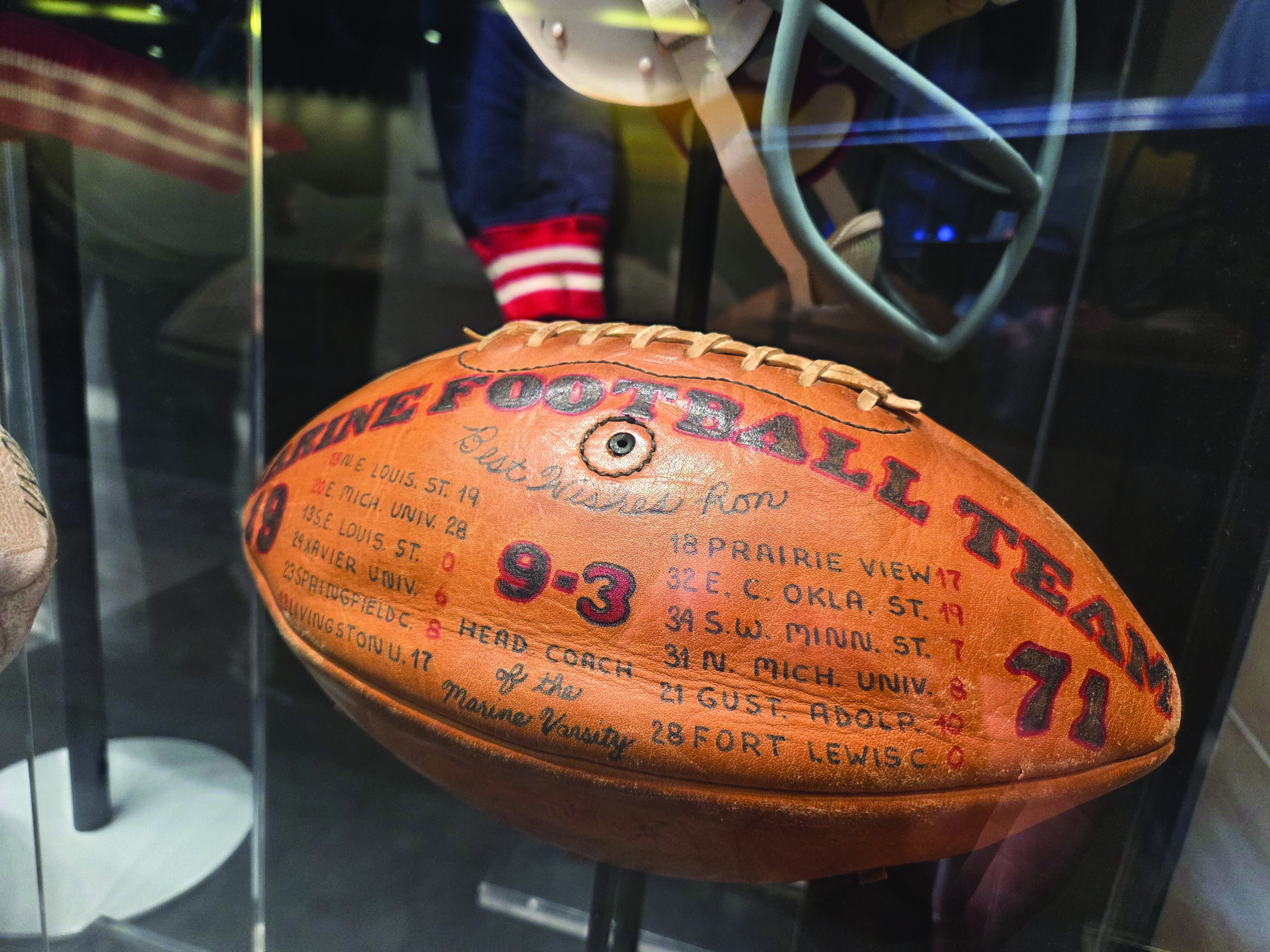
Thanks largely to the generosity of Eckert, the Quantico football program lives on inside the National Museum of the Marine Corps.
This January, the Triangle, Va., museum opened a small exhibit on the Quantico footballers. Visitors can view, among other things, game balls, an old helmet and a beautiful portrait titled “Semper Fi on the Field,” which provides a visual timeline of the program that started in 1919. The 1971 game ball encased in the exhibit shows the game-by-game results of the 9-3 season and features a note from Eckert saying, “Best wishes Ron.”
A running back on the 1971 squad, Les Steckel called his time in Quantico one of the greatest experiences during his football career, which included stints as head coach of the 1984 Minnesota Vikings and assistant coach of the 2000 Super Bowl runner-up Tennessee Titans. Steckel served 30 years in the Marine Corps Reserve in addition to his highly successful coaching career.
“You have to let them know that you are in the trenches with the troops,” said Steckel, who keeps a copy of the Marine Corps principles of leadership in his home office. “When they know you are in the trenches, they know who you are and your leadership can carry on. I learned that in the Marine Corps and that has been with me all my life.”
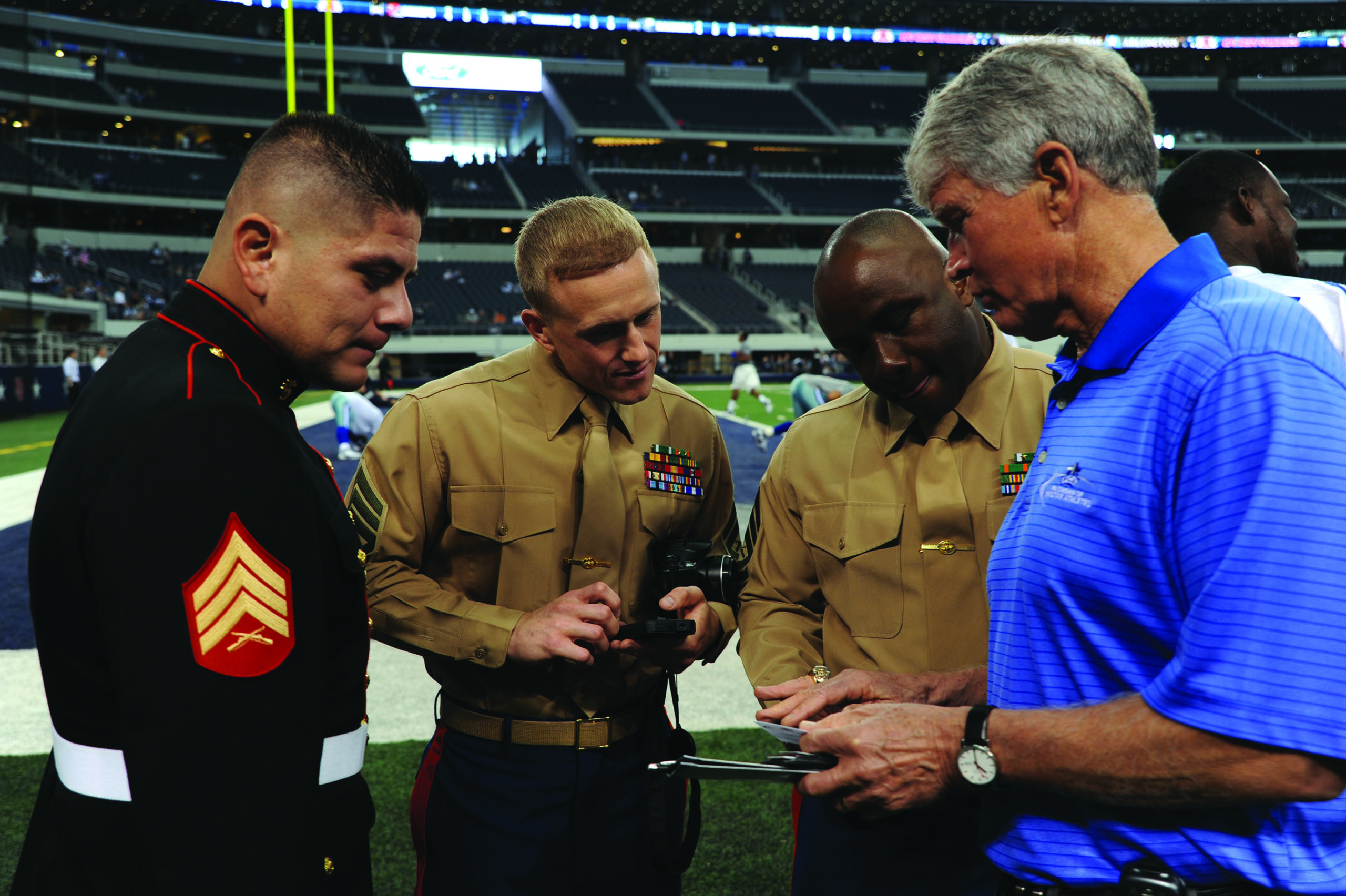
Museum curator and Leatherneck contributor Kater Miller said he learned a lot about Marine Corps football while in the process of putting the exhibit together. He also learned just how important athletics were to the Corps as both recruiting and retention tools. Butler Stadium is named in honor of leatherneck legend Smedley Butler, whose original idea was to build the largest football stadium in the nation, said Miller.
“Whether you’re a fan of sports or not, sports and athletics were a huge part of the culture of the Marine Corps from the 1920s to 1970s,” Miller said. “I think it’s nice to finally have a display in the museum that speaks to that legacy.”
Eckert still recalls a compliment that legendary Penn State football coach Joe Paterno gave his squad of Marines at a national coach’s conference, one that exemplified the Corps’ sterling reputation.
“I talked to him about scheduling and he said, ‘Listen, I just play the games they offer me. But I know this, that everybody wants to beat us.’ He said, ‘I have to recruit the finest, and everybody is going to want to beat you because you represent the finest.’ That stuck with me in my mind every time I asked for a guy [to have on our team].”
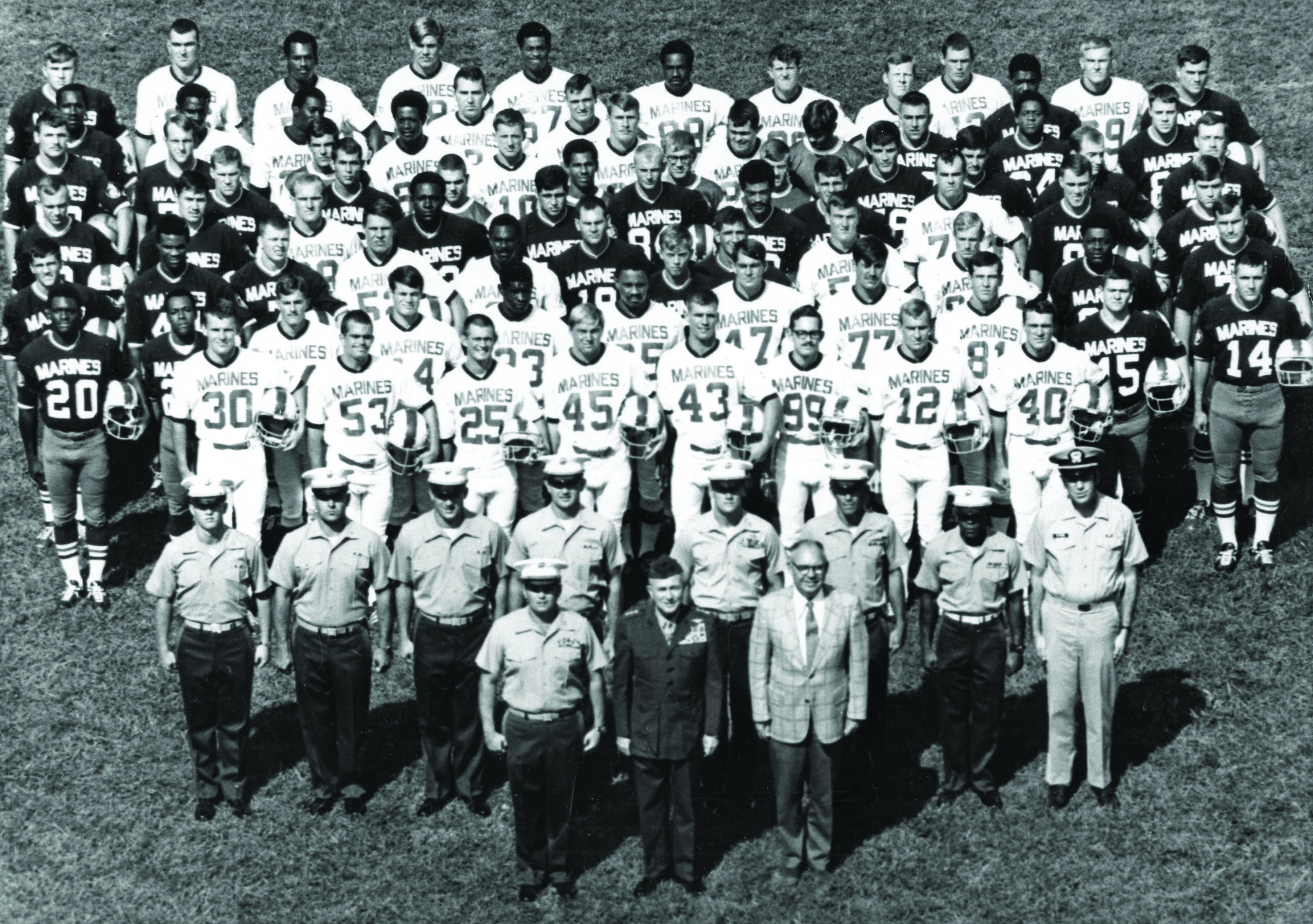
Featured Photo (Top): The 1972 football team had many standout players like quarterback Mike Jay, who went on to play for Texas A&M. (Courtesy of Joe Belasco)
About the Author

Kipp Hanley is the deputy editor for Leatherneck magazine and resident of Woodbridge, Va. The award-winning journalist has covered a variety of topics in his writing career including the military, government, education, business and sports.
Enjoy this article?
Check out these similar Leatherneck, Gazette, and Scuttlebutt features:
Showing Her Mettle: Olympic Hopeful Goes Full Speed As Marine, Bobsledder
Leatherneck
March 2024
By: Kipp Hanley
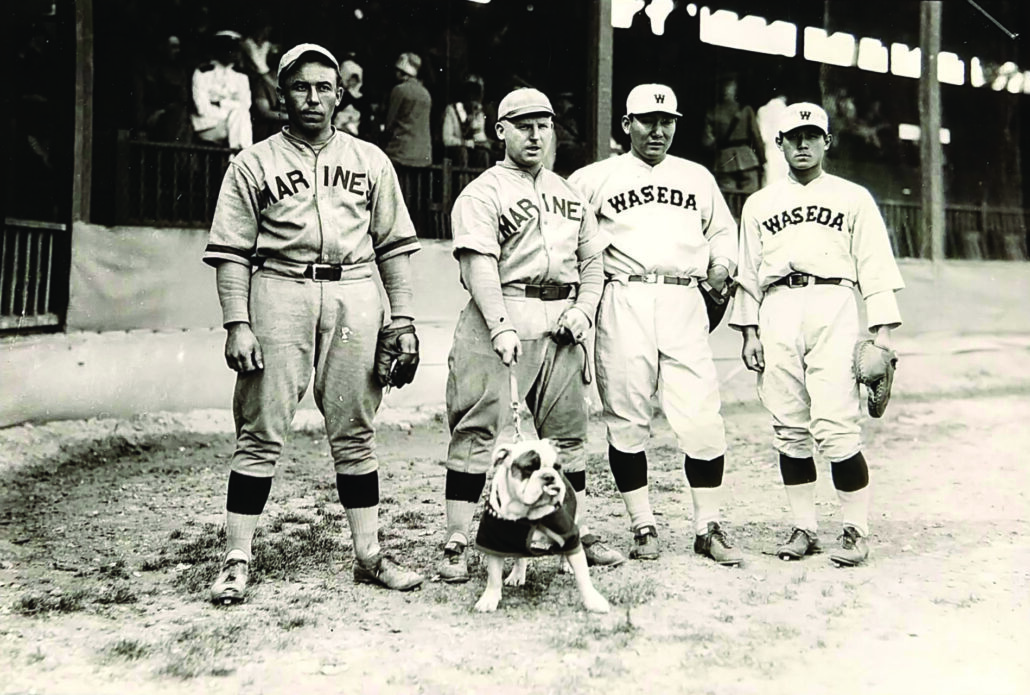
A Shared Hardball History: Pre-World War II Marines, Japanese Were Friendly Foes On The Diamond
Leatherneck
April 2024
By: Kater Miller
“HOLD THAT LINE!”
Marine Corps Gazette
November 1932
By: Anonymous