

Carrier Killers: Marine Aviators Show Their Versatility in World War II
By: Barrett TillmanPosted on April 15, 2026
Though wearing the gold wings of naval aviators, Marine pilots only occasionally flew from aircraft carriers before World War II. Two understrength scouting squadrons operated from USS Lexington (CV-2) and Saratoga (CV-3) in the early 1930s, and another was briefly assigned to Langley (CV-1). In 1935, leatherneck fighting, bombing and scouting units began cycling through carrier qualification (CQ) periods, but more as a contingency than as part of a particular Navy air group.
Hand in glove with Marine carrier squadrons were landing signal officers (LSOs). Few LSOs were trained before the war, but two, Robert E. Galer and Kenneth A. Walsh, qualified as “paddles” and later were recipients of the Medal of Honor for combat missions they flew in the Solomons.
In 1943, Naval Air Forces Pacific noted that Marines comprised one-third of the aviators qualifying as carrier pilots. As far as using the flattops went, though, the Marines made only one brief cruise in May 1943, supporting Army troops recapturing Attu in the Aleutians. USS Nassau (CVE-16) embarked 26 F4F-4s and three Marine F4F-3Ps with six pilots and nine enlisted men, ultimately losing one Wildcat and one pilot. Otherwise, no Marine squadrons were using the carriers, and the CQ requirement was dropped.
A year and a half later, a crisis hit. In October 1944, the first kamikaze missions shocked the Pacific Fleet into a chilling realization: More fighter squadrons were needed in the Western Pacific. The purge from CQ was abruptly reversed, but months were required to make up the deficit. An immediate increase in fighters was instituted for Essex class carriers, but until more Navy fighter pilots were trained, Marines would fill the gap.
The Fast Carrier Task Forces
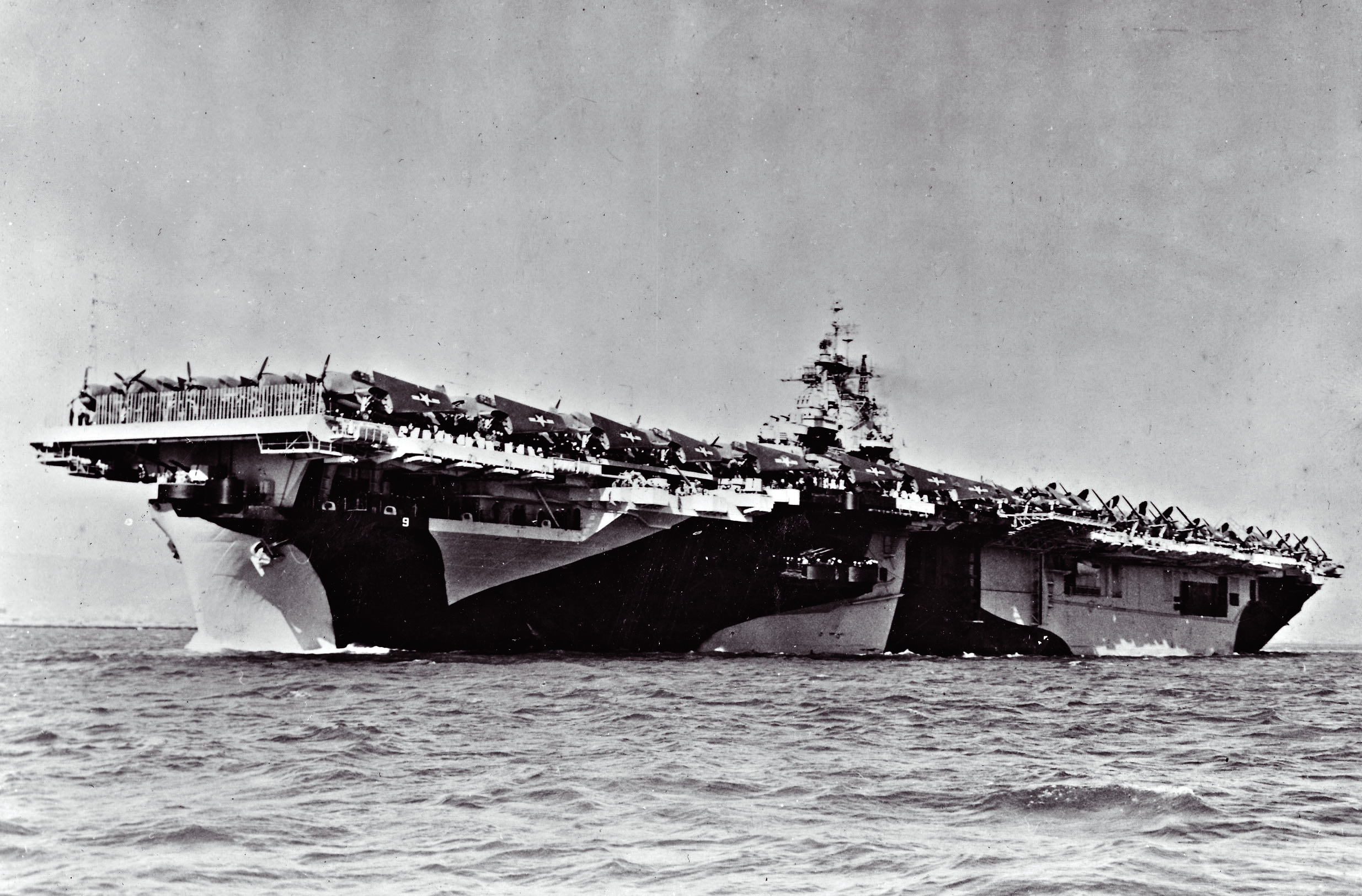
Two F4U squadrons were available in Hawaii for early embarkation: Marine Fighting Squadrons (VMF) 124 and 213, which reached the Ulithi Atoll on Dec. 28. Embarked on USS Essex (CV-9) with Air Group 4, the Marines sailed with Task Force 38, the Fast Carrier Task Force, on Dec. 30. Despite briefings and practice with the LSOs, two pilots and three F4Us were lost in the first two days. Worse was yet to come.
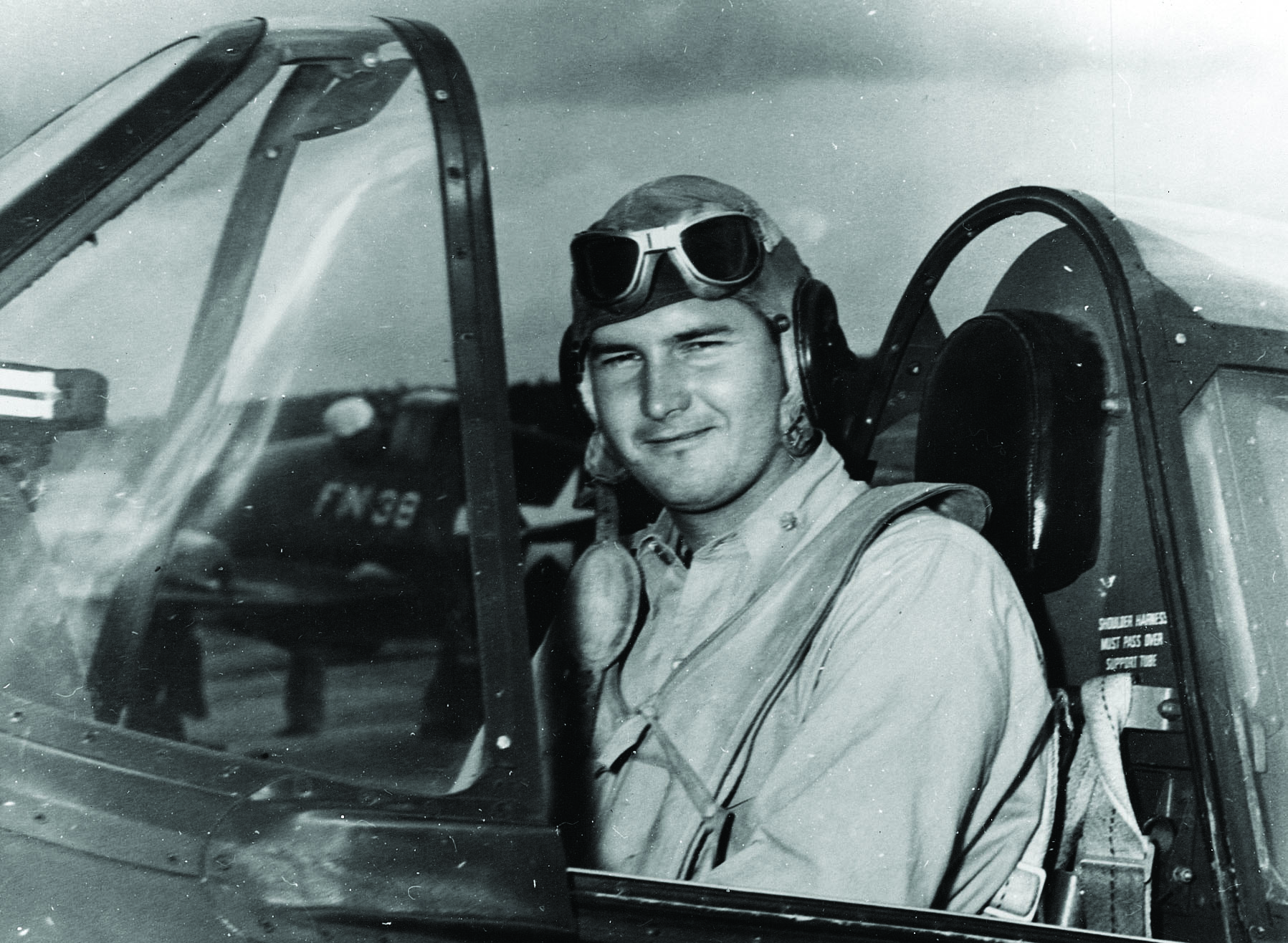
Senior among the 54 pilots was Lieutenant Colonel William A. Millington, commanding officer of VMF-124.
On Jan. 3, 1945, on Okinawa, Millington claimed the first kill by carrier-based Marines, but one pilot succumbed to navigation error. Another disappeared the next day in heavy weather. After nine days of fleet operations, the Essex leathernecks had lost seven pilots and 13 Corsairs. None of the Navy’s Fighting Squadron (VF) 4 Hellcats were lost to weather or operational causes at the time, highlighting the need for increased instrument training among Marine pilots.
On Jan. 12, the fast carriers struck Japanese naval and air bases in French Indochina. The Corsairs shot up a dozen planes on the ground, losing one in the process (though the pilot returned to Allied control). The day’s most tragic loss was a B-24 Liberator that inexplicably failed to heed radio and visual challenges from the Corsair combat air patrol (CAP). When the Marines were fired upon, they attacked the unmarked bomber, which seemed to be Japanese flown. They destroyed the Liberator, which, in fact, belonged to the 14th Air Force.
Upon exiting the South China Sea, within range of Formosa, the task force was attacked on Jan. 20 and 21. Essex F4Us claimed eight victories, but another carrier, USS Ticonderoga (CV-14), suf-fered heavy damage.
When the fast carriers sortied again in February, three more ships embarked Marine squadrons. VMF-112 and 123 sailed on USS Bennington (CV-20), 216 and 217 joined USS Wasp (CV-18), and USS Bunker Hill (CV-17) became the first ship to embark three Corsair squadrons: VF-84, VMF-221 and VMF-451.
Together, the squadrons totaled 133 F4Us and 216 pilots—one-sixth of the fast carriers’ fighter strength. The new units had received intensive carrier and instrument refreshers and would be spared the operational losses that plagued Millington’s men. However, Commander Otto Klinsmann, the Essex air group commander, had been lost off Formosa, so Millington “fleeted up.” He was the first Marine to command a Navy air group.
He later recalled the Marines’ introduction to fast carrier warfare: “We were warned about the kamikazes—indeed, the Essex had been hit by one just before our cruise. We would have to shoot them down before reaching the fleet, for it was their tactics that were doing the most damage. As a result, we abandoned defensive tactics when we went after the kamikazes. The Navy really feared them, more than the Marines [did]. They used destroyers as pickets, and we flew CAP over them. The kamikazes would go after the pickets, these being the first ships they came across. By the time of the Okinawa operation, they were no longer trying to establish air superiority, merely trying to destroy ships with kamikaze tactics.”
The February strikes were among the most ambitious to date. The task force struck the enemy’s home islands, launching missions over Tokyo itself. The weather precluded a full-scale application of airpower, however, and strikes were canceled on the 17th, the second day of the operation. Still, the Marines claimed 21 aerial victories and 60 grounded planes, losing nine F4Us and six pilots. Especially hard hit was Bennington’s VMF-123, as antiaircraft fire knocked down three Corsairs, though two pilots were rescued. The skipper of VMF-217, Major Jack Amende, fell to a Zeke (A6M Zero), and three other Wasp Corsairs were lost—one on launch.
Recalling the Tokyo strikes, Millington explained, “Our offensive fighter sweeps against enemy airfields were conducted without external ordnance—we just used our guns. When attacking airfields, we would go in en masse to dilute the anti-aircraft fire. Sometimes we would do a second sweep, depending on the defenses, dividing the airfield up and each flight taking a different segment. Later, we conducted ground attack missions using rockets and bombs.”
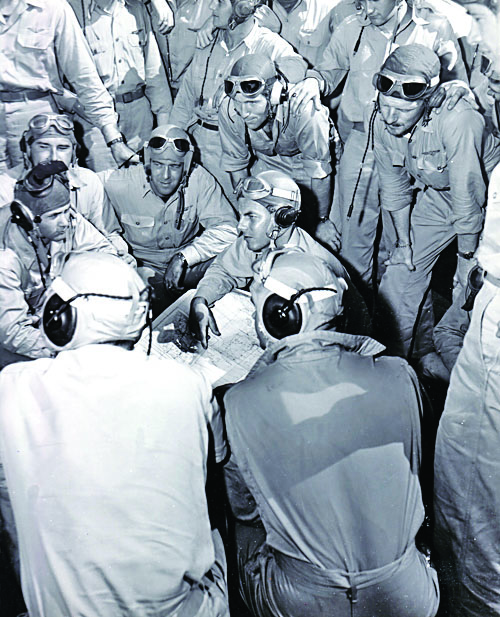
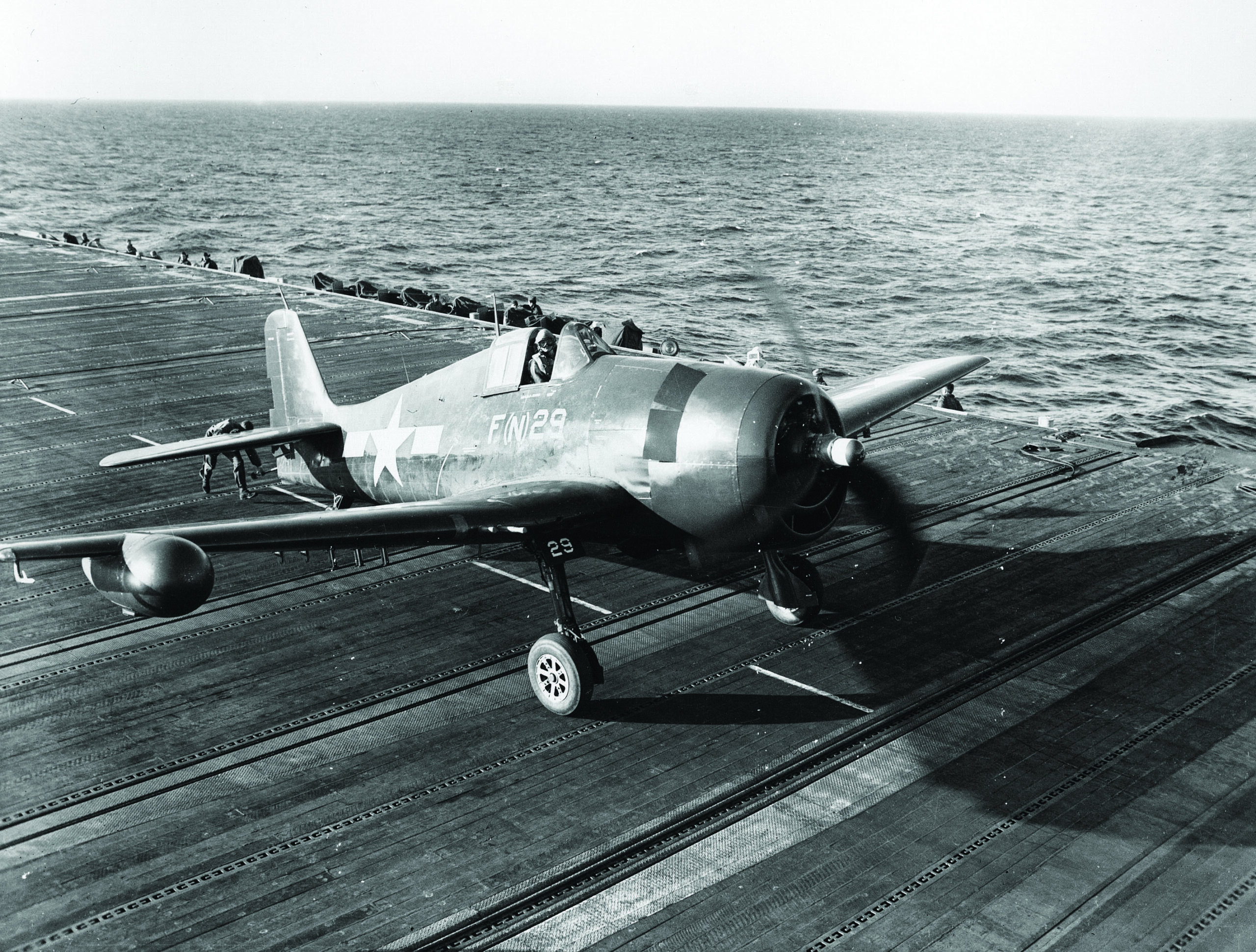
The first carrier strikes against Japan were significant in that naval aviation had taken the war to the enemy homeland. But more important to Marine aviation was the tactical support given assault troops at Iwo Jima. Millington had helped prepare the close air support plan and led the D-day mission on Feb. 19. The Essex group commander took 24 F4Us and 24 F6Fs down on the beaches in a well-timed operation coordinated with naval gunfire. Napalm, rockets and liberal strafing helped suppress Japanese defenses as the aviators fired barely 200 yards ahead of the infantry. Ground commanders gratefully noted that full enemy resistance did not arise until after the Marines were ashore.
The fast carriers continued supporting the bloody struggle ashore until D+3. It was back to Japan on Feb. 25, where the weather again blocked effective air operations. Of the nine carrier planes lost, two were Bennington Marines, including Major Everett Alward of VMF-123.
Upon return to Ulithi in early March, Essex and Wasp lost their leathernecks as Air Groups 4 and 81 rotated out. However, 75 Marine mechanics volunteered to remain in the two carriers, lending their knowledge of Corsair maintenance.
Joining the task force were two more Marine units, VMF-214 and 452 on USS Franklin (CV-13) with Air Group 5. Operations began off Kyushu on March 18; primary targets were enemy airfields, as Task Force 58 fliers claimed more than 100 shootdowns. The Marines bagged 14 and lost only three.
On the 19th, the fast carriers were hit by conventional and suicide attacks while sailing within 60 miles of Shikoku. With 31 planes on deck, Franklin was hit by a pair of 550-pound bombs. “Big Ben” went dead in the water for almost four hours and finally was towed out of range. Sixty-five Marines were among the 800 dead, as VMF-214 and 452 were knocked out of the war on their second day of carrier combat.
Bennington and Bunker Hill Marines pressed on. Twenty-four-year-old Major Herman Hansen of VMF-112 led four divisions into 20 Zekes near Kanoya, claiming nine kills without loss. VMF-123 had a running fight against stiff odds, losing three and claiming nine. Three more F4Us were jettisoned with extensive battle damage. Captain William Cantrel, a Solomons veteran who, though badly wounded in one foot, stayed in the fight, downed two assailants and organized cover for the withdrawal. Back aboard, he collapsed from blood loss and received a well-deserved Navy Cross.
Carriers off Okinawa
With the invasion of Okinawa on April 1, the fast carriers met a succession of determined Japanese air attacks. The big kamikaze raids of the 6th and 12th brought dramatic opportunities to engage enemy aircraft. Major Hansen celebrated his 25th birthday with a triple kill, becoming an ace and earning a Navy Cross. A full day’s work for a former photo pilot.
Major Archie Donahue of 451 accounted for five of Air Group 84’s 25 shootdowns, becoming the Marines’ only carrier-based ace in a day. However, with good hunting came high risk. On May 11, Bunker Hill was ravaged by two bombs and two suiciders. She was engulfed in gasoline fires, and 28 enlisted Marines and one pilot died on board. Airborne leathernecks watched the conflagration, awed by the spectacle.
One onlooker was Captain James Swett, who caught an attacker before recovering aboard USS Enterprise (CV-6). The Solomons Medal of Honor recipient ran his record to 15.5 victories. In three months of combat, VMF-221 and 451 had lost 13 pilots and claimed 84 Japanese planes.
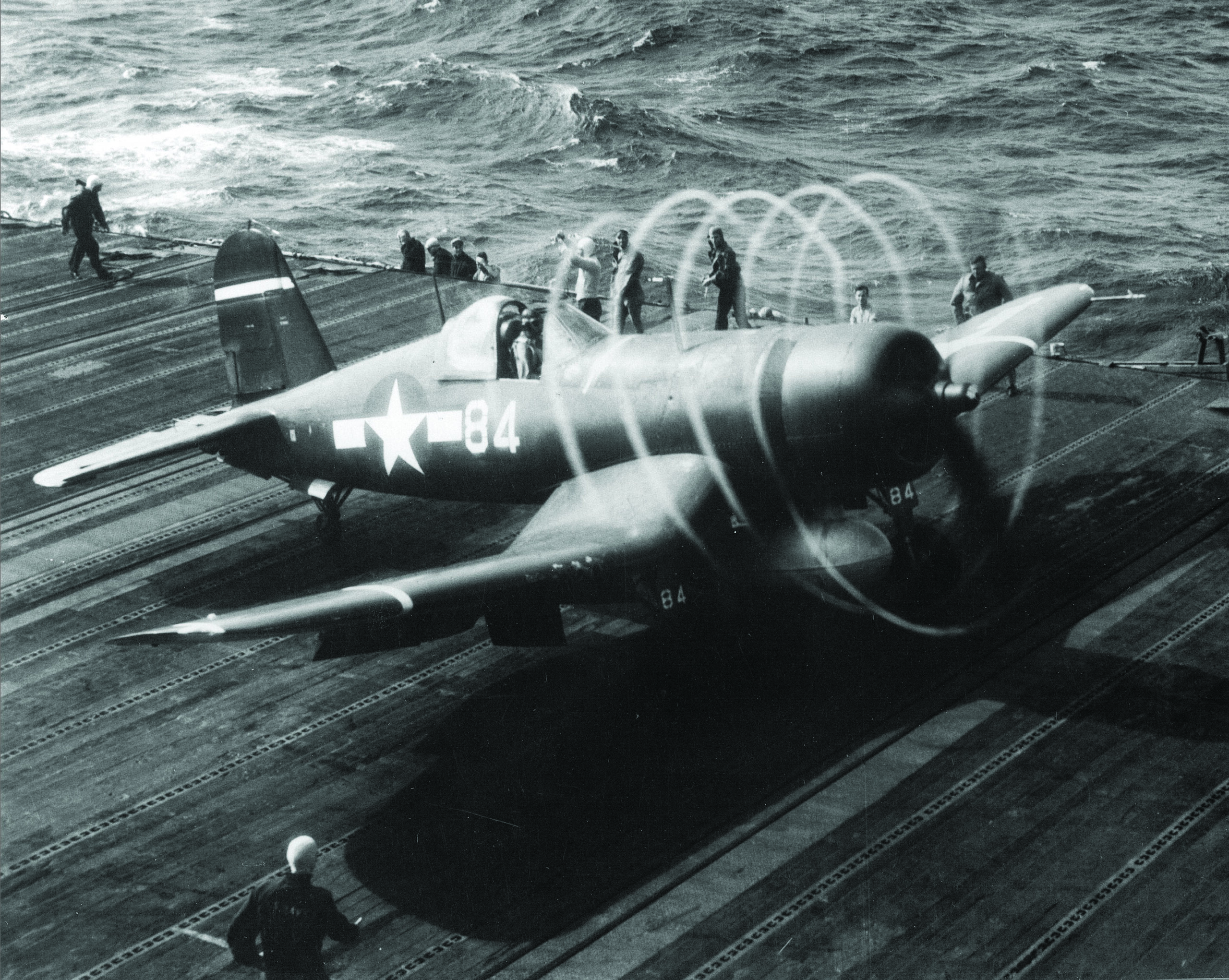
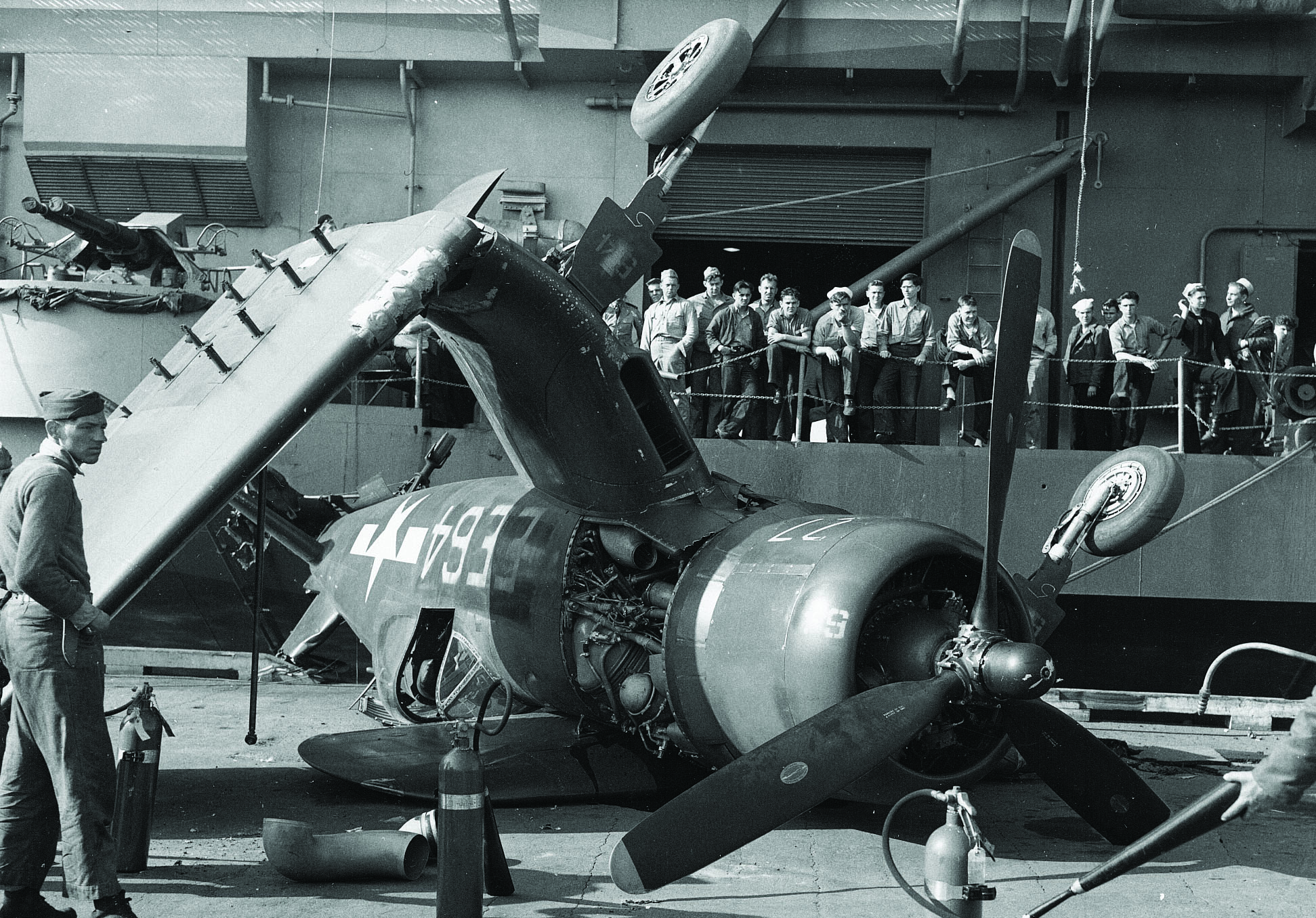
Bennington remained on the line until June 8, spending nearly four months in almost continuous operations. VMF-112 and 123 recorded 82 shootdowns plus 149 planes claimed on the ground, but losses were high. Eighteen pilots were killed in action, one in three. Forty-eight F4Us were lost (31 in combat), and another 41 were transferred out with damage.
While the Corsair squadrons formed the bulk of Marine aviation’s contribution to carrier aviation in the war, a smaller group also logged flattop service. At least 13 Marines flew with Navy squadrons, including eight with Air Group 10 on USS Intrepid (CV-11). Their appearance was accidental—a personnel office thought that “Evil I” needed replacement Marines when in fact none were aboard. But Carrier Air Group 10 Commander John Hyland had no prejudice—perhaps he was looking for “a few good men.” In their brief time aboard, the eight Marines shot down 10 bandits and helped sink the 64,000-ton battleship Yamato on April 7. One pilot was killed before the detachment left Intrepid.
Five other wandering leathernecks flew with Air Group 85 on USS Shangri-La (CV-38) for about two weeks, mainly flying against kamikaze bases. Originally assigned as escort carrier pilots, they rejoined their friends in VMF-512 on USS Gilbert Islands (CVE-107) at Leyte in June.
Baby Flattops
The final chapter of the Marine carrier experience in World War II was the escort carrier (CVE) program under Colonel Albert D. Cooley. When the first F4U squadrons joined the fast carriers, the project was already underway, as noted in the Chief of Naval Operations’ dispatch to Pacific Fleet Commander Chester Nimitz. It said in part, “You are further authorized to proceed with training Marine fighter squadrons for deployment in assault CVEs to relieve Navy pilots and personnel required for fast carrier groups. Keep me informed of number of Marine squadrons to be assigned fast carriers and make recommendations for substituting Marine squadrons in combat CVEs.”
On Oct. 21, 1944, Marine Carrier Groups, Fleet Marine Force, Pacific, was established at MCAS Santa Barbara, Calif. The command was comprised of two groups at Santa Barbara and Mojave. Two weeks later, they were designated Marine Air Support Groups 48 and 51. Each group was to be composed of four carrier air groups (MCVGs), each with an 18-plane fighter squadron and a 12-plane torpedo bomber squadron. The units were to be deployed in four escort carriers with an additional two CVEs of Navy squadrons to form an escort carrier division. The all-Navy ships’ task was antisubmarine and CAPs, while the Marine units provided air support for amphibious forces. All ground crews were organized into carrier aircraft service detachments as part of each MCVG.
The goal of the Marine CVE program was to provide 16 air groups simultaneously, plus spares. A full complement would be 540 fighters and 360 TBM Avengers for the deploying and backup or spare Marine air groups.
By early 1945, the first “all Marine” carrier was ready: USS Block Island (CVE-106), embarking VMF-511 and Marine Torpedo Bombing Squadron 233 in MCVG-1. The other three MCVGs were assigned at one-month intervals: MCVG-2 on Gilbert Islands, MCVG-3 on USS Vella Gulf (CVE-111) and MCVG-4 on USS Cape Gloucester (CVE-109). They merged with the Navy units aboard Kula Gulf (CVE-108) and Siboney (CVE-112) in May 1945.
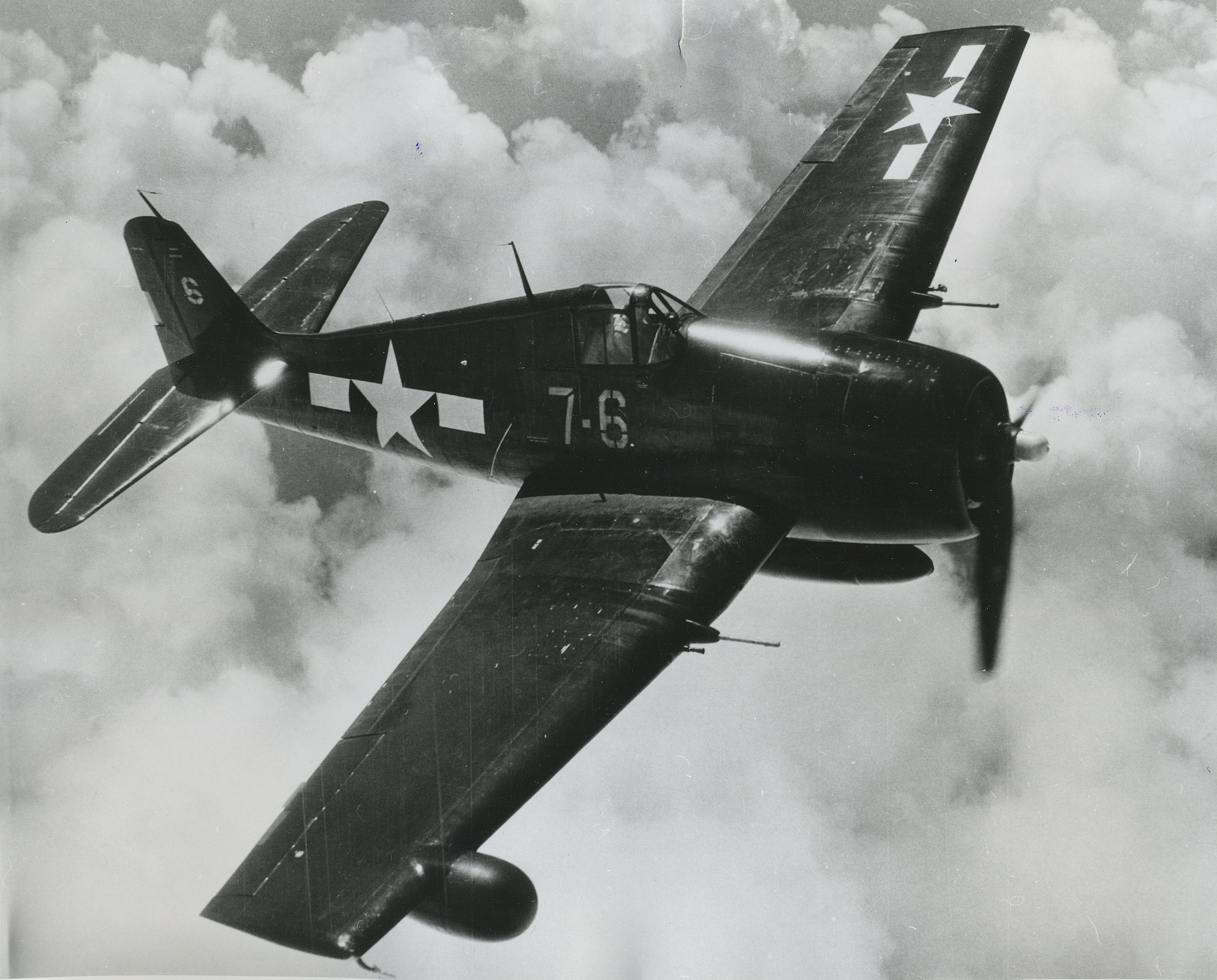
As always, maintenance loomed large. Some of the “downstream” fighter squadrons were slated to receive F6F Hellcats or even F8F Bearcats. Experience had shown that sustained operations taxed F4U squadrons because of the Corsair’s complex oil and hydraulic systems. Deferred maintenance often was not possible, resulting in fewer sorties per aircraft compared to F6Fs. The operational CVE air groups deployed with F4U fighter-bombers plus F6F photo aircraft and night fighters.
Among the pilots in MCVG-1 was Major R. Bruce Porter, the commanding officer of VMF-511, which was expected to conduct night-fighter missions from Block Island. After a Solomons tour, the 24-year-old Californian anticipated his greatest challenge yet—flying fighters from small-deck carriers at night.
The squadron began night “car quals” in Hawaii early in 1945, and Porter recalled the evolution beginning with his F6F-5N hitched to USS Tripoli’s(CVE-64) hydraulic catapult:
“I looked to my left and saluted. Ready! In response, a dimly perceived deck hand standing over the catapult crew’s catwalk whirled a flashlight. Go! I turned my eyes front, loosened my grip on the stick, set my jaw and leaned back into my seat. “WHAM! “My conscious mind was eons behind my senses. … I had a very busy couple of seconds as I kicked the right rudder pedal and yanked the stick into the pit of my stomach. I had no time to dwell on how dark it was out there.
“All my training and experience saw me through a climb to 3,000 feet. While my mind reeled off a thousand facts about my flying, my voice talked to the ship in calm tones, reporting on routine matters. … I was neither here nor there.
“After assuring myself that I was flying on a heading opposite of that of the ship, I flew down the carrier’s port side and approached the plane guard destroyer, keeping it just off my port wing. I could not help ruminating about how useless a night search for a bilged aviator must be.
“Next, I flicked on my radio altimeter, a brand-new instrument that had been installed just before we left San Diego. I set it for 150 feet. If I flew above that altitude, I’d get a white signal light. If I flew below, I’d get a red—danger! If I was flying right at 150, I’d get a comforting green light. It was green when I turned the altimeter on.
“I flew upwind the length of the tiny destroyer and sighted her deck lights. This was the only concession to a pilot’s natural aptitude for becoming disoriented across even the briefest interval of night space.
“At what I judged to be the best moment, I turned 90 degrees port, dropped wheels and flaps, enriched the fuel mixture, partly opened the cowl flaps, put the prop in low pitch and turned another 90 degrees to arrive downwind dead astern of the carrier.
“Then I was committed to the approach; all my attention was aimed at visually acquiring the LSO’s luminous paddles.
“I momentarily panicked and said, ‘Where the hell are you?’
“First, I sensed the colored paddles, then I knew I saw them. The LSO’s arms were both out straight. Roger! My ragged confidence was restored, though I remained a good deal less than cocky. I checked my airspeed, down to the required 90 knots. Before I knew it, I saw the ‘cut’ signal. Then, WHAM! The tailhook caught a wire and I was stopped on a dime.
“I taxied past the barrier, came to rest beside the island and cut the engine. As had been the case after my first live combat mission, my flight suit was reeking of sweat.”
By the time the Marine CVEs became operational, the war was winding down. Despite initial intent, Block Island and Gilbert Islands, which arrived off Okinawa in May with Marine squadrons and a primary mission of close air support, logged more sorties striking targets in Sakishima Gunto than working with infantry ashore.
Rear Admiral Calvin C. Durgin, commanding the escort carrier force at Okinawa, noted that Navy CVE squadrons were well trained in close air support. He added, “The advent of Marine Air Groups in CVEs should not be permitted to complicate the support carrier picture any more than is necessary. … Marine air groups should be and probably are as flexible as navy squadrons and groups, and should remain so, and should expect no preferential treatment. To assign all Marine squadrons to direct support work would probably work to the detriment of morale of the Navy groups … and this command sees … no reason for such assignments and has no intention of allowing it to occur.”
“Jeep carriers” also supported the Balikpapan, Borneo, occupation. In July and August, Cape Gloucester aircrews contributed to an operation off the China coast. VMF-351 downed five aircraft, two of which fell to Lieutenant Colonel Don Yost, who on Aug. 5 became the last Marine ace of the war, having started his career with VMF-121 at Guadalcanal. Meanwhile, Vella Gulf arrived at Okinawa as the war ended. Block Island and Gilbert Islands supported the Allied occupation of Formosa and the evacuation of former POWs.
Ultimately, 14 of the planned 16 MCVGs were established or directed to form. In the rapid demobilization following the war, however, the Marine CVE program was drastically reduced, providing only three air groups for the Pacific Fleet and two for the Atlantic.
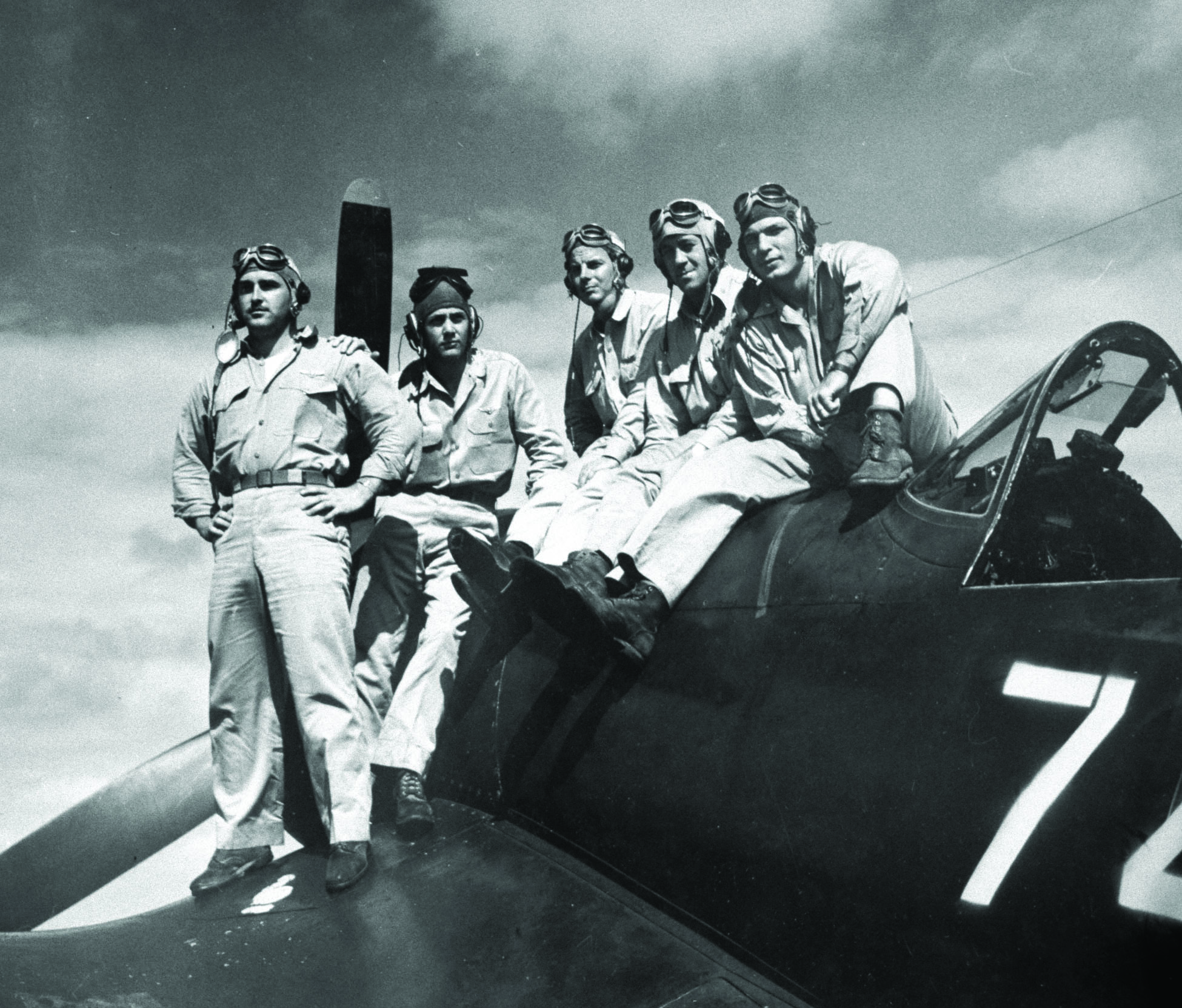
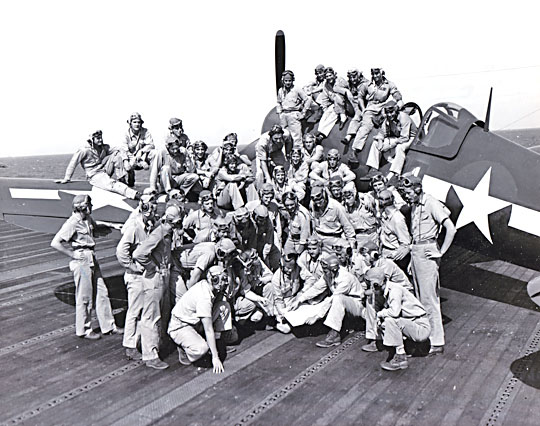
Featured Photo (Top): Marines of VMF-124 and VMF-213 aboard USS Essex, led by LtCol William A. Millington, the first Marine to command a Navy air group. (USMC)
About the Author
Barrett Tillman is a professional author with more than 40 non-fiction volumes and novels plus more than 800 articles published worldwide. He is best known as an award-winning historian for his histories of naval aircraft and carrier operations. He learned to fly as a teenager and has flown hundreds of hours in historic aircraft. A competitive marksman, he has led a national championship shooting team.
Enjoy this article?
Check out these similar Leatherneck and Scuttlebutt features:

The National Naval Aviation Museum: A Flight Through History
Leatherneck
October 2010
By: Sara Bock

Warbird Review: A List Of Legendary Marine Aircraft
Leatherneck
May 2025
By: Barrett Tillman

Alfred A. Cunningham: Father Of Marine Corps Aviation
Leatherneck
May 2025
By: Dr. Laurence M. Burke II