

Behind the Scenes: The Process of Bringing Marine Aviation to Life
By: Kyle WattsPosted on April 15, 2026
Behind the scenes of every piece of equipment fielded by the Marine Corps lies a complex acquisition system. The intricate process ensures the right product ends up in the hands of the warfighter. Evolved through a methodical, layered structure of requirements and testing, anything a Marine might carry, wear, shoot, drive or fly begins with the most generic form of a requirement.
If Marines across the Corps were thirsty every time they went to the field, the basic need for a water bottle might bubble up to the top. From the highest level, the Corps tasks an acquisition officer in charge of the appropriate program office with the fundamental requirement: We need a way for Marines to carry water in the field. Along with the requirement comes specifications. The vessel must be small enough for an individual to carry, but large enough to keep a Marine hydrated for six hours. It must close and be leakproof. The drinking orifice must fit the average size mouth. It must withstand being run over by a 7-ton truck, or maybe a direct hit from a 500-pound bomb. Etc.
Marines and civilians within the program office get to work. Some partner closely with civilian industry looking for companies to enter competing bids with prototypes that meet the specifications. Others generate the lifecycle documentation required for sustaining the project. They estimate the cost per unit, research and development and timetable required. They request funding for engineering, development, initial manufacturing and fielding, testing, revision and mass adoption of the finalized product. With funding approved, the program office is now responsible for keeping the cost, schedule and performance of each product to the original spec and delivering it to Marines in the fleet.
Getting the product into Marines’ hands, a monumental effort in itself, is only step one. Perhaps the lid designed for the water bottle breaks too easily or unscrews itself under certain conditions that only occur in the field. The program office drafts engineering change proposals to correct the problem, implements the changes into manufacturing, then delivers the newly designed lid to each bottle coming off the production line and to every bottle already in the field. Meanwhile, data shows that fully two-thirds of fleet Marines are losing or otherwise demolishing their new water bottles at the rate of one every six months. Now, the program office must create a sustainment plan for the dictated life cycle of the water bottle; for the next 20 years, we have to order how many hundred thousand water bottles, at what cost, coming from what pot of money, in order to keep the fleet supplied?
It’s easy for even the most ignorant of us outside the acquisition field to imagine the intensive workload, mental pressure and herculean effort required of these Marines. They operate within an unsung and largely thankless subsection of the Marine Corps, working more often with government civilians and contractors to create and deliver products than with their fellow Marines who use them. The simplest, smallest piece of equipment endures the same fundamental acquisition process as the most complex.
Marine aviation employs some of the most technologically advanced and expensive equipment the Corps has to offer. While the fundamental acquisition process is the same, every lever, door and wire within an aircraft endures the same testing, fielding and revising as the water bottle. Acquiring and sustaining these technologies requires not only an array of dedicated program offices, but also a host of fleet-experienced subject matter experts and certified Marine test pilots to fly each aircraft and safely trial every upgrade or new technology. Like the Marine Corps as a whole, all of these Marines and program offices fall within a larger U.S. Navy command.
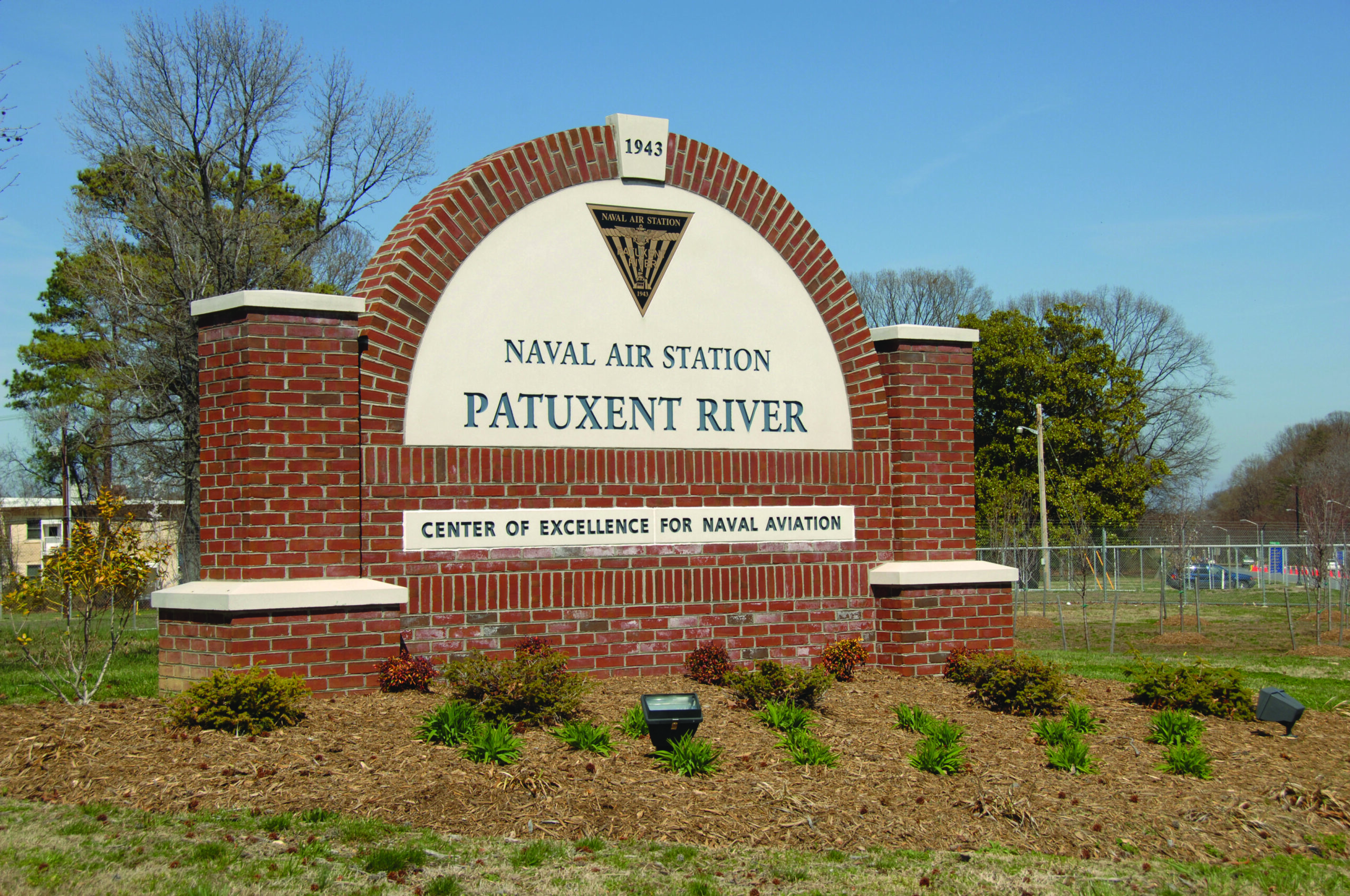
Naval Air Systems Command (NAVAIR) is headquartered at Naval Air Station Patuxent River, Md. Dominating the southern mouth of the Patuxent at the Chesapeake Bay, the base is home to numerous test flight squadrons, program offices, engineering offices and civilian contractor spaces. In the heart of the air station, occupying an old firehouse directly on the flight line, lies the Marine Aviation Detachment (MAD). The MAD holds administrative responsibility over all Marines assigned to program offices and test flight squadrons within NAVAIR, providing the crucial talent management needed to keep the right Marines in the right seats at all times to move aviation acquisitions forward.
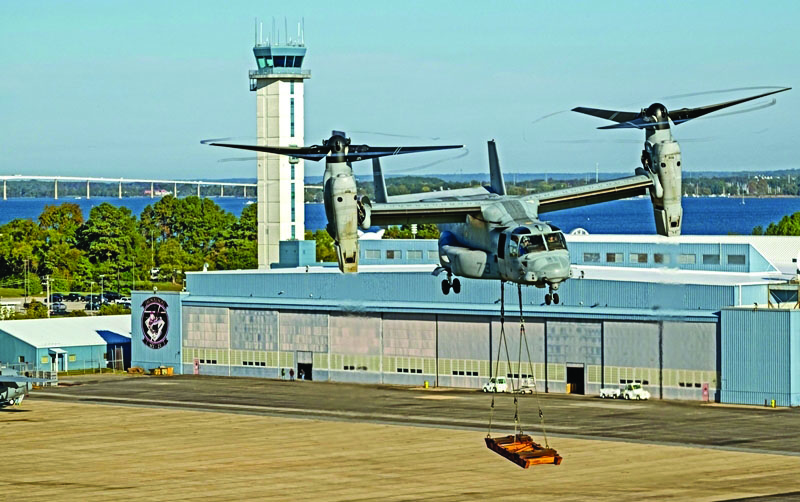
A V-22 Osprey conducts a test flight over the HX-21 squadron area at NAS Patuxent River, Md. (Courtesy of HX-21)
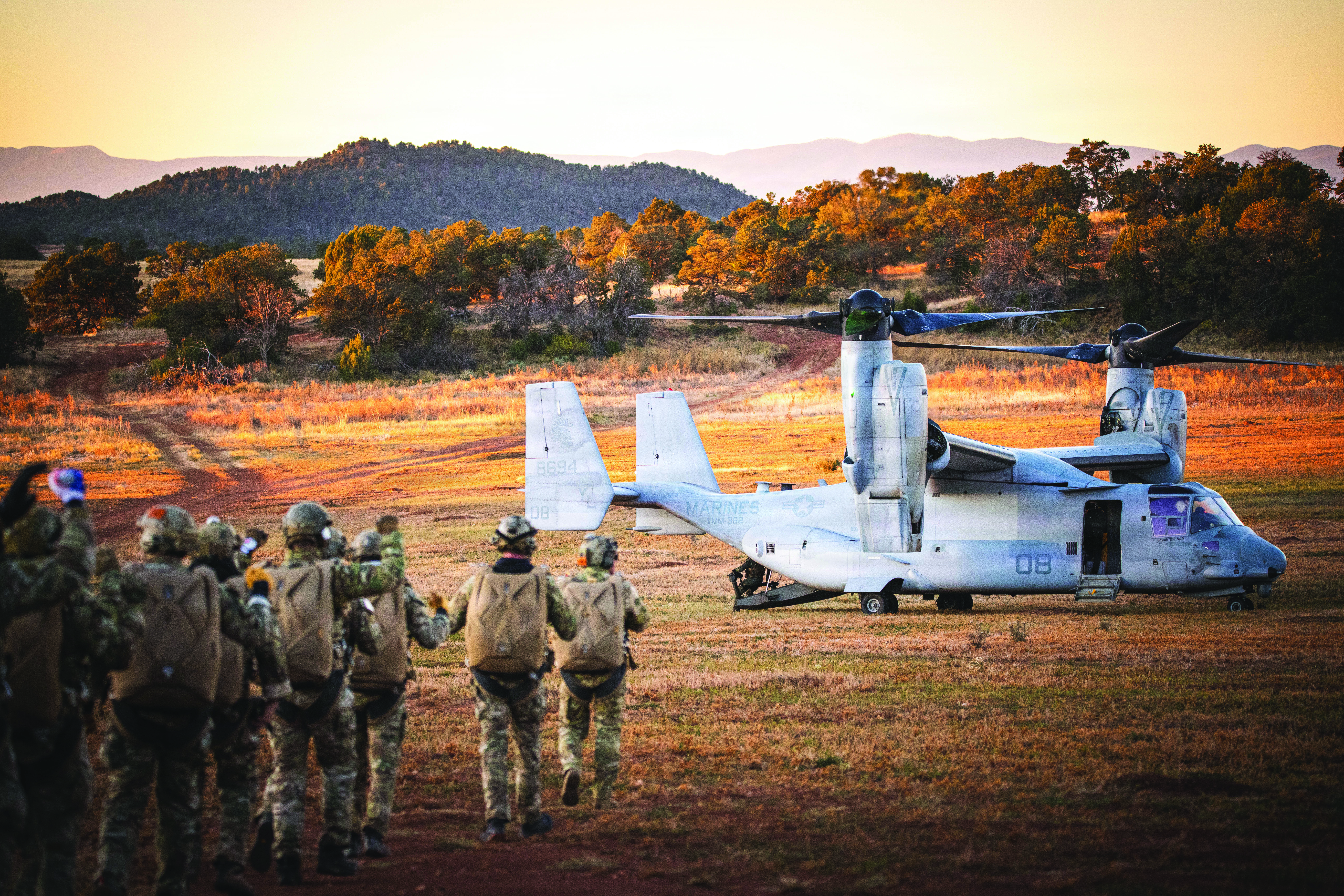
Army Green Berets with the 10th Special Forces Group (Airborne) walk to a Marine Corps V-22 Osprey on Fort Carson, Colo., Oct. 21, 2025. Green Berets with the 10th SFG(A) conducted multiple high-altitude free-fall jumps from a V-22 Osprey, honing precision and proficiency. (Sgt Rhianna Ballenger, USA)
At 185 Marines strong, only a few call the former fire station home. Most are spread from coast to coast working on aviation projects as varied as the Marines assigned to them.
“We are a very top-heavy organization with an incredibly wide range of expertise,” said Lieutenant Colonel Michael Shull, the MAD executive officer (XO). “The Marines are all operationally dispersed. You may have a lone Marine in a program office. You may have another with six to eight Marines, depending on the size of the portfolio or the attention it’s getting from Headquarters Marine Corps. It’s important for us to keep a bead on those upper-level documents that trickle down to how we manage manpower to ensure the right people are in the right spot. They’re all hand-selected billets with people out of the fleet selected for their expertise.”
Despite the “behind the scenes” nature of their work, the results these Marines produce reach the highest levels of visibility. There are roughly 60 Marine officers qualified as 8059 acquisition officers specializing in aviation. These men and women work in close conjunction with civilian industry partners operating with a staggering budget to bring ideas to life. In the three-year period from April 2022 to April 2025, Marines within the MAD executed the funding of $65 billion across research, development, testing and evaluation. The funding derived from Marine Corps projects as well as Navy and joint program offices, meaning not all were specifically Marine Corps dollars, but Marines were still responsible for managing those dollars. At a time when the annual service budget for the entire Marine Corps totals roughly $50 billion, the responsibility these Marines shoulder proves no trivial task.
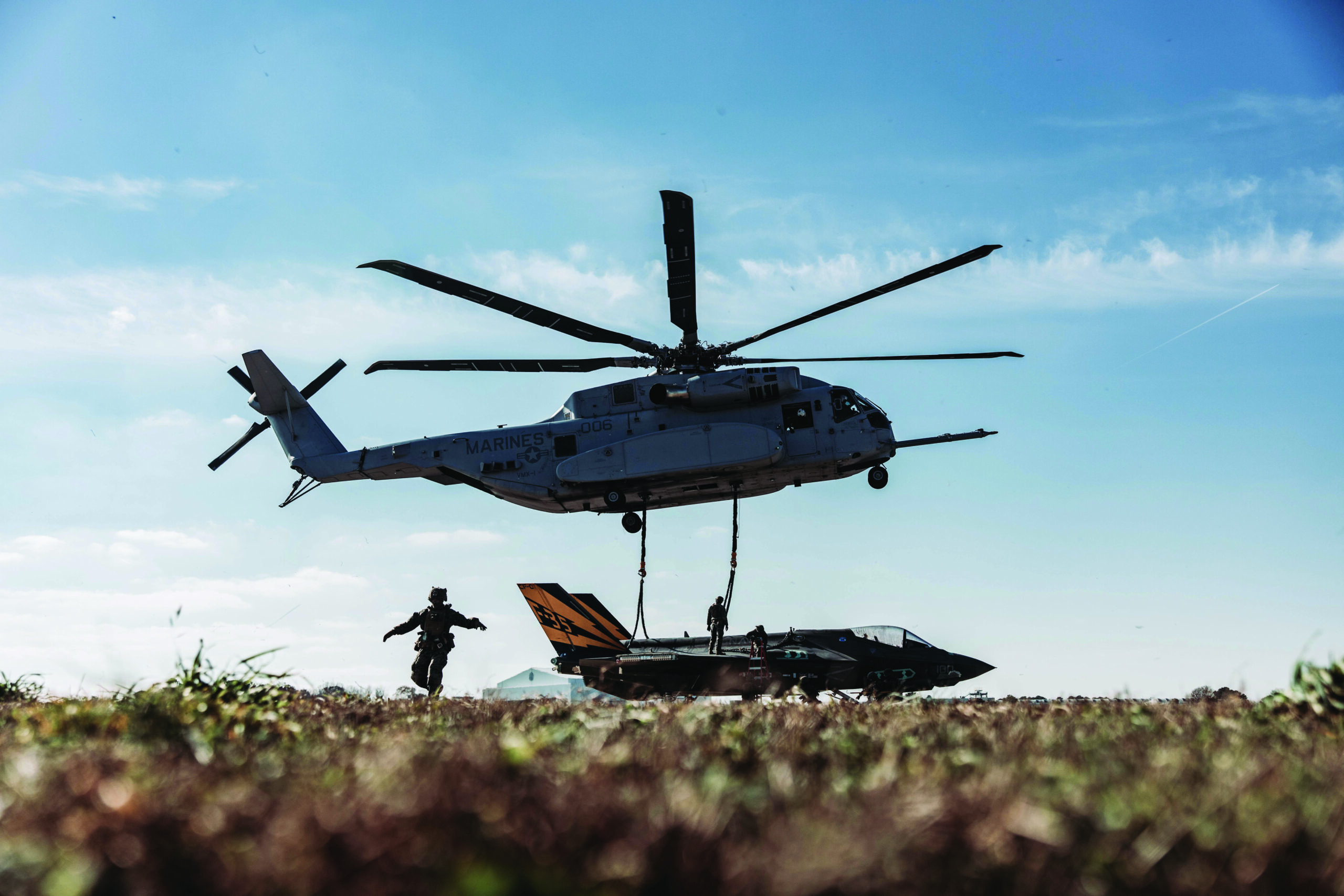
Marines with CLB-24, CLR-2, 2nd MLG, hook an F-35C Lightning II to a CH-53K King Stallion for helicopter support team operations at NAS Patuxent River, Md., on Dec. 13, 2022. CLB-24 conducted external lift operations with a helicopter support team to develop the proper tactics, techniques and procedures when flying a CH-53K King Stallion. (Cpl Meshaq Hylton, USMC)
Additional pilots and enlisted Marines fill out the MAD as subject matter experts supporting each program office. They help design engineers understand all the ways their product will be used by Marines around the world and the creative ways Marines will find to break it. They make suggestions for design changes that will ultimately result in the most user-friendly version winding up in the hands of warfighters. Some senior enlisted work as fleet liaisons, remaining close to operational squadrons around the world. Once a new widget of any kind trickles down to the end user, fleet liaisons travel from unit to unit introducing Marines to the new equipment, gathering their feedback, and relaying information and suggestions back to the program office.
Program Manager Air (PMA) offices cover every facet of Marine aviation and supporting systems. The life-cycle stages of each office range from new acquisition to sustainment of current technologies.
“Every year we receive an aviation plan from the deputy commandant for aviation based on force design, projections, budget and other factors from the three-star level,” said Colonel James Reynolds, the MAD commanding officer. “That determines the needs and requirements for the future. Acquisition officers take requirements and money, merge the two and deliver a product. It’s an important mindset to frame your thoughts around—the idea that when you purchase a drill, you’re not buying a drill, you’re buying holes. There are many ways you can get those holes, you can’t just fixate on needing a drill. If the Marine Corps needs a ship-to-shore connector, that could be an AAV, a helicopter, a flat bottom ship; there are so many ways to crack that problem. If you fixate on a helicopter, then that’s how everything becomes a helicopter.”
PMA-275 operates one of the largest program offices across the force. This joint office between the Marine Corps, Navy and U.S. Air Force is responsible for the procurement, development, support, fielding and disposal of the U.S. military’s tiltrotor program: the V-22 Osprey. MAD Marines work alongside roughly 350 other servicemembers and civilians in the program office at Pax River, including Marine Col Robert Hurst, the program manager for the entire V-22 Joint Program.
“The work we do here is critical,” Col Hurst said. “For my office, it’s critical to the lance corporal, the Sailor and the airman. They count on us to get things done. The criticality of having a Marine voice inside the acquisitions system cannot be overstated, having our focus on the warfighter, problem solving and leadership. Being an acquisition officer is as much about leadership as it is about knowing acquisition.”
An additional 300 PMA-275 personnel work out of Marine Corps Air Station Cherry Point, N.C., as the program’s Fleet Support Team. These civilians and servicemembers deploy all over the world, wherever American V-22s are in use, to provide subject matter expert support. A program more than 20 years in the making, as of this year, PMA-275 decommissioned its active production line for Marine Corps Ospreys, transitioning from new production to sustainment of the current fleet.
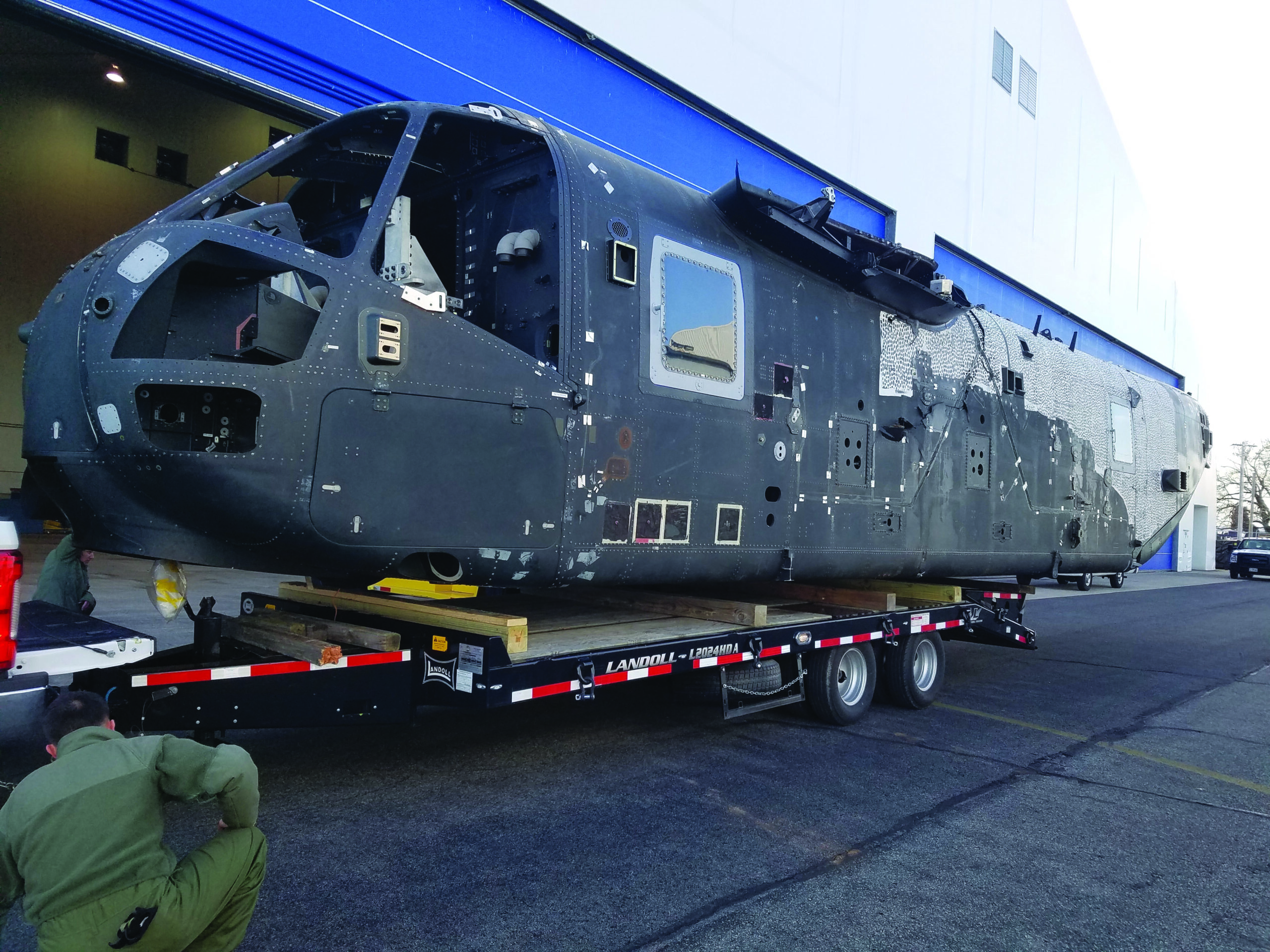
PMA-261, responsible for the CH-53 heavy lift helicopter, underwent the reverse transition over the last several years. For more than four decades the CH-53E model served as the Marine Corps’ workhorse. By the mid-2010s, the Pax River-based PMA determined sustainment was no longer pragmatic.
Marines with CLB-24, CLR-2, 2nd MLG, hook an F-35C Lightning II to a CH-53K King Stallion for helicopter support team operations at NAS Patuxent River, Md., on Dec. 13, 2022. CLB-24 conducted external lift operations with a helicopter support team to develop the proper tactics, techniques and procedures when flying a CH-53K King Stallion. (Cpl Meshaq Hylton, USMC)
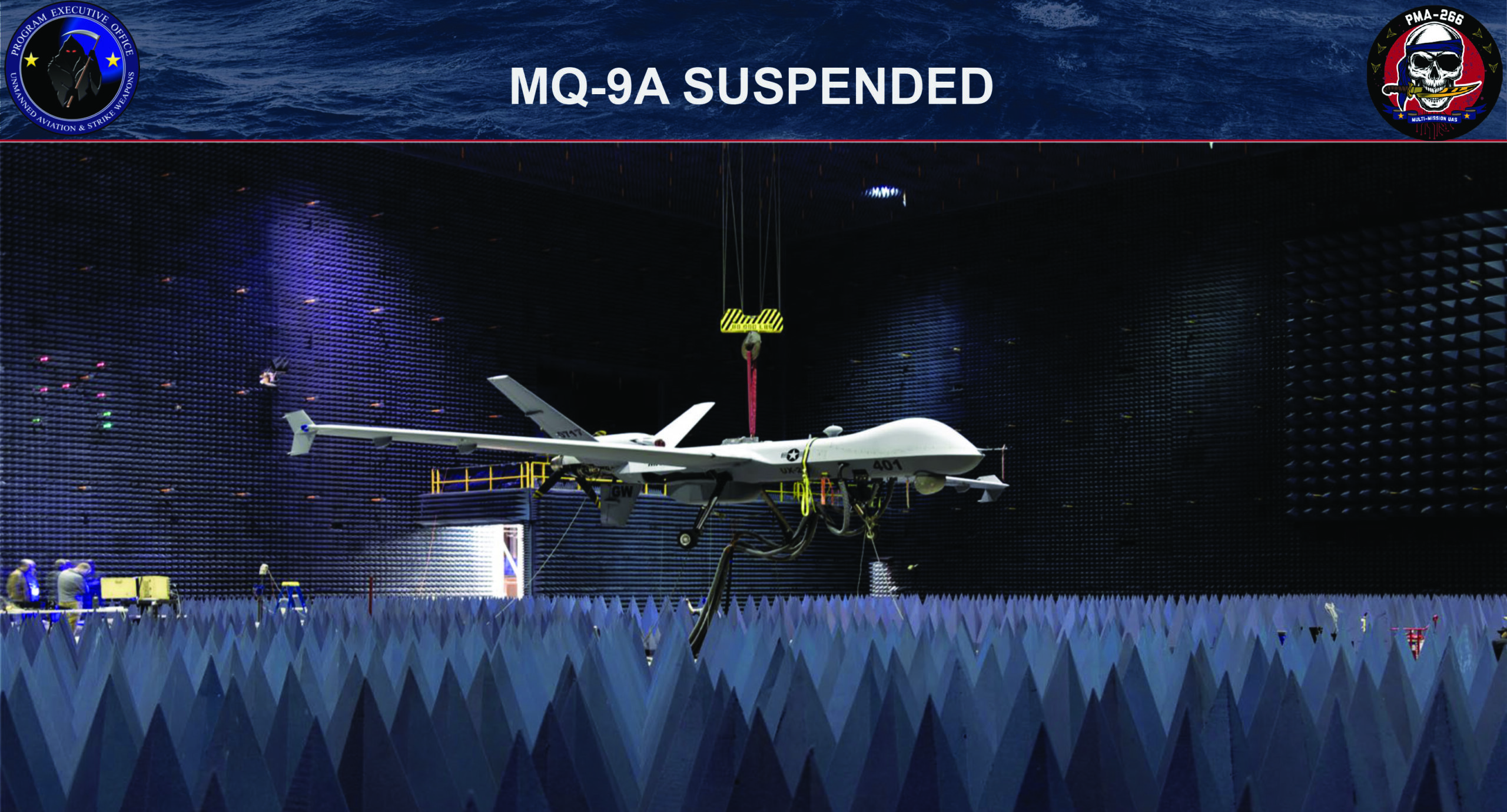
A UX-24 MQ-9A is suspended in a specialized chamber for absorbing sound and electromagnetic waves at the Advanced Systems Integration Laboratory, Patuxent River, Md., on Feb 27, 2025. PMA-266 is NAVAIR’s program office for multi-mission tactical unmanned aircraft systems. (Theresa Thomas, DAiTA and Missions Systems Group)
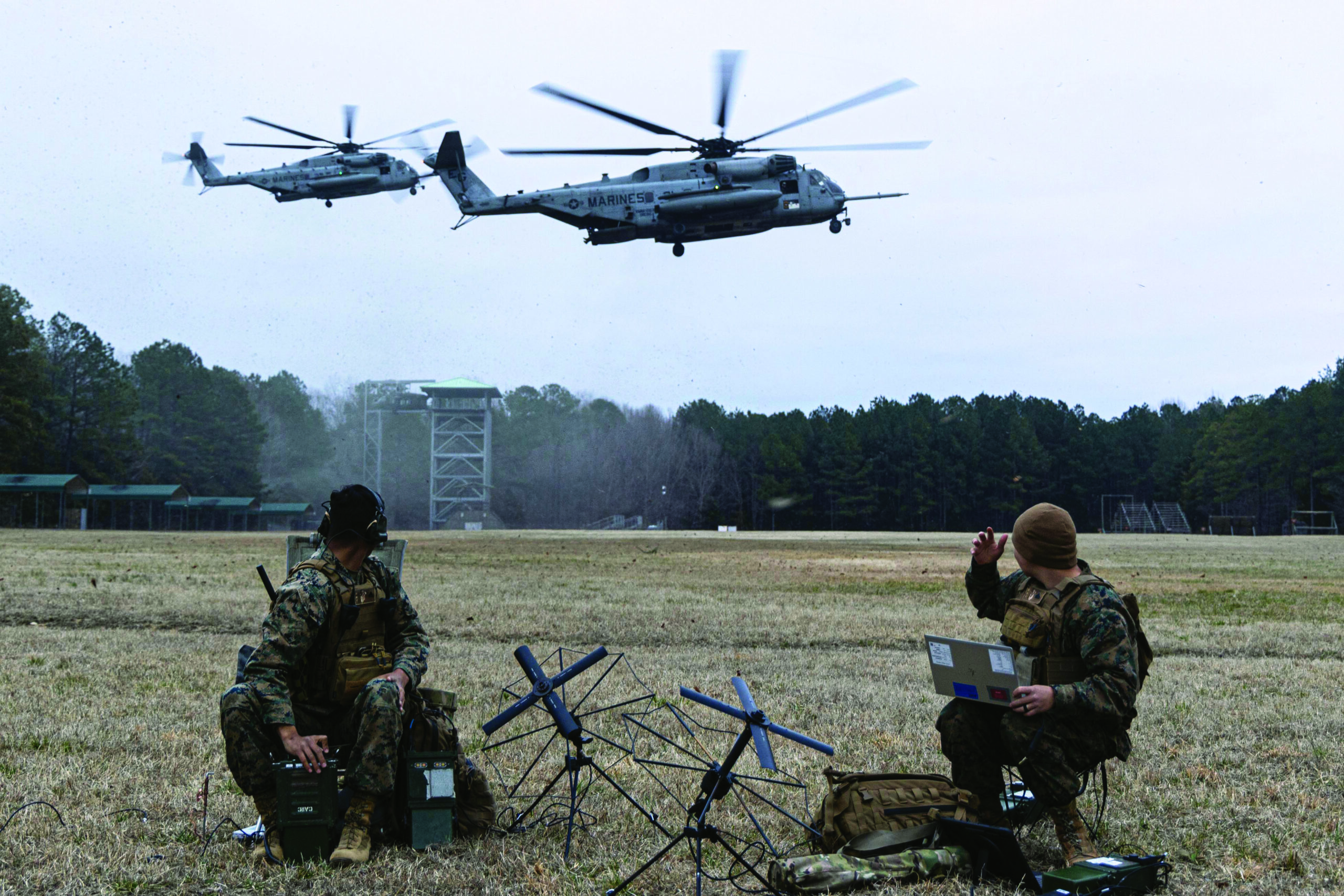
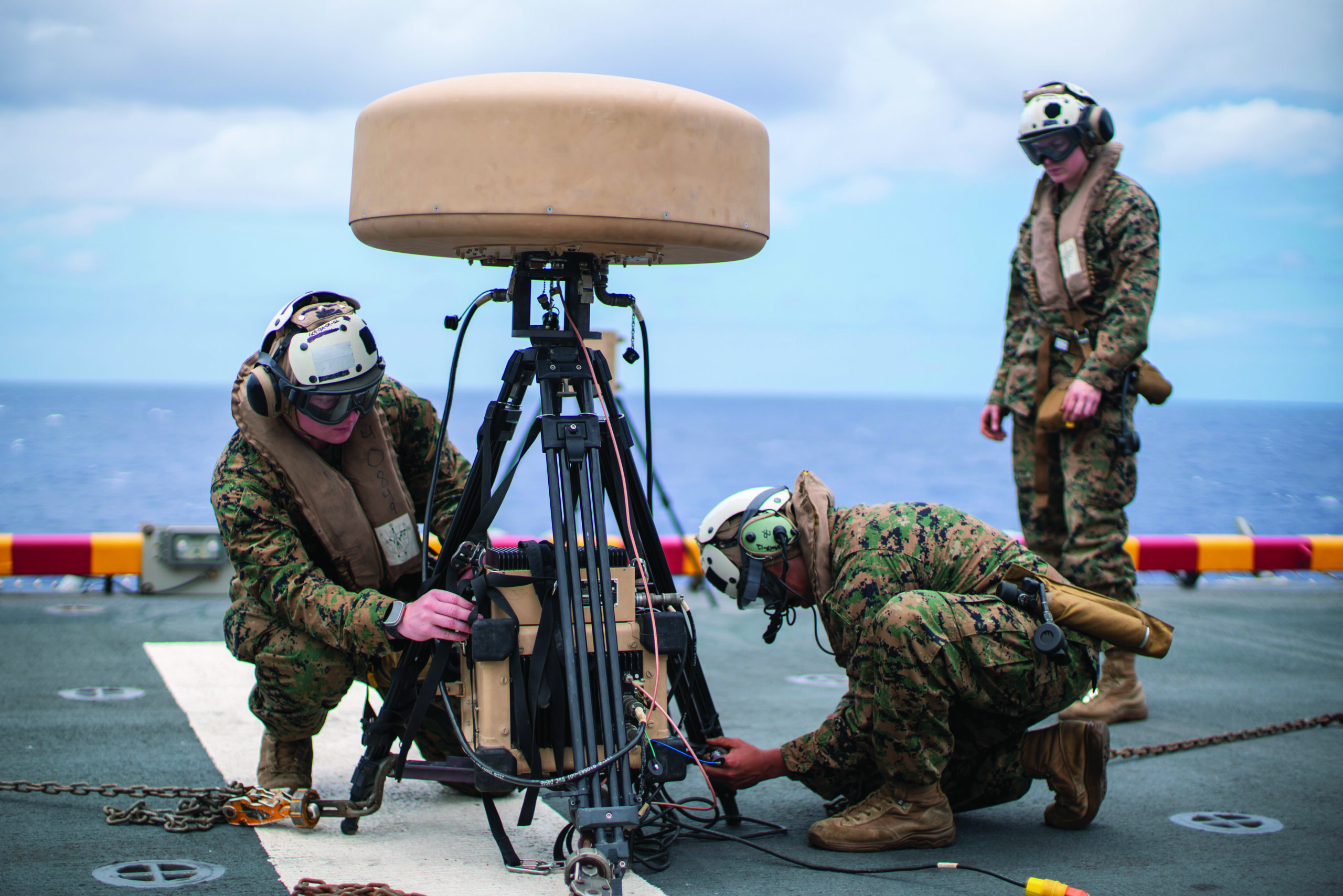
Air traffic control technicians with VMM-263 (Rein), 22nd MEU, calibrate communications systems with CH-53E Super Stallion helicopters in preparation for a simulated night raid as part of Realistic Urban Training Exercise at Fort Barfoot, Va., on March 14, 2025. (Photo by Cpl Emily Hazelbaker, USMC)
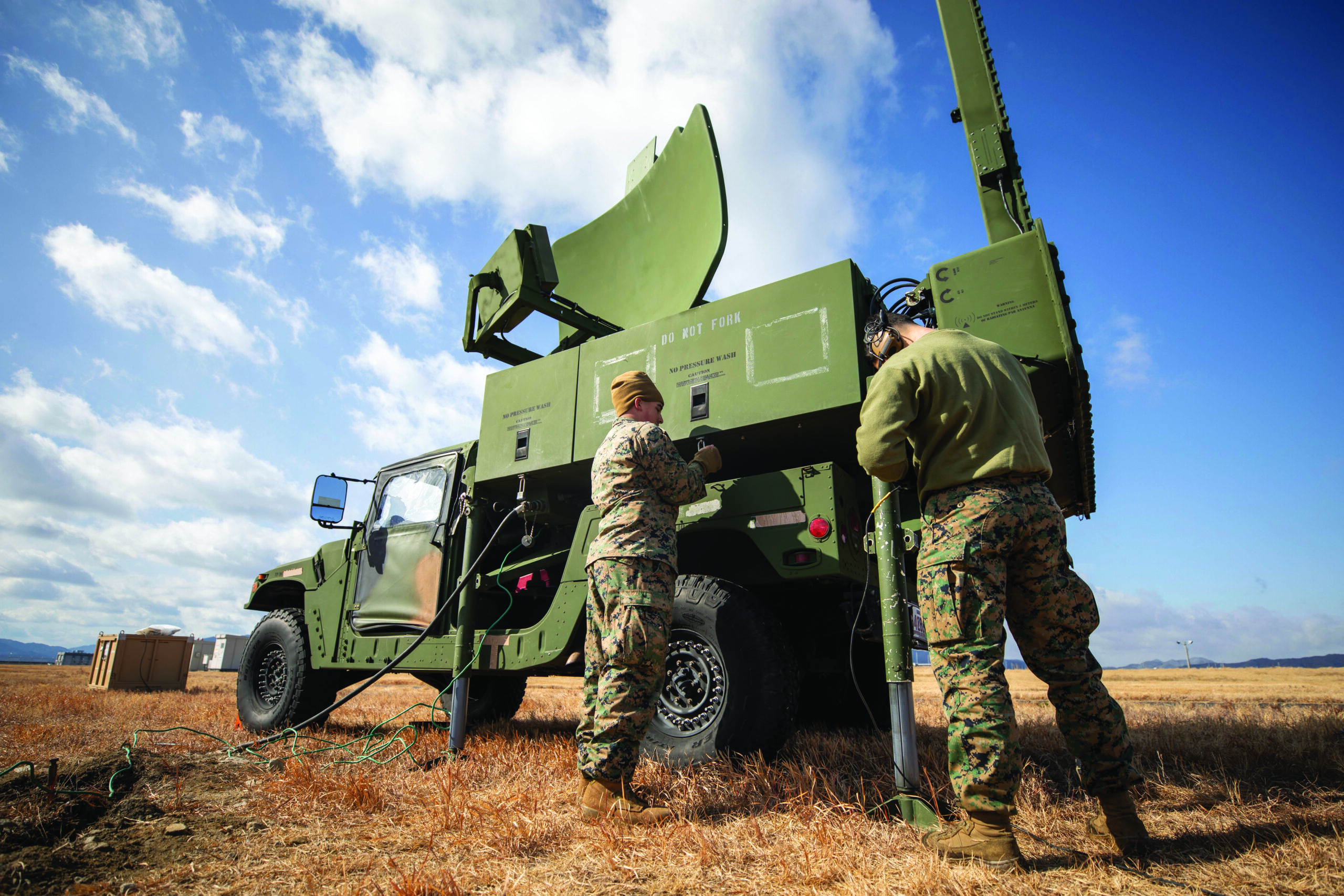
“For a long time, the goal in that office was to keep the helicopter flying and relevant,” said LtCol Shull. Prior to his service as the MAD XO, Shull piloted CH-53s in the fleet and served as an acquisition officer assigned to PMA-261. “The acquisition mindset was improvements and upgrades, maybe a new weapons system, new instrumentation or safety measures. At some point, it becomes more expensive to sustain than to replace. Either the threat has surpassed it or just the lifespan of the aircraft can no longer be extended, like an old car that eventually needs to be replaced. So, the office began the standard ‘new capability’ acquisition process, identifying the best product to meet the heavy-lift requirements. Eventually, it transitioned into the development and fielding of the CH-53K.”
Beyond the development and acquisition phases, testing each new product requires a special breed of Marine aviators. Roughly one third of the Marines selected and placed by the MAD are pilots assigned to one of the Air Test and Evaluation squadrons covering every type, model and series of aircraft. Unlike any other squadrons in the fleet, pilots joining a developmental test squadron must undergo the U.S. Navy’s Test Pilot School (TPS). Here, Marine aviators develop a unique skill set. Students endure a rigorous academic and flight schedule over the course of 11 months, including the ability to graduate with a Master of Science in aviation and aerospace management from Purdue University.
“TPS, most plainly stated, teaches two things: how to evaluate systems and how to manage risk,” said Major Nicholas Mantz, a UH-1 pilot assigned to Air Test and Evaluation Squadron (HX) 21 at Pax River. “The real difference is that, as a test pilot, you’re doing things that no one has ever done before.”
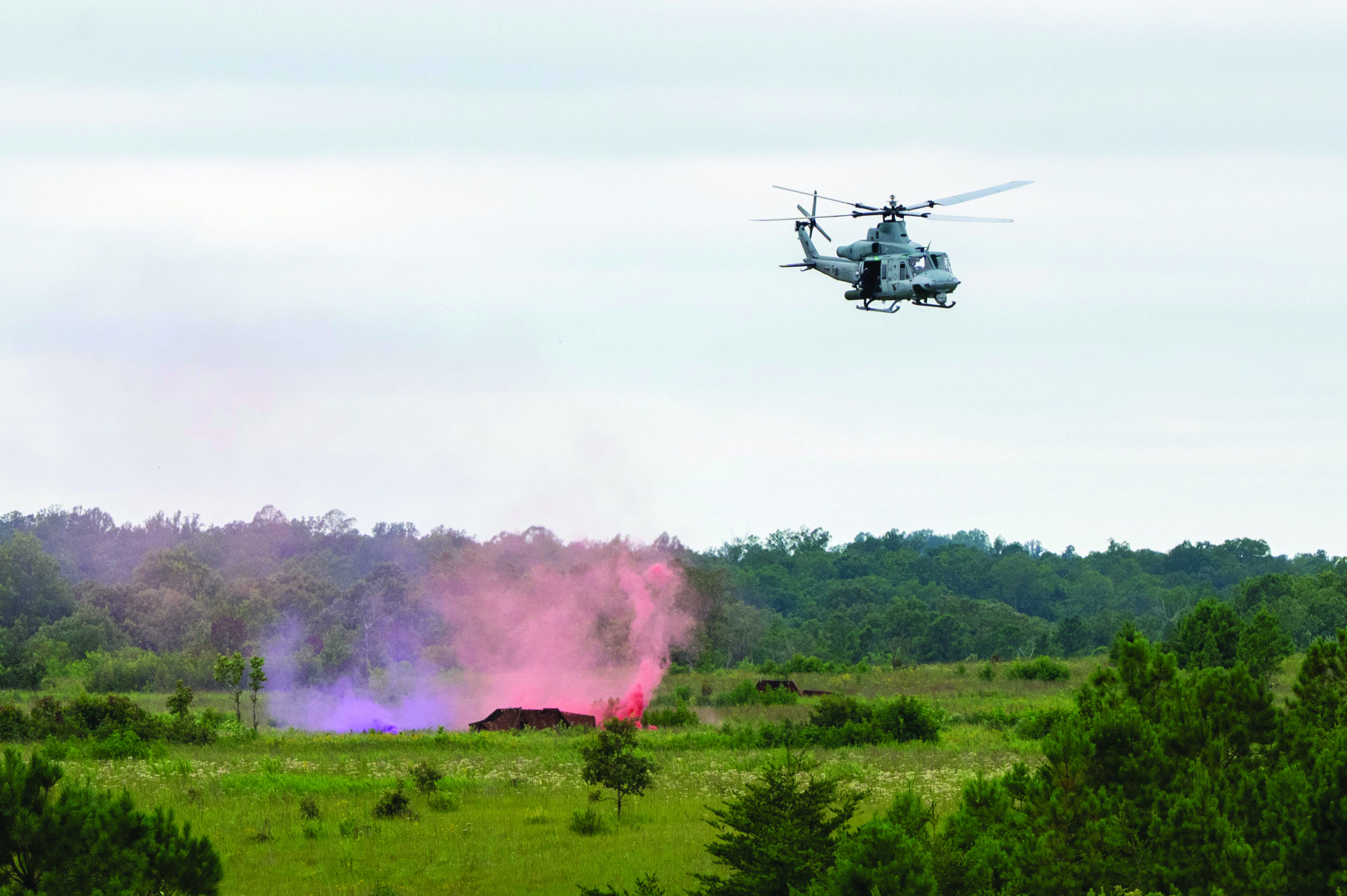
School-trained test pilots assigned to HX-21 are responsible for operational testing of every type, model and series of rotary-wing and tiltrotor aircraft utilized by the Marine Corps. (Photo courtesy of HX-21)
“It gives you the ability to combine an aviator’s opinion with an engineering mindset,” added LtCol Aaron Okun, the commanding officer of HX-21. “We are the bridge between the fleet and the engineers. Fundamentally what we do is we test something, we evaluate it and we communicate back to the engineers what that evaluation was.”
HX-21 employs Marine test pilots to fly and evaluate all rotary wing and tiltrotor aircraft employed by the USMC. Just like the acquisition process, the test process covers every single component within each airframe.
“When we talk about acquisitions, we think about aircraft from the cradle to the grave; from the inception of the idea all the way until we sunset it,” Okun said. “We also have to do that with every product that gets implemented into the aircraft. A new engine, a new display, any new widget, whatever it is, somebody had to design that, somebody had to install it and test it and vet all the procedures. The whole process gets boiled down for the smallest little thing.”
Okun, like all test squadron commanders, is a TPS graduate and an 8059 acquisition officer. A chief test pilot and chief engineer join the CO as the most senior and experienced veterans. Every test pilot in the squadron possesses at least four years of flying experience in the fleet, and a hearty recommendation from their previous commands, prior to enrollment at TPS and commencing a three-year stint with the test squadron. Though the squadron employs hundreds of people to test, evaluate and maintain the aircraft, only about 75 are active servicemembers. For test pilots, managing projects with civilian maintainers and engineers requires leadership skills and an approach not necessarily taught at The Basic School.
For every new or upgraded product, the PMA submits a request for testing to the squadron. A test pilot is assigned as the project officer, along with a project engineer, to spearhead the task together. The project team scales up or down depending on the complexity of each task and the level of risk associated with it.
“The team designs a set of test procedures to answer all the requirements of the aircraft or product,” Mantz explained. “Once we have that shell of what the test needs to look like, we will start going through the risk management process, identifying the hazards and precautionary measures we can take to mitigate the risks.”
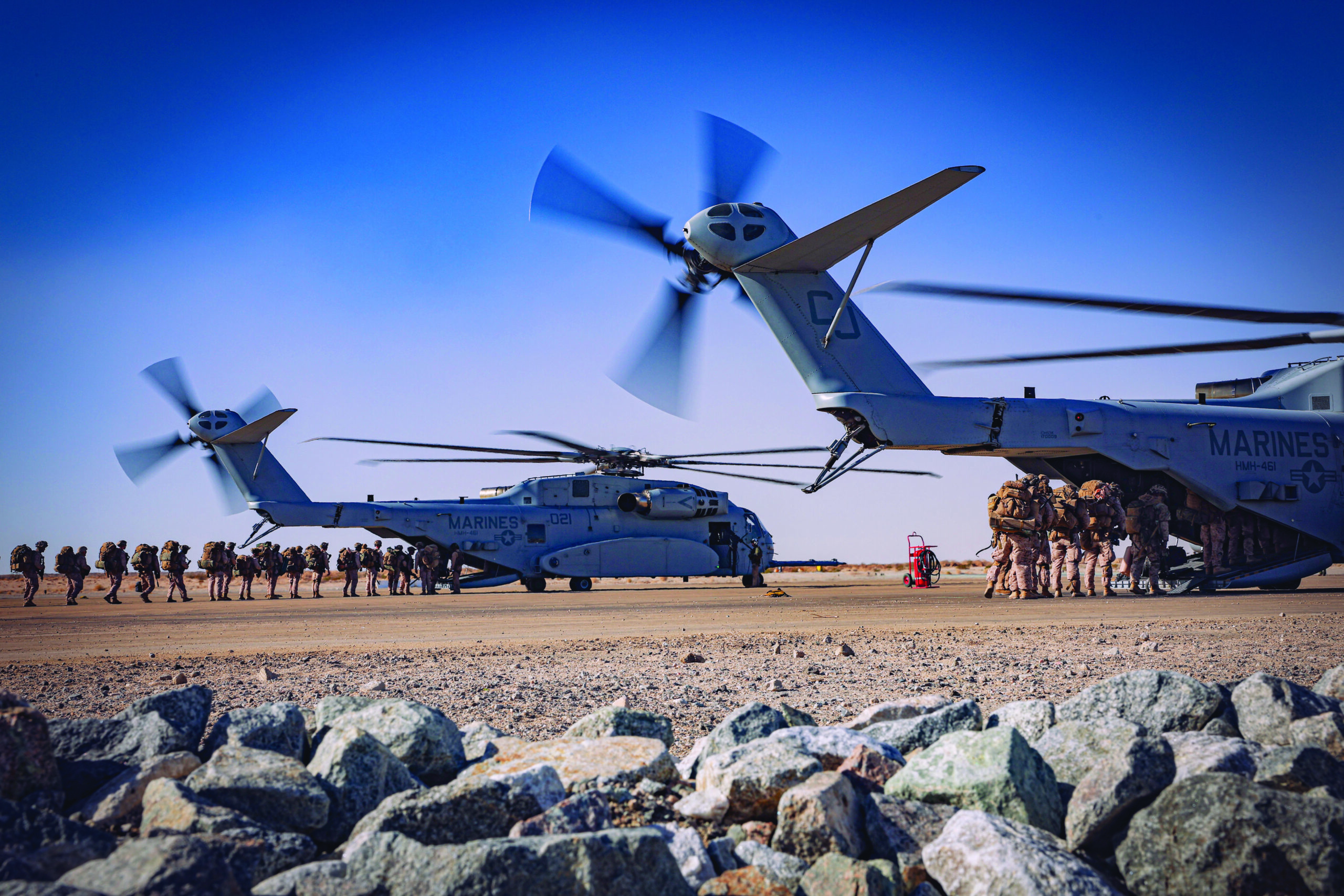
Marines with 1st Bn, 7th Marines, 1stMarDiv, board a CH-53K King Stallion helicopter during Marine Air-Ground Task Force Distributed Maneuver Exercise 1-25 at Camp Wilson, Marine Corps Air Ground Combat Center, Twentynine Palms, Calif., on Feb. 11, 2025. (SSgt Armando Elizalde, USMC)
The specialized training test pilots receive enable them to venture into unknown territory as safely as possible. A host of sensors and monitoring devices specific to the test squadron accompany them on each journey.
“If you go out to one of our aircraft, you’ll see a ton of orange wires and devices everywhere,” said Gunnery Sergeant Jonothon Stutesman, a CH-53 crew chief assigned to HX-21. “They are all kinds of things—sensors measuring temperature, strain, pressure, you name it. This kind of telemetry is something you’re not going to find on a fleet aircraft. I don’t think a lot of people realize how much capability we have with that here. We can have a team of engineers in another room watching a live feed of all that data and advising if the flight is starting to progress in a way that may not be safe.”
The acquisition process calls for two types of testing: developmental testing (DT) and operational testing (OT).
“The easiest way to say it is that DT answers whether or not we built the thing right, OT answers whether or not we built the right thing for the mission it was intended,” Okun explained.
Developmental testers, such as HX-21 pilots, verify each specific function of the aircraft or system. If, for example, requirements call for a helicopter to lift a 10,000-pound load and carry it 300 miles, an HX-21 pilot will verify it can perform this task at a required speed and altitude. The goal of DT is to ensure the aircraft is safe, functional and technically capable of meeting every requirement. For an entirely new aircraft, like the CH-53K, dozens of test plans will be open simultaneously. The “Kilo” model remained in DT for nearly a decade.
Operational testers with Marine Operational Test and Evaluation Squadron (VMX) 1 out of Yuma, Ariz., place the new airframe or system in real-world situations, testing metrics such as reliability, maintainability and availability. These aviators come from the fleet and do not attend TPS prior to assignment with the squadron. Though not administratively managed by the MAD, the Marines at VMX-1 play a vital role in the testing process, providing data to PMAs and working in conjunction with DT squadrons.
After each test event is completed, the test squadrons return their evaluations to the PMAs, who retain ultimate responsibility for the decision to field a new product or go back to the design board. The process for even the simplest items might take at least a year from inception to fielding. As a result, often the Marines who spend a period of several years at a PMA working to bring an idea to life will not be present to witness their work come to fruition. For them, the satisfaction comes much later, seeing the aircraft or system they worked on flying across social media or in the news as Marines around the world put it to use.
The unique work Marines do in pro-gram offices around the nation delivers each capability the Corps brings to the fight. Just as any big-box store employs a dedicated team to engage suppliers and sellers to fill their shelves, Marine Corps PMAs fill the gap with civilian industry.
“The interaction we have with our commercial business partners is certainly something that makes us quite a bit different than a lot of the Marine Corps,” Shull reflected. “We interface daily with stakeholders out of uniform, the key military industrial base. This is the corporate, business side of the Marine Corps.”
PMAs remain constantly future-oriented, sustaining the equipment in use today and procuring the “state of the possible” for tomorrow. The MAD at Patuxent River operates equally future-focused, making sure all the right players are in place to acquire, test and field new technology. The critical work they perform is the first step in bringing about the vision for Marine Corps aviation to life.
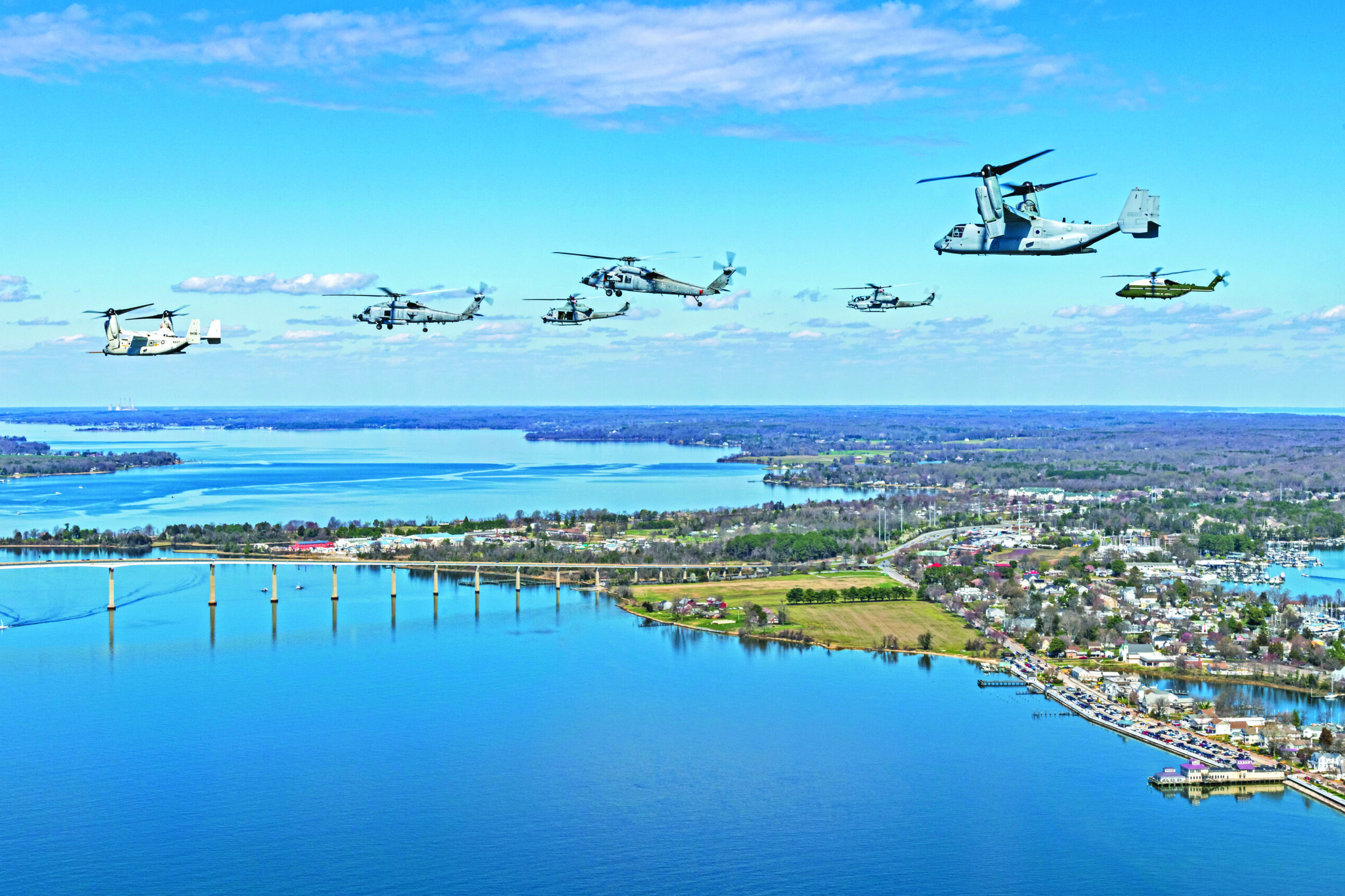
Featured Photo (Top): Air Test and Evaluation Squadron (HX) 21 executes a squadron-wide formation flight on March 25, 2022, highlighting the variety of rotary-wing and tiltrotor aircraft flown and tested by HX-21 test pilots and flight test engineers. (Photo by LT Ben Putbrese, USN)
About the Author

Kyle Watts is the staff writer for Leatherneck. He served on active duty in the Marine Corps as a communications officer from 2009-13. He is the 2019 winner of the Colonel Robert Debs Heinl Jr. Award for Marine Corps History. He lives in Richmond, Va., with his wife and three children.
Enjoy this article?

Force Multiplier in the Sky: KC130J Harvest HAWK is Here to Stay
Leatherneck
July 2015
By: Sara Bock

Safeguarding The Airspace: Marine Air Traffic Controllers’ Critical Role In Marine Aviation
Leatherneck
May 2024
By: Kyle Watts
Value of Aviation to the Marine Corps
Leatherneck
Org. September 1920
By: MAJ Alfred Cunningham