


Marine Corps Marathon: A Tribute to Past Battles
By: Jeff HorowitzPosted on September 15, 2026
The marathon has always been more than just a race. As the saying goes, attributed to the great Olympic long-distance running champion Emil Zatopek, “If you want to win something, run 100 meters. If you want to experience something, run a marathon.”
The origins of the marathon go back to ancient Greece, when in 490 B.C., a messenger named Pheidippides raced from the plains of Marathon, where the Athenians had just miraculously defeated a much larger Persian army, to Athens, about 25 miles away, to deliver the news of the victory. Pheidippides, already exhausted from racing to Sparta to plead with them to fight alongside the Athenians, shouted “Nike!”—“We are victorious!”—and died. So the legends say.
Fast-forward to 1896, when the organizers of the first modern Olympics were looking for an epic event to close out the Games, which were being held, appropriately, in Athens. In a flash of inspiration, they decided to create a 25-mile long-distance race, retracing the steps of Pheidippides. They called their new race the marathon.
Since then, the now 26.2-mile run has become a true phenomenon, with over 2,500 official marathons held every year around the globe, attracting millions of athletes of all abilities and ages.
To finish a marathon, these runners have to overcome doubt and exhaustion and find a willpower that they might not have known they possessed. Through their challenges, they learn something profound about their own strength and ability.
Among the United States’ most popular and beloved marathons is the Marine Corps Marathon. This year marks the 51st Marine Corps Marathon. It was first held in 1976, spearheaded by Colonel Jim Fowler as a way to boost Marine Corps recruitment, but Fowler wasn’t sure that anyone would even show up. He needn’t have worried; since its inception, more than 700,000 runners have crossed the race’s finish line, helping it grow into a world-class event.
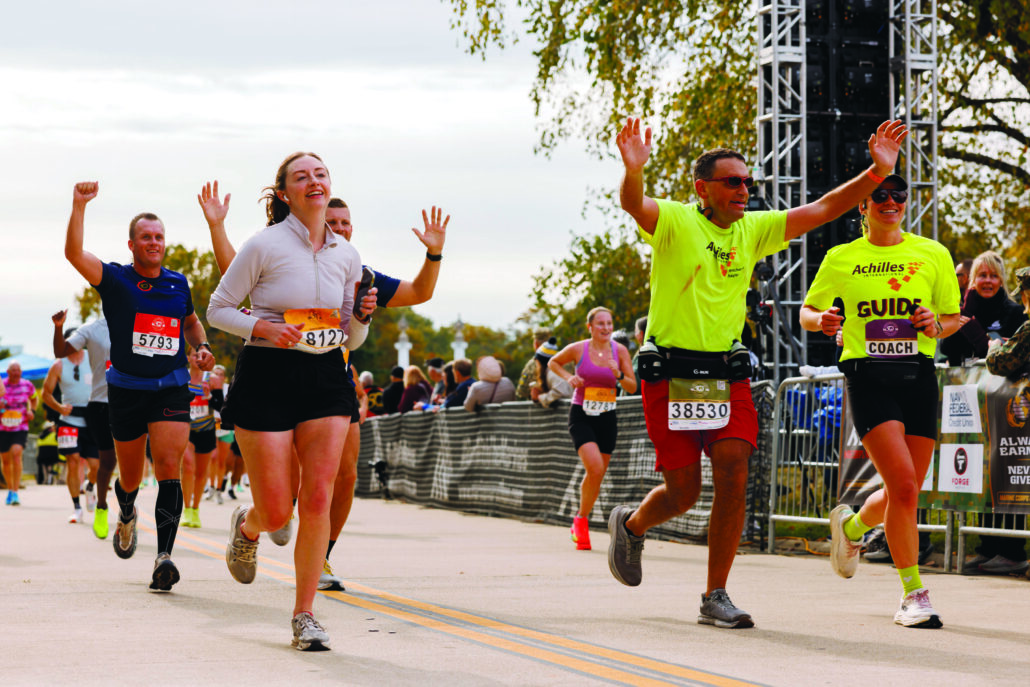
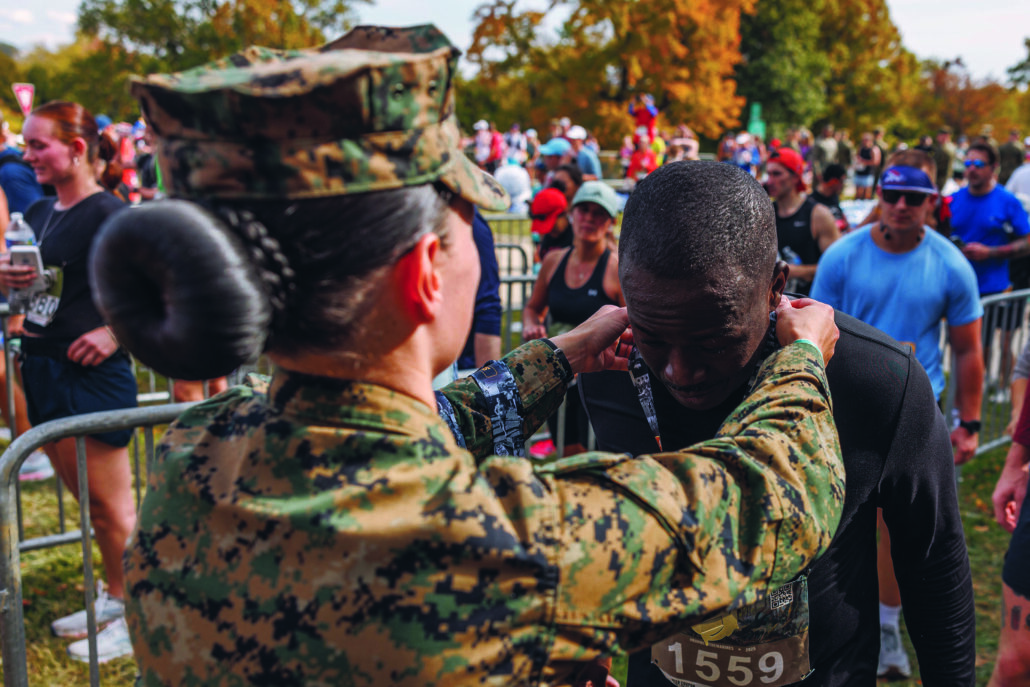
But the Marine Corps Marathon has always been more than just a race; it is inseparable from the Corps itself. It is an event created, organized and staged by Marines. Upon crossing the finish line, every runner is greeted by an active-duty Marine, who places a medal around their neck and congratulates them on an outstanding run. Marines run the race, too, as do the sons and daughters of Marines, to honor the service and sacrifice of their parents.
There is only one Marine Corps Marathon, and there is no other race like it in the world.
This year’s Marine Corps Marathon will be held on Oct. 25, and to honor the crucial role that the Corps has played in the 250 years of our nation’s history, its organizers have created a way for participants to engage with the past while taking on the challenges of the course.
On the official race app, participants and fans can find a history of the Marine Corps in seven significant engagements, which are linked with seven iconic moments on the race course. These Points Of Remembrance will serve to both remind runners of and educate them on the debt of gratitude that we all owe to the Corps—and offer them an opportunity to draw inspiration from those battles as they face their own challenges on race day.
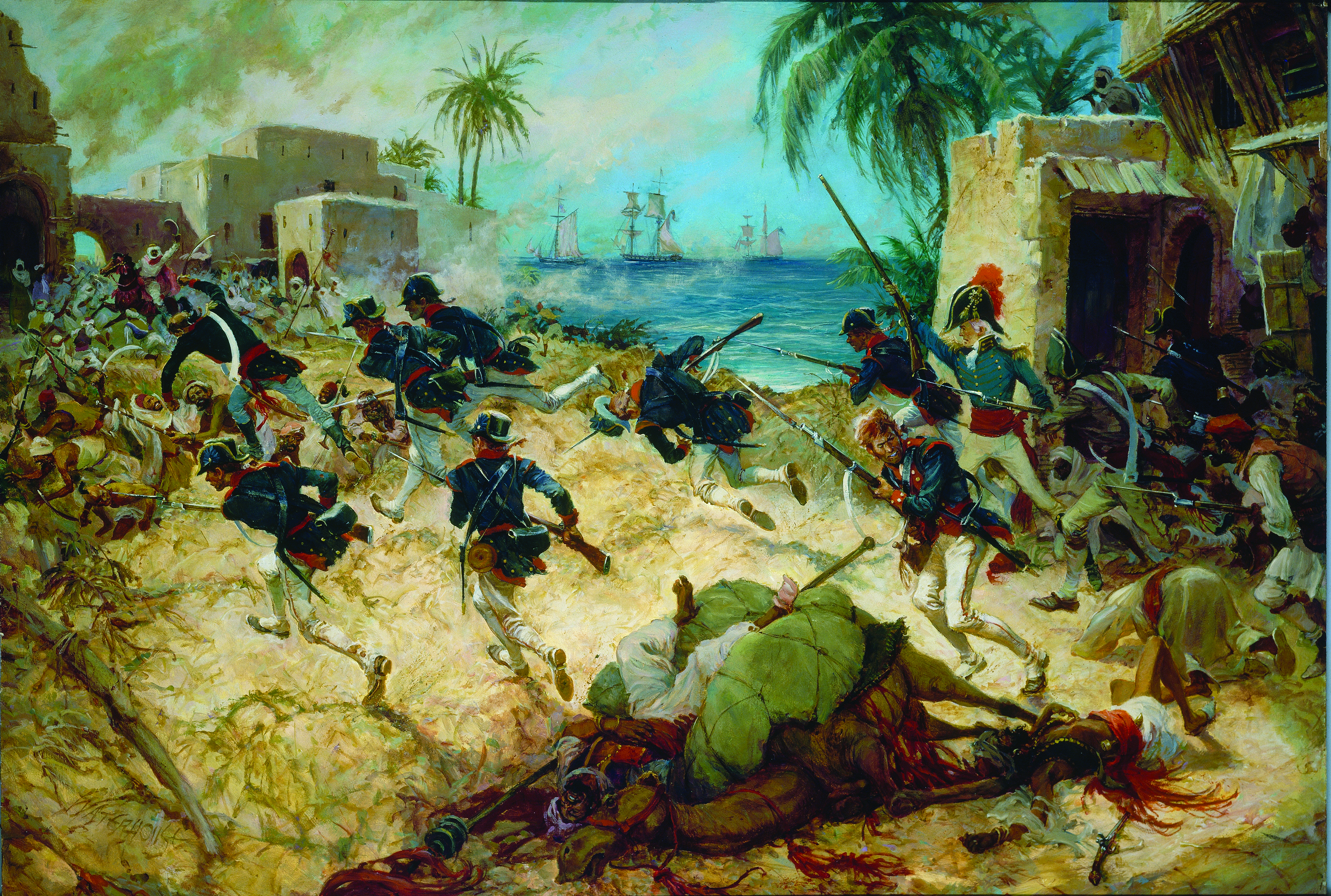
Battle of Derna, Libya, 1805
In the early 19th century, the United States faced the challenges of piracy, the kidnapping of sailors and protecting its interests abroad. It was uncertain whether the newborn United States would be able to rise to the moment and establish itself on the world stage.
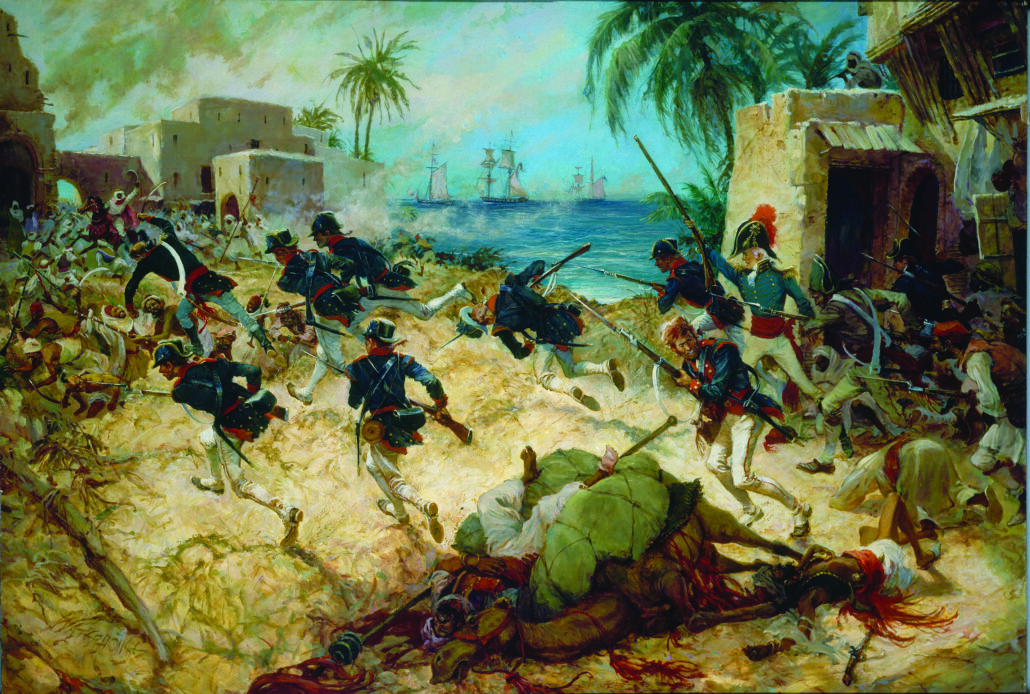
In 1804, President Thomas Jefferson decided to take action. He hoped to solve all of those problems by taking sides in a power struggle for the throne of Tripoli, located in modern-day Libya. He dispatched a small U.S. squadron of fighting ships to support a force of 400 Arab and Greek mercenaries, under the command of First Lieutenant Presley O’Bannon and seven U.S. Marines.
O’Bannon and the naval agent for the Barbary Regencies, William Eaton, landed their force in Alexandria, Egypt, and marched 521 grueling miles through the desert to attack the city of Derna. Along the way, O’Bannon had to quell mutinies and maintain order in his force. Despite his limited resources and facing heavy enemy fire, he captured Derna, arranged the release of the Sailors being held prisoner and restored a former ruler to the throne.
When, on April 27, O’Bannon personally raised the flag over the harbor fortress, it marked not just the end of the first U.S. battle on foreign territory but also the first U.S. foreign military victory. This early engagement established the Marines’ reputation for resilience and tenacity and is immortalized in “The Marines’ Hymn” with the reference to “the shores of Tripoli.”
Langston Boulevard, MCM Mile 2
After crossing the marathon start line adjacent to Arlington National Cemetery, runners head north on Route 110 and then west on Langston Boulevard. Approaching mile 2 of the race, they have to climb a series of rolling hills. Runners can use this challenge to test their resolve and grit and set a precedent for what is to come, remembering those Marines centuries before them who paved the way for the future Corps.
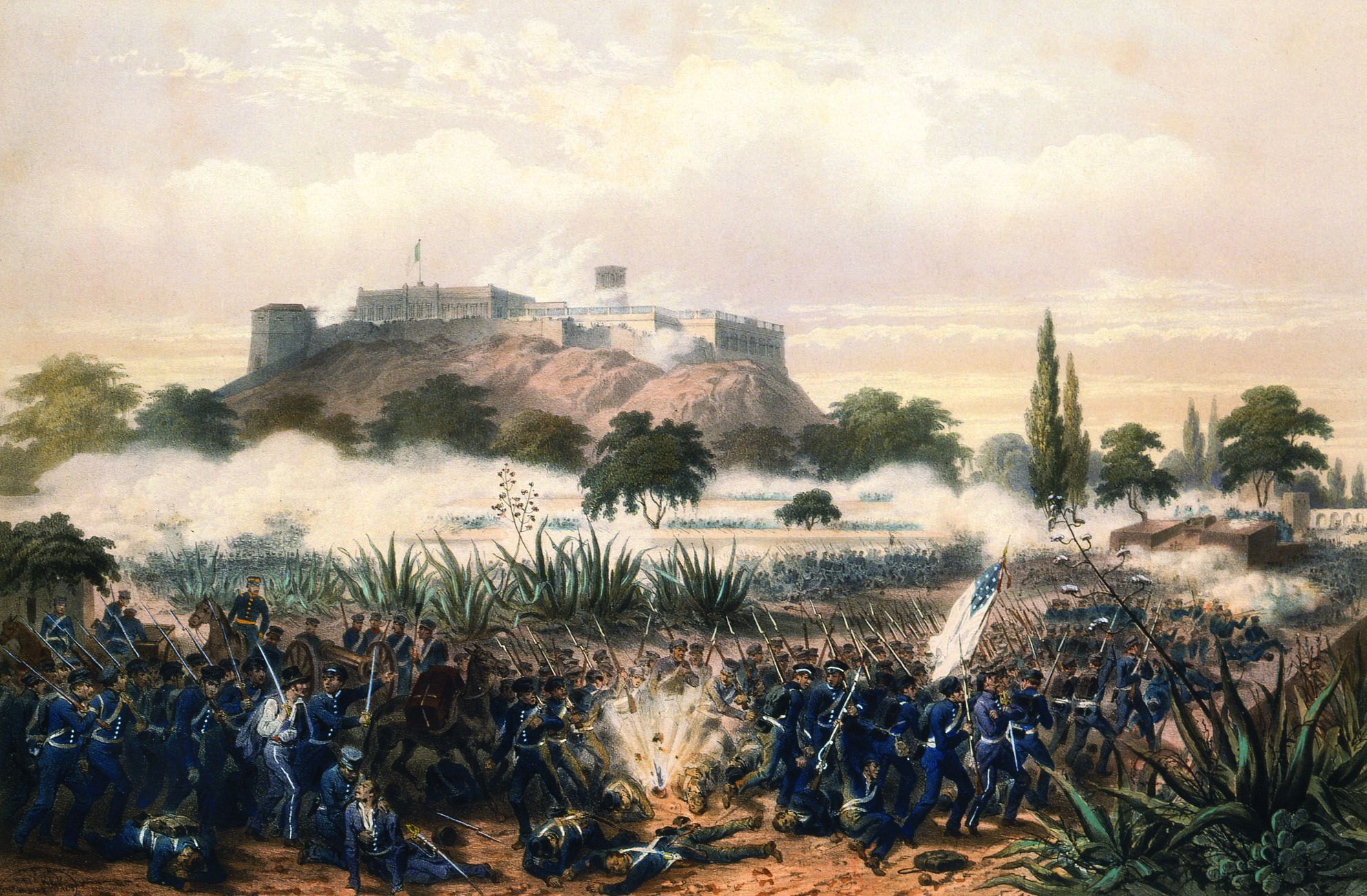
Battle of Chapultepec, Mexico, 1847
In March of 1845, the United States annexed the territory of Texas. In December of that year, it became the 28th state. A border dispute quickly developed between the United States and Mexico, with Mexico maintaining that the boundary between the two countries was at the Nueces River, while the United States claimed that it was farther south, along the Rio Grande.
Over the following year, the countries tried to settle their differences through negotiation, with President James Polk offering to buy the territory. Mexico refused the offer. In response, President Polk ordered General Zachary Taylor to move his forces south of the Nueces River. Mexican cavalry attacked Taylor, killing 11 U.S. soldiers and capturing 52. On May 13, 1846, the United States declared war on Mexico.
A force of some 7,200, including about 400 Marines, landed in Mexico and moved inland to attack Mexico City. Both sides knew that the key to the city was Chapultepec Castle. It was the site of a military academy, sitting on top of a 200-foot tall hill and surrounded by a wall. It was defended by a force of about 832 soldiers and seven cannons.
On Sept. 13, 1847, a segment of the U.S. force, including 40 Marines, fought their way up the hill and attacked the castle walls. They suffered 90% casualties—among the dead was Major Levi Twiggs, who led the Marine assault. Nevertheless, they took the castle. It was a turning point in the war, as the Americans then quickly captured Mexico City. The war ended in February of 1848 with Mexico ceding territory in exchange for $15 million.
The valor of the Marines who fought at Chapultepec became a template for the Marines to follow, and their actions were also immortalized in “The Marines’ Hymn,” in the line, “From the Halls of Montezuma.”
George Washington Parkway, Mile 3
This is one of the most beautiful miles in all of racing, rolling mostly downhill on a tree-lined roadway adjacent to the Potomac River, in view of the historic campus of Georgetown University. Runners here can reflect on the Marines who fought uphill toward Chapultepec and take a moment of gratitude for those memorialized in the Hymn.
Battle of Belleau Wood, France, 1918
Arriving in Belleau two years into World War I, the Marines faced a fierce struggle against an entrenched German army. Taking the lead in a mixed force including British and French elements, the Marines fought back against repeated German assaults and held their ground as the fighting devolved into brutal close-range combat. The bravery and resolve of the Marines in the thickly wooded forest earned them the respect of the Germans, who nicknamed them “teufelshunde”—the Devil Dogs—a nickname that the Marines proudly adopted.
By halting the German advance to Paris, the Marines shifted the tide of the war and earned their reputation as fierce warriors. Afterwards, the French would call Belleau Wood “Bois de la Brigade de Marine”—the Wood of the Marine Brigade.
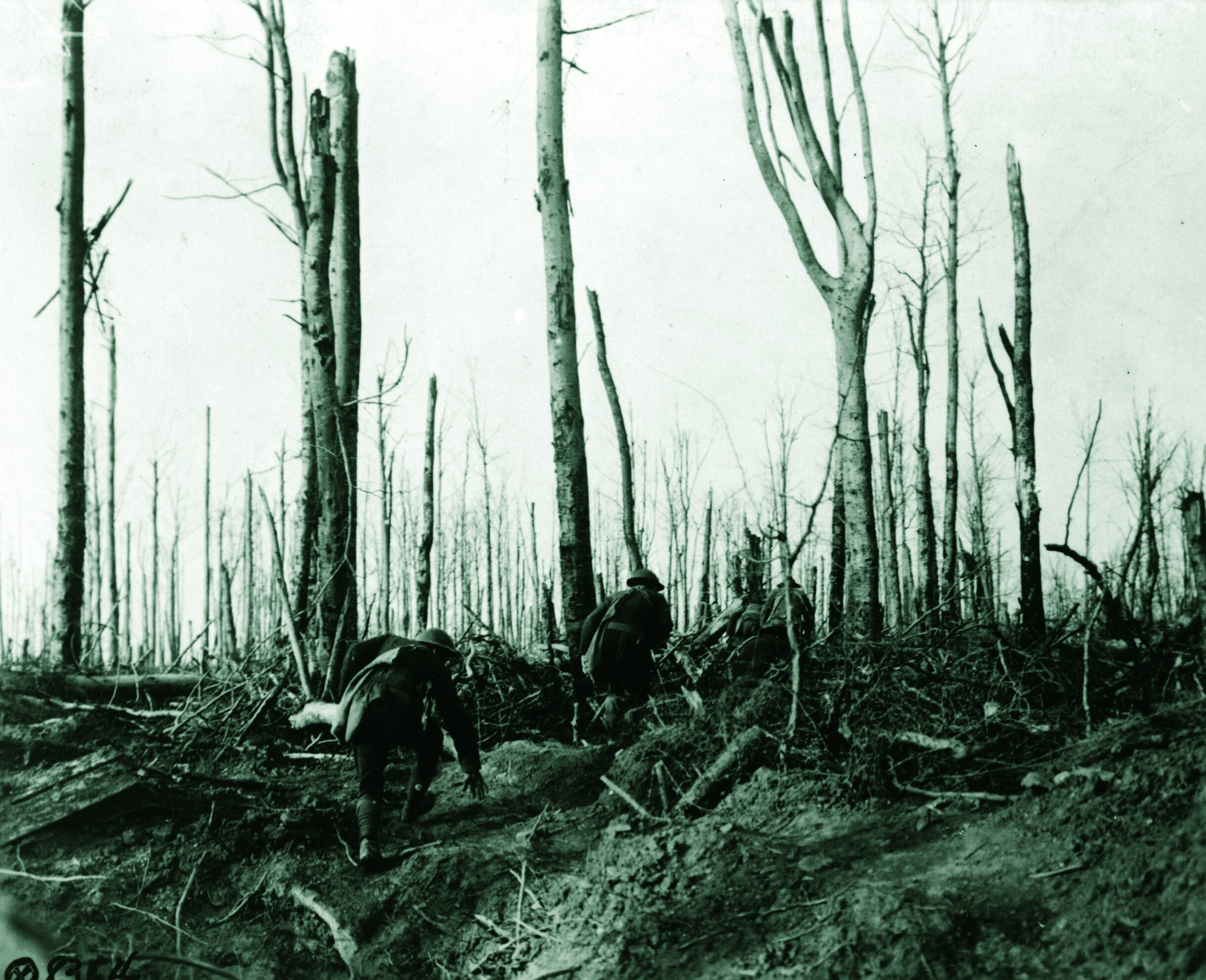
George Washington Parkway Exit Ramp, Mile 4
The climb from the George Washington Parkway up to Key Bridge marks the first major challenge of the race. It’s a short but steep hill, testing the mettle and resolve of every runner. Here is where every would-be marathoner must channel their inner Devil Dog and fight for every inch, keeping in mind the Marines of the past who bestowed on them that name.
Battle For Guadacanal, Solomon Islands, 1942
After suffering devastating losses in the sneak attack on Pearl Harbor, American forces lost island after island in the Pacific, as the Japanese war machine ground relentlessly forward. By 1942, however, the Americans pushed back, beginning their Pacific offensive.
Key to their plan was the establishment of a base on the island of Guadalcanal. The achievement of that objective was only the beginning of the challenge, however, as the Japanese launched a series of counterattacks, including assaults at Matanikau River, the airfield and Koi Point. Over the course of six months, the Marines suffered heavy casualties but held firm. Their tenacity, courage and sacrifice was key to the eventual U.S. victory in the Pacific.
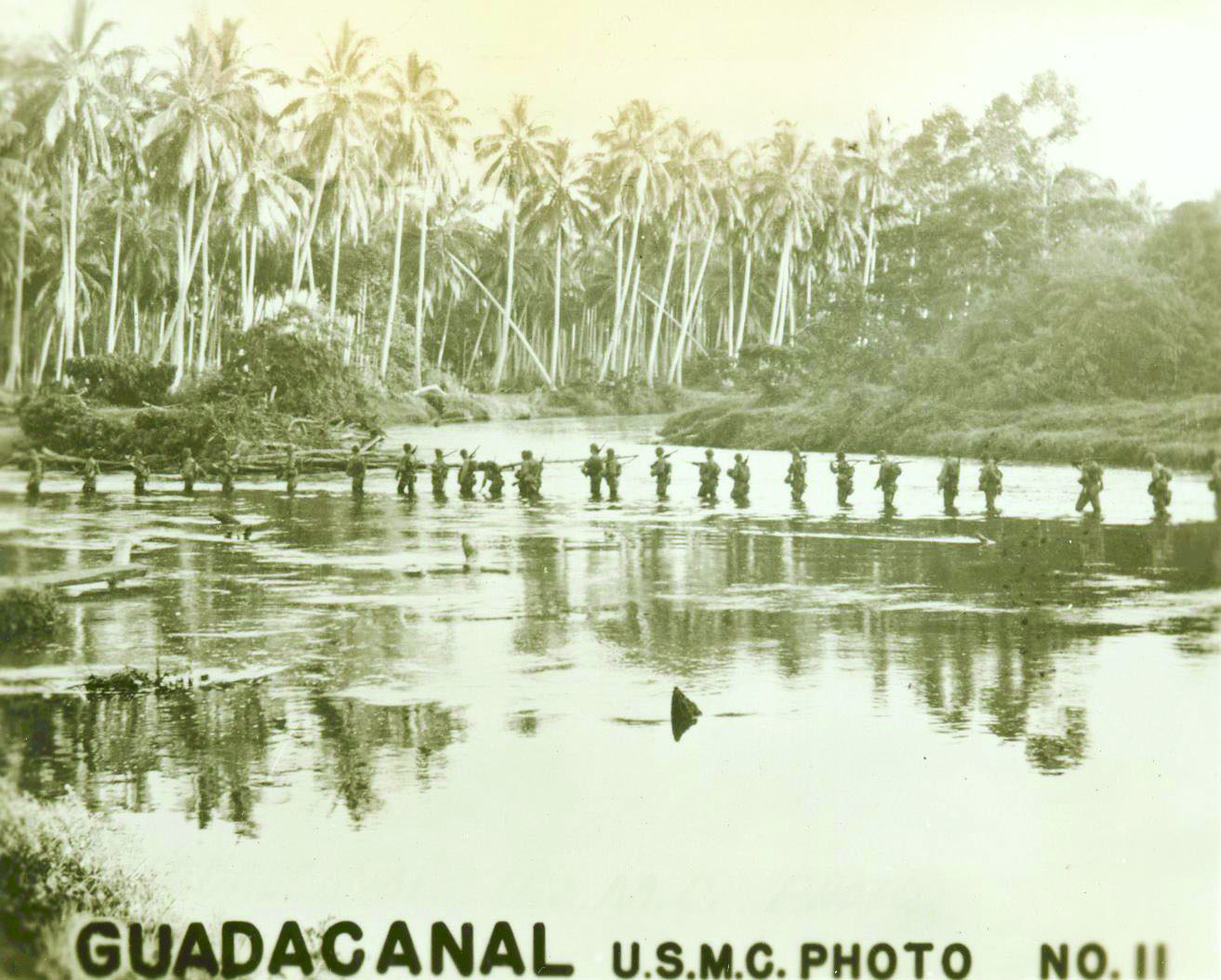
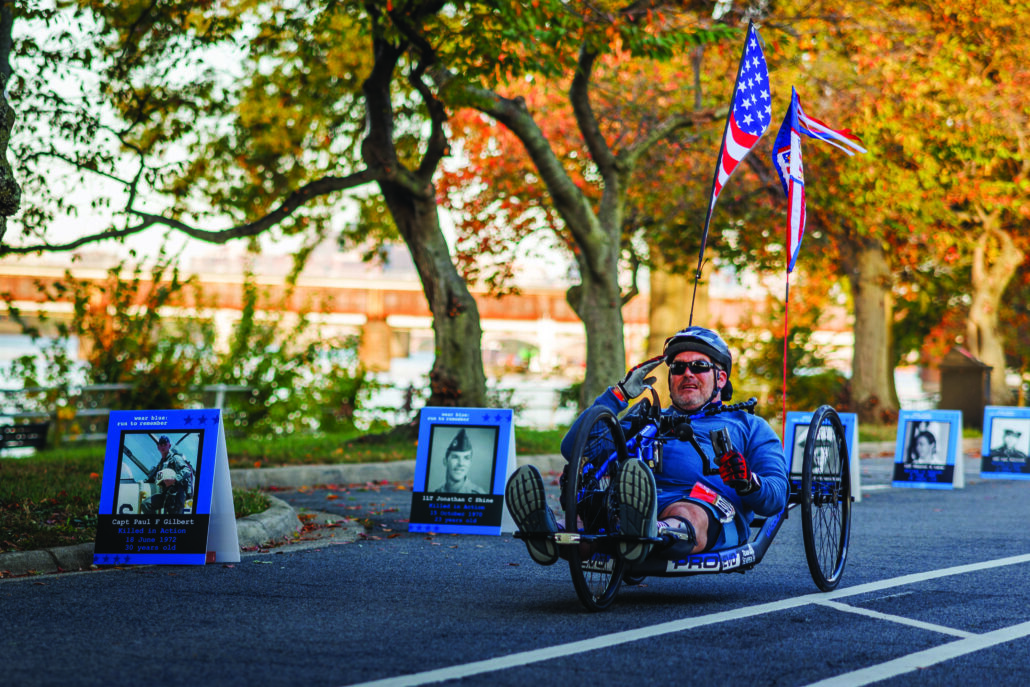
“The Blue Mile,” Mile 12
At this point in the race, runners loop Hains Point, a peninsula whose tip marks the confluence of the Anacostia and Potomac Rivers. On race day, this quiet stretch of roadway will be lined with “Faces of the Fallen” posters, each of which displays the photograph, name and background of a fallen Marine. Volunteers man the Blue Mile holding full-sized American flags to honor our American heroes. Here, runners can contemplate those who sacrificed their lives for our nation at Guadalcanal and elsewhere, and find the strength and will to go on.
Battle of Chosin Reservoir, Korea, 1950
Surrounded and outnumbered by the Chinese People’s Volunteer Army in the middle of a bitterly cold winter, the 1st Marine Division faced a devastating defeat. Fighting against these obstacles and overwhelming odds, the Marines suffered heavy losses but fought their way out of the encirclement and escaped the trap.
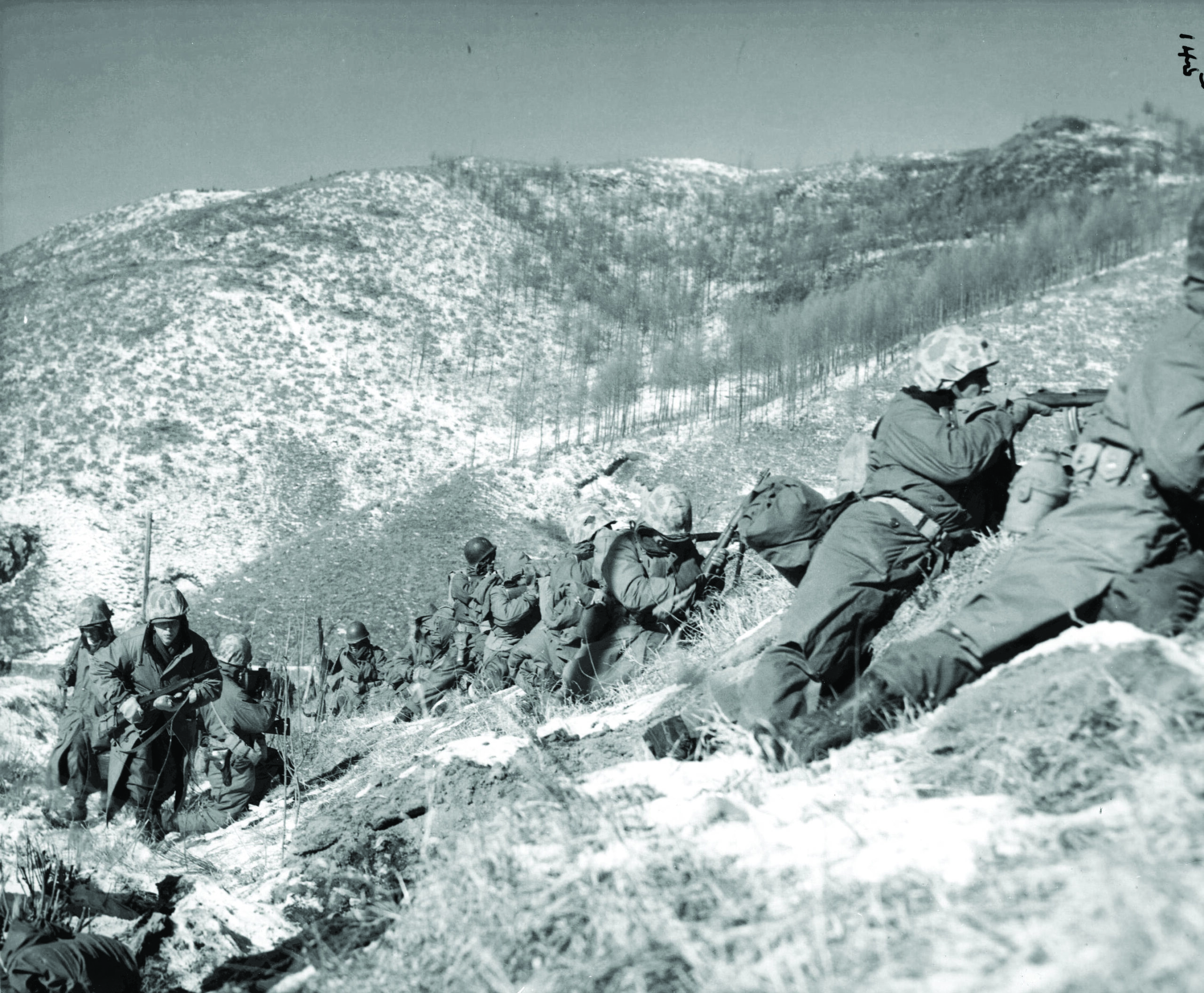
Legendary Marine Colonel Lewis B. “Chesty” Puller received his fifth Navy Cross for his actions in this battle. Reviewing the situation, he said, “We’ve been looking for the enemy for several days now. We’ve finally found them. We’re surrounded. That simplifies our problem of finding these people and killing them.” Perhaps nothing better sums up the Marine Corps’ determination to see every challenge as an opportunity to succeed, no matter the odds.
The 14th Street Bridge, Mile 20
In every marathon, runners risk hitting the legendary “wall.” It’s the point at which energy reserves are drained and legs seem to turn to cement. This usually occurs somewhere around mile 20. Dedicated training in the months before the race and careful adherence to a sound plan on race day can help runners avoid falling victim to the wall. However, even elite athletes feel the mental and physical strain of the race by this point.
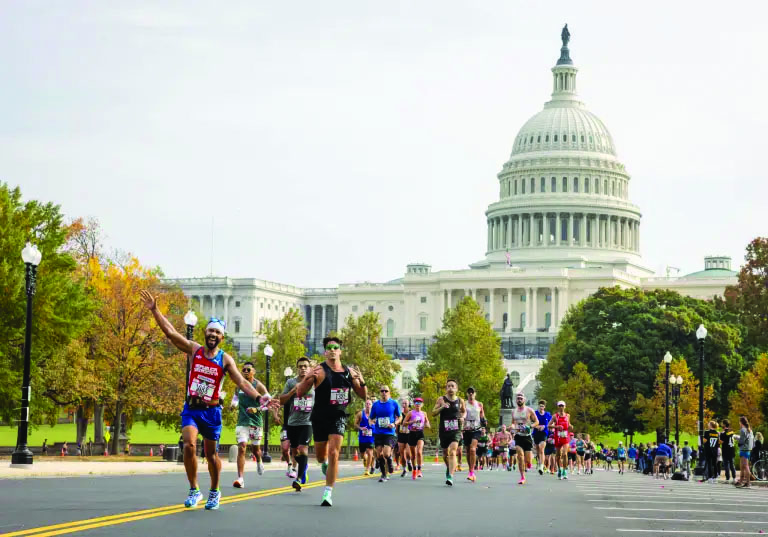
Runners in the Marine Corps Marathon face more than just the dreaded wall at mile 20; it is here that they cross a bridge from Washington, D.C., back to Virginia. This bridge is not just a hill; it’s also a wide-open roadway. They can be lashed by rain and wind, or baked by a blazing sun. For this reason, veteran marathoners have been known to refer to this bridge as “The Anvil of God.”
This is the point in the race when runners should find a way to fight on, even as their bodies beg them to stop. Here, they can recall the winter at Chosin Reservoir and be reminded of the body’s capabilities. If those Marines could persevere through true suffering, how much more can a runner press on.
Battle of Hue City, Vietnam, 1968
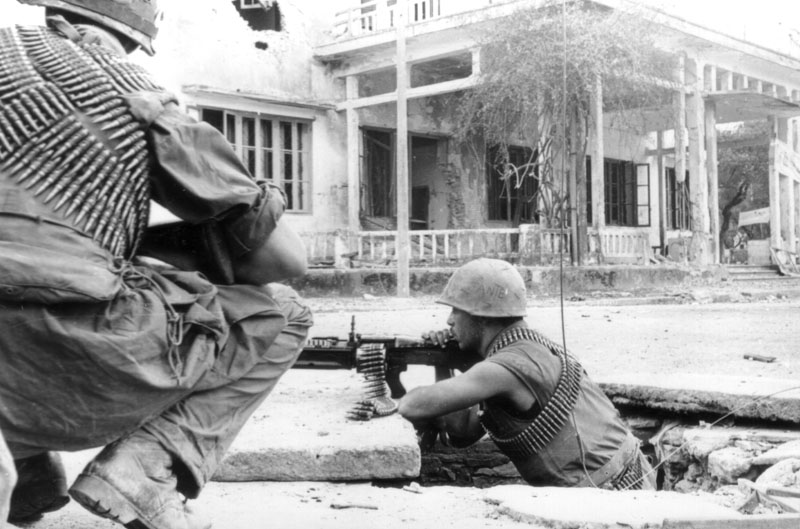
Perhaps nothing in the history of the Marine Corps showcases their adaptability more than the month-long siege of this Vietnamese city. Instead of a pitched battle against an opposing army, the Marines faced an entrenched enemy in an urban battlefield. They had to shift from jungle warfare to a new kind of urban fighting. They overcame booby traps and a fortified enemy in house-to-house combat. Although they suffered heavy losses, the Marines captured the city.
Route 110, Mile 25
This is the moment for which no amount of training can adequately prepare the runners. They have now gone farther than they ever did in training. They have conquered the hills and the bridges and crashed through the “wall.” They are only a mile away from glory. And yet their legs may be shot and their energy gone. Many runners move forward on willpower alone, going step to step, and can remember the Marines in Hue City who fought house to house, certain that victory would follow if they just kept moving forward.
Battle of Iwo Jima, Japan, 1945
So far, we’ve listed these key Marine Corps engagements in chronological order, but here we reach back to World War II. There is perhaps no image more identified in the public’s mind with the Marine Corps than the famous photograph showing the raising of the American flag at the summit of Iwo Jima’s Mount Suribachi.
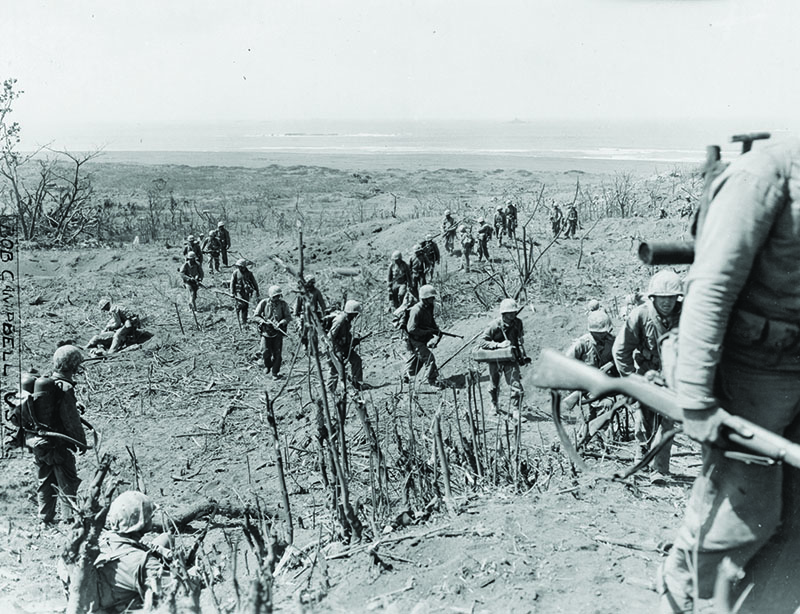
Iwo Jima is a small volcanic island located just 660 miles south of Tokyo. Its proximity to the Japanese capital raised the stakes of the battle for both sides and led to some of the fiercest fighting of the war.
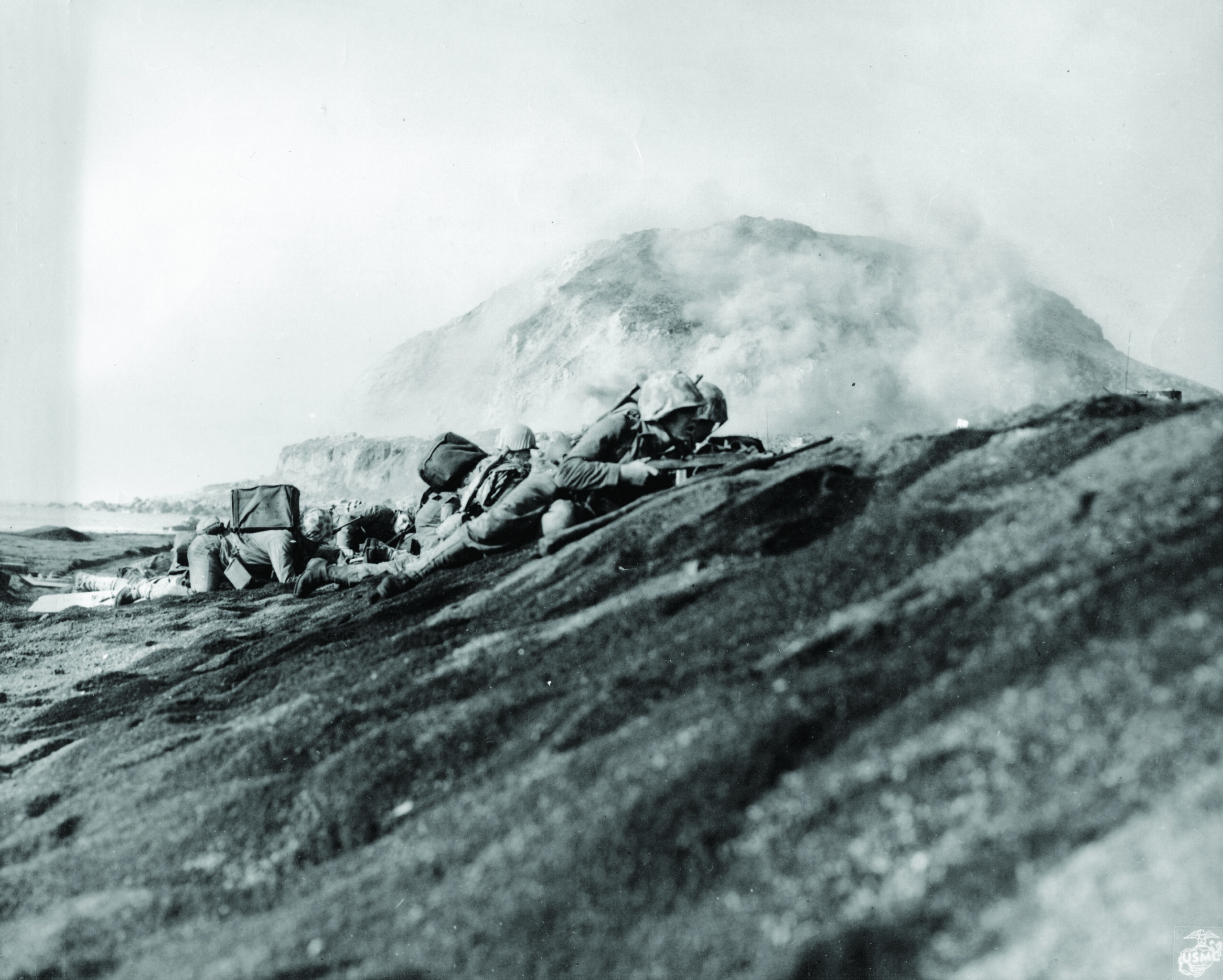
Facing a Japanese strategy that employed a web of tunnels and fortified positions, thousands of Marines were killed or wounded, but they upheld their tradition of resourcefulness and determination and pressed forward through over a month of close-quarter combat until they captured the island. As Fleet Admiral Chester Nimitz said afterwards, “Among the men who fought on Iwo Jima, uncommon valor was a common virtue.”
Marine Corps Marathon Finish Line, Mile 26.2
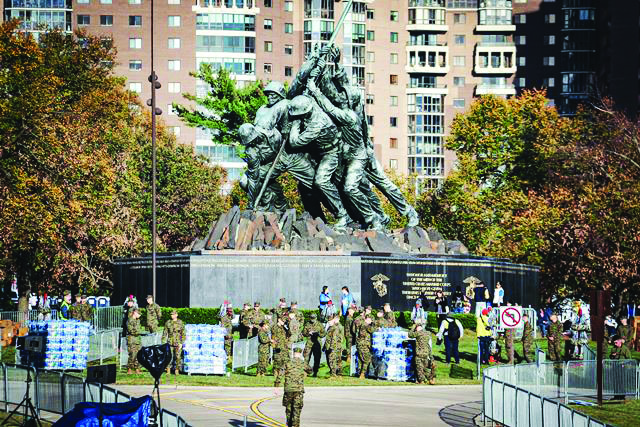
Upon crossing the finish line, runners receive their medal and are congratulated, then make their way toward the Marine Corps War Memorial, where the photograph of the Marines planting the American flag at Iwo Jima has been immortalized in a sculpture.
For the runners, their journey is now complete, and they have shown the same virtues that embody the Marine Corps ethos: resiliency, determination, courage, resourcefulness and grit. They have fought against the challenges of the race course, and the negative voices in their own minds, and have persevered.
As the runners gaze up at the larger-than-life Marines frozen in place at the memorial, perhaps they can appreciate that while the marathon challenge was a sporting one, the sacrifices made by Marines to secure and defend our freedom was a life-and-death struggle, one that continues long after the last runner has completed the race.
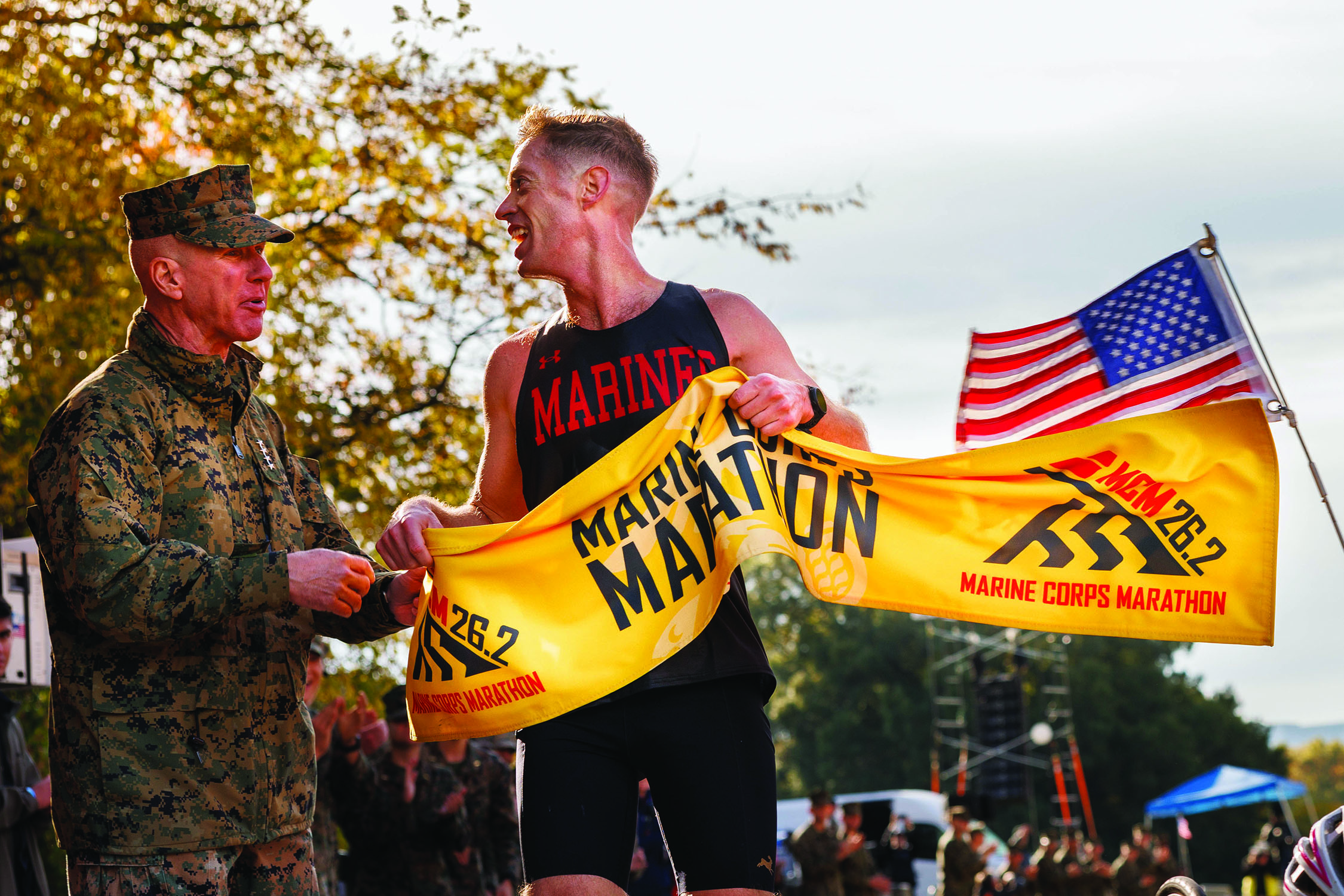
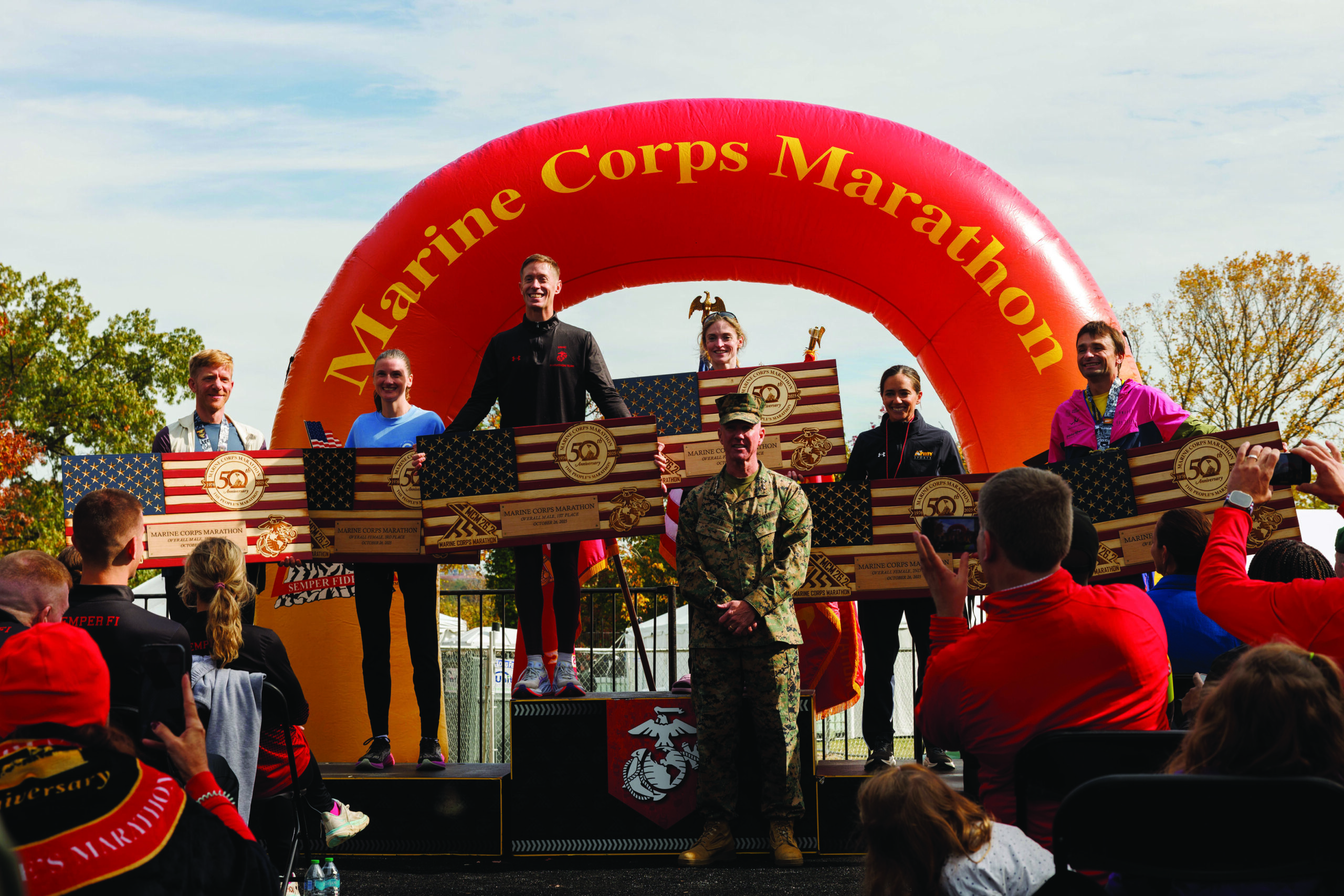
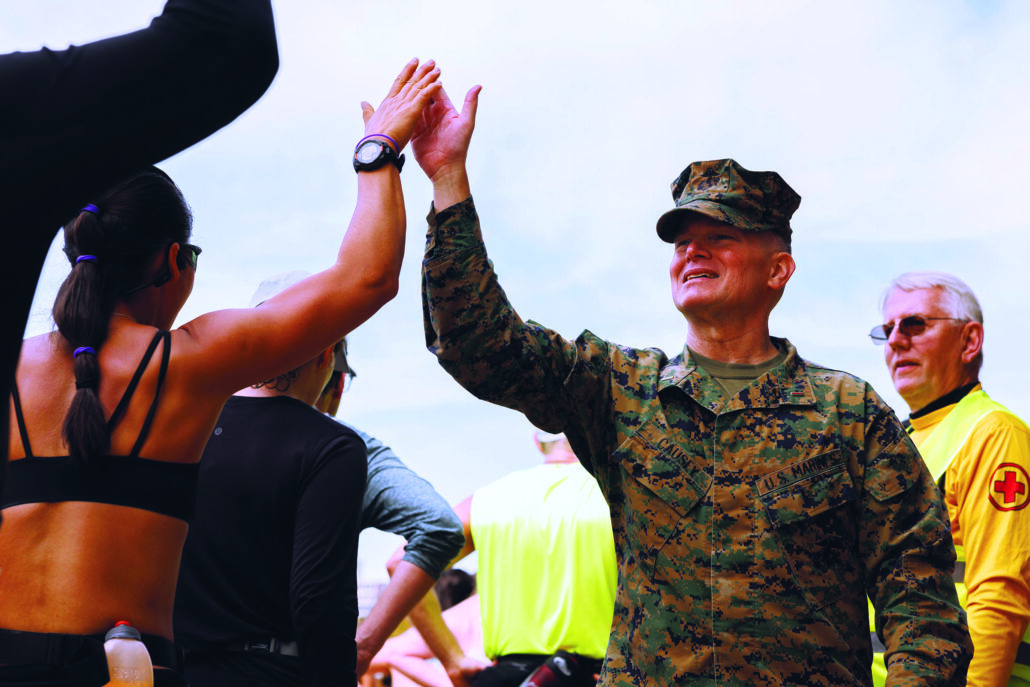
Featured Photo (Top): Marine Corps Commandant Gen Eric M. Smith celebrating with the top three male and female finishers, (left), and welcoming overall winner, Maj Kyle King, across the finish line during the 50th Marine Corps Marathon in Arlington, Va., Oct. 26, 2025. Maj King has been the first to cross the finish line in Arlington three times. For an in-depth conversation with King, listen to the Marine Corps Association’s Scuttlebutt podcast, available on podcast platforms and at www.mca-marines.org/scuttlebutt/. (Photo by Sgt Rowdy Vanskike, USMC)
About the Author
Jeff Horowitz ran his first marathon, the Marine Corps Marathon, in 1987, and fell in love with running. Since then, he’s completed 205 marathons, including 16 MCMs, and has completed at least one marathon in every state and on six continents, including Antarctica. Formerly a practicing attorney, Jeff quit law to share his passion for fitness. He is a certified personal trainer, endurance coach, and author. He lives with his wife and son in Washington, D.C.
Enjoy this article?
Check out these similar Leatherneck and Scuttlebutt features:
To the Shores of Tripoli
Leatherneck
December 2024
By: Mike Miller
The Power of Positivity
Leatherneck
December 2024
By: Kipp Hanley
1/27 on Iwo
Leatherneck
July 2025
By: John A. Butler III