



In Every Clime and Place
By: VariousPosted on November 15, 2026
Australia
MRF-D Marines Employ sUAS
Marines with Marine Rotational Force-Darwin (MRF-D) 26 used multiple organic drone assets for the first time to enhance logistical reach and lethality during exercise Predators Run 26 from July 20 to 27. The exercise took place across the austere, rolling hills of the Townsville Field Training Area in Queensland, Australia.
On July 23, Marines with the logistics combat element of the MRF-D 26 Special Purpose Marine Air-Ground Task Force transported temperature-controlled simulated blood using a tactical resupply unmanned aircraft system, or TRUAS. Working with medical personnel from the Australian Army’s 2nd Brigade, they attached refrigerated blood to the TRUAS and flew it more than 2 kilometers to the task force’s primary medical facility.
“The blood resupply is just one example of how the TRUAS has expanded our logistical reach and capability across distributed operations,” said Captain Hope Islas, commander of Combat Logistics Company Bravo, Combat Logistics Battalion 5, MRF-D 26. “The ease of the drone was even further demonstrated through our interoperability alongside 1st Brigade to seamlessly accomplish this blood transfer.”
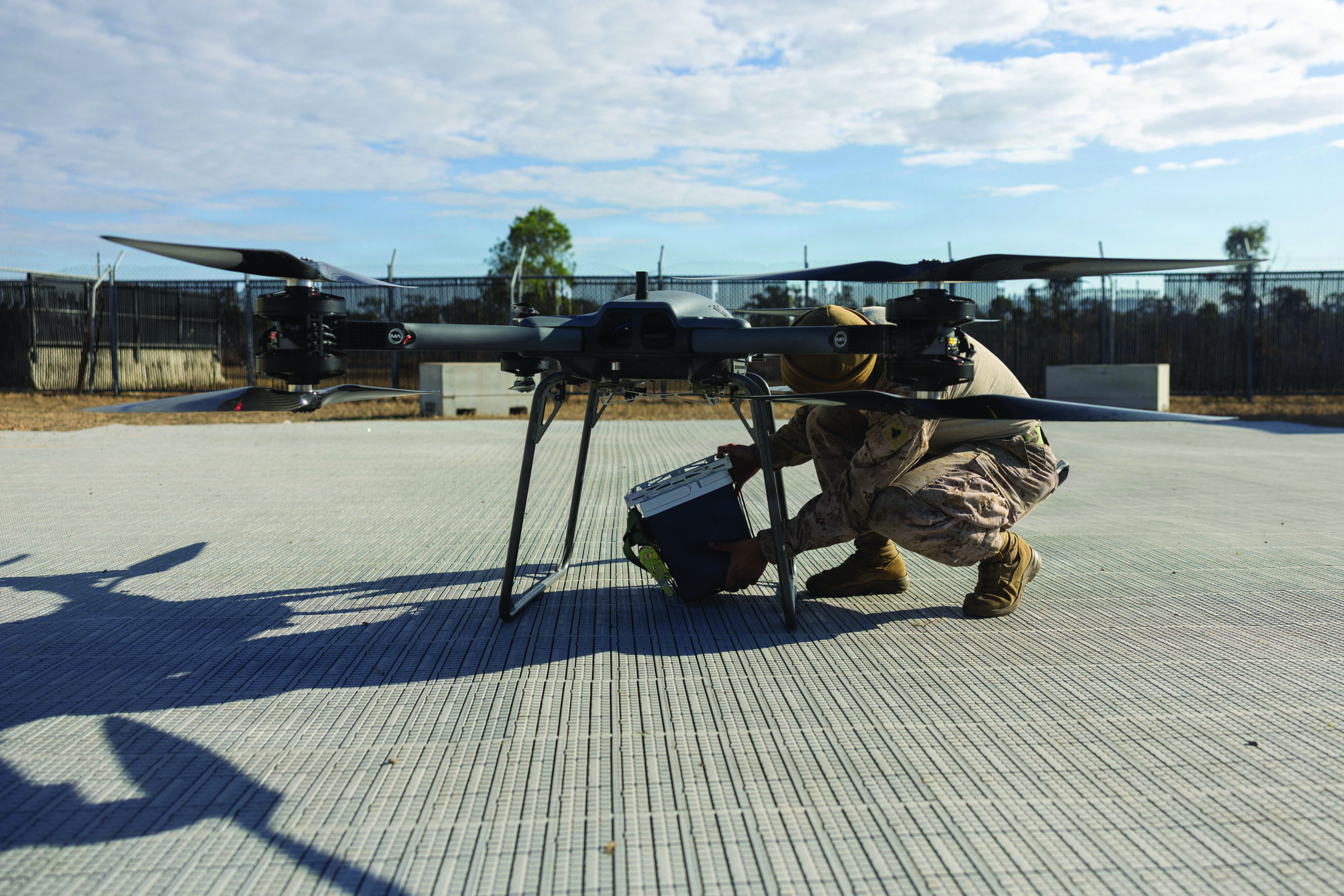
Following the successful blood transfer, the task force employed its first-person-view attack drone during a simulated live-fire platoon attack. The drone team quickly set up and launched two FPV drones, resulting in two successive strikes on simulated, static armored personnel carriers.
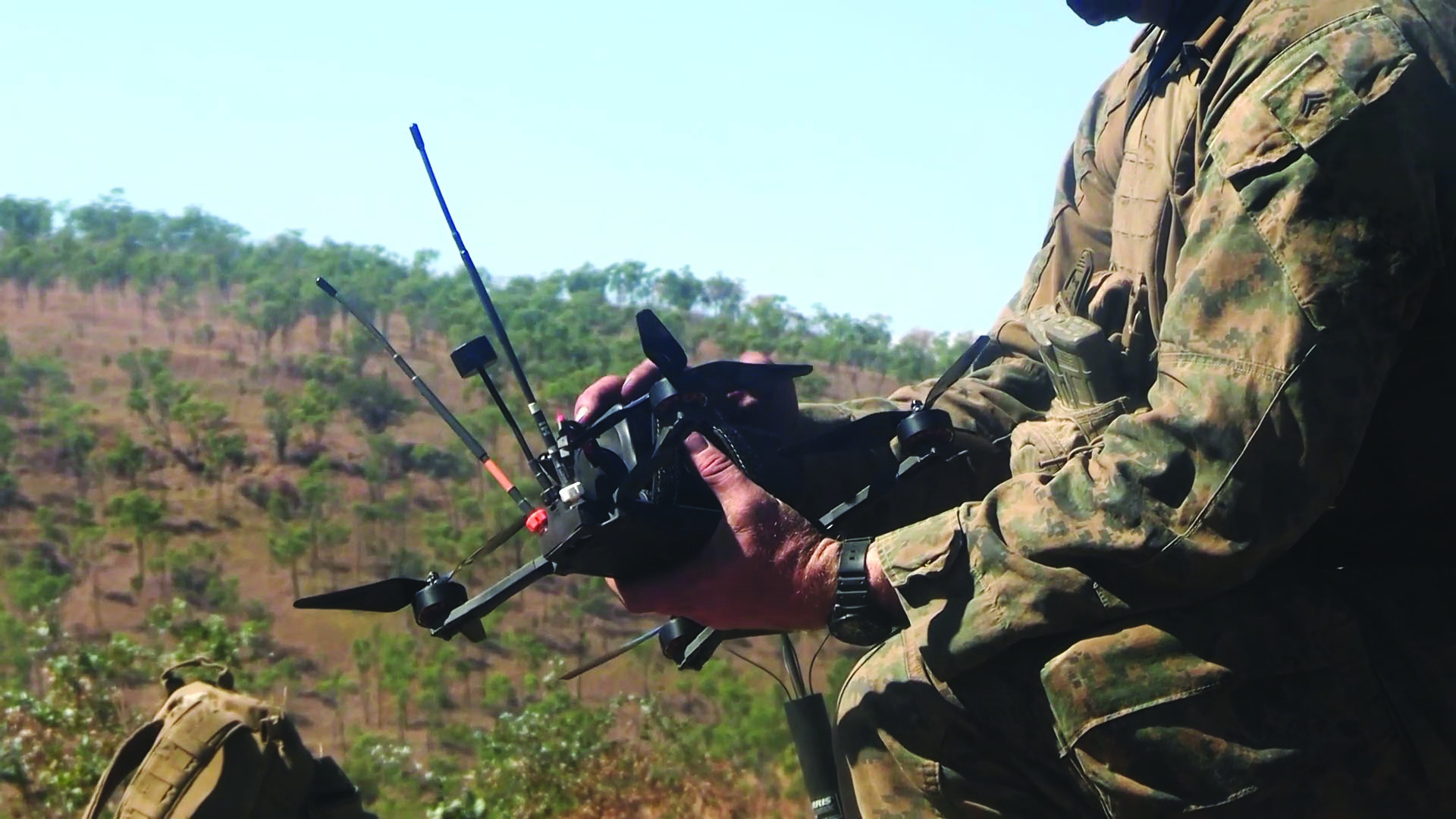
Marines with MRF-D 26 operate a Neros Archer first-person view drone during Exercise Predator’s Run 26 at Townsville Field Training Area in Queensland, Australia, on July 25.
“These small one-way attack drones are not only able to provide reconnaissance but also provide us a great long-range precision fires capabilities,” said 1st Lieutenant Phuong Tran, the drone team’s officer in charge. “The FPV drone is just another asset to put in the hands of our Marines to help them dominate the battlespace.”
Exercise Predator’s Run 26 is a trilateral training event integrating forces from MRF-D 26, the Australian Army’s 1st Brigade, 1st Division, and the Philippine Army’s 1st Brigade Combat Team. It is designed to enhance the combat readiness of regional allies through interoperability.
–Capt Kevin Hicks, USMC
Peru
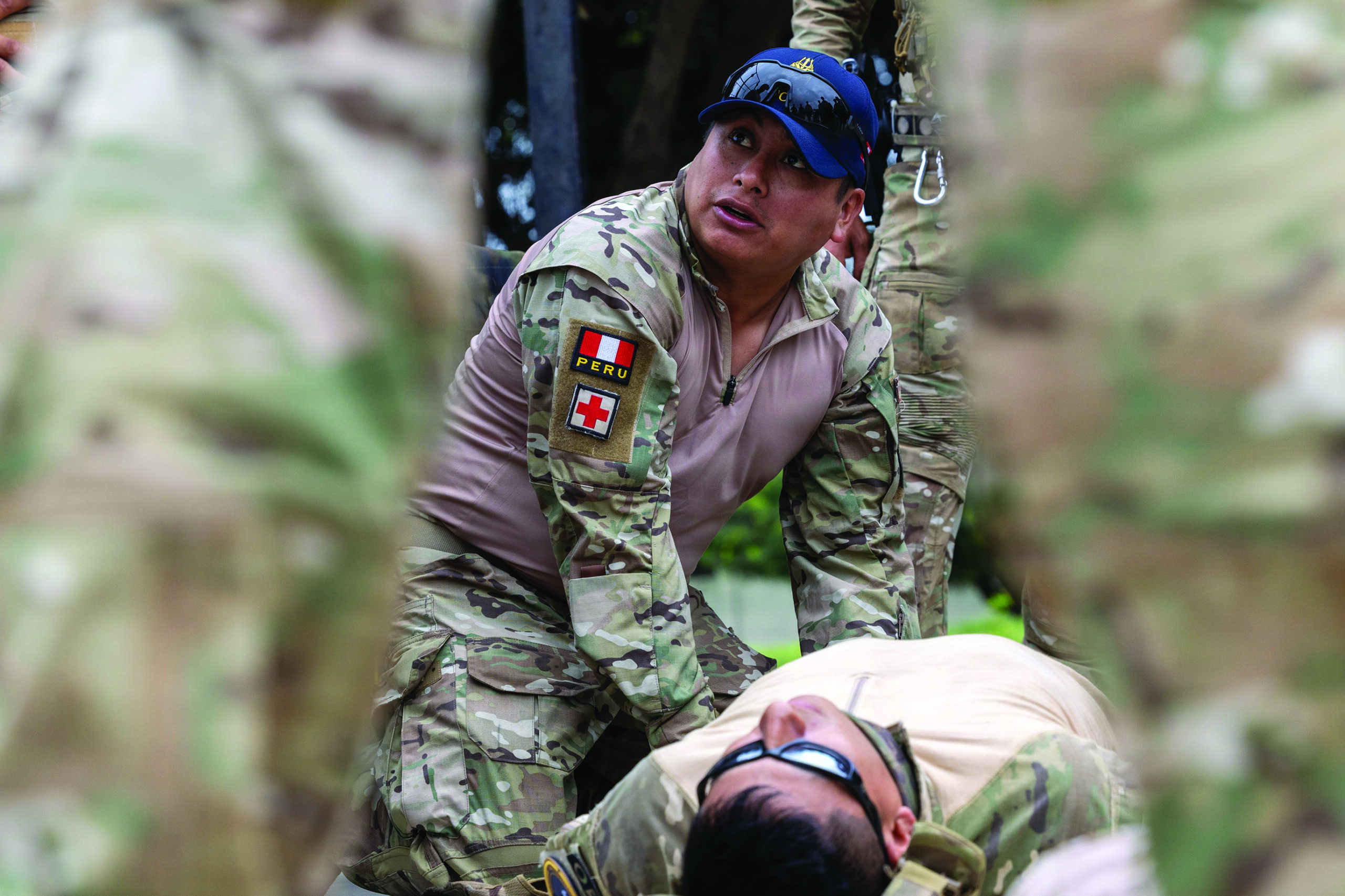
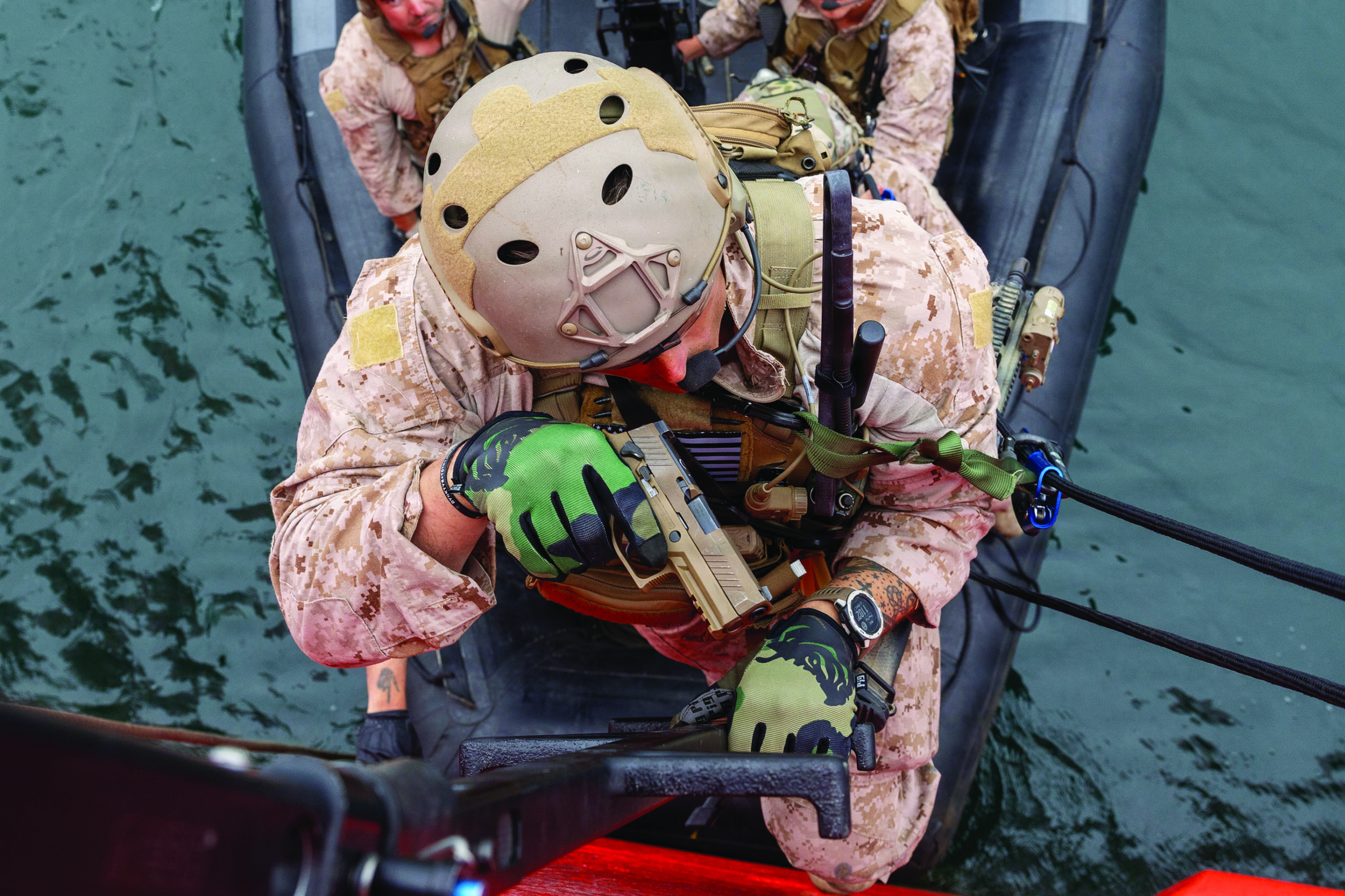
4thMarDiv Marines Train with Partner Nations in Unitas 26
Iwo Jima
Marines Learn History, Study Battle on Iwo Jima
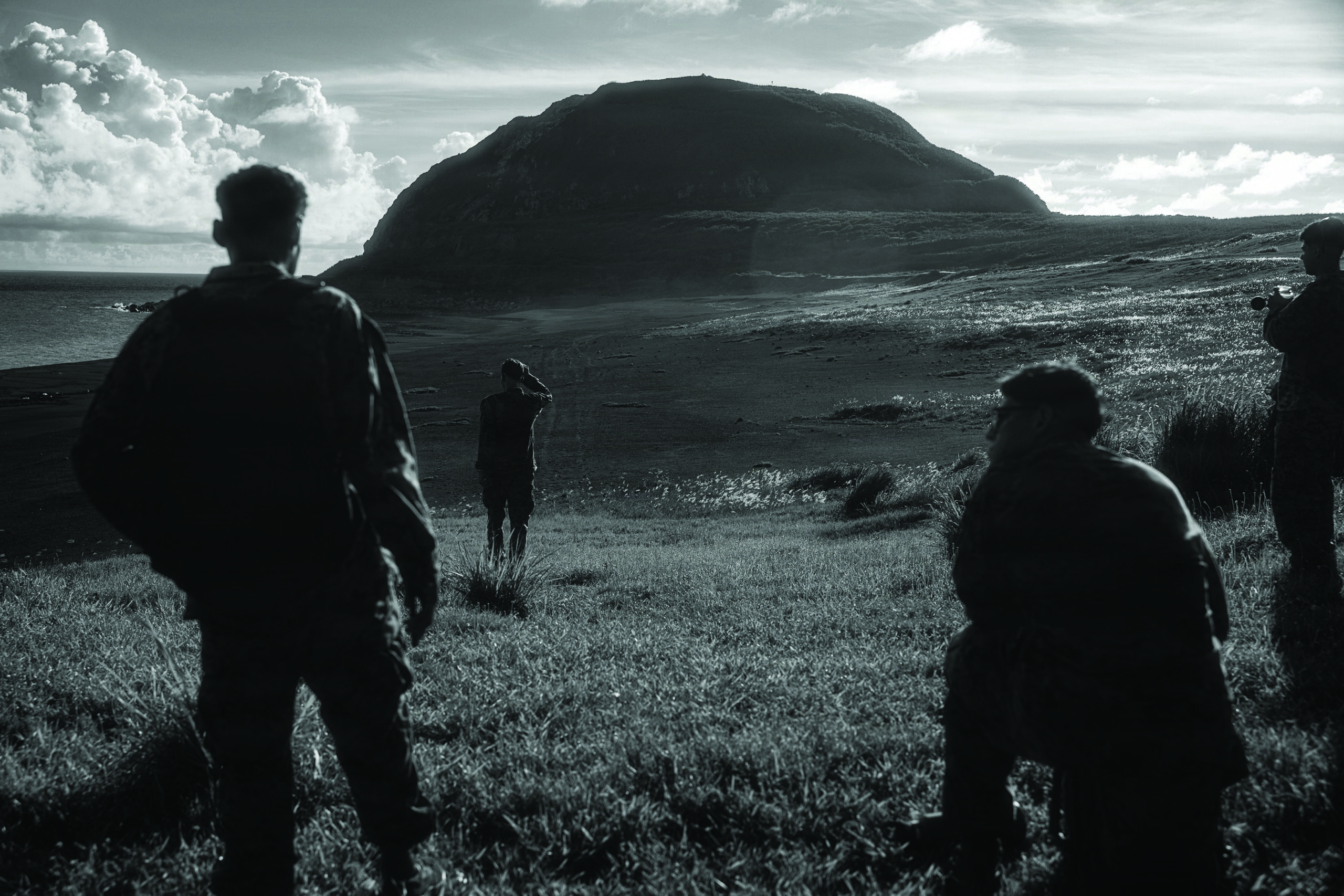
Eighty-one years after the battle of Iwo Jima, a group of Marines from 3rd Marine Division disembarked a C-130 aircraft on Iwo Jima, ready to explore the island and to see exactly where one of the most historic battles in the Marine Corps unfolded.
Iwo Jima is a small Japanese volcanic island, measuring only 21 square kilometers in size. During World War II, the capture of the island became a main objective for U.S. military forces. Taking this island would enable the U.S. to launch air attacks from the airfields located on Iwo Jima. On Feb. 19, 1945, the battle of Iwo Jima began, with Marines from 5th, 4th, and 3rdMarDiv, prepared to claim the island.
“The island was much greener compared to any photos I’ve seen,” said Lance Corporal Thiago Facchini Jr., a 3rd Reconnaissance Battalion Marine with 3rdMarDiv. “I got a more realistic idea of the distances between objectives and what the terrain would have been like for the Marines that fought on Iwo Jima.”
The Marines began the professional military education event by walking down the main path that exists on the small island, eager to take photos and point out any landmarks they came across. The descent from the airfield was steep, as it wound its way down to the black beach where the 1945 amphibious assault was conducted, all while Mount Suribachi, the island’s most prominent landmark, loomed in the distance.
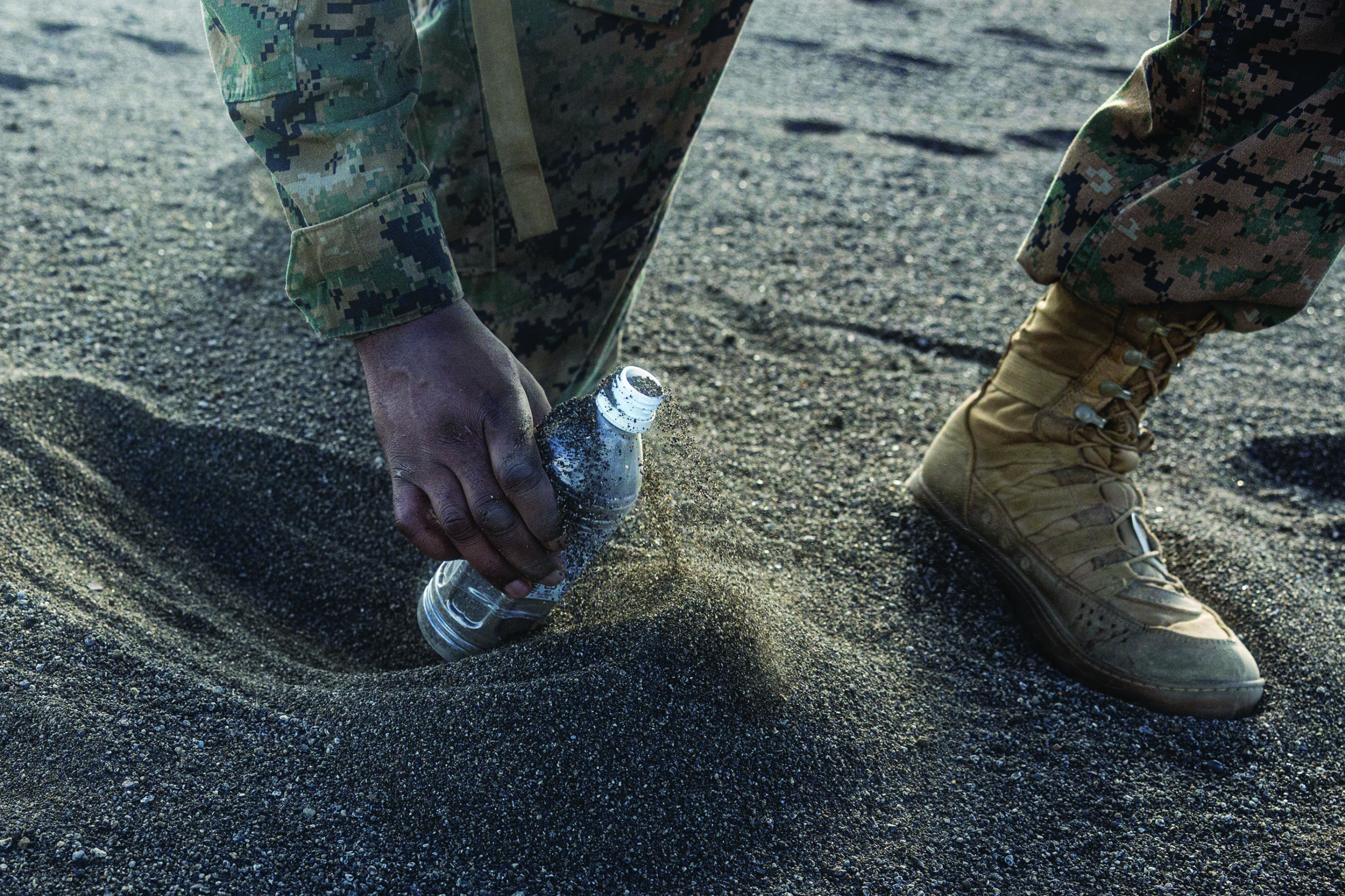
A Marine with 3rdMarDiv collects black sand from the beach during a professional military education opportunity on Iwo Jima, Japan, on Sept. 28. (LCpl Emily Bos, USMC)
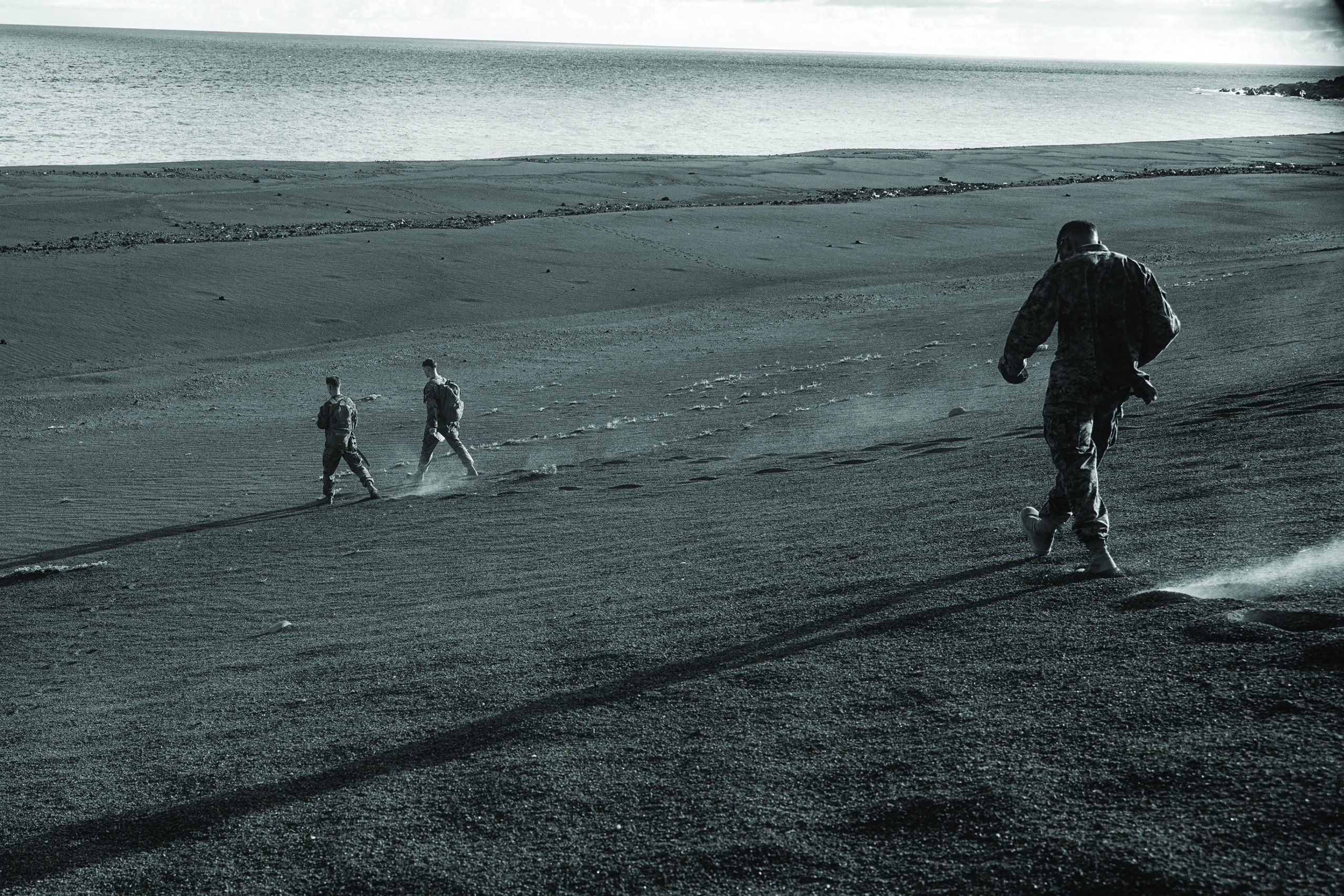
The closer they got to the beach, the darker the ground became. What started out as a paved path, turned into a rough gravel trail, which eventually became a fine, black sand. The vegetation surrounding the trail opened up to make the entire beach visible.
“It’s not a normal beach,” said Facchini. “It’s terraced. There’re levels, and it’s a steep, slippery walk to climb up each one.”
Marines took their time leaving the beach, allowing the gravity of the landmark to sink in. This gave the Marines the opportunity to fully grasp what was experienced by those on Iwo Jima in 1945. Walking through the same terrain and standing in the shadow of Mt. Suribachi gave the Marines participating in the battlefield tour a small glimpse into what the Marines before them may have endured.
“One thing I’ll take with me is the fact that I walked where they walked, and I’ve seen the terrain that they had to move through,” said Facchini. “I’ve read about the things they had to do, and now I’ve seen where they did it. Now, I’ve got to do my best to maintain that fighting spirit throughout my time in the Marine Corps, to honor their legacy.”
The history and the bloodshed that occurred on this small island are just as poignant in 2026 as they were in 1945. The charred remains of artillery exist along the paths that run throughout the island, and the volcanic ash still permeates the beach. Mt. Suribachi remains an enduring relic, having seen the unforgiving violence of the Battle of Iwo Jima, still standing as the next generations of Marines visit the island in remembrance of those who gave the ultimate sacrifice.
–LCpl Emily Bos, USMC
Enjoy this article?
Check out these similar Leatherneck and Scuttlebutt features:

Protecting the Way: Sergeant Major of the Marine Corps Carlos A. Ruiz: A Committed, Engaged Leader of Marines
Leatherneck
April 2024
By: Kyle Watts

A Day in the Life of a MARSOC Critical Skills Operator
Leatherneck
January 2024
By: Mac Caltrider
Attitude and Spirit: Marine Recon Vets Inspire Next Generation
Leatherneck
December 2023
By: Kyle Watts