


Crowdsourced Kill Webs
By: Capt IgnotusPosted on December 15,2025
Article Date 01/01/2026
Human-enabled targeting within the first island chain
Humans are more important than hardware, and every human is a sensor. Focusing on humans as a meansof crowd-sourcing intelligence, by as-sisting them with technology (both old and new), Marine Forces Special Op-erations Command (MARSOC) can fundamentally transform the way we gather intelligence as an organization. Below are three vignettes, all taking place in a futuristic scenario of a cross-strait invasion, that highlight potential use cases of a crowdsourced, versatile, and human-centric platform to find, fix, and finish. All the vignettes incen-tivize intelligence gathering on threat networks and utilize crowdsourcing to both source and verify information. The proposed crowdsourced kill web is persistent and reliable, offering cel-lular capabilities in a contested environ-ment and high frequency (HF) digital capabilities in a denied environment. Overall, a crowdsourced kill webs offer MARSOC the ability to transform the way we do intelligence gathering by turning every human in the contested littoral environment into a thread in the kill web.
Vignette 1: Freedom of the Seas
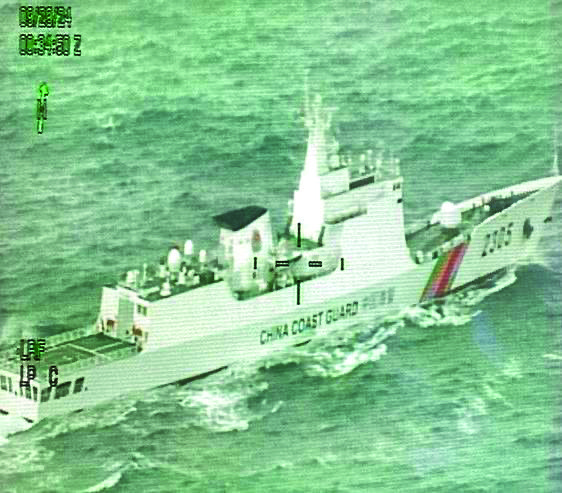
Somewhere in the Philippine Sea: Capt Remy was steaming toward his favorite fishing grounds north of his hometown in Luzon. He had been fishing these grounds since he was a kid, but he had not been back here in a couple of months. Back in the day, he did not have to worry about getting boarded by Chinese Coast Guard vessels, but their patrols of this area had kept Remy away for the past couple of months. Remy was not a political guy, but when someone came after him and affected his ability to make a living and feed his family, it felt like a personal attack. He was struggling to make ends meet, and every time he got pushed off the fishing grounds, all he could think about was the sunk cost going down the drain. Last week, his buddy showed him this app on his phone. He said this was a way of making some quick cash out on the boat in case you got run off by anyone while trying to stand up for his fishing rights at the same time. He was not too sure at first, but after a couple of days of mediocre catches, Remy was warming up to the idea of standing up for his fishing grounds, and it did not hurt that he could make a quick buck at the same time. Just then, through a break in the fog, a Chinese Coast Guard vessel appeared, cutting a collision course straight across Remy’s bow. As he changed course to avoid a collision, Capt Remy pulled out his phone and snapped a pic of the Chinese Coast Guard vessel. As the loudspeaker harassed him in broken propaganda, he changed his course for home and resigned himself to another day without a catch. Once he had cleared the vessel, he took out his phone to look at the picture. Remy was done dealing with getting chased off his fishing grounds; he was done coming home without anything to show for it. With bitter resolve, he opened the app and uploaded the picture, filled out a couple of details, and hit the submit button. Remy’s report was quickly validated via AI, and he was rewarded with $50 into his PayPal.
Operations Center: Got another one, Capt Kim said to himself. Reports had been flooding in since his intel fusion cell had launched the crowdsourced intel program earlier this week. Higher (headquarters) did not seem as bought off on the idea as he had initially hoped, but they did grant him and his team two months to beta test it, and he knew that was all the time he needed to show how game-changing this capability would be. As the reports flowed in, Kim and his team assisted the AI program in sorting and grouping the reports as it automatically compiled intel summaries and updated the common operation picture accordingly. Reports came in of varied qualities, but users were incentivized financially to provide as much detail as possible, and once the report was corroborated via other modes of intelligence, they were rewarded.
“I still don’t get why you’re wasting your time with this,” Kim’s coworker, LT Smith, snarled.
“You still don’t get it, do you? We have essentially created a crowdsourced intelligence platform for the entirety of the Pacific. Fishermen, merchant marines, recreational pilots, sailors, everyone that is out there with a smartphone in the littorals is a sensor working for us.” Kim retorted defiantly.
He knew it would work; nobody bought an idea on the first sell. Everybody said it would be too expensive, but unmanned sensors could be expensive too and often less reliable. Drones crashed, sensors broke, and weather caused delays, but humans could persist and prevail.
Petty Officer 1st Class Travis Magee.)
Vignette 2: Return of the Coast Watcher
Two weeks have passed. The People’s Liberation Army (PLA) invaded Taiwan and established a total blockade of the first island chain. In addition to the blockade, PLA Cyberspace Forces eliminated all cellular and satellite services.
Ishigaki Island: On the island of Ishigaki, Henry Smith, an Australian studying abroad, just summited the final step of the Tamatorizaki Observation Platform. This is crazy, Henry said to himself as he set down his backpack and started setting up his kit. Henry’s grandfather was one of the legendary Australian Coast Watchers in the Solomon Islands during World War II. Maybe I’ll get a shoutout in the his-tory books one day too, Henry thought to himself as he finished tuning his five-watt QRP (ham radio speak for “reduced power”) HF radio. He pulled out his old bird-watching binos and focused them on a Chinese warship on the horizon. Henry had flown into Ishigaki about three weeks ago, unaware of the global turmoil mounting in the South China Sea. Cell and satellite services had been nonexistent for at least two weeks; he figured this was pretty serious and he might as well try to make a difference. Luckily, he happened to bring his ham radio equipment along, hoping to get some Summit on the Air contacts from this remote Pacific island during his short vacation. Summit on the Air was an amateur ham radio organization that rewarded people based on their ability to establish “contacts” from remote summits utilizing portable ham radio equipment. As both a ham radio and outdoor enthusiast, Summit on the Air was the perfect hobby for Henry to challenge him both physically and intellectually. Until this moment, he had not realized it also happened to be the best preparation for being a modern-day Coast Watcher out there. He jotted down the description, heading, and estimated speed of the People’s Liberation Army Navy (PLAN) Warship on his notepad and quickly translated the message into Morse, connected his paddle, and started transmitting.
Operations Center: Beeeeep-Beeeeep-Beep-Beep-Beep. GySgt Johnson shot up from his desk and flipped over his coffee as the squawk box in front of him burst to life, beeping out Morse code in a hurried tone. Johnson could hardly contain his joy as he opened SOF-Chat to translate the message. He was not sure if he was more excited about the first intelligence report they had received in days or because of his absurd idea to monitor the ham radio Military Auxiliary Radio System band had actually yielded fruit.
“Sir, you’ve got to get a load of this,” Johnson hollered, motioning to Capt Kim furiously with one hand as he copied down the message with the other.
“This is the gold,” said Kim as he alerted the command operations center, resulting in a flurry of battle drills. Once the strike had been prosecuted, Kim came back over to Johnson and said flatly, “We need more intel, our system hasn’t yielded any reporting since the blockade started, and the cellular networks went down. Is there a way to pair our app with ham radios so we can get back to crowd-sourcing intel and building targeting data?”
“I’m glad you asked, sir. I have been going back and forth with VK7JQP, that’s our boy on Ishigaki, and I think we may have a solution. Unfortunately, not everyone out there has a ham radio kit like our man VK7JQP, but he recommended an existing low-cost commercial-off-the-shelf kit for under $200, pairing a small five-watt QRP HF radio, smartphone, a small solar charger, and a simple set of instructions. The smartphone will be preloaded with our app capable of pulling targeting data from a video of the target and then automatically sending that data in an HF data package through the radio. Sir, if you can get your team to adjust our system to receive reports over HF digitally, we’ll be able to build back the kill web and end this blockade.” Johnson sat back, excited that his ham radio knowledge had finally paid off.
Vignette 3: Contested Littoral Coast Watchers
On the outskirts of Hualien in Taiwan: It was early morning, and the fog was thick along the eastern coast of Taiwan. Weilong walked down the shore with his younger brother, Yi, and looked for a break in the surf where they could cast their lines. The PLA soldiers had not made it to Hualien yet; for now, the mountains protected them. The coast was a different story; the PLAN patrolled there and would harass anyone along the beach, forcing them to fish in the morning fog. Food had grown short in the city, but luckily, Weilong and Yi’s father, who came from a line of indigenous Taiwanese people, taught them at an early age not to rely on the grocery store. As Weilong and Yi walked toward their morning fishing spot, Wei-long spotted a strange box floating in a tide pool. Before he could caution his younger brother to be careful of the foreign object, Yi jumped upon the box, hauled it to the dry sand, and ripped it open. Weilong hurried over and peered inside, reached into his hand, and pulled out a small, cheaply made smartphone, something that looked like an old radio with a string of wire, a small solar char-ger, and an instruction manual. Weilong opened the instruction manual and read the introduction page:
To the People of Taiwan, you have been unjustly occupied, and the United States is here to help. Inside this box is a ham radio, a phone, and a solar power charger. If you follow the simple instructions in this manual, you will be able to fight back and reclaim your homeland in a peaceful manner. All you must do is follow these simple instructions. Every report you send up is a day closer to breaking the blockade and reclaiming your homeland.
Weilong flipped through the other pages and skimmed the instructional graphics as he went. He had played around with walkie-talkies when he was younger, but that was about the extent of his radio knowledge. The graphics clearly laid out how to set up the antenna, utilize the radio, and send reports via the phone. What the hell, he thought. Might as well do something instead of sitting here waiting for the PLA to come take our land.
“Come on, Yi, we got work to do,” Weilong said to his brother, and they headed up into the mountains to break out of the fog layer and start their unknown journey to submit the first intel reports on PLAN movement on the east coast of Taiwan since the war had begun.
The crowdsourced kill-web system would prove pivotal in turning the tide of the PLAN blockade, providing crucial targeting data on PLAN vessels that would facilitate the joint kill web and lead to the liberation of Taiwan. It was entirely instrumented by allies, partners, and concerned citizens submitting crowdsourced intelligence reports of PLAN ship movements along the coast. Opening the app and following a set of simple instructions, users take a video of the enemy threat system. Artificial intelligence analysis built into the app pulls all relevant targeting information from the video and transmits that data to the paired radio system in binary code. That code is then sent via HF digital transmission to a distributed network of processing centers where AI and human analysts sort the data and compile firing solutions. Even after the PLA found such radios and learned of the existence of the program, they were unable to hinder the mass influx of reporting.
Conclusion
Overall, crowdsourced kill webs will give MARSOC the ability to transform the way we do intelligence gathering by turning every human in the contested littoral environment into a thread in the kill web. Through this simple, low-cost, resilient, and commercial off-the-shelf solution, we will enable allies, partners, and concerned citizens to report on threats in a timely, safe, and nearly untraceable manner. The crowdsourced kill web system is built on the premise of open-source intelligence gathering, utilizing both smartphone and ham radio technology to build intelligence awareness in both permissive and denied environments. Humans will be more important than hardware in the fight to come. Crowdsourced kill webs will enable allies, partners, and concerned citizens across the littorals to join the fight to protect their homeland.
>Capt Ignotus is an officer serving in MARSOC. He is writing under a pseudonym due to security concerns.


