


Modern Day Marine: 250 Years of Fighting Forward
By: Sam LichtmanPosted on July 15, 2026
The future of Marine Corps warfighting was out on display in the nation’s capital earlier this year. Held April 28-30 at the Walter E. Washington Convention Center in Washington, D.C., the annual Modern Day Marine expo was where some of the latest equipment in the Corps’ arsenal—and some still in development—saw the light of day.
Attendees explored acres of floor space filled with armored vehicles, loitering munitions and radio systems, and asked questions of the people who helped design them. Several briefing stages hosted senior leaders reporting the progress of their continuous efforts to improve the way the Corps operates. There was so much to do and see that, even arriving the moment the doors opened and staying until the lights shut off, no one person could have experienced everything the expo had to offer.
With the Marine Corps Association co-hosting the event, Leatherneck compiled a list of just a few of the highlights from this year’s show. 3D printers? Virtual reality? Attack drones? All of those, and much more, were found at Modern Day Marine.
Forterra/Oshkosh Defense
In last August’s “Modern Day Marine: The Future of Fighting Is Now,” Leatherneck covered Forterra’s AutoDrive system integrated into a small unmanned ground vehicle. This year, larger vehicles were on display, demonstrating AutoDrive’s compatibility with chassis originally designed for human occupants. Forterra and Oshkosh Defense have been in the news recently as recipients of a Marine Corps contract for Block 2 production of Remotely Operated Ground Unit for Expeditionary Fires (ROGUE-Fires).
As its name implies, ROGUE-Fires is an unmanned, highly mobile long-range missile carrier. It offers some of the capability of the existing M142 High Mobility Artillery Rocket System (HIMARS) in a much smaller package, making for easier air transportation; whereas HIMARS must be carried by a C-130 or larger, ROGUE-Fires can be sling-loaded under a CH-53. Its visual similarity to the joint light tactical vehicle (JLTV) isn’t coincidental—the vehicles share a common chassis and drivetrain, alleviating potential concerns over logistics and maintenance. The launcher can also be configured for missiles compatible with the Marine Corps’ HIMARS, the Army’s M270 Multiple Launch Rocket System and allied militaries’ comparable systems.
Freeing up enough space and mass to integrate a full-size rocket artillery system on the comparatively small JLTV chassis required removing the cab entirely, which in turn mandated replacing the crew with remote operators who control ROGUE-Fires through the AutoDrive module. In addition to its intuitive remote-controlled interface, AutoDrive gives ROGUE-Fires limited autonomy, allowing it to follow a convoy or relocate between firing positions with minimal human intervention and therefore minimal human risk from counter-battery fire. Its comparatively small size and good cross-country capability granted by the JLTV chassis make it somewhat stealthy and give it tremendous freedom of movement around the battlefield. By the time one of its missiles impacts, the vehicle will have moved elsewhere, making it difficult to target, and even if it does come under attack, enemy forces will have little way of determining its human operators’ locations. All these factors combine to make ROGUE-Fires a valuable asset to the Marine Corps and a formidable threat to its adversaries.


Polaris ULTV
Ever since the first automobiles went to war, ground troops have relied on small, lightweight vehicles at the tactical level. Though lacking the glamor and excitement of tanks and infantry fighting vehicles, the humble World War II-era jeep and its long line of successors have been versatile and trusted platforms. In plain language: There’s a lot you can do with a light vehicle. The JLTV is highly capable and protected from improvised explosive devices (IEDs) and small-arms fire, but tipping the scales at nearly 14,000 pounds, its “light” designation is a relative term. That weight can make the vehicle somewhat difficult to transport and cumbersome to use in certain environments. For situations requiring a much lighter general-purpose vehicle, infantry and reconnaissance units instead use the Polaris ultra-light tactical vehicle (ULTV), the successor to and descendant of the similar utility task vehicle.
Derived from Polaris’ similar civilian-market vehicles, the ULTV, referred to outside the Marine Corps as the MRZR Alpha, is essentially a military-grade, four-wheel-drive ATV. Its 1.5-liter turbocharged diesel engine produces up to 118 horsepower and 199 foot-pounds of torque, delivering twice the performance of the WW II jeep in a four-seat vehicle weighing just over 3,000 pounds empty. The ULTV is small and light enough to be carried inside a V-22 Osprey but offers enough performance to carry a 1-ton payload up to 300 miles on just 10 gallons of standard JP8 fuel. Its high ground clearance, low center of gravity and high power-to-weight ratio give it the agility to negotiate difficult terrain and up to 2 feet of water without endangering the four Marines inside.

Though the ULTV is a simple way to deliver people and supplies from point A to point B, much of its value for Marines in the field lies in its versatility. The vehicle comes standard with a 3-ton winch and a robust electrical system that allows it to act as a mobile generator. With three electrical sockets and 5 kilowatt of power on tap, both stationary and on the move, the ULTV can power demanding external loads such as radar arrays, a necessary capability in its role in low-altitude air defense battalions. The Marines inside the vehicle have access to electrical power for charging their own devices through three 12-volt auxiliary sockets and a pair of USB ports.
MADIS Virtual Trainer
Small unmanned aircraft systems (UAS) have changed the character of warfare as dramatically in the 2020s as machine guns and airplanes did in the 1910s. Although larger unmanned aircraft have been valuable reconnaissance and strike assets in the U.S. arsenal since at least the 1990s, the wide commercial availability of small UAS allows any threat actor to deploy what amounts to a flying IED for very little expense. It follows, then, that LAAD Marines will have their work cut out for them in the next ground war, but setting up a range to train with Marine Air Defense Integrated Systems (MADIS) can be complicated and expensive.
To ensure LAAD Marines are competent with their equipment, PEO Land Systems has developed two training systems: the MADIS Desktop Trainer and Virtual Trainer (MVT). The former, in development since 2019, is a piece of software that works very much like a computer game: Using a laptop computer and a joystick, a Marine can practice the procedures necessary to track and shoot down a variety of airborne threats, ranging from small attack drones to large tanker aircraft. The MVT is much more sophisticated, running similar software on a full-scale simulator that mimics the interior of a JLTV. Sitting in the back of the dummy vehicle, crewmembers manipulate controls identical to the real ones, working together to destroy virtual aircraft just as they would in real life. Joysticks, switches, display screens, headsets—every part of the real system is replicated on a one-to-one basis inside the MVT. The system even has speakers built in to provide realistic auditory feedback. The whooshing of missiles and thunderous report of the autocannon certainly go a long way toward enhancing immersion for the LAAD Marines who use it for training.
“They’re impressed by it,” said Major Timothy Harpe of Portfolio Acquisition Executive Marine Corps, who provided a hands-on demonstration of the MVT. A former air defense control officer, Harpe identified and tracked a virtual airplane, passed targeting data to the other console, then fired a simulated Stinger surface-to-air missile, the 30mm autocannon and bursts from the coaxial M240 machine gun as needed. In short order, I, a mild-mannered author who has no experience whatsoever operating ground-based air defense systems, was shooting down enemy aircraft.
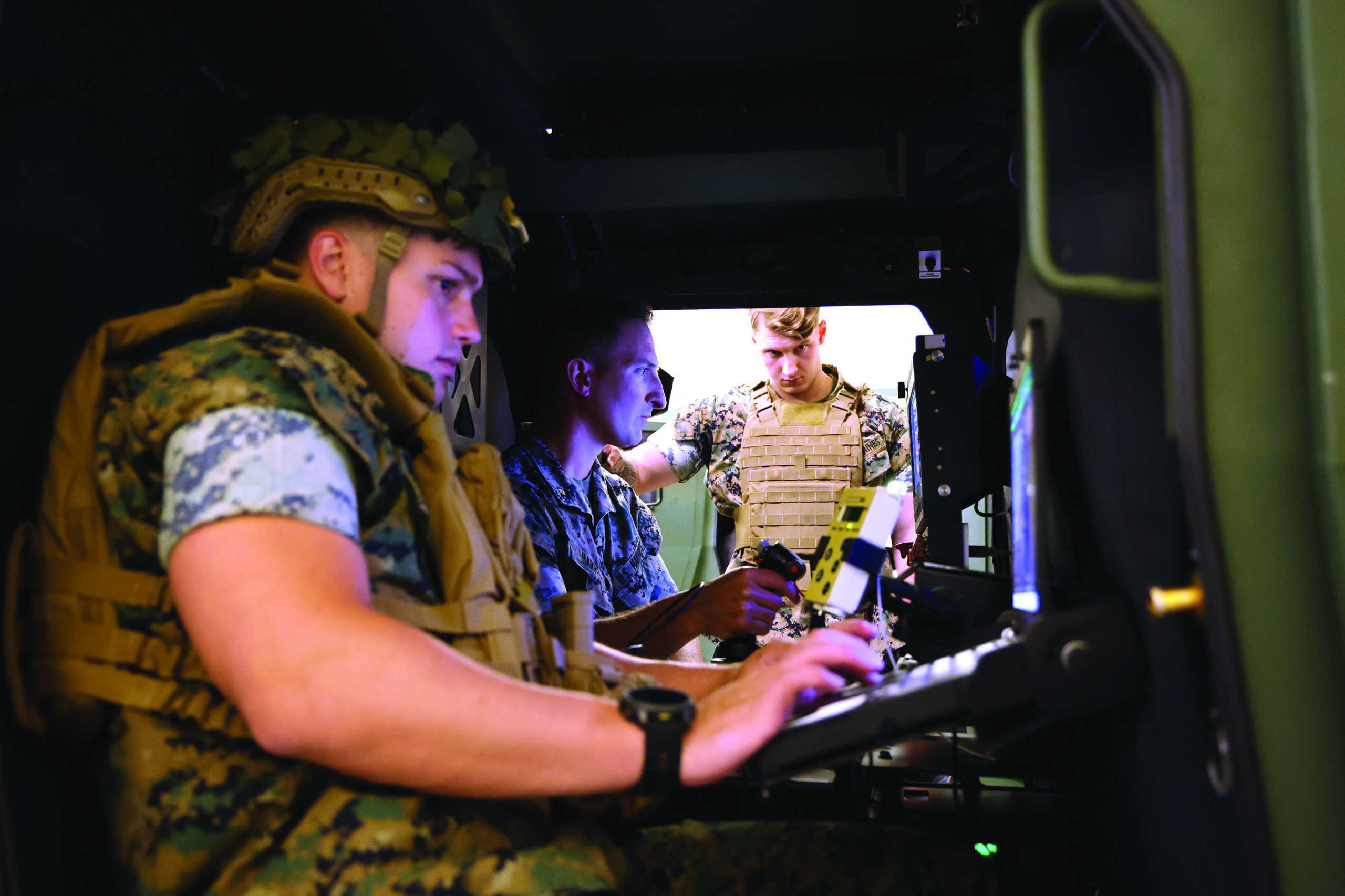
“Cool” scarcely begins to describe the MVT (the Marines at PEO Land Systems apparently prefer “badass”). Both training systems were developed iteratively using feedback from Marines in the fleet to improve realism and ease of use, ensuring the Corps is providing its Marines with the best training products possible. The desktop trainer is already available in the fleet, and the LAAD battalions are just beginning to receive their full-scale MVTs. Their only complaint about the systems so far, according to Harpe, is that they can’t get them quickly enough.

MCCS
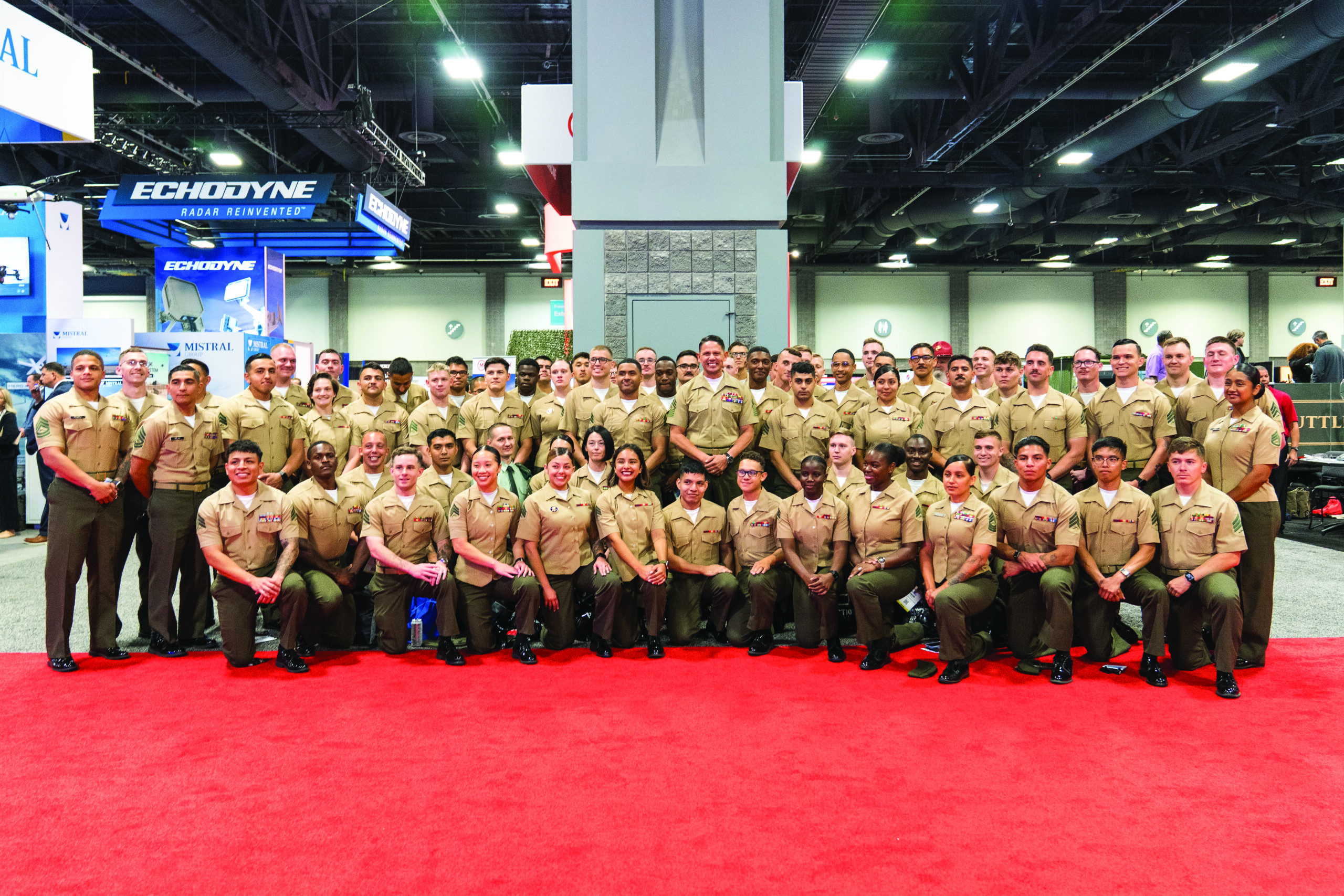
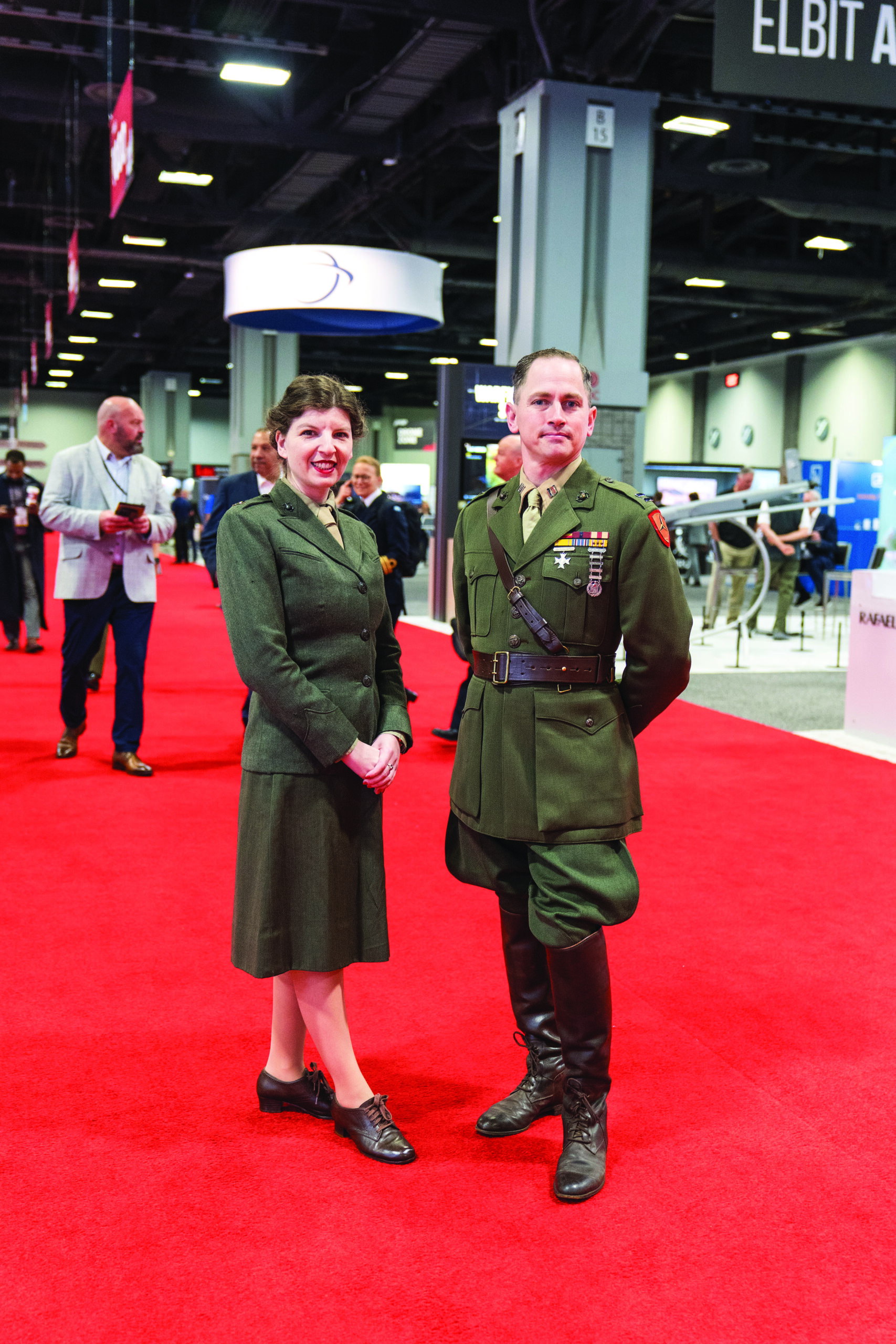
Part of what makes Modern Day Marine so valuable is the diversity of its exhibitors. Amid acres of drones, missiles and radios, Marine Corps Community Services (MCCS) had a booth set up to show off the important work they do for servicemembers.
Marines might recognize MCCS as the entity that runs the Marine Corps Exchange, but they also operate dining halls, lodging, gyms and morale, welfare and recreation facilities—“anything [on base] with a cash register,” according to one representative. Profits from those enterprises are reinvested in programs to benefit Marines and their families, ranging from permanent change of station assistance to mental health services and everything in between. To raise morale among Marines deployed abroad, MCCS has the ability to provide them with a field unit—a CONEX box filled with all the amenities of a stateside convenience store, such as soda, beer and snacks.
MCCS also runs programs to support Marine spouses, such as employment workshops, career training and a financial grant system to help spouses obtain business licenses. Numerous Marine family members also work directly at MCCS operations; the next time you visit the movie theater or bowling alley at your duty station, there’s a decent chance the clerk behind the counter is a husband, wife, son or daughter of a fellow Marine.
GDLS Advanced Reconnaissance Vehicle
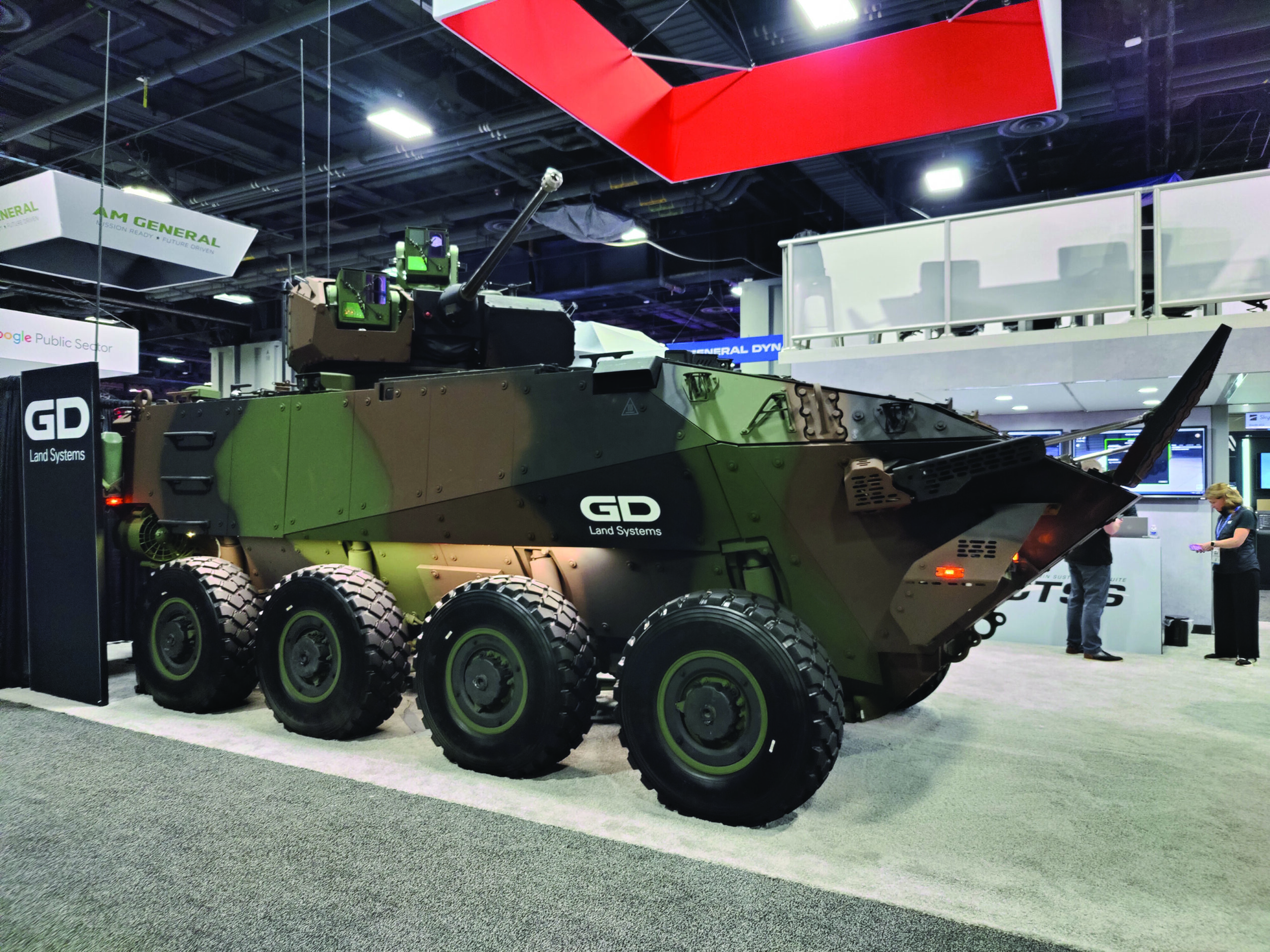
Since the 1980s, the Marine Corps’ light armored reconnaissance battalions have fielded the light armored vehicle (LAV) 25 and its derivatives as their vehicles of choice. Although the LAV-25 has proven its worth over the past four decades, the platform’s age limits its ability to be upgraded with modern sensing and electronic warfare equipment. Its replacement, the advanced reconnaissance vehicle (ARV), combines familiar characteristics with extensive improvements and a modular, extensible vehicle architecture.
At first glance, the ARV strongly resembles its predecessor—an eight-wheeled amphibious vehicle with a V-shaped hull for protection against land mines. Indeed, General Dynamics Land Systems (GDLS), the ARV’s designer and manufacturer, is the same company behind the LAV family and has applied numerous lessons learned to the new vehicle. The integration of new features and technology directly into the design, rather than adding them through upgrade packages for a legacy platform, helps keep the vehicle’s loaded mass under 37,000 pounds, ensuring a landing craft, air cushion, can still carry four Marines.
As a reconnaissance platform, the ARV needs to be as stealthy and agile as an 18 1/2 ton armored vehicle with a 30mm autocannon can be. Its sensor suite is augmented by several cameras mounted around the hull; the same technology that helps you parallel park your car on a narrow city street gives the ARV’s crew excellent situational awareness without requiring them to leave the safety of their vehicle. On water, the ARV’s maneuverability is enhanced by steerable propulsion units, allowing its driver to navigate tight waterways with ease. It is a surprisingly quiet vehicle, even compared to some civilian trucks, helping it to remain undetected while its Marines gather intelligence or patrol a dangerous area.
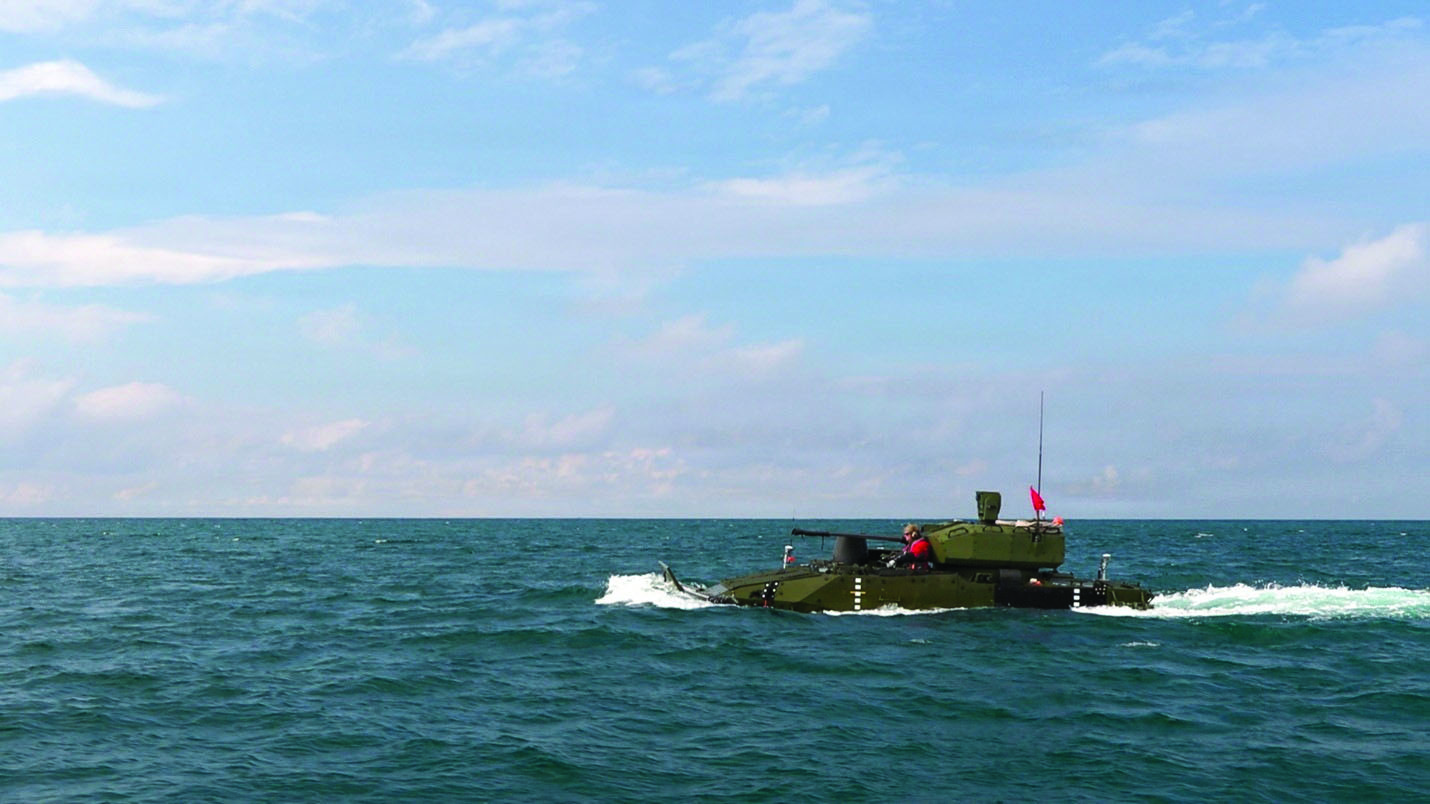
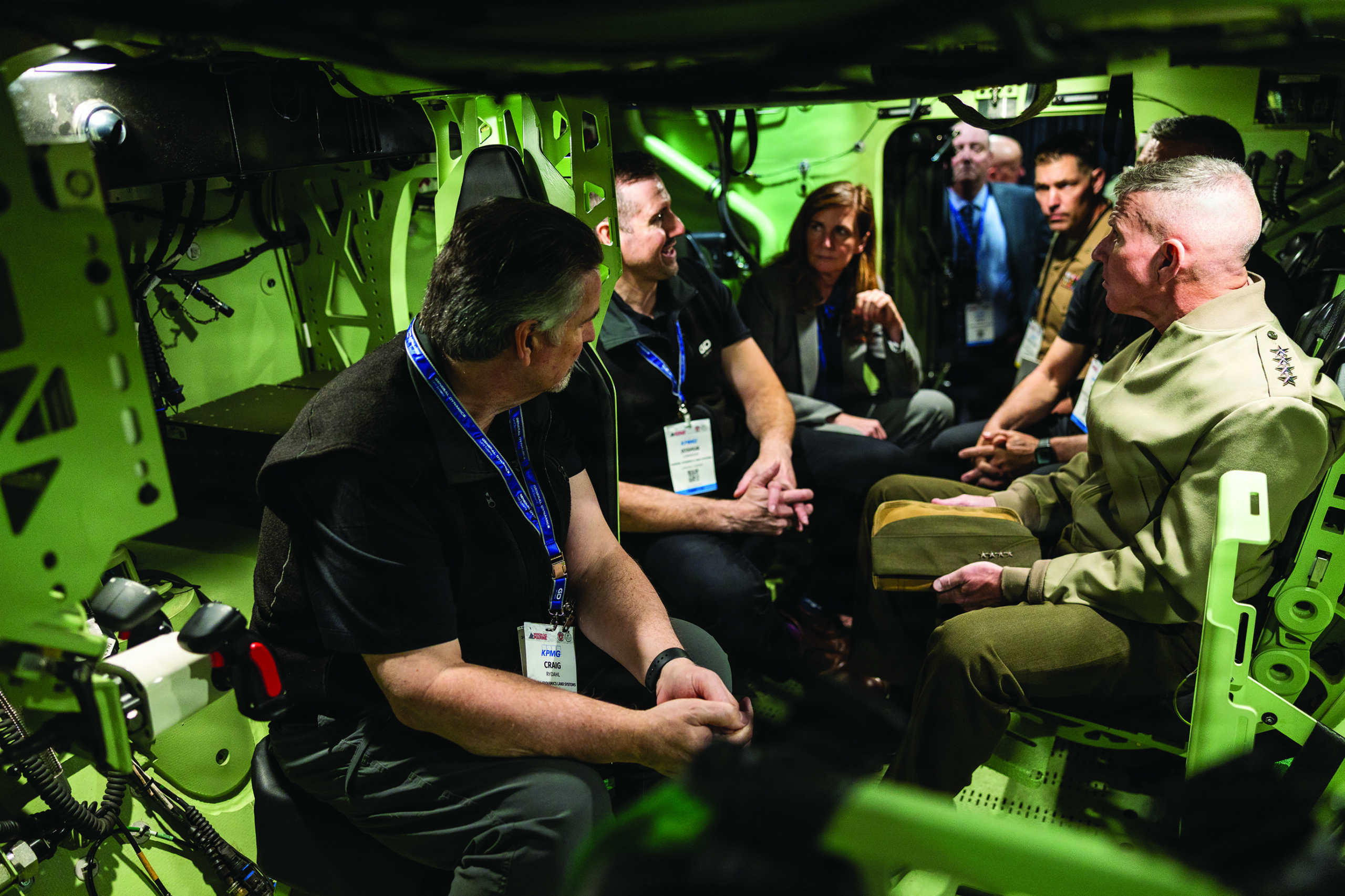
Useful though these features are, by far the most impressive part of the ARV is its onboard computer system, connected to every one of the vehicle’s systems. Not only does the vehicle help its own crew to keep it running by diagnosing faults, but it can connect to an external computer running GDLS’ Digital Twin Sustainment Suite (DTSS) software to aid in training. DTSS is a powerful interactive application providing Marines with a three-dimensional virtual environment in which they can view every part of an ARV’s anatomy, down to the literal nuts and bolts.
“All of the products they need are in one software,” said GDLS engineer Dino Pelekanos, allowing ARV crewmen to learn everything they need to know about their vehicles before ever climbing inside. They can either practice maintenance and repair procedures on their own or participate in guided lessons when connected to an instructor’s computer, which itself can control the actual vehicle for demonstration purposes. On the MDM show floor, Pelekanos remotely started the ARV’s engine and rotated its turret to prove the point.
Printed Solid
Advertising agencies love to throw around the word “revolutionary” to describe the latest smartphone or newest model year of luxury car. Consumer-grade 3D printers, while not as visually appealing, actually warrant that descriptor. The Marine Corps continues to investigate 3D printing as a way to reduce logistical burdens and enable Marines in the fleet to create their own solutions for the unexpected problems they encounter. 3D printers from Czech company Prusa Research are highly desirable for defense-related applications due to their excellent build quality, ease of maintenance and optional security features; indeed, Prusa machines are already in use in the Marine Corps.
Delaware-based Printed Solid, Prusa Research’s U.S. affiliate, builds Prusa printers Stateside to ensure regulatory compliance for government and military use. They also supply replacement parts, guaranteeing a reliable supply for Marine Corps installations in the continental United States that can’t afford to wait weeks or months for components to be shipped from Europe.
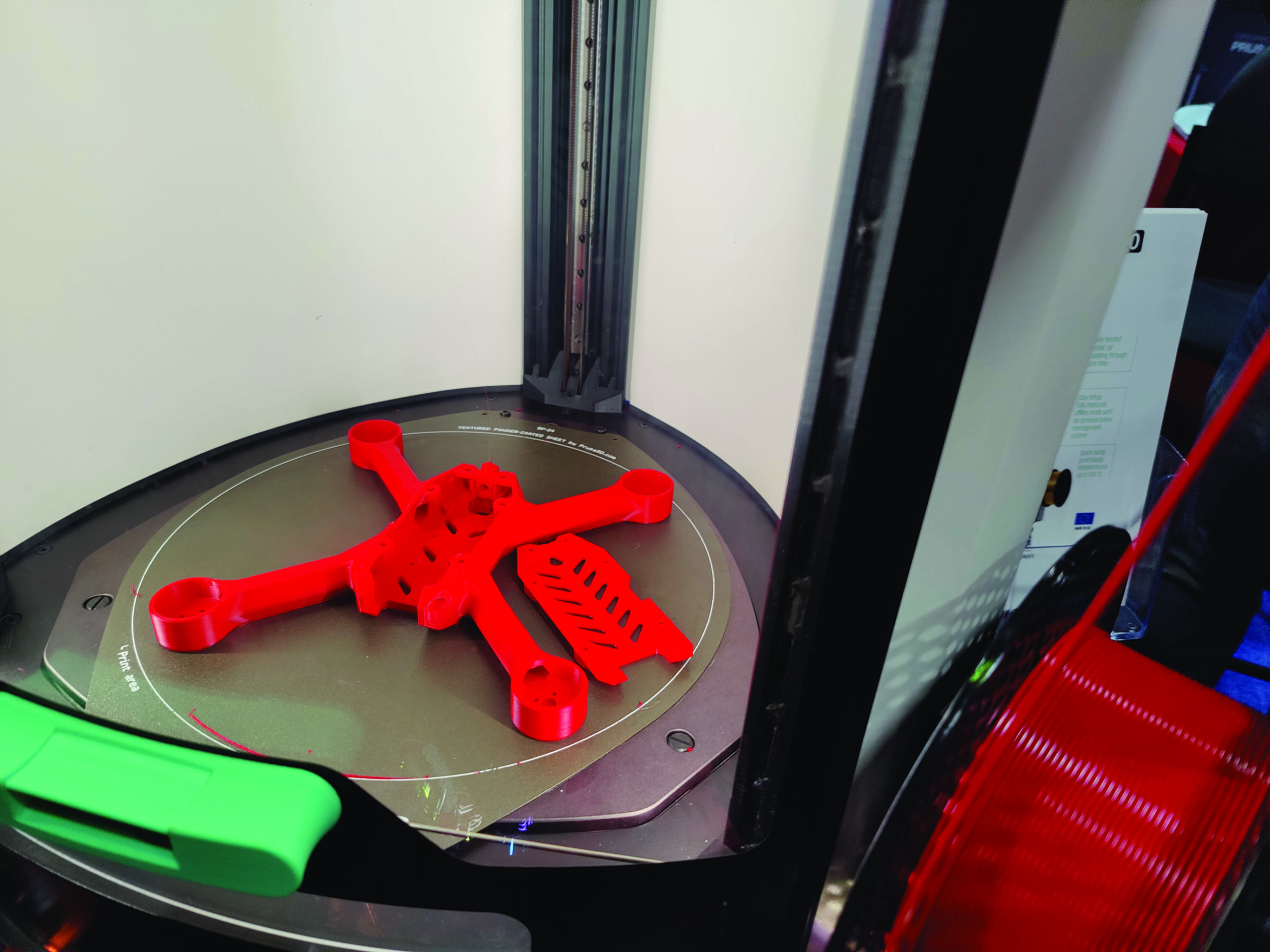
At this year’s expo, Printed Solid showed off a menagerie of printers: the high-speed, grandfather-clock-sized Pro HT90, the hobbyist-oriented MK4S, the popular CORE One+ and the famous toolhead-switching XL. The company expects to soon offer the INDX multiple nozzle system, an upgrade for the CORE One line, allowing the printer to switch between up to eight nozzles, and therefore up to eight different materials, in seconds. This capability enables more complex parts to be manufactured—a rifle stock, for example, could be printed in sturdy ASA or PETG with an integrated buttpad made of rubbery TPU.
BAE Amphibious Combat Vehicle
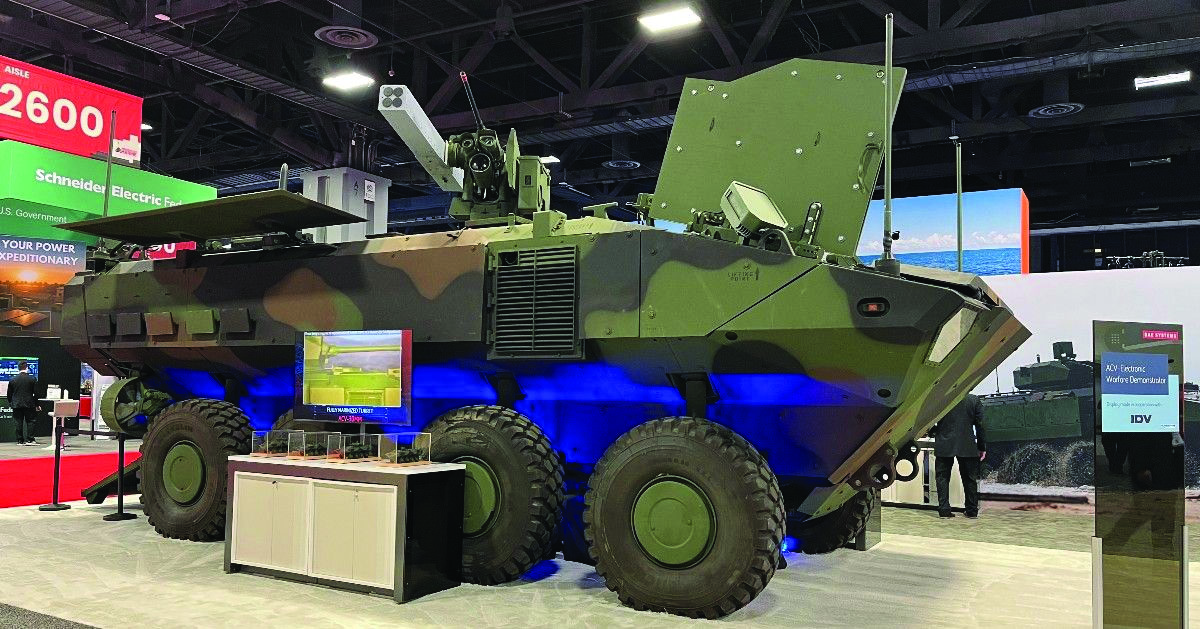
Every year, BAE Systems brings out a different variant of the amphibious combat vehicle (ACV) to show off the platform’s adaptability; this year’s model was the ACV-Electronic Warfare (EW) demonstrator. BAE is developing the ACV-EW on its own initiative in the hopes of soliciting interest from the Marine Corps in new variants other than the four that have already been ordered. The goal is to “show … what’s within the realm of the possible to meet Marine Corps operational requirements,” according to BAE representative Chip Hall, a retired colonel and prior amtracker.
Similar to the ACV-C, the ACV-EW replaces the infantry compartment’s seats with special equipment and an array of workstations. Externally, the vehicle strongly resembles the baseline ACV-P, but with additional radio antennae and radar arrays to detect and track air and ground targets and interfere with enemy communications. With the same Integrated Combat System as the other variants, the ACW-EW variant can pass targeting data to other vehicles to create a more complete picture of the battlefield.
Although this vehicle’s intended role should keep it out of the line of fire, it retains a Kongsberg remote weapons station (RWS) for defense against infantry, UAS and light ground vehicles. The example at the show also mounted a dummy launcher to show the RWS’ ability to integrate antiarmor and antiaircraft missile systems.
Objective 1 Wargaming
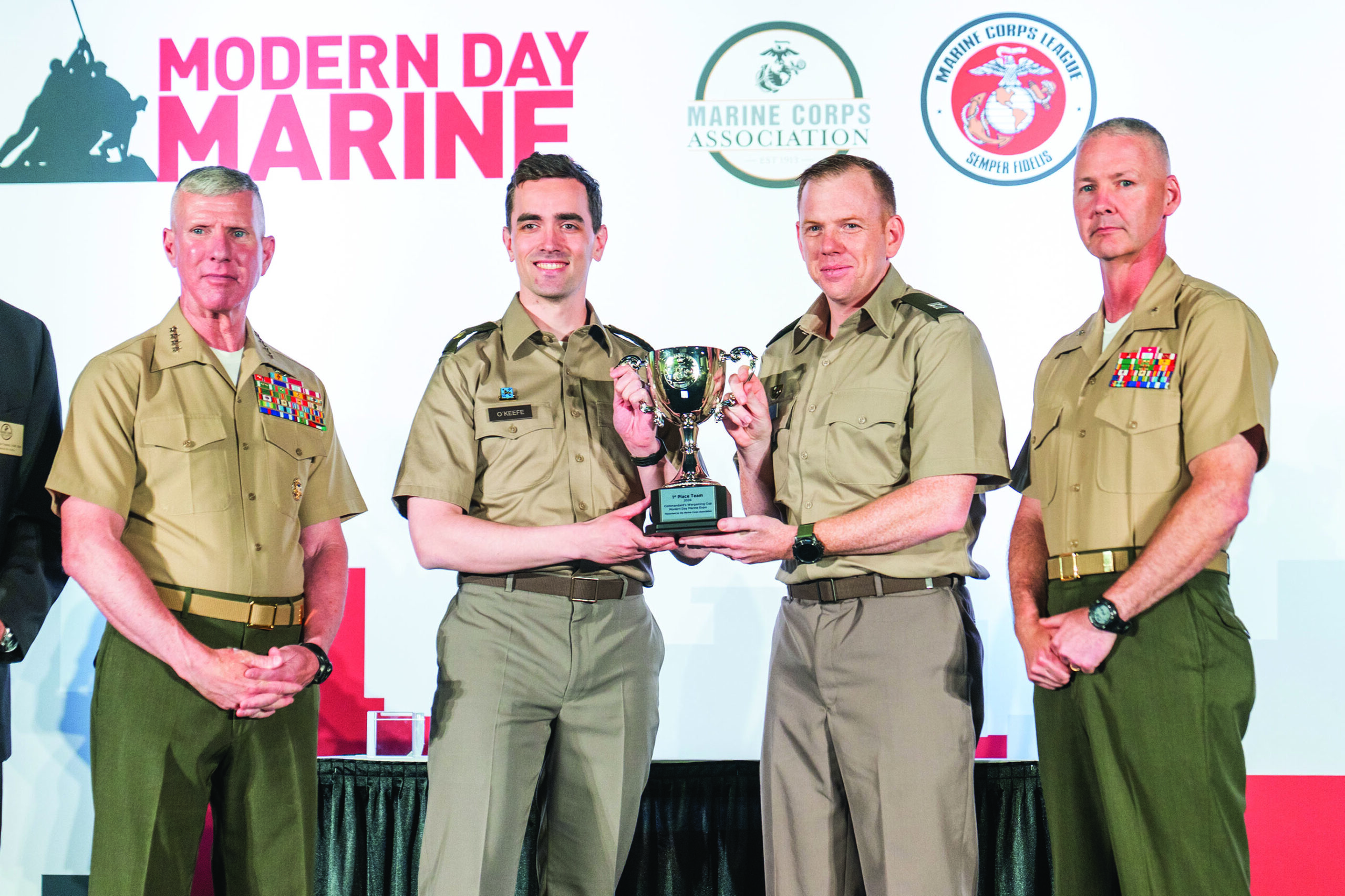
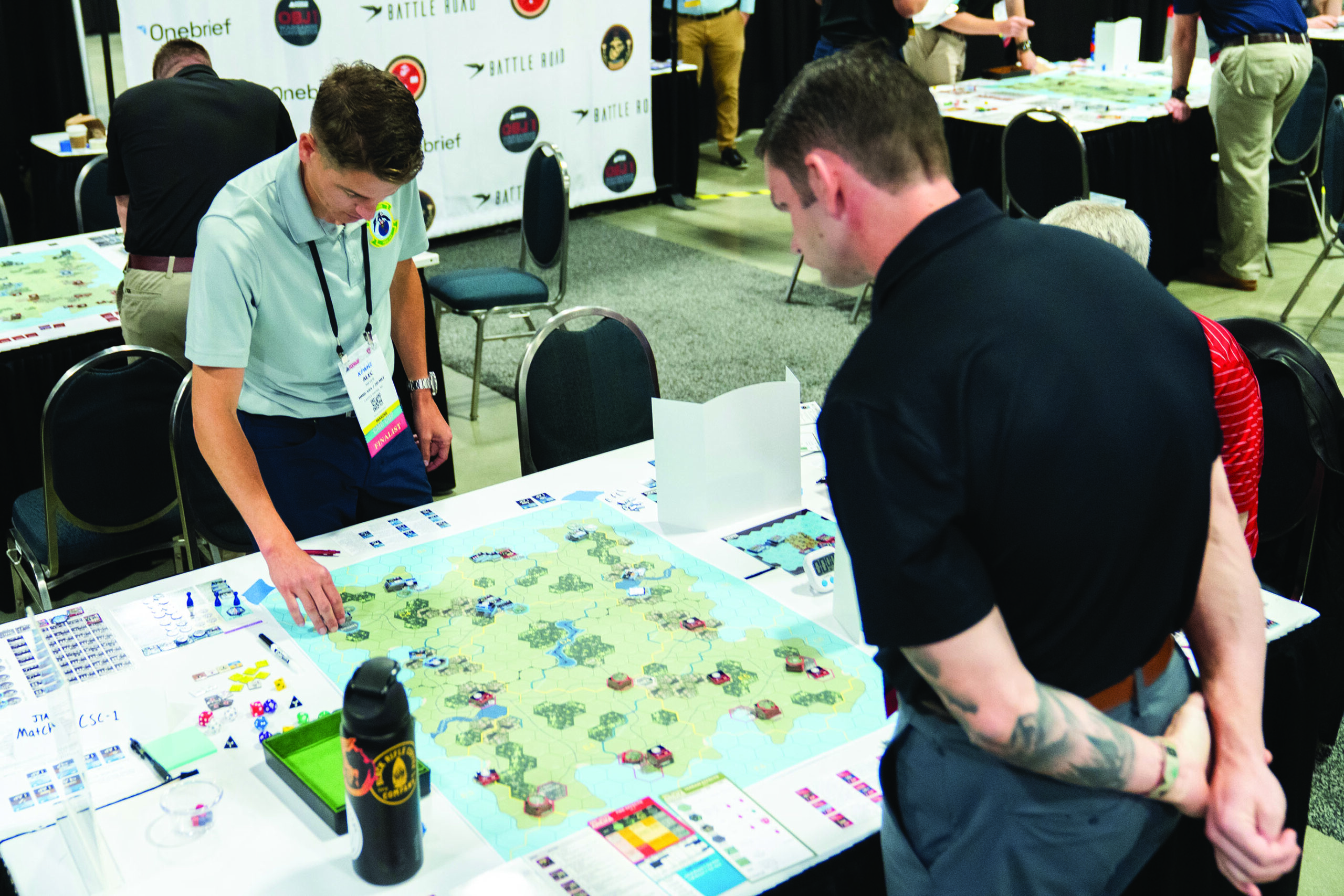
Modern Day Marine was the site of the semifinals and finals for the Commandant’s Cup Wargaming Tournament, an international competition pitting two-person teams from across the Marine Corps and other services against each other in a test of strategic thinking and mental stamina. Over the course of four days, participants competed on simulated battlefields across a variety of both digital and physical map boards under the watchful gaze of facilitators from Marine Corps University. Wargaming for professional military education has a long tradition dating back to the 1700s but has often been sidelined due to shifting strategic priorities. Now, wargaming is experiencing a resurgence in interest from senior military planners interested in learning tomorrow’s lessons today, and the Marine Corps has played a leading role.
In the span of three years, the Commandant’s Cup has evolved from a somewhat casual contest to win a bottle of whiskey to a battle of wits among serious professionals who spend months training for the occasion in addition to their regular duties. Teams are welcome from any military command and can include either officers or enlisted servicemembers. The Commandant of the Marine Corps, General Eric M. Smith, presented this year’s Cup to a team from the U.S. Army’s 2d Cavalry Regiment, who was followed in second place by a pair of cadets from the Polish Military Academy of Land Forces. Major Christopher Lowe of Marine Corps Forces Europe and Africa earned first place in the Flashpoint Campaigns Pro individual event and came out as this year’s highest-scoring Marine.
OPTIA Ammo Can Computers
250 years ago, military intelligence consisted mainly of written notes and verbal reports on enemy troop movements. In 2026, military intelligence personnel rely on data from myriad sources: radio messages, UAS camera feeds, satellite reconnaissance images and more. To collate and process all that data, 02-series Marines need portable computers built to withstand rough handling and extreme environments and still perform reliably. To fill that need, United Computer Products offers the OPTIA line of ruggedized “ammo can computers.” Marines and their logistics infrastructure are already well accustomed to moving ammo cans around, the thinking goes, so why not pack a computer into a sturdy steel chassis with a similar form factor?
The familiar size and shape is a neat trick, to be sure, but it’s by no means the OPTIA line’s only design feature suiting these machines well for field use. These computers are designed from the ground up to work well sitting on bare dirt under a folding table in a tent instead of nestled comfortably in an air-conditioned data center. To prevent fans from sucking dust into the cases, all air intakes are protected by thick filter pads, which can be removed without tools for cleaning. The rear of each case has a door to cover the exhaust holes, expansion slots and motherboard’s input/output shield (the latter two recessed for further protection) during transit.
Internally, an OPTIA system has all the features and performance of a typical high-performance server or workstation, using commodity Intel Xeon CPUs connected to Nvidia RTX PRO graphics cards via PCIe or MXM interfaces. Most configurations are available with hot-swappable solid-state storage (protected, again, by doors containing aggressive dust filters), and the higher-end models can mount dual CPUs. The use of standard components ensures that any Marine with access to parts and a modicum of technical knowledge can easily maintain these systems long into the future.
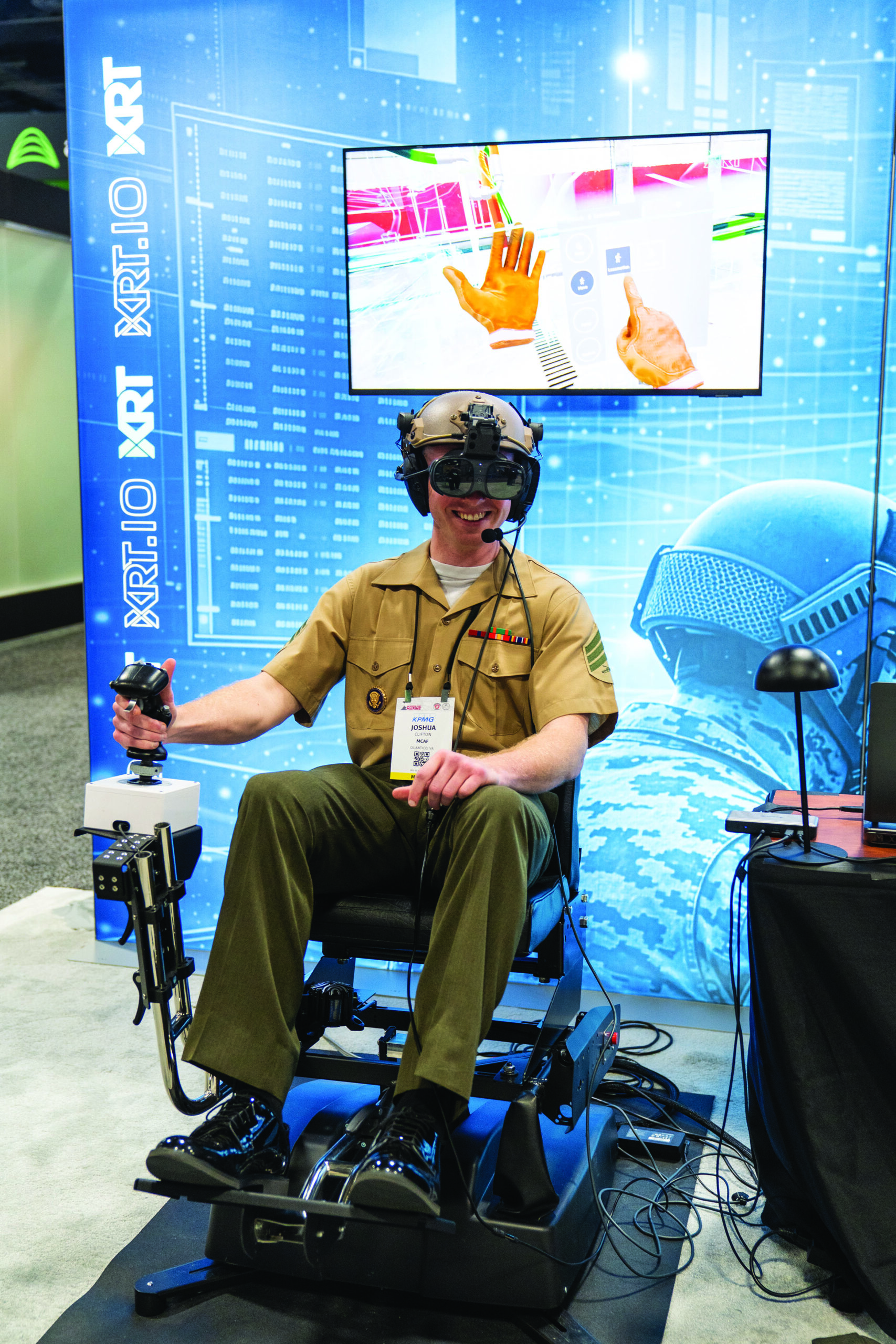
Featured Photo (Top): XR Training (see “Modern Day Marine: The Future of Fighting is Now” in the August 2025 issue of Leatherneck for more details)supplies training systems combining physical controls with virtual reality headsets, allowing the user to feel as though he or she is behind the controls of a real vehicle. (Photo by Amanda Higgs)
About the Author
Sam Lichtman is a freelance writer and editor who specializes in small arms technology and military history. He has a weekly segment on Gun Owners Radio. He is a licensed pilot who lives in Virginia.
Enjoy this article?
Check out these similar Leatherneck and Scuttlebutt features:

Modern Day Marine
Leatherneck
September 2022
By: Sam Lichtman
Office Of Naval Research: Preparing The Marine Corps For Battlefields Of The Future
Leatherneck
July 2023
By: Sam Lichtman
Precision Weapons Section
Leatherneck
April 2026
By: Sam Lichtman