Rabblerousers

Situation

You are the Squad Leader, 1st Squad, 3d Platoon, Company G, Battalion Landing Team 2d Battalion, 1st Marines (BLT 2/1). Recently the MEU was sent to Jalalabad, Afghanistan, in support of NATO forces during Operation E N-DURING FREEDOM. You have been in-country approximately 2 months and have been assigned to the northeast sector of the area of responsibility, Nan-garhar Province. Last month Company G engaged sizable needihajum forces under Sher Dil during a cordon and search operation within the valley. Company G was able to disrupt arms trafficking via the valley; however, small pockets of resistance continue to slip through the valley (squad-sized, Soviet small arms, light machineguns/rocket propelled grenades (RPGs)). Some of the platoon checkpoints (CPs) have received inaccurate 82mm mortar fire in the last week. Additionally, Company G’s actions last month resulted in significant collateral damage to local poppy fields and goat herds. Several houses and barns within Ada Atah were damaged, and the sole pump in the village center was crushed under the weight of the company’s assault amphibious vehicles. Unequal distributions of solatia payments (appearing to favor Kushtuz farmers in Ada over the minority Nuris-tani) have led to increased thefts and violence against Kushtuz by nonaligned Nuristani tribesmen. The company CP is located 25 miles southwest, and the commanding officer has deployed his platoons throughout the valley to provide security for nongovernmental organizations (NGOs), conduct security patrols, and support human exploitation teams in answering demographic requests for information about the local leaders, population, atmosphere, etc.

It is about 1830 now after 3 days in Ada Atah. The villagers are beginning to be less skittish around your Marines and even the World Agro Fund (WAF) and Healthwatch are less irritable. As you head under the cover of an awning by a stable, you hear Cpl Clark;s voice over your internal squad radio,Boss, this is Echo 4 Charlie. Ive got two males in man-dresses checking out the village from the farm 300 meters to the north. They were out there this morning, but theyre back with binoculars now.

Roger, Charlie. You release the handset, but something has changed in Ada Atah. The village is still packed. There is a hum, a murmur underneath the noise of the crowd. Then you notice the soccer ball lying still in the middle of the road. The flutes of the shepherds aren’t playing. There are no children. A WAF volunteer sprints from the pile of seed to the medical center. As she does, a rifle cracks over the noise of the crowd. A gunman with an AK’?47 stands behind a donkey cart and tries to incite the crowd, ‘Bey-baies . . . paida-warunah . . . bon-sat-tunah!’? A rock is hurled from the crowd and strikes the wall next to you. Seconds before the rock above you explodes you see an RPG skip off the top of the pile of seed bags directly across the village. The chatter of machinegun fire comes from the farm to the north. Your radio squeals as your fire team leaders talk over one another, ‘oeBoss, Williams is hit bad. He needs casevac!’

As soon as you look over to Cpl Clark”s position, a teenage boy from the village runs across your path with an AK’?47. He is 1 meter ahead of you and doesn”t see you. What now, Sergeant?

Requirement

Given the deployment and current activities of your squad, and in a time limit of 5 minutes, issue your verbal orders to your element leaders and any reports to higher headquarters. What are you doing after your orders are issued?

Issues for Consideration

1. What are your priorities? The ca-sevac? The machinegun? The RPG? The boy?

2. What do you want to make happen in the next 60 seconds?

3. What can you make happen in the next 5 minutes?

4. Do your actions and their probable results escalate or deescalate violence in your area of operations?

5. Do you want to kill or capture possible opponents?

6. What considerations do you give to injury to noncombatants and damage to local property (collateral damage)?

7. How much collateral damage do you anticipate as a result of your actions?

8. Assuming your actions result in a fight and victory over insurgent forces, what actions do you take with regard to:

* Dead and injured enemy combatants?

* Dead and injured noncombatants?

9. Based on your actions in question 7, what do you expect civilian/NGO response will be to collateral damage:

* At the conclusion of fighting, while you are in the area?

* Within 1 hour after you leave?

* At the end of the day?

* At the end of the week?

10. Based on your actions in question 7, what is the expected enemy response to collateral damage:

* At the conclusion of fighting, while you are in the area?

* Within 1 hour after you leave?

* At the end of the day?

* At the end of the week?

11. What actions can you and the BLT take to counter and exploit enemy and civilian responses to collateral damage:

* While you are in the area?

* After you return to base?

* When you subsequently patrol in the area?

12. What actions have you, the BLT, and local forces taken to defeat enemy motivation to attack:

* While in the area?

* After you return to base?

* Over the next week?
Trouble at the VCP

Situation

You are the Squad Leader, 1st Squad, 3d Platoon, Company G, Battalion Landing Team 2d Battalion, 1st Marines (BLT 2/1). Recently the MEU was sent to Jalalabad, Afghanistan, in support of NATO forces during Operation Enduring Freedom. You have been in-country approximately 2 months and have been assigned to the northeast sector of the area of responsibility, Nangarhar Province. Last month Company G engaged sizable needihajum forces under Sher Dil during a cordon and search operation within the valley. Company G was able to disrupt arms trafficking via the valley; however, small pockets of resistance continue to slip through the valley (squad-sized, Soviet small arms, light machineguns, and rocket propelled grenades). Some of the platoon checkpoints (CPs) have received inaccurate 82mm mortar fire in the last week. Additionally, Company Gs actions last month resulted in significant collateral damage to local poppy fields and goatherds. Several houses and barns within Ada At ah were damaged, and the sole pump in the village center was crushed under the weight of the company’s assault amphibious vehicles. Unequal distributions of solatia payments (appearing to favor Kushtuz farmers in Ada over the minority Nu ristani) have led to increased theft and violence against the Kushtuz by nonaligned Nuristani tribesmen. The company CP is located 25 miles southwest, and the commanding officer has deployed his platoons throughout the valley to provide security for nongovernmental organizations, conduct security patrols, and support human exploitation teams in answering demographic requests for information about the local leaders, population, atmosphere, etc.

It is 1030 and your squad has been at work in Ada Atah for about an hour and a half. You have been in radio contact with your platoon commander and the vehicle CP (VCP). The VCP is closing up shop and is about to push out to continue patrolling along the main supply route. It’s about time; you believe they’re just a target there. In the street in front of you, children kick around a soccer ball that one of your Marines produced out of his pack earlier in the morning. You can hear music from flutes of shepherds who are intermingled with the growing crowd of locals at the seed distribution center and the building housing the health workers. As you clip the handset back to your flak vest you hear the dull thud of two mortar rounds to the north and look up to see a brown pickup truck tear off of the main supply route into a poppy field, heading south. Your radio crackles to life with the voice of one of the heavy machinegun (HMG) corporals up at the VCP, “Orphan 1-3 this is Thor 1. Brown pickup with four Afghans heading south along the dirt road.”

One of the HMG HMMWVs wheels around to the south in the poppy field west of the dirt road and stops. Its gunner traverses the .50 caliber and fires a six-round burst over the pickup that impacts about 100 meters short of the creek bed. The brown pickup jumps onto the northsouth dirt road and continues south at about 40 kilometers per hour. You have about 20 seconds until that pickup makes it to Ada At ah. What now, Sergeant?

Requirement

Given the deployment and current activities of your squad, and in a time limit of 5 seconds, issue your verbal orders to your element leaders and any reports to higher headquarters. What are you doing after your orders are issued?

Issues for Consideration

1. Do you engage the pickup truck? Did the truck’s occupants commit a hostile act/show hostile intent? How does the indirect fire play into your decision? Do your actions change if the passenger points an AK-47 straight in the air out of the window? What if the passenger fires the AK- 47 back at the HMG section?

2. What do you tell the HMG section to do, if anything?

3. Do your actions and their probable results escalate or deescalate violence in your area of operations?

4. What do you expect the enemy to do as a result of your orders? How do your orders exploit the enemy’s response?

5. How do you expect the nongovernmental organizations to react to the actions of your squad?

6. What do you expect civilian reaction/sentiments to be to the collateral damage and/or the actions of your squad? Within 2 hours after you have arrived? At the end of the day? At the end of the week?

7. What is the expected enemy response to collateral damage and/or actions of your squad? Within 2 hours after you leave? At the end of the day? At the end of the week?

8. What actions can you and the BLT take to counter and exploit enemy and civilian responses to collateral damage? While you are in the area? After you return to base?

9. What actions can you, the company, and the BLT take to deter future enemy activity in this area? While you are in the area? After you return to base? During subsequent patrols in the area:

Reseeding the Poppy Fields

Situation

You are the squad leader, 1st Squad, 3d Platoon, Company G, Battalion Landing Team 2d Battalion, 1st Marines. Recendy the MEU was sent to Jalalabad, Afghanistan, in support of NATO forces during Operation ENDURING Freedom. You have been in-country approximately 2 months and have been assigned to the northeast sector of the area of responsibility, Nangarhar Province. Last month Golf Company engaged sizable needihajum forces under Sher Dil during cordon and search operations within the valley. Golf Company was able to disrupt arms trafficking via the valley; however, small pockets of resistance continue to slip through the valley (squad-sized, Soviet small arms, Soviet light machineguns, police pistols). Some of the platoon combat outposts have received inaccurate 82mm mortar fire in the last week. Additionally, Golf Company’s actions last month resulted in significant collateral damage to local poppy fields. Several houses within Ada Atah were damaged by rocket propelled grenade fire, and the sole pump in the village center was crushed under the weight of the company’s assault amphibious vehicles (AAVs). Unequal distribution of solatia payments (appearing to favor Kushtuz farmers in Ada over the minority Nuristani) have led to increased theft and violence against the Kushtuz by Nuristani tribesmen. The company command post is located 25 miles southwest, and the commanding officer has deployed his platoons throughout the valley to provide security for nongovernmental organizations (NGOs), conduct security patrols, and support human exploitation teams in answering company requests for information about the local leaders, population, atmosphere, etc.

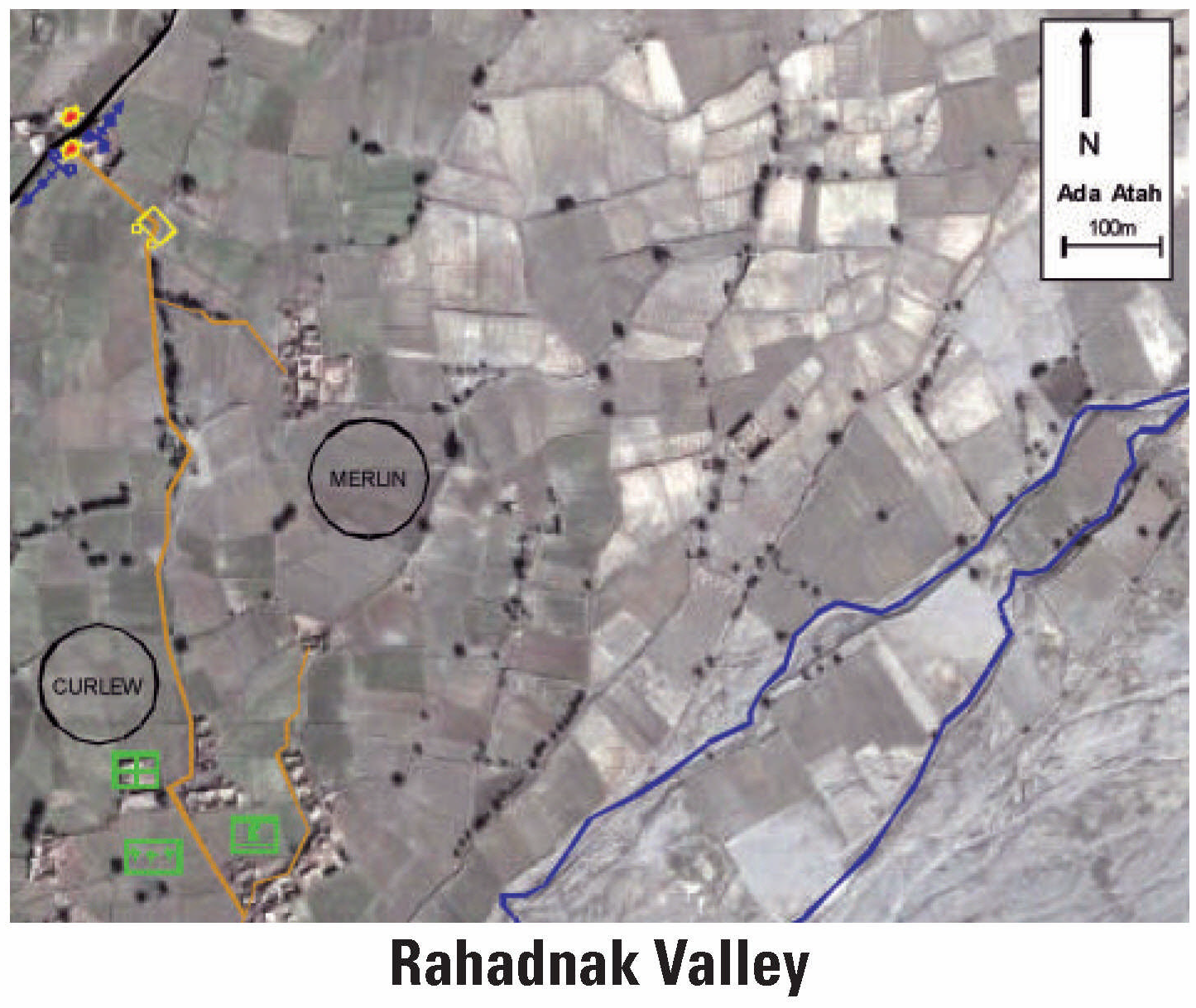
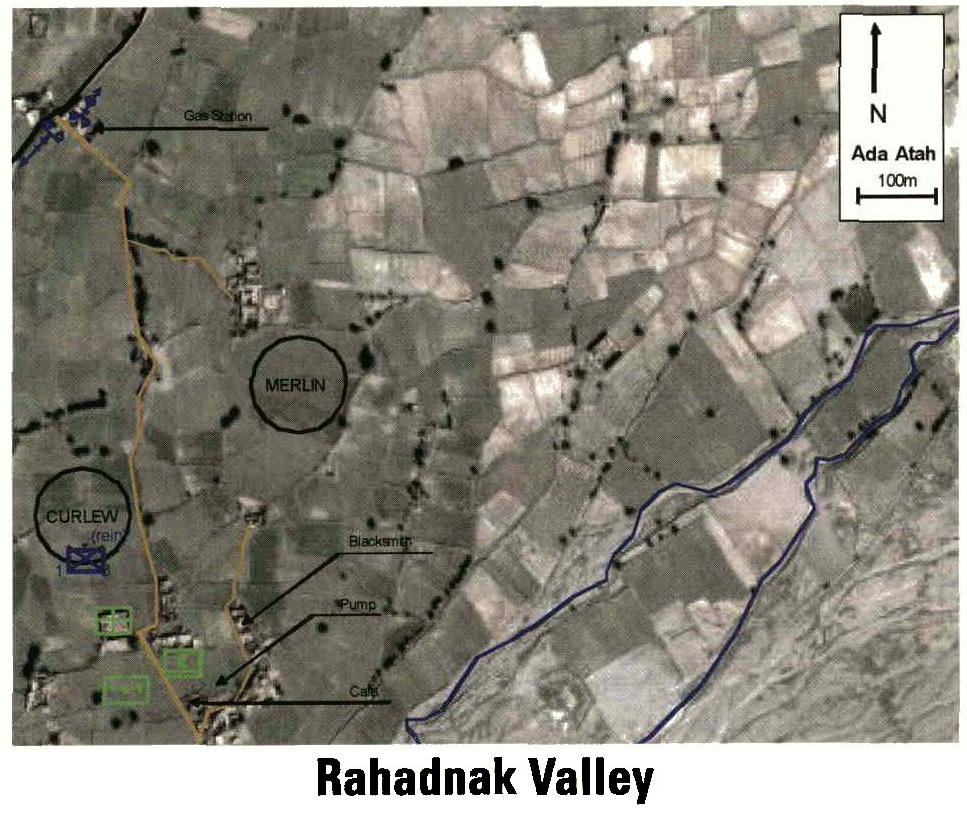
Your squad is dismounted and is tasked with providing security for two NGOs (World Agro Fund (WAF) and Healthwatch (HW)) operating in Ada Atah, a small Nuristani village 2 kilometers northeast of Ada in the Rahadnak Valley. You have one of the company’s high-back HMMWVs (damaged by an antipersonnel mine), with lumber, steel pipes, tools, and five 20-pound bags of cement. CpI Vasquez, a steamfitter from Tacoma, WA, borrowed an oxy-acetylene torch from motor transport to repair the HMMWV for the company gunny. A four-man combat engineer detachment and a corpsman are attached to your squad. Each fire team carries one AT-4 in addition to its standard combat load. All of your personnel have personal role radios. You have only one AN/PRC-1 19F that can reach back to your platoon commander’s control base. A section of AH-I W Cobras can reinforce Golf Company in 1 5 minutes. A casevac CH- 46 is on 30minute strip alert.

WAF/HW are operating under the auspices of the United Nations World Food Program and are expected to be in Ada Atah for 96 to 120 hours. They are distributing hybrid corn seed and fertilizers in hopes of replacing the damaged poppy crop, collecting nucricional surveys, and providing measles, mumps, rubella inoculations. They have been in che province for abouc 6 months and were in Ada and Ada Acah when Golf Company rolled chrough lase month. The WAF/HW reluctandy accepted your squad’s protection for die duration of their mission after it was insisted upon by the United Nations World Food Program director. WAF/HW volunteers are of one accord in their perceptions that Golf Company has caused most of the problems in Ada Atah. Even you admit to yourself that the pump’s shallowly buried water pipe was crushed by a Golf Company AAV, and chose tracks thac plowed across che poppy fields were probably noe driven by Taliban.

It is 0800 when your plaeoon commander and che ocher 2 squads load on che CH-53 in Landing Zone Curlew, leaving you wich your 16 Marines, 1 corpsman, 24 WAF/HW volunteers, and a broken-down HMMWV that is dragging its brush guard and is missing the driver’s side floorboard. There is a heavy machinegun section from Weapons Company conducting a visual checkpoint along the main supply route about 400 meters north of the landing zone. By 0830 chete are about 70 locals men, women, and children) in che village cencer, lining up near die NGOs. You remember Ada and Ada Atah from last months operations. The village is about 200 meters in diameter, a ring of one-story houses and srables around a village green. There is a blacksmich shop and a café with a few tables. About 400 meters to che norch is a gas station on the main supply route and several oudying farms to the norch norcheasc. What now, Sergeant?

Requirement

Given assets available and in a time limit of 10 minutes, issue your verbal orders to your element leaders and any reports to higher headquarters. What are you doing after your orders are issued?

Issues for Consideration

1. Should you do anything?

2. What is the intent of the U.S. mission in Afghanistan? What might you do to support that intent?

3. What might your company’s commander do in your situation? Your battalion commander? What does chat mean for you?

4. How might your potential actions play at the physical level? The mental level? The moral level? Which of these is most important?

5. How important are the NGOs to the U.S. mission in Afghanistan? Could you do something that might change eheir opinion of U.S. Marines?

Unwanted Guests

Situation

You are Ahmed al Aba. You have been the patriarch of your extended family in Basawal for over 30 years. Your extended family is of the Wakhi tribe, and your family interests are primarily in farming and trade. Over the past several years you have watched the Taliban leave to Pakistan through the Khyber Pass, the Americans move in and then leave, the Taliban return, the Europeans come and go, and now the Americans have returned. During this time you have noticed other tribes and families ally themselves with the foreigners, installing themselves in government and army positions, and then stealing from the people they should be protecting. Your family has not benefited from the occupation and has suffered in confrontations with the local “army” and “police” force who are primarily members of the majority Pashtun and city-dwelling Tajik tribes. You have regained some of your family’s prominence by hosting and moving weapons and people from Pakistan into Jalalabad. While you do not have strong passions toward this “insurgent” faction, they at least let your family live in peace according to your customs and tradition and provide you with some means to resist the corrupt police and army in your area.

Over the past month the Americans have been supporting local Pashtun and Tajik tribes as they seek to consolidate power over the region. To further this gain, the Americans have been training the local police force. While this has had the desired effect of making them less corrupt (they cannot charge bribes in front of the Americans), it has also given them more power to attack other family and tribe strongholds, usurping power in the area.

In response to this situation, you called the leaders of three of the families in the area with the idea of diverting some Taliban fighters who flow through your area from Jalalabad into the town of Basawal in order to attack the local police and remind them who is boss. The patriarchs agreed to your idea, and three of you arranged a home and weapons for the fighters in Basawal.

Fifteen fighters arrived yesterday, and you met with their Taliban leader who agreed to do what you asked. In the Afghan tradition, the night before the first attacks in Basawal, the fighters, the family heads, and several members of your family have come to your house to celebrate the coming venture.

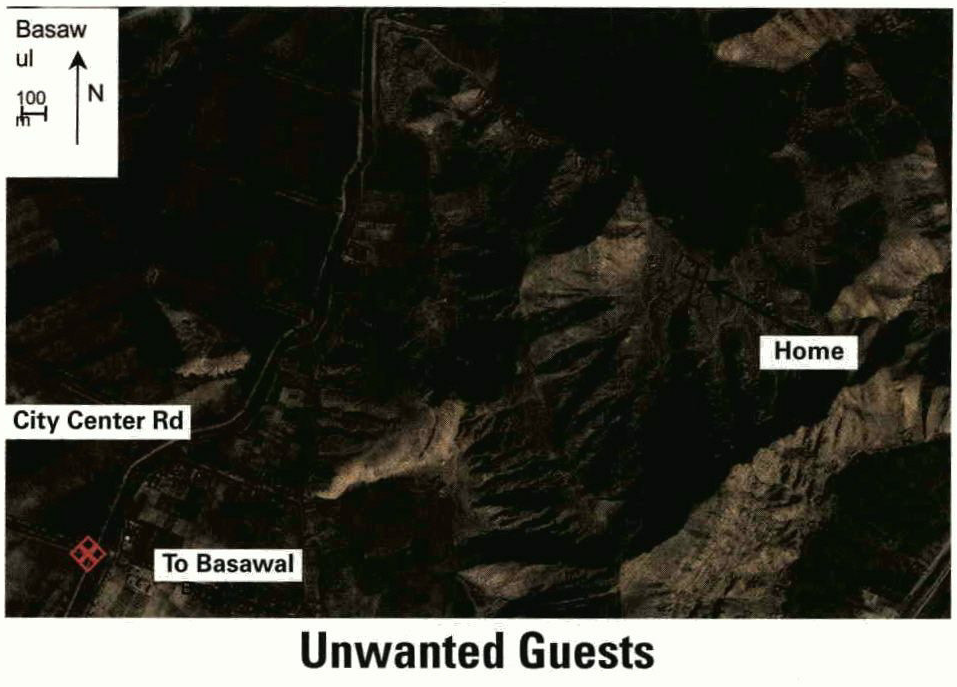
Just before sunset, as you are readying to sit and eat, you see your son, Ustad, talking excitedly on his cell phone. He hangs up, walks over to you in defiance of good manners, and whispers in your ear, “Father, my friend told me there are some, maybe four, American armored vehicles with an Afghan police vehicle perhaps 1 kilometer southwest of here along the City Center Road.” You look around and realize that you have 1 5 Taliban fighters, the heads of 3 families with 2 fighting- aged sons each, 20 AK- 47s with 2 magazines each, 6 grenades, and 1 rocket propelled grenade with 4 rockets in your home. There are also four women and children from each of the families who have not learned to fight. You think and remember that your pickup truck and van are inside the compound. You close your eyes, gather your thoughts, and walk over to the head of the three families and the Taliban leader. What do you say?

Requirement

In a time limit of 20 minutes, indicate what actions you will take, what your intent is, and what actions the family heads and Taliban leader must take tonight.

Issues for Consideration

1. Do you face a threat or an opportunity? Explain.

2. What (and when) do you believe the Americans and Afghan police will do tonight?

3. What is your intent for your actions?

4. How do your actions and orders meet your inrenr?

5. Can you ambush the Americans? If so, how?

6. What do you consider mission success?

7. How sensitive are you to:

* Casualties among your family?

* Casualties among the Taliban?

* Casualties among the other family members?

* Damage to your property?

8. Do your actions force the Americans to fight? Is so, what are the possible repercussions of a fight with the Americans?

9. If you chose not to attack the Americans, what other methods could you use to neutralize them?

Home on the Range

Situation

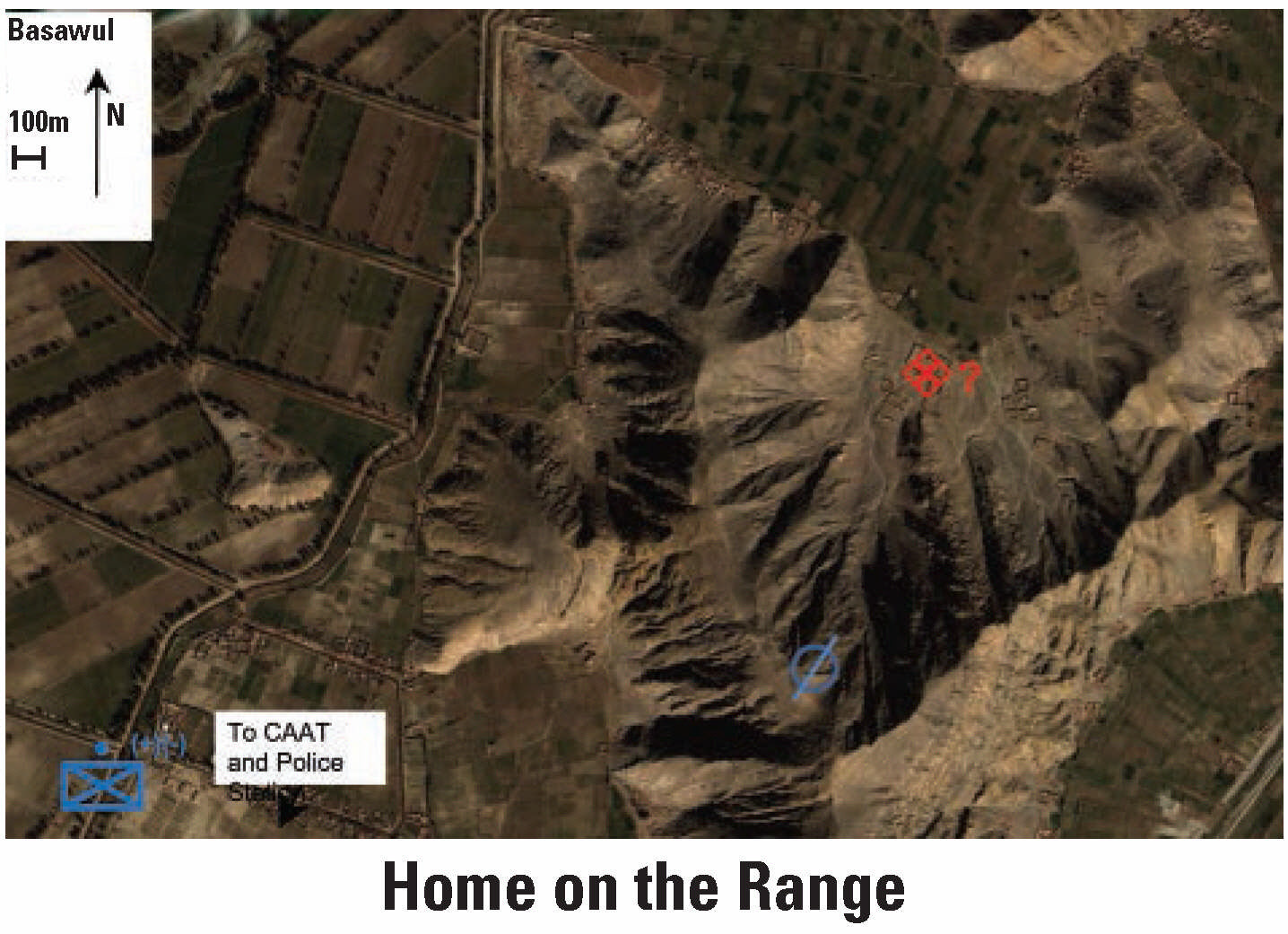
You are the 1st Squad Leader, 3d Platoon, Company F, Battalion Landing Team 2d Battalion, 1st Marines (BLT 2/1). Recently, the MEU was sent to Jalalabad, Afghanistan, in support of NATO forces during Operation Enduring Freedom. The MEU has been in country approximately 45 days and is assigned to the northeast sector of the area of responsibility, Nangarhar Province. Recently, your company has been assigned to the eastern sector of the area of operations (AO), a sector that includes the main road from Jalalabad to Pakistan through the Khyber Pass. Your company’s tasks include defeating anticoalit ion/ ins urgent/Taliban forces, halting the illegal flow of arms and explosives, and strengthening local government, police, and army forces. All of these tasks are executed in order to increase local stability and promote legitimate economic growth in the AO.

Your company commander assigned your platoon to the town of Basawul with the specific task of working with Afghan police in support of the BLT antiinsurgency campaign. The area around Basawul is arid, sparsely populated, and poor, with a market square in the town center. Extended families reside in low, single-story dwellings built around a central courtyard. You and your men are quite familiar with these dwellings from your weeks of patrolling and frequent house searches for weapons and contraband.

You command a Marine rifle squad (13 men) mounted in 3 HMMWVs, 2 with ring-mounted M240 machineguns, and 1 Afghan police pickup truck. Four Afghan policemen are attached to your squad for this patrol. The mission of your patrol is to interdict any insurgent forces or their supplies transiting your AO and to confiscate any caches of arms or equipment discovered in order to deny this region to the enemy as a sanctuary or supply source. The platoon has two personnel HMMWVs back at the police station, and the Afghan police have two more pickup trucks. One combined antiarmor team is approximately 10 minutes from the town and serves as a quick reaction force.

During an uneventful patrol through the local village you notice more than a dozen unarmed militaryaged men loitering about. You don’t recall seeing any of them before. Those who meet your gaze give you hard looks. You notice that the general store has sold out its small stock of canned goods. Per the patrol route, you drive by a circuitous route to a residence 4 kilometers east of town reputed to be the family home of a popular insurgent chief your battalion has long been after.

You halt your HMMWVs away from the residence, and you assign 1st Fire Team to advance with two of the policemen in the pickup truck to observe the house. You are able to observe through binoculars the team drive up the north side of a mountain, dismount, then ascend the mountain to observe the home. Approximately 5 minutes after they crest the ridgeline and you cannot observe them, your radio operator hands you the radio and says, “1st Fire Team.”

You receive the report. “There’s an unfamiliar pickup truck and a van parked in the courtyard. There’s an older man butchering a sheep in the front yard. Afghan police officer states that he believes the activities in the courtyard are in preparation for a celebration.” You hand the Afghan police officer the radio, and he talks to the Afghan police officer with 1st Fire Team. He then looks at you, shrugs his shoulders, and says in his broken English, “Something will happen, maybe tomorrow, maybe the next day.” He indicates the clear sky and says, “Tonight is a good night for a fight,” and smiles. You look at your watch and notice that sunset is in 80 minutes, and the patrol is due back in 60 minutes. What now?

Requirement

In a time limit of 20 minutes, indicate what actions you will take, issue your orders to your team leaders, give your report to your platoon commander, and make a recommendation on support you need from him to accomplish the mission.

Issues for Consideration

1. What do you believe will happen in the area over the next 4 hours and 24 hours that will impact the platoon’s mission?

2. What do you want to make happen?

3. How do your actions, orders, and recommendations do this? What is the task and purpose of the local police force, if anything?

4. Do your actions and their probable results escalate or deescalate violence in your AO?

5. Do you want to kill or capture possible opponents?

6. What considerations do you give to injury of noncombatants and damage to local property (collateral damage)?

7. Assuming your actions result in a fight and victory over insurgent forces, what actions do you take with regard to:

* Dead and injured enemy combatants?

* Dead and injured noncombatants?

8. Based on your actions in question 7, what do you expect civilian response will be to collateral damage:

* At the conclusion of fighting, while you are in the area?

* Within 1 hour after you leave?

* At the end of the day?

* At the end of the week?

9. Based on your actions in question 7, what is the expected enemy response to collateral damage:

* At conclusion of fighting, while you are in the area?

* Within 1 hour after you leave?

* At the end of the day?

* At the end of the week?

10. What actions can you and the BLT take to counter and exploit enemy and civilian responses to collateral damage:

* While you are in the area?

* After you leave the base?

* When you subsequently patrol in the area?

11. What actions can you, the BLT, and the local forces take to defeat enemy motivation to attack:

* While in the area?

* After you return to base?

* Over the next week?
Tax Trouble

Situation

You are Khorasan Parsi, a warlord of the Tajik clan in the city of Sar-e Pol. For the last several years, foreign armies have been operating in your country after ousting the Taliban from the government. Over a month ago American armies moved into Jalalabad, about 30 kilometers north of your city. The continued invasions of foreign powers over your lifetime have left their mark upon your family and clan. Your family has learned to deal with all countries that respect them, and your clan sells good and services to all people. At the same time, some members of your clan are resentful that outsiders from Kabul, Europe, and now the United States seek power in your land for reasons that you do not understand. As a warlord, you know how to stoke the fires of resentment when needed and how to laugh and celebrate with strangers from all over the world, all the while looking to increase your clan’s standing, influence, money, goods, and property.

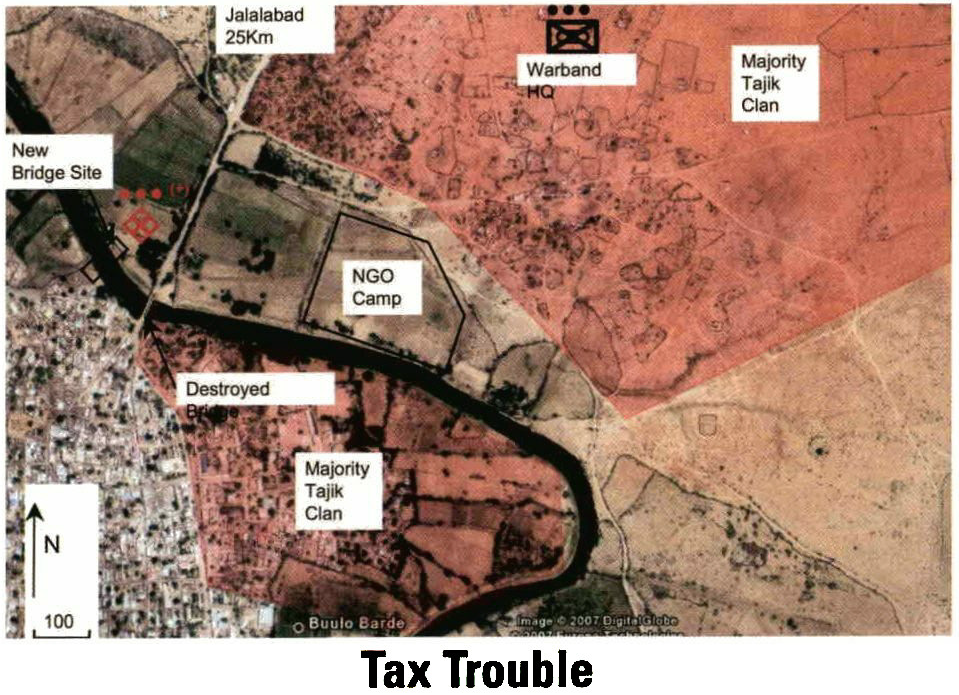
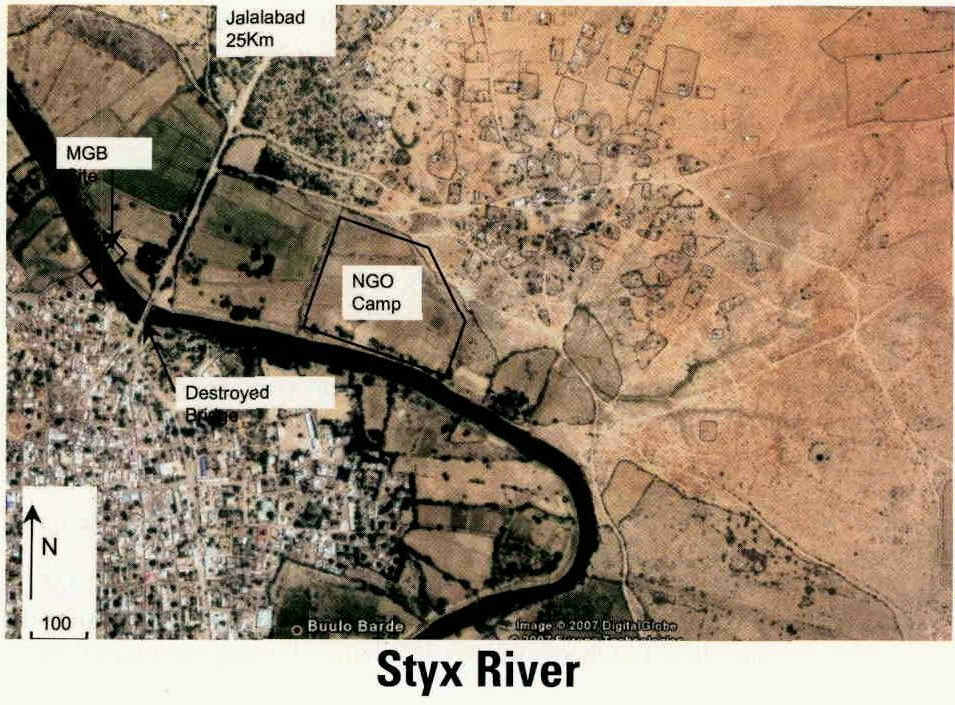
Your family and clan reside north and east of the Styx River and in the north and east sections of the city south of the river as well. In the middle of your area a French and British nongovernmental organization (NGO) has been distributing food, blankets, and fresh water to those whose homes have been destroyed as a result of the invasion and occupation.

During the American invasion, the Pashtun tribes have gained the uppet hand in the endless power struggle between the clans. Through manipulation of the French and British, they have convinced them to distribute the majority of the aid goods to warlords of the Pashtun clans who establish distribution points in the city center then charge tolls to cross the bridge. Through these tolls your clan loses most if not all of what they receive. The French and British do not understand the extortion, and the Americans are only seen in their armored trucks moving from Tora Bora north to Jalalabad.

A few weeks ago your clan leader ordered that the bridge be destroyed and the NGO camp attacked and looted with the spoils distributed among your clan. The bridge was destroyed, and your clan leader ordered you to take charge of sacking the camp when he orders it. Your warband consists of 30 fighters who have trained with AK-47s and rocket propelled grenades (RPGs). As young children they learned to fight with all manner of improvised weapons. You also have 6 pickup trucks from your family, 1 cell phone with contacts with the rest of your clan leaders on both sides of the river, 2 radios, 30 AK-47s with 40 rounds each, and 2 RPGs with 2 rounds each. Your men generally move as a mob and will break into smaller warbands of two to five fighters once the battle is joined.

Yesterday evening, over dinner with the clan chief, he informed you that the time to take the camp is today. Whether to attack during the day or at night is up to you. All of the clan leaders and heads of the community have offered their support with the stipulation that you wait until afternoon or evening. You agreed to their requests and reconnoitered the camp that evening. You discovered that the camp has about 20 workers, 2 trucks, and enough food to see your family through the next year.

The next morning you notice a group of 50 or so American Marines with armored trucks and a lot of construction equipment enter your area and begin work on building a new bridge. It is now noon, the attack must commence this afternoon or evening (within 3 to 10 hours), and the Americans look like they have no intention of leaving. What now?

Requirement

In 20 minutes, explain to your men and supporting clan leaders what you intend to do and what you need them to do. Issue your orders to your warband.

Issues for Consideration

1. What is your goal for this attack? How does the American presence complicate it? How do your actions negate the American presence?

2. What do you consider mission success?

3. How does your vision of success correspond to your clan leader’s objective?

4. How sensitive are you to casualties among your own fighters? How sensitive are you to local civilian casualties and property damage? How do your actions reflect this?

5. Is your warband being used to attack the Americans, instigate the local populace to action, take the NGO camp, or something else? Whom do you use and who will be reliable to deal with other situations that your warband cannot handle; i.e., will they take the NGO camp and keep the supplies?

6. Do your actions force the Americans to fight your warband? If so, what are the possible repercussions of a fight with the Americans?

7. If you chose not to attack the Americans, what other methods could you use to neutralize them?

Misleading Future Marine Tacticians?

By Dr. Andrew H Hershey

It is my belief that certain features of the current series of tactical decision games (TDGs) are not in the best interests of creating the next Napoleon as Mastering Tactics was want to do.1 TDGs are being stretched beyond the parameters and utility they are best intended to cover. The problem with recent TDGs is that too many extraneous “Issues for Consideration” have begun to seep into or become bolted onto TDGs. In some respects TDGs are taking on the qualities of exams, advanced school papers, or after-action reports. It is reasonable to postulate that if these ancillary thought processes found in Issues for Consideration are allowed to continue and become inculcated into the minds of Marines, there will be a deleterious effect on their combat decisionmaking.

How so? It only stands to reason that adding any additional thought for consideration, which strictly speaking at that instant does not have an immediate rde in the decisionmaking process to solve the slice of the Êght at hand} is a recipe for disaster. It will enable the enemy commander to execute his decisions more quickly, maintain his initiative, and thus impose his will on Marines. The enemy has the advantage in that none of these extraneous issues enter his combat decisionmaking process. His is a pure, refined, and straightforward one – -how best to kill his enemy.

As a concrete example of what I see as the added impedimenta creeping into TDGs take, for example, TDG #10-8, “Rahadnak Valley Search,” and its Issues for Consideration points 5 through 9 and furthermore their series of 14 followup bullet points, making 19 excess points to address in all! (Although the first sentence of point nine seems to really be a restatement of point four, which is a crux issue to address.)

How exactly does it behoove the captain to address points five through nine while he already has units engaged and a mobility kill on his hands? Is this really the time and place for having these matters directly enter the captain’s observation, orientation, decision, and action, which is frankly what the Issues for Consideration is asking him to do? Does the tactical situation, right this instant, really require points five through nine of him? In fact, is it not the case that at this instant devoting time to work out whether “at the end of the day” six stone walls will have been breached by Marine assault amphibious vehicles and two buildings will have sustained heavy damage from 12.7mm machinegun fire from the enemy on Hill 2 is a total waste of the captain’s combat decisionmaking time?

TDGs are slices of battle; however, aspects of points five through nine can only be addressed when the action is no longer a battle; i.e., beyond the scope of the TDG in its present state and certainly not without the information about how that battle unfolded to its very end state. Only then is it possible to adequately, fairly, and righdy access whether the captains use of force was lawful and proportional or if he inflicted unwarranted collateral damage. The immediate tactical question at hand the coup d’oeil which is the heart of the TDG) is what does the captain do to extricate 1st Platoon and carry on with the mission as briefed?

Further muddying the TDG waters is that in bolting on points like five through nine there is a knock on effect of artificially inflating the time limit presented in the “Situation” so that these ancillary issues can be addressed. Our captain does not actually have 1 0 minutes to skin the cat. He has perhaps 2 minutes to deal with points one through four, with more emphasis on one and four; otherwise things are only going to get much worse for him.

This is not an unfair or unwarranted critique of TDG #10-8. Previous TDGs depicting company-sized actions, and dating as far back as #96-7, used more realistic time scales; e.g., 2 minutes. It is implicit in TDG design itself that time should be limited.2 The 1 0 minutes granted in #10-8 is frankly an eternity the captain just does not have. Allowing for artificial time limits is not going to help train Marines any more effectively in combat decisionmaking; it is only going to engender them with a false sense of the operational tempo of battle. In short, train like you fight. Think slowly, fight slowly, and suffer defeat in short order is one of the essential lessons of Mastering Tactics if nothing else.3

It is possible, however, for TDGs in a revised form to address points like five through nine. The best way to do so to modify the current layout of TDG. Step one would be to see in “Requirement” section a return to istic time limits as well as the gence of the “old school” standard just asking for “any orders or and the rationale behind them.” Do prompt Marines or lead them down programmed path of questions; do help them from the outset to arrive at solution through such questions or lead them with extraneous Doing so does not help them learn think for themselves.

Step two is to create a new subdivision to the TDG, which would come after revised requirement section with stricdy tactical focus. The new sion might appear thus: “For analysis, take a further 1 5 minutes to dress the following issues for tion.” Here then one could list points five through nine or others that salient to the particular TDG at hand.

The advantage of this revised TDG format is that Marines will begin to which types of thoughts and questions are best needed and employed for tactical combat decisionmaking and which types of thoughts and questions are best used to reflect upon a battle, won or lost, within the context of the laws of war, commander’s engagement guidance, and rules of engagement.

Notes

1. Schmidt, Maj John R, USMCR, Mastering Tactics: A Tactical Decision Game V(brkbook, Quantico, 1994, p. 2.

2. Ibid.

3. Ibid., pp. 7-8. See also MAJ John H. Burns, USA, “Vitalize the Map Problem,” Infantry Journal, September-October 1937, pp. 412-414.

Authors Nora I would like to thank Maj Bruce I. Gudmundsson, USMCR(Ret) and GySgt Jeffrey R Waldon, USMC(Ret) for reviewing drafts of this article.

Dilemma at Styx River Bridge

Situation

You are the Platoon Commander, 1st Platoon (Reinforced), Bridge Company, 8th Engineer Support Battalion. Your platoon recently deployed to Afghanistan in support of the 11th MEU with the primary task of constructing medium girder bridges as part of civil-military operations in the Marine area of responsibility (AOR). You arrived in country 3 days ago.

You are currently tasked with building a medium girder bridge near the destroyed bridge in the town of Sar-e Pol in order to open the lines of communications within the battalion landing team’s (BLT’s) AOR. The Sar-e Pol bridge was destroyed in clan warfare between the majority Pashtun clan and the minority Tajik clan in this region of Afghanistan. To further complicate matters, the clans are further broken into smaller subclans and warlords that may feud with each other over matters of water well and road access. While no one has claimed responsibility for the bridge destruction, it is widely believed that elements of the Tajik clan who live north and east of the city center destroyed the bridge in a dispute over access to relief supplies and tolls charged by Pashtun clan members to Tajik clan members crossing the bridge.

Your detachment arrived at 0700 and has been working all day. The river is 2 feet deep, 40 meters wide, and has a current of 3 to 5 knots. A nongovernmental organization (NGO) base camp is 500 meters away by road outside of the town of Sar-e Pol. The NGO team has been establishing temporary shelters for the homeless, organizing food distribution, and providing limited medical treatment for the local population. You have had intermittent radio communications with the BLT, located in Samarkhel, near Jalalabad. You are expected to rejoin the BLT before sunset.

Toward the late afternoon, after mission completion and while conducting site cleanup and prepping for retrograde, you are visited by a group of Frenchmen from the NGO camp. They are very concerned about a report that clan forces in the immediate area will attack the village within the hour in order to capture the NGO camp and supplies and secure control of the bridge site. The Frenchmen report that there are 25 other British and French aid workers at the camp. They have two 2 ½-ton trucks and about 18 tons of food and medical supplies. What do you do?

Requirement

In 20 minutes, explain to the French aid workers what you intend to do and what you want them to do. Issue any orders to your squad leaders. Provide a sketch of your decision. Be prepared to discuss the issues for consideration.

Issues for Consideration

1. Who do you believe the enemy is?

2. How does your commander’s intent apply to this situation?

3. In this scenario, how do your actions and orders relate to his intent?

4. What does the enemy hope to gain from this attack?

5. How do your actions deprive the enemy of those gains?

6. Is the enemy expecting an armed military response? Do you think he will fight if he faces an armed military response?

7. What is the enemy’s motivation for this attack? How can you exploit and defeat his motivation?

8. Assume as a result of this incident that two civilians are wounded and one home is damaged.

* How do you expect the local villagers to respond? In 20 minutes? By the end of the day? The rest of the week?

* Is the anticipated response based on who caused the damage?

* How can you (or the MEU) counter negative responses? After the incident? After you return to base?

Fight for Rahadnak Valley

Situation

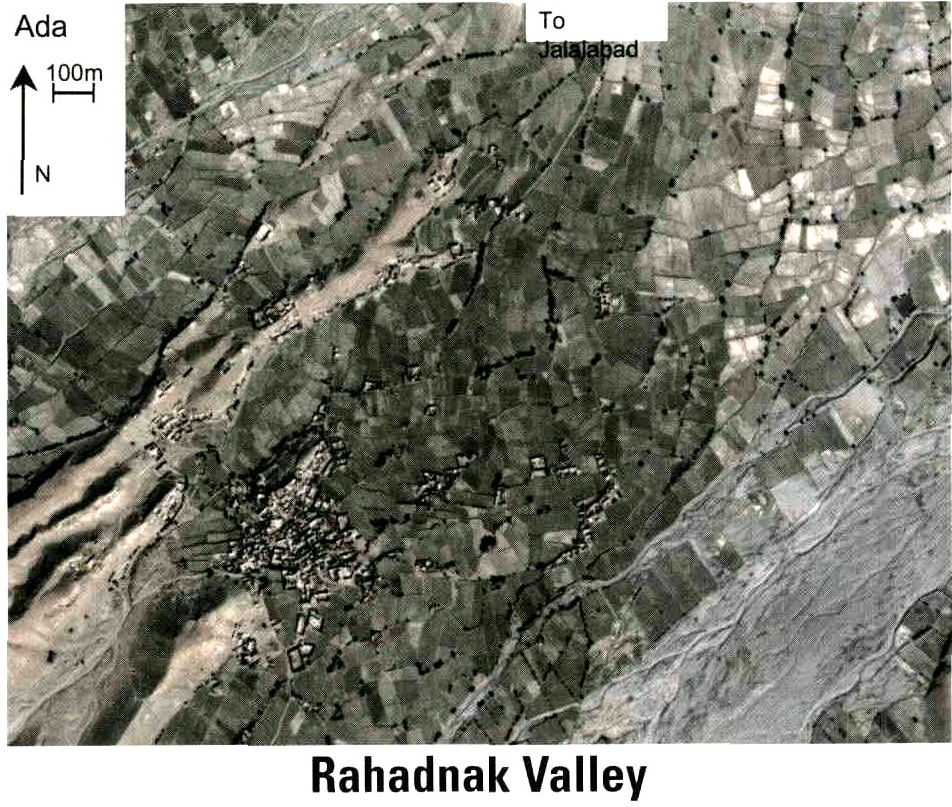
You are Marwand Paywastun, a local leader of the needihajum freedom fighters led by Sher Dil. You live in Rahadnak Valley and are proud to have never left it. It is now spring, the winter has gone, and your friends, family, and neighbors have planted the annual crops hoping for a bountiful harvest. After a few years of relative peace, foreign soldiers invaded your valley. Over the past month the Americans took over to impose foreign rule upon the dozen villages that make up the Rahadnak Valley. There is no reason to expect they will stop. They come in the hundreds, riding in their armored vehicles, often with helicopters flying overhead. Fortunately, while they have vehicles, you own this land and know every cave, ravine, goat trail, and hiding place in the valley.

This season you have been able to recruit over 60 fighters from your village of Ada and 2 nearby villages. While they include many of the major clans, some of the clans are neutral to your cause and some are hostile, favoring the Americans over their freedom. Your fighters have trained since birth as hunters and are organized as eight groups of seven to eight fighters (ineluding your own bodyguard) by clan affiliation. You have been able to amass 6 rocket propelled grenades with 20 rounds, one 82mm mortar with 25 rounds, two 14.7mm machineguns, 45 AK-47s with 80 rounds for each weapon, 4 cell phones, and 3 radios. Communication in the valley is primarily by messenger. Clan leaders have cell phones, and you have most of their numbers. Ada has four vehicles that belong to the local clan leader, who is also your uncle. The landscape is littered with unexploded bombs and shells left over from past wars.

Sher Dill has charged you with defending the western entrance of the valley from the American invaders. (See map.) He also reminds all of his leaders to be vigilant of the mood of other clans and to take every advantage to both defeat the Americans and increase our own numbers and supporters.

This morning one of your nephews rides to your home with news from your brother, a worker at the American base near Jalalabad. He states that the Americans have just received a new unit of soldiers with their armored vehicles, who began patrolling in the area a day after arrival. Based on previous experience, the Americans usually follow the same pattern, encircling the village with some of their men and vehicles and sending a smaller force into the village to search houses. You believe the Americans will be here by tomorrow afternoon at the latest. What now?

Requirement

In a time limit of 15 minutes, prepare your order to your group leader. Be prepared to discuss the rationale for your decisions.

Issues for Consideration

1. What do you believe the Americans’ goal is?

2. What is your estimate of the American strength compared to your own?

3. What do you consider mission success?

4. How does your vision of success correspond to Sher Dil’s objectives?

5. How sensitive are you to casualties among your own fighters? How sensitive are you to local civilian casualties and property damage? How do your actions reflect this?

6. Is your focus on using your fighters to destroy the Americans or to instigate the local populace to action?

7. Assume that at the end of the engagement you have brought down two Americans but are unable to photograph or claim the bodies, one home is damaged in the fighting, one oí your lighters from a nearby village is killed, another is wounded in the fighting, and your force has fallen back to the surrounding countryside and into the valley.

What actions can you take to exploit the loss of life and damage to property?

What actions can the Americans take that will help you exploit the situation?

How can this action increase your standing with the local populace?

How will you communicate your message to the local populace?

‘Cordon and. . . .’

Situation

You are the 3d Platoon Commander, Company G (Mechanized, Reinforced), Battalion Landing Team 2d Battalion, 1st Marines (BLT 2/1). Recently the MEU was sent to Jalalabad, Afghanistan, in support of NATO forces during Operation ENDURING FREEDOM. You have been in-country approximately 1 month and have been assigned to the northeast sector of the area of responsibility, Nangarhar Province. Recently the BLT has been searching for warlord, Sher Dil, and his needihajum freedom fighters believed to be operating in the Rahadnak Valley. Sher Dil is the primary source of arms transportation into Jalalabad. The arms shipments flow from the northwest tribal regions of Pakistan into the Tora Bora region, through the Rahadnak Valley, then into Jalalabad. The Rahadnak Valley was initially quiet with no armed conflict. However, after successful arms interdiction in the area, organized guerrilla groups ignited an active campaign against coalition forces and inflamed tribal unrest throughout the valley.

Your mechanized platoon is embarked on four assault amphibious vehicles and is further reinforced with one machinegun squad and two assault teams from weapons platoon. Your company is tasked to search a village suspected of harboring Sher Dil and needihajum fighters. Speed is essential as the enemy is prone to resupplying its forces and then quickly fading into the rugged and mountainous countryside. A section of AH-I W Cobras can reinforce the company within 1 5 minutes.

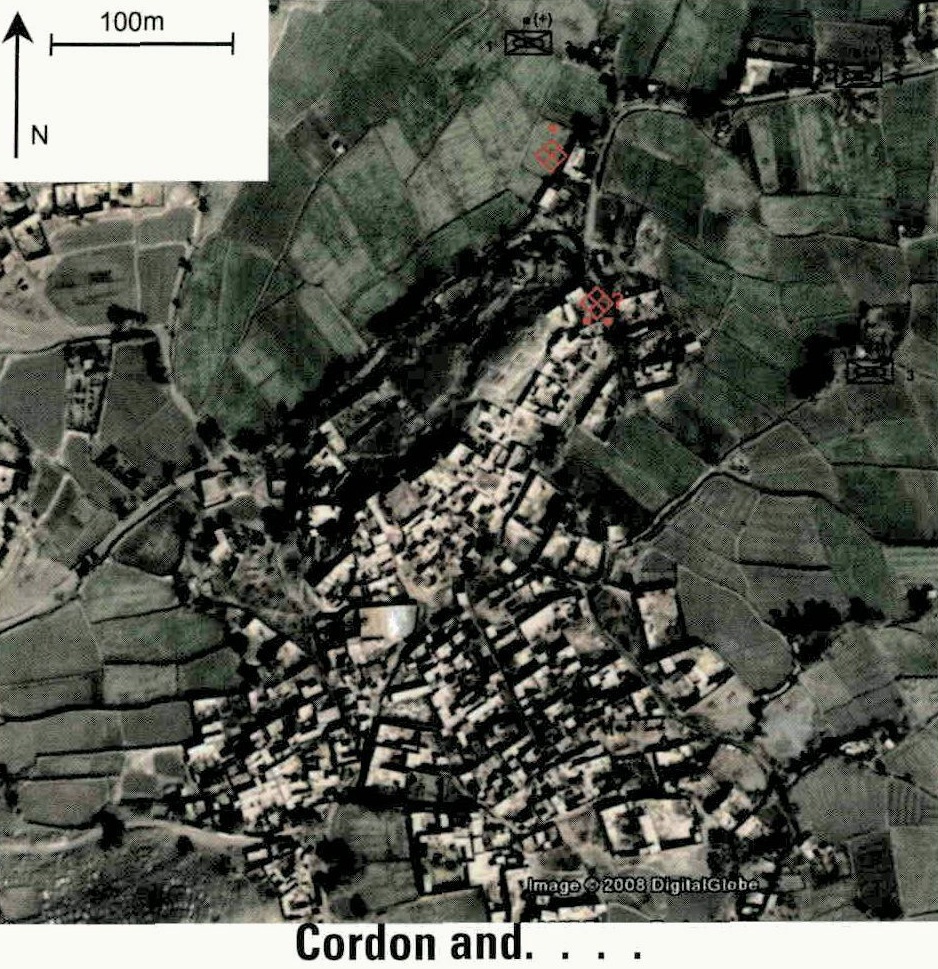
The company scheme of maneuver calls for two platoons to encircle the village, one from the west and the other from the east, one platoon to advance along the main avenue of approach to seal the entry point, and a dismounted mortar section to isolate the objective area with calls for fire as needed. The section of Cobras can be used to further isolate the objective area or provide supporting fires if required. Your platoon is the main effort. On order, you will secure the main supply route (MSR) northwest of Ada while 1st and 2d Platoons isolate the village. During isolation operations, are the reserve. Be prepared to attack the enemy force west and east of the village in support of 1st and 2d Platoons’ mission. Upon conclusion of isolating the village, you will enter the village and search for weapons caches, needihajum fighters, and Sher Dil. Your platoon is reinforced with a weapons cache detection team (fire team of combat engineers), the company intelligence cell (the company executive officer attended basic Farsi language school), and the company interpreter who speaks Farsi and the local tribal language. You have used the tactic successfully in this area in the past and are familiar with your mission and the local area. You have placed the platoon sergeant with 1st Squad, and you are with 2d Squad with the company attachments.

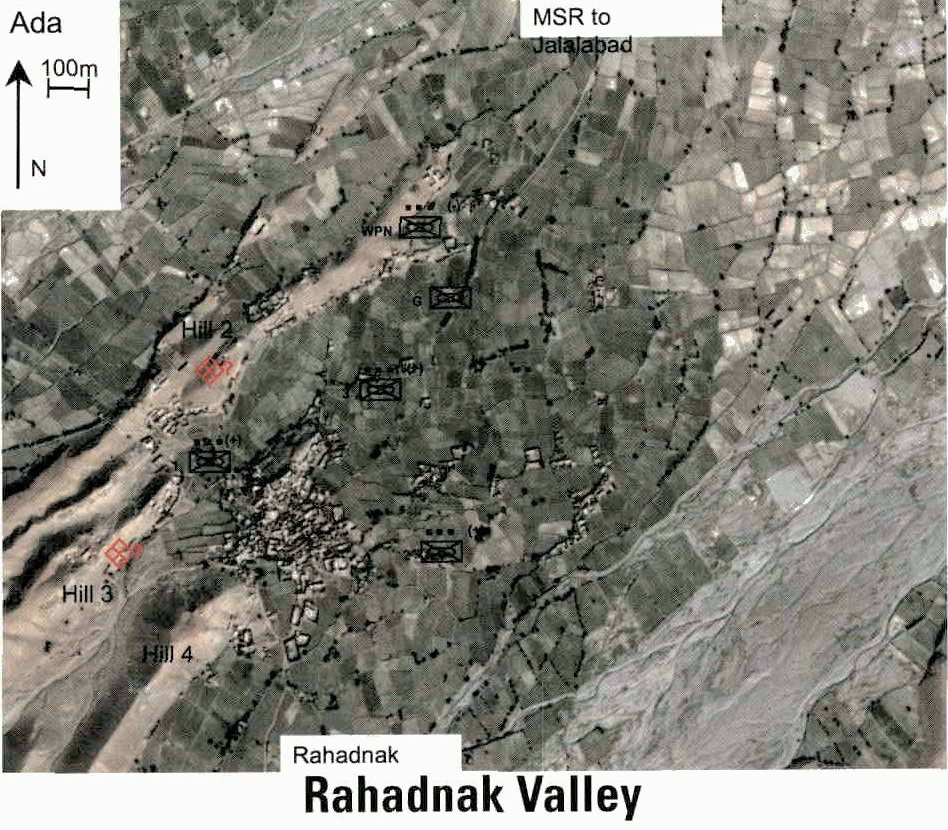
During the isolation of the village, your platoon advances to the outskirts of the village along the MSR and secures the northeast exit of the village as 1st and 2d Platoons execute their mission. Your platoon established blocking positions, overwatch, and observation into the village as shown on the graphic. Approximately 10 minutes into the operation you hear machinegun fire from west of the village, and about 2 minutes later you hear mortar round explosions from the west as well.

2d Squad Leader calls you over and reports, “Sir, take a look. There are approximately six vehicles being loaded down with men, women, children, bags, and boxes. The men are all carrying AK-47s, and I see two rocket propelled grenades so far.” You confirm what 2d Squad observed and note that the vehicles will be completely loaded in approximately 1 0 minutes at the rate they are going. At the same time, fire erupts from 1st Squad’s position, but you cannot see what they are engaging.

The radio operator hands you the radio and says, “1st Platoon talking to company.” You listen in, “. . . on Hills 2 and 3, squad-sized each, machineguns on Hill 2, mortars on Hill 3. Lieutenant and Jenkins down. Need 2 minutes of immediate suppression on south side of Hill 3, grid 354256. Am assaulting Hills 2 and 3. Over.”

Less than 5 seconds later, your platoon sergeant radios you, “Enemy team on north side of village attempting to access a weapons cache. 1st Squad engaging to suppress. Still developing situation. Over.”

Less than 10 seconds after that, the company commander radios you, “Need your platoon to attack enemy forces on Hill 2 in support of 1st Platoon’s mission. Attack northeast to southwest and flank the enemy force.” He then radios 2d Platoon and orders them to focus on taking Hill 4 and attacking enemy forces on Hill 3 in order to prevent their escape into the valley. What now?

Requirement

In a time limit oí 5 minutes, issue your orders to your element leaders as well as any reports and recommendations to the company commander.

Issues of Consideration

1. What is the enemy’s disposition of forces? What is the enemy trying to accomplish with this attack?

2. What do you believe is the company and BLT commander’s intent for this area?

3. How do your actions support these intents?

4. How do your actions defeat the enemy’s intent?

5. What do you expect the enemy to do as a result of your orders?

6. Do your orders exploit the enemy’s response?

7. Did you consider collateral damage (civilian injury and damage to property) when determining your orders and recommendations?

8. What do you expect civilian response will be to collateral damage (property damage and casualties), and how do you think it will be communicated:

* At conclusion of fighting, while you are in the area?

* Within 1 hour after you leave?

* At the end of the day?

* At the end of the week?

9. What is the expected enemy response to collateral damage, and how do you think their response will be communicated:

* At conclusion of fighting, while you are in the area?

* Within 1 hour after you leave?

* At the end of the day?

* At the end of the week?

10. What actions can you, the company, and the BLT take to counter and exploit enemy and civilian responses to collateral damage while you are in the area and after you return to base?

11. Are there any recommendations you would give to the company’s commander to improve future missions of this type after the mission is complete?

“What now, Staff Sergeant?”

Situation

You are che 1st Platoon Sergeant. Company G (mechanized, reinforced), Battalion Landing Team 2d Battalion, 1st Marines (BLT 2/1). Recently the MEU was sent to Jalalabad, Afghanistan, in supporr of NATO forces during Operation ENDURING FREEDOM. You have been in-country approximately 1 month and have been assigned to the northeast sector of the area of responsibility, Nangarhar Province. Recently, the BLT has been searching for the warlord, Sher DiI, and his needihajum freedom fighters believed to be operating in the Rahadnak Valle}·. Sher DiI is the primary source of arms transportation into Jalalabad. The arms shipments flow from the northwest tribal regions of Pakistan into the Torà Bora region, through the Rahadnak Valley, then into Jalalabad. The Rahadnak Valley was initially quiet with no armed conflict. However, after successful arms interdiction in the area, organized guerrilla groups initiated an active campaign against coalition forces and inflamed tribal unrest throughout the valley.

Your mechanized platoon is embarked on four assault amphibious vehicles and is further reinforced with one machinegun squad and two assault teams from weapons platoon. Your company is tasked to search a village suspected of harboring Sher DiI and needihajum fighters. Speed is essential as the enemy is prone ro resupplying ITS forces and then quickly fading into the rugged and mountainous countryside. A section of AH-I W Cobras can reinforce the company within 1 5 minutes.

The company scheme of maneuver calls for two platoons to encircle the village, one from the west and the other from the east; one platoon to advance along the main avenue of approach to ,sea] rhe entry point; and a dismounted mortar section to isolate the objective area with calls for fire as needed. The section of Cobras can be used to further isolate the objective area or provide supporting fires if required. Your platoon is tasked with encircling the village from the west in order to prevent enemy forces from escaping the village during the search operations. ? he company main effort is 3d Platoon, which will conduct the search of the village. Your boundary (limit of advance) is southwest of the village ending at a line from the village to the western part ot Hill 4. You have used this tactic successfully in this area in the past.

The platoon commander orders the platoon to advance west of the village with each squad tasked with securing Hill 2 (1st Squad), rhe main supply route (MSR) between HiJIs 2 and 3 (2d Squad), and the MSR between Hills 3 and 4 (3d Squad). 2d and 3d Squads are reinforced with one machinegun team .and one assault team. The platoon commander is with 3d Squad, you are with 2d Squad, and the platoon guide is with 1st Squad.

As 1st Squad advanced toward its objective and 2d and 3d Squads continue toward their objectives, lsc Squad begins taking machinegun fire. 2d and 3d Squads dismount and begin to suppress the enemy on Hill 2. Approximately 1 minute into the fight for Hill 2, mortar round and machinegun fire impact around 3d Squad. You see 3d Squad directing fire on Hill 3 but cannot see what they ate firing at. Over the radio 3d Squad Leader reports, “Lieutenant and Jenkins down, enemy team, squad sized, on Hill 3, am preparing to assault pending further orders.”

What now, StaffSergeant?

Requirement

In a time limit of 5 minutes, Issue your orders to your element leaders and any reports and recommendations you would make to higher headquarters.

Issues for Consideration

1. Who do you believe the enemy force is? What is the enemy’s intent for this attack?

2. What do you believe is the platoon commander’s intent?

3. What do you believe is the company commander’s intent for this area?

4. How do your actions support these intents?

5. How do your actions defeat the enemy’s intent?

6. What do you expect the enemy to do as a result ol your orders? How do your orders exploit the enemy’s response?

7. How much property damage do you anticipate as a result of your actions?

8. How many civilian casualties do you anticipate as a result of your actions?

9. What do you expect the civilian response will be to collateral damage (property damage and casualties):

* At the conclusion of fighting, while you are in the area?

* Within 1 hour after you leave?

* At the end of the day?

* At the end of the week?

10. What is the expected enemy response to the collateral damage:

* At conclusion ot fighting, while you arc in the area?

* Within 1 hour after you leave?

* At the end of the day?

* At the end of the week?

11. What actions can you and the BLT take to counter and exploit enemy and civilian responses to the collateral damage?

12. What actions can you, the company, and the BLT take to deter future enemy activity in this area:

* While you are in the area?

* After you return to base?

* During subsequent patrols in the area?