Military Theory

by Maj W. J. Quentin, USMC(Ret)

Maj Andrew D. Walker’s article, “An Alternative to Maneuver Warfare” (MCG Nov91), is a thoughtful and excellent piece, but I think it is poorly titled.

As I read it. Walker does not reject any of the fundamental concepts associated with the term maneuver. He simply talks about them in a logical and intelligent manner using the six battlefield operational systems that are the basis of AirLand Battle Doctrine. It is important for Marines to do this. In an era of joint operations, those who do not think, talk, and fit in with the doctrine and terminology of the unified commands are apt to be misunderstood and less useful than they ought to be. . . .


by Maj C. H. McGohey

Maj Walker’s article should have been titled, “An Alternative to Movement Warfare.” His thesis is based upon a flawed understanding of maneuver warfare. Maj Walker implies that the “maneuverist” eschews the massive application of firepower in favor of battlefield movement in order to obtain a bloodless decision.

Maneuver warfare encompasses far more than spatial movement. It is primarily a conceptual doctrine of warfighting that focuses on creating and exploiting advantage through a variety of means, including the selective application of massed firepower. The tactics applied are, as always, situationally dependent. The ultimate aim is to shatter the enemy’s cohesion and balance by ensuring that when we commence the destruction of his material assets, we do so at the right place and the right time, for a coherent reason, rather than merely attempting to destroy everything on the battlefield. The act of “maneuvering” often occurs principally in the commander’s mind, as he determines who, when, and where to fight, and what he will fight with.

Operation DESERT STORM was a superb example of maneuver warfare. Targeting priorities, targeting sequence, phasing of the campaign, the identification of critical factors, tempo of operations, and deception are all examples of how Coalition forces “maneuvered” against the Iraqi Army. While some may argue that our massive application of firepower and technology was attritionist, the difference was that when firepower was applied, it was done so for a specific purpose, within the framework of a plan designed to unhinge the enemy. Battles and engagemenls (tactics) were correctly matched against clear operational objectives.

The distinguishing feature of maneuver warfare is economy of force, i.e., the results achieved outweigh the effort expended. The ultimate goal is to defeat the enemy quickly and efficiently. If the attainment of this goal requires the application of massive firepower and technology, so be it.


by LtCol Gary I. Wilson

Maj Walker’s award winning article should be given a second award for using definitions of his own convenience. Walker states that combat has two distinct styles: an attrition style based on firepower and a maneuver style based on movement. His definition of maneuver, however, is nothing more than mere movement.

FM100-5 notes that maneuver is the employment of forces through movement supported by fire to achieve a position of advantage from which to destroy or threaten destruction of the enemy. FM 100-5 further notes that the successful application of the principle of maneuver requires not only fire and movement, but also flexibility of thought, plans, and operations. JCS Pub 1-02 defines maneuver of forces on the battlefield through movement in combination with fire, or fire potential, to achieve a position of advantage in respect to the enemy in order to accomplish the mission.

Proponents of maneuver warfare have never viewed maneuver as mere movement. In fact, maneuverists (for lack of a better term) have always described their style of warfare as fire and movement within a maneuver context.

Maneuver, as defined in FM 100-5 and 7CS Pub 1-02, seeks to exploit firepower. Col John Boyd, USAF(Ret), in “Patterns of Conflict,” describes how the destructive and disruptive effects of fire and movement tie up, divert, or drain away the enemy’s attention and strength. Walker is apparently unaware that fire and movement play a major role in the maneuver style of war. . . . Walker is quick to quote Clausewitz. Clausewitz assumed war was rational, but the preponderance of historical data from 1945 on does not lend itself to rational analysis championed by Clausewitz. Martin van Creveld’s book Transformation of War boldly challenges Clauswitzian assumptions and demands reading by all professionals. Hopefully, Marine Corps thinking regarding maneuver will not see a retreat to 19th century thought.

A Need For Frank Discussion

by LtCol G. I. Wilson

The letter from the Chairman of the Joint Chiefs of Staff (MCG, Oct91) was refreshing and gives a valuable perspective regarding the “eclipse” of the Joint Chiefs. Both Col Gordon D. Batcheller and Gen Colin Powell have the courage to put their views in writing. This is commendable. The Corps frequently mutes candid difference to accommodate that which is politically acceptable and maintains the status quo.

Indeed, it is heartening to see the Chairman respond to Col Batcheller’s article. We need more of this. All too often senior officers are quick to disagree but unwilling to put their position in writing. Others would do well to follow the lead of Gen Powell and Col Batcheller.

Real professionals can have professional differences. Regrettably, it is the bureaucracy’s milicrats who take it personally, opting to make lightening rods out of those who have the courage and intellectual honesty to be heard.

An Alternative to Maneuver Warfare

by Maj Andrew D. Walker

Winner 1991 Bevan G. Cass Award

The challenge is to identify and adopt a concept of warfighting consistent with our understanding of the nature of war and the realities of the modem battlefield.

-FMFM 1 Warfighting

The U.S. Marine Corps has sought to meet this challenge by adopting maneuver warfare as its warfighting style, an action based on a conclusion made about the nature and realities of modern battle. As with any conclusion, its truth depends on the validity of the underlying assumptions. By examining these assumptions, it can be determined whether maneuver warfare is truly consistent with the nature of war and the realities of the modern battlefield.

The cogent evidence presented to support acceptance of maneuver warfare is presented in Fleet Marine Force Manual 1 (FMFM 1), Warfighting. The reasoning is based on two assumptions about combat. First, combat has two basic components: fire and movement. Second, combat has two distinct styles: an attrition style based on firepower and a maneuver style based on movement. The attrition style is described as the systematic “destruction of the enemy’s material assets by superior firepower and technology.” Maneuver style applies strength against weakness with “the object of shattering the enemy’s cohesion, organization, command, and psychological balance.” FMFM 1 continues:

Potential success by maneuver-unlike attrition-is often disproportionate to the effort made. But for exactly the same reasons, maneuver incompetently applied carries with it a greater chance for catastrophic failure, while attrition is inherently less risky.

Because of the expeditionary nature of the Marine Corps and the proliferation of high-tech weapons, the Marine Corps can no longer presume vast numerical and technological superiority. It must win quickly by finding enemy weaknesses and exploiting them. A maneuver style of warfare makes this possible.

The assumption that combat is composed of only two basic components and therefore is defined by two styles of warfare is a vast oversimplification of a complex concept. The U.S. Army Field Manual 100-5 (FM 100-5) Operations, in what it calls the dynamics of combat, describes two components in addition to firepower and maneuver (FMFM 1’s fire and movement). These additional components are leadership and protection. Leadership is described as the most important dynamic and the facilitator of the others. Protection is the countermeasure to firepower and maneuver. It follows that under certain circumstances firepower and maneuver can be neutralized by superior leadership and protection. Maneuver may actually uncover friendly forces, thereby rendering them vulnerable to destruction by well-led and protected forces, in which case, combat power is not made greater with increased maneuver.

As in any human behavior, war has innumerable variables. If these variables could be quantified into a model of warfare, then their effects on war might be more clearly understood. However, to try to create a model that included every component of combat would be impractical. AirLand Battle Doctrine maintains a more accurate model can be formed from six battlefield operating systems: intelligence, firepower, maneuver, protection, command and control, and logistics. A concept of warfighting based on the interrelationships between these components will be a much truer representation of the nature of war than a concept based on only two components.

On today’s battlefield, it is possible for the United States to enjoy a vast numerical and technological superiority. Certainly the United States enjoyed that advantage in the Gulf War. The Marine Corps can expect a similar advantage in many stabilization operations involving the Third World. There is no doubt that the Marine Corps needs the capability to fight in an environment of disadvantage; however, an expeditionary force does not need to take unnecessary risks when it enjoys numerical and technological superiority simply in order to engage in maneuver warfare.

It is both shortsighted and dangerous to follow doctrine that assumes that all combat operations need to take the form of maneuver warfare and that the only enemies the Marine Corps must be prepared to fight are those of equal or greater strength. Though maneuver warfare has much utility in various situations, the Marine Corps must base its doctrine on a more complex understanding of the nature of warfare and on a more realistic appreciation of the varied modern battlefield.

The object of warfare is victory. The idea that a commander has a choice to seek victory on the one hand through the systematic destruction of the enemy (attrition warfare) or on the other hand by shattering the enemy’s cohesion, organization, command, and psychological balance (maneuver warfare) ignores the complementary aspects of the two styles of warfare. To imply that the enemy can be confused into surrender by intricate, high tempo maneuver alone is irresponsible. This may work against a poorly led army with low morale. But an army with the will to fight will not be overcome only by maneuver. The enemy’s means to resist often must be destroyed before victory is certain.

The 19th century military theorist Carl von Clausewitz described the nature of war when he wrote:

How are we to prove that usually, and in the most important cases, the destruction of the enemy’s forces must be the main objective? How are we to counter the highly sophisticated theory that supposes it possible for a particularly ingenious method of inflicting minor direct damage on the enemy’s forces and control of his will-power as to a constitute a significant shortcut to victory? [Maneuver warfare?] Admittedly, an engagement at one point may be worth more than at another. Admittedly, there is a skillful ordering of priority of engagements in strategy; indeed that is what strategy is all about, and we do not wish to deny it. We do claim, however, that direct annihilation of the enemy’s forces must always be the dominant consideration, We simply want to establish this dominance of the destructive principle.

Real confusion of the enemy will result from the systematic destruction of his command and control systems, air defense systems, and major weapons systems. This destruction will limit his ability to observe the battle and to fire back accurately. All warfare should attempt to do this.

The destruction of enemy forces has become an important element of the modern strategic objectives of war. An enemy left with a potent military force poses a considerable threat of future conflict. This opinion would have met with disagreement from Sun Tzu, the 4th century B.C. Chinese military theorist and early maneuverist. He wrote, “To subdue the enemy without fighting is the acme of skill” and, “Generally, in war the best policy is to take a state intact; to ruin it is inferior to this.” These maxims are held by maneuverists as the ultimate measure of success.

However, Sun Tzu is referring to the Chinese practice of conquering other warring states with relatively small professional armies. To seize the conquered state intact with low casualties was to add power to the victor’s state without bankrupting it. Modern warfare is different in that it has limited strategic objectives. Today it is unacceptable to absorb sovereign nations. The Gulf War is the most recent example of this reality. Clausewitz saw modern warfare more accurately, writing that:

We are not interested in generals who win victories without bloodshed. The fact that slaughter is a horrifying spectacle must make us take war more seriously, but not provide an excuse for gradually blunting our swords in the name of humanity. Sooner or later someone will come along with a sharp sword and hack off our arms.

The destruction of the offensive capabilities of a defeated enemy should always be a strategic objective of modern war. The maneuverist’s optimal result, that of a bloodless war, is not consistent with the objectives of modern war.

As a commander must focus his tactics on the enemy and not terrain, the style of warfare chosen for combat must be consistent with the capabilities and intentions of the enemy. The art of war is knowing what the capabilities and intentions of the enemy are. Clausewitz understood the relationship of warfare to the unpredictable reactions of the adversary. His “fog of war” is based on the elements of uncertainty that arose largely from the impossibility of gauging enemy intentions and reactions. The commander who can properly counter the enemy’s capabilities and intentions will have freedom on the battlefield. This is not to suggest that warfare is a step-by-step process that is reactive to the enemy. Many proactive operations can be prosecuted simultaneously, as long as the objective is to destroy the enemy’s means to resist. Once the enemy’s ability to affect the battle has been neutralized, victory is only a matter of attrition-enemy attrition.

Development of a doctrine or concept of warfighting must be based on the interrelationships of the principal components of combat. The six operating systems of combat previously mentioned (intelligence, firepower, maneuver, protection, command and control, and logistics) are appropriate for this purpose. Instead of only one style of warfare, this more complex model suggests many possible styles. The difference in styles of warfare is in the application and integration of the different components of warfare to bring about the destruction of the enemy’s ability to fight. To suggest maneuver warfare or any one style of warfare is consistent with the multifaceted nature of war is to ignore the need for the flexibility of matching friendly strengths to enemy weaknesses in all the components of warfare. Before a concept of warfare can be created based on these components, they must be defined, and their interrelationships understood. Additionally, if this concept is to stand the test of time, future trends of these components should be examined.

Intelligence

FM 100-5 defines intelligence operations as

the organized efforts of a commander to gather information on terrain, weather, and the enemy. Obtaining useful intelligence prior to the initiation of operations is a vital task.

The art of war is knowing the enemy’s capabilities and predicting his intentions. Intelligence is principal to clearing this “fog of war” so that the commander is able to see the battlefield accurately.

The trend of the future will be realtime intelligence. Real-time intelligence is the optimal tactical intelligence. The goal is for all tactical leaders to have an accurate picture of the battlefield at the very moment they are making their decisions. Real-time intelligence at all levels of command would be the ultimate union of intelligence and command and control. Just as the AWACS (airborne warning and control system) can be downlinked into the cockpit of a fighter aircraft, the target information gathered by JSTARS (joint surveillance and target attack radar system) needs to be downlinked in a usable form to all levels simultaneously. This will facilitate centralized control of fires, but localized execution. The principal shortcoming of intelligence has always been getting the appropriate information to the right commander. This problem will resolve itself as computers network information, and the information passed becomes that which the tactical commander wants, namely, critical target information. The strategic and operational commanders may need analyzed intelligence but the tactical commander’s primary concern is target acquisition.

Firepower

“Firepower provides the destructive force essential to defeating the enemy’s ability and will to fight.” Firepower can be used to facilitate maneuver by suppressing enemy fires or it can be used independent of maneuver to destroy the enemy’s operating systems (i.e., intelligence, firepower, maneuver, protection, command and control, and logistics). Firepower is the decisive element of combat. If victory is gained by the destruction of the enemy’s means to resist, then firepower is responsible for the destruction. All other components (the six operating systems) ultimately support firepower.

Firepower of the future will be increasingly accurate with greater effect and will be susceptible to fewer adverse environments and less jamming. The smart weapon is here to stay. However, dispersion and mobility will be critical to the survival of forces on the future battlefield. To optimize firepower, the systems will have to be able to fire on the move and concentrate fires even while dispersed. The Ml tank is an example of the “fire on the move” technology present on today’s battlefield. To concentrate moving, dispersed fires, networked onboard computers will have to generate the gun data for an entire battalion of self-propelled artillery pieces, all in different locations. No matter how effective one weapon system becomes, the integration of combined arms systems will always allow for the most effective use of firepower. Any one system can be defeated when employed by itself. However, the effectiveness of a weapon system employed as part of an integrated package is multiplied many times.

Maneuver

Maneuver, according to FM 100-5, “is the movement of forces in relation to the enemy to secure or retain positional advantage.” It is the means by which firepower can be concentrated at a critical time and place to achieve surprise and gain momentum. Technological improvements in mobility and communications have given maneuver additional speed and flexibility. However, maneuver will rarely be possible without firepower and protection. Though firepower must support maneuver, ultimately maneuver supports firepower by positioning firepower to advantage on the battlefield. Maneuver is the dynamic component of combat. The less the enemy is prepared to handle a dynamic battlefield, the more maneuver becomes effective.

Maneuver on the future battlefield will stress dispersion and mobility. Speed and freedom of movement will become increasingly important. The air arm presents a medium that allows for both speed and freedom of movement. Tilt-rotor technology will expand the horizons of maneuver tactics. Distances, speeds, and loads will increase as vertical envelopment becomes the maneuver of choice.

Protection

Protection is “the conservation of the fighting potential of a force so that it can be applied at the decisive time and place.” FM 100-5 divides protection into two categories-first, actions to counter the enemy’s firepower and maneuver and, second, actions to keep soldiers healthy and their morale high. Though the latter actions are important, the former actions are those that have application to a warfighting concept. Actions to counter the enemy’s firepower and maneuver include security, air defense, dispersal, cover, camouflage, deception, suppression of enemy weapons, mobility, and counter-mobility. More than any other component, protection is structured to the enemy’s capabilities. As enemy capabilities are reduced, actions to provide protection can be reduced to afford greater offensive flexibility.

Protection techniques will also be needed on the battlefield of the future. Effective protection starts as deep as possible on the battlefield. “Star Wars” technology for antimissile and antiair defense is here today with the Patriot missile system. Ultimately, the use of space to position defensive weapons will provide a versatility that cannot be matched. No matter how sophisticated protection becomes, the key ingredient will be the individual warrior’s desire to fight. No protection will be sufficient to protect an army that does not have the desire to fight.

Command and Control

FM 100-5 points out that command and control “must facilitate freedom to operate, delegation of authority, and leadership from any critical point on the battlefield.” The principal element of this component is leadership. It is leadership that “will determine the degree to which the firepower, maneuver, and protection are maximized.” Without competent and confident leadership, the courage and competence of soldiers, the excellence of their training, the capability of their equipment, and the soundness of their combined arms doctrine are meaningless.

For the force to be successful, this competent and confident leadership must be present in the battlefield commander. He must be decisive, experienced, and able to affect the action. Clausewitz believed much of the success of any operation was due to the “genius” of the commander. “Genius” did not refer as much to clever tactics as to the ability to find a way to carry on through adversity. Combat requires a commander who would rather advance on his own responsibility than remain waiting for orders. Complementary to this “genius” is a plan flexible enough to allow for shifting the focus of main effort. With a commander decisive enough to capitalize on a momentary advantage and a plan that allows for exploitation of momentary advantages, determination and flexibility are wed.

The modern battlefield has produced many advantages in command and control. However, the strength of command and control is best tested when no communications exist. If the commander’s intent is understood and subordinate independent action is encouraged and expected, then the enemy will be incapable of stopping the force by disrupting command and control systems.

Command and control in the future will rely on reliable, directional, covered burst communications. With the increased fluidity of the battlefield, communications with adjacent units will become as important as communications with superiors. The future will see the increased use of artificial intelligence to make the standard decisions that fire support coordinators and air controllers do today. The computer will verify the target information, compare it to restrictions, and decide who should fire the mission. The challenge for the commander will be to use the technology to its best advantage without becoming a slave to it.

Logistics

The final component is logistics. It has been said by many that “amateurs speak of tactics; professionals speak of logistics.” This maxim recognizes the principal importance of logistics to warfare. All else becomes irrelevant if the forces in the field cannot be sustained. Napoleon’s march on Moscow is the classic example of what happens when this military maxim is ignored. FM 100-5 lists six key sustainment functions: manning, arming, fueling, fixing, transporting, and protection of the sustainment system. Technology on the modern battlefield has become necessary to manage the incredible amounts of supplies required to fight a high-tech army. Computer systems for ordering and warehousing supplies have become commonplace. Containerized shipping and cargo movement systems are now utilized for rapid offload and distribution. The future battlefield should see artificial intelligence systems planning and executing lift and sustainment operations to optimize time and space requirements.

No matter how high-tech the battlefield may become, certain tenets of logistics will never change. Logisticians must anticipate the requirements of combat if they are to keep up with demand. They must “push” supplies to the front, rather than wait for requests to “pull” supplies forward. Logistics must be integrated into the concept of operations from the beginning of the planning process. Logistics must be continuous and redundant. Supplies cannot be interrupted because one mode of support is temporarily or permanently lost. The system must be responsive by performing surge operations if the momentum and initiative are to be maintained by maneuvering forces. Improvisation is required of every good logistician. Those who can improvise will always have an advantage over those who cannot.

To form a doctrine of warfare these six components must be brought together in a workable concept. The maneuverist might expect that increasing maneuver increases combat power. But this in only true when the enemy’s mobility, countermobility, fire support, and command capabilities have been brought under control through other means. If the reality of today’s battlefield is that “the United States can no longer expect to enjoy vast numerical and technological superiority,” as is noted in FMFM 1, then maneuver may very well lead to disaster. Certainly maneuver against an enemy with limited command and control that can no longer see and react in its area of influence is the tactic of choice. However, a well-protected enemy with greater numbers of conventional arms and equal technology is not automatically a candidate for maneuver. Once the battlefield has been shaped by a coordinated effort against the enemy’s ability to see and react, maneuver becomes viable.

A doctrine of warfare should be appropriate for every environment and enemy. It must be adaptable to the jungle as well as the desert, be equally applicable to high-intensity conflict and to low-intensity conflict, and prove effective against high-tech enemies as well as primitive ones. What must be considered in each situation is the unique and distinctive nature of the environment and the enemy. A relative advantage in one of the components of warfare must be developed. Once one advantage is attained, others can be developed. This is the doctrine of “relative advantage.”

This principle of relative advantage is valid at all levels of war: strategic, operational, and tactical. Strategically, a country should choose the type of war that matches its relative strength. Using Clausewitz’s trinity of war (the government, the military, and the public) as the components of a country’s strength, a country with a stronger military than its adversary should obviously engage in military action. However, a country with a stronger public will to fight but a weaker military than its adversary may prefer to use guerrilla tactics, and a country with stronger political means may find cold war tactics (i.e, economic and political sanctions) to be its most effective strategy. At the operational and tactical levels, the six components of warfare are the strengths to be evaluated-the areas in which relative advantage should be sought.

The United States’ doctrine, weapons, and tables of organization were formed for fighting high- to mid-intensity conflicts. Low-intensity war will provide much different problems for maneuver warfare. The command and control of insurgents is decentralized and therefore is difficult to confuse. Large formations of troops are purposely not present in guerrilla warfare and therefore cannot easily be maneuvered against. The insurgents’ vulnerability is their logistics. Successful counterinsurgencies have always started with the separation of the guerrilla from his support.

The Soviets’ inability to cut the Afghan rebels from their sustainment is the reason for the defeat of a high-tech army by a low-tech army, not the Soviets’ inability to maneuver. Though the Vietnam War was not an insurgency, it was low intensity in most cases. An argument can be made that a type of maneuver warfare was practiced in Vietnam. However, it was not effective because the jungle environment did not allow for the fixing of the enemy. Their true vulnerability, logistics, was never fully neutralized for primarily political reasons. But for whatever reasons, maneuver warfare was not the appropriate warfighting style.

If the doctrine of maneuver warfare has alerted the Marine Corps to a forgotten component of warfare-maneuver-then it has served its purpose. Certainly maneuver is a dynamic factor of combat that positions firepower for the destruction of the enemy. But firepower is not subordinate or even equal to maneuver. Firepower is the decisive factor in combat. Firepower can support maneuver, but ultimately maneuver supports firepower. Historically, maneuver was invented to concentrate firepower for the maneuvere’s advantage. From Frederick the Great’s oblique formations to Napoleon’s parallel columns, maneuver has always had the purpose of concentrating firepower into the enemy’s relative weakness.

To use maneuver on today’s and tomorrow’s battlefields, the preparation of the battlefield is crucial. It is only through the disabling of the enemy’s ability to fight that maneuver becomes viable. The disabling or neutralizing of the enemy’s components of warfare is done by applying the friendly forces’ relative advantages to the enemy’s relative weaknesses. As the enemy’s capability is diminished, the battlefield becomes free for use of maneuver. This is not to say that maneuver cannot be used early in some situations. Maneuver may be the relative advantage the friendly force enjoys. However, there are some circumstances where maneuver will not be a relative advantage early in the conflict. Only after the enemy’s ability to stop maneuver is neutralized does maneuver become effective.

Although maneuver warfare is valid under certain circumstances, the nature of war and the realities of the modern battlefield call for a much more flexible doctrine of warfare. The concept of relative advantage, focusing on the six essential operating systems of combat discussed above, may serve this purpose.

Observations on SWA

Capt Paul E. Bowen, USMCR

BGen Paul K. Van Riper’s “observations” hit right down the middle in describing the personnel problems and material shortfalls discovered during the “staffing up” and “fighting” of I Marine Expeditionary Force (I MEF) for Operation DESERT STORM. He correctly identifies the “administrative” mindset vice the “combat operations” mindset that interfered with some intelligence functions. Over 800 I MEF “augmentees” arrived as the first week of Operation DESERT STORM drew to a close. The Targeting Section, Fire Support Coordination Center, G-3,1 MEF, for example, had not worked together as a staff before hostilities. . . .

Logistically, I MEF was ready to go, thanks to years of exercising maritime pre-positioning force concepts. Operationally, I MEF arrived in Southwest Asia (SWA) with sufficiently heavy forces, but with insufficient staffing and liaison support. The implementation of BGen Van Riper’s proposals will make the next MEF/MEB general staff a “proactive” response vice a “reactive” result in the next conflict.


LtCol Ky L. Thompson, USMC(Ret)

The frank assessment of DESERT STORM operations by BGen Van Riper was good to see, and I hope that we profit from the lessons learned. I also hope, however, that we don’t find ourselves-as we often have in the past-“preparing to fight the last war.” On the subject of maneuver warfare, I find myself coming down more on the side of the “Col Edsons” rather than on that of the “LtCol Wilsons.” In my opinion, the “Wilsons” (See MCG, Jun91, pp. 23-27.) tend to mistake common sense and sound tactics for some mysterious, new-found, philosophy of warfare. I guess that’s one of the points that has always bothered me about the rabid disciples of the maneuver warfare school.


Col Gordon D. Batcheller, USMC(Ret)

Being retired means not losing sleep over the maneuver warfare debate, usually fatuously framed as a choice between being a mindless attritionist, cheerfully feeding our men into a meatgrinder, or a clever maneuverist, masterfully dominating the battlefield with guile and audacity and bloodlessly guillotining the enemy with his unraveled observation, orientation, decision, action (OODA)-loop. But as Col Edson demonstrated in the June issue, being retired lets you weigh in with something besides the politically correct dogma those on active duty seem temporarily burdened with. It is intriguing to hear the maneuverists talk about getting inside the Arab OODA-loop, especially when, as Col Edson points out, firepower took out the “OO.” If ever there was a war that proved the efficacy of firepower, it was the Mother of All Victory Parades. But the war didn’t end until units maneuvered; anyone looking at the entire war “discovers” what was being taught ages ago at The Basic School, sometime after Korea and before Vietnam.

The simple fact is that there are some nine principles that have proven historically to be relevant to success on the battlefield, and that most battlefield decisions involve the orchestration of fire and maneuver and combat service support to secure victory over an enemy. “Maneuver warfare” no more satisfies the need for an intellectual foundation for tactical competence than some Latin phrase in the Mass explains Christianity. . . .

BGen Van Riper’s observations on DESERT STORM in the same June issue confirm that familiar issues of at least 30 years’ standing remain unsolved; Maj Taylor and Bennett identify disturbing deficiencies when one considers that I MEF has theoretically been primed for a DESERT STORM for some 10 years. We should take pride in what we did well, thank Saddam Hussein for giving us the time to do it, and attack the identified “discrepancies” with an urgency that will make us less dependent in the future on the incompetence of our enemy.

No one expects a perfect FMF, and with the normal maturing and turnover of the Corps from year to year there will be few organizations at any given C-day totally prepared, even for their most likely contingency plan. But it ought to be embarrassing for a lot of Marines to review Gen Van Riper’s list of things that need fixing, or worse yet, inventing. We need to spend a great deal more effort on the basic nuts and bolts. For at least 20 years I have been aware of a large body of thought, if not a consensus, that we don’t do as well as we should getting ready for D-day because we are so overcommitted to exercises and peacetime projects and fuzzy thinking and misordered priorities. Concern normally focuses on the effects this has on small unit training, but as Gen Van Riper indicates, higher headquarters-or command elements-pay a high price also. If budget cuts keep us closer to the flagpole for the next couple of years, it appears that we will have a few things to keep us busy.

MLRS and Maneuver Warfare

by Maj Charles W. Morris

The Multiple Launch Rocket System is a war-proven weapon that adds immensely to a commander’s ability to bring massive amounts of fire to bear on deep targets-a capability that will enable commanders to destroy enemy cohesion more effectively.

As early as 1814, Sir William Congreve had written of the theory of rocket system employment. In his writings he discussed “the facility of firing a great number of rounds” as quickly as possible, thereby advocating the capability of massing fires and the benefits that accrue to a rocket system. He stressed two characteristics: the simplicity of a launcher and, primarily, its capacity to mass fires on a’large target instantaneously, thus effecting total surprise on the enemy. His theories on the tactical employment of rocket launchers are still valid, and were validated during the war against Iraq.

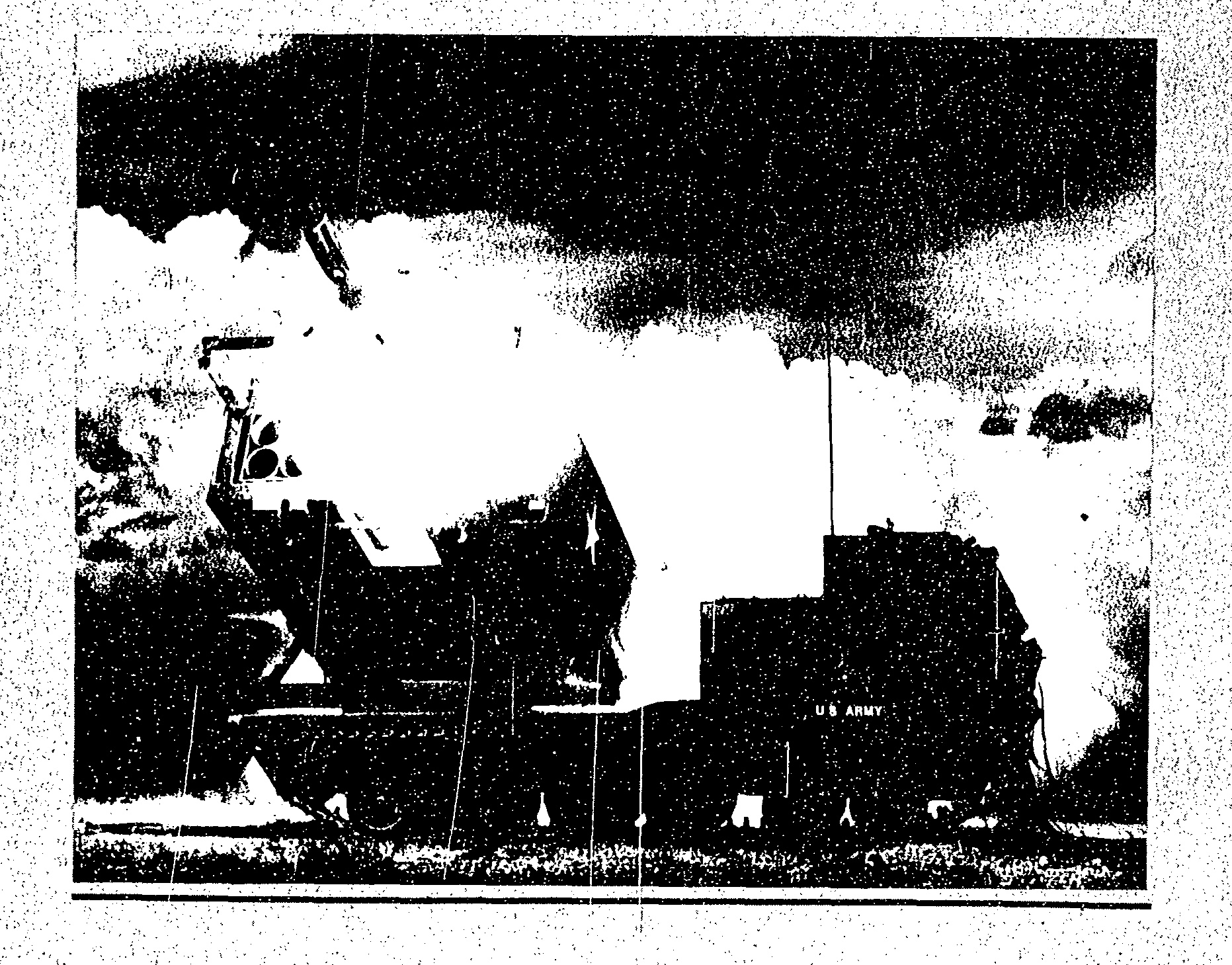
The U.S. Army acquired the Multiple Launch Rocket System (MLRS) in 1981. It is a tracked, self-propelled, allweather rocket system capable of launching twelve 227mm rockets in a single ripple of approximately 60 seconds or engaging targets individually with a single rocket. The armored self-propelled loader-launcher (SPLL) is operated by a crew of three and provides an automated positioning and firing capability. Its onboard communications system and fire-direction computer are digital and provide a burst transmission link to higher and adjacent headquarters. It is produced by the LTV Corporation and each dualpurpose, improved conventional munition (DPICM) rocket is able to deliver 644 antimaterial/antipersonnel grenades. It is air transportable by both the C-141 and C-5A aircraft. It is highly mobile and is designed to augment cannon artillery in its suppression, counterfire, and interdiction roles. It may be used in the general support (GS), general support-reinforcing (GSR), or reinforcing (R) role as an indirect-fire, area artillery weapon system. The inherent responsibilities of each of these missions are similar to those for tube artillery. The MLRS provides additional firepower while freeing tube artillery units for the direct support (DS) role. Its present range is more than 30 kilometers, but with the Army Tactical Missile System (ATACMS) that was used with great success against Iraq, its range can be increased to 130 kilometers.

The Army is presently organized utilizing the MLRS battalion (three batteries of nine launchers each) as a corps asset, either independently deployed or attached to a field artillery brigade within the corps. The battalion is organized to provide rocket fires in support of the corps, as well as to reinforce other corps artillery units. In addition, an MLRS battery is organic to the divisional artillery of the Army’s heavy divisions (mechanized and armored). This provides general support fires for the division. The batteries that are organic to the division artillery are virtually identical to those within a corps’ MLRS battalion.

The concept for employment of the MLRS is GS and GSR at the division level while the battalion can be used in an R, GSR, or GS role at the corps level. It can be used not only for the attack of deep, high-payoff targets, but also to augment tube artillery suppression of enemy air defense, counterfire, and interdiction. Its value in augmenting tube artillery by providing additional firepower is made evident when considering that one rocket with 644 submunitions equals 7.3 rounds of 155mm (88 submunitions per round). This equates to a single launcher with 12 rockets equaling or exceeding the massed firepower (one round per tube) of 11 batteries of 155 mm howitzers.

There are some drawbacks to the MLRS, including cost and logistics; still, the system does offer some significant advantages when considered in light of the Marine Corps’ concept of deploying as a Marine expeditionary brigade (MEB) and employing as a Marine expeditionary force (MEF), and when considering the system’s potential employment in conjunction with maneuver warfare. Due to the fact that many potential enemies are now equipped with Soviet-style mechanized, armored, and rocket units, thought must be focused on these types of forces and what the Marine Corps will need to face them in future conflicts. The intensity and complexity of warfare has increased due to extended engagement distances, very mobile armored forces, and shorter duration of engagements due to those highly mobile forces being placed in armored formations. In such an environment, the commander of a Marine air-ground task force (MAGTF) is going to need more firepower than three or four battalions of artillery can provide him. He will have to mass his fires repeatedly and with great intensity if he is going to succeed in his mission. It is under these circumstances that a rocket launcher becomes a very useful weapon system. Its major characteristics of heightened volume of fire, shock, and surprise-effect fulfill a definite requirement for the massing of fires on high-priority targets.

At the present time Marine Corps GS artillery is limited to the 155mm M198, the same system used in each of the Corps’ DS battalions. While bold and aggressive use of this artillery by means of flexible command and control and organization for combat may temporarily suffice, long-term considerations for additional fire support need to be addressed. Given the growth of artillery capabilities worldwide, the Corps will need the greater range and volume of fire traditionally available from GS artillery. A possible solution is the acquisition of the MLRS as a GS system. The major disadvantages and advantages to this proposal are discussed in the following paragraphs.

The first of the disadvantages that require discussion is the problem of cost. Currently, one MLRS launcher costs approximately $3.04 million, according to the FY94 Program Objective Memorandum. The real issue, however, is the cost of ammunition. A 30-day supply for the planned acquisition would cost nearly half a billion dollars. Based upon the number of launchers acquired, this can become an expensive proposition. However, the increase in combat power available to a MAGTF commander must be weighed, as must be done for every acquisition, against the cost. It appears to be well worth it.

A second drawback is logistics support. The rockets are large and cumbersome, but while 30 days of ammunition for the MLRS is slightly heavier, its cube is smaller than the ammunition for the 8-inch howitzer Marines previously fielded. Still, it is important to have support vehicles to transport this load. A ripple of 12 rockets fired in less than one minute can expend a great deal of ammunition, so indiscriminate use of the MLRS against all targets should not be contemplated. Current five-ton trucks (M900 series) would not be able to provide the necessary ammunition resupply support. But the acquisition of three Mk48 logistics vehicle system (LVS) per artillery regiment has relieved this problem to a certain degree. Still, the additional costs of this logistics system must be considered. Prioritization of the overall targeting effort to consider high-value targets for engagement by MLRS would aid in the justification for accepting these additional problems.

An additional disadvantage to be considered is the fact that MLRS is not helicopter transportable. On balance, this is not an overly significant weakness considering that the M198 howitzer can be transported only by the CH-53E.

One last disadvantage to be addressed is its firing signature. Once the rocket is launched, the dust and smoke create a signature that can be easily identified visually and the trajectory of the rocket can be identified electronically. This vulnerability has been overcome to a certain degree by the employment of “shoot-and-scoot” tactics; that is, firing followed by immediate launcher displacement. This requires in-depth planning of battle zones to allow for the rapid movement of launchers and uncovering a large number of firing positions for their sites. (For more on “shoot-and-scoot” artillery raids and MLRS, see LtCol Mazzara’s “Artillery in the Desert, 1991,” MCG, Apr91.)

While the disadvantages are significant and must be considered in light of possible acquisition, there are many advantages to the current MLRS fielded by the Army. Foremost among these is mobility. The M270 MLRS is a tracked vehicle, providing much greater crosscountry mobility and speed in displacement for survivability than current towed weapon systems. The M270 is lighter and smaller than earlier self-propelled systems and is compatible with all present landing craft and the landing craft, air cushioned (LCAC). In addition, it is capable of being airlifted by both the C-141 and C-5A aircraft, making its strategic mobility a point of considerable interest. The ammunition weight and cube are similar to that of the old eight-inch howitzer, which keeps it compatible with the present amphibious lift capability. In addition, the onboard fire-control computer and navigation system allow for individual launcher employment or the massing of the fires of several launchers.

The advantage of increased lethality available with the MLRS has already been mentioned. This increased killing power is due largely to the numerous and diverse types of munitions available and under development for the system. At present, the M77 rocket fired by the MLRS delivers DPICM to a range of 32 kilometers. The MAGTF Master Plan calls for increased capabilities for counterfire and the development of a GS system with a range of 40 kilometers. The MLRS approaches this now. At present, tube artillery is capable of ranging 30 kilometers with rocket-assisted projectiles, which comprise only a small portion of the base ammunition allowance. But maximum charges fired to achieve this contribute heavily to tube wear. Developmental warheads for the MLRS include scatterable mines, terminally guided warheads, seek-and-destroy armor (SADARM), and chemical munitions. However, the most significant developmental munition is the ATACMS, which has extended the range to 130 kilometers. While only two missiles per launcher can be employed, literally no launcher modification is required, and the capability of the system in terms of depth of attack will be markedly increased.

An advantage for the Marine Corps lies in the fact that the MLRS has already been fielded by the Army, providing a war-proven, off-the-shelf system for acquisition. There would be some research and development costs associated with it-for instance, hardening of the computerized systems against salt water associated with amphibious operations-but these would be minimal. In fact, the Army may be convinced to participate and gain a product improvement. Overall, there would be limited developmental costs incurred.

Finally, the demands for manpower resulting from adoption of MLRS would be minimal. In these days of tight budgets and manpower reductions, this is an important consideration. The battery structure proposed by then-Maj Andrew F. Mazzara (MCG, Sep88) calls for 5 officers and 71 enlisted (a crew of 3 is required to operate the launcher)-a relatively small investment for the capability acquired.

When looking at a numbers comparison only, the advantages definitely outweigh the disadvantages. However, if the MLRS were acquired, the Marine Corps must still determine how it will be employed. Since the considerations following acquisition are still in their infancy, a possible method of employment for the Marine Corps requires development.

Before developing a Marine Corps concept of MLRS employment, we must first examine how the MLRS would be employed and integrated into the maneuver warfare concept. By its very nature, MLRS would lend itself readily to employment as a GS weapon system with which the maneuver commander can influence combat. Maneuver warfare must be thought of in terms of space and time to gain a positional advantage as well as generating a faster operational tempo to gain decisive superiority at the required time and place. Attempts should be made to shatter the enemy’s morale and physical cohesion through rapid, violent, and unexpected actions. Basically, the aim is to create a situation with which he cannot cope. Firepower, especially that which will shock and surprise the enemy force, will be critical to accomplishing these tasks. The idea is to shift combat power, defined as the sum of firepower and maneuver, to decisive points and times in the battle. Firepower, such as that provided by the MLRS, can rapidly shift combat power without the physical movement of maneuver units. MLRS, with its capacity for mobility, lethality, surprise, and shock, equating to instant suppression and destruction of large areas of the battlefield, can provide that concentration of combat power at decisive places and times. It is capable of immediate response to a situation with massive coverage of a particular area of the battlefield.

Any joint munitions effects manual will bear out the increased effects of a first-round, massed time-on-target (TOT) as opposed to second and succeeding volleys. The key to the employment of the MLRS is the selective application of its massive capabilities against critical enemy vulnerabilities. This would lend itself to the GS mission where control is centralized and exercised directly by the maneuver commander through his artillery headquarters. The attempt is to pose dilemmas to the enemy so rapidly that the maneuver commander dictates terms of battle. He actively works to seek out enemy vulnerabilities and concentrate his combat power against them. Rapid rates of fire and the capability to mass on a single target or engage 12 individual targets from a single launcher provide a capability heretofore unknown by the maneuver commander. The munition pattern from a single rocket covers an area on the ground approximately 200 meters in diameter. The vanety of warheads under development would give the commander a great deal of flexibility.

The present range capability of the MLRS with ATACMS munitions exceeds that called for in the MAGTF Master Plan. ATACMS would allow the maneuver commander to engage extremely deep targets with a surface-to-surface fire support system in any kind of weather and in any type of terrain. Survivability of Marine air assets, the only system now capable of deep interdiction, as well as an overall savings of air sorties available, hang in the balance.

It is interesting to note that the Army organizes its defensive framework to include an area for deep operations. An Army commander has the MLRS as well as joint air attack team (JAAT) operations at his disposal to extend his area of influence and pursue deep operations. While the Marine framework considers three echelons-security, main battle area, and rear-and stresses deep attack, the only fire-support asset available for deep operations is air, weather permitting. Can the MAGTF commander afford to squander air assets and sorties, or worse, let his vital mission requirements go unfulfilled, when there is an all-weather system available that would allow him to provide deep interdiction of enemy second-echelon elements and counterfire? MLRS offers an exciting alternative to extend the MAGTF commander’s area of influence. Given proper intelligence regarding his area of interest and new capabilities for target acquisition provided by the surveillance, reconnaissance, and intelligence group (SRIG), he now has an additional capacity for altacking highpriority targets acquired well beyond the security area.

If, in fact, these points are deemed to have merit and the MLRS is acquired, we must now turn our attention to the numbers of launchers the Marine Corps will require and how they will be employed. It is recommended that the Marine Corps buy 42 launchers (12 each for the 10th and 11th Marines, and 18 for the 14th Marines). (This figure accounts neither for a maintenance nor operational readiness float, nor launchers for the Maritime Pre-positioned Force, all of which may also have to be considered.) The austere artillery assets that would remain without this acquisition are totally inadequate. The 12th Marines would maintain their light stnicture for GS artillery while the 10th, 11th, and 14th Marines would increase their GS capability with procurement of the MLRS.

The increase in firepower and lethality for the MAGTF commander would be substantial. Twelve launchers (two six-launcher batteries) of MLRS can provide the equivalent first-round firepower of 84 tubes of 8-inch howitzers (14 six-gun batteries) per MEF with comparable embarkation characteristics to presently employed systems (comparison is based upon numbers of submunitions delivered in one volley). An added advantage is the strategic mobility of airlift by C-141 aircraft. One battery (six launchers) of MLRS could be attached to the DS battalion of each MEB to increase the firepower of that organization.

Upon compositing to form the MEF, one MLRS battery could provide GS fires to the ground combat element (GCE) and the other battery could provide GS fires to the MEF commander to take advantage of the SRIG’s acquisition capability and allow him to formulate his own counterfire and interdiction programs. Response to the GCE is critical, but the MEF commander must also have a means of increasing his area of influence and providing surprise while also providing rapid and massively destructive fires upon his own priority targets within that area. MLRS provides this by supplying the MAGTF commander an all-weather, expeditionary, surface-to-surface fire-support asset that provides greater survivability for aviation assets, particularly with the advent of ATACMS. Both the GCE and MEF commanders would now have a capability to not only extend their areas of influence, but provide a means of destroying enemy cohesion through selective use of separate counterfire and interdiction programs within these areas. They would have the capacity to mass an element of combat power with a ferocity that has been totally unavailable in the past.

By relying upon the present personnel within the artillery regiment (survey, meteorological, electronics, and track repair) there would be no real requirement for support personnel increases. The GS role for the MEF and GS, GSR role for the GCE would be appropriate with no real changes in the inherent responsibilities delineated in current Marine Corps doctrine. At the MEB level a mission of GS or GSR would be appropriate.

A reinforcing mission would not be appropriate due to the need to strike high-priority targets with mass destructive fires in accordance with the priorities set by the maneuver commander. In addition, the signature associated with those fires must be compensated for when planning zones of action. The maneuver commander must not only be aware of the MLRS mass destructive capabilities, but the fact that its employment makes it a very lucrative target.

The Marine Corps has had an interest in rockets either actively, as demonstrated by their use in World War II and Korea and developmental testing of various lightweight systems, or passively, as demonstrated by continuous study and periodic mention in professional journals. The MLRS is an offthe-shelf, expeditionary system that can provide the MAGTF commander the finest benefits of any rocket system with an increased capability for counterfire and interdiction. He is provided one of the simplest, most direct means of destroying enemy cohesion, the quintessential element in the maneuver warfare concept. The maneuver commander must concentrate on the enemy who, when considered in relation to a nonlinear forward edge of the battle area, may present many high-payoff targets well beyond the capabilities of engagement of the present tube artillery systems. MLRS acquisition and employment would provide increased lethality, strategic mobility, and an overall enlargement of the area of influence of the MAGTF commander, allowing those units assigned the direct support mission to concentrate on close support fires for the individual maneuver units.

The MLRS can exceed the present capabilities and will maintain a relative status quo in amphibious or airlift requirements. It is an expensive proposition, to be sure, but one that provides for an overall increase in fire support, as a subset of combat power. It will allow our maneuver commanders to destroy enemy cohesion, to save Marine lives and aircraft, and above all, to win!

Operational Art and Amphibious Warfare

by LtCol Paul F. Pugh

Unified commanders concerned with warfare at the operational level would do well to consider amphibious forces. As was so clearly demonstrated in Operation DESERT STORM, the Navy-Marine team has unique capabilities to offer those seeking to enhance their operational art.

For over 2,000 years power projection by amphibious forces has contributed to securing the strategic aims of many nations. For example, in the Second Punic War the Roman General Scipio landed in Iberia, striking the Carthaginian center of gravity in hopes of defeating Hannibal. In the Peninsula Campaign during the Napoleonic wars, Wellington used sea-based expeditionary forces to gain a lodgment on the continent, ultimately compelling France to fight on two fronts. Throughout the Pacific campaigns of World War II, the seizure of advanced naval and air bases by amphibious forces provided intermediate objectives leading to the unconditional surrender of Japan.

Each of these historical examples illustrates elements of what is now popularly referred to as operational art. Ironically, as we witness a rebirth of thinking at the operational level of war, nearly all the literature discussing operational art, campaign planning, and maneuver warfare is too narrowly focused on a continental approach. Conspicuously absent from these writings is the link naval forces, particularly amphibious forces provide between tactical engagements and strategic objectives.

This article demonstrates how amphibious forces with their sea and air mobility, organic sea-based logistics, and tailored combined arms organization bring to the theater of war attributes that greatly enhance operational art. Such forces provide the unified commander with the momentum, tempo, and leverage to win, or contribute to winning, the overall campaign. The article first frames the anticipated international security environment, then reviews terminology associated with operational art, and finally describes how and why amphibious forces represent the essence of the operational level of war.

The Threat

Everyone recognizes that the international security environment has undergone dramatic, rapid, and unexpected change. The breakup of the Warsaw Pact, the economic collapse of the Soviet Union, and the diminishing fear of vertical esclation towards a nuclear Armageddon all indicate that the prospect of war between the two superpowers is unlikely.

The bipolar world of the past has been replaced with the multipolar world of today. The growth of independent regional power bases, some as surrogates of the United States or Soviet Union and others as nonaligned nations, has been most impressive. These regional power bases have impressive military arsenals in terms of quantity, lethality, diversity, and sophistication of both weapons and delivery systems. For example, the Democratic Republic of Yemen possesses about 450 tanks, Cuba has 1,500 artillery pieces, and Mozambique has Mi-24 Hind helicopters. It is no mere coincidence that these countries, all Soviet client states, lie astride geostrategic sea lanes or near maritime chokepoints.

Equally important as geographic position are the demographic implications of these emerging nations; their capital cities and major population centers are near the coastlines. Of the 113 cities in the world considered to be significant to U.S. interests, 80 are within 75 miles of the sea. Moreover, competition between the “have” and “have not” nations is growing at an alarming rate. Consider the State Department’s Global 2000 Report to the President:

. . . Four-fifths of the world’s population will live in underdeveloped countries and three-quarters of the population will live within 500 kilometers of the sea. . . . Many of these disiant Third World regions will become maritime theaters, and amphibious forces . . . will serve as the military instrument of choice.

Coupled with this rise of regional power bases is a reluctance to provide America with basing and overflight rights. Without forward bases the ability of the United States to project power for either global conflict or crisis management is limited. Current operations in DESERT SHIELD highlight the importance of access to friendly forward staging areas.

The next conflicts are likely to be short, politically constrained ware with limited objectives and limited application of force. They will generate from unstable political situations, regional insurgency, and political-military crises and will often be drug or terrorist related. In Gen A. M. Gray’s view this will place a ” . . . premium on capable, mobile, logistically independent naval forces able to demonstrate U.S. presence and power projection capability on the horizon of all but a handful of countries.” Amphibious forces can provide the unified commander with the operational tools to defeat these threats.

The Terms

Over the years the gray zone between tactics and strategy has been referred to as la grande tactique (grand tactics) by the French and English, operativ by the Germans, and operatvnyi by the Russians. The United States refers to it as the operational level of war or operational art. It has come to mean more than simply warlike activity or a way of organizing for war. In fact, it has become a way of thinking about war requiring the vision and ability to orchestrate many diverse and apparently separate elements towards the accomplishment of some distant, ultimate goal. It is as much an intuitive feel of how events will or should unfold as it is a learned military discipline. FM 100-5, Operations, provides perhaps the best baseline description of operational art:

The employment of military forces to attain strategic goals in a theater of war or a theater of operations through the design, organization, and conduct of campaigns and major operations . . . Operational art thus involves fundamental decisions about when and where to fight and whether to accept or decline battle . . . Operational art requires broad vision, the ability to anticipate, a careful understanding of the relationship of means to ends, and effective joint and combined cooperation . . . Reduced to its essentials, operational art requires the commander to answer three questions: (1) What military conditions must be produced in the theater of war or operations to achieve the strategic goal? (2) What sequence of actions is most likely to produce that condition? (3) How should the resources of the force be applied to accomplish that sequence of actions?

Others have defined it in terms of what it is not. Authors in Parameters (Jun88) state that “the operational level of war relates properly to the strategic aim, not the size, echelon, or type of formations involved.” Richard Simpkin in his book Race to the Swift claims that operational art is more than just a specific level of war. It is a dynamic, closed-loop system characterized by speed and appropriateness of response. It considers the opponent’s will, the synergistic effect of employing forces together, rather than separately, and is self-contained within the scope of its mission. Simpkin, in keeping with Sun Tzu, also noted that “If you were never going to be strong enough to fight and win a battle, you had to achieve operational aims without fighting one.” In other words, you have to move faster, use surprise, deploy in depth, and shatter the enemy’s cohesion.

Closely tied to operational art is the concept of maneuver warfare, as opposed to attrition warfare. Maneuver warfare emphasizes concentration, speed, and surprise in order to shatter the enemy’s morale, break his cohesion, and exploit his vulnerabilities It is frequently described in terms of the tactical level, but applies equally well to the operational level.

The operational level of war is synonymous with operational art, and links the strategic aims of a nation to the tactical battles or engagements that are waged. Joint Publication 1-02 defines the operational level of war as:

The level of war at which campaigns and major operations are planned, conducted, and sustained to accomplish strategic objectives within theaters or areas of operations. Activities at this level link ladies and strategy by establishing operational objectives needed to acomplish the strategic objectives, sequencing events to achieve operational objectives, initiating actions, and applying resources to bring about and sustain these events. These activities imply a broader dimension of lime or space than do tactics; they ensure the logistic and administrative support of tactical forces, and provide the means by which tactical successes are exploited to achieve strategic objectives.

The operational level normally covers a long timespan by emphasizing that the goal is to retain the initiative, shape events in one’s favor, and focus formations before the battle commences. However, it is important to note that any event that impacts on a nation’s strategic aims, regardless of the size of the force, the timeframe covered, or the space required in terms of land mass needed, can and should be considered to function at the operational level. For example, the singular act of bombing the Marine Barracks in Beirut by a small faction of fanatics could be considered an operational level success. This distinction has direct implications for amphibious forces that have mistakenly been considered too small to function at the operational level.

The vehicle or instrument used by unified commanders to articulate the operational level of war is referred to as a campaign or campaign planning. FMFM 1, Warfighting defines campaign planning as: “A plan for a series of related military operations aimed to accomplish a common objective, normally within a given time and space.”

In practical terms then, operational art is the ability to attack the enemy force before it can be brought to bear; interdict unengaged forces; keep the enemy-to-friendly force ratio manageable at the point of contact; slow or stop the flow of second echelon or reserve forces to the battle; and attack the enemy’s plan-not just his forces.

It should be clear from the above discussion mat operational art can be applied equally to a naval or continental context, and ideally both. Now let’s look at how we apply these terms.

The Theory

By definition, amphibious warfare is one of two naval power-projection capabilities-the other being strike warfare. To conduct amphibious warfare requires sea, air, and land forces. In this regard, the amphibious forces are unique in that these functionally separate parts can be combined into a singular entity and called an amphibious task force (ATF). For the unified commander, this force provides a wide array of force employment options, from crisis response to forcible entry.

At this point, rather than recite traditional amphibious capabilities, it may be instructive to relate the operational tenets of momentum, tempo, and leverage to amphibious forces. Momentum is the product of the mass of the forces involved and the velocity that those forces can generate. Mass, or combat power, is a function of several tangible and intangible components. We tend to think of raw numbers or physical throw weight as mass. But mass is also affected by internal combat multipliers like morale and leadership. External combat multipliers like the choice of ground to wage a battle also affect mass. However, it is not the entire force that produces momentum, it is only that portion that is usable at the point of application. Amphibious forces, through sea and air mobility, can optimize mass by selecting the best terrain and then concentrating superior force at an enemy weakpoint.

Velocity, the other component of momentum, is more than just the speed with which the infantryman walks or the tank moves. Velocity also involves how fast a force can be marshalled, transported to the conflict, and employed. Forward afloat amphibious forces are uniquely qualified in this regard.

Related to velocity is tempo. Tempo is the operational rate of advance, relative to the enemy, considering the aspects of time, space, and sustainabiliry. Simpkin defines overall tempo:

as the distance from the initial line of contact to the back of the final operational objective, divided by the time (in days) from the receipt of orders by the operational commander to accomplishment or abortion of the mission.

If a unified commander can shorten this time, he increases his tempo. Theoretically, the faster the tempo, the greater the advantage gained over an opponent. The use of maritime prepositioned shipping (MPS) can compress the deployment window, thereby increasing tempo. Decentralized command and control, faster processing of intelligence, and anticipation of outcomes through development of sequels and branches all equate to faster decisionmaking and, hence, increased tempo.

Tempo is also related to what operational theory refers to as the culminating point or, as noted in FM 100-5,

a point where the strength of the attacker no longer significantly exceeds that of the defender, and beyond which continued operations therefore risk overextension, counterattack, and defeat.

The goal is to keep relentless pressure on the enemy and attain the objective as quickly as possible before reaching one’s culminating point. Critical to this process is the ability to sustain oneself. Large, lucrative, rear areas with stockpiled supplies will certainly be targeted by the enemy. Loss of these assets will reduce tempo, hence, an advantage to the enemy. Amphibious forces with their organic sea-based 15, 30, or 60 days of supply and selective offload capability can provide the unified commander with the logistic edge to avoid, or at least extend the culminating point.

The last concept to examine is leverage. A key aspect of operational art is the decision as to when and where to give battle. Amphibious forces, by their superior mobility at sea and organic aviation capability, provide latitude for this decision and gain leverage against the enemy. Leverage is the ability to move the enemy center of gravity without direct, brute, head-to-head conflict. It avoids attrition warfare. The threat of an attack in one area can hold the enemy in place; a threat in another can cause him to abandon his position. The combined arms approach to war, which is the full integration of all components in such a way that in order to counter one act the enemy makes himself vulnerable to another, illustrates the effects achieved by leverage, a capability inherent in amphibious forces.

In summary, amphibious forces, through mobility, sea-based logistics, and a tailored force organization, provide a unified command with the tools needed to conduct operations with increased momentum, tempo, and leverage. They enable him to strike at a place of his choosing with sufficient organic staying power to finish the fight.

Examples.

* Traditionally and by law (Title 10, U.S.C.), the United States has used amphibious forces to seize advanced naval and air bases. Considering the paucity of overseas bases, this mission is still valid, and capabilities are far greater than in the island-hopping campaigns of World War II. Today a landing in the Aleutians or Kurils could provide a jumping off point for continued operations. More importantly, these bases serve to shorten the logistic tether and assist the unified commander in avoiding strategic overreach or lack of punch at the focus of combat. In operational art lingo, advanced bases extend the culminating point. Such bases could be used as a hinge or a pivot point enabling the unified commander to employ the concept of leverage. In some instances the fortified base becomes a holding force, while a mobile amphibious task force is free to envelope or turn the enemy’s flank. While seizure of an advanced base may not win the war, it should be considered as a corollary or supporting operation within the overall campaign plan.

* Another more traditional use of amphibious forces is to strike the flanks of an opponent. The best historical example is Inchon. By landing on the west coast of Korea deep behind the enemy’s forward forces at Pusan, MacArthur was able to collapse an overextended enemy both in the physical and psychological sense. Despite a lessening Soviet threat, a unified commander could use this same concept in Norway. Not only could the operational principle of leverage be attained, but also a second front could be opened that would divert Soviet resources. Equally important, seizure of Norway denies the Soviets the ability to use leverage against NATO forces in central Europe. Landing force aviation units ashore could be used not only for the landward sector of the outer air battle, but also in defense of the carriers. If a carrier were sunk, these land bases could provide alternative landing sites as they did at Guadalcanal. Furthermore, land-based aviation could extend the carrier’s scouting and reconnaissance ability against Soviet long-range aircraft, thereby augmenting the indications and warnings effort. It may be useful to note that the number of tactical aircraft in a Marine expeditionary brigade (MEB) roughly equates to the number aboard one aircraft carrier.

* The third traditional use of amphibious forces is in the control of the sea lines of communications (SLCO). As LtCol Thomas C. Linn has pointed out:

. . . in the event of an attempt to forcibly dominate the southern entrance to the Red Sea by either the Soviets or a regional nation, Marine Corps forces could seize Bab al Mandab, or even Aden. Air assets within the Marine Air-Ground Task Force would ensure positive control over the southern portion of the Red Sea and contribute to the air defense of eastern Saudia Arabia. In addition, the MAGTF [Marine air-ground task force] could counter any threat to Aman by Yemen while protecting Aden as an advanced naval base. It is important to note that this waterway is a vital link in the Soviets southern route connecting European and Asian portions of the Soviet Union. The employment of seapower in this operational context has important application for other vital choke points as well.

* Amphibious forces can function as the theater commander’s operational reserve. Here they could be used either to stop a breakout by blocking a penetration or to counter a strategic turning movement by acting as a counter threat force.

* Amphibious forces will be required for small wars on or near the coastline. Third World countries, using lethal weapons with extended ranges, can easily control maritime chokepoints. These new littoral theaters of war are located along the seams of continental and maritime theaters and include the air space over both. These littoral theaters have no regionally assigned commander and no Service with principal domain. Liddell Hart recognized that distinctions drawn on separate air, sea, and land lines were no longer suitable. He believed that, “Problems need to be tailored in a more integrated way, blending the functions of the three Services.” Amphibious forces blend those functions and provide the unified commander with a unique way to handle a new battlefield.

* Unified commanders can use amphibious forces in a littoral theater of conflict for bold strikes into the enemy capital, paralyzing the will of the government by early seizure of political and economic power bases. In operational terms it means striking at their center of gravity, the hub of all their strength. For most cases, a coup de main requires no bases and no overflight rights. The war is quick, decisive, and avoids escalation. It represents maneuver warfare at its best.

* Amphibious forces can be used to preempt the outbreak of hostilities. In today’s international security environment our strategic aims may not be the total defeat of the enemy. The goal may be to restabilize a situation to allow diplomacy, negotiations or mediations to resume. Using strategic mobility to increase readiness may force the enemy into military submission or simply inhibit his actions.

Preemption is best exemplified by the ‘fleet in being’ theory expounded . . .by Mahan . . . . Mahan states the theory like this: ‘The presence of a strong force even though inferior, near the scene of operations will produce a momentous effect on the enemy’s action.’

* For many conflicts involving Third World nations amphibious forces provide surprise. Surprise can be attained in the moral sense, when the enemy just doesn’t know you are coming, or a material sense, in which he knows you are coming but cannot do anything about it. Surprise can also be related to the use of operational deception by amphibious forces or simply the potential to land those forces in a number of possible locations. This enables the unified commander to deliver a crushing defeat-think momentum-before the enemy has time to galvanize his forces or public support.

* A few years ago we heard a lot about competitive strategies or pitting ones’s strengths against an adversary’s weakness. Amphibious forces, by nature of being light and mobile, depend on this concept for success. In the context of maneuver warfare, amphibious forces may employ to multiple sites and rapidly shift forces to exploit enemy weaknesses. This enables the unified commander to outwit the enemy rather than outmuscle him. Moreover, amphibious forces can capitalize on technology and fight asymmetrical battles where dissimilar forces are matched; for example, large numbers of small, mobile antitank weapons systems against heavy tanks. In many situations a light mechanized force has almost the ideal balance of mass and tempo needed for extreme flexibility.

* Finally, amphibious forces can be used for deep raids. The goal of such operations is to break cohesion and shatter enemy morale. For raids, the concepts of tempo and momentum are critical. Amphibious forces with their organic aviation capability can deliver and support raid elements with appropriate mobility and mass to create significant leverage. These deep raids can attack vulnerable rear areas and shape or influence subsequent battles. For the unified commander, such a force is an invaluable tool.

Summary

Because of geostrategic positioning, demographic changes, and economic inequities, the most likely conflicts for the foreseeable future will involve Third World nations. These regional power bases possess sophisticated weapons with the ability to wage intense, lethal, small wars. These conflicts will, in many instances, be fought on or near a littoral and often will require simultaneously coping with sea, air, and land warfare. Amphibious forces are uniquely suited for such situations.

The revival of operational art is encouraging, but should not be so rigidly interpreted as to imply that only large, continental formations, fighting for extended periods of time, are participants. The operative words in understanding operational art are the ability to accomplish strategic goals. In this regard, amphibious forces, which provide anything from crisis management to forcible entry, can contribute at the operational level and respond effectively to national needs.

The inherent strength of amphibious forces is synonymous with the fundamentals of operational art: mobility; combined arms; surprise; increased reach; extension of the culminating point; ability to concentrate or disperse; ability to strike the enemy’s center of gravity; ability to generate momentum, increase tempo and exert leverage; and maintenance of the initiative. Moreover, operational art requires the commander to conceptualize his campaign plan by determining what military conditions will lead to achievement of strategic aims; how those conditions will be phased or sequenced; and how the necessary resource will be applied. Amphibious forces can help answer those questions and provide the unified commander with the combat striking power and, equally important, the sustainability to win.
Over-the-Horizon Amphibious Operations

by LtCol Jerome F. Bierly and Maj Thomas E. Seal

On 15 March 1991 LtGen Ernest T. Cook, Jr., commanding general, Marine Corps Combat Development Command (MCCDC), signed the Over–the–Horizon (OTH) Amphibious Operations Operational Concept. This concept will provide the basis for determining amphibious assault requirements for the next 20 years.

Development of an OTH assault capability is imperative for two reasons. First is the threat to traditional amphibious forces posed by naval mines and precision-guided munitions. The use of antiship missiles in the Falklands War, light antiaircraft missiles in Afghanistan, and our more recent experiences with naval mines and antiship missiles in the Persian Gulf serve notice that heretofore militarily insignificant states now have the potential to seriously challenge larger, modern forces. Second, the proliferation of weapons of mass destruction and improved delivery means pose a further problem to concentrated forces ashore or afloat. While these obstacles are not insurmountable, they compel a number of changes in doctrine, training, and equipment.

OTH is much more than a traditional amphibious landing from a greater range. Launched from beyond visual and radar range (usually in excess of 25 miles), the OTH concept is a logical step in the evolution of amphibious warfare. Dating from the development of the helicopter after World War II, the first official mention of an OTH requirement was in 1948. While we possess a limited capability today, full realization of the concept requires both new technology and a wider doctrinal view of amphibious operations.

OTH and Maneuver Warfare

We can no longer expect to fight an evenly matched or numerically inferior opponent. Therefore, we cannot afford to exhaust combat power in a war of attrition. FMFM 1, Warfighting, outlines our philosophy of maneuver warfare, a philosophy deeply ingrained in the essence of amphibious warfare. The OTH concept enhances the flexibility inherent in amphibious operations, broadening their scope as a seaward extension of maneuver warfare. Our ability to conduct such operations will improve as we institutionalize doctrine and training, modify force structure, and acquire advanced equipment.

Improvements in ship-to-shore mobility, command and control capabilities, and long-range fire support provide the means to apply maneuver warfare in an amphibious context. These improvements allow us to threaten a larger area and project forces inland far more rapidly than before, thus achieving objectives quickly and with fewer casualties. Essentially, these improvements equate to enhanced tactical mobility, operational speed, and operational flexibility-the keys to success in maneuver warfare.

Tactical mobility provides the freedom and ability to maneuver. When combined with firepower, tactical mobility becomes the principal physical ingredient of maneuver, enabling us to achieve a positional advantage over our enemy. Anything that enhances our ability to move or react quickly improves our ability to conduct maneuver warfare and OTH amphibious assaults. For this reason, the Marine Corps must continuously examine its operational requirements and the potential applications of new technology.

Enhanced tactical mobility offers many practical advantages. Capitalizing on the enemy’s inability to defend every potential landing site, the extended range and speed inherent in OTH enables the landing force to achieve surprise and concentrate strength against critical enemy weaknesses. By implication, this enhanced mobility complicates the enemy commander’s defensive problem. Barrier, obstacle, and countermobility plans become increasingly unmanageable. The enemy’s command and control problem also grows in direct proportion to the landing force’s mobility, diluting enemy cohesiveness and creating uncertainty in the mind of the defending commander.

Operational speed/tempo enables a commander to seize the initiative, shape the battle, and keep the enemy off balance. In maneuver warfare we strive to operate faster than the enemy can react. By decentralizing decisionmaking, gathering and processing intelligence rapidly, and reacting to battlefield chaos faster than our enemy, we place him in a situation where he cannot effectively function. This creates confusion and hesitation on his part and, in its ultimate form, panic, paralysis, and loss of the will to resist. Our operational tempo must exceed the enemy’s so that we may exploit opportunites and maintain the initiative, thus dictating the terms of the conflict.

Operational flexibility derives from the successful application of combined arms. A Marine air-ground task force (MAGTF) presents the enemy with a dilemma. If the enemy postures to counter one element of the combined arms force, he becomes vulnerable to the capabilities of another. For example, massing to counterattack leaves him vulnerable to supporting arms. Conversely, dispersing to avoid the ravages of supporting arms opens gaps vulnerable to exploitation by mobile forces.

There are two primary reasons to conduct OTH amphibious operations. The first is to achieve a tactical advantage over enemy forces on the ground. The second is to counter threats to the amphibious task force (ATF) by launching our assault from farther out at sea. Operational speed, tactical mobility, and the firepower of our combined arms enables the landing force to attack along multiple axes, by air and surface. In so doing, the landing force creates confusion, disrupts the enemy’s planning, compounds his targeting problem, and denies him the opportunity to attack concentrated and relatively immobile forces.

Our tactical mobility forces the enemy to counter the landing with a mobile defense. This defense relies on mobile reaction forces and indirect fire to provide a quick response to landing force incursions. This defense has several inherent vulnerabilities; these include a greater reliance on the initiative of subordinate commanders, dependence on effective intelligence to determine the time and place of landing, the need for more fire support to cover the expanded battlefield, and the command and control difficulties posed by a fluid, nonlinear battlefield. The OTH concept targets all of these vulnerabilities.

Executing OTH

Successful execution of future amphibious operations requires mastery of abbreviated, flexible planning techniques to cope with reduced warning and reaction times. To be successful, planners must anticipate likely missions, have good intelligence, know their responsibilities, and practice standardized plans and procedures until they become second nature. Employing the technique of “intelligence pull,” commanders must make such basic decisions as selection of landing zones and landing beaches virtually at the last minute. A firm understanding of the commander’s intent and flexibility at all levels are imperative.

Intelligence requirements for OTH will far exceed those of traditional amphibious operations. An OTH-capable amphibious force can threaten a thousand-mile coastline within a 24-hour period. The landing itself will cover a much greater area than in the past, both in terms of coastline available for surface landing and the depth to which airlifted forces will be inserted. Collecting, analyzing, and disseminating information will therefore be much more difficult in tomorrow’s wide-ranging operations. The landing force commander will require national intelligence collection products and an expanded analysis capability. Expertise in acquiring, processing, and evaluating national level intelligence data must therefore be resident in the landing force. Additionally, the ability to fuse intelligence from all sources, identify that which is needed by various echelons of command, and rapidly disseminate that information in a usable form, both afloat and ashore, is critical to success.

In OTH operations beaches and landing zones serve only as points of entry and control measures for landing forces. The point of OTH is to get mobile, combined arms teams ashore quickly, merge them into combat formations while on the move, and drive deep into the enemy’s rear. These multiple formations need not be mutually supporting in the traditional sense of supporting each other by fire. Their combined actions must, however, contribute to the confusion and dislocation of the enemy commander by making his preplanned defenses irrelevant. While pushing inland, the mobile forces will avoid the enemy’s fixed defenses, obstacles, and likely fire sacks in favor of drawing enemy counterattack forces into a meeting engagement. This tactic renders obsolete the traditional practice of seizing a beachhead to organize for land combat and to prepare for a massive logistic buildup. By implication, it also produces two tactical advantages. First, it avoids creating a lucrative target for the enemy. Second, it precludes a drawdown from the landing force to defend a beachhead with its attendant cost of slowing the pace of the operation.

New logistics equipment and procedures will be needed to support the landing force during OTH operations. The emphasis will be on unit distribution to support long-range, rapidly moving mobile forces. Coming from a sea-based rather than land-based logistics facilities, resupply of committed forces will be more difficult in OTH. Revised procedures for reporting, delivering, and tracking inventories and usage will be required. New items of equipment may also be needed to accomplish these tasks.

Representative Operation

In Marine expeditionary force (MEF) operations, aircraft will land self-contained, combined arms forces well inland, beyond prepared defenses. This could include regimental landing teams inserted some 40 kilometers beyond the beach into gaps in the enemy’s defenses. The mission of such vertical assault forces will be to threaten enemy command and control facilities, logistics sites, and lines of communication. Landing zones will be on the flanks of or behind enemy positions. Aircraft flight paths will be circuitous and at low level to avoid known enemy air defenses and observation, thus increasing the need for speed and range of aircraft.

The surface assault force, also a regimental landing team, will attack across multiple, widely dispersed points of entry. Landing as battalion landing teams, or even as reinforced companies, each specific landing team will be a task organized, self-contained, mobile combined arms force. The mission of each landing team will be to land across a narrow beach, quickly consolidate while on the move, and thrust deeply inland. If one landing team is unable to avoid or suppress opposition, the actions of the other teams should serve to make the defender’s position untenable. The preferred method of meeting the enemy will be to consolidate the advancing landing teams and engage his counterattack forces in a meeting engagement. This allows us to capitalize on our operational speed and tactical mobility.

The surface landing force can expect to encounter mines in shallow water, in the surf, and on the beach. A minefield is a “surface” that the landing force must avoid whenever possible and breach only if necessary. The key to mine avoidance is mine detection. To facilitate rapid planning, minefield locations must be identified and rapidly passed to higher headquarters. The tactical organization and formation of surface waves must minimize exposure to shallow water mines while en route and to land mines once ashore. Although the Navy retains the responsibility of clearing mines up to the high-water mark, the Marine Corps must aggressively pursue all ways to counter the mine threat Perhaps more than any other enemy tactic, effective minefield placement can hinder a surface assault and operations inland.

As with traditional amphibious landings, vertical and surface assaults can occur simultaneously or sequentially. They are designed to be complementary and either can represent the focus of effort. A mobile, sea-based exploitation force can be held aboard ship to influence the action ashore. Normally organized around a reinforced infantry regiment, this force can land by air, surface, or a combination of both.

Continued Development

Although already published, the OTH concept is far from complete. It is a dynamic document that will evolve through continued study and application. In the meantime, the Warfighting Center continues to develop supporting concepts of command and control, combat service support, aviation, and fire support. Through such vehicles as an OTH Working Group, studies, and lessons learned, the Warfighting Center gathers ideas, refines them, and incorporates them where warranted. Given the importance of the concept and its far-reaching effects, all Marines should contribute to this effort.

MAGTF Warlords: A Naval Perspective

by LCDR Terry C. Pierce, USN

This article is the third in a series for Marines concerning the Navy’s composite warfare concept. It continues discussions begun by Col William M. Rakow (MCG, Jul90) and by Col Wallace C. Gregson (MCG, Dec90) on a subject that is revising our approach to the command and control of maritime operations.

In their recent and truly important articles, Col Rakow and Col Gregson both made several valid points for integrating amphibious doctrine into the Navy’s composite warfare (CW) concept From a naval perspective the concept of blending the two doctrines is farreaching. A strong argument for such a reformation is that it would reestablish the principle of unity of command. It would also facilitate the Marine Corps’ effort to apply the principles of maneuver warfare to amphibious warfare. The merging of doctrines, however, implies change in the command relationships between the Navy and the Marine Corps. Undoubtedly, many Navy officers would resist any doctrinal development effort that places all naval forces under a single operational and strategic concept if, as Col Rakow proposed, it meant that the Marine air-ground task force (MAGTF) commander would assume the status of a “naval warlord,” co-equal to the amphibious task force commander (CATF) and other major naval warfare commanders, such as the antiair warfare commander (AAWC), the antisubmarine warfare commander (ASWQ, the antisurface warfare commander (ASUWC), and the strike warfare commander (STWC). Without question, our reluctance to envision new command arrangements is the obstacle to achieving one doctrine for our forces. Therefore, resolving the command relationship issue is key and is the focus of this article.

Admittedly, an amphibious campaign requires unity of command. Based on doctrine that differs little from World War II, amphibious command relationships, as described in JCS Pub 3-02, are completely straightforward. The initiating directive, which establishes the amphibious objective area (AOA) and the relationship between the CATF and the landing force commander (CLF), requires the CATF to be the unified commander of all forces within the AOA. Nevertheless, recent deviations from amphibious doctrine during real world operations involving nonamphibious forces using the CW concept diminished the CATF’s powers as a unified commander.

In addition, for the first time within the CW concept, a Marine air-ground task force commander (MAGTFC) (Col Rakow’s Contingency MAGTF (CM) 2-88 deployed to the Persian Gulf during the Iran-Iraq War) was placed in a warfare commander status coequal with the senior amphibious commander and other naval warlords. Undoubtedly, these deviations from amphibious doctrine indicate that it is failing to provide a strong unified commander. This is unacceptable.

Col Rakow argues, however, that a viable amphibious doctrine is possible if the Navy’s CW doctrine is integrated with it. He is right. Such a change will reestablish the principle of unity of command and accommodate maneuver warfare. But for this change to occur, both the Navy and Marine Corps must be willing to accept new command relationships.

Traditional Amphibious Command Relationships

Traditionally, the CATF has operated with unique and wide-ranging authority over all friendly assets operating inside the AOA, Although the CATF is the unified commander, the principle of unified command has come to mean that after the landing phase of the operation has concluded, control of the troops ashore should revert to the CLF. This established procedure is possible because the conventional amphibious landing allows the Navy and Marine Corps to maintain separation in thought and tactics throughout the operation. Consequently, the Navy has been content to focus upon the tactical movement techniques of the ship-to-shore phase, and the Marines’ focus has been on the tactical transition from a landing force to a land force. Both Services see a logical dividing line, the so-called high-water mark, between the ship-to-shore movement and operations ashore. When the landing force has established a force beachhead this has usually meant it can have control passed ashore and the Navy can depart the area.

It is this tactical separation of responsibilities during traditional amphibious operations that precludes the amphibious forces from achieving more integration and mutual support at the tactical level. For example, there is the controversy of using embarked MAGTF assets for emergency defense of the amphibious task force (ATF). (See Maj Milstead’s article, “Defending the ATF,” MCG, Sep87.) Although an informal understanding exists that acknowledges MAGTF assets will be used, if required, in the emergency defense of the ATF, a formal understanding exists which states that the MAGTF commander must arrive safely with most of his combat potential. To be sure, when control is passed ashore the MAGTF commander is left alone to provide his own combat shield. Undoubtedly, this will require that he arrive with most of his assets intact.

Challenges to Amphibious Doctrine

In operations that bring amphibious and nonamphibious forces together under the CW concept, the CATF’s authority is clearly diminished. Specifically, the command procedures that evolved in Grenada and Beirut essentially shifted power and command authority from the CATF to the adjacent composite warfare commander (CWC). In fact, what occurred during these operations was the result of an officer in tactical control/composite warfare commander (OTC/CWC) and CATF having their first mutual combat experience.

In both operations, the conscious decision to depart from amphibious doctrine and not to establish an AOA served to undermine the doctrinal powers of the CATF. Without an AOA it became unclear if the senior amphibious commander had the power to task nonamphibious assets to perform the amphibious mission. For example, CATF, requiring destroyers for gunline duty, now had to compete for them with the OTC/CWC, who had screening requirements for the carrier battle group (CVBG). Furthermore, during the Beirut amphibious operation, the senior amphibious commander actually was required to obtain permission from the ASUWC before he could conduct counterbattery and suppressing fires. Consequently, without an AOA the amphibious force commander did not have CATF’s customary unity of command authority.

Perhaps as alarming were the MAGTF deployments of CM 1-88 through CM 3-88, in which amphibious forces sailed to the Persian Gulf without doctrine for nonamphibious employment of the MAGTF. After CM 1-88 deployed, the Navy made the unprecedented move to make the MAGTFC of 2-88, Col Rakow, a naval warlord within the CW concept. Accordingly, Col Rakow, as a naval warlord, was able to perform numerous nonamphibious tasks in a most exemplary manner.

Although these ad hoc approaches of addressing command relationships between the senior amphibious commander, the MAGTFC, and the OTC/ CWC appear to have worked for Grenada, Beirut, and during the Iran-Iraq War, they were primarily personality dependent and should be avoided. Accepting the CW concept as our one operational doctrine would resolve this issue.

Unfortunately, since most Marine Corps officers are unaware of how the CW concept works, they do not understand how it can enhance amphibious forces capabilities and Marine maneuver warfare ashore. Certainly, any concept that facilitates the prosecution of amphibious campaigns and maneuver warfare is important and worth learning. For this reason, a brief explanation of the CW concept should help us grasp the meaning of a concept that, when integrated with amphibious doctrine, will result in the promotion of the MAGTF commander to the status of a naval warlord.

Understanding the CW Concept

The naval warlord concept as practiced within the CW concept evolved much later than amphibious doctrine. Furthermore, the two doctrines have never had any connection with each other. The CW idea originated from the Navy’s effort to defend its aircraft carriers from the credible Soviet threat that emerged during the 1970s. If an aircraft carrier were to retain its ability to conduct offensive strikes at long range, then “shields at sea” that could deny an enemy the opportunity to shoot at the force or otherwise disrupt its operations were needed. (See LtGen Shutler’s article, Thinking about Warfare,” MCG, Nov87.)

The aircraft carrier and the remaining combatant ships in the carrier task force are able to generate this “combat shield” by the combination of tactical actions of subordinate warfare commanders. These commanders operate like strong barons or warlords and are expected to wage aggressive combat operations against threats in their particular warfare area.

A warlord can be either assigned as the ASWC to defend against submarine attack (ASW shield), or as the AAWC to counter enemy air threats (AAW shield), or as an ASUWC to counter surface threats (ASUW shield). Coordinating their tactical actions by a decentralized command and control structure is the OTC/CWC.

With the tacit approval of the CWC, each warlord has the authority to request and task assets throughout the task force. Certainly, the situation will arise when two warlords simultaneously task the same asset This situation is resolved by the OTC/CWC deciding which warfare commander has the greater need. Accordingly, the OTC/CWC expects the individual actions of the warlords to have a synergistic effect that results in an effective defense shield behind which the task force can safely carry out its primary mission.

CWC Concept and Amphibious Doctrine

No doubt, making the amphibious warfare commander (AWC) and the MAGTFC* coequal warfare commanders, as Col Rakow proposes, would be a very practical way to integrate amphibious doctrine with the CW concept. In fact, since all forces would be directly under the OTC/CWC, such an arrangement would reestablish unity of command among nonamphibious and amphibious forces. For nonamphibious operations this would be ideal and would resolve such issues as the MAGTF defending the ATF.

Also, amphibious operations could be successfully conducted with the MAGTFC not having to chop to the AWC. Of course, this is assuming both the Navy and Marine Corps are still using a traditional style of warfare. However, maneuver warfare will soon be institutionalized throughout the Marine Corps. Assuredly, this doctrine shift will significantly alter the way amphibious landings will be planned and executed.

In fact, a maneuver-styled approach means that the operational level of war is now a separate level of military activity. The impact of this change is that the commanders of maneuver warfare amphibious assaults must stop thinking of sea and ground operations solely in tactical terms and visualize, plan, and execute the amphibious operation in its entirety at the operational level of war.

But unless we recognize that the Marine Corps has adopted a maneuver style of warfare, we are in danger of returning to the command relationships used during the Gallipoli Campaign. At Gallipoli, the amphibious operation floundered at the very outset because of conflicts in command jurisdiction occurring between the Navy and landing force. A simple realignment of AWC and MAGTFC as coequal warfare commanders under the OTC/ CWC will not resolve the questions of respective duties and who is in command over whom, when, and where-the kind of questions that caused many of the difficulties that led to the Gallipoli disaster. As the Marine Corps shifts from attrition warfare to maneuver warfare, similar jurisdictional controversies will arise.

The Navy commander who is charged with the responsibility for conducting a maneuver warfare amphibious operation must be thoroughly familiar with MAGTF capabilities, land warfare, and the theory and concepts of maneuver warfare. The OTC/CWC is not. The Marines expect strong naval leadership in this area, and it is required if maneuver warfare is to be successful.

Maneuver warfare requires that the AWC and MAGTFC have an operational link, a connection that did not exist before. This link is essential to ensure that the sea and land maneuver elements work in concert at the operational level. Furthermore, because the command relationships are now based at the operational level, the how and when of transfer ashore becomes situational. In fact, due to the advantages of the maneuver warfare concepts of seabasing and seaborne operational mobility, it is to our advantage to operate from the sea as long as possible. Consequently, the AWC will probably retain control for a much longer period.

Having described the operational level as the primary link between the AWC and MAGTFC, we must ask ourselves if the Navy truly appreciates the mental process and the considerations involved in commanding a maneuver warfare campaign. It probably does not. In other words, maneuver warfare requires that the naval officer commanding the amphibious forces not only understand maneuver warfare, but also be competent enough to participate in the process. To achieve this the AWC will be required to have nearly the same indepth understanding of the ground tactical and operational levels of war as the MAGTFC.

This requirement demands a careerlong study of the art of littoral warfare and should involve an indepth association with the education offered at Quantico. We cannot, nor should we, expect that a naval officer of the talent that will rise to assume the position of OTC/CWC of a CVBG will have had the opportunity to acquire these skills. However, we should expect this of our amphibious officers who have traditionally become CATFs and are now called AWCs. Accordingly, to execute a maneuver warfare amphibious operation will require the MAGTFC to chop to the AWC during amphibious operations. On the other hand, once AWC has passed control to MAGTFC, the AWC may well chop to the MAGTFC.

Therefore, unity of command for the amphibious operation lies with the AWC until he passes control to the MAGTFC, who then assumes responsibility as unified commander. Because the CW structure allows the AWC and MAGTFC to be under the command of a common on-scene superior, the OTC/CWC, nonamphibious support of the amphibious operation should not be an issue. Thus, we should see nonamphibious assets being used to support the forces ashore for the entire amphibious operation. (See Col Gregson’s example of the Aegis-based cooperative engagement system reinforcing MAGTFC antiair warfare combat power, MCG, Dec90.)

MAGTF Warlord

In short, resolving the command relationship issue is key to achieving one doctrine for our forces. Because of the operational command requirements of maneuver warfare, the MAGTFC should still chop to AWC for amphibious operations. A new change, however, is that once control is shifted ashore to the MAGTFC, the AWC should chop to him. For nonamphibious operations the AWC and MAGTFC should remain coequal with no need for either to chop forces to one another.

Certainly, one of the challenges to accepting one operational doctrine will require the Navy to recognize that the arguments presented by Marine Corps writers for creating a MAGTF warlord are not a calculated power move meant to diminish Navy authority. Rather, a MAGTF warlord depicts the outcome of an effort to integrate the MAGTF in both nonamphibious and amphibious operations. If the Navy and Marine Corps can accept these new command relationships, then there is a very real possibility that MAGTFCs will soon become warlords within the CW concept.

Note

* As implied by earlier discussion, AWC and MAGTFC are new titles for CATF and CLF, respectively, that seem better suited in the broader context of the CWC concept.

A Perspective on DESERT STORM

by Col J. J. Edson, USMC(Ret)

The Gulf War was a great victory. It was also the source of vital insights on the importance of balanced combined arms teams and the need to recognize firepower, properly understood, as a prerequisite to maneuver and a preeminent means of collapsing an enemy.

There are at least two lessons that emerge as fundamental truths from DESERT STORM. They were alluded to by the editor in the March Gazette, and it is important to the future well-being of the Corps that they be understood and heeded. The first of these deals with firepower, the second with the overriding importance of balanced capabilities within combined arms teams. My intent is to expand on these lessons and reemphasize their importance.

FMFM 1, Warfighting provides the philosophical foundation for maneuver warfare, the new style of warfare that was officially adopted by the Corps in 1989 with the publication of the manual. Maneuver warfare’s roots reach back to efforts in World War I to find an answer to the statemate resulting from increased battlefield firepower. Maneuver warfare’s fundamental concepts include focusing on the enemy rather than terrain objectives, avoiding enemy strengths, attacking enemy critical vulnerabilities, acting more quickly than the enemy can react, using mission-type orders, and exploiting tactical opportunities uncovered by subordinate units. The goals throughout are to seize the initiative by a series of high-tempo operations, to create chaos and confusion for the enemy, and to destroy his cohesion and ability to react effectively. Bold, rapid maneuver supported by firepower is the principal agency for execution of this warfare style.

It would be a serious mistake to believe that DESERT STORM merely tested and validated the concepts set forth in FMFM1. What the operation did was reaffirm something that was already clear from earlier Arab-Israeli wars-technology over the last 20 years has created a revolution in firepower. Vastly improved reconnaissance, surveillance, and detection means can now locate critical targets of all types throughout an entire enemy country; precision-guided weapons of great lethality, accuracy, and range can then attack these targets. Unless the enemy has highly effective missile and air defenses, a high percentage of these targets can be quickly destroyed.

This is precisely what happened for the 43 days of Operation DESERT STORM. Having obtained complete air superiority in the initial hours of the operation, a massive number of aircraft sorties, as well as missile and artillery missions were launched against thousands of Iraqi targets carefully selected for their strategic, operational, and tactical value. Electronic warfare efforts reinforced this explosive assault.

Iraqi forces were quickly deprived of intelligence, their air arm put out of action, command and control centers destroyed, communications disrupted, supply dumps leveled, reserve units battered, weapons systems obliterated, bridges and roads destroyed. The attack created widespread chaos and confusion at every level. Attempts at maneuver by Iraqi forces rendered them more vulnerable, more exposed to immediate destruction.

As a result of these actions, the initiative passed entirely to coalition forces. In maneuver warfare terms the air campaign not only put the allies “inside” the Iraqi observation-orientation-decision-action (OODA) loop but actually destroyed Iraq’s ability to employ an OODA cycle and carry out coordinated action. The systematic destruction or neutralization of selected critical targets simply collapsed the Iraqi forces, wiping out a significant part of their combat capability and much of their will to fight.

The principal goals sought by maneuver warfare doctrine were brilliantly achieved, but the job was done by firepower, not maneuver. What we witnessed is a demonstration of the new relationship between maneuver and firepower. Maneuver is no longer the sole or even the primary means of gaining and achieving decisive results. Indeed, unless firepower has done its work, unless enemy weapons systems are neutralized, maneuver in the face of prepared defenses is most apt to be a costly proposition. FMFM1 must be revised to reflect this and make perfectly clear that the commander has not one but two powerful tools as he seeks to collapse the enemy and thus avoid having to attack into the teeth of an effective defense. These twin tools are firepower and maneuver, and of the two the former is king.

Although the air campaign in DESERT STORM was key to the collapse of Iraqi forces, Allied ground forces were essential to the operation. They deterred the enemy from further advance, fixed his position, and thus secured the airfields from which much of the air campaign was waged. They reconnoitered and probed. Their firepower neutralized and destroyed tactical targets, contributing significantly to the collapse at that level. The ground forces breached obstacles and advanced to occupy the ground, accept the surrender, and disarm the defeated Iraqi forces. Ground force planning and execution appears to have been well done, but it is abundantly clear that the basic issue was decided long before the first Allied ground forces crossed the Kuwaiti border. The air campaign, in which 3d Marine Aircraft Wing played an important part, had done the collapsing.

The significance of the revolution in firepower is such that the Marine Corps might have been better advised to term its new 1989 style of fighting “Firepower Warfare” rather than “Maneuver Warfare.” Like maneuver warfare, firepower warfare would be much more than its name implies-a matrix of concepts including almost all those woven into maneuver warfare. It would, for example, seek out critical enemy vulnerabilities at the strategic, operational, and tactical levels and describe how these would be identified, located, and systematically attacked by a variety of firepower means. The distinction between the selective, precise targeting of firepower warfare and attrition warfare would be carefully drawn. And just as firepower plays a role in maneuver warfare, maneuver plays an essential but secondary role in firepower warfare. The point of this paragraph, however, is not to propose a name change,* but to emphasize that FAMFM 1, despite an occasional bone thrown to firepower, fails to reflect the new realities wrought by technology. The maneuver-firepower relationship has changed. In a growing number of threat situations, firepower must precede rather than follow maneuver. Properly understood and applied, today’s firepower is as far removed from attrition warfare as maneuver, and it can collapse an enemy more quickly, more effectively, and with far fewer casualties than can be accomplished by maneuver options. On many battle-fields its prior application will be indispensable if maneuver is to succeed.

It is unlikely that a force as vulnerable and ill prepared as Iraq will challenge the United States on a conventional battlefield in the foreseeable future. Media coverage has made the lessons of DESERT STORM available to everyone throughout the world. If the United States is challenged, it may well find that its firepower attacks on critical vulnerabilities are not so uniformly decisive; losses to integrated missile and air defenses and counterbattery fire can be anticipated. Firepower alone will not always produce the massive collapse seen in DESERT STORM. More of the task may have to be allocated to maneuver forces. Commanders then must be prepared to orchestrate their twin tools of firepower and maneuver in a coordinated, simultaneous effort. Against a competent, well-prepared enemy, this may prove costly and vastly more difficult than anything experienced in DESERTSTORM. Indeed, a stalemate may be the unavoidable outcome. But a force that does not grasp the essence of the fire-power revolution will suffer severely for this failure.

There is nothing new at all about the second fundamental lesson from DESERT STORM-that battles are most often won by balanced combined arms teams has long been recognized. It is folly to field a force that has asymmetrical vulnerabilities, a force that cannot counter one or more of the arms available to the enemy. It makes no difference whether the force involved is a corps or a company. If it cannot answer enemy artillery fire, resist attack by enemy armor, or defend itself against enemy aircraft, it can be subjected to the same fate as Iraq. It can be annihilated by a force that it is unable to engage or harm.

Thus an effective combined arms team is not created solely by incorporating the capabilities needed to deal with every arm of the enemy force. Those capabilities must also be immediately available at the levels where they are needed. If distances, command relationships, employment policies, poor communications, enemy electronic warfare assets, or anything else prevents, for example, the aviation combat element of a Marine expeditionary force from responding to a rifle company’s need for air defense, the company is an unbalanced, vulnerable, easily destroyed force for as long as that condition exists. The same can be said if that rifle company is attacked by artillery, mortar fire, or enemy armor. Thus the levels at which teams are balanced and the procedures that ensure capabilities are available where needed are crucial. This, of course, does not mean that forces have to be a mirror image of their enemies-far from it. It does mean, however, that they must have countering capabilities.

Despite these obvious realities and the vivid example of DESERT STORM, there are those who propose restructuring the Marine Corps as light infantry with reduced capabilities in terms of armor, artillery, and air assets. The Marine Corps cannot afford to limit its contributions to the low end of the warfare spectrum. Any military organization with missions of readiness and forcible entry that cannot compete on the modern conventional battlefield is of little value to anybody. Generations of Marines have adhered to the idea of task organizing-tailoring forces for the job at hand. Given the American style of warfare and what Americans expect for those who risk their lives on the battlefield, there will be but few situations in which light infantry is the preferred answer. If we do encounter an occasion in which technology, heavier weapons, combat support, logistic support, etc. are a disadvantage, Marines can quickly pare down to whatever level of lightness or reduced combat power seems appropriate. The important thing is to structure a Corps-however big or small-with units that can be properly balanced for any battlefield. Even if Marines are left with only enough people for two division-wing teams, they should be teams with the requisite capabilities to fight any equivalent-sized force that can be fielded against them. They must be balanced Marine air-ground task forces that can handle infantry, armor, artillery, and air threats; they must not have “critical vulnerabilities” that an enemy can exploit with minimum risk to himself.

The Marine Corps must think seriously about these issues. If the manner in which the Corps expresses its new style of warfare does not put firepower and maneuver in proper perspective, if its new style does not adequately reflect the revolution in firepower, if it does not realize that only balanced forces can survive on modern battlefields, and if it does not preserve capabilities that enable it to be useful across the spectrum of threats that may confront the Nation, then it will have failed in a fundamental way. A flawed warfighting philosophy will have led it to flawed decisions on structure and equipment.

The goal of FMFM 1 is to establish the foundation for Marine Corps doctrine and define a style of warfare. As such, it is a document of great importance. Making sure that it is absolutely right is now a matter of first priority.

Note

*If the Corps decides a name change is in order, I would opt for Maj R. Scott Moore’s “MAGTF Warfare,” or in a nod to the importance of jointness, simply follow the Army’s lead with “AirLand Battle” modified as necessary by variations in force structure.

Misnamed Doctrine Misleading

by Capt David C. Andersen

To a new student, the name “Maneuver Warfare” seems to say it all. The concept implied is that of simple tactical movement. One will move a unit against another to win a battle. In truth, of course, to maneuver has another, more subtle meaning, which is to seek advantage in war. The common misconception among many Marines is to think maneuver means only physical movement.

Maneuver Warfare, however, is not an action we take but a mindset we must have. It is the framework we construct, around which we build a battle plan. We deal with the same basic problem, war, but solve it using a different mental approach.

It probably cannot be stated more simply than in Capt John E Schmitt’s article “Understanding Maneuver as the Basis For a Doctrine” (MCG, Aug90) where he states, “Maneuver derives from a very simple concept: creating and exploiting advantage. . . .”

Creating an advantage is a broad statement. Consider the range of methods that the modern Marine has to work with, not to mention the vast number of different approaches that can be taken in employing each method. The possibilities are virtually unlimited. We have an immediate advantage because the enemy cannot be absolutely sure of how we will engage him. We must exploit that advantage. My point is that we have moved to a higher plane by incorporating these new ideas and getting away from “standard drill” movements such as the envelopment. This is not to say the envelopment is an inappropriate option, but by employing the full concept of Maneuver Warfare and concentrating on creating and exploiting advantages, our power is greatly increased.

As stated earlier, the common misconception is originated by the actual name of our doctrine. “Maneuver” immediately leads one to think of physical movement I believe, and I am not the first, that if we adopted a different name it would solve many problems caused by initial misconceptions. The name should get away from the thought of simple movement; rather it should encompass all the elements of true Maneuver Warfare.

The name “indirect warfare” has been suggested a few times, and it would definitely focus one away from the idea of movement, but the term raises ideas of something other than actual combat, and is also misleading

The next logical sequence in this leller would be for me to suggest a name that would end all arguments. But I haven’t solved the dilemma. Others have suggested “MAGTF Warfare” and “Strategic Warfare” and maybe they are an improvement, but I am interested to hear ideas from the rest of our readers. There has to be a better name out there someplace.

Although the label we give this concept of warfighting is important, what is most important is that we grasp the concept itself. We cannot let the name become a barrier to understanding our doctrine. If a discussion about what to call the Marine Corps’ doctrine helps us to study and learn more about the doctrine, then that is a discussion worth having.

The Gulf War, Maneuver Warfare, and the Operational Art

by LtCol G. I. Wilson, USMCR

Much of the success of the Gulf War hinged on maneuver warfare, a philosophy that has percolated through the ranks of a new generation of intellectual Marine Corps officers . . .

The Gulf War took place in one of the world’s most strategic locations. As such, geopolitical considerations were dominant, but matters of political leadership, international cooperation, economic concerns, resources, strategy, national will, and dozens of other matters added to its complexity. In my view, however, much of the war‘s success hinged on maneuver warfare and the operational art.

Fred Kaplan of the Boston Globe writes that maneuver warfare was once espoused by a clique of renegades and reformers. This philosophy, however, has percolated through the ranks of a new generation of intellectual officers. The Gulf War displayed not only new technologies in American weaponry, but also the new breed of American warrior imbued with this philosophy.

Maneuver warfare was ushered into the Marine Corps over 13 years ago by Gen A. M. Gray and Col John Boyd, USAF(Ret). It took root in the 2d Marine Division in 1981, appearing first as a maneuver warfare board made up of “Young Turks.” Only two unpublished documents existed then: “Gray’s Battle Book” and “Boyd’s Patterns of Conflict.” The effort was accompanied by numerous articles in the Gazette. Now FMFM1. Waifighting and FMFM 1-1, Campaigning have codified maneuver warfare and operational art philosophy for the Marine Corps. Moreover, this philosophy has become Marine Corps doctrine.

The success of this doctrine was spelled out in Gen H. Norman Schwarzkopfs brief of “How the War Was Won.” It is all there: the refusal to join ground combat prematurely; deception operations; multiple simultaneous thrusts; collapsing a flank by deepsweeping forces; firepower in a maneuver context, creating ambiguity; uncertainty, hesitation, and psychological operations shattering enemy unit cohesion.

Gulf War operational art used tactical events (i.e., battles, engagements, and the refusal to join battle) to strike directly at Iraq’s strategic center of gravity. The idea was to win strategically without resorting to a prolonged ground war. It was a matter of deciding where and when to fight, and where and when not to fight. The heart and soul of the operational art was the correct identification of Iraq’s center of gravity. It was not Kuwait, but Baghdad itself. The refusal to enter a ground war prematurely let military planners shape the operation and focus on winning the war at the highest possible level-the strategic level.

War-winning operational art centers on achieving a decisive outcome quickly without visiting the butcher shop of a nasty ground war. The application of the operational art and the correct identification of Iraq’s strategic center of gravity proved central to the maneuver-style success.

The strategic center of gravity, Baghdad, was much more than a geographic location on a map. It was the nerve network and infrastructure of Iraq’s political-military organization. By throwing strength against weakness, allied air against Iraq’s weak air and air defense, Iraq’s command, control, and communications capability was effectively erased. This helped the coalition forces to stay one step ahead of Iraqi forces. Loss of the ability to communicate and exercise command and control at the highest levels prevented Iraq from coordinating the defense of the so-called Saddam Line and counterattacking.

Early naval actions and blockade set the stage for developing the operation to our advantage. From the beginning the United Nations’ sanctions and naval blockade quietly and insidiously tightened the vise on Iraq’s logistics system. The overall effect of naval actions and air served us well in preparing for the ground action vice ground warfare. As a consequence of cutting off all viable logistics support to Iraqi troops, coalition forces rapidly flushed the Iraqis out of Kuwait without having to dig them out in a mutual bludgeoning contest.

Carrying the war directly to Baghdad and refusing to commit ground forces prematurely in Kuwait enabled the warfighters to shape the operation and decide where and when to undertake ground actions. Iraq had the initial advantage of choosing the ground over which to fight. But its static defense quickly turned this into a disadvantage, ultimately fixing its forces in place and limiting other military options. The quick, in-and-out artillery and light armored infantry (LAI) raids by Marines preempted Iraqi efforts. BGen Richard I. Neal, in a Riyadh briefing, noted how the Iraqis were in severe trouble because “we’re inside his (the Iraqi’s) decisionmaking cycle.”

Such actions kept the Iraqis off balance and guessing where and when the Marines were to come from-land, sea, or both. While air power was used to help cut inside the Iraqi decisionmaking cycle, it also was integrated and sequenced to throw strength against weakness. The technological strength of our air was leveraged against the technologically weak and relatively unsophisticated Iraqi Air Force and air defense. Having eliminated most of the Iraqi command and control capability, our air continued to disrupt logistics that were already suffering from sanctions and naval actions. The corps-level Iraqi fire support coordination capability was nullified and any Iraqi offensive action was checkmated.

While air pounded away, preparing the Kuwaiti theater of operations (KTO) for a ground offensive, Iraq tried unsuccessfully to draw Marines into a premature battle. Refusing battle may have been as important to the Marines’ ground success as actually joining battle. This refusal to enter into the fight too early illustrates that the coalition was truly in control of time and space in the KTO.

Gradually, the Iraqi Army lost the mobility needed to offset a static defense in depth. It was thrust upon the horns of a dilemma: if it tried to move out of its static positions, it was exposed to increased and precision allied air and artillery and certain death. If the Iraqi Army stayed in its defensive positions, it was vulnerable to attack by maneuvering forces from the west, the south, and the sea. This dilemma, exacerbated by lack of logistics and intelligence, set the Iraqi Army up for a decisive blow from a swift ground action.

Gen Schwarzkopf commented:

We knew that he had very, very limited reconnaissance means. And therefore, when we took out his air force, we took out his ability to see what we were doing down here in Saudi Arabia. Once we had taken out his eyes . . . when we knew that he couldn’t see us anymore, we did a massive movement. . . .

Because the Iraqi Army was unable to see the field of battle and communicate, Saddam Hussein could not exercise command and control of his forces. The coalition outmaneuvered Iraq by creating a high tempo of operations and posing dilemmas that occurred unexpectedly and faster than the Iraqis could keep pace with.

According to LtCol Ray Cole, 1st Marine Division operations officer, maintaining a fast tempo in the 1st Division’s advance was imperative. He noted:

If you are to maintain that quick tempo, you must keep moving. If we would have taken the time to fight everybody in every hole, that would have slowed us. We took a chance on speed and won.

Going through as fast as we did made every action they [Iraqis] took irrelevant, especially when we were behind them already. . . . If you go where the enemy isn’t and then get behind him, their morale is beaten to nothing and you’re going to have a lot of EPWs [enemy prisoners of war], which was the case. The Iraqis were subject to deception as well. Task Force Troy created an illusion of a large troop concentration using decoys and broadcasting noises simulating advancing armor. Ground and amphibious deception literally “faked out” the Iraqis. Marines poised for a large amphibious assault on Kuwait forced the Iraqis to concentrate a reinforced corps along the coast. This significantly tied up well-armed Iraqi forces, allowing Allies to shift to the west and collapse an exposed flank. At the same time the 1st and 2d Divisions penetrated seams in the Saddam Line at weak points as Saudi and other Arabic forces pushed up the coast.

The success of Marine forces breaching the barrier on 24 February 1991 stemmed partially from bold actions by 2d LAI Battalion on 21 February 1991 while raiding deep into Kuwait. This action diverted the Iraqis’ attention from the actual breaching points. The deception worked well and misled the Iraqis. The ground war started 3 days later and ended as abruptly as it began in a 100-hour blitz crushing Saddam’s forces and freeing Kuwait.

The Gulf War capitalized on the maneuver warfare philosophy, generating the greatest decisive effect against the enemy and his plan with the least possible cost to ourselves. The essence of the Marine maneuver style rings clear in the words of MajGen James M. Myatt, commanding general of the 1st Marine Division: “Our focus was not on destroying everything. Our focus was on the Iraqi mind and getting in behind them.”

The operational art embodied in Operation DESERT SHIELD/STORM represents the practical application of this philosophy. It involved surprise, deception (both ground and amphibious), multiple thrusts, bypassing strong-points, sweeping quickly around collapsing flanks, and getting behind the Iraqis, forcing them to give up without a fight. By any measure the Marines’ brand of maneuver warfare was splendid, with two divisions of Marines gobbling up 13 to 18 Iraqi divisions.

“While we should be proud of what we have done, I don’t think it’s wise to get a big head about this war,” reflects LtGen Walter Boomer in the Wall Street Journal. Phil Gold of Insight magazine cautions, “All that can be said of the next war-and there will be a next war-is that it is probably unimaginable today.” Nevertheless, even in the next war, let us not overlook maneuver warfare, the operational art, and Gen Gray’s FMFM 1, Warftghting.