


From Sensor to Shooter
By: Maj Trevor Raymond and Maj Frank WleklinskiPosted on March 15,2026
Demand for data and transport interoperability
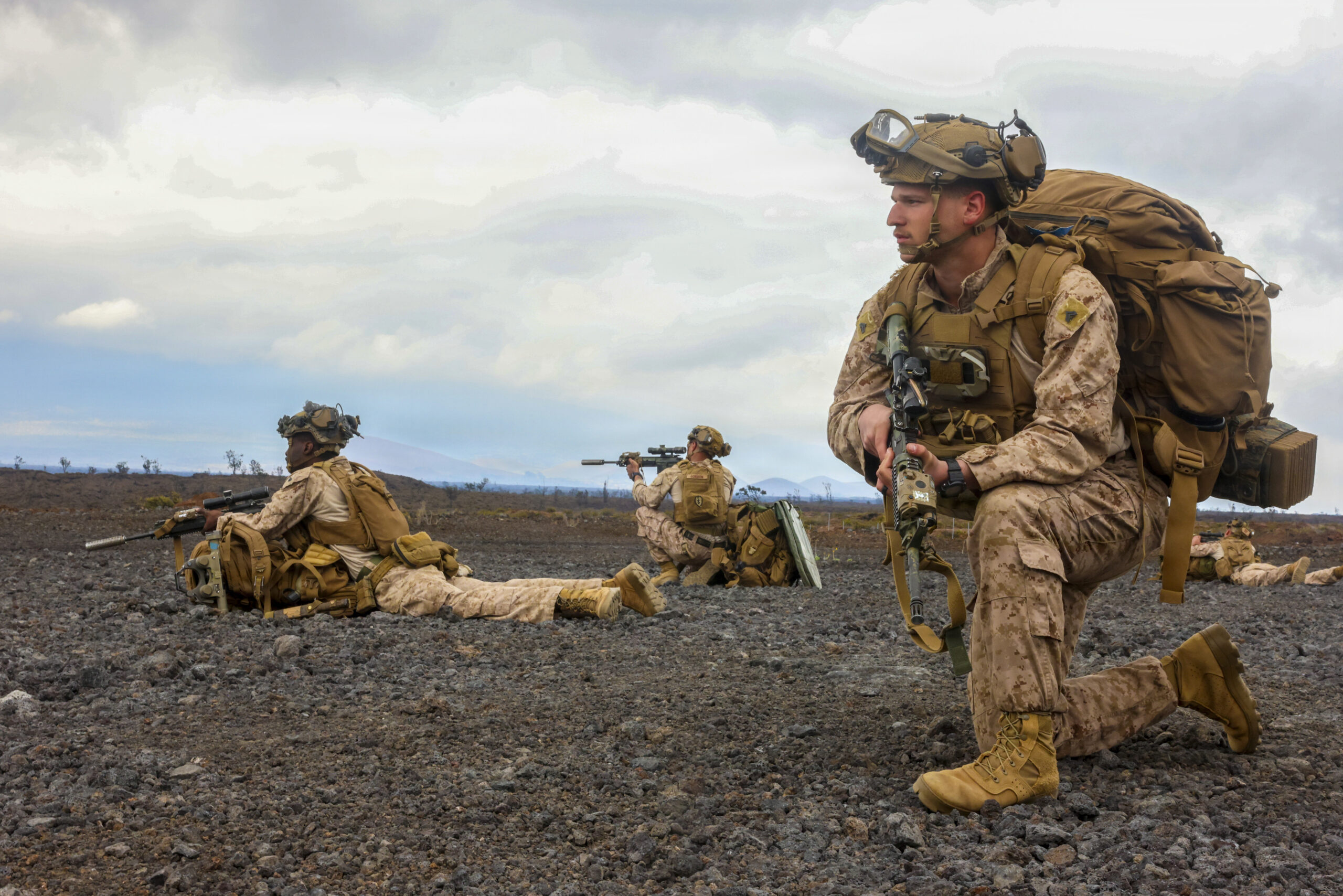
Sgt Jones is a member of a Marine littoral regiment reconnaissance team, operating deep within the adversary’s weapons engagement zone. He identifies a time-sensitive surface threat. The targeting data is perfect, captured with high fidelity, yet it remains a fleeting digital image on a single screen. To act on this intelligence requires Sgt Jones to exit one application, manually transcribe coordinates into another, and then pray that a voice call can find its way over a strained satellite link so he can verbally pass information that there was no option to enter digitally. In the precious minutes this takes, the opportunity is lost, and Sgt Jones’ transmissions have compromised his position.
This is not a hypothetical scenario; it is the central warfighting challenge of our era. It is the precise reason that Marine Forces Cyberspace Command, by direction of the Commandant, has issued the MCCE Battlespace C2 Execution Order, formally operationalizing the Marine Corps’ transition to a new way of thinking about and codifying major subordinate commands’ boundaries and responsibilities across secure, operate, and defend missions. It is the reason that the Deputy Commandant for Information published the Marine Corps Transport Strategy in 2025, and the reason that Information, Command, Control, Communications, and Computers is developing the Marine Corps Cyberspace Environment (MCCE) Convergence Strategy. We are moving beyond the theory of data-centricity and into the hard, practical work of execution.
The Problem
The problem is clear; data silos degrade operational effectiveness in a multi-domain conflict. Limited means of data transport outside the silo degrade effectiveness by creating artificial limitations within command-and-control systems. The Service’s traditional approach to acquisition and procurement of weapon systems, command-and-control platforms, sensing capabilities, and data systems has built data stovepipes into the ecosystem, where manual transcription is still sometimes the solution for passing data between systems. Proprietary hardware and software for prototypes and programs of record do not seamlessly integrate into the larger Service transport, and the data ecosystem’s slow transmission of information to speeds renders even the most exquisite sensing and engagement systems useless in denied, degraded, intermittent, or limited connectivity environments. The lag, as online gamers would call it, that this creates in the chain from sensed to targeted to engaged will only continue to degrade the effectiveness of kill webs.
The Solution
The solution is two-pronged. To enable concurrent, decentralized operations envisioned by our (not so) future operating concepts, the Marine Corps must re-architect its digital battlespace from a collection of disconnected systems into a cohesive environment where information moves across systems and enclaves at machine speed. These strategies are not static concepts; they are being actively implemented by the Service. The Marine Corps is already making this a reality through two key, interconnected strategies. The MCCE Convergence Strategy provides the blueprint for a seamless hybrid cloud ecosystem, the destination for our data and the home for our warfighting apps. The Marine Corps Transport Strategy builds the foundational highway to get it there, creating a single, agnostic transport layer to fuel the entire ecosystem with data. Together, they provide the vision to enable decision dominance.
Simultaneously, the Marine Corps must adapt its acquisition and procurement strategies to reinforce this vision. Internal progress is not enough; the Service must ensure that every dollar spent and system procured actively align to and supports a data-centric model. This will require sending a clear, consistent demand signal to our industry partners.
Demand Signal for Change
The Marine Corps cannot achieve this vision alone. Efforts and progress made through efforts like Marine Corps Enterprise Network Unification, Sensing the MCCE, and other Deputy Commandant for Information and Marine Forces Cyberspace Command initiatives demonstrate the Service’s resolve. Despite this progress, the problem requires a demand signal to be sent to the Service’s industry partners. The statement is this: To achieve decision dominance and fight and win, this is what we need and this is what we will prioritize.
We need to embrace data sharing. We will prioritize and procure systems that serve as nodes within our broader ecosystem. Systems that silo their data and require additional effort to integrate into our enterprise will be at a competitive disadvantage.
We need to embrace agnostic transport. Your systems must be engineered to connect seamlessly to our unified transport infrastructure. We are building the highway; your products must be able to use the standardized on-ramp, fit in the lane, and comply with safety and operational requirements. Cars without blinkers, headlights, and seatbelts will not be allowed.
We need to compete on capability, not on data hoarding. We need applications and analytics that work together to build situational awareness and accelerate decision-making. Your competitive advantage will now be judged by how well your system shares and enriches data for the entire kill web, not by its ability to perform a single function in isolation.
Conclusion
With the principles from this statement in mind, we are moving this vision from theory to practice. The question for our industry partners is no longer about understanding our vision but about having the agility and foresight to align with its implementation. The partners who embrace their new role as application providers on a common platform will be the ones who help us deliver victory in the information-driven conflicts of the future.
ABOUT THE AUTHOR
>Maj Raymond is is a Supply Officer serving his Data Systems Management Officer payback tour at Headquarters Marine Corps, Deputy Commandant for Information, Information Command, Control, Communication, and Computers.
>Maj Wleklinski is is a Cyberspace Warfare Officer and Data Systems Management Officer currently serving at HQMC, Deputy Commandant for Information, Information Command, Control, Communication, and Computers.


