Father of My Spirit

by Capt Isaiah J Berg

During World War II, LtGen A.A. Vandegrift distributed a pamphlet entitled Battle Doctrine for Front Line Leaders} This pamphlet was published by the Third Marine Division, summarizing lessons learned by Marines engaged in fierce combat in the Solomon Islands. The pamphlet contains 41 proverbs of combat leadership, proven in the brutal infantry warfare of the Pacific islandhopping campaign. The final leadership proverb in Battle Doctrine for Front Line Leaders is perhaps the most important: “Battles are won during the training period.” In combat, our Marines demand decision making from their leaders. Decision making and mission tactics are the fundamental responsibility of officers and leaders in combat. Yet the decisive moment of preparation arrives before the last 100 yards to the enemy. Training İs critical, and, therefore, the fundamental responsibility of leadership outside of combat is education and mentorship. Horace wrote that “learning increases inborn worth, and righteous ways make strong the heart.” Great leadership outside of combat must teach more than it tasks. Commanders must be professors of their Marines’ minds, bodies, and spirits.

Gen John A. Lejeune s famous letter on the relationship between Marine officers and enlisted members, published in the Marine Corps Manual, 1921, İs helpful in illustrating this mandate.2 He describes a spirit of “comradeship and brotherhood” that “must be fostered and kept alive and made the moving force in all Marine Corps organizations.” He rejects leadership as superiority over those being led or as an excuse to demand servitude. A leader is to be a “teacher and scholar” who serves his Marines, responsible for their physical, mental, and moral welfare as well as their discipline and military training. This İs not to neglect the other dimensions of a Marine officer’s leadership. Officers shoulder a burden of moral and legal authority for killing. They must demonstrate character, endurance, resilience, and technical and tactical proficiency. Fundamentally, leaders İn combat must be able to make good decisions quickly. Our Marines demand this leadership İn combat.

However, time spent in training and preparation vastly exceeds time spent in combat. During this time of training and preparation, our focus must be on education and mentorship. This can be a challenge for some young Marine officers. Young officers are specifically prepared to supervise the tasks that fall within their occupational specialty, but mentorship and education are often murky by comparison. Very little of their training directly prepares them for it. Training schedules can still be compiled and submitted. Counseling letters and fitness reports and awards can still be written. But how can leaders rise above this bland, formal, procedural leadership and deliver the training and education that their Marines need?

One of the best gunnery sergeants I have ever worked with once said to me, “When I think of a great leader, I think of someone who can really teach me something.” An officer can wear shiny rank and be appointed to a position of authority, but he cannot fake competence. There İs no shortcut to earning trust and credibility. Teaching İs an excellent way to develop and evaluate one’s Marines. It also builds the teacher s own capabilities and reinforces the trust that makes teams lethal. My company commander once put me and our rifle company’s weapons platoon commander through a fire support tactical decision game during a large-scale field exercise, purely on his own initiative. The whole company was tired and thirsty after a few hot days of establishing our defensive positions and patrols. The tactical decision game was good training for us, and İt gave our company commander a tool for evaluating our capabilities. Most importantly, it reinforced for us that (1) our company commander was proficient enough that he could not only do but also teach at a high level, and (2) that he valued our development and training, not just in his words, but in his actions. When the new infantry battalion executive officer checked in, one of his first actions was bringing the battalion’s officers and SNCOs together on a regular basis for real professional military education. We would have some food and drinks and work through a case study or tactical decision game facilitated by company-grade officers and SNCOs. We were doing what a warfighting organization needs to do. I would go anywhere with leaders like that. They prioritized my learning and development and, in turn, the learning and development of our Marines. Good leaders carved out time in the schedule to prioritize the study of warfighting and tactical decision making.

The history of military education can also offer us some insight into effective training and education. At the turn of the nineteenth century, Europe was gripped by the Napoleonic Wars. Mass conscription, the rise of the nation state, technolog}7, and professionalization had transformed the character of war. This was fundamentally a social and political transformation. Leaders were being raised up in France on their own merit as opposed to their birth. Gerhard von Scharnhorst was a Hanoverian-born military officer who was hired to work with the Prussian military institute İn Berlin, the Militärische Gesellschaft. The Prussian aristocracy and ruling class was hobbled by social and cultural prejudices. This aristocracy dominated the military but disdained education and ignored the threat posed by Napoleon’s France. Scharnhorst was brought from Hanover on the strength of his reputation as a military leader who could think, teach, and make reforms.

Scharnhorst instituted a number of reforms, but his chief influence was on the students of the Militärische Gesellschaft who would go on to lead the transformation of Prussia’s military, especially after the Prussian defeat at Jena İn 1806. Among his pupils was the revered theorist of war, Carl von Clausewitz.

In Scharnhorst, Clausewitz recognized qualities and achievements to which he himself aspired: a successful career in spite of humble beginnings, intellectual authority, manliness-a soldier who was not the passive agent of events, but one who tried to understand and guide themV

Scharnhorst’s work revolutionized the Militärische Gesellschaft and Prussian military education. His students studied philosophy, literature, and history in addition to technical and military subjects. Hard training in the field and academic study under Scharnhorst led Clausewitz to describe him as “the father and friend of my spirit.”4

Scharnhorst’s influence was especially remarkable because of his lack of combat experience. HİS first fifteen years of military service were spent reading, teaching, editing three professional journals, and publishing three books. He was commissioned İn 1777 and first went to war in 1792. He joined the First Coalition against France and demonstrated excellent leadership under fire until his return from the war İn 1795. The disciplined intellect that allowed him to write, teach, and study was the same intellect that prepared him for leadership in combat. Nothing could be more relevant to Marine officers today. There İs a famous image of Defense Secretary James N. Mattis as a Marine Captain, a few years after the end of the war in Vietnam, boasting a single ribbon and two shooting badges. He lacked experience, but he possessed the mind and mindset that he needed to lead his Marines İn war. Gen Matris would later write a famous letter to all officers who lamented that they did not have time for reading:

We have been fighting on this planet for 5000 years and we should take advantage of their experience. ‘Winging it’ and filling body bags as we sort out what works reminds us of the moral dictates and the cost of incompetence in our profession. As commanders and staff officers, we are coaches and sentries for our units: how can we coach anything if we dont know a … lot more than just the [Tactics, Techniques, and Procedures]? What happens when you’re on a dynamic battlefield and things are changing faster than higher [Headquarters] can stay abreast? Do you not adapt because you cannot conceptualize faster than the enemy’s adaptation? (Darwin has a pretty good theory about the outcome for those who cannot adapt to changing circumstance-in the information age things can change rather abruptly and at warp speed, especially the moral high ground which our regimented thinkers cede far too quickly in our recent fights.) And how can you be a sentinel and not have your unit caught flat-footed if you don’t know what the warning signs are-that your unit’s preps are not sufficient for the specifics of a tasking that you have not anticipated?-‘

If the men and women who lead Marines fail to build a teacher-scholar culture İn their units, Marines will deploy with procedural competency but without the creativity, judgment, and decisiveness required to win. Let us return once more to the young officer, recently graduated from his occupational specialty school, confident in his procedural acumen but uncertain about his capacity for training and education. What does he have to teach given his lack of experience?

Officers of any rank will be prisoners and victims of their own experience if they do not read widely and seek the experiences of others they wish to learn from. They have to be scholars hrst if they hope to be professors later. The hrst necessary step for all men and women who lead Marines is to read. Marines have no other choice if they aspire to be what Gen Mattis called the “‘coaches and sentries” of their units. Simple reading can form the foundation for some of the best training at the platoon level in the Operating Forces. Critical thought is the difference between mindlessly hitting the right codes İn a training and readiness manual versus understanding your future enemy and preparing to fight him and win İn an uncertain, chaotic, violent, and timecompetitive environment. Resources abound, whether in MCDP l, the Commandant’s Professional Reading List, Marine Corps University, or the Marine Corps Gazette’s, library of tactical decision games. Senior officers should prioritize the development of a digital library for their units, where tactical decision games, case studies, articles, books, and creative held training events can be widely shared and discussed without being lost. Time must be devoted to officers and SNCOs learning and studying together in order to “get a good rep” in making tactical decisions. If a unit does not prioritize its learning, İt will fail İn its warhghting.

Great leadership outside of combat must teach more than it tasks. Ask yourself, what have my Marines learned from me lately? What have I done to build their minds, bodies, and spirits? If you cannot conceive of anything beyond the procedural “what” of your daily routine, you are missing the “who” and the “why,” which are the foundations of an effective warhghting organization. Col John Boyd’s famous axiom was, “First people, then ideas, then things, in that order.” Attack your weaknesses through self-study, and share what you have learned. Pay close attention to your Marines and attempt to probe their weaknesses and strengths. Discuss and practice maneuver warfare. If you hope to succeed, this must be a team effort. Ralph Waldo Emerson wrote, “The soul environs itself with friends, that İt may enter into a grander self-acquaintance or solitude.”6 Men and women who teach will hnd themselves learning more than they thought possible. They will enjoy the fruits of solitude and self-study, the camaraderie of fierce bonds, and the soldierly affection that belongs to any father, mother, and friend of their spirit.

Notes

1. A.A. Vandegrift, Battle Doctrine for Front Line Leaders, (Third Marine Division, 1944).

2. Headquarters Marine Corps, Marine Corps Manual, 1921, (Washington, DC: Government Printing Office, 1922).

3. Peter Paret, Clausewitz and the State: The Man, His Theories, and His Times, (New York: Oxford University Press, 1976).

4. Charles E. White, The Enlightened Soldier: Scharnhorst and the Militärische Gesellschaft in Berlin, 1801-1805, (New York: Praeger, 1988).

5- Geoffrey Ingersoll, “General James ‘Mad Dog’ Mattis Email About Being ‘Too Busy To Read’ Is A Must-Read,” Business insider, online at http://www.businessinsider.com.

6. Ralph W. Emerson and Joel Porte, Essays & Lectures, (New York: Literary Classics of the U.S., 1983).

Marines Ought to Play More Games!

by LtCol Gregory A. Thiele

As the Marine Corps entered a period of fiscal austerity, a previous Commandant attempted to reinvigorate the Corps’ intellectual efforts. In late 2012, Gen Amos released White Letter 4-12, which reinforced the importance of reading. This was a useful step in creating a professional force. If the Marine Corps is truly serious about improving the military education possessed by Marine leaders, there is an additional measure the current Commandant could take. The Commandant should encourage wargaming.

In the late 1990s, then-Commandant of the Marine Corps, General Charles C. Krulak, encouraged Marines to play games provided by the Corps. In Marine Corps Order 1500.55 “Military Thinking and Decision Making Exercises” (dated 12 April 1997), Gen Krulak laid out his vision. Marines were encouraged to have tactical discussions each day and to play wargames. This was a worthy initiative. As Gen Amos attempted to reinvigorate the professional reading program, Gen Neller should encourage wargaming to allow Marine leaders to exploit every available opportunity to enhance their professional military education.

The Marine Corps requires leaders of all ranks to have a deep understanding of war and the employment of force. Marine Corps Doctrinal Publication 1 (MCDP-1) reminds all Marines that

The military profession is a thinking profession. Every Marine is expected to be a student of the art and science of war. Officers especially are expected to have a solid foundation in military theory and a knowledge of military history and the timeless lessons to be gained from it.”1 MCDP-1 goes even further in describing the importance ol intellectual development for Marine leaders:

… every Marine has an individual responsibility to study the profession of arms. A leader without either interest in or knowledge of the history and theory of warfare-the intellectual content of the military profession-is a leader in appearance only. .Self-directed study in the art and science of war is at least equal in importance to maintaining physical condition and should receive at least equal time. This is particularly true among officers; alter all, the mind is an officer’s principal weapon.Marine

leaders of all ranks have a fundamental responsibility to continuously study the art and science of war, on duty and off, in or out of formal schools, as part of a command-directed education plan or individually.

As always, the key component of this program is the involvement of commanders. According to MCDP7, “All commanders should consider the professional development of their subordinates a principal responsibility of command.” ‘ MCDP-1 goes further and states that, “Commanders should see the development of their subordinates as a direct reflection on themselves.”4 (Emphasis in original.) Commanders must exhaust every avenue in order to teach their Marines and prepare them for war. Wargames can be an excellent tool in this respect. Without emphasis from the Commandant, however, an initiative to encourage wargaming is unlikely to gain traction, and the potential benefits will go unrealized.

Wargaming can provide Marines with a better understanding of the nature of war. While the conduct of war changes, the nature of war (friction, uncertainty, violence, etc.) does not. In addition, MCDP-1 reminds Marines that, “the enemy is not an inanimate object … While we try to impose our will on the enemy, he resists us and seeks to impose his own will on us. Appreciating this dynamic interplay between opposing human wills is essential to understanding the fundamental nature ofwar’.’s (Emphasis added.) It is critical that Marines find ways to incorporate a hostile, independent will into train- ing if we are to be prepared for the battlefield.

One method of introducing an opposing will into training events is to conduct free-play force-on-force exercises. Although MCDP-1 recommends free-play force-on-force exercises, very few Marine Corps units train in this manner.6 Current training often takes the form of attempting to master techniques and procedures. While there may be some value in this, it is far outweighed by the inward focus that results. Exposed to such a training regime over time, Marines acquire a distorted view of war as a one-sided affair in which the actions of the enemy are largely inconsequential. Such sterile preparation is a poor environment from which to draw an understanding of war. Wargaming is a simple, lowcost method of introducing an opposing will into training. Ideally, wargaming complements a training regime that consists largely of free-play force-onforce exercises.

When played against an opponent, wargames allow participants to experience conflict with a hostile, independent will. In order to win, Marines will be forced to think constantly about the enemy, how they can thwart the enemy’s plans, and how they can accomplish their own. Marines will also learn to remain flexible in their approach. Wellbalanced games will force players to be creative and resourceful, maximizing any advantage-no matter how slight- in order to win. Wargames will develop in participants an outward focus on the outcome desired, rather than an inward focus on process and methods.

Wargamers will also gain a better understanding of other characteristics of war. The internal focus that predominates in many Marine Corps units often leads to processes that are ineffective in combat (for instance, an operations order that is too long, too detailed, or too prescriptive). Playing wargames will remind Marines that military actions rarely occur exactly as planned. Wargaming helps develop an understanding of the need for plans that are adaptable. Wargaming should help leaders to craft a flexible plan, a clear commander’s intent and an order that enables subordinates to use their individual creativity in unforeseen circumstances.

Wargaming will also provide Marines with the vicarious experiences that are very difficult, or too expensive, to accomplish under normal conditions. How many Marines have maneuvered a brigade, division or MEF/corps on the battlefield? Wargames allow Marines to simulate such maneuvers and, with careful thought, Marines can begin to glimpse some of the challenges that they may face in leading such organizations or in planning their employment. More, they can gain an understanding of the context within which smaller units decide and act.

Wargaming can have a synergistic effect when paired with a carefully structured professional reading program. Because wargaming often requires a greater degree of involvement than does reading, the fidelity of the vicarious experience may be greater than that provided by reading a book on the same subject. Marines can select battles and campaigns that interest them, read about the campaign, and then play a wargame dealing with the same battle or campaign. Due to the great variety of wargames available, many battles can be wargamed at the tactical level and the campaigns of which they formed a part can be gamed as well in order to provide operational-level context regarding how and why the battle occurred. Such structured gaming may lead to a greater interest in the battle or campaign and even more reading, lighting a fire of interest in the individual Marine as he tries to understand historical events.

By their very nature, wargames are also progressive tactical decision games. As the game develops, each player is presented with situations with which he must cope and for which he must devise solutions. Players are required to make a large number of decisions in each game. Every new situation acts as a template that may assist leaders in making recognition-primed decisions in similar real-life situations.

When played as a team, wargames can assist seniors and juniors in building implicit communication. In such team games, decisions must be clearly communicated to subordinates so that orders may be properly executed. As time goes on, subordinates will begin to develop a sense of what their leaders expect from them with shorter communications and perhaps even when orders are entirely lacking. Such implicit communication will build trust between leaders and led and facilitate decentralized decision making.

In a fashion similar to the Commandant’s Professional Reading List (CPRL), the Commandant should create a list of recommended wargames. One option is to divide the games into categories based upon the traditional levels of war (tactical, operational, and strategic). Such a list would allow Marines to select the appropriate games for their rank and billet. Such a list ought to serve as a guide and should not be considered prescriptive or all encompassing.

What would such a list of recommended wargames look like? There are a variety of games available to Marines off-the-shelf. Many computer-based games can be found online, and these games can often be downloaded and played in minutes. There are games that Marines can play on their smart phones, tablets, or computers. For example, just imagine Marines playing wargames and developing their decision-making skills as they wait in line for a routine screening at sickbay! Just as important, these games are fun, so Marines will want to play them even in their off-duty time. A list of currently available titles is listed below. In a manner similar to the CPRL, any list of wargames should be updated every few years to provide an opportunity to add the most up-to-date wargames available.

Marines must seize upon every opportunity to advance their professional growth. Wargaming offers Marines a fun and enjoyable way to increase their understanding of war and conflict. When paired with a thoughtful individual reading program, wargaming offers rich opportunities to gain insights into how and why historical events unfolded as they did. Such knowledge is of inestimable value to Marine leaders. Given the low cost and the potential benefits, it is time for the Marine Corps to reenergize the wargaming effort and encourage Marines to play games.

Recommended Games

Smart Phone.

* Frontline: Road to Moscow (Slitherine): a simple tactical-level game that simulates early battles on World War II’s Eastern Front between the German and the Soviet armies.

* Frontline: The Longest Day (Slitherine): similar to Road to Moscow above, but it simulates World War II battles on the Western Front in 1944.

Tablet.

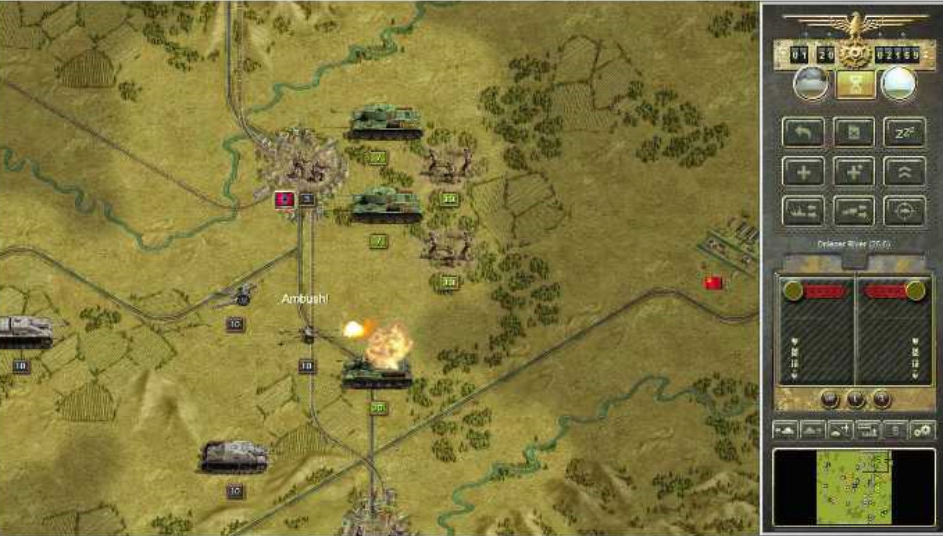
* Panzer Corps (Slitherine): a simple, yet enjoyable series of computer games that can be learned quickly but will prove difficult to master.

* Desert Fox (Shenandoah Studios): an area movement game that is simple but surprisingly subtle, simulating World War II campaigns in North Africa.

* Drive on Moscow (Shenandoah Studios): area movement game that simulates Operation Typhoon, the German drive on Moscow in the Fall of 1941.

* Battle of the Bulge (Shenandoah Studios): area movement game that simulates the Battle of the Bulge on Western Front in World War II.

* Vietnam 65 (Slitherine): an attempt to simulate the duality of counterinsurgency and large-unit operations in Vietnam in 1965. Allows players to “buy” and employ a variety of units-at a cost to domestic U.S. support-in an attempt to defeat the Viet Cong and pacify South Vietnamese villages.

Home Computer /Laptop.

* Panzer Corps (Slitherine): same as above, but for a computer. There are no differences in graphics or game play.

* War in the East (2×3 Games): a massive operational-level simulation of the Eastern Front in World War II. Extremely playable for its size but loaded with detail.

* War in the West (2×3 Games): does for World War IFs West Front (from Sicily to the invasion of Germany) what War in the East (above) did for the Eastern Front.

* The Operational Art of War (Slitherine): an older game that simulates campaigns from across history.

* Close Combat series (Slitherine): this series of games puts players in tactical situations and attempts to model the real behavior of soldiers in combat.

Notes

1. MCDP-1. (Washington, DC: Headquarters Marine Corps, 1997), 37.

2. MCDP-1,63-64.

3. MCDP-1, 63.

4. MCDP-1,63.

5. MCDP-1,4.

6. MCDP-1, 61.

7. There are also a large number of excellent board wargames. They can be harder to find and will appeal mostly to those Marines who are hooked on wargaming, enjoy standing over a map as they make decisions, or just prefer maps and cardboard pieces to computers.

For Further Reading

1. Philip Sabin, Simulating War: Studying Conflict Through Simulation Games, (London: Bloomsbury, 2012).

2. Martin Van Creveld, Wargaming: From Gladiators to Gigabytes, (Cambridge: Cambridge University Press, 2013).

The Nightmare Battlespace

by 2ndLt Robert D. O’Neill

You are the platoon commander tasked with clearing in zone a sector of Dharavi, Mumbai, one of the most densely populated slums in Asia, let alone on earth: an estimated one million people live in one square mile of what used to be a mangrove swamp. There are both civilians and potential threats everywhere. The area is contaminated with human waste; the water is toxic with heavy metals; the alleyways are maybe six feet wide; and the hodgepodge of wood, cardboard, and tin shanties offer no true cover from enemy fire. Your map is a satellite image, and your Marines are down to fire teams and buddy pairs throughout the maze of alleyways to maintain dispersion. You can’t get comms with your squad leaders because the shanties make your reception nonexistent. You start taking contact! What are your geometries of fires and overpenetration concerns, especially to avoid civilian casualties or hitting one of your Marines in adjacent alleyways? Do you use tracers or smoke grenades and risk setting the entire slum on fire? Where and how do you casevac your wounded?

Welcome to the nightmare battlespace.

The Marine Corps’ fights in the near future will be in the sprawling and broken coastal cities of the developing world. Humans are war’s lowest common denominator: where the people are, so too will be the conflict. The shantytowns of the developing world house over 1.3 billion survivaloriented urbanites.1 Slums are the most densely populated areas on the planet, the product of weak state capacity and neglect, and are the physical and spatial manifestations of socioeconomic marginalization and urban exclusion. As the primary means of crisis response in an increasingly complex and uncertain world, the Marine Corps will inevitably find itself woefully unprepared to be the bringers of security and stability to the slums that surround and penetrate megacities like Lagos, Manila, Cairo, Rio de Janeiro, Cape Town, Dhaka, Caracas, and Mumbai. These urban agglomerations represent potential epicenters of human suffering on a massive scale (whether as a result of conflict, disease epidemic, or other human emergency spurred by a natural or industrial disaster), but more importantly embody the “nightmare battlespace” concept.

Such slums are “nightmare battlespaces” because they offer the worst combination of mission sets (in terms of lethality and complexity) in the worst possible environment, where the full spectrum of conflict against myriad opponents and/or threats is entirely possible. Any expeditionary operation to littoral slums of the developing world, from HA/DR (humanitarian assistance/disaster relief) to large-scale combat operations, would be necessarily a Joint and coalition amphibious operation. Operations would immediately transition into chaotic urban engagements-which are already time-, resource-, and manpower-intensive-in some of the most expansive, densely populated, impoverished, polluted, and complex environments on earth. Many of these slums are dominated by gangs, slumlords, mafias, and other such non-state armed groups, thereby necessitating a combination of counter-insurgency, counter-terrorism, and counter-narcotics mission sets. Urban operations in the nightmare battlespace will be an extremely lethal and brutal “three-block war amongst the people,” only made more complicated by additional contemporary players such as the media, nongovernmental organizations, and the complex adaptive system that is the local sociopolitical structure.2

The ultimate goal of the nightmare battlespace concept is to use it as a framework for action and education; it is a starting point to address some of the complex and ambiguous characteristics associated with the role tactical-level leaders play in such an environment. Individual combat skills and small unit leadership will be strained to the extreme, and existing notions of command and control and combat leadership will be disrupted. Marines and small-unit leaders will face unique tactical, emotional, moral, and ethical challenges in an extremely dangerous and chaotic operational environment on a level unlike any previously faced.

At the broadest level, there is a considerable spatial difference between the urban combat for which we train and slum fighting.3 Not only are slums often a dense hodgepodge of tightly packed structures that will force the disaggregation of Marine units down possibly to fire team or buddy-pair levels, but they also add a vertical component to the crushed yet simultaneously expansive lateral battlespace. While there will not be the subterranean dimensions or multistory hardened structures like in the business or residential districts of a megacity, consider the favelas surrounding and penetrating Rio de Janiero or the Petare slum in Caracas as examples of how elevation on top of a chaotic layout of shanties offers a three-dimensional chessboard like no other battlespace. Oftentimes, there are only mazes of narrow pathways that are barely wide enough for a Marine in full combat gear.

An added element of the nightmare battlespace is the oversaturation of noncombatants. Even those without hostile intent can overwhelm the force, especially in a HA/DR mission set where survivalist and apocalyptic mindsets take over. The sheer masses of humans in such dense proportions and the likelihood that we will face nonstate armed groups and a multitude of other non-uniformed opponents will not only make it impossibly difficult to tell friend from foe from the disinterested, but it will also guarantee civilian casualties at an astronomical rate. Slum dwellers are tied to the location for job and eviction security, or myriad other reasons; they already have nowhere else to go, so evacuation prior to the commencement of combat operations is not a likely solution. Extensive collateral damage will be regrettably commonplace.4

Such a complex and unknown battlespace offers a whole host of unique planning considerations and commandrelated issues for tactical-level leaders. In terms of enemy-centric planning, who and where is the enemy, and how do you get there? What does the area of operations look like? With such a vast and overwhelming amount of structures and people, how effective is ISR (intelligence, surveillance, and reconnaissance) ? What are your ingress and egress routes? Are there ground vehicles at your disposal? If so, which vehicles can go where, and how close to your objective can they get you? What about masses of people in the streets and alleyways- how will they inhibit your movement? Can aircraft be used? Aviation is vital to mobility, intelligence, and the delivery of focused fires in urban environments, but rotary wing assets can be especially vulnerable in this environment.

There are unique logistical concerns as well. What does chow and water resupply look like in an environment where great masses don’t have access to clean water or food? How can Marines get resupplied with ammunition and in what quantities? What about casevac-where and how can air or ground casevac happen? How do you ensure wounds do not get infected in an environment contaminated with industrial and human waste, not to mention the general immune health of Marines who are entirely not used to such an environment? Will Marines be able to evacuate their wounded through the narrow alleyways with the pole-less litters currently issued or will they need to find another way to get them to the AAVs (assault amphibious vehicles) that can barely squeeze along an “MSR”?

During the conduct phase, every fight develops differently than expected; the nightmare battlespace requires ultimate decentralized execution by well-prepared low-level leaders down to fire team leaders.5 The broken spatial qualities of slums fragments units and compartmentalizes encounters and engagements. The platoon commander and his subordinates’ span of control can easily collapse, and it is exceedingly hard to maintain an accurate picture of the multidimensional battlespace.6 Accountability and control of units thus becomes a severe issue. Battle tracking and using tactical and/or restrictive control measures is critical for ensuring good geometries of fire while maneuvering becomes nearly impossible. Simple firefights and tactical-level engagements within the slums will offer an array of unique and extremely difficult challenges: over-penetration of rifle and machinegun fire through multiple shanties to the use of tracers, explosives, and/or supporting arms and their potential for collateral damage, fratricide, civilian casualties, and the ignition of a slum fire. There will likely be severe restrictions on the use of large caliber direct fire weapons and indirect fire assets. Much of that falls under engagement criteria, restrictive control measures, and the rules of engagement; however, it is imperative to know that when the casualties mount, units historically loosen their restrictions on fires.

Command and control in the nightmare battlespace is an illusion, which will further deteriorate by poor communications: if one cannot communicate, one cannot command. Units will be disaggregated and isolated, unable to use basic hand and arm signals, and with no radio communications while potentially only dozens of meters apart; the three pillars of “move, shoot, and communicate” will be almost non-existent. Can leaders effectively communicate up, down, and laterally through the chain of command? Leaders need combat reporting to inform their decisions without overwhelming them with data, because without information, no leader can make sound decisions. 1 2 3 4 5 6 7

Many questions have been posited intentionally: the nightmare battlespace concept is meant to initiate a discussion on how to better prepare tactical-level leaders throughout the Marine Corps for the worst possible conditions they could face. As the focus for fighting tomorrow’s conflicts shifts downward to squad leaders, fire team leaders, and individual Marines, so too must the systems that educate Marines, enable their decision-making skills, and increase their autonomy to more effectively deal with uncertainty and chaos as embodied by the nightmare battlespace. But what does that actually entail?

By using the nightmare battlespace as a training paradigm, leaders must prepare their Marines for the chaotic, uncertain, and brutal tactical realities they may face in a nightmare battlespace well before they get there. In order to be combat effective in the nightmare battlespace, “conditions must be set,” in a sense, well before arrival. However, since Marines have not been engaged in such a battlespace, expectations and experiences will come up short. Significantly more trust between the leader and the led is required in an environment where leaders cannot exercise direct control over their Marines, and have no choice but rely on subordinate leaders to make “dependent decisions” based off of initial guidance and the constantly developing situation. Unit cohesion and the will to fight and win must be created in advance, and one’s subordinates must be trained beyond the fundamentals and given tools to enhance their decisionmaking capabilities.8

The use of tactical decision games (TDGs) provides an effective mechanism to develop individual ability to make decisions under physical and mental stress as well as offer opportunities for leaders at all levels to hone their decision making skills. This also has the ability to build concrete examples and experiences our Marines can call upon to inform their intuitive decision making while in the nightmare battlespace. TDGs can reinforce doctrinal procedures and a variety of tactics, techniques, and procedures as well as provide an opportunity for subordinates to gain insight into how the leader thinks about tactical problems.9

As Sun Tzu writes: know thy self and in one hundred battles you shall not be in peril. In the nightmare battlespace, combat can happen at bewildering speeds and rapid decision making is essential to capitalize on increasingly fleeting opportunities. In order to be effective, Marines can and should fight those one hundred proverbial battles well before they get to the nightmare battlespace.

However, we must not confuse combat readiness with combat effectiveness. We must also realize that discussion of leadership is inherently idealistic-what it ought to be-while crisis response is wholly pragmatic-“come as you are.” The nightmare battlespace is, above all, disintegrative; the stresses on the individual Marine and small-unit leaders will be incalculable.10 The imperative is that we continue the discussion and prepare Marines for the worst possible conditions as embodied by the nightmare battlespace. As Adolf Von Schell says in Battle Leadership, “dangers that are thus foreseen are already half overcome.” The challenge for leaders is to overcome the inherent friction from the multitude of competing ideas, wills, tasks, and requirements from superiors, peers, subordinates, and the institution.

Notes

1. UN-Habitat (United Nations Human Settlement Program).

2. A combination of General Charles Krulak’s “Three Block War” concept and General Rupert Smith’s “War Amongst the People.”

3. Ralph Peters, “Our Soldiers, Their Cities,” Parameters, (Carlisle, PA: U.S. Army War College: Spring 1996), 43-50

4. Ibid.

5. Captain Adolf Von Schell, Battle Leadership, (Brattleboro, VT: Echo Point Books and Media: 1933).

6. Peters.

7. Marine Corps Doctrinal Publication 6 (MCDP-6), “Command and Control,” 50.

8. Christopher Kolenda, Leadership: The Warrior’s Art, (Carlisle, PA: Army War College Foundation Press: 2001), 63.

9. MAJ Frank W. Brewster, “Using Tactical Decision Exercises to Study Tactics.” Military Review, (Fort Leavenworth, KS: NovemberDecember 2002).

10. Peters.

Tactical Decision Game

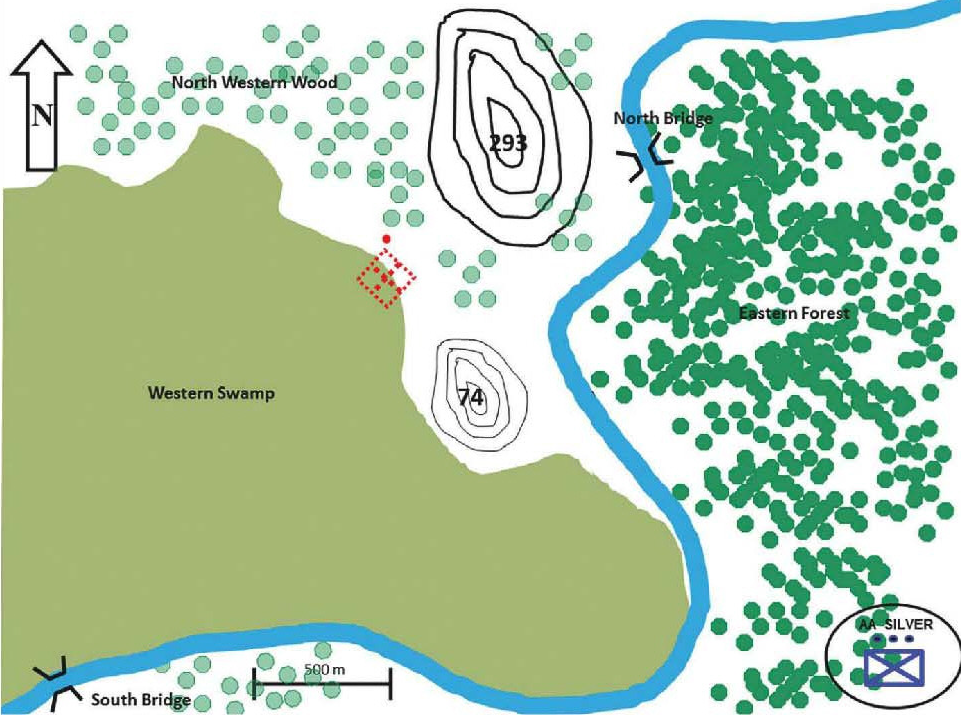
You are the commander, 1st Platoon, Alpha Company.

General Situation

Company A is on the far right (northern) flank of the battalion as it clears from east to west in order to (IOT) prevent the Centraban Resistance Force (CRF) from destabilizing the Centraban government. The CRF has been conducting a guerrilla campaign that has been marked by small units operating independently to strike government forces quickly and then withdrawing. The CRF has occasionally massed to company strength to conduct deliberate attacks. CRF forces have occasionally conducted deliberate defenses when they can muster significant strength, and the area defended is critical to their operations. The CRF has been operating in this area for approximately 1 year and is seeking to prevent us from advancing westward into their key territories. 1 st Platoon is on the far right (northern) flank of Company A and is the northernmost unit in the battalion. The company is approximately 2.5 kilometers to the south of 1st Platoon. Since your attack will take place prior to the main efforts attack, you will have priority of fires for the company 60mm mortars until the main efforts attack commences.

Orientation

You arc currently located in Assembly Area Silver in Area ol Operations White (AO White). The map shows the entirety of your AO. The Deep River is swiftflowing and crossable only where there are bridges. North and South Bridges are identical footbridges of wood construction. The Western Swamp is mired in chest-deep mud in almost all areas except for some footpaths that are known to the locals and are nearly invisible. Visibility in open areas is 100 meters, 50 meters in the swamp, 50 meters in the thinner tree line, and 25 meters in the thick tree line. Visibility from the high ground is 100 to 200 meters, but essentially stops at the tree line and 100 meters into the swamp. Within the tree line next to the river, visibility is 25 to 50 meters. Sunrise tomorrow is at 0620, sunset today is at 1726, end of evening nautical twilight today is at 1801, moonrise is at 2106 tonight, illumination will be 50 percent tonight, beginning morning nautical twilight tomorrow is at 0532. It is early winter in the Quantico Highlands and the temperature tonight will be 43 degrees Fahrenheit with light cloud cover and no precipitation. Your probable rate of march in the Eastern Forest is 1 kilometer per hour.

Situation

Enemy: Composition, disposition, and strength: Intelligence reports indicate that a squad of CRF in green camouflage utilities is present in AO White and a platoon may be present 10 ro 20 kilometers to the south. The squad is reportedly armed with at least 1 PKM, one or two RPG 7s, and AK-74s. They may have a single antiquated Soviet 50mm mortar system with a maximum range of 800 meters. They are communicating via cellular phones and handheld radio systems with a maximum range of 5 kilometers. They do not have night-vision capabilities.

lasks

1st Platoon: You are [SE3]- No later than 2000, destroy the enemy in AO White IOT prevent them from interfering with die company’s main-effort attack in AO Black.

2d Platoon: You are the main effort. On order, destroy the enemy squad on Company Objective A IOT protect the battalion’s right flank.

3d Platoon: You are [SEI]. On order, destroy the enemy listening posts/observation posts on Company Objectives B and C TOT prevent them from interfering with the company’s main effort attack on Company Objective A.

Weapons Platoon: You arc [SE3]. On order, support by fire 2d Platoon TOT allow them to close with and destroy the enemy on Company Objective A.

Time is now 1600.

Tactical Decision Games

by the Advanced Warfighting Seminar, Expeditionary Warfare School

On the modern battlefields of the global war on terrorism, the U.S. military is facing enemies that have no state; government; uniform; tactics, techniques, and procedures; standing operating procedures; or goals that resemble those of fighting forces in decades past. Our past enemies at least had leaders whose goal was governing once they defeated their enemies on the battlefield or in the political arena. In short, they were either a second-generation (Soviet military of the Cold War) or third-generation (North Vietnamese Army and Viet Cong) milirary. The new enemy is defined as being stateless and lacking a clear strategic goal that directly links force with achieving political supremacy. Many lessons that we derived from our past enemies do not apply to this new enemy. We seek to challenge leaders to evaluate tactical situations in a fourth-generation warfare (4GW) context, looking beyond the immediate need of applying fires to the enemy. The authors are challenging leaders to consider nonkinetic “fires,” civil-military relationships, and your unit’s standing and respect among the local population.

This method of training utilizes tactical decision games (TDGs) in 4GW. The setting is Afghanistan. Solutions will not always require kinetic fires against an enemy. Frequendy the tactical decision deals with cultural or language issues with which you may not be familiar. In this case you are encouraged to refer to publications (the Aighanistan Country Book or translation card) available within your unit to help find answers to these questions. In some cases you may need to communicate with a local national: how would you do this, and did you bring the gear? In other cases, knowledge of the local tribes and tribal influences may be useful: how do you gain this knowledge? While a leader is determining a course of action, he may want to make a note to add certain cultural gear to his standard patrol or operational gear list.

These TDGs are often linked to one another to accustom the leader to the concept that his actions will have effects beyond his immediate unit and area. This also brings to the forefront the idea of the “three block war” where one squad is fighting and another is rescuing civilians, while a third is determining if a group of military-aged males is friend or foe. The points of view of the squad leaders and the platoon commander in a particular situation, though different, may be equally valid, and they are explored here through linked TDGs.

Finally, the leader will get the opportunity to put himself in the enemy’s shoes in several of these TDGs. A leader can “turn the map around” and look at the same tactical situation from the enemy’s point of view. This should provide the leader with valuable insight into how differently the enemy might view the situation, conceptualize his actions and outcomes, deploy his forces, control them in battle, and ultimately identify what the enemy considers victory during and after an engagement.

Through the methods utilized in these TDGs, military leaders will be challenged to think like their enemies, better understand rapidly changing situations, and determine courses of action that take into account not just the kinetic fires but also nonkinetic fires and civil-military relationships. Often in counterinsurgency, the immediate tactical situation is not difficult to solve. The problem is that solving it by force often has strongly negative consequences. The challenge to our military leaders is to determine what courses of action will undermine the insurgents’ credibility and desire to fight while increasing our standing and respect in the eyes of the local populace.

Authors Note: To view manuals on 4GW produced by ohe Advanced Vfàrfìghting Seminar, go to htm://www.d-n-i.net/dni/strategyand-force-emplayment/fourm-genera rion-war fare-manuals, or if you are in riie U.S. military and have a common access card, go to https://www. intranet, tecom. usmcmil/sites/E WS/AdWF.

A More Realistic Command Post Exercise

by Majs William W. Yates & James P. McDonough

Command post exercises (CPXs) for units at the battalion level and below frequently rely on a master scenario events list (MSEL) to drive the staff decisionmaking process. MSEL events are initiated or activated by the exercise control team as the staff undergoing training executes the operations order on which the exercise has been built. The result of activating an MSEL event may cause the commander to branch or sequel from the plan and, in the context of a CPX MSEL-driven exercise, provide a simple framework to stimulate action by the training audience. Though simple in design, the success and benefit of driven MSEL CPXs depend in large part on the experience of the exercise control team and the MSEL manager. Even experienced exercise controllers and meticulously developed MSELs cannot provide the level of realism necessary to support some training objectives for staff decisionmaking.

Combat Models

Almost 30 years ago the Marine Corps began using combat models executed in computer simulation to add realism and detail to CPXs for large units, primarily the Marine expeditionary force (MEF) staff. The first fielded simulation model for training was the tactical warfare simulation, evaluation, and analysis system or TWSEAS. TWSEAS provided a realistic simulation of friendly and enemy unit behaviors on the battlefield. TWSEAS concentrated primarily on accurately modeling movement rates, weapons effects, and sensor ranges for detection. Rather than relying on a human judgment or a dice roll to adjudicate the attrition from an engagement between two forces in a skirmish, TWSEAS could quickly and accurately assess the outcome of kinetic engagements using probabilistic algorithms.

TWSEAS was replaced by the Marine air-ground task force (MAGTF) tactical warfare simulation (MTWS) in the early 1990s. MTWS is a more powerful and flexible model that provides higher resolution for the factors influencing the outcome of simulated combat and information to the commander and staff. MTWS continues to be the Marine Corps’ primary aggregate combat model for training, and it is also used by the militaries of several allied countries. MTWS can simulate not only enemy and friendly forces but also up to a total of 10 different sides that may behave in a friendly, neutral, or hostile fashion to other factions. MTWS can model simple tactical engagements to train units down to the company level or can model very complex environments, including electronic warfare and intelligence, surveillance, and reconnaissance capabilities. MTWS also adds realism to training by its accurate modeling of the consumption of fuel, ammunition, water, and other supplies that would be very laborious to calculate manually. Recent updates to MTWS have added compliance with the Department of Defense high-level architecture protocol for exchanging data between disparate models that will eventually enable the Marine Corps to use MTWS for exercises in the joint training community. (see sidebar on CAS, p. 14.)

Despite the robust capabilities of combat simulations, MSEL events still play a valuable part in CP training because of the factors that aren’t simulated well by kinetic computer simulations. Most, if not all, of the data feeds to the CP regarding civil affairs are more practically introduced into the exercise via MSELs. Interactions with the civilian populace and many aspects of stability and support operations are exercised in a CPX through MSEL events because the appropriate response is often a combination of communications of intent and allocation of logistical assets. Although computer-driven combat simulations have become very capable, it is still essential that the outcomes assessed by the simulation are monitored and verified by real-world experience to ensure that they are realistic and support the training objectives of the commander.

Tactical Simulations

Since the late 1980s there have been many commercial computer games in the domain of tactical decisionmaking. Some of these games, such as TacOps (Tactical Operations), have been of sufficient quality to be of use as tools for tactical decision training in preference to other formats, such as sandtable exercises. As the power of desktop computers has grown, the fidelity of some tactical game software has approached the level of simulations like MTWS. Tactical simulations that began in the domain of gamers and hobbyists have migrated into the realm of training tools.

Training and Education Command (TECom) has sponsored the development of the MAGTF XXI tactical decision simulation to bridge the gap between a stand-alone desk-top training simulation and a multiple workstation simulation for driving CPXs, such as MTWS. The software is licensed for free use by Marines. The latest release of MAGTF XXI is capable of interfacing directly with command and control personal computers and providing simulation-driven feeds to the tactical interface. This capability will allow key staff members to use their actual tactical equipment and software during the exercise as opposed to looking at a simulation screen. While MAGTF XXI does not possess the level of detail and the functionality of MTWS, it does provide the capability to plan and execute a computer simulation-driven CPX without the necessity of conducting the exercise at a battle simulation center (BSC). The niche that MAGTF XXI intends to occupy is as a tool to drive a CPX for the key members of a staff before undertaking a more complex exercise at a BSC using MTWS. In addition, since MAGTF XXI can run on most laptops, it can be used in a deployed setting as well.

MAGTF XXI requires about 1 gigabyte of disk space, a 1-gigahertz processor, 512 megabytes of random access memory, and a DirectX 9.x video card to run optimally. The software has been designed such that it is tolerated by the software policies on Navy Marine Corps Intranet workstations with user-level privileges. TECom sponsors a web site for technical support and sharing of training scenarios for MAGTF XXI at <http://www.magtf-xxi-marines. com/MAGTF>. MAGTF XXI has recently been used as the simulation of choice for student tactical exercises at Expeditionary Warfare School. In addition, the School of Infantry-East, Advanced Infantry Training Company, has begun using MAGTF XXI during the unit operations chief course to train future battalion-level and above operations chiefs for CP operations.

Simulation-driven CPX is becoming more accessible to commanders and their staffs at levels below the major subordinate commands. The BSCs at most Operating Forces installations are available with advanced notice to support CPXs with simulation and new tools, such as MAGTF XXI, and offer the potential to use simulation for staff training within the unit headquarters. Using simulation for staff training is one of many tools available to the commander to qualitatively improve the staff’s decisionmaking ability.

The Tactical Trainer

by Cavalry Captain Patrik Schaathun, Norwegian Army

I was once asked to teach a handful of junior leaders some aspects of military operations on urbanized terrain. Time constraints and lack of training areas and units to lead made me want to try out something a Danish colleague once described that the Danes call “the tactical trainer.” I believe that the tactical trainer is something Marines will find helpful in developing tactical decisionmaking skills and learning tactics.

Preparing the Tactical Trainer

An umpire is appointed to prepare the maps, one of which is distributed to each participant on each side. A commander is designated for friendly forces and given a mission and a radio. Subunit leaders are appointed and also given a radio each. Friendly forces then make a plan within a given time limit. The same procedure applies to the opposing side. Depending on the size of the enemy unit, the leader of the opposing forces may or may not have subunits to command. A third party may also be involved, playing a neutral side. The umpire checks out the plans for all sides and marks all deployments on his own map. The umpire must appreciate which success criteria will apply to both sides. The players are placed in such a way that they cannot hear each other by voice or see the umpire map. Face-to-face communications between participants will only be allowed if the units in question are at the same location on the map.

Execution

The umpire keeps track of all unit movements on his map in accordance with orders and plans. He also decides when units can observe each other and referees the outcome of contacts. When a unit makes an observation or is fired upon, the units in question are called to the umpire’s map and informed about the incident. For example, the leader of 2d Squad is told, “As you deploy to Building 19, you see two men in civilian clothes armed with Kalashnikovs run from this point to that point.” (The umpire points to Buildings 21 and 22.) “What do you do?” The squad leader then has to choose a course of action and send any messages on the radio. When informing participants about what they encounter, photographs may also be used in place of verbal descriptions. (“What you see in this photo just moved from this building to that building.”)

The umpire ends the scenario when one of the sides has achieved a decisive result. He then leads an after-action review where all parties reveal their plans with rationales and go through the sequence of events. Last but not least, lessons learned are concluded.

Scenario Example

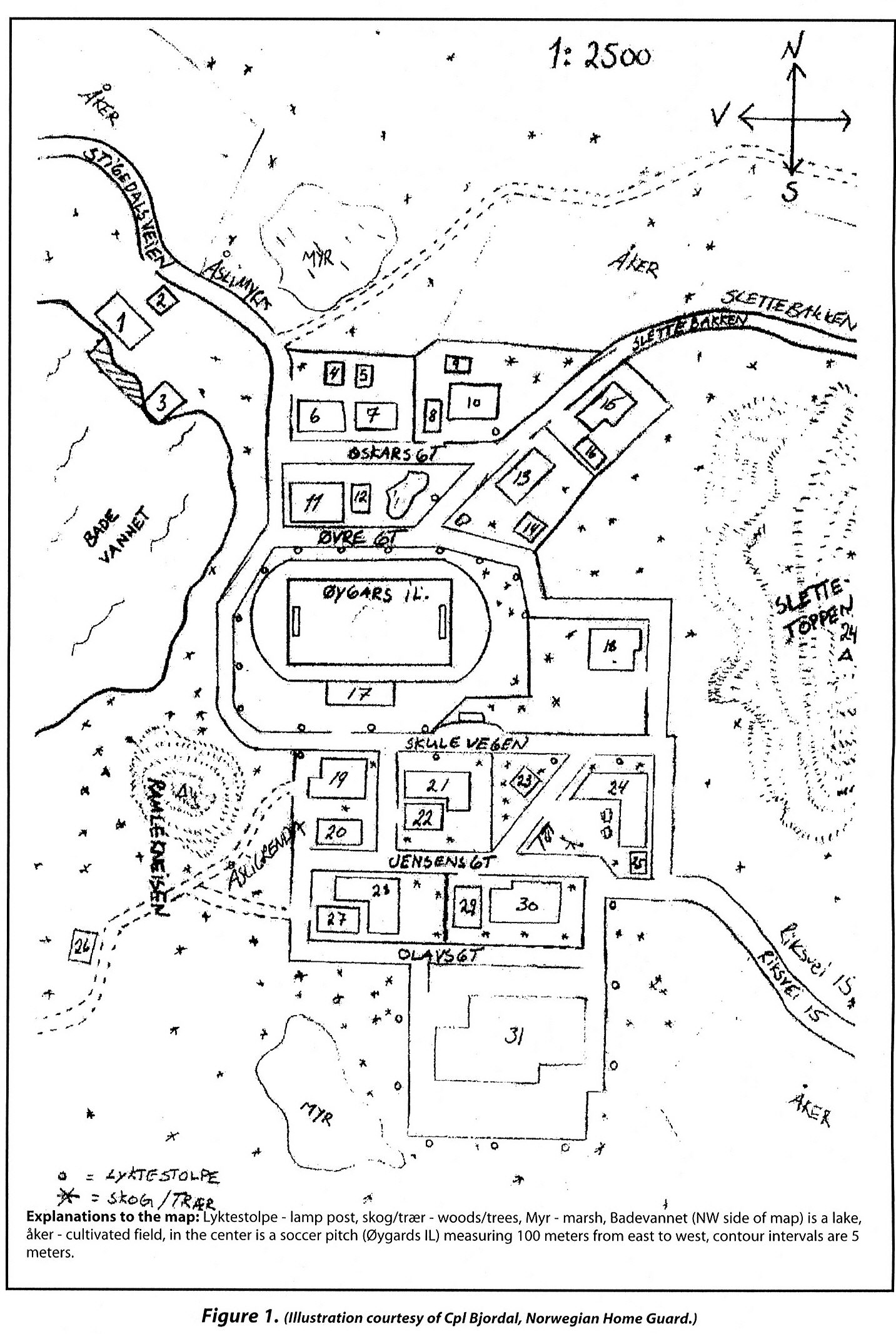
Use the map in Figure 1 showing an abandoned industrial area. All buildings are made of concrete, have two floors, and have doors and windows facing all directions. It is 1200. The sun goes down at 1900.

Situation. You command 1st Platoon, Company A. Your company is securing an airfield against a terrorist threat. Your platoon is currently the company quick reaction force and is mounted on HMMWVs. You are located 3 kilometers south of the map and may enter the map from any direction.

Orders to the Marine forces. The company commander gives you the following orders:

“A tipoff has revealed that two terrorists are hiding in the abandoned industrial area. They have a portable surface-to-air missile and intend to shoot down friendly aircraft. Civilians often loiter in the industrial area as it is not fenced in.

“You have a sniper team attached. Your mission is to apprehend or neutralize the terrorists in order to make it possible to reopen the airfield to air traffic as quickly as possible.”

Orders to the opposing force. “You lead a group of four people. Each of you has civilian clothes, an MP5 submachinegun, night vision goggles, binoculars, and a radio. Also at your disposal are a black van and a motorcycle. You are currently in Building 21 (safe house) guarding two portable surface-to-air missiles (Stingers). At 2100 an agent will arrive to pick up the Stingers in preparation for a strike. You must guard the missiles until then. A Marine unit of unknown size is guarding the airfield 3 kilometers to your south. Their most dangerous course of action is to mount patrols to your area. Plan guard duty and actions on contact.”

Orders to the neutral side. “Deploy the following on the map and where applicable plan their movements: three buddies taking a stroll, a motorcyclist going from south to north, a person walking his dog, a vagrant searching for things of value, six; children playing soccer, and three; car wrecks.”

Observations

The tactical trainer is a good training technique because it requires participants to take an active part by making decisions, sending messages, and giving orders. Participants must formulate clear and concise descriptions of events in order to give friendly forces situational awareness. I have noticed a significant improvement in the quality of reporting during tactical trainer participation. A colleague explained that during a field training exercise. where a unit he was part of was required to cordon and search an area, he felt as if he had done it before because of a tactical trainer session. Its competitiveness is also motivating. Most soldiers enjoy the opportunity to outwit the opponents and will do their best. It is a way to “spice up” your tactical decision games, making them more demanding. Not only must you make a plan, you must also execute it while facing the friction and fog of war that will result from it being two-sided and free play.

Naturally, these sessions are no substitute for training with proper units, but they are a good warmup exercise for Marine leaders before taking charge of men in the field.

Marine Corps Family of Tactical Decisionmaking Simulations

by the Staff, PM TraSys S&T Division

As discussed briefly in the previous article about the Program Manager, Training Systems (PM TraSys) Science and Technology (S&T) Division, tactical decisionmaking simulation (TDS) technology is one of the four thrust areas of applied research and advanced technology development. The Marine Corps family of TDSs is being developed to demonstrate the effectiveness and affordability of low-cost personal computer (PC)-based gaming technology to provide realistic scenario-based training for individual Marines, small units, and Marine air-ground task force (MAGTF) staffs. TDSs teach cognitive (vice psychomotor) tactical decisionmaking skills for Marine Corps leaders. All current and future TDSs are distributed via compact disk without individual license fees.

The training methodology of a TDS involves a three-phased approach:

* Conduct planning based on the operation order provided in the scenario.

* Execute the plan in the simulation.

* Conduct an after-action review.

To ensure that the proper cognitive skills are being taught in the TDSs, PM TraSys is conducting a cognitive task analysis and a training effectiveness evaluation for each TDS.

The research aspects of the family of TDSs include vertical integration of training systems (training teams from different echelons of the MAGTF); horizontal integration of training systems (training teams of teams from different elements of the MAGTF); gaming technology to high-level architecture interoperability; situational and spatial awareness; command, control, communications, computers, and intelligence (C^sup 4^I) to simulation interoperability; and recognitional decisionmaking, all in low-cost, deployable systems.

Precursors

Some early efforts to create TDSs are well-known, such as Marine Doom and Virtual Battlefield Systems (VBS1(TM)).

Marine Doom. Marine Doom was a project of the Marine Corps Modeling and Simulation Management Office from 1995 to 1997. 1stLt Scott Barnett and Sgt Dan Snyder adapted the game Doom II from Id Software for training four-man fire teams. The game taught concepts, such as mutual fire team support, proper sequencing of an attack, ammunition discipline, and succession of command. It incorporated M16A1 rifles, M249 squad automatic weapons, and M67 fragmentation grenades. Marine Doom supported four players on a network. Each player was provided with training objectives and information about potential enemy and friendly units. Marines had to purchase the commercial game, Doom II. Marine Doom would not run without the commercial game.1

VBS1(TM). VBS1(TM) was developed as part of the deployable virtual training environment (DVTE) infantry toolkit (ITK). VBS1(TM) is an adaptation of the game Operation Flashpoint from Bohemia Interactive Studio. It is designed as an interactive, three-dimensional, synthetic environment in which small unit tactics may be practiced among team members. Photo-realistic terrain, user definable mission scenarios, and variable environmental conditions enhance the team training experience. VBS1(TM) provides the ability to operate a myriad of land, sea, and air vehicles across large outdoor terrains and allows free play within scenario-based training missions. It supports 32 users on a local area network (LAN) or across the Internet. Each user is required to have a licensed copy with a security upper sideband key to use the simulation.

Transitioned (Fielded) Systems

PM TraSys has transitioned three TDSs to the TDS system (formerly ITK) of the DVTE (although DVTE will not become a program of record until fiscal year 2006 (FY06)).

Tactical Operations Marine Corps (TacOpsMC). TacOpsMC, a combat engineering TDS developed for the Engineer School, is a PC-based, fast-paced, and tactically realistic turn-based simulation. The intent is for students, or the training audience, to be presented with a tactical situation for which they develop a plan. The students will then wargame their plan using the simulation to provide feedback. The changing nature of the enemy will also force rapid decisionmaking. The simulation is modeled to simulate the execution of combined arms operations at the company and battalion level and will cause the engineer officers to apply all of their critical thinking and decisionmaking skills while operating as a part of a simulated MAGTF. Repeated simulation play will enhance their skills as commanders and planners. The simulation can be played in a competitive free play mode to develop combat decisionmaking skills. The simulation can also be used as part of a command post exercise scenario where planning is done prior to the simulation, and then simulation data is used to provide feedback. Command and control (C^sup 2^) and communications personnel can be trained using the command post exercise mode. TacOpsMC is based on the commercial product, Tactical Operations, by Maj I. L. Holdridge, USMC(Ret). TacOpsMC supports 30-plus participants on a LAN. (See Maj Michael L. Muller’s article, “TacOpsMC: A New Training Tool,” in the June 2004 Marine Corps Gazette.)

Close Combat: Marines (CCM). CCM is a realtime strategy TDS that teaches tactics at the squad, platoon, and company levels. The target audience is noncommissioned officers (NCOs), staff NCOs, and junior officers. It is designed to supplement field exercises, allowing instructors to create their own scenarios. The training scenario duration is generally limited to less than 2 hours with up to six players in various configurations of one to one, one to many, and many to many. In the one-to-one configuration, a Marine can engage another Marine or fight the computer’s artificial intelligence. CCM is based on the commercial Close Combat (CC) series from Atomic Games. A copy of CCM is included in this issue of the Marine Corps Gazette for your use.

Combat Decision Range (CDR). CDR is a PC-based, event-driven decisionmaking simulation. A Marine is provided video clips of a real-world situation, played out by both Marines and actors. The video leads to a series of events. Each target event requires a decision to be made by the trainee. CDR provides a number of decision branches that facilitate the trainee’s freedom to choose his own (most logical) courses of action. CDR training is best performed under the guidance of a trained facilitator. CDR was originally developed by GAMA Corporation for the Marine Corps Warfighting Laboratory.

Systems Under Development

In order to enhance the Marine Corps family of TDSs, to conduct research into the vertical integration of training systems (training teams from different echelons of the MAGTF), to conduct research into gaming technology to high-level architecture interoperability, to conduct research into situational and spatial awareness in a deployable system, and to conduct research into recognitional decisionmaking, the following TDSs are currently under development:

MAGTF XXI. MAGTF XXI is a battalion, battalion landing team (BLT), and Marine expeditionary unit (MEU) C^sup 2^ realtime strategy TDS that teaches tactics at the company, BLT, and MEU levels. The target audience is captains and staff NCOs. MAGTF XXI can be used to help MEU commanders develop warfighting skills by allowing them to plan the battle, fight the battle, and review the battle. At the start of training, trainees produce, via C^sup 2^PC or MAGTF XXI, all graphical and text-based products to support their military planning process. During this process, trainees collaborate on shared graphical overlays and text-based plans. When trainees are ready, they can activate the simulation and fight their plan against other players or a computer directed enemy. During the exercise, trainees can work together to revise the plan and issue changes to subordinate unit commanders. They can manage the deployment of assets and control maneuvers, and then view the results through an eagle-eyed battlefield view, panning and zooming in on the battle. At the end of the exercise, MAGTF XXI provides charts and tracking information to determine the success of the battle plan as well as a full recording of the exercise for later review. MAGTF XXI is under development by Mäk Technologies.

Logistics TDS. The logistics TDS under development for the Logistics Operations School is a realtime strategy simulation targeted at training battlefield logistics to lieutenants and staff NCOs in the 0402 logistics officer and 0491 combat service support (CSS) chief military occupational specialties.

The objective of the logistics TDS is to leverage existing technology to develop a fast-paced, realistic logistics simulation that will force logisticians to apply all of their critical thinking and decisionmaking skills to ensure that their MEU is operationally and logistically successful. The TDS allows the student to primarily serve as a CSS operations center watch officer with the MEU service support group and use CSS personnel and equipment in order to support the mission. Repeated simulation play is designed to enhance their skills as adaptive logistics commanders and planners.

The mission of the logistics TDS is to teach Marines how to plan for the full spectrum of CSS in a forward deployed, expeditionary environment while enhancing the Marine’s awareness of CSS. The logistics TDS uses the best commercial practices and the latest video simulation technology to provide users with several unique MEU mission scenarios. Key logistics doctrine, concepts, and principles are highlighted by the play in each scenario. The logistics TDS is being developed by Technologies To Be, Inc.

CC: First to Fight (CC:F2F). The CC:F2F TDS under development is a “first-person shooter” simulation targeted at small unit leaders. The overall objective of this infantry TDS is to produce a training system that will emulate the tactical combat environment and allow squad leaders, team leaders, and team members to practice the appropriate cognitive skills in a first-person synthetic environment.

F2F features the first ever implementation of “ready-team-fire-assist” (RTFA), the U.S. Marine Corps’ proven system of formations, movement, and tactics that Marine fire teams use right now in urban combat. F2F’s use of RTFA ensures that each of the player’s three artificial intelligence teammates behaves the way Marines behave in live combat. RTFA guides how Marine fire teams move as a unit safely through streets under siege, cover fire sectors on stairs, take down rooms, use bounding overwatch, achieve multiple angles of fire against enemies, and much more. Because players can trust that their Marines are following RTFA, players can keep their eyes sighted, their fingers firing their weapons, and their minds focused on making the right decisions to bring their teams safely through battle.2 Destineer Studios is the developer.

CC: Antiterrorism (AT). The AT TDS under development for the Marine Corps Security Forces Battalion is a PC-based, fast-paced, and tactically realistic simulation. The AT TDS will provide training for armed AT and physical security personnel involving the use of deadly force to protect designated installations. The intent is for the training audience to be presented with a platoon-level tactical situation for which they develop a plan. The students will then wargame their plan using the simulation to provide feedback. Repeated simulation play will enhance their skills. The simulation can be played in a competitive free play mode to develop combat decisionmaking skills where planning is done prior to the simulation, and then simulation data is used to provide feedback.

Joint Terminal Attack Controller (JTAC) TDS. The JTAC TDS under development will provide a first-person view for JTACs to develop and practice situational and spatial awareness for conducting calls for fire and close air support, both fixed- and rotary-wing. The JTAC TDS will be completely interoperable with CC:F2F and CC:AT. As a result, the JTAC trainee will be immersed in a fluid combat scenario, supporting a platoon or company, rather than at a static observation post. This reinforces close coordination (and movement) with the supported ground forces. Atomic Games is the developer of the JTAC TDS.

Anticipated FY05 New Starts

In order to expand the Marine Corps family of TDSs, to conduct research into the horizontal integration of training systems (training teams of teams from different elements of the MAGTF), and to conduct research into C^sup 4^I to simulation interoperability, the following TDSs are anticipated as FY05 new starts:

* Command element C^sup 2^ TDS.

* Aviation combat element C^sup 2^ TDS.

* CSS element C^sup 2^ TDS.

Copies of TacOpsMC, CCM, CDR, and MAGTF XXI are available now, free of charge, for any active duty or Reserve Marine. Contact Martin Bushika, S&T PM at PM TraSys at <[email protected]> for your copy.

Notes

1. Adapted from Rob Riddell, “Doom Goes To War,” <http://www.wired.com/wired/ archive/5.04>.

2. Tamte, Peter, Destineer Studios, June 2004.

Close Combat and Learning Infantry Tactics

by Maj Brendan B McBreen

This month the Gazette focuses on the increasing availability and utilization of combat simulations, wargaming, and training devices that are designed to improve Marine Corps warfighting capabilities. These simulations range from individual to small unit tactics, fixed- and rotary-wing training simulations to joint-level wargames and exercises.

Close Combat is a computer combat simulation published by Atomic Games. The focus of the simulation is on infantry combat at the small unit level. The series currently consists of five versions: Close Combat I: Omaha Beach, II: A Bridge Too Far, III: The Russian Front, IV: Battle of the Bulge, and V: Invasion Normandy. The Marine Corps version, Close Combat Marine will soon by released as a training simulation by the Training and Education Command.

I am an infantry major with over 15 years commissioned service, including 7 years with 5th Marines, 2 years in schools, and 3 years as an infantry training officer with the Marine Corps Warfighting Laboratory. I have deployed overseas with 2d Battalion, 5th Marines four times. I have commanded two infantry platoons and one rifle company. I have served as a battalion operations officer and regimental operations officer. I am a student of tactics. I have taught infantry tactics to officers and noncommissioned officers. I have participated and led tactical decision training.

None of these activities or learning experiences can match the effective and focused tactical learning that I have experienced through repetitive fighting of the small unit scenarios in Close Combat.

Close Combat permits a player to fight hundreds of scenarios, make thousands of tactical decisions, experiment with different tactics, and learn from his mistakes. I would be a far more qualified platoon commander now than I was 13 years ago. Through fighting the Close Combat simulation, I have internalized significant platoon-level tactical lessons:

* Long, unsupported assaults are deadly. Assault for short distances against a lightly armed or well-suppressed position. A single enemy soldier can destroy a squad across 100 meters of open ground.

* A long, covered approach is always better than a short, open route. Be careful of covered approaches that cannot be covered by an overwatch unit.

* Every unit needs obscuration. Smoke save lives. Every assault and every withdrawal should use smoke.

* Fire and maneuver is the hey tactic. Use the majority of your force to overwhelmingly suppress the enemy and a small assault unit to rapidly close on the objective.

* It’s all about suppression. Fire without maneuver is wasteful and indecisive. Effective suppression is the basis for all infantry tactics.

* Units without mutual support are doomed. Mutually supported units protect each other from being fixed or assaulted.

* Mortars are inherently inaccurate. Area suppression is not destruction. Rounds are limited; use them well. Don’t waste mortars on bunkers or buildings.

* Concentrate your fire. Fire control ensures decisive action. In contact, men will disperse their fire. Sequentially destroying targets with point fire is more effective than distributing ineffective fires.

* Every unit-squad, platoon, and company-needs an antitank capability when facing tanks. An infantry unit with no organic antitank weapon is either retreating or being overrun. Infantry can only fight tanks in close terrain.

* For antitank positions, deep and narrow sectors of fire with defilade on both sides-“dirt on jour cheek”-are best. The best sector of fire allows you to engage only one tank at a time.

* Defensive positions are temporary. All units need multiple positions and the ability to withdraw.

* For machinegun positions, deep and narrow sectors of fire with defilade on both sides are best. Primary and secondary sectors separated by frontal protection are better.

* Cover is life. Move from one covered position to another. Good cover is relative to a single enemy position. Mutually supporting enemy positions can overcome the protection of your cover.

* Use bounding overmatch to move. A squad in contact needs immediate suppression from another unit. The measure of success is the number of units that can immediately bring suppression to bear upon enemy contact.

Good Marine leaders know all of these lessons. They have been taught; they have read; they have trained to do them. But I, and those Marines who have fought Close Combat, know these lessons in our bones. We know the penalty for mistakes, for misreading the situation, for making decisions too late. Hundreds of simulated men have died in botched assaults, poorly laid positions, and as a result of unexpected enemy actions in order to teach these lessons. We have examined the ground, checked the line of sight, positioned the units, and supervised the units in contact so many times that the key tactical principles have become ingrained as second nature.

I have defended 300 road intersections-not just the first step of putting a defensive scheme on paper, but all the way through to initiation of combat, falling back to supplementary positions under pressure, and sometimes being overrun by the enemy because I failed to protect my machinegun positions. I cannot now walk across a street without seeing in my mind the intersection occupied-an antitank weapon tucked into that low position with an oblique field of fire and good defilade, machineguns here and here, one squad forward with an alternate position near the guns, one squad on the corner in case they put infantry down that alley.

The historical methods for teaching tactics-walking the ground, working through the examples in the manuals, tactical decision games, and actual field exercises-are important and must be done by all leaders. Schools and units must focus on real leaders, real units, and real ground.

To augment this practical training, however, leaders need to experience the chaotic challenges of combat hundreds of times. As an inexpensive and easy-to-use tool to teach a Marine leader the dynamics of tactics, the Close Combat simulation is matchless.

* Repetition. In order to understand and identify patterns, Marines need hundreds of simulated examples. In order to internalize lessons, Marines need to fight an active enemy and suffer from their own tactical mistakes. Through repetition the basic lessons become so well-known that advanced tactics and experimentation can be attempted. Only with the experience of fighting through 100 enemy positions can a leader look for weaknesses in a given position and initiate creative ways to exploit that weakness. Reading the subtle aspects of a tactical situation is a learned skill that requires far more practice than is currently available outside of a simulation.

* Efficient use of time. Schools and units schedule training time. Far more time is typically available to individuals in the “gaps.” Weekends, nights, travel time, and dead time can all be used for individual simulation training. This time is usually far more plentiful than that allocated to formal learning environments. In the Operating Forces, especially, opportunities for individualized learning should be maximized.

* Peer competition. Marines can fight each other on a simulated battlefield. These tactical learning experiences, heightened by professional rivalry, can serve as a catalyst for doctrinal discussions, an opportunity to build leader cohesion, and a chance to compare tactics and techniques among professionals. Close Combat simulation is a great tool while deployed either on ship, during an exercise, or overseas.

Close Combat is a valuable training tool. I recommend it to all Marine leaders interested in improving their small unit tactical skills. Fight the scenarios. Fight your peers. Fight to learn to lead.

When Goliath Fell

Reviewed by Col Drew A Bennett

The Bear Over the Mountain was first reviewed in the June 1999 issue of the Gazette. The following review incorporates this book as a reference for new lessons learned from the Soviet-Afghan conflict.

THE BEAR WENT OVER THE MOUNTAIN: Soviet Combat Tactics in Afghanistan. By Lester W. Grau. Frank Cass Publishers, Portland, OR, 1998, 220 pp., $24.50. (Member $22.00)

THE SOVIET-AFGHAN WAR: How a Superpower Fought and Lost. Translated & edited by Lester W. Grau & Michael A. Gress. University Press of Kansas, Lawrence, KS, 2002, 392 pp., $17.95. (Member $16.16)

Just as many people scrambled to learn about Iraq and Kuwait during the Gulf War, current operations in Afghanistan have increased the demand for information about this region and its inhabitants. Of significant interest to military professionals is the conduct of the Soviet-Afghan War (1979-89). These two books offer a unique Russian perspective on that conflict.

Mr. Grau has studied the Soviet– Afghan war extensively and, in addition to these two books, coauthored The Other Side of the Mountain: Mujahideen Tactics in the Soviet-Afghan War. A retired lieutenant colonel in the U.S. Army, Mr. Grau uses his Vietnam War experience throughout his books, often comparing the Soviet guerrilla war in Afghanistan to the United States’ experience in Vietnam. The coeditor of The Soviet-Afghan War, Michael Gress, draws on his experience as a former soldier in the Soviet Army and native of Siberia.

The Bear Went Over the Mountain: Soviet Combat Tactics in Afghanistan is a compilation of tactical vignettes primarily taken from the Russian Frunze Academy, the equivalent of a command and staff college. A drawn map accompanies each vignette and uses graphics to illustrate troop dispositions and actions. Additionally, the editor ends each vignette with comments providing amplifying insights and summarizes the lessons learned in a concluding chapter.

The Soviet-Afghan War: How a Superpower Fought and Lost was written by the Russian General Staff. This work almost went unpublished as the Russian Armed Forces lacked the money to print the manuscript, and efforts for a commercial publication could not find backing in the changing marketplace and Chechnyan War– weary public of Russia. As a companion to his other works on the subject, Grau acquired the rights to the manuscript that provides an account of the war from the point of view of the Russian military leadership. However, the final product includes numerous evaluations and comments by the editors that are just as valuable as the Russian text.

Both books use many of the same vignettes covering Soviet-Afghan engagements. Indeed, there are almost two dozen footnotes throughout The Soviet-Afghan War, particularly in the chapter entitled “Combined Arms Tactics,” referencing The Bear Went Over the Mountain and recommending it for a more detailed discussion. While The Bear Went Over the Mountain focuses on motorized rifle and air-assault unit tactics, The Soviet– Afghan War covers tactics and operations, discussing how the various branches fought, including chapters titled “Combat Support” and “Combat Service Support.”

The use of the Vietman War to provide a backdrop for the Soviet experience in Afghanistan is illuminating. First, there are major differences. Afghanistan is five times the size of Vietnam, yet at any one time the Soviets used only a quarter of the number of forces used by the United States. The United States slowly entered the Vietnam War, while the Soviet Union conducted a well-prepared and successful lightning operation to invade Afghanistan and topple the government. The Soviet Union was strongest at the operational level and weakest at the tactical level, while the United States was arguably strongest at the tactical level and weakest at the strategic level. I am reminded of the ecounter between a North Vietnamese Army (NVA) colonel and U.S. Army COL Harry Summers at the end of the Vietnam War. COL Summers declared, “You know you never defeated us on the battlefield,” and the NVA colonel replied, “That may be so, but it is also irrelevant.”

Then there are the many similarities. Both wars were fought between technologically superior superpowers with an industrial base against guerrilla fighters. The use of mines and rocket propelled grenades is important in both conflicts, although the use of Stinger missiles becomes significant in the latter stages of the Afghan War. A startling revelation of this book is that given the four to one United States to Soviet troop strength, the casualty rates were similar. During the 9 years of the Vietnam War, the United States lost over 211,500 casualties compared to over 63,700 battlefield casualties suffered by the Soviets during their 10year war period. This is almost double the “official” number previously reported. Like Vietnam, the enemy in Afghanistan used “terrorism, sabotage, and the most barbarous methods of war” and the borders of adjacent countries to cover their operations. Both superpowers used conscripts to fight; however, the use of professional noncommissioned officers by the United States was significantly different. Both countries had problems operating with “loyal” host– nation forces that were usually less capable and too often corrupt, incompetent, or infiltrated by the enemy. Soviet and U.S. artillery and airstrikes often alienated the population and forced large numbers of refugees. On these two topics, I was reminded of Neil Sheehans’ book, A Bright Shining Lie.

The Soviet perspective is often amazing. The Soviet Union was completely focused on major armored mechanized operations in Europe. Because of this focus, despite its extensive World War II experience and recent efforts supporting North Vietnam, the Soviet Union did not have detailed training manuals on how to fight a guerrilla war. Far too many Soviet troops were tied up in providing security for base camps, airfields, cities, and supply lines. Too often ground troops in the field were tied to their armored personnel carriers (APCs) and operations during daylight. The Soviets were convinced that their enemy had more organized structure and training than actually existed. Distorted by their Marxism-Leninism philosophy, the Soviets never understood their enemy and could not comprehend a popular uprising against a Communist state. The suppression of the media is almost impossible to comprehend. By the end of 1983, despite having suffered 6,262 killed in action and 9,880 wounded in action, the Soviet press had only reported 6 dead and wounded. Another astounding lesson concerns the Soviets’ lack of medical care and sanitation. Over two– thirds of all Soviet troops fell victim to disease (415,932), and on any given day almost one-third of a unit would be incapacitated by hepatitis, typhus, malaria, dysentery, and meningitis.

The Afghan terrain and road network has changed little since the Soviets left. During the 10-year war the Soviets lost 118 jets, 333 helicopters, 147 tanks, 1,314 APCs, 433 artillery pieces, and 11,369 trucks. However, the more important lesson for us today may be how the Soviets departed Afghanistan. Considered a textbook maneuver, in a two-phased operation Soviet forces successfully withdrew over 100,000 personnel, 500 tanks, 4,000 artillery pieces, and 16,000 trucks.

Providing insight into the Soviet Union, Afghanistan, guerrilla warfare, small unit tactics, and major operations, these books are a valuable addition to the library of any military professional. Officers, especially company grade, will find The Bear Went Over the Mountain an excellent resource for tactical decision games and small unit leader discussions. The Soviet-Afghan War provides a complete history of the Soviet experience and centers more on the operational level. These books are especially appropriate in light of ongoing Operation ENDURING FREEDOM in Afghanistan. Reading them may help us avoid the costly mistakes made by the Soviets.

Combat When Not in War

reviewed by Col James A. Lasswell, USMC(Ret)

SHARKMAN SIX. By Owen West. Simon bi Shuster, New York, 2001, 320 pp., $24.00. (Member $21.60)

When 1stLt Kelly’s reconnaissance platoon swims ashore in Mogadishu, he meets no armed resistance. Instead, he finds the glare of the cameras of the international media undoubtedly tipped off by Pentagon public affairs personnel of the time and place of the American military intervention in Somalia. Before he can adjust fully from being center stage in a media circus, he is informed that his best Marine has killed an armed Somali gunman. His platoon sergeant assures him that it was necessary, but there is conflicting evidence. The Marine involved is a hero from DESERT STORM, so does he warrant the benefit of the doubt? The battalion commander is on his way, and it is only a matter of minutes before the press descends. What now, Lieutenant?

So begins a complex morality play about military operations other than war and the practical and ethical dilemmas involved. For example, if a unit is employed for humanitarian reasons-to stop the dying-do orders that prohibit feeding the starving after dark make sense? How do orders to avoid confrontation with the Somali gunmen apply when murder, rape, and wanton lawlessness take place in their immediate presence?

Again and again lstLt Kelly faces leadership and tactical decisions in which his training and orders appear to conflict with what he believes is the “right” thing to do. Increasingly conflicted and compromised by his own actions, he begins to doubt his moral compass. He feels isolated and alone. In his previous tour during DESERT STORM, he earned the dubious distinction of being the only officer in his battalion to have one of his Marines killed in action and, as a result, his own tactical competence challenged. In contrast, his best friend and role model receives a Bronze Star for action during which he is seriously wounded. Later he finds that his friend was not a hero, but instead shot himself in the knee by accident and that his men lied to protect him from embarrassment. But Marine officers never lie-or do they when they compromise their integrity by recommending or accepting an award that is not earned?

What is “right and wrong” in the context of these kinds of conflicted situations? Owen West, leaves this issue essentially unresolved, much like Somalia was left after U.S. forces were withdrawn. Americans like polar classifications: good versus evil, heroes and villains, winners and losers. However, in the context of peace enforcement interventions, these terms have little relevance. West’s book focuses on this lack of clarity. Lt Kelly is as much an antihero as he is a hero. Winning and losing take on wholly new meanings in the context of DESERT STORM and Somalia where avoiding U.S. casualties and following orders can become the measures of effectiveness rather than defeating an enemy or providing humanitarian support to the inhabitants in a lawless country of bandits.

In the end, the reader is faced with a series of interwoven moral and tactical dilemmas that defy application of the simple “school solution.” Instead, the military reader is asked to consider both “what should Lt Kelly have done?” and “how would I have acted in his place?”

The closest thing to a description of what we have come to think of as a hero is found on the back jacket in describing the author. Though only in his early 30s, West has a resume that sounds like a Dirk Pitt-like character from a Clive Cussler adventure novel. A Harvard graduate and former varsity oarsman, he is commissioned a second lieutenant of Marines upon graduation and commands an infantry platoon, company, reconnaissance platoon, and special operations unit. When no longer able to remain in the Operating Forces, he resigned his commission and sought new challenges. At Stanford Business School he was elected class president. He then became a commodities trader for Goldman Sachs on the New York Mercantile Exchange. In his spare time, he is a world-class athlete competing in five EchoChallenge Adventure races-most recently in Borneo teamed with three Playboy Playmates-and a nearly successful attempt to climb Mount Everest.

West has written a complex novel on several levels. It is a commentary on how modern interventions are not our father’s war, and victory has new measures of effectiveness. It is also a virtual compendium of situations that could be used as tactical decision games or as discussion topics for professional military education classes designed to follow training in law of land warfare and rules of engagement in Marine units preparing for deployment. Yet, even with the deeper issues it addresses, it remains a fast-paced adventure novel.

The language may offend some readers. Marines aren’t saints, and West doesn’t pretend to paint them as such. However, those of us who have had to stifle a grin when pretending not to overhear the conversations of their Marines when talking among themselves will likely feel like they have been returned to the foxhole. For many, it doesn’t get much better than that.