

A Proven Trac Record: AAV Retired After 50 Years of Service
By: Kater MillerPosted on December 15, 2025
When we saw the tanks floating across the river, we knew we could not win against the Americans.
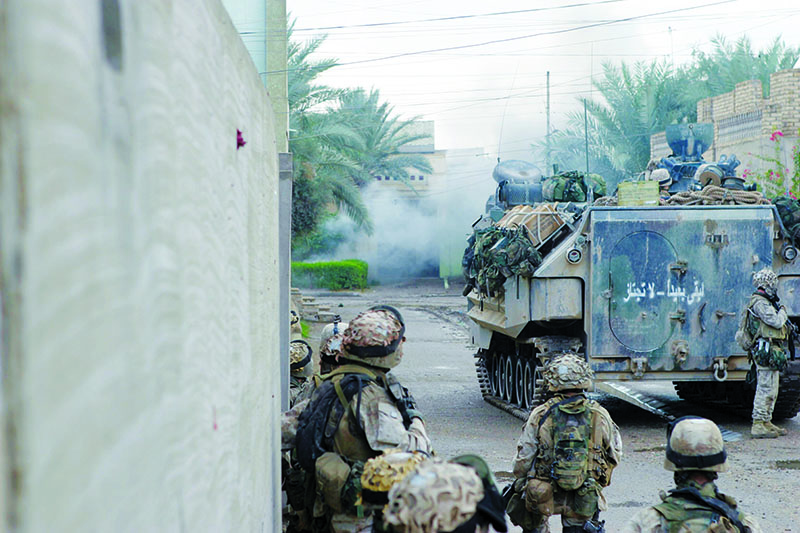
Of course, the Iraqi soldier who uttered these words wasn’t talking about tanks; he was talking about the Marine Corps’ assault amphibious vehicle (AAV) carrying Marines across the Diyala River into Baghdad in 2003. The venerable AAV carried Marines from the Kuwaiti border, through hundreds of miles of desert, on roads and in sand, and finally, across the river.
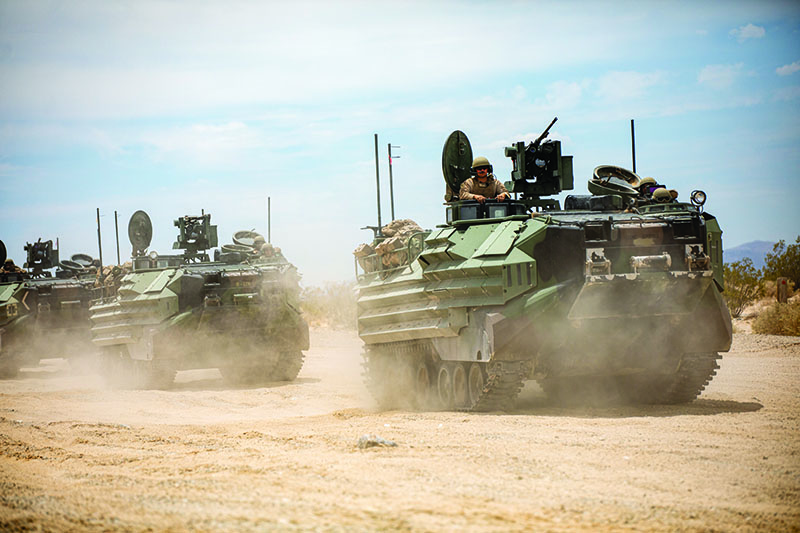
The Marine Corps has finally retired the AAV7A1 after 50 years of service, where it saw action across the globe—from small Caribbean islands to tsunami relief in Indonesia and even humanitarian missions in North Carolina, Mississippi and Louisiana in the wake of terrible hurricanes. The AAV was a versatile vehicle capable of using caterpillar treads over roads and marginal terrain and impellers to propel itself through water. It came into service in 1972 as a direct descendant of the Roebling Alligator and the landing vehicles, tracked, designed to carry Marines and soldiers from ship to shore during World War II.
During the 1930s, the Marines trained and prepared for a war in the far-flung islands of the Pacific Ocean. The big question on everyone’s mind was, how could troops and materiel be moved from ship to shore? A question as old as warships themselves. In 1937, Admiral Edward C. Kalbfus, Commander, Battleships, Battle Force, United States Fleet, saw a Life magazine article that featured a unique vehicle. Engineer Donald Roebling had invented a vehicle that used caterpillar treads. It could float and propel itself in water or on land. After witnessing a devastating hurricane in Florida, he had the idea to build a vehicle that could conduct rescues in the marginal terrain of the Everglades.
The admiral told Marine Major General Louis McCarty Little, Commanding General of the Fleet Marine Force, about it, and Little in turn told the equipment board. The equipment board contacted Roebling, who made prototypes based on the Marines’ requirements—and the Marines loved them. However, after testing the vehicle, initially made of aluminum, they asked for changes, preferring it to be constructed of steel for rugged use in the south Pacific. The first production vehicles, known as landing vehicles, tracked, Mk1 (LVT-1), rolled off the line in 1941, and ever since, the Marines have had amtracs, a portmanteau of “amphibian tractor.”
As with most combat-tested equipment, the design and use of the vehicle evolved quickly. Initially, the LVTs did not have a ramp or carry offensive weapons. They were devised as logistics vehicles. Flat-bottomed boats with bow ramps, like the landing craft, vehicle and personnel (LVCP), or landing craft, medium, delivered Marines and equipment to shore.
These boats were speedy and carried tons of cargo, but their limitations became apparent as the 2nd Marine Division prepared to land on the Tarawa Atoll. The V Amphibious Corps Commanding General, Major General Holland “Howlin’ Mad” Smith, seeing that the reefs around the atoll would keep the LVCPs from getting close to shore, refused to complete the assault unless he had every available LVT in the Pacific to ferry troops ashore.
When the Marines made the assault, many of the landing boats got stuck hundreds of yards offshore and were forced to wade to the beach under withering machine-gun fire. The LVTs were able to make it all the way to the island’s seawall if they survived the Japanese defensive fire. This was at great cost to the LVTs though. By the end of the day, most of the vehicles were out of gas or disabled due to maintenance breakdowns or enemy fire.
Tarawa was a proving ground. There were 125 LVTs—75 LVT-1s from the Guadalcanal campaign and 50 brand new LVT-2s. They performed admirably, though for a short period of time and at great danger. Due to the lack of tank landing ships (LSTs), each LVT at Tarawa had to be craned into the water and loaded with Marines while it bobbed like a cork. Most of the LVTs that reached shore were shot so full of holes that they could not return to the transport ships to take more Marines to shore. Many sank as soon as they tried to reverse off of the reef back into the water. But the LVTs and their crews proved their worth in combat to take combat Marines to shore.
Some limitations remained, however.
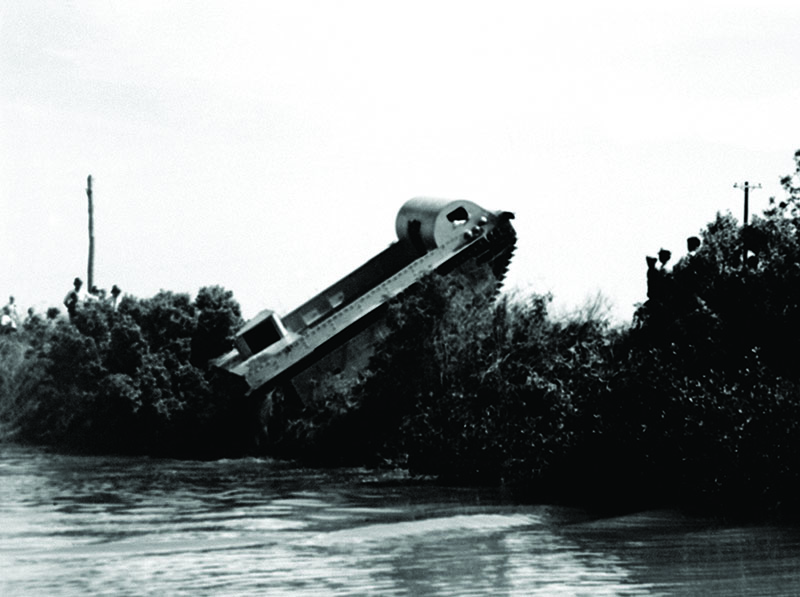
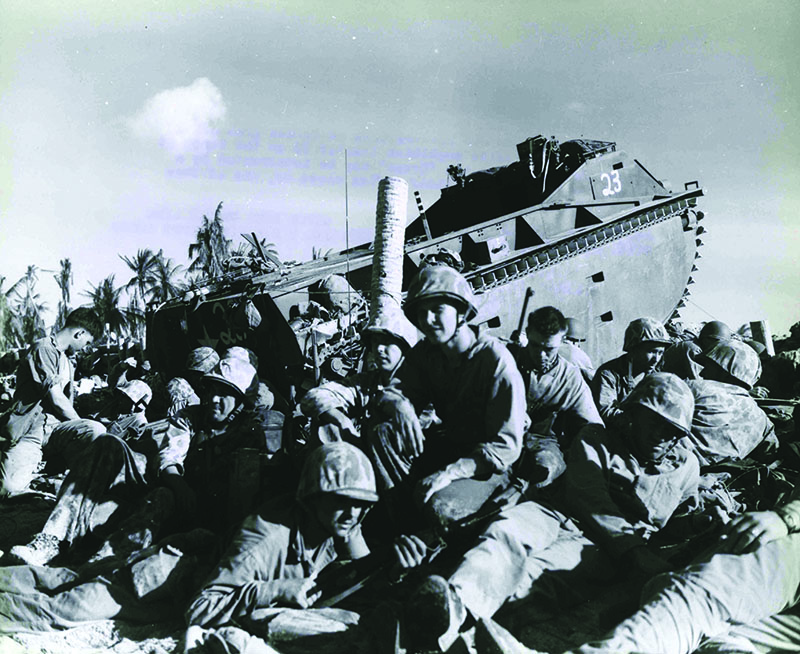
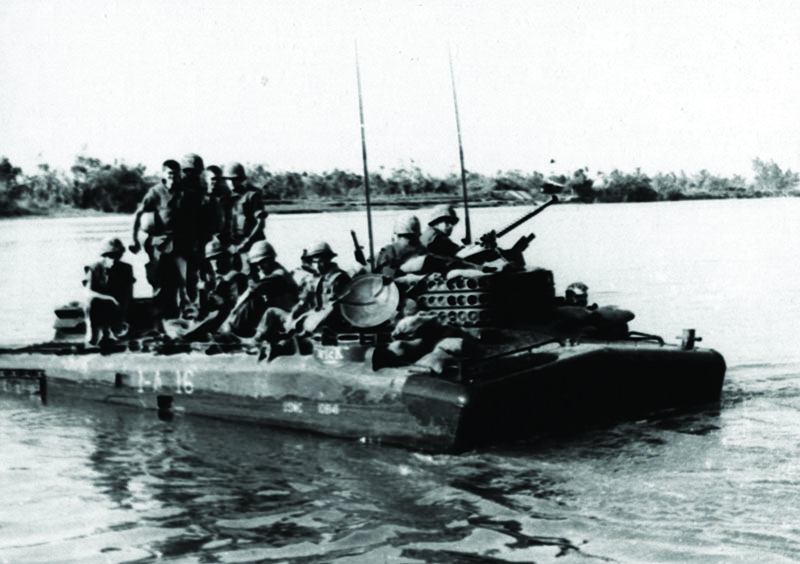
As a logistics vehicle, and as a vehicle whose survival required that it be light enough to float in heavy surf, it lacked heavy armor or offensive weapons. It also lacked a ramp. Marines were forced to load the tub-like cargo area in the rear of the vehicle from the top. On shore it was much harder to unload. Under fire, it was quite deadly. Marines who rode the LVTs to shore laden with heavy combat equipment had to jump several feet down from the top of the vehicle to dismount. Many broke or sprained their ankles and knees in the process.
The Marines went to work developing an armored version and a version with a ramp in the rear. The armored versions boasted machine guns, and some carried a turret with a 37 mm tank gun while others carried a 75 mm howitzer.
The Marines went all-in on the amtrac. Just months after the Battle of Tarawa, during the invasion of Saipan, they loaded more than 50 LSTs with Marines and put the LVTs in the well deck. Each LST could launch 15 combat-loaded LVTs in minutes, saving time and making the dangerous process of having Marines climb down a cargo net into a tiny, bobbing amphibious vehicle unnecessary. More than 700 LVTs participated in the operation. Saipan also saw the combat debut of the LVT-4, the first amtrac with a rear ramp; the LVT(A)-1, the amtank which boasted a 37 mm cannon on a turret; and the LVT(A)-4, which carried a 75 mm turret-mounted howitzer.
As the war progressed, the cargo capacity and horsepower increased. The early models landing on Guadalcanal had a cargo limit of 4,500 pounds and were powered by a 150-horsepower engine. The last unarmored LVT fielded in the war, the LVT-3 (which was fielded out of order, after the LVT-4) had a capacity of 12,000 pounds, two 220-horsepower engines and a ramp in the rear capable of carrying a jeep that could be easily rolled on and off without assistance from a complicated gantry.
Still, the open tubs made the occupants vulnerable to airbursts or Japanese gunners firing down from cliffs. As LVT crews took their vehicles inland, the exposed Marines were picked off by Japanese sharpshooters. Wounded Marines riding LVTs away from the front to aid stations suffered many such incidents.
After WW II, the Marines converted some LVT-3s to carry extra radios and added an aluminum-hinged covering to protect the Marines from shell splinters, designating the newly modified amtracs the LVT-3C, the “C” indicating it was a “command” variant. Marines used this updated LVT in the Inchon landing during the Korean War. But by then, the LVT-3C was old technology, and could only carry WW II-era sized jeeps for equipment. Still, the Marines wanted bigger.
The fact that the Marines still wanted a tracked landing vehicle was somewhat controversial in the age of the atom bomb, and with the advent of guided missiles. Landing vehicles only work if the troops inside can survive the ship-to-shore movement. The threat of nuclear weapons on the battlefield was all-consuming. One tactical nuke could wipe out entire military formations. The Army even reorganized itself into “pentomic divisions” to fight a nuclear war, leaving the Marines as the force that still thought about amphibious assault and tactical amphibious logistics.
Even if a nuclear weapon could wipe out a naval task group and its component landing craft, the Marines still felt there was room to prepare for smaller conventional wars and small wars as the nation’s ready expeditionary force. At the time, propelled with paddle-like grousers on their caterpillar tracks, LVTs spewed water into the air at the back of the craft, making their positions apparent to defenders. Worse, the slow ship-to-shore trek made them potential sitting ducks with long transit times. This put the Marines in amtracs at serious risk. But they plodded along, continuing to design, field, and implement tracked landing vehicles.
One of the major weak points of the design of amtracs to that point was the tracks. They were fragile and prone to breaking. The grousers were like cleats, running along the contact surface of the track and jutting off sharply. On sand, these were ideal, but they would tear up road surfaces. It was one of the many things that the Marines looked to improve with the next generation of landing vehicles.
The next iteration of tracked vehicle was the LVTP-5, which first saw service in the mid-1950s. This generation had more roles than the WW II-era predecessors. In addition to an amphibious armored personnel carrier, there were command, mine-clearing and recovery vehicle variants, all built on the same chassis. This was the final generation to have an artillery variant, the LVTH-6, which mounted a 105 mm howitzer. It was also the first and only variant so far to have a bow-mounted ramp. These amtracs saw widespread use in Vietnam but were also used in landings in the Levant and Caribbean. The grousers that propelled the vehicle in the water were much improved in their shape, though the steel treads still damaged road surfaces.
There were several issues with this family of vehicles. It used an 800-horse-power gasoline engine with fuel tanks that ran along the bottom of the vehicle. These were critically vulnerable to mines. An exploding mine would rupture the gas tanks, setting off an inferno inside the vehicle. Marines using these behemoths in Vietnam often chose to ride on top of the vehicles, setting sandbags around themselves for protection. It was also exceedingly heavy. Its rear-mounted engine sat low in the water, and when traveling it would sag and the intakes would get swamped. The solution was to add a superstructure at the back of the vehicle to keep the intakes well above the water line.
Development for the current, and final, iteration of these LVTs began as soon as the LVTP-5s hit the fleet. The conflict in Vietnam showed the limitations of the large, very heavy vehicles. Amtrac crews had difficulty moving around, and the Marine Corps took these limitations to heart.
The first prototypes of their replacement, known as the LVTPX-12, rolled off the assembly lines in the late 1960s. During the development of what would become the LVTP-7, the Marines decided to return to aluminum hulls to reduce weight. Diesel engines replaced the gasoline ones, and were placed at the front, with the ramp in the rear. Using diesel made the new amtrac much less likely to explode when hit. Designers also incorporated a hinged door on the roof, as with the LVT-3C, for ease of loading and escape. Later, these hinged roofs served as a place to load the mine-clearing line charge launchers used in Operation Desert Storm. Importantly, the Marines wanted the new amtrac to be capable of keeping up with tanks. Initially, the personnel variant was slated to have a 20 mm cannon mounted on a turret at the front, but that was scrapped in favor of a .50-caliber machine gun, which lacked the firepower ashore that the Marines desired.
The first LVTP-7s began arriving in the fleet in 1972—more than 50 years ago. The vehicle worked well and had almost all the same variants as the LVTP-5. The Marines wanted to implement a heavy weapons version using the 152 mm Shillelagh weapons system, but the aluminum frame could not withstand the repeated heavy vibrations of the weapon being fired. Though there were multiple attempts to put a more powerful offensive weapon in, the budget shortfalls of the post-Vietnam era made the Marines reevaluate.
But in the post-Vietnam time frame, the Corps turned within in an era of austerity. Planners knew the Marines would not have the larger budgets they had in the years past. Marine thinkers, lamenting the Corps’ turn to jungle warfare, wanted to return to amphibious and littoral warfare, which for the most part had been neglected during Vietnam. The LVTP-7 afforded the Marines the opportunity to turn back to the littorals and large-scale maneuver warfare. The new amtrac could do something its predecessor could not do easily: drive on improved roads due to its rubberized treads, lighter weight and smaller footprint, and it could operate at the same speed as tanks in the same environments.
During the LVTP-7’s 50-plus year lifespan, it went through multiple upgrades to stay relevant to the Marines, and it even survived the attempt to replace it with the advanced assault amphibious vehicle (AAAV). There were still many hotspots in the world where the amphibious and expeditionary nature of the Marines allowed for multiple deployments, in an era hallmarked by the decline and collapse of the Soviet Union and the rise of Islamic terrorism. Where there was a shoreline to land on, the Marines took their amtracs with them. Marines deployed this vehicle in Beirut and Grenada in the early 1980s.
During a major service life extension program overhaul period in the mid-1980s, the LVTP-7 received several upgrades, which replaced its powerpack and saw the addition of a retractable bowplane to help it plow through the surf during amphibious operations. The Marines awarded a contract to Cadillac Gage to add an MK19 40 mm automatic grenade launcher alongside the old .50-cal. machine gun in the up-gunned weapons system. However, they were not coaxially mounted; the gunner had to aim each weapon individually. Along with the change, the Marines redesignated the vehicle to the assault amphibious vehicle, or AAVP7A1.
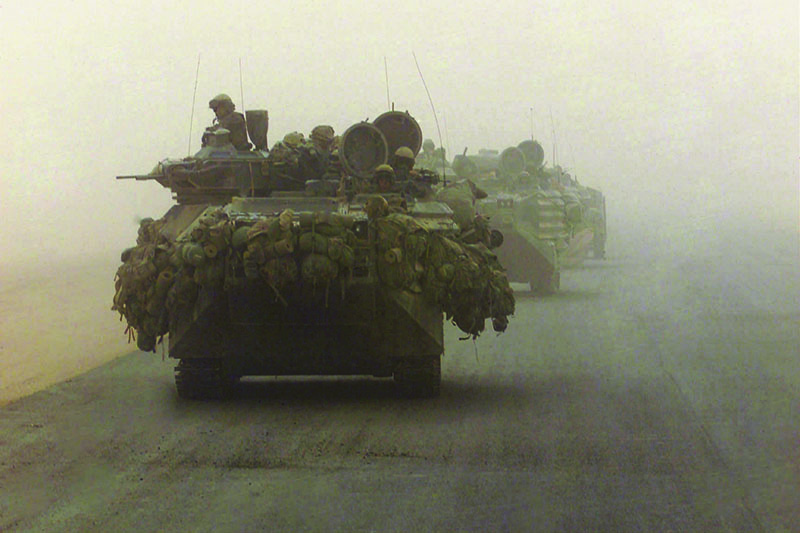
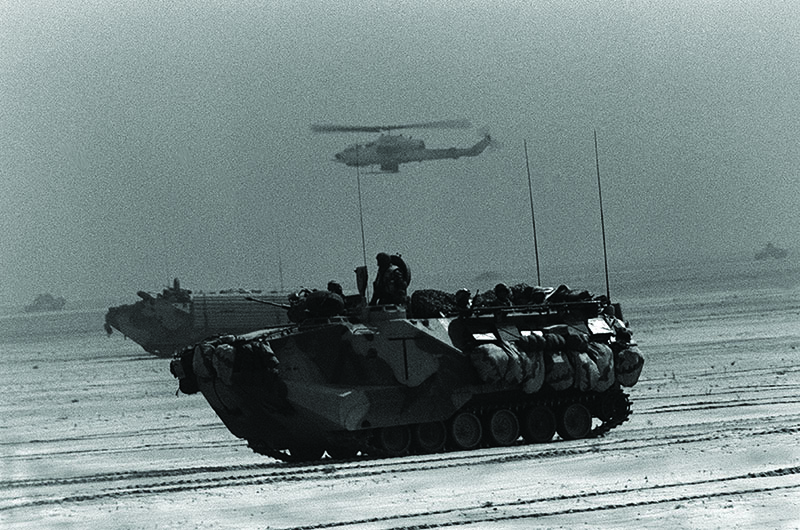
The Marines returned to their first large-scale involvement since Vietnam in Operation Desert Shield and Operation Desert Storm. The AAVs showed their value by keeping up with the tanks across the open desert terrain, carrying Marines and supplies as the task forces punched through the obstacle belts that Saddam Hussein had built in Kuwait to slow them down. Tank units, like 3rd Tank Battalion, used the AAV7CA1 command variant to keep the battalion on task and fighting. A dozen AAVs were tasked to mine-clearing operations, carrying mine-clearing line charges and launchers on top and towing additional charges on trailers behind.
After Desert Storm, the AAV7A1 was nearing 20 years of arduous service. Although it was proving to be a capable combat vehicle, armored personnel carrier and utilitarian vehicle, the Gulf War showed that it would need more improvements to continue operations into the 21st century. New applique armor systems were devised to improve protection against arms fire on the battlefield. The new P900 system, which was essentially two sheets of stacked perforated steel shaped in blocks and bolted to the sides of the vehicle, was quickly upgraded again to the enhanced applique armor kit (EAAK). Its corrugated sheets of composite sandwiched between steel fit the contours of the vehicle and bolted onto the vehicle’s sides and top so as not to interfere with waterborne operations.
The 1990s were marked by landings on foreign shores, like the humanitarian missions in Haiti, Somalia and Kosovo. Although the country lacked a major adversary, the aging AAV fleet was wearing out. It had been in service longer than any one type of amtrac had, and its projected replacement, the AAAV, was still on the drawing board. This made it necessary for the Marines to extend the life of the AAV once again. This time, in the late 1990s and early 2000s, the Marines replaced the running gear and powerpack with those identical to the M2/M3 Bradley Fighting Vehicle, calling the upgrade the reliability, availability, maintainability/rebuild to standard (RAM/RS).
During the aftermath of 9/11, the AAV7A1 RAM/RS with EAAK armor found itself participating in the global war on terror, though it never served in Afghanistan. Its next big deployment would be in Operation Iraqi Freedom in 2003. Unlike in Desert Storm, where several of the Marine task forces walked into Kuwait by foot, the entire Marine Corps that participated in the invasion was mechanized, using humvees, medium tactical vehicle replacements and the venerable AAV. These amtracs crossed the line of departure carrying Marines who braced themselves from the fold-open roofs. Spending hours shut inside the vehicle was uncomfortable and hot, often causing motion sickness.
The decision to drive the amtracs all the way to Baghdad as an armored personnel carrier was not without detractors. Many claimed it was too big and not armored enough to risk the effort. And it was designed as a landing vehicle, not an armored personnel carrier. It was vulnerable to rockets, mines and IEDs. When the amtracs reached the shores of the Diyala River, no one was sure that they would be able to float in a shore-to-shore operation due to the excessive wear of the 300-mile trek from Kuwait.
During 2004’s Operation Phantom Fury, as Marines and soldiers methodically worked their way through the streets of Fallujah, rooting out and killing insurgents, Marines used amtracs to deliver supplies to the front and evacuate wounded to the rear. Unfortunately, the AAV was still susceptible to propelled grenades and mortar fire. But IEDs in Iraq soon became a very large problem. The hull of the amtrac was designed to help it float through the water, not to protect it from blasts. This led to AAVs being used less in Iraq, as Mine Resistant Ambush Protected vehicles became available.
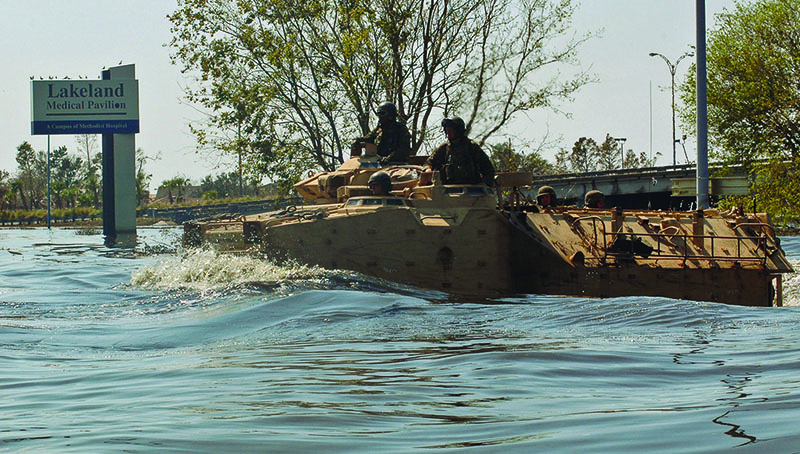
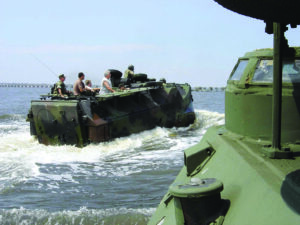
The AAV still proved useful in humanitarian operations around the globe. In 2004, the 15th MEU used AAVs, in conjunction with helicopters and landing craft, air cushion, to provide aid to Indonesia in the wake of a devastating tsunami. The amtrac Marines used AAVs in Louisiana and Mississippi in the aftermath of Hurricane Katrina in 2005, and in 2018 in North Carolina in the wake of Hurricane Florence, to deliver much-needed emergency supplies and evacuate victims.
By the late 2000s, it had become clear that the AAAV was in trouble. Cost over-runs and reliability issues kept it from being sent to full production. It was redesignated as the expeditionary fighting vehicle, or EFV. The main two issues that the EFV was trying to solve was the vehicle’s slow landing speed and lack of firepower. The AAV was not much faster at waterborne operations than its WW II predecessors: only moving at about 8.5 miles per hour. The U.S. Navy grew concerned about ship-killing missiles if they brought their amphibious ships too close to shore. The Marines wanted to send troops in armored landing craft from nearly 30 miles offshore at high rates of speed and have a vehicle with some fire-power once there. As missile technology improved, the Navy felt that their amphibious ships would need to be even more than 30 miles away from shore—closer to 60—to be protected from missile attack. Having Marines ride in a fast but enclosed box for 60 miles was not feasible, and the EFV was cut.
The Navy would instead work to make it safe to put their amphibious fleet closer to shore to complete a ship-to-shore land-ing. One course of action the Marine Corps looked at was putting the AAV into a survivability upgrade package and keeping them in service until 2035. They decided instead to change their amphibious assault vehicles from tracked landing vehicles to wheeled ones in the newly fielded amphibious combat vehicle (ACV). Breaking with tradition, the new ACV has eight wheels and sports a more powerful engine, making it capable of traveling on land at 65 miles per hour, though its top speed on water is still roughly the same as the amtracs from WW II. Its shipboard dimensions are smaller than the AAV7A1, though it is heavier, and its survivability against mines and IEDs is much improved.

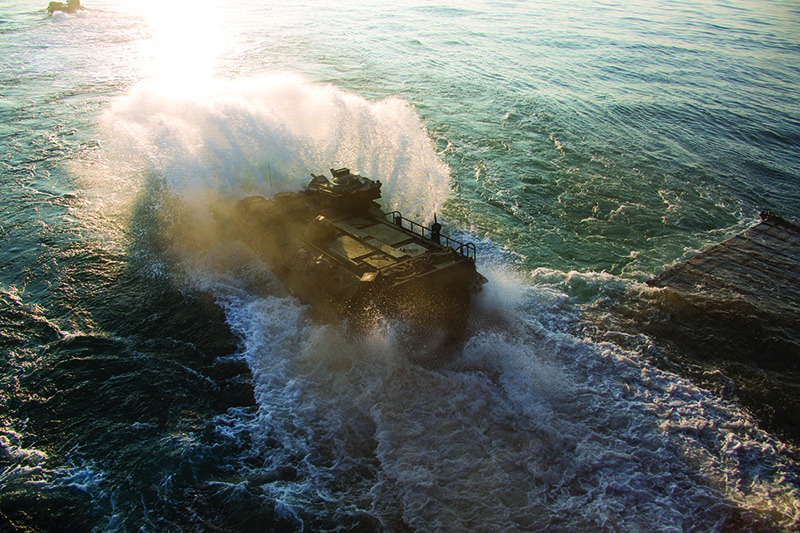
An AAVR7A1, or recovery variant amtrac, keeps Marines afloat as they prepare to enter the well deck of USS Wasp (LHD-1) in 2017. The Marine Corps retired the AAV in 2025—ending more than 80 years of tracked amphibious vehicle tradition dating back to WW II. (DOD photo)
The Marine Corps phased out the AAV in September 2025 after more than half a century of service. During that time, the LVTP-7 underwent multiple upgrades to stay relevant to the Corps, survived attempts to replace it and, as the U.S. extricated itself from Vietnam, continued to deploy to global hotspots. With the decline of the Soviet Union and rise of terrorism, wherever there was a shoreline, Marines brought their amtracs. Not bad for a vehicle that was expected to have a service life of 10 years. This marks the first time since before 1941 that the Marines have not possessed a tracked landing vehicle. The AAV’s long history stands as proof of its reliability and adaptability—and of the Marines’ enduring ability to go wherever the country needs them.
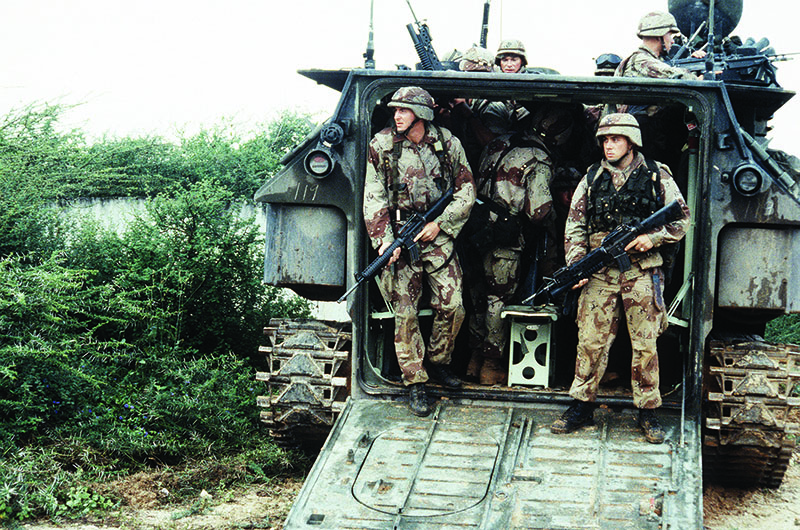
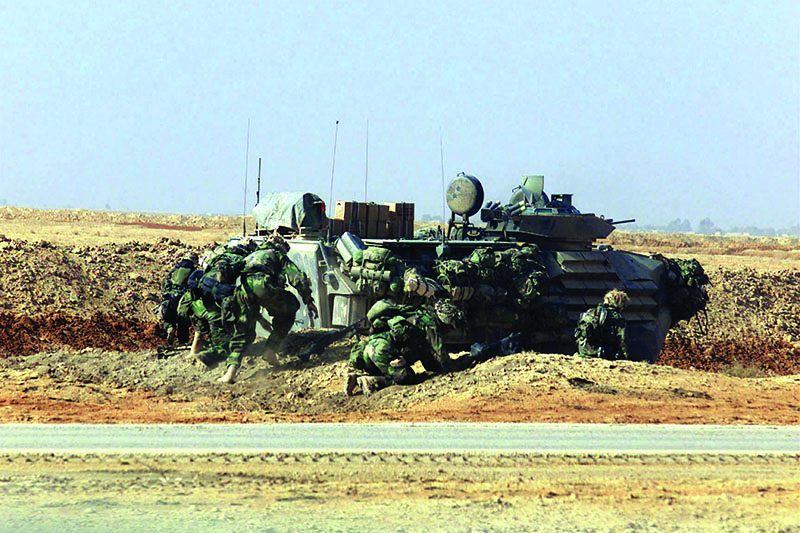
Featured Image (Top): Marines prepare to exit an AAV7A1 during the multinational relief effort Operation Restore Hope. The AAV’s unique ability to move troops, supplies and aid workers across beaches, flooded roads and debris-strewn urban terrain made it invaluable in operations far beyond combat.
Author’s bio:
Kater Miller is an Outreach Curator and Exhibit Chief for the National Museum of the Marine Corps and has been working at the museum since 2010. He served in the Marine Corps from 2001-2005 as an aviation ordnanceman.
Enjoy this article?
Check out similar member exclusive articles on the MCA Archives:

Gallipoli? Where’s That?
Leatherneck
November 2016
By: Allan Bevilacqua
Homefront Heroes: Marines Recall Lifesaving Actions During Hurricane Katrina
Leatherneck
September 2025
By: Kyle Watts
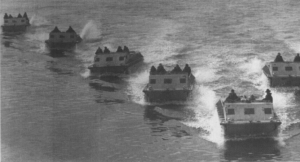
Amtrac Museum preserves Corp’s unique amphibian legacy
Leatherneck
June 1998
By: Chris Lawson


