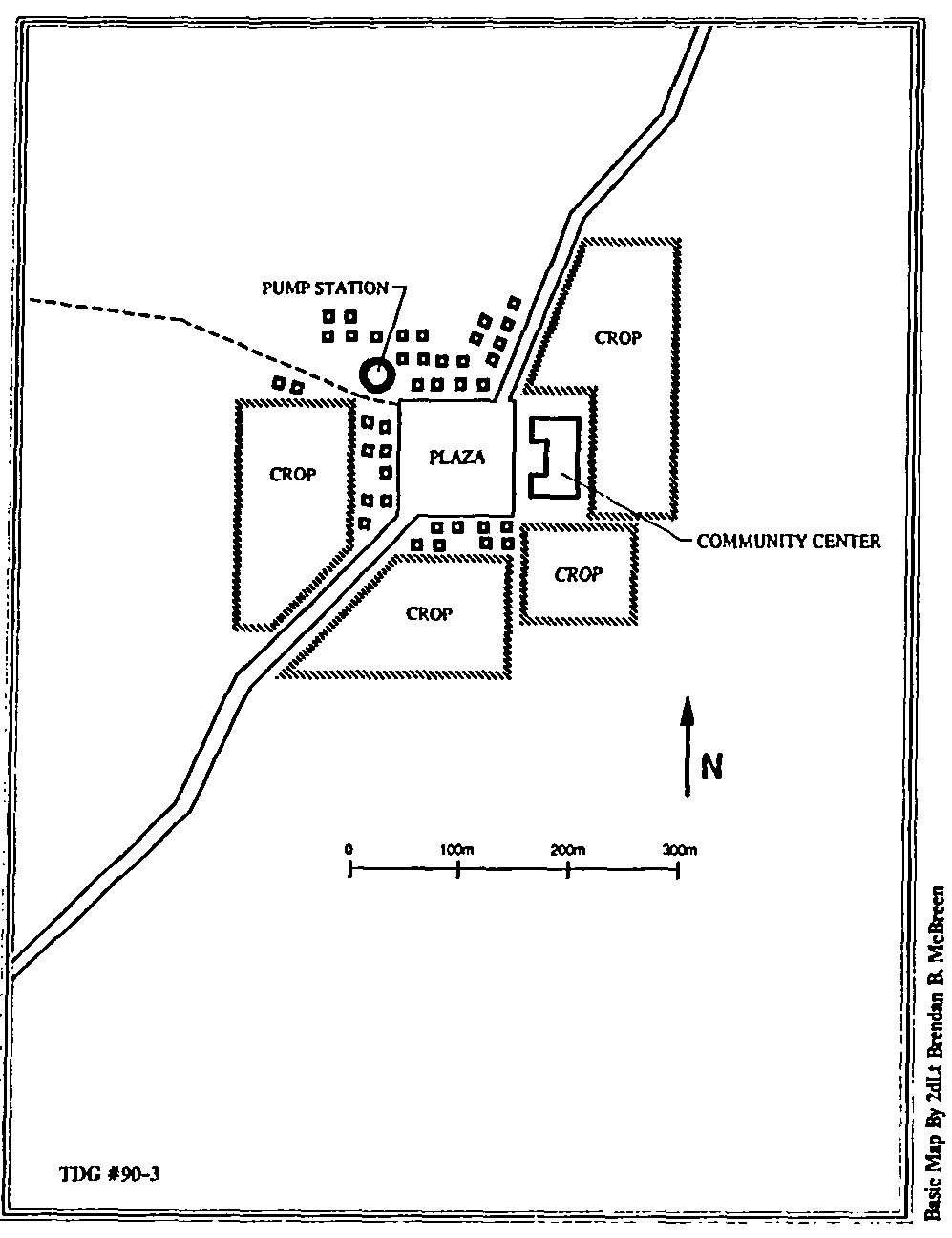
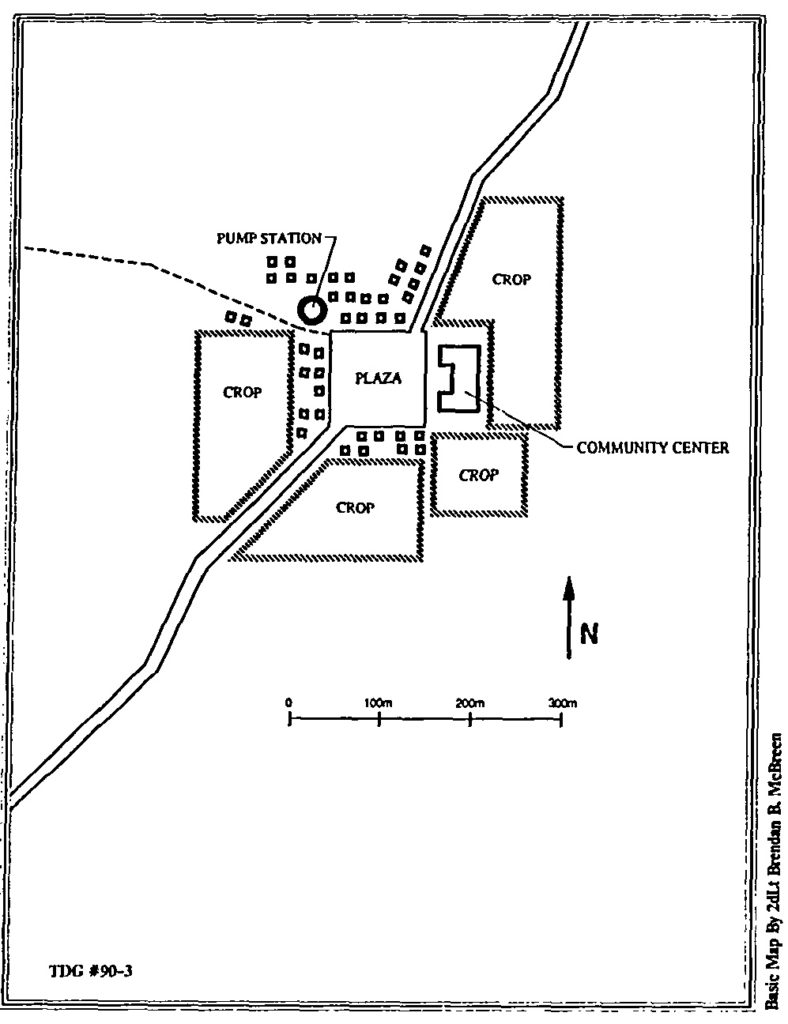
“Belleau Wood Challenge”

by Team 1, H&S Bn

Situation

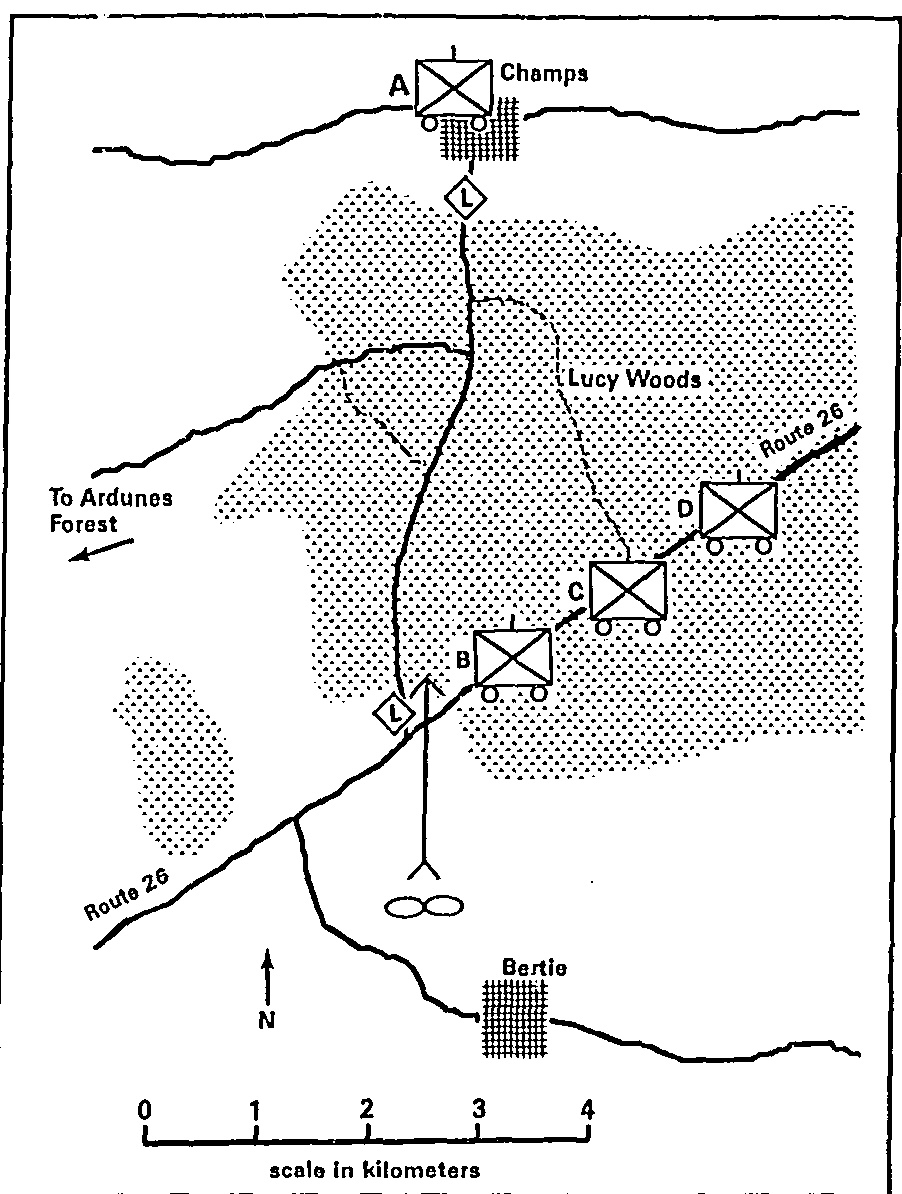
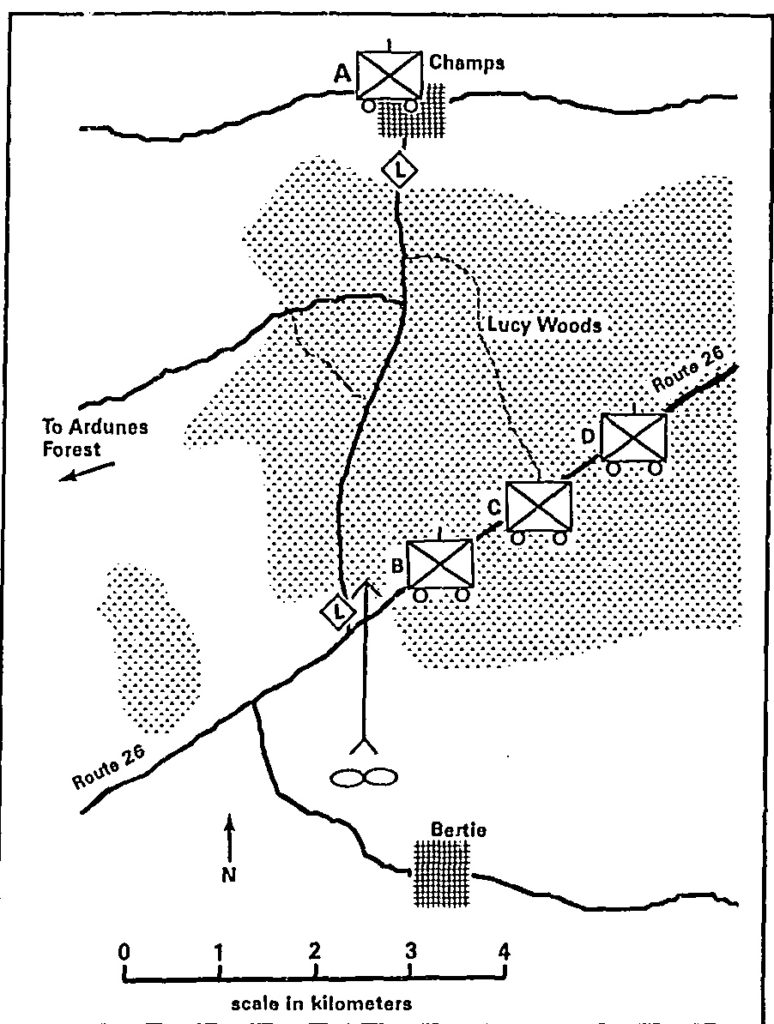
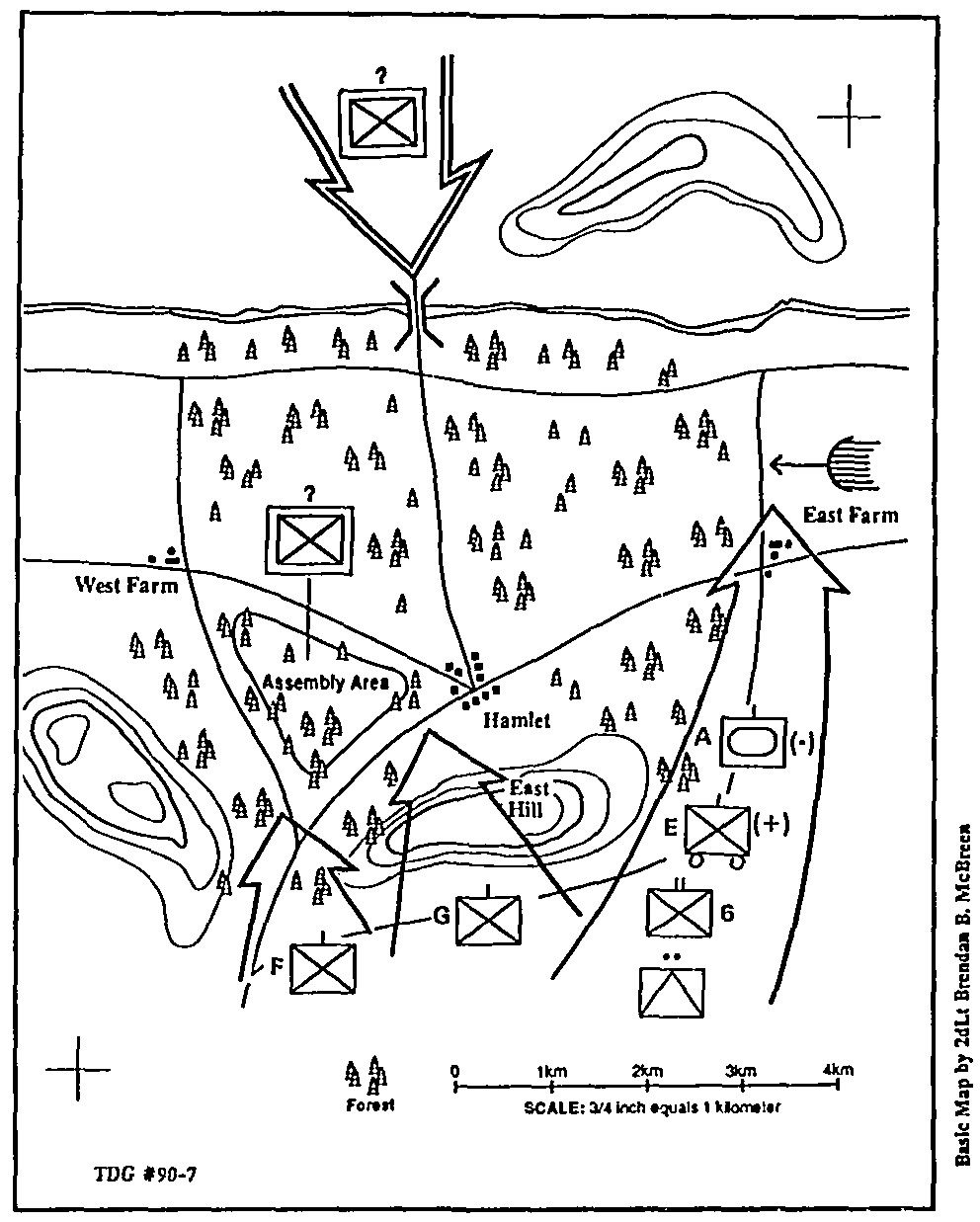
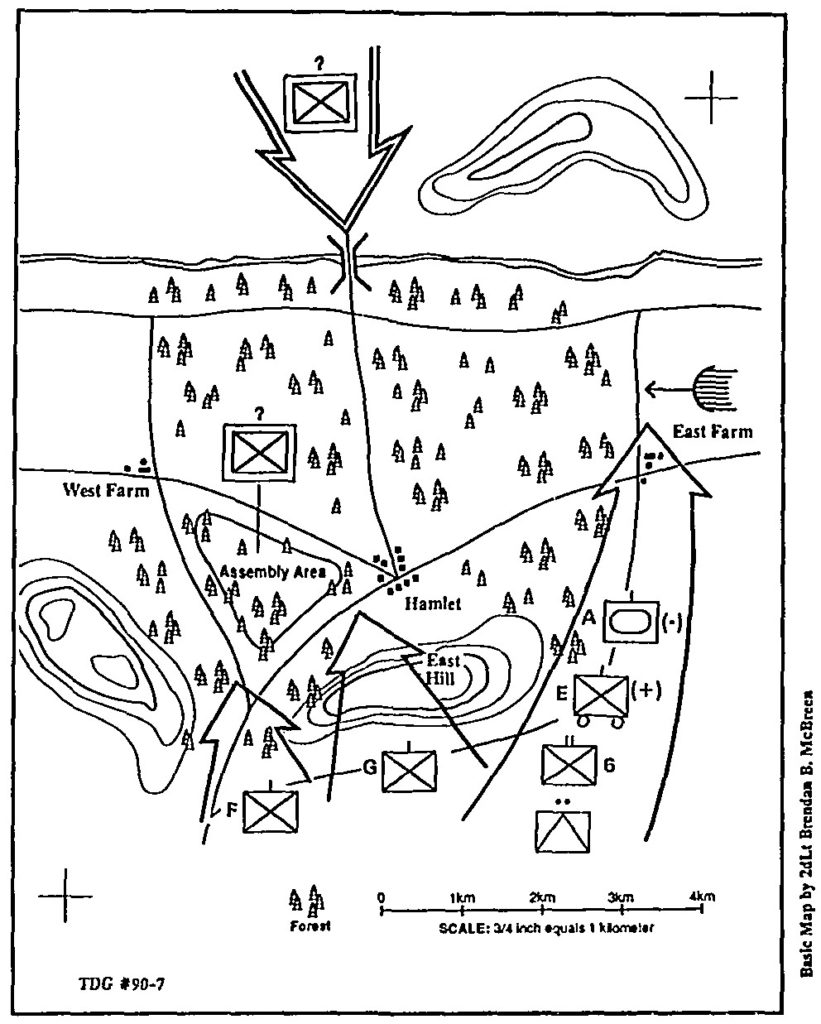
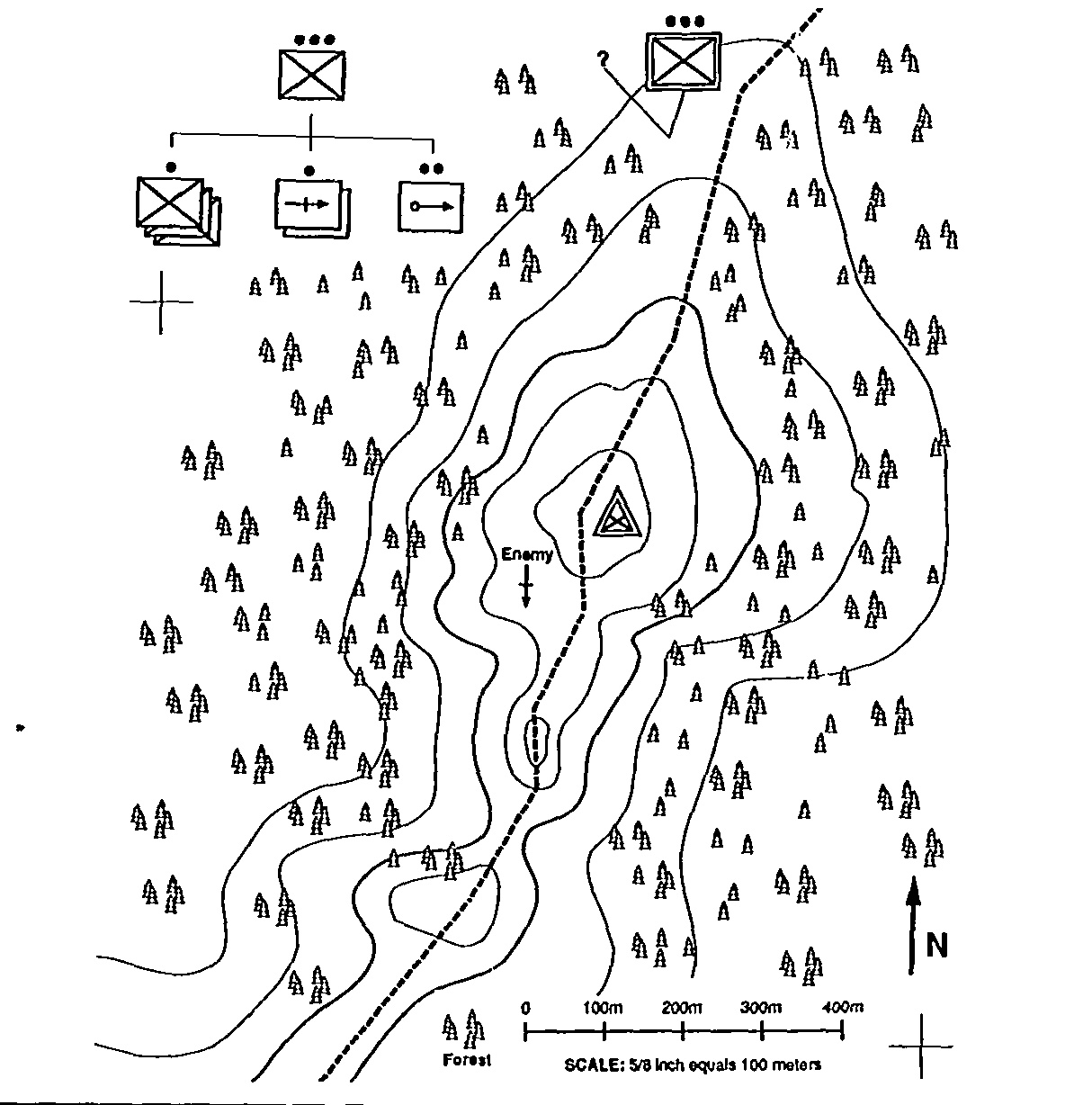
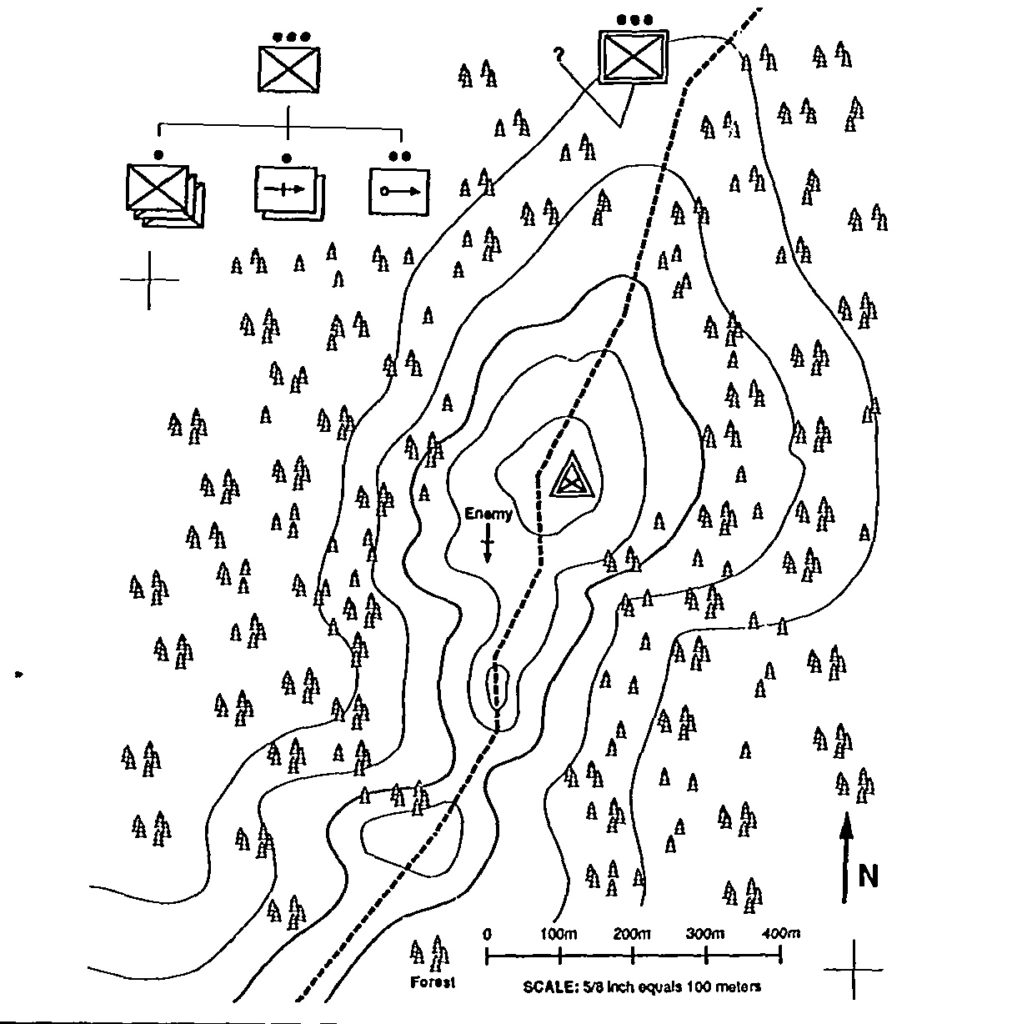
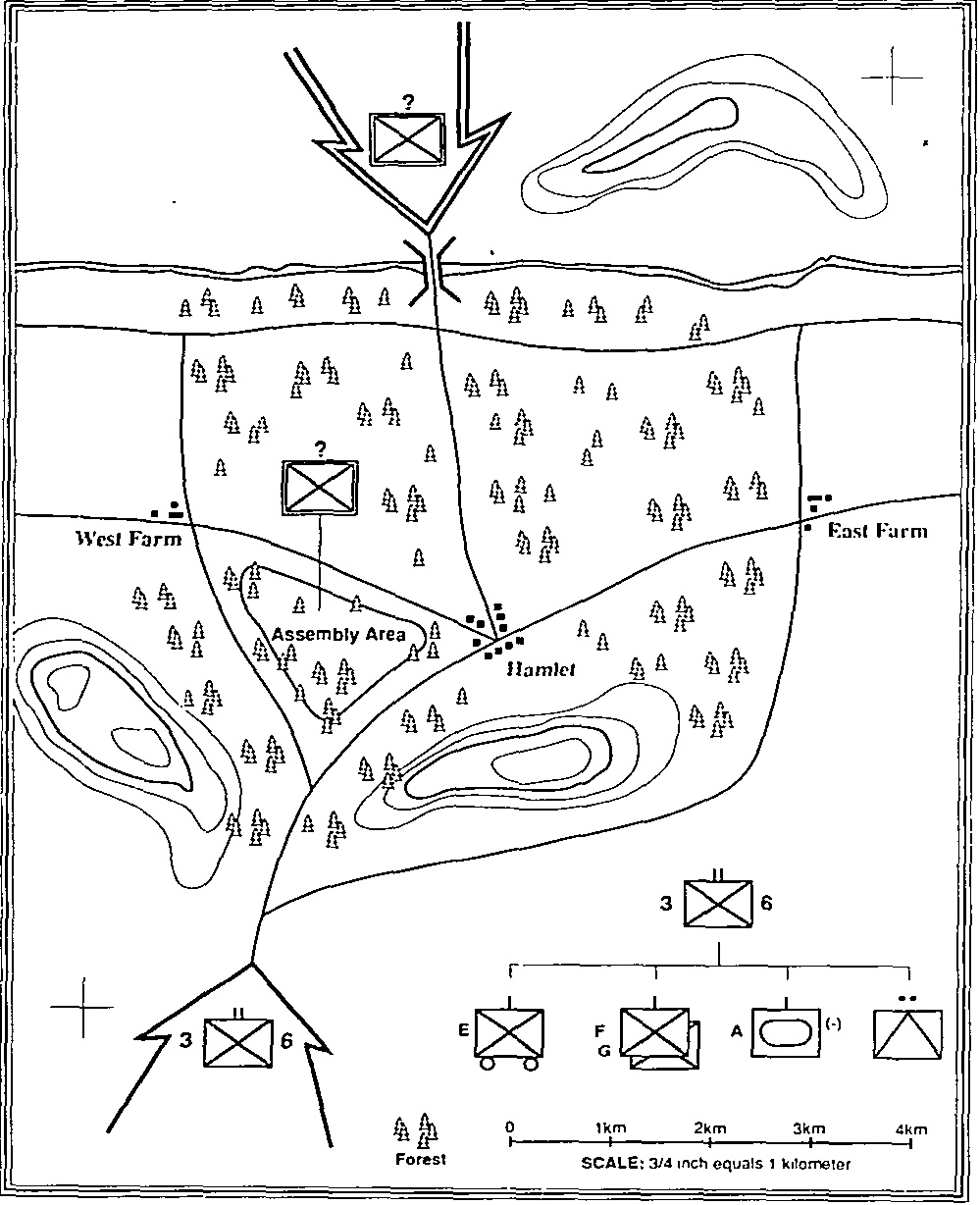
You are the CO, 1st Bn, 6th Marines, 4th Marine Brigade, 2d Infantry Division, American Expeditionary Forces. Your battalion is currently located to the southeast of Lucy-de-Bocage. During the Battle of Château-Thierry on 6 June 1918, the 4th Marine Brigade seized Hill 142 and the town of Bouresches and established a foothold in the southern portion of Belleau Wood. The clearing of Belleau Wood is now essential in preventing harassing fire and in ensuring the overall security of the Paris-Metz highway—the main Allied line of communication. With outcropping boulders, dense foliage, and steep, rolling terrain, Belleau Wood offers the perfect defensive position and is currently occupied by the German Army with elements of the 461st Infantry Regiment, 237th Division in the north and the 40th Fusiliers Regiment, 28th Division in the south. Operations conducted by Marines from 6 through 9 June have shown that the Germans are armed with heavy and light machine guns and are well supported with artillery fires. German artillery units have been known to utilize chemical munitions. The enemy has regimental-sized elements to the north and east of Belleau Wood that can make a movement to reinforce during the night.

On 9 June at 1830, you receive Field Order 3 from BG James Harbord, CG, 4th Marine Brigade. Your battalion has been tasked with clearing the southern portion of Belleau Wood to the limit of advance. Upon taking the objective, you are to link up with 2d Bn, 5th Marines to the west in Bois de Champillon and 3d Bn, 5th Marines to the east, in Bouresches. You have the 1st Bn, 15th Field Artillery Regiment in general support of your maneuver that can range all objectives within Belleau Wood.

Requirement

It is H-10; prepare a course of action graphic and narrative; identify and task your main effort and supporting efforts. Additionally, include a reconnaissance and fires plan.

Issues for Consideration

  • 1. What is the enemy’s composition, disposition, and strength within the southern portion of Belleau Wood?
  • 2. How can an integrated fires plan shape the battlespace?
  • 3. How can you utilize maneuver or deception to avoid attacking the enemy’s main strength?

Instructions

Quickly formulate your plans and issue your orders. Provide a brief discussion of the rationale behind your actions. Submit your solution to [email protected] or Marine Corps Gazette, TDG 07-18, Box 1775, Quantico, VA 22134. The Gazette will publish solutions in an upcoming issue.


>Members of Team 1 are found on p. 18.

“Take that Wood”

By Bradley J. Meyer

Situation

You are the commander of the 4th Marine Brigade, 2nd U.S. Division. It is early on 9 June 1918. Your mission, assigned by the commander of the 2nd Division, is to “clear Belleau Wood on 11 June 1918.” This is a matter of particular importance to higher echelons of command, as the majority of the American public thinks that the Marines have already cleared Belleau Wood.

Probably because of the level of attention focused on Belleau Wood worldwide, the French have agreed to support your attack with quite a large amount of artillery fire, namely 50 batteries worth. They are also prepared to fire off a large amount of ammunition, namely 6,000 rounds of 155mm shells and 28,000 rounds of 75mm shells. You may set the targets and priorities for this fire however you think would best support your attack.

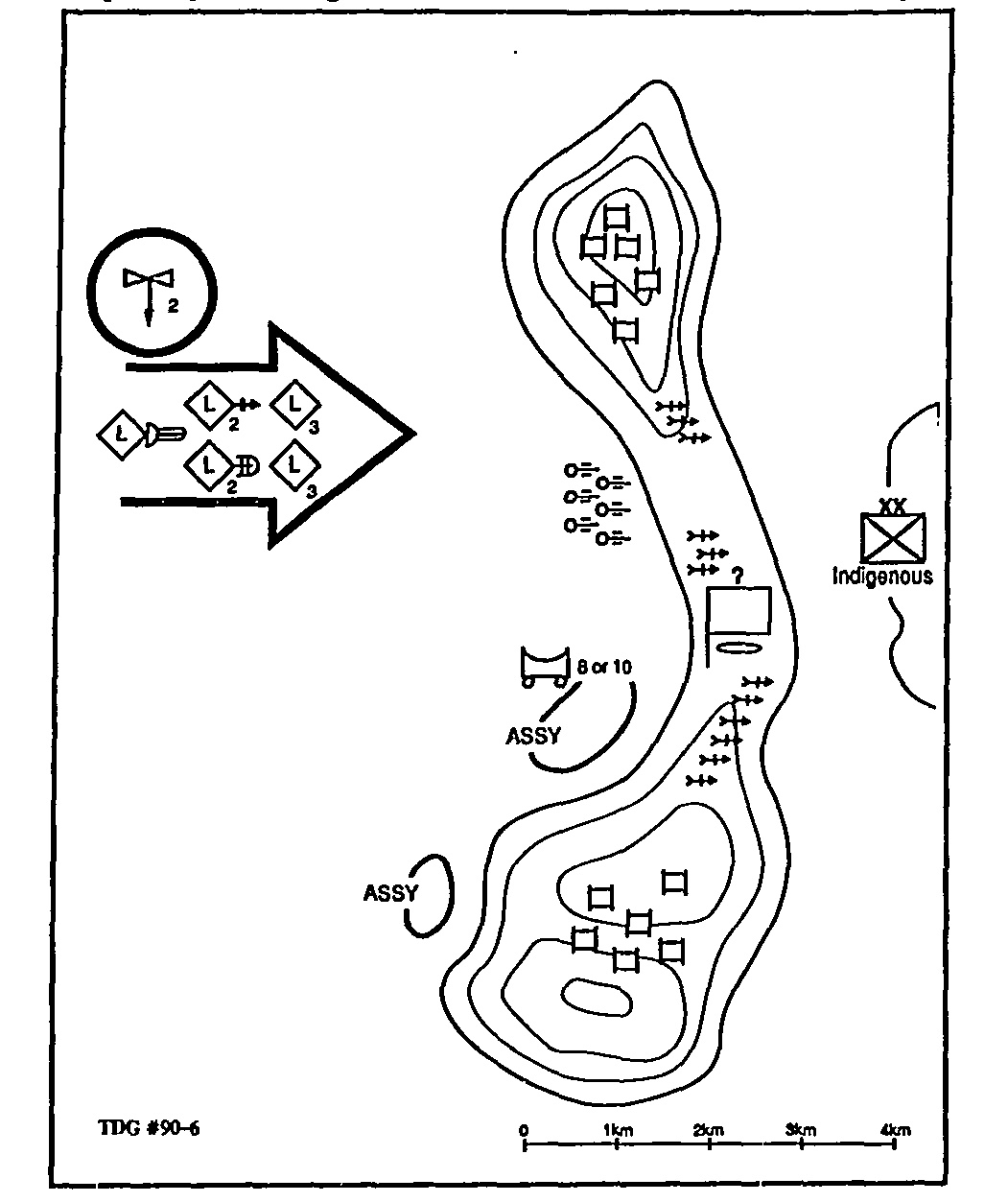
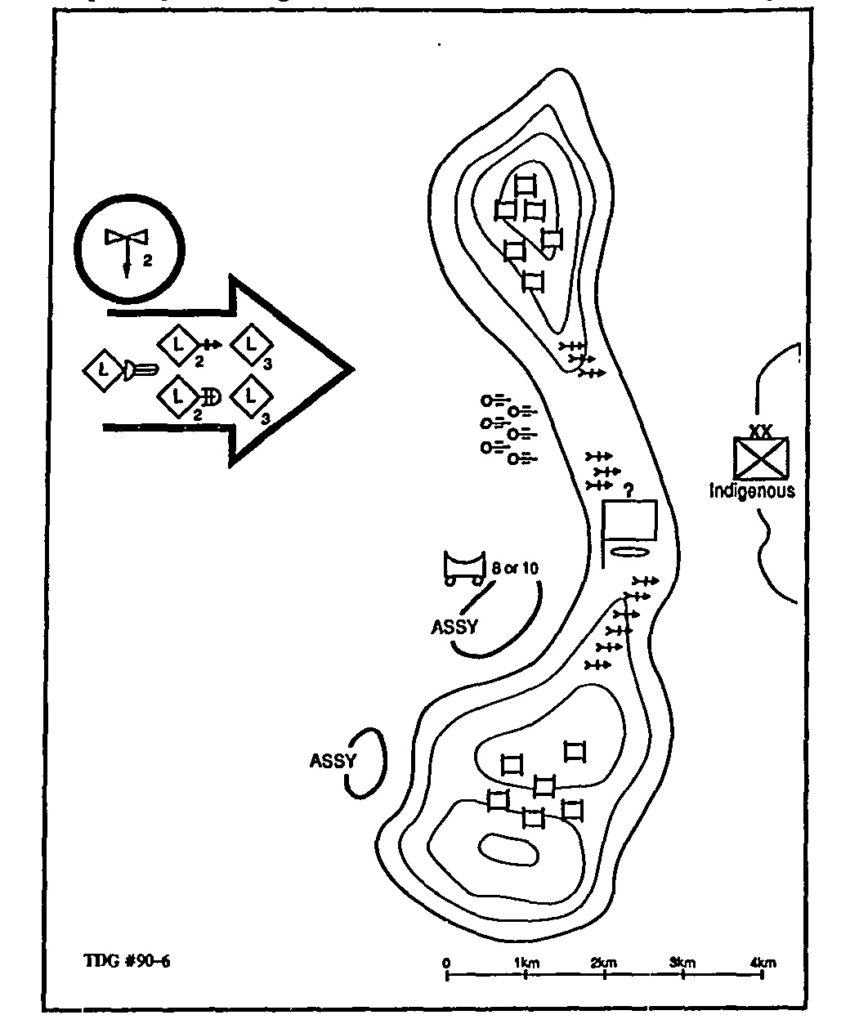
On 6 June, two of your battalions attacked the wood, which was believed, at the time, to be unoccupied. 3d Battalion, 6th Marines (3/6) ran into a strongly posted German line a couple of hundred yards from the southern edge of the wood. Machine guns with intersecting fields of fire prevented any further progress, even though 3/6 took over 40 percent casualties. There were many large boulders along the German line; the Germans, in many cases, posted their machine guns behind the boulders, thereby securing protection from fire from the front while firing the machine guns at an angle to the front. These arcs of fire intersected. No rifle grenades were available during these attacks, a fact that the Marines have bitterly complained about. It was noted during this fight that there were several relatively covered routes into the southern edge of the woods, working off the gully that runs between Lucy-le-Bocage and Bouresches.

3d Battalion, 5th Marines also attacked on 6 June, across a wheat field. (See map.) They received heavy fire on their left flank from behind a knoll on the western side of the wood, Hill 169, and also from the tree line directly to their front and right flank. Only the company of 3/5 farthest to the right, the 47th, made it into the woods relatively intact. That was because a small ridgeline protected them to some extent from the fire coming from the left. Survivors of the 47th also reported abandoning their original formation, four rows of skirmishers spaced five yards apart with rifles at high port, in favor of “spreading out in the wheat and taking the old formations we had used so many times in the cane fields of Santo Domingo.”

You have available for the attack two infantry battalions, 2/5 (75 percent strength), under Maj Frederick Wise, and 1/6, under Maj John Hughes (“Johnny the Hard”). Also available is the 6th Machine-Gun Battalion (four companies, each with sixteen heavy machine guns (Hotchkiss, Model 1914), led by Maj Edward Cole. The attack on Belleau Wood, while of great importance, is part of a larger Allied counteroffensive against the German offensive originating at the Aisne River. The rest of your Brigade is required to hold Hill 142 and the village of Bouresches, localities gained in the 6 June attacks.

Currently all American units have been pulled out of the woods, with the exception of the 80th Company of 3/6, located in the extreme southwest corner of the Wood (northeast of Lucy-le-Bocage). This has been done to give free rein to the action of the artillery. There is no detailed information on German dispositions, but it may be assumed they hold the wood in approximately regimental strength. Because of the small size of the battlefield and the amount of time available, the attack units can approach the wood from any direction south of the Lucy-Bouresches road or west of the Lucy-Torcy road.

Requirement

BG Harbord, what are your orders?

Instructions

Quickly formulate your plans and issue your orders. Provide a brief discussion of the rationale behind your actions. Submit your solution by email to [email protected] or to the Marine Corps Gazette, TDG 06-18, Box 1775, Quantico, VA 22134. The Gazette will publish solutions in an upcoming issue.

The Quick Reaction Force

By the Staff, Marine Corps Gazette

This TDG is a continuation of the scenario that began with TDG 02-17 in the February 2017 edition. For additional information on the current situation, refer to TDGs 02-18 and 03-18: “The Routine Patrol,” Parts I and II, in the February and March 2018 editions respectively.

Situation

You are the platoon commander of Second Platoon, A Company, 1st Battalion, 1st Marines. Since your 3d squad is conducting a day security patrol, the remainder of your reinforced platoon is currently “standing by” on a plus-fifteen-minute alert as the Company’s quick reaction force (QRF). This means your company commander expects you be able to depart friendly lines with your force in fifteen minutes or less from the time support is requested.

In addition to your two remaining squads, you are reinforced with one machine-gun section (two M240B machine guns), one JTAC-trained Marine, and a Corpsman. The QRF also includes two squads of MUGA Commandos and two Commando “anti-tank/assault teams” of two men each, armed with Type 69 rocket propelled grenade launchers and a mix of anti-personnel and anti-armor rounds. All close air support, fire support, and medevac assets remain the same. Your communications are still limited, unencrypted VHF/UHF voice-only radios.

Approximately 25 minutes ago, steady small arms fire was heard coming from the area east of the Al Mumeet Mosque, and ten minutes ago, your patrol reported in that they were taking fire from a building or buildings in the vicinity of checkpoints four and five and requested support. They have no casualties and have consolidated in covered and concealed positions in the fallow fields south of the road running east–west from checkpoint two. The patrol also reports an AUXFOR vehicle checkpoint east of checkpoint one manned by about ten “Oxfords.” These AUXFOR are clearly agitated and showing the effects of a morning’s khat use, but they remain covered and have started firing their weapons in the general direction of checkpoints four and five.

As you rapidly supervise to ensure the QRF is prepared to depart COP Ritz, your company commander directs you to link up with the patrol in the vicinity of checkpoint one, assess the situation, report back, and, on order, attack to clear the buildings between checkpoints four and five. You have five minutes remaining to complete your initial plan and issue a fragmentary order (FRAGO) to the QRF for link-up with the patrol and execution of your on-order mission.

Requirement

With a time limit of five minutes, write the FRAGO and the rationale for your solution, and also provide a graphic for your plan. Submit your solutions by email to [email protected] or to the Marine Corps Gazette, TDG 04-18, Box 1775, Quantico, VA 22134. The Gazette will publish solutions in an upcoming issue.

Routine Patrol, Part II

By the Staff, Marine Corps Gazette

Situation

You are the squad leader of 3d Squad, 2d Platoon, A Company, 1st Battalion, 1st Marines. You have been leading a day security patrol east of the company positon at COP Ritz past the Al Mumeet Mosque and southeast of several abandoned farms and fields thickly overgrown with shoulder-high sawgrass and upland cane.

After exiting the southeast corner of COP Ritz and departing friendly lines at Checkpoint One, the patrol moved past the AUXFOR (“oxfords”) vehicle checkpoint east of Checkpoint One without incident. You observed the AUXFOR sitting in the shade, chewing khat and talking. Several were talking on local cell phones.

After passing Checkpoints Two and Three, you turn northeast into the tall grass of a fallow field. After moving about 250 meters, your forward security reaches the road leading east from the mosque. You send two fire teams (-), three Marines each, to establish security on the east and west flanks of the patrol and begin sending the patrol across the road to establish far-side security.

Half of the patrol makes it across the road and starts taking steady small arms fire from somewhere north or northwest of your positon. No one is hit, but the fire does not cease as everyone takes cover. Your point and cover men report back that the fire may be coming from the buildings between Checkpoints Four and Five. The high grass provides good concealment but no cover, and you order the lead elements to break contact and move south of the road.

Despite the steady fire from the northwest, everyone makes it to cover on the low ground south of the road, and you consolidate the main body of the patrol in a tight 360-degree perimeter. You leave your flank security teams in positon.

After reporting your situation to the company, you receive the following change of mission:

Maintain contact with the anti-MUGA force in the vicinity of Checkpoints Four and Five. Link up with the Company QRF (quick reaction force), which will be approaching from the west toward Checkpoint Four. On order, support the QRF’s attack to clear the buildings between Checkpoints Four and Five by fire.

Soon after receipt of the change of mission, your west flank security team reports that it sounds as if the AUXFORs around Checkpoint One are firing their weapons in the direction of Checkpoints Four and Five.

There is no change to your patrol’s organization, and you still have ten combat-effective Marines including yourself and the following attachments for the patrol, making a total of twenty men:

  • One Machine-Gun Team (one M240B 7.62 machine gun, two Marines).
  • One MUGA Commando Fire Team (four Commandos with AK-47s and rifle grenades) plus one Commando Machine-Gun Team (one RPK 7.62 machine gun, two-man crew).
  • One Hospitalman, 3rd Class.
  • One MUGA Commando Interpreter.

Fire support remains limited to the battalion’s organic mortars and Marine rotary-wing CAS on alert +15 at the battalion FOB (forward operating base). There is one registered target at Checkpoint Seven: AB1107. The Al Mumeet Mosque is established in all aviation special instructions (SPINS) as the center of a 200m by 200m rotary-wing attack positon, “AP Snake.”

The battalion’s alert +5 section of medevac helicopters has a dedicated radio net. Response time is less than 10 minutes, and the JTF (joint task force) Level III treatment facility is 45 minutes flight time.

Your communications are limited to unencrypted, VHF and UHF, voice-only radios.

Requirement

What are your orders to the patrol?

What coordinating instructions for the QRF do you relay back to the company?

Instructions

Quickly formulate your plans and issue your orders. Provide a brief discussion of the rationale behind your actions. Submit your solutions by email at [email protected] or to the Marine Corps Gazette, TDG 03-18, Box 1775, Quantico, VA 22134. The Gazette will publish solutions in an upcoming issue.

The Routine Patrol

By the Staff, Marine Corps Gazette

Situation 

You are the squad leader of 3d Squad, 2d Platoon, A Company, 1st Battalion, 1st Marines. Your squad has been ordered to conduct a day security patrol east of the company position at COP (combat outpost) Ritz. Your designated patrol route (depicted on Figure 1) will take you out past the Al Mumeet Mosque and southeast to the far side of several abandoned farms and fields thickly overgrown with shoulder-high sawgrass and upland cane. You and your Marines have been on patrol both day and night, approximately every 48 to 72 hours, ever since the company occupied COP Ritz. You and your team leaders are highly experienced in patrolling the congested area surrounding the COP and have been in more firefights than you can remember. On several occasions, you have had to call in the Company’s quick reaction force (QRF) to reinforce your patrol after making contact.

Your mission is: No later than 0900, depart friendly lines and conduct a security patrol along the designated route east of the Al Mumeet Mosque neighborhood in order to disrupt any anti-MUGA forces in the area and demonstrate a MUGA/CJTF presence. Mission has priority.

You designate your first fire team leader, LCpl Santeira, as your assistant patrol leader and LCpl Sharpe as your radio operator.

For today’s patrol, you have 10 combat effective Marines including yourself, and the following attachments for the patrol make a total of 20 men.

  • One Machine-Gun Team (one M240B 7.62 machine gun, two Marines).
  • One MUGA Commando fire team (four Commandos with AK-47s and rifle grenades) plus one Commando machine-gun team (one RPK 7.62 machine gun, two-man crew).
  • One Hospitalman, 3rd Class.
  • One MUGA Commando Interpreter.

Fire support remains limited to the battalion’s organic mortars and Marine rotary-wing CAS on alert +15 at the battalion FOB. There is one registered target at Checkpoint Seven: AB1107. The Al Mumeet Mosque is established in all Aviation Special Instructions (SPINS) as the center of a 200m by 200m rotary-wing attack position, “AP Snake.”

The battalion’s alert +5 section of medevac helicopters has a dedicated radio net. Response time is less than 10 minutes, and the JTF Level III treatment facility is 45 minutes flight time.

Your communications are limited to unencrypted, VHF and UHF, voice-only radios. You are monitoring and reporting checkpoints to mark the patrol’s progress on the company tactical net.

Requirement 1

How do you organize your patrol for movement? Where do you assign the machine-gun teams and all-around security?

The patrol exits the southeast corner of COP Ritz and departs friendly lines at Checkpoint One. You move past the AUXFOR vehicle checkpoint east of Checkpoint One without incident. You count ten “oxfords” sitting in the shade, chewing khat and talking. Several are talking on local cell phones.

The patrol continues past Checkpoints Two and Three and turns sharply northeast into the tall grass of a fallow field. In about 250 meters, your forward security reaches the road leading east from the mosque.

Requirement 2

How does your patrol treat this linear danger area? Do you sprint across, deliberately establish security before crossing, or do something else?

As half of your patrol makes it across the road, you start taking steady small-arms fire from somewhere north or northwest of your positon. No one is hit, but the fire does not cease as everyone takes cover. What do you do?

Requirement 3

Do you continue the mission along the designated patrol route, attempt to break contact and consolidate the patrol south of the road, or change the mission to locate and close with whoever is firing on the patrol? Do you do something completely different? What reports do you radio to the company?

CJTF Al Ouadiyya: Part VII: “Combat Tourism”

Situation

It has been 30 days since the U.S. Mission in Al Ouadiyya and the CJTF officially partnered with the Nuzuri tribe and contracted their militia as “auxiliary forces,” or AUXFOR (pronounced “oxford” by your Marines), for the security and stability mission on the island nation. You remain the Company Commander, A Company, 1st Bn, 1st Mar, and despite a non-punitive letter of caution from your battalion commander for exaggerated reporting of enemy forces in the midst of an attack on your COP (combat outpost), you are beginning to think you may stay in command of “Red Death” for the roughly two months remaining in this deployment … if you live that long.

Your Company’s area of operations in the Al Mumeet Mosque neighborhood is still dynamic. The ubiquitous presence of Nuzuri AUXFOR patrols and checkpoints has reduced or at least forced anti-MUGA forces into the open. In other words, the enemy is more interested in attacking the “oxfords” than your Marines or the MUGA commandos attached to your company. The Nuzuri presence does nothing to demonstrate stability or rule of law in the area as groups of fighters, many as young as 12 or 13, “patrol” through this section of the city in Chinese-made pickups with crew-served weapons, and equally armed groups man random roadblocks, searching travelers and collecting a “service charge” for their work. Unlike the anti-MUGA Islamic extremists, whose preferred terror tactic was beheading, the “oxfords” employ “necklacing:” placing a car tire soaked in gasoline around the neck of a bound detainee and setting it on fire. If the captive is lucky, smoke inhalation is quick. Your Marines who have encountered the results often comment that “at least the beheadings didn’t stink so bad.” You have consistently reported these incidents, but, to date, no action has been taken or directed. You have the following forces and supporting arms available:

  •  1st and 3rd Platoons, Company A 1/1: 58 effective Marines, 1 1stLt and 1 SSgt platoon commanders; 1 Hospitalman 1st Class (Independent Duty Corpsman), plus 2 Hospitalmen 3rd Class
  •  2 Battalion radio operators
  •  2 4-man Scout Sniper teams (2 SASR and 2 M40A5 sniper weapons)
  •  1 Machine gun Section (-) (4x M240B 7.62 machine guns)
  •  1 Assault Squad (2x SMAW 83mm rocket launchers)
  •  1 Joint Tactical Air Controller (JTAC) Team
  •  2 Interpreters (CJTF contracted)
  •  1 MUGA Commando Platoon (rein): 48 Commandos total, equipped with AK-47 rifles, rifle grenades, two RPK Machine gun Sections (8x RPK 7.62 machine guns) and their own interpreters (English, Arabic, and the Nuzuri dialect)

Fire support remains limited to the battalion’s organic mortars, and Marine rotor-wing CAS on alert +15 at the battalion FOB.

The battalion’s alert +5 section of medevac helicopters has a dedicated radio net. Response time is less than 10 minutes, and the JTF Level III treatment facility is 45 minutes flight time.

Communications remain limited to unencrypted, VHF and UHF voice-only radio, wire (analog field telephones), and couriers. The local commercial telecom enterprise (landline and cellular) is also functional although unreliable and unsecure. You have sufficient radios to maintain a company tactical radio net, one battalion tactical net, and the infantry battalion mortar net. Your JTAC team also has uncovered UHF radios to coordinate RW CAS and medevacs.

Your Company has been tasked to provide security for one of the senior U.S. officials in country and a media team. Darla Hayman, a war correspondent and on-screen personality for one of the largest worldwide news networks, and her producer and cameraman are accompanying the Honorable Grainger LaSalle, Deputy Chief of Mission for the U.S. Mission in Al Ouadiyya. He has a three-man personal security detail with him. LtCol Darrin Douxe, the MEB PAO; CWO3 Yvonne Shadee, the PA Chief; and two combat camera Marines are escorting the party. The group is scheduled to RON (remain overnight) at your COP.

After issuing your orders to the company for the visit, you also instruct your platoon commanders and all NCOs to drill everyone in the COP on the current public affairs guidance from the CJTF.

The group arrives by MV-22 after your Marines secure an LZ and move to your position without incident. However, several teams of AUXFOR make themselves very visible as they overwatch the group’s arrival.

Shortly after their arrival, the MEB PA team takes Mr. LaSalle to the roof of the COP for his photo op. Ms. Hayman asks if she and her crew can “just wander around the outpost and talk to the Marines.”

After talking with your Marines for several hours, she also asks you “off the record” whether you think the Nuzuri AUXFOR are helping stabilize the country and if their support is worth $1.5 million cash the U.S. has paid to the tribal leadership and MUGA officials. Do you think the U.S.-led coalition should continue funding a regime that employs children as security forces?


Requirement A

What do you tell her? Do you continue to allow her and her team unescorted access to you Marines? If not, how do you prevent such contact?

Later that evening, LtCol Douxe shares with you that he is a Reserve officer with a lucrative career in public relations in New Orleans. Prior to leaving active duty, he was an infantry platoon commander deployed to Helmand Province, Afghanistan, in 2009. After this collegial preamble, he informs you that he will be taking the PA team on a patrol to collect footage of the Al Mumeet area. If you have any security patrols planned, he proposes combining the two patrols for added security and unity of command with him as patrol leader.


Requirement B

What do you do? Do you permit the PA team to patrol in your AO? If so, do you combine this effort into one of your security patrols or keep the patrols separate? If you combine the patrols, what mission and tasks do you assign them? How do you task organize this patrol? Who is the patrol leader: the PAO, one of your Marines, or do you make a different decision?


Instructions

Quickly formulate your plans and issue your orders. Provide a brief discussion of the rationale behind your actions. Submit your solutions by email at [email protected] or to the Marine Corps Gazette, TDG 01-18, Box 1775, Quantico, VA 22134. The Gazette will publish solutions in an upcoming issue.

Operations in Coalinga

By Maj Roy Miner

Situation

You are the operations section for a CLB executing operations in the country of Coalinga, a hot and arid climate. Your unit is in direct support of the MEB GCE, Task Force Alpha. The GCE is starting their fifth day of their assault to seize three MEB objectives. The assault is anticipated to take 15 days. (See map.) Your primary mission at this point is to provide sustainment support for Class I (chow and water), Class III (POL), and Class V(W)(ammunition) through the assault phase of the operation. Task Force Alpha is comprised of three infantry battalions and one HQ (headquarters) company. Two of the battalions are mechanized (one with tanks, the other with AAVs). Your CLB consists of three companies: HQ Company, Transportation Services Company, and Engineer Services Company. The Transportation Services Company has two MT (motor transport) platoons currently task organized with the same number of personnel and equipment as well as a landing support platoon capable of generating six helicopter support teams as required. Each MT Platoon has 4 flatrack refueling capability trailers, 10 water sixcons, and 11 LVSRs with 4 PLS (palletized loading system) trailers. There is a sufficient amount of vehicles for security escort. Additionally, you have the ability to request two sorties of CH-53 helicopters for assault support. Prior coordination has your CLB delivering sustainment supplies to the GCE combat trains at the RRP (repair and replenishment point). The GCE combat trains then distribute supplies to the GCE maneuver units throughout their area of operations.

Based on the progress of the operations, there are no indications that this phase of the operation will end earlier or later than 15 days. The battalions of TF Alpha are executing ground combat operations along three axis of advance as depicted in the graphic. Mileage along MSRs and ASRs between the units, CSSA (combat service support area), RRP, and MEB objectives are also depicted in the graphic. 2d Battalion has reached its objective and is expected to seize it in the next three days. It is approximately 15 miles from the RRP. Their progress was met with moderate resistance. 3d Bn is advancing along its axis of advance and is currently 25 miles from the RRP. It is expected to reach its objective (20 miles away) in one day and seize it in four days. They have met with moderate to heavy resistance thus far, and they expect heavy resistance for the remainder of the operation. 1st Bn (GCE main effort) is currently 15 miles from the RRP. Its objective is still 65 miles away, and it is expected to reach and seize its objective in 10 days. They have had heavy resistance and are expected to be met with heavy resistance the remainder of the operation.

1st Bn for TF Alpha has estimated its requirements for sustainment classes of supply to be the following per day: 260 cases of MREs; 4,300 gallons of bulk potable water; 1,500 gallons of fuel; and 15 pallets of ammunition. Excluding what is on their combat trains, the battalion can organically hold up to 550 cases of MREs; 8,600 gallons of potable water; 13,300 gallons of fuel; and 30 pallets of ammunition. Their current estimated inventories after 5 days of operations in the assault is 450 cases of MREs; 4,300 gallons of potable water; 5,800 gallons of fuel; and 30 pallets of ammunition.

2d Bn for TF Alpha has estimated its requirements for sustainment classes of supply to be the following per day: 250 cases of MREs; 4,200 gallons of bulk potable water; 1,000 gallons of fuel; and 13 pallets of ammunition. Excluding what is on their combat trains, the battalion can organically hold up to 500 cases of MREs; 8,400 gallons of potable water; 4,000 gallons of fuel; and 30 pallets of ammunition. Their current estimated inventories after 5 days of operations in the assault is 500 cases of MREs; 4,800 gallons of potable water; 2,500 gallons of fuel; and 30 pallets of ammunition.

3d Bn for TF Alpha has estimated its requirements for sustainment classes of supply to be the following per day: 290 cases of MREs; 4,800 gallons of bulk potable water; 3,000 gallons of fuel; and 14 pallets of ammunition. Excluding what is on their combat trains, the battalion can organically hold up to 600 cases of MREs; 9,600 gallons of potable water; 7,300 gallons of fuel; and 30 pallets of ammunition. Their current estimated inventories after 5 days of operations in the assault is 500 cases of MREs; 4,800 gallons of potable water; 5,500 gallons of fuel; and 30 pallets of ammunition.

The logistics combat trains for each battalion have consolidated in one area designated as the main RRP for the GCE, which is 60 miles away from a forward CSSA. In total, these log trains can carry 1,700 cases of MREs; 15,700 gallons of potable water; 7,900 gallons of bulk fuel; and 100 pallets of ammunition. Their current on-hand inventories are estimated to be 800 cases of MREs; 10,000 gallons of potable water; 6,000 gallons of bulk fuel; and 75 pallets of ammunition. The forward CSSA currently has 1,600 cases of MREs; 300,000 gallons of potable water; 150 pallets of ammunition; and 300,000 gallons of fuel in its inventories. The next scheduled resupply for the CSSA is 11 days from now, at which time the inventories will be maintained at 200,000 gallons of water and fuel; 40 pallets of chow; and 50 pallets of ammunition.

One scheduled resupply has already occurred two days ago, where the 1st MT Platoon topped off the GCE combat trains with 7,000 gallons of fuel; 13,000 gallons of water; 50 pallets of ammunition; and 1,300 cases of MREs.

Requirements

1) What is your assessment of the current overall logistics architecture and conditions?

2) What recommendations do you have to the battalion commander to modify the current logistics concept of operations?

3) Is there any absent information from battalion staff sections that is needed to make a recommendation to the battalion commander?

4) Are there any shortfalls, and what additional support do you think is required to sustain GCE operations?

Provide a brief discussion of the rationale behind your answers. Submit your solutions by email to [email protected] or to the Marine Corps Gazette, TDG 10-17, Box 1775, Quantico, VA 22134. The Gazette will publish solutions in an upcoming issue.

Part VI: “Simple Choice, Lieutenant …”

by the Staff, Marine Corps Gazette

Situation

You are the 3d Platoon Commander, A Company, 1st Battalion, 1st Marines, and you have been left in charge as the senior Marine aboard COP Ritz (Combat Outpost Ritz). It has been two days since the two squatter families living in the COP took everything they could carry and left after an unannounced visit from two “cousins.” Your company commander and a team of three MUGA commandos have been outside the wire since dawn meeting with the Imam of the Al Mumeet Mosque and a local tribal leader to try to ascertain what may have prompted the sudden departure of the squatters.

Immediately after noon prayers, two VBIEDs [vehicle borne IEDs] simultaneously struck the HESCO and “Jersey” barrier obstacles across the two northern streets approaching the COP. Immediately following the detonations, several teams of four “military age males” with automatic weapons began firing and moving toward the barriers. The obstacles were undamaged by the blasts, and the VBIEDs only added burning debris to the barrier plan. Your Marines and the MUGA commandos at the COP have been well-rehearsed for this “most dangerous enemy action”—their fire covering the obstacles has been accurate and effective. The COP’s perimeter has not been penetrated, and at least 20 attackers are dead or incapacitated. Several attackers were also wearing “suicide” explosive vests and detonated on or near the obstacles. You estimate there are at least 40 more attackers in covered firing positions to the northwest who are organizing additional attempts to breach the COP’s perimeter.

You are still unable to raise the “Skipper” on the company tactical radio net. You are attempting to contact the battalion by radio and landline but are having no success. The radio traffic is broken and unreadable, and the landline is dead. The COP has four days’-worth supply of ammunition for all weapons; however, you are within one day of a critical shortage of potable water and had been expecting a resupply convoy later in the afternoon.

Your attachments and support available at the COP have not changed. Fire support is currently limited to the battalion’s organic mortars and Marine rotory-wing CAS; however, you have not been able to communicate with the battalion. You doubt you would be able to request medevac support either.

While you are trying to raise your company commander again, the first volley of three RPGs (rocket propelled grenades) hits the COP. None get through the chain-link fencing and chicken wire installed over the windows in the Ritz, but one came close to a direct hit on an east-facing top-floor window. Your 1st Squad Leader, Sgt “Blade” Edgington, reports that there are at least four RPG gunners in the four-story building northeast of the COP and that heavy small arms fire preceded the RPG volley. You get a cold, tight feeling in your gut as you realize your men are being effectively suppressed by the RPGs teams across the street while the “suicide bombers” to your north are preparing to attack. Adding to the friction, you personally observe numerous civilians, mostly women and children, in the same building as the RPG gunners and can hear them praying and crying. Your Marines are keenly observant of the need to positively identify their targets as they judiciously attempt to return fire.

The battalion radio breaks squelch and 1stLt Fonbhone, the S-4 A, is on the line. He reports his resupply convoy hit an IED about a mile outside the city with no KIA (killed in action) and one MTVR requiring tow or recovery. Somehow, he learned from the battalion that the COP was in danger of being overrun, and he has taken his four M1113 up-armored HMMWVs with two MK-19s and two “Ma Deuce .50 cals” up to the fields just south of the city. He wants to know your situation and where you want him to get the heavy guns into action.

What is your choice: do you want him the fire on the RPG gunners, the “suicide bombers,” or do you have another idea?

Requirement

Quickly formulate your plans and issue your orders. Include an overlay sketch and provide a brief discussion of the rationale behind your actions. Submit you solutions by email at [email protected] or to the Marine Corps Gazette, TDG 08-17, Box 1775, Quantico, VA 22134. The Gazette will publish solutions in an upcoming issue.

Part V: “Meanwhile On the Road.”

by Staff, Marine Corps Gazette

You are the S-4a (Assistant Logistics Officer) for 1st Battalion, 1st Marines. You are an infantry 2nd Lieutenant, but when you graduated IOC, you took 30 days PCS leave, plus 8 days of travel and proceed. By the time you checked in to the battalion, there were no platoon commander assignments left unfilled. The battalion XO gave you a choice between Adjutant and S4a, and you obviously chose to support the Marines in the field the rather than do paperwork and make coffee for the XO.

Since deploying to Raz Al Dezzel, you and the Marines of the S-4, the Motor Transport Platoon and Battalion Supply, have been “outside the wire” conducting convoy operations to sustain the battalion and the company (-)(reinforced) at “COP Ritz” and to support various humanitarian relief tasks. You have personally led 12 convoys through complex attacks, including IEDs, small arms fire, and indirect fire. Despite the high level of proficiency you and your Marines have developed, you have lost two M1113 “up armored” HMMWVs, numerous Marines WIA, and you have been wounded twice. You have already experienced more close combat than most of your fellow infantry lieutenants.

You have been assigned as the convoy commander for a eight-vehicle resupply convoy to COP Ritz. You have four M-1113 HMMWVS armed with a mix of .50 Cal and MK-19 Heavy Machineguns and four MTVRs with ring-mounted .50 Cal and M240B machineguns. One infantry squad from C Company is attached to your convoy as local security and to provide a dismounted counter ambush force. The convoy is carrying a mix of Class I, III, and V plus mail and personal demand items for the company at the Ritz. The class Iw (bottled drinking water) is a high priority for resupply since the water in the city of Minna Sultan Usween might carry cholera. Ammunition is always a priority as are batteries and fuel for the COP’s generators.

The route from the battalion FOB to COP Ritz is only about 3.5 miles and crosses gently rolling rocky semi-desert terrain. Off road movement is possible, but it is very slow and damaging to all tactical vehicles. There are numerous small shacks used primarily by shepherds and smugglers throughout the area, none closer than about 100 meters from the road. There is seldom any local vehicle traffic on the road; however, foot traffic, pedal “trikes,” and animal-drawn carts are common in early morning before the heat and humidity become oppressive.

Your experience leads you to ensure that in addition to the infantry squad you also have two MUGA commandos who serve as your interpreters, an Independent Duty Corpsman, HM1 Zorba, and two additional Corpsmen. You coordinate to depart friendly lines at noon since the route will be clear of local civilians during the heat of the afternoon and you will arrive at the COP before sunset. You plan to remain overnight at the COP and return to the battalion FOB the following day.

The JTF continues operating with degraded and denied communications. Since working radio sets are in demand only your MTVR and the four M1113 HMMWV heavy machinegun vehicles have communications within the convoy. You also have a radio capable of reaching the battalion, the forward company, for calls-for-fire, or for the dedicated MEDEVAC coordination net.

Fire support is currently limited to the battalion’s organic mortars, and Marine rotor-wing CAS on alert +15 at the battalion FOB. The battalion’s alert +5 section of MEDEVAC helicopters has a dedicated radio net. Response time is less than 10 minutes, and the JTF Level III treatment facility is 45 minutes flight time.

Your lead vehicles are almost a mile away from the outskirts of the city when there is a large explosion between your second and third vehicles. The third vehicle, an MTVR with the mounted infantry squad, stops and pulls off to the left (west) of the road. Your MTVR is next in the order of movement. You stop and the rest of the convoy comes to a halt and disperses in herringbone fashion to the left and right of the road. The machinegun section leader, Corporal Oh, reports on your convoy control net that no one was killed or injured in the IED explosion; however, most of the Marines in the MTVR “look like they walked out of the gas chamber.” They are unable to see clearly due to burning watery eyes, and are coughing violently with red rashes on their exposed skin. Corporal Oh reports the area “smells like a swimming pool or some kind of industrial cleaner.” Also, the MTVR took the blast under the front axle and engine compartment and is no longer drivable but looks like it can be towed. Of course, all of your MTVRs are equipped with tow-bars.

You direct HM1 Zorba to take his corpsmen to assess and treat the Marines in the MTVR and you start working on getting the MTVR on-tow by a second truck when you are wanted on the battalion radio net. COP Ritz is under attack by a force of roughly 40 unidentified enemy. A VBIED hit the barriers northwest of the mosque followed by two teams with suicide vests and automatic weapons. The Marines at the COP were ready for the attack and have fired an effective FPF disrupting the attack. No enemy have yet penetrated the perimeter of the COP, but the Marines are in imminent danger of being overrun.

Do you continue to recover the MTVR, treat the injured, and press the resupply mission when able; leave the convoy and join the fight at the COP; or do something else completely?

Requirements:

  • 1. What are your orders to your Marines?
  • 2. What is your report to the battalion?

Include an overlay sketch and provide a brief discussion of your rationale. Submit your solutions by email at [email protected] or to the Marine Corps Gazette, TDG 07-17, Box 1775, Quantico, VA 22134. The Gazette will publish solutions in an upcoming issue.

Part IV: “Should I Stay, or Should I Go?”

by the Staff, Marine Corps Gazette

Situation

Your command—A Company, 1st Battalion, 1st Marines, aka “Red Death”—has been occupying and improving a combat outpost in “the Ritz,” a four-story building west of the Al Mumeet Mosque, for six weeks. You are still reinforced with an MUGA Commando Platoon, and both your Marines and the commandos have been regularly rotating between the company’s sector of the battalion FOB and the outpost for the last four weeks, spending two weeks in each position. The route between positions is patrolled by elements of the battalion and LAR, and it is under near-continuous observation by rotary-wing aircraft and scout snipers.

Since establishing “COP Ritz,” the residents of the mosque area have increased their support for the Marine presence and have provided through your interpreters and the elder of the Al Umm family important information on the local situation. Last week their reports led your Marines to a shallow grave containing the remains of four U.N. aid workers who had gone missing several months ago. Although supportive, the locals have not gone so far as to identify local anti-MUGA fighters from any of the various factions. Moreover, there remain very few men between the ages of 14 and 40 in the area. The locals report that they are all away working in the mines.

The JTF continues operating with degraded communications: limited to unencrypted, frequency static, voice-only radio, wire, and couriers. Commercial satellite telephones are available for emergency and morale calls.

Your attachments and support have not changed:

• 1 Machinegun Section (-) (4x M240B 7.62 machineguns).

• 1 Assault Squad (2x SMAW 83mm rocket launchers).

• 1 Joint Tactical Air Controller (JTAC) Team

• 2 Interpreters

• 1 MUGA Commando Platoon: 40 commandos total, equipped with AK-47 rifles, rifle grenades, and is reinforced with an RPK Machinegun Section (4x RPK 7.62 machineguns)

Fire support is currently limited to the battalion’s organic mortars and Marine rotary-wing CAS on alert +15 at the battalion FOB.

The battalion’s alert +5 section of Medevac helicopters has a dedicated radio net. Response time is less than 10 minutes, and the JTF Level III treatment facility is 45 minutes flight time.

Your Marines and the commandos have built a rapport with the two families of squatters inside COP Ritz—your men respect the privacy of the families, especially the women and girls, and a visit from one of the battalion’s female engagement teams (two female Marines, a female corpsman, and woman from USAID fluent in the local dialect) was very well received by both families.

Yesterday, the Al Umm elder informed you that two of his cousins would be visiting from the mines, and the two younger men spent several hours having tea with the old man yesterday evening. The two cousins were respectful and in clean local dress with “knock-off” athletic shoes dusty from the road. You and your interpreters could only catch parts of the conversation discussing the weather and family matters. During the visit, the women and girls all gathered in a separate room and kept their long, black, “Saudi-style” abbayas on the entire time. After the cousins left, you asked the elder why the women did not mix with their family. He replied that they were shy and the daughters might one day be promised in marriage to the men.

This morning, after your pre-dawn “walking the lines” of COP Ritz’s fighting positions, you notice the women and girls of both families leaving the COP with their belongings. The elder and the other men of the squatter families were collecting the heavier property and preparing to leave as well. Through your interpreter, the elder explains that his cousins offered the family a safe place to stay closer to the mines. He seemed sorry to leave and blessed you and your men profusely before quickly departing.

What do you think is going to happen and how soon?

Requirements:

1. What is your assessment of the situation?

2. What are your orders to your Marines and the commandos?

3. What is your report to your battalion commander?

4. What, if any, additional support do you request and why?

Include an overlay sketch and provide a brief discussion of your rationale. Submit you solutions by email at [email protected] or to the Marine Corps Gazette, TDG 05-17, Box 1775, Quantico, VA 22134. The Gazette will publish solutions in an upcoming issue.

Note: This problem is a continuation of TDG 04-17

Heliborne Assault Gone Bad

by Maj A.J. Graham

Situation

The 28th MEU is ashore in the country of Wasteland conducting counter-terrorist operations against a global network of religious extremists. Today, the BLT and ACE are conducting a heliborne assault into the village of Bad in order to establish a blocking position to deter an enemy attack from both Bad and through Canyon, a nearby valley. An enemy squad occupies the government center adjacent to local soccer fields, which are the primary landing zones.

You are the escort flight lead, leading a mixed section of H-1s on an assault on Bad. You are flying the lead Huey, and your wing is a Cobra. The friendly scheme of maneuver is a three-wave assault of 3 x MV-22s to land a platoon of infantry Marines, secure the government center, establish defensive positions around the village, and posture for follow-on operations. In addition, the infantry platoon has sections of mortars and heavy machine guns attached to the final wave which will be established in the courtyard of the government center once it is secured.

An RQ-7 Unmanned Aerial System (UAS) provides route and landing zone reconnaissance during the assault support holding and approach, calling the zone winter. You approve the assaults out of the initial point and take up the overhead support position.

The first wave of three Ospreys takes a volley of RPGs fired during the approach and waves off during the first wave. Mercifully, none of the MV-22s were hit by the RPGs. You lead an attack to suppress the RPG’s point of origin, allowing the first and second waves to land unmolested.

After the attack, you have the following ordnance remaining:

The original plan was to land the first two waves with five minutes of separation. Due to the attack on the first wave and the close air support (CAS) during the second wave, you now have five minutes remaining until your fuel minimums for landing, and it takes 30 minutes to fly back to the base for refueling. The third wave has not launched and will wait for you to escort them; they will not arrive for at least 90 minutes.

Your wingman calls that he has low engine oil pressure, an emergency that requires reducing power on one of the two engines in flight. However, if oil pressure continues to drop, he will have to shut down the engine, which becomes a “land as soon as possible” emergency. Your wingman says he is comfortable flying for another 5 minutes time on station, but he is limited in speed, maneuverability, and standoff since he now has only half the engine power.

The RQ-7 reports a convoy of seven to nine technical vehicles, armed with heavy machine guns, travelling at high speed toward the village. The enemy convoy will arrive in approximately ten minutes. Immediately after this radio call, the FAC “Rocksalt” reports troops in contact again and asks if you are ready for CAS game plan and nine-line attack brief. Taking stock of the situation, you realize the following:

1) You have five minutes time on station before you must fly back to your only source of fuel. In six minutes time, you will be unable to make it back to the FARP.

2) Only half the assault force is at the objective, and they do not have their heavy weapons attachments. The assault force is in a firefight, and their situation is bad enough that it requires air support.

3) Your wingman is in the middle of an in-flight emergency but can provide five minutes of flight time. He can fire the Hellfire missile in his reduced capacity provided you or the RQ-7 can provide laser designation for the missile.

4) Enemy reinforcements are on the way and will arrive five minutes after your time on station ends.

Requirement

1) Accept the airstrike, assuming you can complete it in five minutes?

2) Deny the airstrike, and get your wingman home safely?

3) Do something else entirely?

Include an overlay sketch and provide a brief discussion of your rationale. Submit your solutions by email at [email protected] or to the Marine Corps Gazette, TDG 05-17, Box 1775, Quantico, VA 22134. The Gazette will publish solutions in an upcoming issue.