The Future Threat Is Insurgency

By 1stLt Kevin E Stephensen

The future operating environment is uncertain. However, even as there are patterns in chaos, there are certainties in uncertain operating environments. One certainty is that insurgencies are now inevitable in any enduring conflict. If the Marine Corps bets its existence on the one certainty in the uncertain future, then it is not gambling but rather investing in its own future.

This article argues first that insurgencies are inevitable. Second, it argues that bottom-up counterinsurgency (COIN) is how to conduct maneuver warfare in the COIN environment. Third is that the Marine Corps must implement a new retention and recruiting plan that will elevate the Corps to a level to be able to thrive in the COIN environment. Fourth is how this force can operate as the “silver bullet” solution to insurgency by generating bottom-up COIN.

The Inevitability of Insurgency

In terms of maneuver warfare, there are several reasons that the modern world is a “cohesive system that creates a situation in which an insurgency can function.” The first, being the only global super power, any conflict the United States engages in will be asymmetrical. Insurgency has proven to be the only platform to compete in a protracted conflict against a more powerful military. That is exactly what happened in Iraq, Afghanistan, and Vietnam. Thus, it can be concluded that since no country can compete conventionally with the United States, any protracted war the United States engages in will become an insurgency: “Insurgency is defined as an organized, protracted politico-military struggle designed to weaken the control and legitimacy of an established government, occupying power, or other political authority while increasing insurgent control.”1 Simply put, it is a campaign for public support using any means necessary.

It is almost impossible to deter an insurgency in the modern digital world for several crucial reasons. First, insurgencies can easily receive financial, political, and military support from the globally networked world. An example of this is the global jihad movement, where different Islamic extremist groups across the world receive support from international sympathizers.2 Second, insurgencies are inexpensive to conduct and expensive to counter. Third, insurgencies have always sought to manipulate media coverage to increase their own legitimacy while eroding support for the counterinsurgent. Examples of this are the lack of positive press coverage during Vietnam and how Al-Jazeera covered Operation Iraqi Freedom (OIF) and Operation Enduring Freedom (OEF) during the first few years. Fourth, insurgencies are easier to establish in developing democracies than in a dictatorship.3 This is because a dictatorship can outlaw any movement of which it does not approve. An example of this is Falun Gong in China and the Muslim Brotherhood being outlawed under Mubarak’s Egypt. A developing democracy is incredibly susceptible to insurgency because free speech is tolerated, which allows the insurgency to campaign as a legitimate party. An example of this is the early Iraqi elections and the Muslim Brotherhood’s quick rise to power after the revolution in Egypt.

Bottom-up COIN Aligns with Maneuver Warfare Doctrine

“If the aim of maneuver warfare is to shatter the cohesion of the enemy system, the immediate object toward that end is to create a situation in which the enemy cannot function.”4 Both David Galula and Mao Tse-Tung believe that two competing insurgencies cannot co-exist for a long period of time because the stronger insurgency will absorb the weaker insurgency. Thus, Galula and Mao come to the conclusion that using an insurgency to combat another insurgency should not be used as a strategy.5 6 What Galula and Mao failed to recognize is that creating the stronger insurgency is then all that is needed to absorb the weaker enemy insurgency and that is exactly why it should be done.

If the objective of maneuver warfare is to “create a situation in which an enemy insurgency cannot function,” then introducing a stronger competing insurgency to the situation will defeat the weaker movement. This is exactly what happened in the Sunni Awakening in Al Anbar Province, Iraq. In that case, Sunni militias essentially became a coalition-sponsored insurgency against al-Zarqawi’s (al-Qaeda in Iraq) insurgency. Al-Qaeda’s insurgents began to turn themselves in, became absorbed by this insurgency, or were killed.7 The militias took over the role of security that the al-Qaeda insurgency was pretending to do.8 Being the same demographic that was supporting the insurgency, the militias gained support quickly and easily from the population because they were from the population. During this process, the flow of intelligence reversed and fed the militias and coalition forces instead of al-Qaeda. Essentially, the militias served as the decentralized security force that was able to shatter the enemy’s cohesion through a variety of rapid, focused, and unexpected actions which created a turbulent and rapidly deteriorating situation with which the enemy could not cope.9 The Marine Corps must function as a catalyst that sets the locals into motion who then generate an indigenous insurgency that defeats the enemy’s insurgency. The most important and difficult part is generating a competing insurgency from the same demographic that is providing support for the enemy insurgency. If the insurgency was generated in a competing demographic, it would be in danger of fueling old feuds, or in extreme cases, be perceived as genocide. In Iraq, the competing insurgency needed to be predominantly Sunni. In Afghanistan, a successful opposing insurgency would have required a majority Pashtun support. If done in Malay during 1946–1957 when the Chinese were supporting a communist insurgency, a successful competing insurgency would have also required support from the Chinese populace.

The most difficult part about generating a competing insurgency is that it requires tremendous cultural understanding to identify the complex cultural systems, networks, nuances, and history of that society. This is crucial as creating a competing insurgency within the same demographic requires it to outmaneuver the original insurgency on its home turf. This would require a deep cultural understanding, which is defined as the highest level of cultural knowledge. Cultural understanding is an appreciation for why people do what they do and knowing how to use that information to create support. T.E. Lawrence was able to be so influential at focusing Arab support during World War I precisely because he had developed this level of cultural knowledge. There are lower levels of cultural knowledge that are not as powerful. Cultural awareness is the second highest level of cultural knowledge and is limited to what a culture does. Cultural sensitivity is the lowest level. It is only learning how not to offend someone from another culture, and, therefore, is of limited use in influencing members of that culture toward political or military objectives.

The current Marine Corps teaches only to this low level of cultural sensitivity training, which is, by its defensive “offend not” nature, counter to the Marine Corps doctrine of taking the initiative to fight the enemy proactively. Cultural sensitivity is reactive and does not have the decisive offensive capability to influence the outcomes of insurgencies. The Marine Corps teaches to the lowest common denominator. This is why we have cultural sensitivity classes instead of cultural understanding classes prior to deployment.

To develop the highest level of cultural understanding requires mastery of the language. The difficulty with this is that it requires a large amount of time that an average Marine will not have as well as money that the Marine Corps will never have. So in true Marine Corps fashion, the solution must be improvised.

Retention and Recruiting

“Counterinsurgency is not just a thinking man’s warfare—it is the graduate level of war.”10

The current promotion system allows Marines to compete on a merit-based system for promotion to the next grade. This is excellent and shouldn’t be any other way. The problem is that the current system gives Marines two choices, either up in rank or out of the Corps. This system eventually forces out each Marine, who is then replaced by a Marine who is not necessarily any better, thus never raising the lowest common denominator. Considering the cost of training the new Marine to replace the current one, this becomes an expensive system that only maintains the status quo without improving the quality of the Corps, particularly in developing cultural expertise that can be leveraged to fight insurgencies.

The Royal Marines and the special operations community have a different model that can be scaled to work for the Marine Corps even though the Marine Corps is significantly larger. In the British Royal Marines, it is possible to stay the same rank and grade throughout one’s career. Royal Marines still have to compete to stay in the Service (they have fitness reports and are required to meet the standards of their grade and rank), but they are not fired for being in the Service for too long. They choose to stay in at a lower rank because they want to be an operator in the field instead of being pushed up in rank and—consequently—behind a desk. Rather than the prestige of increased rank and responsibility, they could have the prestige of being the subject matter experts in their respective field.

The Marine Corps will benefit from this model in several orders of effect for this policy change. First, the individuals who maintain the same rank and grade will become the experts of their rank’s billets and job skills. The second order of effect is that they elevate their peers by sharing their experiences; in Gen Alfred M. Gray’s plan of each unit having a pool of knowledge from which to draw, that pool now becomes an ocean of knowledge in each unit. The third order of effect is it creates a smaller demand for new recruits. The fourth order of effect, the most important, is that the Corps can be incredibly selective with recruits. With a lower demand, the supply of new Marines can be handpicked. The fifth order of effect is that each new Marine will be better than the Marine he or she replaces.

This allows the Corps to be selective enough to recruit only citizens who have a good cultural understanding and who know foreign languages. This would allow the Corps to leverage a national resource of individuals who already possess cultural understanding to better influence insurgencies and win wars. The Marine Corps could be even more selective in other dimensions including citizens with significant physical fitness and leadership backgrounds. This selection process will exponentially increase the Corps’ most valuable assets: the prestige of being a Marine and the reputation of the Marine Corps. This added prestige then puts joining the Corps on a similar level of competitiveness as joining the FBI, CIA, or NSA. On a longer time line with this increased prestige, the next generation of Marines would study languages and cultures in preparation to join the Corps. Eventually, language and cultural proficiency could also be promotion criteria. After all, we fight wars with members of other countries.

The proposed retention plan has several additional benefits. First is that this will drastically raise the quality of the Corps, yet doesn’t cost the Marine Corps a single penny. Second is that it creates a force that would be able to more readily adapt to future international situations without sacrificing any current capabilities. Most importantly, it creates a graduate-level force that can thrive in the “graduate level of warfare.”

Recruiting individuals of the highest caliber and retaining our experienced operators sets up the composition of our force for enduring success at the critical level of the COIN fight. “The critical actions are those that occur at the village, district, and provincial levels.”11 These are the levels at which the most junior members of the Marine Corps operate. If the Corps truly believes in maneuver warfare, knowing that these levels are where the critical actions occur, this is where the bid for success would have to be put. This is where the best, most trained, and experienced Marines need to be. The current system doesn’t do this. The proposed system does.

Recruiting citizens who have cultural and language skills should be the highest priority. These skills improve the force’s situational understanding, improve communication with the native military, improve the quality of interactions with the population, and give Marines the ability to recognize cultural centers of gravity that can be leveraged.12 Studying and understanding the local political structure and inner workings of the people is as important in COIN as map study is in conventional war.13 Understanding these cultural centers of gravity allows the COIN force to identify and then occupy the key COIN terrain. Since COIN warfare is a competition for the support of the people, cultural centers of gravity are the only centers of gravity that will lead to victory. This means that language and cultural skills are essential to conducting maneuver warfare in the complexity of the COIN environment.

The “Silver Bullet”

During the early years of OIF and OEF, there was debate about what a possible solution or “silver bullet” for the insurgency problem. This proposed model for reshaping the Marine Corps will make the Corps the silver bullet for insurgency. This will address the different complex problems of the future operating environment. Even more importantly, this force will thrive in the COIN environment.

Every conflict must be handled expertly, especially in the beginning. There would be no need for a surge or high number of U.S. forces. Instead something similar to the “dribble-in method” as outlined in the Small Wars Manual could be used to allow a minimum footprint and maximum legitimacy of the local government.14 This method is incredibly less expensive than using a massive amount of U.S. forces. The model and size of the combined action platoons of Vietnam would be as large a U.S. presence in an area that is needed. With an entire Marine Corps that is hand-selected, there would be minimal risks operating in squad-sized elements that are integrated with a local platoon. The majority of Marines would be experienced operators trained to advise and assist.

The modern world has a sensitive social/political climate with mass digital access that can create an internationally sponsored insurgency with less than a headline. In the words of T.E. Lawrence, “the most important weapon in a commander’s arsenal is the printing press.” The Corps could expertly use this “most important weapon” and the modern printing press is the global digital network. With this hand-selected Corps, there would be no risk of friendly fire with this most important weapon. Marines urinating on dead bodies and posting it on YouTube, the killing of villagers in Afghanistan, burning of Korans, and the infamous events at Abu Ghraib prison would be things of the past.* “The COIN manual teaches this lower law of leaders must consider not only the first-order, desired effects of a munition or action but also possible second- and third-order effects including undesired ones.”15

This is similar to the lower law of cultural sensitivity—teaching how not to offend. Operating on the lower principles will only help to protract a war but is not enough to win one. Guerrillas, however, operate on the higher law, which is to only do something for the second- and third-order effects. In an insurgency, a guerrilla’s actions are primarily aimed at generating support of the population and to gain media coverage. Marines operating on the higher law of cultural understanding can seize the key cultural terrain through their expertise.

If the Marine Corps is redesigned to be a COIN force, it will serve three ends. The first is that the Corps won’t be threatened with being dissolved because it will no longer be mistaken as just another land force. The second is that the Corps will essentially become the only force in the world truly fit to fight in the inevitable COIN conflicts. The third is that this high-caliber Corps will be more adaptable and able to solve unpredictable problems. This change also allows the Corps to be more in line with its maneuver warfare doctrine.

This article shows why insurgencies are inevitable in conflicts in the future. It shows how bottom-up COIN aligns with maneuver warfare doctrine. It shows how a new retention and recruiting plan would elevate the Marine Corps to be able to thrive in the COIN environment. Lastly, it shows how this new force could operate as the “silver bullet” to insurgency.

Notes

*Three of these incidents did not involve Marines.

1. U.S. Army Combined Arms Center, Insurgencies and Countering Insurgencies, FM 3-24/MCWP 3-33.5 (Washington, DC: 1971), Combined Arms Doctrine Directorate, 2006, 1-1.

2. David Kilcullen, Counterinsurgency, (New York: Oxford University Press, 2010), 165–227.

3. David Galula, Counterinsurgency Warfare: Theory and Practice (New York: Praeger Publishers, 1968), 27–29.

4. U.S. Marine Corps, Marine Corps Doctrinal Publication 1, Warfighting, MCDP 1 (Washington, DC: U.S. Government Printing Office, 1997), 74.

5. Galula, 73–74.

6. Mao Tse-Tung, On Guerrilla Warfare (Champaign, IL: University of Illinois Press, 1961), 33–34.

7. Duncan Hunter, Victory in Iraq: How America Won (Columbus, MS: Genesis Press, 2010), 252–253

8. Ibid.

9. MCDP 1, 73.

10. MCWP 3-33.5, 1-1.

11. Daniel Ellsberg, Pentagon Papers, Washington, DC, 1971, 576.

12. Kilcullen, 222–224.

13. Galula, 100–101.

14. U.S. Marine Corps, The Small Wars Manual (Washington, DC: Government Printing Office, 1940), 5–8.

15. MCWP 3-33.5, 7-7.

Education for an Uncertain Environment

By Capt Dan O’Connell & Capt Matt Fallon

For Marines, the lecture method stifles the initiative and creativity the Marine Corps requires from its leaders. To execute maneuver warfare, Marines at all levels must make sound and timely decisions to out cycle their opponents. To do this, all leaders must develop sound judgment in their decisions. In his 2010 planning guidance, Gen James F. Amos stated, “We will better educate and train our Marines to succeed in distributed operations and increasingly complex environments.”1 Yet the Marine Corps training and education system is in some ways still grounded in outdated modes of instruction, most notably the lecture method, which is designed to produce massive citizen armies—formations that we may not need for the foreseeable future. There have been educational gaps both exploited and created across Marine Corps schools by hard working instructors. We need an instructional method that is in step with current adult education theory and capable of producing Marine leaders that the Commandant demands and the future operating environment will require.

Throughout their time in the Marine Corps, Marines of all ranks are often called upon to teach classes in both formal and informal settings. Unfortunately, the current teaching methodology most Marines are familiar and comfortable with is among the least effective methods to impart knowledge and create understanding.2 In fact, the GOLMEST method (gain attention, overview, learning objectives, method/media, evaluation, safety, transitions) focuses on memorizing facts and data vice long-term retention, application, and innovative thinking. If the Marine Corps is going to produce leaders capable of confronting the myriad challenges the current security environment presents, we need a more effective teaching method. Current methods that focus on rote memorization and regurgitation without thought fall short of the task. We require a more holistic teaching methodology by first describing why the current methodology is ineffective.

According to studies as early as 1969 and as recently at 2012, only 10 to 30 percent of the population retains information from a lecture and can apply that information.3 As an example, students routinely get in the habit of memorizing information for the test but consistently fail to apply and generalize concepts they were taught.4 This problem stems from two issues: first, how the brain functions, and second, what the lecture actually teaches. Adult education expert David Sousa explains this in his brain processing model. He suggests that information only transitions beyond working memory and into long-term memory when it becomes “useful” to the individual.5 Information in working memory is prioritized in three ways: survival, emotion, and new learning. Due to the inability to evoke any of those three categories, information presented in a lecture typically will not make it past the working memory. Working memory draws on an individual’s past experiences to help him answer two questions: Does this new information make sense? And does this information have meaning for me? When both questions are answered “yes,” there is a high likelihood of long-term storage.6 Consequently, appealing to adult learners at a visceral level will result in greater retention and application of new information. The second problem is the fundamental premise of the lecture. The lecture is predicated on the existence of a singular right answer. Students tend to believe that whenever they apply the techniques stated in the lecture or the textbook, they will be able to solve real-world problems. Perhaps this is because the “problems” developed for a lecture are carefully chosen to have a sanctioned answer, driven home by stale questions seeking a little “nugget” which launches the instructor on another long talk. Despite the world being an inherently complex and chaotic place, the typical lecture method only prepares students to deliver a “book” answer.

One approach to consider is the Adaptive Learning Model (ALM). In a 2009 article from Assembly magazine, Maj Chad Foster explains the power of evoking emotion as central to long-term and useful retention, through the ALM:

Above all, ALM nurtures effective decision-making and adaptability through experiential learning. Experimentation first…the ‘teaching’ is accomplished through these (after-action reports or “wrap-up’s”) as the students discover for themselves the concepts and principles involved. Only after this has occurred, is the ‘theory’ or doctrine formally introduced by the instructor.7

Allowing students to experience an event relevant to the subject and, more importantly, make decisions in relation to the subject, ensures a far higher degree of retention. Additionally, decisions and critique foster judgment. ALM prepares a leader or a Marine for the true rigors of battle and challenges of leadership, to recognize patterns and choose an appropriate course of action. This is the leader that the modern Corps demands.

One effective ALM tool is the decision forcing cases (DFCs). A DFC is based on a historical situation. The instructor retells the story from the point of view of a protagonist such as a squad leader, commanding general, or even the Queen of England. Upon reaching the point in which the protagonist has to make a decision, the instructor stops the story and demands that the students make a decision by placing themselves in the historical moment of the leader’s dilemma. The instructor then facilitates a discussion that encourages analysis and diagnosis of the situation, allowing students to better understand key concepts through argument. The discussion and argument ensure that concepts will be stored in working memory. The flexibility to make a decision encourages deeper understanding versus rote, school-like regurgitation of information.8 Additionally, students are placed under the constraints and restraints that leaders faced in all their complexity. Each situation in combat and leadership is unique and requires an individually tailored solution bound by the science of weapons and human nature. The primary purpose of the case method is “to develop the student’s ability to solve complex and unstructured issues well.”9 Complex and unstructured issues define the operating environment that the Commandant envisions Marines operating in for the foreseeable future. To prepare for these operating environments, we need to move past the transmittal education model and adopt the case method approach through ALM, and the DFC specifically.

In addition to being a better vehicle for teaching, implementing the DFC has multiple benefits by second- and third-order effect. First, teaching and learning by the DFC develops a depth of subject knowledge for both instructor and student. This can include doctrine, tactics, techniques and procedures, and historical approaches. The DFC develops analytical and application skills which allow the student to analyze issues into key concepts then identify viable solutions based on knowledge developed from multiple cases. Third, when students defend a plan, they explore their own level of knowledge and reflect on personal values, ethics, and morals while strengthening communication skills. N.M. Webb’s extensive research on interaction and learning in peer groups demonstrates that when students must explain concepts or defend a position, the exercise serves to improve their own understanding.10 Further, Harvard University professor Erik Mazur points out that a classmate is more likely to reach another student than the instructor: “You’re a student and you’ve only recently learned this, so you still know where you got hung up, because it’s not that long ago that you were hung up on that very same thing.”11 This is the crux of the DFC. In an interactive classroom, objectives are reached more rapidly than in a traditional informal lecture. In an interactive learning setting, there are greater overall gains in knowledge and retention.12 When students are required to reconstruct information in new and personally meaningful ways, that information is processed in such a way as to be meaningful and useful in other situations. Information-processing theories stress that reformulating information and generating new ideas builds extensive cognitive structures that integrate new ideas with old knowledge.13 Creating such elaborated memory structures fosters understanding of new information.14 This method of education can develop a bias for action while providing the opportunity to cultivate the judgment required for maneuver warfare and the future operating environment. It is inexpensive and develops the teacher and student by broadening their knowledge of military history and doctrine. Finally, when the teacher employs a case with Marine Corps history, it builds a familiarity with our heritage, defined as a key component of our character by Col T.X. Hammes in Forgotten Warriors.

In a March 2014 Marine Corps Gazette article, Col Todd S. Desgrosseilliers, CO, TBS, identified that:

By understanding their Corps’ combat history, Marine second lieutenants visualize those leaders who have gone before them and recognize that what’s expected of their generation as an extension of that heritage.15

At TBS, many classes have been transitioned to a DFC, such as night attacks, urban operations, and many more. Student feedback has all been overwhelmingly positive and the application of learning objectives in the field has reflected this positive attitude. To provide doctrinal language to the event, a discussion of learning objectives at the end of a case is usually required, and is much preferable to a 100-slide dissertation. Other formal schools have incorporated the DFC method as well. For example, Expeditionary Warfare School, Sergeant’s Course, Command and Staff College, Infantry Small Unit Leader’s Course, Infantry Officer Course, and Marine Corps Tactical Operations Group all use DFCs at length.

The number and topic of cases is limited only by recorded history and the creativity of the instructor. Cases can teach tactics and doctrine or they can teach ethics and leadership through challenging situations others have faced. They can teach how past Services have educated, armed, and equipped the forces. Currently, Marine Corps University’s Case Method Project is spearheading the effort to spread the use of DFCs within our Service. They have a website that contains resources, summaries of a portion of their case library, and videos of cases being taught. This can be found at http://guides.grc.usmcu.edu/case_method.

The purpose of this article is not to condemn the lecture. The lecture will always be useful, especially to hear the experiences others have had, to hear a new theory or proposal, or as a presentation on a book. However, the lecture method should not be the default method of instruction for Marines at a formal school or in the Fleet Marine Forces. Does a DFC require more work than a lecture? Probably not. You will most likely study and prepare longer as an instructor building a DFC. But you will take far less time remediating what the students did not learn in lecture when you are in the field, in execution, or dealing with leadership challenges that the PowerPoint failed to prevent. The DFC appeals to adult learning mechanisms, and that means your Marines will learn more. It will deepen their understanding of military history, making them more thoughtful. Employing Marine Corps history examples will foster an appreciation of our heritage, a hallmark of the Corps. It will develop Marines’ ability to argue and disagree tactfully, making leaders capable of persuading their subordinates and superiors of an appropriate course of action. Finally, it will make leaders who are capable of recognizing patterns and making decisions, a foundation of maneuver warfare and a skill set crucial to the future operating environment. If you care about the subject material you teach, transition that old platform class to a DFC, and see the difference for yourself.

Notes

1. James F. Amos, 35th Commandant of the Marine Corps Commandant’s Planning Guidance, Washington, DC: Headquarters Marine Corps, 2010.

2. R. E. Mayer, “Aids to Prose Comprehension.” Educational Psychologist 19 (1984), 30–42.

3. Edgar Dale, Audio-visual Methods in Teaching, (New York: Dryden), 1954.

4. Robert J. Sternberg and Elena L. Grigorenko, Teaching for Successful Intelligence: To Increase Student Learning and Achievement, (Arlington Heights, IL, SkyLight Professional Development), 2000.

5. David A. Sousa, How the Brain Learns, (Thousand Oaks, CA, Corwin), 2006.

6. Mayer, “Aids to Prose Comprehension,” 30–42.

7. Chad Foster, “No ‘Approved Solutions’ in Asymmetric Warfare: Nurturing Adaptive leadership in an outcomes based Training Solution, Assembly Magazine, (July/August 2009).

8. Emily Hanford, “Physicists Seek To Lose The Lecture As Teaching Tool,” National Public Radio, 1 January 2012.

9. Nils Randrup and Amy Sekits, The Case Method: Road Map for How Best to Study, Analyze and Present Cases, (Denmark: International Management Rodovre), 2007.

10. N.M. Webb, “Peer interaction and learning in small groups,” International Journal of Educational Research 13, (1989), 21–39.

11. Craig Lambert, “Twilight of the Lecture.” Harvard Magazine, (March–April 2012).

12. Randrup, The Case Method.

13. Mayer, “Aids to Prose Comprehension.”

14. Ibid.

15. Todd S. Desgrosseilliers, and Randall Hoffman, “The Basic School,” Marine Corps Gazette, (March 2014), 8–20.

Air Cooperation Revisited

By LtCol Gregory A Thiele & Maj Mitchell “Ruby” Rubinstein

The question of how the ACE can best support the Marine on the ground is critical for the Marine Corps. The way in which this question is answered has vast implications for how the Marine Corps trains, organizes, and equips. This in turn determines what capabilities the ACE has (or does not have). In “A Response to Air Cooperation,” (MCG, February 2014), Maj Jeff Dean attempted to address the arguments we made in our “Air Cooperation” essay. As this is a subject of critical importance to all Marines, Maj Dean is to be commended for his detailed response. There are, however, several points in Maj Dean’s response that must be addressed in order to provide a fuller understanding of Air Cooperation.

Maj Dean does an excellent job of staking out the position of those who would defend the status quo. The vast majority of Marine aviators have now been integrating with, or operating under, the Air Force Theater Air-Ground System (TAGS) for so long that they have lost sight of why the MAGTF is designed as it is and how best to use aerial forces in maneuver warfare. Another issue is that the fixed-wing (FA) ACE does not conduct maneuver warfare as Maj Dean believes. The confusion this causes can be found in the fact that after making this claim, Maj Dean defends the centralized, internally focused processes that are moving the ACE closer toward attrition warfare.

The great American military theorist, Col John Boyd, USAF (Ret), was famous for preaching, “People, ideas, hardware—in that order!”1 As intellectual disciples of Col Boyd, this essay will, therefore, address people first and aircraft last.

People

Maj Dean attempts to paint Air Cooperation as a vote of “no confidence” in the aviation community. He claims that the Air Cooperation Manual insults aviators. Pilots of all Services are some of the most highly skilled warfighters in the world. They train extremely hard to the JCAS (joint close air support) standard.

Being “more professional” is not what makes Marine pilots different. Such an argument will hold no water when the combined forces air component commander (CFACC) asks why the F-35s with “Marines” stenciled on the sides should be treated differently. Our answer, based on Air Cooperation, is that Marine pilots should be part of the planning, rehearsals, execution, and debriefings of the ground forces. They should have a comprehensive understanding of the ground commander’s intent, constraints and restraints, and understand what is happening on the ground, so they can act on their own initiative to provide immediate, appropriate, and decisive support to the ground commander. In Air Cooperation, pilots are tacticians, air-to-ground as well as air-to-air, not just technicians. That is Air Cooperation’s big difference from the current “JCAS standard” in the realm of “people.”

Ideas

In his article, Maj Dean asks, “What is maneuver warfare?” The real question is, “How can the ACE best support the GCE in maneuver warfare, and how should the ACE train, organize, and equip in order to achieve this vision?” These are the questions Air Cooperation is meant to answer.

The MAGTF is well structured to conduct Air Cooperation. As an institution, the MAGTF has air and ground forces that answer to the same commander. Although MAGTFs can be ad hoc organizations, the Marine Corps has a number of permanent MAGTF headquarters in existence. This allows MAGTF elements to work together in planning and training, which could allow air-ground integration to occur at a lower level and more effectively in the Marine Corps than in other Services.

Such an organizational advantage should facilitate a high degree of air-ground cooperation in the Marine Corps. Unfortunately, this ideal is rarely realized in practice. The difficulty does not lie entirely in the Marine Corps’ aviation command and control philosophy. If the ACE fails to support ground forces effectively, the major reason is due to requirements imposed by the joint forces air component commander (JFACC) and “jointness.”

The ACE is often forced to work under the TAGS imposed by the JFACC (i.e., U.S. Air Force). This requirement essentially negates the utility of the Marine air command and control system (MACCS) due to the TAGS’s inflexible, systematized, routinized processes and procedures. The JFACC requirement to create an air tasking order (ATO) has created, and requires, a highly centralized command and control system. The Marine Corps’ ACE, operating in a combat zone under JFACC control, cannot escape the gravitational pull of this black hole.2

Unfortunately, Marine Corps maneuver warfare doctrine of decentralized decision making is rapidly discarded under such rules. There is no slower method of command and control than going to the highest point in the chain of command for approval of every decision. The ATO effectively slows down the operational speed and tempo of the tactical units that it supports. To make matters worse, after a decade of war, most Marines know no other way of doing business. In this sense, jointness may be slowly destroying the effectiveness of the ACE.

The basis for the disposition of the aircraft on the ATO is efficiency, not effectiveness. The air support operation center’s (ASOC’s) most valued measure of success is the overall number of joint tactical airstrike request (JTAR) windows serviced. Lacking any fingerspitzengefühl (literally “fingertip feel”) whatsoever, the ASOC simply tries to weight the initial disposition of air by assigning a priority to each request. It does so without any reference to the Schwerpunkt, instead scattering air power to achieve general attrition. Request priority is the product of a formula that factors relative rankings of the number of requests already received, the assigned importance of the named operation, the assigned importance of the geographic area, and assigned risk factors such as whether the ground force is on foot or in vehicles. This formula is entirely inward focused, and the priority is often obsolete three days later when the air assets will actually be employed.

To make matters worse, changes to the ATO are largely ineffective and often do not provide the desired result. The initial disposition having been set to maximize efficiency, the best a commander can hope for when submitting a change is that the priority of the change trumps an adjacent command’s, and he “steals” their air. The ultimate trump card is always to declare that there are “troops in contact” (TIC), in which case the declaring unit automatically becomes the number one priority at the cost of another unit’s air support. But at any given moment, the troops in contact may or may not be the Schwerpunkt.

By the time the ground unit is in a fight, it is too late. When a ground unit must declare a TIC, aviation forces should consider this a failure. The failure is often caused by air’s inability to react quickly to a changing ground situation (the ATO’s Boyd cycle is three days). Ideally, “TIC response time” should be zero at the Schwerpunkt because there is already air on station when the fight occurs. Indeed, it should often be air that is pushing information to the ground commander about enemy locations, enemy forces waiting in ambush, and even friendly locations when the fog of war overcomes friendly forces.

Yet in a Catch-22 in Afghanistan, the “number of declared TICs” became a metric used by International Security Assistance Force (ISAF) Joint Command (IJC) to rerank which geographic area should be the priority. The thought process was that areas with more TICs required more air support. In practice, the result was that those ground forces that were the least effective at planning with and integrating air started to receive the most air support. Indeed, commands became incentivized to plan less and declare more TICs. Each TIC inevitably “stole” air from an adjacent unit and disrupted whatever plan the unit may have had.3 The concept of Schwerpunkt was completely absent.

The result of the ATO process is that ground forces do not usually include air as an integral part of their operational planning. They have little confidence in receiving reliable air support at all unless they are in a TIC. Designation as the Schwerpunkt, a concept central to maneuver warfare, means nothing. When units do get air, they have no control over the type of aircraft, pilot familiarity, or even which country (and associated national caveats) they are dealing with. Ground units operating under such conditions find it difficult to try to integrate air into the operational plan. This situation does not incentivize a pilot to attempt to become a truly integrated member of the air-ground team or to maintain a relationship with the ground forces sufficiently close to adapt to the battlefield from the bottom up. Under such conditions, aerial forces are reduced to their lowest common denominator: they become nothing more than airborne artillery in general support, fair-shared across the battlefield. So employed, they cannot be decisive; all they can do is contribute to overall attrition.

For the MAGTF, the attritionist JCAS standards are insufficient. They reduce the MAGTF to nothing more than a ground force with airborne artillery. The result is an ACE that is highly centralized and optimized for (perhaps even “biased toward”) putting steel on targets. It is ideal for attrition warfare—not maneuver warfare. Little is required other than Marines who can follow procedures. Creativity is unnecessary and perhaps even undesirable. Decisions are made at a level that inhibits the operational speed and tempo of the units closest to the point of contact. There is no Schwerpunkt in place or in time. The MAGTF must, and can, do better.

The Marine Corps should base its organization and philosophy on what has actually worked in combat and break free of the ATO. We must push decisions closer to the point of contact, to those who have situational awareness about the ground fight.

The MAGTF cannot do this through the ATO and JCAS standards. It can best do it through Air Cooperation: the use of aerial forces in maneuver warfare. This has proven successful in combat in the past. Air Cooperation is more than airborne artillery responding to 9-lines through the TAGS. Air cooperators push information around the battlefield, both ground and air. They use that information to form, and when necessary shift, a Schwerpunkt. The Marine Corps should man, train, and equip MAGTFs around this truly integrated concept of aerial forces cooperating at all levels with ground forces through training, planning, execution of operations, and feedback intended to evolve tactics. Air cooperators increase operational speed and tempo through trust, familiarity, and greater situational awareness.

Hardware

Col Boyd placed hardware last in his hierarchy because equipment is less important than the doctrine that it supports. GEN H. Norman Schwarzkopf, USA, is said to have remarked that the 1991 Gulf War would have turned out exactly the same if both sides had switched equipment.4 However, when matched with the appropriate doctrine (ideas), the right equipment can make a tremendous difference.

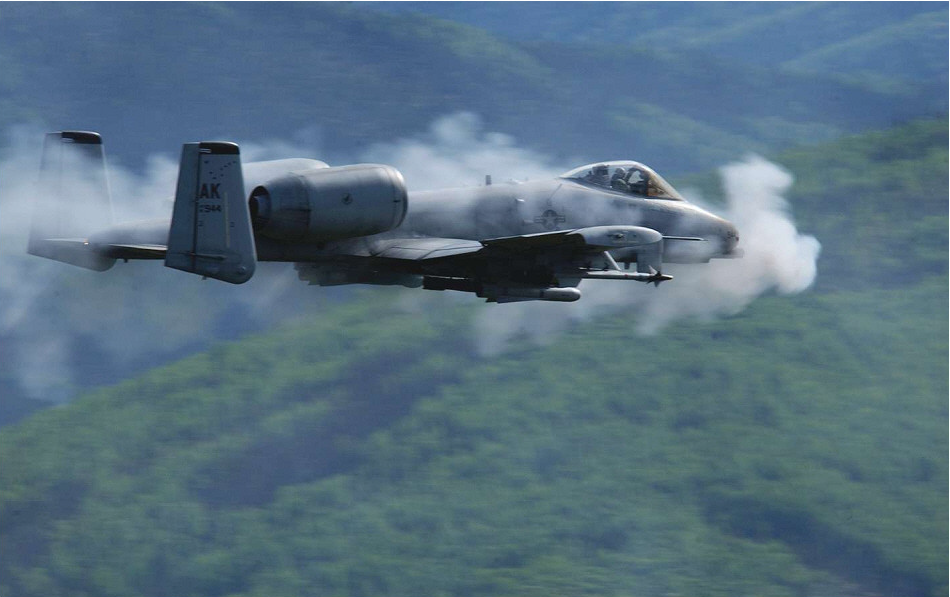
Maj Dean does not like the A-10 or the Super Tucano. He states that there is no convincing evidence that the A-10 is a better close support aircraft than those in our current inventory. This is untrue. The A-10 was built to be a ground support aircraft; our current aircraft were all designed for air interdiction. The A-10 passes the ultimate test of merit: experience in combat. During Operation Desert Storm, the A-10’s total casualty rate was just .0023 aircraft per sortie, and it was zero for the missions the A-10 flew at night.5 In the 1999 air war against Serbia, no A-10s were shot down while two F-117 stealth fighters were shot down by the Serbians.

In essence, Maj Dean claims that there are no deficiencies with Marine Corps fixed-wing CAS and that we “fail to identify specific deficiencies that exist in our current fixed-wing inventory.”6 The Marine Corps itself has already done this. It was to address these deficiencies that the Marine Corps submitted and fulfilled an urgent need statement (UNS) for Harvest Hawk and armed unmanned aerial systems (UASs). The Marine Corps recognizes that there is a gap in long time-on-station CAS.7

Maj Dean also claims the authors are advocates of the OV-10 and the Super Tucano. This is true. The OV-10G+ has already proven itself operating from LHDs. The A-29 Super Tucano, meanwhile, is in production today. The Marine Corps could have either of these combat-proven aircraft today.

For the price of one F-35 (costing approximately $240 million and climbing),8 the Marine Corps could have 24 A-29s ($10 million each). Each A-29 provides three hours of time on station compared to the F-35’s one. For the price of one hour of time on station with an F-35, ground Marines could get three days of time on station. This comparison does not include the savings from not requiring tanker aircraft or the operating hour cost savings of the simpler aircraft. Some might argue that the advanced capabilities of the F-35 will make it worth the cost, but from the perspective of the ground Marine, there is no comparison. A greater number of inexpensive aircraft capable of conducting the missions critical to supporting ground forces is far preferable to just one expensive aircraft.

With three days of time on station, pilots will have the time to become air cooperators with their corresponding ground units. They will have the time to attend operations orders and spend enough time with the ground force to gain a comprehensive understanding of the ground commander’s intent. They will be able to be a part of a unit’s actions from the start of planning, cooperating through execution, and attending after-action briefs. With greater numbers of aircraft, the MAGTF will actually have the ability to surge when needed, an option that is almost entirely unavailable to current MAGTFs.

The Marine Corps has the high-quality people to conduct Air Cooperation and allow the ACE to work more closely with ground units. Those Marines that designed the MAGTF created an extremely flexible structure that can facilitate Air Cooperation. In large part, the failure comes from the wrong mindset and too many requirements imposed upon the ACE by the JFACC/TAGS. Marines may unintentionally compound this difficulty by exclusively acquiring fewer, more expensive aircraft with short on-station times. If the Marine Corps is truly focused on supporting the Marine on the ground and is serious about its maneuver warfare doctrine, then Air Cooperation is the only option.

Notes

1. Coram, Robert, Boyd: The Fighter Pilot Who Changed the Art of War (New York: Little, Brown and Company, 2002), p. 354.

2. Highly centralized systems usually create extremely slow decision cycles. Decision makers removed from the point of contact often place unnecessary restrictions on subordinates. For example, in Afghanistan in 2012, II MEF, acting as Regional Command – Southwest, received a mission from IJC to destroy an enemy communications asset. Acting as a MAGTF per Joint Publication 1, II MEF could use organic assets to accomplish low collateral damage expectant missions, including this one, without specific IJC approval of the targets. Adapting to the situation at hand, II MEF used a carrier-based Marine F/A-18 (a “CFACC asset”) rather than an organic one, to conduct the strike. All “CFACC assets” required IJC’s approval of the “10-digit grid” prior to execution. The strike was, therefore, considered a violation of IJC’s orders. This applied even though the target was originally tasked to II MEF by IJC, and even though the actual aircraft used was a Marine aircraft and pilot! Although the ground forces were quite happy with the support, IJC subsequently grounded the pilot.

3. Maj Rubinstein traveled to IJC in Kabul each month to discuss air command and control matters. Regional Command – Southwest (RC-SW) never declared a TIC, yet 85 percent of fixed-wing fires throughout the entire area of operations occurred in RC-SW, even when RC-SW was not the main effort. Unlike the other RCs, RC-SW’s metrics for success were whether or not the mission was accomplished and whether the aircraft were useful to the ground commander. This was feedback from the ground forces that incentivized the improved employment of aircraft.

4. Snider, Don M., and Gayle L. Watkins, “The Future of Army Professionalism: A Need for Renewal and Redefinition,” Parameters (Autumn 2000), 5–20, accessed 26 August 2014, http://strategicstudiesinstitute.army.mil. This quote appears in the referenced essay. The footnote for this quote leads to Stephen Biddle, “Victory Misunderstood: What the Gulf War Tells Us About the Future of Conflict,” International Security 21 (Fall 1996), 139–79. Although Biddle does not provide the Schwarzkopf quote in the essay, his detailed analysis supports the idea that technology was not decisive in the outcome of the 1991 Gulf War.

5. U.S. General Accounting Office, Operation Desert Storm: Evaluation of the Air Campaign, GAO/NSIAD-97-134, (Washington D.C.: U.S. Government Printing Office, 1997).

6. Dean, MCG, 62.

7. From 2013 Marine Aviation Plan: KC-130J HARVEST HAWK: In response to an urgent universal need statement, the Marine Corps integrated a bolt-on/bolt-off ISR/weapon mission kit for use on existing KC-130J aircraft.

8. Wheeler, Winslow T., “New Data: How Much Does An F-35 Actually Cost?” accessed 11 August 2014, https://medium.com.

Maneuver Warfare: A defense

By B. A. Friedman

Since the last revision of Marine Corps Doctrinal Publication 1 (MCDP 1), Warfighting 17 years ago, the Marine Corps’ fighting philosophy has proven itself time and again. The flexibility of the maneuver warfare ethos allowed the Marine Corps to pivot from brutally effective major combat operations to low-intensity counterinsurgency operations all while maintaining our crisis response abilities as proved by Operation Odyssey Dawn and humanitarian relief operations in Haiti, Japan, Pakistan, and the Philippines. In all of these varied operations, it has been the small unit leaders who have translated intent into action, whether in combat or not. In so doing, those small unit leaders have proven the efficacy of the tenants of maneuver warfare. As the Marine Corps resets itself after Operations Enduring Freedom and Iraqi Freedom, it is an appropriate time to examine its operating software, our foundational doctrine. One effective way to examine Warfighting honestly is by viewing it through the lens of its critics.

Perhaps the most famous attack has been that written by William F. Owen in 2008, The Manoeuvre Warfare Fraud.1 In that article, Owen attacks maneuver warfare on various grounds, including the existence of a maneuver-attrition dichotomy, the validity of B. H. Liddell Hart’s indirect approach, and the usefulness of the OODA [observation, orientation, decision, action] loop. Others attack the existence of the operational level of war, an important facet of MCDP 1. The most telling attack, however, is the unintended one raised by the Attritionist Letters published by the Marine Corps Gazette: the fact that there is a widening gulf between what we preach and what we practice. The author or authors clearly espouse maneuver warfare, but the lack of adherence pointed out by that series should worry us all.

Despite these attacks, Warfighting has endured and has become ever more ingrained in the fabric of the Marine Corps. Its attackers have yet to point out a fatal flaw. Still, in the finest traditions of maneuver warfare, the attacks should not be discarded but rather utilized to improve Warfighting, last revised in 1997. When Gen Alfred M. Gray told John Boyd that he had signed the first version, Fleet Marine Force Manual 1, Boyd said, “Okay, General. Now you have to start changing it.”2 It’s up to today’s Marines to continue the work of improving Warfighting, so a look at its critics can be instructive.

Maneuver versus Attrition

The biggest problem for maneuver warfare proponents is the simplistic maneuver versus attrition warfare dichotomy that occupies a central place in the document. There is really no such thing as attrition warfare: there has never been an attrition warfare theorist or book that proposed that attrition warfare should be utilized. Rather, attrition warfare serves as a straw man against which to compare maneuver warfare. Warfighting thus depicts every aspect of poor tactics and leadership—direct attacks, methodical planning, centralized decision making, firepower-focused, etc.—as “attritionist.” Maneuver warfare then becomes just a collection of good tactics.

Warfighting is not just about choosing good tactics, though. It is about connecting good tactics with the defeat of the enemy’s will to continue fighting. Attrition plays a big role in defeating that will. As Owen wrote in The Manoeuvre Warfare Fraud, “Most battles have been won, or operations have been successful because a percentage of the enemy was killed and the rest gave up. By far the simplest and most easily understood methods of breaking an enemy’s will is to inflict great violence and death upon him.” While true, maneuver warfare principles are more effective at causing this attrition and are intended to connect physical attrition with its effects on the enemy’s will. By separating maneuver from the necessary attrition of the enemy’s forces, the false dichotomy breaks the connection between physical action and psychological effect. As Marines well know, the aim of tactics is not just attrition but on what and for what reason we use maneuver to afflict attrition. Warfighting makes attrition a dirty word by using it as a bin for ineffective tactics and leadership styles thus clouding the dynamic interactions at play on the battlefield.

Indeed, there is an attempt to correct this confusion about firepower and attrition in Chapter 4, but it would be best not to introduce this confusion at all.3 Warfighting could be revised without relying on the attrition versus maneuver crutch by utilizing a better explanation of this dynamic. Attrition has a vital role on the battlefield and causes powerful psychological effects. But thoughtless attrition employed for attrition’s sake may not contribute to the destruction of enemy cohesion and will, violating the principle of economy of force and possibly increasing the amount of force that must be applied to achieve that destruction.

The Operational Level of War

In recent years, the concept of the “strategic corporal” has been in vogue. This is basically a phrase pointing out that the decisions of corporals can have strategic effect. This is not new: a strategy can only be accomplished by and through tactical actions; thus, every tactical action has a strategic effect. No actor on the battlefield or in the chain of command is just a tactical or just a strategic actor—each one is both.

This fact was forgotten in recent years after the adoption of the “operational” level of war by both the U.S. Army and U.S. Marine Corps after first being published in Field Manual 100-5 (FM 100-5, Operations, (Washington, DC, June 2003)). In a 2009 paper for the U.S. Army Strategic Studies Institute entitled, Alien: How Operational Art Devoured Strategy, Justin Kelly and Mike Brennan wrote:

In the American/NATO usage of FM 100-5, rather than meeting its original purpose of contributing to the attainment of campaign objectives laid down by strategy, operational art—practiced as a level of war—assumed the responsibility for campaign planning and, by reducing the political leadership to the role of “strategic sponsors,” quite specifically widened the gap between politics and warfare. The result has been a well-demonstrated ability to win battles that have not always contributed to strategic success.”4

The imposition of this new level in effect created a conceptual wall between tactics and the policy goals they were intended to serve, and allowed high-level leaders to abdicate their responsibility to execute strategy by identifying themselves as operational leaders. This fosters the idea amongst practitioners that strategy is not their problem, they need only be concerned with the tactical problems at hand.

The inclusion of this wall is especially harmful in MCDP 1. It is meant to be read by all Marines, but the use of the operational level makes part of the intended audience—those strategic corporals, lance corporals, and privates—feel like strategy is so far beyond them that it is not their concern. This is definitely not the intended lesson, and the experiences of the last decade bear out the problem. The actions of each Marine on the battlefield adds to or detracts from progress toward the strategic end state. At its core, Warfighting is a document meant to teach Marines how to think about the tactics they are meant to employ. It cannot do this effectively when it also teaches Marines to think about those tactics in isolation from the strategic context. Tactics employed without regard to strategy are at best wasteful and at worst counterproductive. This concept is something that veterans of Iraq and Afghanistan understand at an intuitive level since they frequently witnessed tactical brilliance fail to meet strategic end states. As new Marines begin to enter service, this insight is something that must be taught.

The removal of the operational level would strengthen Warfighting as a philosophy while simultaneously making it easier to understand and to teach to junior leaders. When Marines better understand their role in strategy and the role of the tactics they carry out, it will enable them to make better decisions, thus increasing the trust senior leaders have in their subordinates when utilizing decentralized decision-making principles.

The OODA Loop After

MCDP 1 states that the intent of maneuver warfare is for the Marine Corps to:

…shatter the enemy’s cohesion through a variety of rapid, focused, and unexpected actions, which create a turbulent and rapidly deteriorating situation with which the enemy cannot cope.

Then what?

Shattering the enemy’s cohesion is all well and good, but once that occurs, we cannot click our heels and be transported back to Kansas. The enemy, though presumably ineffective, still exists and the end state intended to be reached through the defeat of the enemy has not been achieved. (Unless the policy is pure destruction.) Once we have out looped our enemy, what does the OODA loop after that entail?

What’s missing from MCDP 1 is the exploitation of battlefield success. Clausewitz considered the exploitation of battlefield success to be second in importance only to victory itself.5 In On War, in a chapter titled “Strategic Means of Exploiting Victory,” Clausewitz wrote:

Meanwhile, what remains true under all imaginable conditions is that no victory will be effective without pursuit; and no matter how brief the exploitation of victory, it must always go further than an immediate follow-up.6

Strategic effects of tactical victories cannot be achieved without the exploitation phase of combat because truly decisive effects can be achieved once the enemy is in disarray. Simply winning on the battlefield accomplishes nothing. Using battlefield success to further the strategy is the only path to victory, and Warfighting is silent on this point. While it is true that the United States Marine Corps is not a strategy-making organization, it is responsible for the prudent use of tactics to achieve the strategy as set forth by higher authorities. It is impossible to choose and execute appropriate and effective tactics if Marine leaders do not understand—or willfully choose to ignore—their connection to the strategy.

Preaching and Practice

The most damning attack on War fighting is that the Marine Corps has yet to implement it. While the document was signed, it is still an ideal that we are striving to reach. Micromanagers are cursed in Warfighting, but are not only tolerated in the Marine Corps, they flourish. Centralized decision making has crept into the institution after more than a decade of canned predeployment training.7 Methodical, process-driven planning is denounced, but the Marine Corps Planning Process remains essentially unchanged as professional military education students at all levels are rewarded for following the process and punished for not doing so. In the section on equipping, Warfighting warns against the acquisition of leap-ahead technology, but our pursuit of extremely expensive platforms in recent years ignores it.8 So too the proliferation of more and more C2 systems shows that we ignore a warning in that very same section.9 Warfighting recommends that we strive for stability of personnel in operating units, but our personnel management policies make such stability impossible.10

The articles known as the “Attritionist Letters” that have appeared in these pages in recent years are one example of a warning sent up by someone or a group of someones in our ranks that sees this problem. Another example is Capt Daniel O’Hara’s article in the May 2014 issue of this magazine:

Calls for empowerment coupled with stiff top-down regulations are empty rhetoric. Marines are generally clever and will see through that. If we truly count ourselves as professionals, does it not follow that we should provide our NCO corps the freedom and trust expected of the position? Should we not focus on their education and allow them to solve the disciplinary problem, maybe each unit in its own way, with an eye toward end state?11

A reawakening can be accomplished through a refocus on Warfighting as our foundational philosophy. But when NCOs read and reread that document and then witness senior leaders ignoring it, they will lose that vital faith in the organization that will allow them to reach their full potential.

In 1970, following the My Lai Massacre, Army Chief of Staff GEN William C. Westmoreland ordered the Army War College to study the U.S. Army command climate. That study describes a complicated relationship between the ideals espoused by the Army and the actual practices employed.12 The delta between those ideals and the practices plays a key role in command climate. Command climate—as the Commandant has recognized13—in turn can affect the occurrence of ethical breaches. A loss of faith in the organization can lead to actions outside the accepted norms of that organization. The examples of ethical violations in recent years—desecrations, animal cruelty, the rise in sexual assaults—may be attributable in part to the fact that Marine Corps leaders are failing to adhere to maneuver warfare tenants. The relationship between leaders and subordinates is a defining characteristic of maneuver warfare and the Marine Corps. If subordinates cannot trust that their leaders are adhering to stated principles, they will also start to drift away from them. In the words of Colin S. Gray:

For soldiers to decide that they will fight truly hard, they need to be led by people they trust… at every level of command, from the highest down to the single soldier and very small group, the most essential basis for voluntary, sometimes personally outrageously risky, combat effort, is trust.14

This lack of adherence therefore has far more pernicious effects than just the occasional negative Gazette article.

A breach of trust between junior Marines and senior leadership caused by more and more apparent flouting of Warfighting will not be fixed by wearing more formal uniforms on more occasions, more rockers on sleeves and more bars on collars in the barracks, or more firearms on more duty belts. It will be solved by more of the intrusive and involved leadership espoused by Warfighting—Marine leadership decentralized to the lowest levels.

Warfighting

can be improved, strengthened, and defended, but it’s all for naught until we begin to practice what we preach. Indeed, it states that, “Perhaps most importantly, our philosophy demands confidence among seniors and subordinates.”15 Any erosion of that trust and confidence is incompatible with maneuver warfare.

A common thread runs through these critiques: the relationship between tactics and victory. The maneuver versus attrition dichotomy treats some tactics as inherently bad and others as inherently good. What matters is whether tactics can translate to strategic effect that serves to achieve the political end state, a relationship rendered opaque by the imposition of the operational level of war. Finally, the actions after tactical victory is achieved determine strategic effects. Tactical victory is insufficient as an end state. Of course, all of these details are immaterial if we do not actually put Warfighting into practice. The critics have Warfighting wrong: it is not a work of strategic theory. Rather, it is a work of philosophy meant for practitioners. While it is informed by strategic theory, it serves a far different purpose and thus cannot be fully judged from a strategic theory viewpoint. It occupies a space between theory and praxis, an extension of strategic theory meant to teach not academics or strategists but tacticians how to think about their actions. If the Marine Corps were an organization of theorists meant to debate war rather than fight it, Warfighting would not pass muster. But we are an organization of warfighters rather than philosophers. We do not intend to win battles with theory. The Marine Corps is an organization of warriors, men and women who will do the dirty work of which battlefield victories are made and upon which strategy depends. With a few tweaks, Warfighting can be improved even further and the critics silenced by future victories. If the Reawakening is intended to reinvigorate our NCO corps, then it is time to reaffirm the philosophy that empowers them.


Notes

1. Owen, William F., The Manoeuvre Warfare Fraud, originally published by the Royal United Services Institute, White Hall, London, p. 2. Available at: http://smallwarsjournal.com.

2. Coram, Robert, Boyd: The Fighter Pilot Who Changed the Art of War, Back Bay Books, New York, 2002, p. 391. MCDP 1 was originally published as a Fleet Marine Force Manual in 1989.

3. MCDP 1, p. 74.

4. Kelly, Justin and Mike Brennan, Alien: How Operational Art Devoured Strategy, U.S. Army Strategic Studies Institute, Carlisle, PA, September 2009, p. 93. Available at: http://www.strategicstudiesinstitute.army.mil.

5. Clausewitz, Carl von, Principles of War, translation by Hans W. Gatzke, Dover Publications. Mineola, New York, p. 33.

6. Clausewitz, Carl von, On War, translation by Michael Howard and Peter Paret, Princeton University Press, Princeton, NJ, 1989, p. 263.

7. Russell, LtCol Brian E., “Organizational-level Leadership,” Marine Corps Gazette, July 2014, p. 11.

8. MCDP 1, p. 65.

9. Ibid, p. 67.

10. Ibid, p. 64.

11. O’Hara, Capt Daniel A., “The Re(al)awakening,” Marine Corps Gazette, May 2014, p 50.

12. U.S. Army War College, “Study on Military Professionalism,” Carlisle Barracks, PA, 1970. The study can be accessed at: http://www. carlisle.army.mil.

13. Lamothe, Dan, “Commandant links bad behavior by Marines with poor command climates,” The Marine Corps Times, Springfield, VA, 10 May 2013. http://www.marinecorpstimes.com.

14. Gray, Colin S., The Strategy Bridge: Theory for Practice, Oxford University Press, New York, 2010, p. 215.

15. MCDP 1, p. 82.

Equipping the Force

By Col Thaddeus Jankowski, USMCR

Then-LTC Paul Yingling, USA, famously published “A Failure in Generalship” (Armed Forces Journal, 1 May 2007) at the height of Operation IRAQI FREEDOM (OIF), cautioning that the United States was at risk of losing a second war in a generation. Deliberately forgotten lessons from Vietnam had threatened success in OIF. Success in OIF was also threatened by leadership shortcomings far from the battlefield, occurring deep in what former Secretary of Defense Robert Gates termed the “Pentagon establishment.”

The Marine Corps’ mission is unique relative to other Services, but its support establishment is not. Mr. Gates repeatedly criticized the Pentagon establishment, including the Marine Corps portion of that establishment. Cultural precedent predicts future behavior, so the Marine Corps’ development of a new amphibious combat vehicle (ACV) capability is a worthy topic. This article presents the need for reform, addresses common counterarguments, and provides 10 guidelines required to build the next expeditionary fighting vehicle (EFV). Requirements for ship-to-objective maneuver must necessarily begin with maneuver in Quantico, else we’ll have impressive tactics but no way to execute them. Reform of the Pentagon establishment is a very important “warfighting” innovation: like it or not, the rate of technological change is increasing, and the importance of technology relative to other aspects of strategy is also increasing. Relevant amphibious forces for a combatant commander require a relevant support establishment.

Critiquing the support establishment organizational character is timely. Looking beyond OIF and Operation ENDURING FREEDOM (OEF), we seek to reset core amphibious capabilities. Even though the Corps is exemplary at counterinsurgency (COIN), COIN is not our Title 10 justification.

Now, leveraging the national pivot back to the Pacific region, we refocus on the amphibious mission. In refocusing, the Corps demonstrates some intellectual agility. But an expeditionary vision languishes as a mere hallucination if combat developers cannot realize it. The Marine Corps’ development of the ACV capability is critical in this: Marine Corps innovators must keep pace.

ACV innovation has been the charge of Supporting Establishment leaders, including generals who excelled operationally. The EFV program’s 2010 cancellation followed decades of chronic program underperformance. Outsiders unfamiliar with how Quantico really works ask how such a failure was even possible. The EFV was a top priority, and senior officers with distinguished careers were leading it throughout. What went wrong? How could the Marine Corps spend $3 billion in 30 years without producing a functioning vehicle? Is a failure of Marine generalship even conceivable? And if so, how do we make sure our next EFV-like initiative does not likewise fail? It is, after all, in the Supporting Establishment that the technology-dependent future of the Marine Corps is hatched and grown.

The EFV similarities to recent equipping debacles are compelling. Everything regarding combat development should be on the table for overhaul including organizations, their functions, recorded behaviors, and typical habits of leadership. Headquarters Marine Corps and other Marine and Joint influences warrant scrutiny. But in understanding the most problematic of the Supporting Establishment’s frameworks of thought, this discussion focuses on Marine Corps Combat Development Command (MCCDC) and Marine Corps Systems Command (MCSC).

Past As Prologue

During OIF/OEF a stark contrast existed between the performances of Marine Corps combat units and the Supporting Establishment organizations that equip them. Operating units were rightly praised for physical courage, adaptability, and foresight, while several very important Supporting Establishment decisions resulted in repeated, withering criticism for misplaced priorities and inertia. Repeated excoriations for lack of moral courage also came from the highest levels of the U.S. Government.

Throughout OIF we witnessed several high-profile cases where MCCDC/MCSC collectively failed to adequately prepare for or respond to capability gaps in the field. For example, the Marine Corps’ foreknowledge that the up-armored HMMWV would be a “deathtrap” when encountering landmines comes to mind. Alerted by experts in the 1990s who foresaw the tragic carnage that landmines would cause, MCCDC planners had no contingency plans for those vehicles. South African wheeled vehicles (from the 1970s) were even studied in 1989 at the Infantry Officer Course, right before going out to practice “hardening” a vehicle by stacking sandbags around the cabs of 5-ton trucks. If second lieutenants knew about South African vehicles in the 1980s, wheeled vehicle planners had to be aware of them. Worse, even after quantitative battlefield data was provided, the establishment in Quantico was still trying to minimize the number of MRAPs purchased irrespective of their utility on the battlefield.

Senior Department of Defense (DoD) and Congressional leadership obviously concluded that thousands were killed and wounded unnecessarily. Only an embarrassing spotlight forced MCCDC and MCSC staffs to correct armor and other neglected areas. The Naval Audit Service Report on the Marine Corps’ urgent universal needs process (28 September 2007) eventually led to a new Marine Corps order on urgent needs, forcing Quantico bureaucrats to apply at least some maneuver warfare principles to their areas of responsibility. Remember: Maneuver warfare theory does not just apply to the battlefield. Col John Boyd, USAF(Ret), also quoted Taiichi Ohno, applying Ohno’s perspectives on maneuver in business to his military theory.

Unfortunately, MCCDC has not been fundamentally reformed. The same culture that enabled unnecessary OIF casualties and the EFV cancellation appears to be intact. Organizational adjustments have evidently occurred to decrease some civilian influence, but no officers or bureaucrats have been held accountable. The same personnel continue in Quantico—those who neither foresaw the need for COIN toolsets nor exhibited moral courage to change priorities when battlefield realities were repeatedly documented for them. These permanent personnel remain in place and continue to get promoted.

With OIF at an end and OEF drawing to a close, Marine Corps Order 3900.17, The Marine Corps Urgent Needs Process (UNP) and Urgent Universal Need Statement (Urgent UNS) (Headquarters Marine Corps, Washington, DC, 17 October 2008), has lost its immediacy and bite. As with similar instances in nature where accountability and consequences are absent, the spotlight gets turned off and the problems invariably return. This is especially true whenever transient and overwhelmingly nontechnical operators are at the helm.

Counterarguments

Some dispute any assertion that leadership, vision, or execution were lacking, flatly contradicting 4 years of speeches from Mr. Gates. They repeat the traditional Marine argument that leaders who perform well operationally can perform well anywhere, including in the Supporting Establishment. They tell us leadership is a fungible character quality. A generalist is sufficient at the top, assuming that competent and honest subordinates permanently populate the staff. Marines at all levels rise to new challenges. And by placing revered general officers in charge of organizations like MCCDC, permanent personnel are energized. Technological foresight is not so difficult that retired or former officers cannot populate the MCCDC/MCSC staffs.

Supporting Establishment leaders had the opportunity to critique a draft of this article in October 2013. One identified a recent decrease in civilian influence in MCCDC. This is certainly a welcome step in the right direction, but suggests the Hydra can actually be defeated with minimal reform effort. Another leader mentioned that there are no examples herein postdating 2011, as if to suggest meaningful change in MCCDC actually has occurred since 2011. Yet, if MCCDC really has been reformed, why do calls for reform still continue? How many more calls for comprehensive, expansive change must there be in military management technology? Experience in leading change—not to mention change management literature—suggests that leading change in large organizations requires a much more fundamental overhaul.

Given the hubris in the Pentagon establishment, reformers’ critiques are reflexively discounted by officers with dubious backgrounds in technological foresight. Important calls for reform continue in 2014. Senior DoD leaders advocate fundamental overhaul. Examples: The January/February 2014 issue of the prestigious Foreign Affairs magazine featured an article by recently retired Deputy Secretary of Defense, Dr. Ashton B. Carter, entitled “Running the Pentagon Right: How to Get the Troops What They Need.” On 24 June 2014, former Deputy Assistant Secretary of Defense for Resources and Plans, Dr. Christopher J. Lamb, testified before the House Armed Services Committee on very similar themes. Finally, recall the slow-burning anger in former Secretary of Defense Robert M. Gates’ autobiography! Calls for reform are not just coming from one Reserve colonel.

If these minor changes were really efficacious, if these counterarguments were really plausible, the EFV would be available right now for amphibious contingencies. If they were plausible, Mr. Gates, the U.S. Congress, and DoD auditors would not have felt compelled to intervene in Marine Corps combat development and acquisition processes to insist on rapid and immediate change, to stem the rise in OIF casualties. The media would have had no incentive to dedicate an inordinate amount of time, ink, and bandwidth to report on Marine Corps casualty and combat equipping issues if they had no basis in fact.

Egregious Supporting Establishment failures not coincidentally occurred during OIF on the watches of general officers whose operational credentials were superior. Misunderstanding of technological innovation is common. Active duty officers have the same basic set of very deep and very narrow training and experience. Structural reasons in academia exacerbate this knowledge gap, a topic for another monograph.

With the recent and parallel experience of OIF/OEF as a backdrop, we can now focus on the to-date futile effort to replace the amphibious assault vehicle (AAV).

Ten Guidelines for a New ACV

We know the proverbial definition of insanity is to keep doing the same thing and expect different results. The following 10 principles can guide Marine Corps officers as we consider our next attempt to replace the AAV.

Question every assumption about how to do business in MCCDC and MCSC. What did Boyd say when he took over the F–X (F–15) development program? Start with a blank sheet of paper. Start with cold air comes in the front, and hot compressed air goes out the back. Similarly, when Marine Corps Doctrinal Publication 1, Warfighting (MCDP 1) (Headquarters Marine Corps, Washington, DC, March 1989), was first published, Boyd warned senior Marine Corps officers not to let doctrine become dogma. Without reform in Quantico, we will likely make the same errors the Air Force’s F–X (F–15) program was making before Boyd got involved. MCCDC/MCSC need a multiyear, comprehensive reform program planned as carefully as former Commandant of the Marine Corps, Gen Al M. Gray, planned and executed the maneuver warfare revolution. Both crisis technology planning during OIF/OEF and deliberate technology planning experiences warrant this rethinking.

Don’t just tolerate the proven innovators—embrace them as you embrace chaos on the battlefield.

The proven military innovator is sometimes—but not always—a maverick. The innovator is a thoroughbred looking for a track to run on. He might see the world just a little bit differently than that all-too-common officer who is always yearning for his next command (to be Someone) and speaking derisively of staff jobs (to do Something). Yet it is that diversity of thought that makes him valuable—say, for example, in avoiding thousands and thousands and many more thousands of unnecessary casualties, as we all observed in OIF and OEF.

Using the innovators is often more effective.

Toolsets initiated using military innovators are usually much more effective in combat and much less expensive for the taxpayer. Consider the Higgins boat (World War II), the light armored vehicle (1980s), and the MRAP (2005–07). Consider the deliberate stalling and roadblocks placed in the way of GBOSS (Ground-Based Operational Surveillance System) (2006), or short-sheeting unmanned aircraft system requirements (2006–07). All of these examples have been variously written about in military biographies, the Small Wars Journal, and multiple internal audits. All these ideas were born outside typical Quantico innovation processes. All were resisted in varying degrees before they were embraced. Yet these toolsets all proved to be highly useful in combat.

Hold Quantico bureaucrats to the same standards of integrity that we require of officers in the field.

For example, fire anyone in MCCDC or MCSC who engages in character assassination. This is the seedy side of what it means for a retired officer to attempt to hold on to power over budgets. This tactic is not uncommon. When an officer proposes change, all too often the establishment intentionally generates fog and sows confusion as a means to keep control of budgets. Officers and civilians in MCCDC start ludicrous rumors about an individual that, once repeated, become “true.” Since the imagined “truth” is convenient, it is allowed to stand, because it serves the end of protecting existing programs. This author’s contempt for this particular tactic is grounded in direct, repeated, personal observation.

Put your innovators in charge of new initiatives like the ACV. In the late 1960s, the Chief of Staff of the Air Force did the unthinkable: He put a blunt-speaking innovator in charge of the F–X (F–15) program. Eventually Col Boyd and his circle of acolytes would build the F–16 and another aircraft that became the F–18—and yet another aircraft, the A–10. The keys to air supremacy came from this group of innovators.

We have institutionalized a pipeline of successful combat commanders—now do the same for military innovators. The establishment, by hubris and habit, makes it incredibly difficult to change anything. The innovator has to thread the needle as the perfect field officer, the perfect internal diplomat, the perfect navigator of the treacherous bureaucracy. Even then, someone in Quantico teams up with a vendor or an ally on another staff and begins a whispering campaign such as, “He’s not a team player.” Meanwhile, the accepted standards of conduct for the Quantico bureaucrat are wide. He can repeat establishment technobabble with impunity. Turn this on its head: figure out how to embrace the innovators, and make it difficult for bureaucrats to be bureaucratic.

In the late 1980s, an intellectual renaissance occurred in the Marine Corps. Gen Gray was looking for someone to help him rewrite all Marine Corps doctrine from top to bottom. He began with an outcast colonel whom a number of general officers had been systematically and deliberately suppressing for quite some time—Col Mike Wyly. Gray called Wyly home from “exile” in Okinawa and put him in a position of influence. Gray also tapped a captain—a captain!—to write FMFM 1, Warfighting (now MCDP 1). He did not assign the warfighting manual to a 1980s equivalent of a gold-plated retired colonel GS–15 with a well-worn DESERT STORM coffee mug and three DoD master’s degrees. Gray found new blood, new thinking, new ideas, new perspectives. Where would the Corps be now if former Commandants John A. Lejeune or Gray did not personally embrace LtCol “Pete” Ellis or Col Mike Wyly, respectively?

We embraced disobedience of a direct order in a recent Medal of Honor winner when lives were at stake: Apply that same logic to innovators. In other words, don’t court-martial or fire your innovators for specious reasons when larger principles—lives, limbs, combat effectiveness—are at stake. This may seem obvious, yet the AAV/EFV record ($3 billion, 30 years, no vehicle) requires underlining the obvious. The Air Force attempted to court-martial Boyd four times in his career while maintaining its treatment of him was always just. Boyd sometimes had to reach outside the Air Force to get proper reform. Similar treatment occurs today in the Marine Corps. Consider the case of the only 100-percent successful DoD whistleblower of the past 10 years. Senior Marine Corps leaders would maintain that GS–15 Franz Gayl, Science Advisor, Plans, Policies, and Operations, was granted due process after approximately 1 year on administrative leave. But any DoD officer or civilian who would consider bucking the system to advocate reform, note carefully: Gayl had to reach outside the Marine Corps to get justice. Only after the White House Office of Special Counsel got involved (7 October 2011) was he reinstated. The message from senior leaders today is no different than in Boyd’s day: If you rock the boat, you will be made to pay a severe price. You will be exiled to a remote island, accused of magically becoming a poor performer after decades of stellar performance, or quieted to a remote corner of the Marine Corps far away from innovation. That is the real lesson of Pentagon “leadership.” Careerism stems directly from the treatment Boyd and Gayl received; most officers conclude it is just not worth bucking the system. Mr. Gates liked to give speeches about Boyd and moral courage, but he never supported any of the innovators on his watch. Driving this point home, Gayl was correctly singled out for praise for his contribution to the war effort, once again by someone from outside of the DoD: On 1 October 2012 he was praised by Vice President of the United States Joe Biden during the MRAP program transition ceremony. Establishment mavens may feel like innovators bring chaos, yet do we not honor our best warriors for thriving on chaos? “Chaos” was one famous officer’s call sign.

Foster and promote officers who have technological competence. Tools are integral to warfighting, yet we teach officers to be commanders while leaving military technology to serendipity. The Marine Corps finds innovators by accident, tolerates them for a short time, and discards them, only to deliberately forget the lessons of innovation.

If a civilian in MCCDC or MCSC lacks foresight, get rid of him. Do not reward those who preside over chronically underperforming capabilities with promotions, lofty titles, awards for “foresight,” or highly prized school seats at the Industrial College of the Armed Forces. The bureaucrats who need to be replaced often fit the following intellectually incestuous profile: they retire as a major, lieutenant colonel, or colonel on Friday and come back to work at MCCDC or MCSC on Monday in a business suit, in the same building, at the same office, sitting at the same desk. As Col James Burton, USAF, taught us in Pentagon Wars (Naval Institute Press, Annapolis, MD, 1993), intellectual inbreeding yields feeble minds.

Apply maneuver warfare principles to the Supporting Establishment. MCCDC had to be repeatedly asked for multiple years to revise the urgent technology rule sets so that they would have a meaningful “seat at the table” in MCCDC at MCSC. MarCent officers asked MCCDC several times in 2006 for major revisions to MarAdmin 045/06, Urgent Universal Need Statement Process. Major reform to urgent UNS handling was advocated via the first Lean Six Sigma project at MCCDC in 2006, but meaningful urgent UNS reform would not be fully implemented until October 2008 with MCO 3900.17, The Marine Corps Urgent Needs Process (UNP) and the Urgent Universal Need Statement (Urgent UNS) (HQMC, Washington, DC, 10 October 2008). Naval Audit Services auditors asked at least twice for MCCDC to comply with its finding to write a Marine Corps order for urgent needs in 2007 and again in 2008, and Department of Defense Inspector General auditors in 2008 were similarly involved with advocating that MCCDC reform the urgent needs process. This was all a big, multiyear bureaucratic game of rope-a-dope to protect careers and prevent changes in the MCCDC staff’s budgetary priorities for military technologies while troops went unsupported in the field: stall any meaningful change, erect every possible barrier to technological maneuver imaginable. Battalion or regimental commanders get fired for this level of performance, but it is rewarded at MCCDC as stated above. All these multiple internal reform efforts anticipated many of then-Secretary of Defense Robert M. Gates’ frequent appeals to actually support the troops in combat by prioritizing toolsets needed for current wars instead of what would be proven to be poorly designed technologies for potential future wars (like EFVs). The establishment has still not internalized that maneuver warfare must apply to the support establishment too. This means the Marine Corps needs to write doctrine for technological aspects of strategy—and apply it as soon as practicable. Consider the typical staff functions at a MEF or in Marine forces. Each is aligned with an MCDP of the same title: intelligence, logistics, operations, plans, and so forth. We need an MCDP 10, Technology, that links MCDP 1, Warfighting, to two downstream orders, MCO 3900.15B, Marine Corps Expeditionary Force Development System (EFDS) (HQMC, Washington, DC, 10 March 2008), for deliberate planning and MCO 3900.17, The Marine Corps Urgent Needs Process (UNP) and the Urgent Universal Need Statement (Urgent UNS) (HQMC, Washington, DC, 10 October 2008), for crisis technology planning. This needs to be written by officers with proven technological foresight and expertise in rapid technological maneuver. Note the use of war planning terms in describing these two orders—we will need technology requirements for all contingency plans. MEFs and Marine forces will need uniformed, trained principal staff officers for technology and innovation. The MEF/Marine forces’ science advisor does no science: rename that billet “technology advisor,” reporting to the senior uniformed trained technology strategist on the general officer’s staff.

Conclusion

The prescription to build an EFV is not complex, but it is enormously difficult to do. Follow Gen Gray’s example: Bring in the innovators. Rehire the thoroughbreds. Put a new generation in charge of important technology programs. Treat them like welcome members of the team. By leveraging good ideas even from those who knew how to evaluate technological efficacy when the chips were down in a real war, the likelihood for creating an ACV vehicle that works actually increases.

The Marine Corps Gazette, as the professional journal for Marines, provides articles that may, on occasion, address topics that “keep officers up at night.” Any young officer faced with the prospect of conducting an amphibious attack in the next 20 years should lose sleep over existing Quantico establishment organizations in charge of building the next ACV. Albert Speer, the German’s chief technologist during World War II, was actually pleased when the Allies bombed his requirements and acquisition command, ridding him of unnecessary “ballast” for a few months. If LtCol Ellis were alive in 2006 he’d have had his character assassinated by twilight-tour colonels in Quantico or HQMC as someone who was difficult to work with and, well, kind of weird.

On the other hand, if we apply these lessons to the son-of-EFV effort today and begin using all our resources—even all those highly successful innovators—the Marine Corps will be much more likely to get a new amphibious troop carrier with an over-the-horizon as well as inland capability much sooner than we would otherwise.

Operational Art

By Maj Romeo P Cubas

The American military’s painful Vietnam War experience and the doctrinal and technological revelations of the 1973 Arab-Israeli War drew attention to its demoralized and unprepared state. It became evident that the U.S. Armed Forces required a complete overhaul in order to contend with future potential adversaries.1 As a result, the military underwent a dramatic transformation that went hand-in-hand with a revolution in operational art. The interpretation and implementation of intellectual concepts, innovative doctrine, and novel approaches to overcoming military challenges dictated how the United States approached conflicts in the post–Vietnam War era.2

The evolving nature of war mandates that the American concept of operational art account for an assortment of enemies that will seek innovative ways to frustrate American interests. Today’s adversaries are achieving shocking levels of barbarity that challenge the traditional Western notions of war.3 Understanding the operational art renaissance of the post–Vietnam war period should prepare U.S. officials to judiciously address contemporary threats and resist the temptation to adhere to an operational art concept that is highly reliant on overwhelming force and technological dominance.

A Rebirth of Operational Art: The Immediate Aftermath of the Vietnam War

During the 1970s, operational art underwent a Clausewitzian renaissance of sorts that focused on linking successes in battle with an overall strategic purpose.4 This military art form has its foundations in a collection of institutional beliefs and experiences known as “doctrine.” Until the Goldwater-Nichols Act of 1986, the Armed Forces developed doctrine in a unilateral manner, concentrating on individual Service interests. These myopic views prevented the Services from coalescing and developing a joint campaign plan; instead, the focus was on ground combat and how to support it. Cold War doctrine limited the traditional conduct of war and restricted doctrinal innovation. The operational failures of the Vietnam War and Arab-Israeli War prompted many changes in the U.S. Armed Forces such as a doctrinal reawakening, the emergence of performance standards, institutional integration, and organizational discipline.5

In October 1973, Egypt and Syria conducted a surprise attack on Israel from the Sinai Peninsula and the Golan Heights with thousands of Soviet-provided armored vehicles, air-delivered precision guided munitions, and antitank guided missiles. The Israeli Defense Force (IDF) was eventually able to counterattack and overcome the Arab two-prong assault, its heavy artillery, aerial bombardment, and advanced air defense system; however, the results of the evolving nature of combat were quite evident to Western powers.6 The Yom Kippur War illustrated the effectiveness of modern weapons and the gap in American warfare capabilities. As the Services downsized and refocused internally, the United States realized it needed to quickly gain parity with Soviet Union. GEN Creighton Abrams’ creation of the U.S. Army Training and Doctrine Command (TraDoc), his appointment of GEN William DePuy as its commander, and the contributions of GEN Donn Starry as TraDoc’s Armor Center Commandant and TraDoc’s second commander were instrumental to the ensuing revolutionary changes in doctrine, organization, equipment, and training.7 One of these changes was the 1976 edition of the U.S. Army operations Field Manual 100–5, Operations (FM 100–5).8

The “active defense” concept of the new doctrine accepted the Soviet’s overwhelming manpower and countered it with a system of linear defenses-in-depth and offensive flanking movements focused on destroying command and control networks and supply lines of communications.9 “Active defense” advocated moving forces along the battle line to prevent a breakthrough while simultaneously conducting deep envelopments to attrite the enemy. Confronting a high-tempo assault required commanders to embrace the German model of Auftragstaktik, which encouraged decentralized command, the flexibility provided by mission-type orders, and having the initiative to meet a commander’s intent.10 However, the new manual received immediate resistance due to its unsettling realities of battlefield lethality, a reliance on analytical information, and formulaic approach to war reminiscent of former Secretary of Defense Robert McNamara’s obsession with quantitative data.11 After 10 years of development and transformation, the doctrine evolved to the Air-Land Battle concept, which eventually evolved into the modern and joint conventional form of fighting known as maneuver warfare.12

The new operational concepts in FM 100–5 relied on the expert use of terrain, demanded rapid movement, required quick strikes, and demanded that the defender achieve target identification overmatch. The Army wanted to avoid the pitfalls of focusing on the last war and embraced its renewed doctrine by investing heavily in highly advanced acquisition programs such as the Abrams tank, the Bradley Fighting Vehicle, the Apache attack helicopter, and the TOW missile.13 Desiring to further break from the Vietnam era, TraDoc also set about restoring the Army’s warfighting tradecraft by identifying individual tactical tasks and associating compliance criteria to them. Within a few years, the military evaluated and enhanced tactical tasks via the National Training Center (Fort Irwin, CA) with force-on-force exercises and through the use of simulation and laser technologies.14 These initiatives improved military standards and elevated the proficiency of the U.S. military.

The Evolution of Operational Art: Focusing on the Right Threat

Nowadays, the United States continues to heavily invest in technology such as the F35 Joint Strike Fighter, the Zumwalt-class destroyer (DDG 1000), advanced air-to-air munitions, and the next amphibious vehicle (even though its current capabilities are more than sufficient to maintain its status as the sole superpower).15 The United States can ill afford to train, equip, and sustain a military solely focused on conventional warfare like it did for Operations JUST CAUSE, DESERT STORM, and IRAQI FREEDOM, where overwhelming aerial attacks were followed by superior ground forces outfitted with the most modern technology.16 Instead of entirely new systems, investments should be made to extend the service life of perfectly acceptable and sustainable aircraft, ships, munitions, and weapons platforms. Furthermore, today’s leaders need to understand that unconventional conflict is the most likely and enduring threat.17 This does not imply that the operational concepts of the 1970s and 1980s should be neglected or that conventional threats should be ignored. Doing so would lead to a loss of institutional knowledge and result in fatal consequences.

Failure to prepare for irregular threats could repeat the failures of the Vietnam War, the Lebanon interventions of 198283, and the Somalia operation of 1992. In these examples, technological and military superiority were effectively offset by unsophisticated means. Guerrilla warfare, suicide bombers, and warlord-led militias understood American operational art and avoided its strengths, conducted surprise attacks, and patiently waited to exploit a moment of weakness.18 The actions of present-day radical Islamic extremists mirror those of irregular adversaries of the past 50 years. Terrorists and nonstate actors are proving that the traditional American way of war based on overwhelming force and industrial might is vulnerable to rudimentary tactics, primitive arms, and an unwavering ideology.19 The 1993 and 2001 terrorist attacks on the World Trade Center, the 1998 car bomb attacks on American embassies in Kenya and Tanzania, and the 2000 strike on the USS Cole (DDG 67) foreshadow a dangerous future that cannot be solved with a traditional mindset. Conventional responses like cruise missile attacks or awe-inspiring air campaigns are very expensive and arguably ineffective against autonomous, resilient, and illusive opponents who blend in with the population.20

Unconventional adversaries are also able to thoroughly study Western militaries and combat their weaknesses with modern state–like capabilities. In 2006, Hezbollah attacked Israel from southern Lebanon with thousands of rockets and missiles of short and intermediate range.21 The IDF was confronted by a highly disciplined, decentralized, and adaptive enemy that was willing to inflict and absorb attacks. As a well-organized political and paramilitary movement, Hezbollah merged its anti-Zionist ideology with guerrilla tactics and state-of-the-art technology such as encrypted communications equipment and fiber optic networks, eavesdropping and antijamming devices, human intelligence sources, armor-defeating weapons, and unmanned aerial vehicles to control ungoverned urban areas.22 Hezbollah’s successes against the IDF revealed the vulnerabilities of a superior conventional force and the dangers of a hybrid form of warfare. American civilian and military leaders should learn from recent history and realize that opponents willing to employ irregular methods can significantly threaten the Nation’s domestic and international security interests. The first step in countering today’s adversaries lies in reflecting on the very nature of operational art and accepting, as GEN DePuy did, that its associated doctrine is an evolving and fluid document, much like a French pot of soup that gets better as ingredients are added over time.23

Conclusion

The Vietnam War, the defense of Europe, and the lessons of the Yom Kippur War heavily influenced an American renaissance in operational art. As a result of an aggressive doctrinal reformation, changes in warfighting concepts soon led to transformations in equipment, manpower, and training.24 Although initially controversial, FM 100–5 was the result of an intellectual rediscovery that promoted the concept of active defense to counter potential Soviet encroachment in Europe. Subsequent versions in the early and mid–1980s espoused a more aggressive model known as Air-Land Battle, and became the foundation of the contemporary theory of maneuver warfare.25 In order for this operational concept to be effective, commanders were empowered to seize opportunities, force the enemy to adapt to their own terms, and maximize their troops’ abilities.26 Another critical aspect of this new style of warfare depended on units having the ability to quickly move forces to the right location and dominate the battlefield. Commanders needed their vehicles to have exceptional speed, outstanding mobility, and superior firepower.27 Technological investments of the early 1970s prepared the military for a future war with investments in billions of dollars and a great deal of time and effort toward research and development.28

In the current era, advanced weapons coupled with irregular forms of warfare are adding complexity to the modern battlefield.29 Maintaining proficiency across the range of military operations with a large and technologically advanced force is economically unfeasible; therefore, the Department of Defense must continue evolving its operational art concepts.30 However, the military must reform in a judicious manner while not jeopardizing its ability to fight and win against a near-peer conventional competitor. Contemporary threats will be adequately addressed when U.S. leaders begin to understand the operational art renaissance of the post–Vietnam era and how concepts need to evolve in order to avoid the pitfalls of past military failures.

Notes

1. Wineman, B.A., “Rebuilding After Defeat: Air-Land Battle and the U.S. Military,” course card, Marine Corps University, 5 April, 2013.

2. Van Riper, LtGen Paul K, USMC(Ret), “Operational Art and its Study,” course card, Marine Corps University, 8 August, 2012.

3. Strong, Mark A., “US Government Responses to Irregular Threats,” course card, Marine Corps University, March 22, 2013. See also Frank G. Hoffman, Conflict in the 21st Century: The Rise of Hybrid Wars, Potomac Institute for Policy Studies, Arlington, VA, December 2007, pp. 1516; and Romeo Cubas, “Focusing on the Right Threats While Bound to Traditional Forms of Dominance: An Analysis of Irregular Warfare and the 2010 National Security Strategy,” unpublished manuscript, 15 April 2013.

4. Swain, Richard M., “Filling the Void: The Operational Art and the U.S. Army in The Operational Art: Developments in the Theories of War,” edited by B.J.C. McKercher and Michael A. Hennessy, Praeger Press, Westport, CT, 1996, p. 148.

5. Ibid., p. 148.

6. Ibid., p. 150.

7. Ibid., p. 149.

8. Ibid., p. 153.

9. Ibid., p. 151.

10. Swain, p. 152. See also Donn A. Starry, “A Tactical Evolution: FM 1005,” Military Review, Fort Leavenworth, KS, August 1978, p. 11.

11. Swain, p. 151; Starry, p. 10.

12. Swain, p. 153.

13. Starry, pp. 23.

14. Swain, p. 152.

15. Cubas, Romeo, “Focusing on the Right Threats While Bound to Traditional Forms of Dominance: An Analysis of Irregular Warfare and the 2010 National Security Strategy,” unpublished manuscript, 15 April 2013.

16. Cassman, Joel F., and David Lai, “Football vs. Soccer: American Warfare in an Era of Unconventional Threats,” Armed Forces Journal, Washington, DC, 17 October 2003, p. 51; Cubas, “Focusing on the Right Threats.”

17. Cassman, p. 51; Cubas, “Focusing on the Right Threats.”

18. Cassman, p. 52; see Maj Romeo Cubas article cited in Footnote 3.

19. Cassman, p. 52; Cubas, “Focusing on the Right Threats.”

20. Cassman, p. 52, 54; Cubas, “Focusing on the Right Threats.”

21. Hoffman, p. 35; Cubas, “Focusing on the Right Threats.”

22. Eschel, David, “Hezbollah’s Intelligence War,” Defense Update, 2007, accessed at defense-update.com. See also Hoffman, p. 36; Cubas, “Focusing on the Right Threats.”

23. Swain, p. 150.

24. Starry, p. 3.

25. Wineman, p. 7.

26. Herbert, Paul, Deciding What Has to be Done: General William E. DePuy and the 1976 Edition of FM 100–5, Operations, Combat Studies Institute, Fort Leavenworth, KS, 1988, p. 34.

27. Ibid.

28. Starry, p. 4.

29. U.S. Department of Defense, 2008 National Defense Strategy, Office of the Secretary of Defense, Washington, DC, June 2008, p. 11. See also Romeo Cubas, “The United States Military’s Ability to Meet the National Security Strategy (NSS),” unpublished manuscript, 4 October 2012.

30. Cubas, “The United States Military’s Ability to Meet the National Security Strategy (NSS).”

The Re(al)awakening

By Capt Daniel A O’Hara

Our Commandant and his generals are right: We have a behavioral problem within the Corps.1 The Marine Corps badly needs an awakening—perhaps just not the one our generals envision. The Corps needs to enforce its standards, but appears to be neglecting its most advantageous and most decisive one: its warfighting philosophy.

Our Corps must fully and consistently institutionalize our warfighting philosophy as our 29th Commandant, Gen Alfred M. Gray, envisioned it to be when he handwrote the following into the first copy of FMFM 1 (the predecessor to MCDP 1):

The thoughts contained here represent not just guidance for actions in combat, but a way of thinking in general. This manual thus describes a philosophy for action, which in war and in peace, in the field and in the rear, dictates our approach to duty.2 (emphasis added)

This statement was then added into the final printed version. The sooner the Corps actually abides by the above statement, the more prepared it will be to face the post–Operation ENDURING FREEDOM (post-OEF) threats to our Nation and the more swiftly and decisively it will overcome the disciplinary problems its senior leaders currently wish to address (if there truly are any systemic disciplinary problems at all). This is because decentralization is best for decision-to-action in any form of conflict, including the so-called “battle for the barracks.” The “reawakening” threatens to sacrifice the tenets of our philosophical warfighting standard for the sake of the old “culture of order,” which is to the detriment of both its disciplinary and warfighting effectiveness goals.

According to the Commandant’s briefing at the General Officer Symposium, the Corps’ behavioral problem is much narrower in scope than what I have mentioned above. He cites lack of personal and unit discipline as the primary culprit, stating the following:

We see evidence of [the behavioral problem] in non-compliance and enforcement of established institutional standards, incidences of sexual assault, hazing, [driving under the influence], fraternization, failure to maintain personal appearance standards, and other areas that indicate an overall lack of leadership and discipline. . . . Where we are faltering, where we need immediate attention, is in preparing our force for the post-OEF decades that are upon us.3

The Clausewitz quote at the beginning of this article helps demonstrate how I believe the Marine Corps has failed to appropriately frame its true current problem, which all but guarantees defeat. A flawed strategy in any kind of conflict will most likely lead to failure, no matter how many operational or tactical victories are achieved along the way. The current strategy championed to reawaken the force and prepare for the post-OEF environment appears to be to attack the symptoms of a potential disciplinary dilemma while ignoring the underlying (and more important) philosophical—and dare I say, spiritual—dilemma of our seemingly ever-stronger distancing from the tenets of maneuver warfare. Yes, strong discipline and ethical conduct are absolutely vital for the force, but they should come as a byproduct of the culture created by true adherence to our warfighting philosophy (a theory based on trust in our professionals to achieve results by high-initiative, decentralized thinking guided by intent, not at the expense of it.

A recent Marine Corps Times exclusive on the reawakening quotes a number of generals and their thoughts on the Corps’ way ahead after 12 years of war.4 The consensus among them seems to be that the force has a serious disciplinary problem and that the way to fix it is to reinstate or reinforce “daily routine” practices that were more commonplace before the long war, thus preparing the force for post-OEF (read: peacetime) challenges. How this first determination (that the Corps has a serious behavioral problem at all) is reached is not readily apparent, but seems to be accepted as fact. I will not go to great lengths to challenge the validity of that claim here, as that would take an entire article itself, but will simply echo the Latin proverb, “Quod gratis asseritur, gratis negatur,” which means, “What is asserted without evidence may be dismissed without it.”5 To quickly summarize, it is not immediately clear whether the Marine Corps is any less disciplined now than it was 12, 23, or 37 years ago in terms of alcohol-related traffic infractions, sexual assault, hazing incidences, uniform standard adherence, or barracks cleanliness. So perhaps the identified behavioral problems in the force are starkly overestimated. Getting back to the point, even if we take for granted that the disciplinary problems are in fact worse than before the recent 12-year conflict and need immediate addressing, are the proposed solutions such as the Service uniform for duty-standers, a revamped basic daily routine, or more officers and SNCOs in the barracks between 2000 and 0400 going to actually do anything to solve those problems? Additionally, do these solutions prepare the force for what lies beyond Afghanistan?

Our commanders do not owe us explanations for their decisions. Commanders can tell the force what they want done and that is enough, then it is our duty to obey; however, in this case, our commanders have offered explanations that do not seem to resonate with the tenets of maneuver warfare. According to the previously mentioned article, the underlying theme with respect to the proposed solutions can be summarized as follows: This is what we used to do, with this nostalgia equated to “what we do and who we are” as Marines, and with imposed centralized regulations disguised as empowerment. I do not believe this approach will actually achieve the stated goals of improving discipline. Rather, the approach misses the deeper issue and guides the entire organization in the wrong direction by inherently disobeying the Marine Corps’ standard of maneuver warfare as defined in FMFM 1.

The practice of maneuver warfare depends on a culture instilled throughout the entire Service, a culture that demands initiative instead of the old blind obedience that typified antiquated attacks online and static set-piece defense. Since adopting maneuver warfare in 1989, the Marine Corps has worked to build in itself our new culture for modern battle. We created a culture that is sustained by self-discipline and can therefore function with decentralized leadership in place of the “parade field,” top-down command and control that typified 19th-century and early 20th-century war. On the modern battlefield, a culture adapted to widely dispersed operations is essential for victory. High-initiative, decentralized decisionmaking is now crucial. It is counterproductive to have one culture for battle and another for garrison. In fact, it is difficult to see how two such diverse cultures could coexist in a single organization.

Marines, after all, look sharp because they want to. They are proud of the Corps and to claim the title “Marine,” and if they are not, then that is the true leadership failure. Leaders in whom Marines truly believe do more to instill pride and discipline than a thousand inspections or spot corrections ever could. We walk upright with heads held high because we still remember the pride we felt when we marched by the reviewing stand upon graduation from boot camp or Officer Candidates School. It’s ingrained. That same high-initiative mentality must pertain in the face of any untoward conduct such as sexual assault, hazing, alcohol-related traffic infractions, or fraternization. The currently proposed solutions appear to be more about form, appearance, and familiarity than about creative assessment, end result, and trust.

Gen Charles C. Krulak, the 31th Commandant, said, “Our Corps does two things for America: We make Marines and we win our Nation’s battles.”6 This nicely sums up who we are and what we do, and will allow us to reach the intersection of preparing for post-OEF threats and solving disciplinary issues. Let us deal with the latter part of Gen Krulak’s statement first. Fighting and winning in war is what we do, and it should follow then that our primary focus is to get better at that calling. Now, maneuver warfare is the Marine Corps’ standard for achieving that objective—it is not the scattered thoughts of a few outliers. Maneuver warfare is the stated command culture of the organization. The demand for outstanding personal appearance and clean living spaces must support our philosophy of warfighting, not fly in the face of it.

The greatest concern of the Marine Corps’ founders’ maneuver warfare philosophy was that the Corps might revert back to being internally focused on a culture of order, rather than maintaining its focus outwardly on the enemy and on results.7 The current Marine Corps drawdown from Afghanistan may not be the period of rest and refit that many believe it is. The peacetime warrior’s principal task is to prepare effectively for the next war. The Nation could be involved in another significant conflict tomorrow and there is little if any evidence that a lack of televisions in duty huts and a fire watch on every floor of the barracks does anything to make the Marine Corps a smarter, deadlier, or more disciplined fighting force. In fact, these measures may simply weaken the Corps, as they send the psychological message that we do not trust our Marines as the professionals we claim they are because we refuse to adhere to our command philosophy in garrison. We do not live it. Jörg Muth, author of Command Culture (a book on the Commandant’s Professional Reading List), talks about “Auftragstaktik,” the command concept loosely defined by mission-type orders that was used to fantastic success during World War II by the German officer corps (arguably the finest in modern warfare history). Muth says, “Mission command [Auftragstaktik] cannot be ordered, it has to be taught and lived on all levels.”8 This sort of thing sounds much more like what we ought to be focusing on to prepare our force for the post-OEF world in terms of what we do as Marines.

Let us now turn to the discussion of who we are. Col Michael D. Wyly, USMC(Ret), sums up professionalism and its ties to “who we are and what we do” nicely when he says the following:

Lawyers would not need to go to law school and pass the bar exam if they could act in courtrooms on command of some superior lawyer who controlled them. The lawyer need turn to no one in the chaos of a fast moving court case, as he serves the cause of justice. As professionals, current in law, they can act on their own in unpredictable circumstances. So it is with the professional soldier. The profession of arms, more than any of the others, must deal with the unknown. Insurgency in Vietnam, terrorism in Beirut, and forms of warfare never before known, are still our responsibility.9

Col Wyly then adds the following:

Professionalism is not, in my view, the exclusive province of commissioned officers. It may have been at one time; however, this is no longer. Education, after all, is not something meted out exclusively at universities, culminating in academic degrees. Education comes through study and in our case it is the study of war such as hardly any university I know of offers. Our noncommissioned officers need it as badly as do our commissioned officers for the unique demands of modern war.10

Calls for empowerment coupled with stiff top-down regulations are empty rhetoric. Marines are generally clever and can see through that. If we truly count ourselves as professionals, does it not follow that we should provide our NCO corps the freedom and trust expected of the position? Should we not focus on their education and allow them to solve the disciplinary problem, maybe each unit in its own way, with an eye toward end state? And let it not be done with a “zero-defect” mentality. From FMFM 1:

Abolishing “zero defects” means that we do not stifle boldness or initiative through the threat of punishment. It does not mean that commanders do not counsel subordinates on mistakes; constructive criticism is an important element in learning. Nor does is give subordinates free license to act stupidly or recklessly.11

There will be mistakes, but the trust built and judgment instilled will pay many times over in reducing our problems long term, both on the top deck of the barracks and on the battlefields of our next conflict.

The Commandant said, “I’m turning to my leaders at all levels to refocus Marines on what we do and who we are.”12 This statement should mean that leaders are obsessively focused on making the force smarter, deadlier, and more prepared to deal with the full range of threats, from near-peer states to the nonstate actors we have been battling for over a decade. This means focusing outwardly on the enemy, whoever he may be, and pursuing the education and progressive command culture that will allow us to out-cycle those enemies. Leaders should be fostering the development of their professionals and treating them as such, having enough confidence in them to allow them to do in garrison what they will be asked to do on the future battlefield: solve problems independently and win, guided by intent (see the sidebar on p. 49). The framework for becoming the most effective force-in-readiness the Corps can be for our Nation is already there. We just have to live it—and never stop learning or improving upon it.

Notes:

1. Amos, Gen James F., opening remarks to the General Officer Symposium, The Basic School, Marine Corps Base Quantico, 23 September 2013.

2. Headquarters Marine Corps, Fleet Marine Force Manual 1, Warfighting, Washington, DC, 6 March 1989.

3. Amos.

4. Lamothe, Dan, “In candid conversation, generals say it’s time to fix Marine Corps,” Marine Corps Times, Springfield, VA, 1 October 2013.

5. Stone, Jon R., The Routledge Dictionary of Latin Quotations, New York, 2005 p. 101.

6. Headquarters Marine Corps, Marine Corps Reference Publication 6–11D, Sustaining the Transformation, Washington, DC, 28 June 1999.

7. Boyd, Col John R., SAF(Ret), et al., private conversation between Col John R. Boyd, Gen Alfred M. Gray, and Col Michael D. Wyly in Gen Gray’s office at Headquarters Marine Corps in 1989. Personal papers.

8. Muth, Jörg., “An Elusive Command Philosophy and a Different Command Culture,” The Best Defense, 9 September 2011.

9. Wyly, Col Michael D., Professionalism Defined for the U.S. Marines, Collection of Michael D. Wyly, Pittsfield, ME.

10. Ibid.

11. FMFM 1.

12. Amos

Wanted: Critical Thinkers

By Maj John D Jordan

Marine Corps Doctrinal Publication 1, Warfighting (MCDP 1), authoritatively states that “the military profession is a thinking profession,” yet a frequent topic of discussion in the pages of the Marine Corps Gazette is the difficulty of developing critical thinking skills in Marine officers.1 The persistence of this theme implies that these essential skills are not as prevalent as they need to be; in fact, most Marines could easily point to examples of officers of any grade who seemingly lack these faculties. Part of the reason for this lack may be that, while the Marine Corps strives to hone its officers’ critical thinking skills throughout their careers, it does not effectively screen for critical thinking skills prior to commissioning. More effective identification and recruitment of officer candidates who possess critical thinking skills would, over time, support a culture where critical thinking was deeply ingrained in the force.

Failures in critical thinking often manifest themselves in misunderstandings of causality and metrics, which can easily result in Marines working at cross purposes to their stated goals. One case was illustrated during a Command and Staff College seminar when an officer described how his unit’s information operations campaign was deemed a success because the relative of a high-level insurgent had turned him in to local law enforcement. When asked whether that had been a goal or intent of the campaign, the officer sputtered that it should not matter, committing the post hoc ergo propter hoc logical fallacy—assuming that because one thing chronologically followed another, the first action caused the second. This way of thinking denied the command an accurate measure of how effective its information operations campaign actually was, replacing evidence with anecdote.

Far more seriously, in the January 2013 issue of the Marine Corps Gazette, a pair of articles described how a lack of critical thinking, particularly in planning and metric development, created perverse incentives. The first article, authored by 1stLt Matthew F. Cancian, focused on partnering with Afghan National Security Forces (ANSF) and described how a battalion measured the success of its partnered patrols by simply counting the number of patrols, assuming that more was better, without any regard for improvement in the ANSF or quality of the patrols.2 Written by LtCol Andrew J. McNulty, the second article focused on the effective allocation of money for development projects and noted that the goal of development spending had become spending itself, with success measured by how quickly money could be distributed, regardless of the benefits of any particular project.3

Most unforgivable is an inability or unwillingness to think critically during deliberate planning. During a MAW operational planning team meeting in support of an operations plan, the G–3 (operations) was given a decision brief, took a few seconds, and then contentedly declared that he’d split the difference between two distinct courses of action, and walked out. While this arguably was decisive leadership, it was at best a flippant approach to a complex operational problem. It was a terrifying glimpse of how cavalierly a Marine’s fate could be decided without even a gloss of critical thinking applied to the decisionmaking process.

Dr. David T. Fautua, chief of the Individual Training and Learning Division, J–7, Joint Staff, defines critical thinking as “the art and science of assessing your thinking, with the aim of improving it.”4 In MCDP 1, the importance of critical thinking is expressed frequently and most concisely when discussing decisionmaking:

A military decision is not merely a mathematical computation. Decision making requires both the situational awareness to recognize the essence of a given problem and the creative ability to devise a practical solution. These abilities are the products of experience, education, and intelligence.5

Predating the issuance of MCDP 1, Confucius similarly stated, “By three methods we learn wisdom: first, by reflection, which is noblest; second, by imitation, which is easiest; and third by experience, which is bitterest.6 Both MCDP 1 and Confucius refer to experience as a key component of the way people learn, think, and decide. The Marine Corps strongly values experience as a component of critical thinking, as seen by the value placed on time served in the Operating Forces and within an officer’s MOS. However, Confucius hints at the dangers that an overreliance on experience can bring. Experience without critical thinking often leads to the employment of solutions that worked in the past, but may not be valid in the present or the future. More insidiously, experience can be used as a proxy for the validity of differing views through the logical fallacy of “appeal to authority” and the spurious argument of “special pleading.”

MCDP 1 and Confucius’ respective references to education and reflection refer to the foundation and function of critical thinking. The right education provides the necessary foundation for reflective or critical thinking. Training and education are often used synonymously in discussions about critical thinking, but it is important to understand that they are quite different. For the purposes of this article, Thomas Ricks’ dictum that “training prepares you for the expected, education prepares you for the unexpected” best demonstrates the difference between training and education.

While imitation and intelligence are also contributors to critical thinking, they shall not be addressed in this article due to the generally low-level thinking required for imitation, and the controversy that attends any discussion of intelligence, particularly in how it is measured.

A major contributing factor that reduces the number of Marine officers capable and willing to engage in critical thinking is the overall poor quality of American higher education. A study by Professors Richard Arum and Josipa Roksa titled Academically Adrift revealed the following:

. . . 45% of four-year college students from the class of 2009 “did not demonstrate any significant improvement in learning” during their first two years of college, and 36% “did not demonstrate any significant improvement in learning” at all over four years of college. Their grades weren’t suffering—students in the study had an aggregate 3.2 grade-point average—they just weren’t getting any smarter.7

Compounding the problem of poor academic preparation is the lack of an effective screening process for critical thinking skills. Currently, an applicant’s grade point average, major, school, and the school’s competitiveness ranking in Barron’s Profiles of American Colleges are all of the educational information provided to the board that determines who shall have the opportunity to try for a commission through Officer Candidates School. These criteria serve as a proxy for educational attainment, but they are poor proxies at best, and may actually be misleading. Grade inflation makes any comparison of grade point averages between and within schools impossible, but even more pernicious is the use of the Barron’s rankings.8

Barron’s itself states, “The Selector [its competitiveness rankings] is not a rating of colleges by academic standards or quality of education,” but a measure of how hard it is for a student to be accepted to the school.9 As one education researcher noted, “Rankings such as those generated by U.S. News & World Report or Barron’s tell us more about the reputations of those schools than about their ability to deliver a high-quality education.”10 Many diplomas, even from elite schools, more closely resemble a receipt for funds expended than a certification that the bearer possesses the foundational knowledge to engage in critical thinking.

The most frequently proposed solution to improve critical thinking among officers is to conduct instruction at The Basic School (TBS) on accession or through Marine Corps University–sponsored professional military education. While both venues develop and sharpen critical thinking skills, neither TBS nor Marine Corps University have the time or resources to build the academic foundation that should have been laid during undergraduate education.

Instead the Marine Corps should ensure that applicants selected to compete for a commission demonstrate the educational foundation needed for critical thinking. A preliminary step would be to discard Barron’s rankings and utilize the American Council of Trustees and Alumni’s (ACTA’s) ranking structure in its place. The ACTA evaluates schools on the existence and academic rigor of their core curricula required for graduation. The ACTA concept is that “a well-crafted core curriculum is challenging, content-rich, and coherent—and it is something that is not necessarily gained by simply amassing 120 credit hours over eight semesters.”11 The subject requirements used by ACTA to evaluate curricula are composition, literature, foreign language, U.S. government or history, economics, natural or physical science, and mathematics. These standards are a better proxy for the education a student receives at a school than the whims of an admissions committee, and challenge the prevailing wisdom that the most competitive schools provide the best education.

School Barron’s Guide ACTA Grade
Harvard University Most Competitive D
University of California, Berkeley Most Competitive F
Thomas Aquinas College Highly Competitive A
United States Naval Most Competitive B
United States Military Academy Most Competitive A
University of Massachusetts, Amherst Very Competitive D
Thomas More College of Liberal Arts Competitive A
City University of New York Competitive A
Cornell University Most Competitive B
Vassar College Most Competitive F
University of North Very Competitive D
University of Science and Arts, Oklahoma Very Competitive A
Carnegie Melon University Most Competitive C

Table 1.

Table 1 is a comparison of the ACTA rankings with those provided by Barron’s for a small sample of schools. The former’s ranking system assigns an intuitive letter grade to schools, with an “A” assigned to those schools that most closely meet ACTA’s ideal core curriculum. Barron’s evaluates the difficulty of gaining acceptance to a school, with a ranking of “most competitive” being the hardest school for a prospective student to gain acceptance to. Barron’s rankings descend from there to “highly competitive,” “very competitive,” “competitive,” “less competitive,” and, finally, “noncompetitive.” As Table 1 shows, there is little correlation between Barron’s competitiveness and ACTA’s academic rigor rankings; prestigious schools to which it is difficult to secure admission have mixed grades, while many obscure schools do an excellent job of building a foundation for critical thinking.

A more labor-intensive but effective and equitable approach would be to ignore the school rankings altogether and require that all commissioning applicants, regardless of school or source, have completed specified coursework that builds their educational foundation. ACTA asserts that the aforementioned seven subjects build the requisite foundation for critical thinking. While some of their values can be debated, the writing and mathematics requirements are essential, as literacy and numeracy inarguably are parts of critical thinking.

Two commissioning sources already require specific coursework: the U.S. Naval Academy and Naval Reserve Officers Training Corps. The former requires coursework in a variety of topics ranging from engineering through the humanities, while the latter requires Marine-option midshipmen to accumulate 9 credit hours split between writing, foreign policy, and national security affairs.12 This requirement pales in comparison to Navy-option midshipmen, who are required to take the same classes as their Marine-option peers, in addition to a further 15 credit hours primarily split between calculus and physics. The Navy wisely makes use of civilian undergraduate institutions to not only provide a diploma for its new officers, but to educate them in areas the Navy believes are important.

There is no reason that the Marine Corps should not add courses to the existing requirements and extend those requirements to all applicants. To ensure they meet the Marine Corps’ requirements for rigor and are not merely the schools’ possibly watered-down requirements, course offerings at schools should be evaluated by the local Marine officer instructor or officer selection officer. Requiring as many courses as the Navy does would not impede a student from attaining a degree in the field of his choosing, but would build the educational foundation needed for critical thinking in commissioned service. While autodidacts certainly exist in the Marine Corps, insisting on baseline requirements for academic attainment is the most effective solution for increasing the number of officers prepared to think critically.

The Marine Corps alone cannot instill the education that is the foundation of critical thinking in Marine officers after commissioning. While it can be refined with experience over time, the foundation for critical thinking is either present at accession or is not. Officer recruiting should take advantage of the fact that the demand for commissions far outstrips the supply, enabling the Marine Corps to apply a new, more rigorous screening for critical thinking. Taking this route would enable us to assess, screen, and commission officers who possess the skills necessary to thrive in maneuver warfare, “a state of mind born of bold will, intellect, initiative, and ruthless opportunism.”13

Notes

1. Headquarters Marine Corps, Marine Corps Doctrinal Publication 1, Warfighting, Washington, DC, 1997, p. 57.

2. Cancian, Matthew F., “Counterinsurgency as Cargo Cult,” Marine Corps Gazette, January 2013.

3. McNulty, Andrew J., “A Return to Instability,” Marine Corps Gazette, January 2013.

4. Fautua, David T., Chief, Individual Training and Learning Division, J–7, Joint Staff, Washington, DC, 20 March 2013.

5. MCDP 1, p. 85.

6. Quote from thinkexist.com, accessed 23 April 2013.

7. American Council of Trustees and Alumni, What Will They Learn: 2011–2012, Washington, DC, 2011, p. 2.

8. Vedder, Richard, “Where Higher Education Went Wrong: The Government Yoke,” accessed at reason.com on 22 March 2013.

9. Barron’s Educational Series, Profiles of American Colleges 2013, Hauppauge, NY, 2012, p. 251.

10. Schmidt, William, Nathan Borroughs, Lee Cogan, and Richard Houang, “Are College Rankings an Indicator of Quality Education?” The Free Library, Philadelphia, PA, 22 September 2011, accessed at www.thefreelibrary.com on 22 March 2013.

11. American Council of Trustees and Alumni, What Will They Learn, Washington, DC, 2009, p. 4.

12. Naval Service Training Command, Regulations for Officer Development (ROD) Programs, Great Lakes, IL, 26 October 2012, p. 4–11.

13. MCDP 1, p. 95.

A Counter to ‘Air Cooperation’

By Maj Jeff Dean

The recent first place MajGen Harold W. Chase Prize Essay Contest winner, titled “Air Cooperation and the Marine Corps: An alternative vision for the employment of Marine fixed-wing aircraft,” was printed in the September 2013 issue of the Marine Corps Gazette. The article’s two authors, Majs Gregory Thiele and Mitchell Rubenstein, argue that Marine aviation fails to adequately support the ground combat element, and that the Marine Corps’ current and future aircraft are ill-suited for not only counterinsurgency, but for the entire spectrum of conflict. The article also states that Marine air “has slowly degraded its ability to support ground Marines” and faces “a fight for its existence [. . .] that might not yet be apparent.” With such scathing claims, one would hope that factual evidence would be presented to back them up, yet the article is littered with weak anecdotes and inaccurate examples.

Called “Air Cooperation,” Majs Thiele and Rubinstein also proposed this vaguely fashioned concept as their solution to the problems of Marine aviation; however, the article offers very few details as to what Air Cooperation is, what its principles are, or how it is to be executed.

The majors’ article spans many somewhat disorganized topics. In an attempt to better organize a counterargument to each of the critiques and proposals offered, this article is divided into three separate topics: aircraft and equipment, people and training, and employment and doctrine.


Aircraft and Equipment

The biggest target in the Air Cooperation article is the F–35 Lightning II, followed closely by two of our current fixed-wing aircraft, the F/A–18 Hornet and AV–8B Harrier. Majs Thiele and Rubinstein complain that F/A–18s and AV–8Bs are “less than optimal” when providing close air support (CAS), and that the F–35 “will do nothing to ameliorate” the alleged degraded support to the ground commander. Their proposed solution is the Brazilian-designed Embraer Super Tucano. While bashing the F/A–18, AV–8B, and F–35, the authors also laud the OV–10 Bronco and A–10 Thunderbolt as the best aircraft for integrating with ground forces.

What is wrong with these arguments? First, the authors fail to identify specific deficiencies that exist in our current fixed-wing inventory. The only performance parameter that is explicitly mentioned is the fast airspeed and relatively short endurance associated with jet aircraft. No other supporting evidence is presented explaining why the capabilities of Marine aviation have supposedly been degraded.

It is important to acknowledge that shorter endurance is simply a byproduct of the faster airspeeds of jet aircraft (compared to turboprop or piston engine aircraft). But faster aircraft are not a limitation—they are an advantage. Faster airspeeds are required for the majority of aerial employment across the entire spectrum of conflict, where fighters face increasingly modern enemy aircraft and integrated air defense systems. But even in low-intensity conflicts, airspeed gives fixed-wing platforms much greater flexibility across the entire battlespace.

For example, compare the F/A–18 and the A–10. If both aircraft tried to fly from one end of Al Anbar Province, Iraq, to the other (approximately 300 miles), it would take the A–10 almost 25 minutes longer than the F/A–18. That excess 25 minutes directly results in a delayed response time for the ground forces. When you add the increased transit time for an A–10 to travel to and from the tanker or to and from its operating base, those delays are compounded.

This does not mean that our current aircraft are required to go fast all the time, which would increase their fuel consumption unnecessarily. F/A–18s in Iraq and Afghanistan typically hold in the exact same altitude block as the A–10s, and both aircraft average 1 1/2 hours between trips to the tanker to refuel. The F/A–18, AV–8B, and A–10 all execute attack profiles between 350 and 450 knots (approximately 400 to 500 miles per hour), and all three aircraft carry the LITENING infrared/electro-optical targeting pod, some combination of laser/GPS-guided weapons, and a cannon as a direct fire weapon; so there really is no convincing evidence that the A–10 is “a better close-support aircraft,” as Majs Thiele and Rubinstein claim. Perhaps what they are suggesting is that A–10 pilots provide better support than Marine aviators, but such a notion is preposterous (this will be explained more in the next section.

Majs Thiele and Rubinstein also argue that Marine fixed-wing aircraft should fly “lower and slower,” but if that were the case, then would not a helicopter be the best platform? After all, helicopters fly lower and slower than fixed-wing aircraft ever will, but it does not make sense to argue that fixed-wing aircraft should be more like helicopters. The Marine Corps already has many more helicopters than fixed-wing aircraft. Instead of mirroring each other’s capabilities, helicopters and fixed-wing aircraft should complement each other on the battlefield.

It is also important to address the complaints against the F–35 Lightning II, or Joint Strike Fighter. The Marine Corps is acquiring both the F–35B vertical/short takeoff and landing (V/STOL) variant and the F–35C carrier variant. Because the F–35 is still conducting both developmental and operational test and evaluation, we do not yet know all of its characteristics. Given its advanced technology, it is sure to encounter technological challenges, and its ultimate success will be determined in time. However, the arguments that Majs Thiele and Rubinstein make against the F–35 are not valid. With regard to range and on-station time, for example, the F–35 outperforms both the F/A–18 and the AV–8B. The F–35C even carries more internal fuel than the F/A–18 and AV–8B combined! But there is much more to this aircraft.

The F–35’s potential goes beyond anything in our current inventory and encompasses many functions of Marine aviation. It is a fifth-generation fighter designed for amphibious forcible entry and first-day strike capability. Many of its true capabilities remain classified. But just because the F–35 was not designed specifically for fighting in Iraq or Afghanistan does not automatically make it less capable in a low-intensity conflict. Its strengths can still be used to exploit the enemy’s weaknesses. In addition to the kinetic fire support capability, imagine a single aircraft being able to collect, exploit, and even directly attack the enemy using the electromagnetic spectrum. Every electron that the enemy transmits becomes vulnerable, the information is distributed across the network, and the kill chain is shortened significantly.

As the F–35 continues to improve, its capabilities will also increase. Think of what the F/A–18 was like back in DESERT STORM, where it carried little more than AIM–7 Sparrows and unguided bombs. Twenty years later, it is almost an entirely different aircraft with sensors and smart weapons galore. Expect the same to be true of the F–35 in 20 years, where it will inevitably remain a requirement for forcible entry against enemy air defenses and across the entire spectrum of conflict.

Last, Majs Thiele and Rubinstein suggest that “interchangeability” and “commonality of aircraft technology [. . .] will continue, until the only difference between Marine Corps, Navy, and Air Force aircraft and pilots will be the word ‘Marines’ stenciled on the bird.” This is where the authors need the biggest correction, because so many aircraft in U.S. history have been shared between the Services without this prediction ever coming true.

Table 1 shows several well-known aircraft that have been flown by at least three different Services. Though the actual amounts are too numerous to list, it is evident that through more than 100 years of Marine aviation, commonality and interoperability have existed in our aircraft. Majs Thiele and Rubinstein should note that even their beloved OV–10 Bronco was flown by 3 different Services. In fact it was our first “common” aircraft, the De Havilland DH.4, that Marine aviators broke the mold and created the first tactics, techniques, and procedures for CAS at the Battle of Ocotal, paving the way for decades to come. Why then would anyone suggest that the F–35 will somehow diminish the unique niche of Marine aviation, or that the future of Marine aviation is in jeopardy? It is also important to note that each of the aircraft listed in Table 1 performed admirably in several different functions of aviation in addition to offensive air support and CAS, disproving the notion that they are “jacks of all trades and masters of none.”

The final point concerns the recommendation for a light attack aircraft for the Marine Corps, such as the Embraer Super Tucano. While the Super Tucano does have some unique advantages, particularly its low operating costs, it is not suited for flight operations on aircraft carriers or amphibious assault ships. This is a big problem, because the Marine Corps and its aircraft are indelibly tied to the sea. Throughout the history of Marine aviation, the majority of aircraft have been operated from naval vessels (F4U Corsair, SBD Dauntless, OV–10 Bronco, A–1 Skyraider, F–4 Phantom II, AV–8B Harrier, F/A–18 Hornet, etc.). The only exception has been certain support aircraft like the KC–130. For its frontline CAS platforms, the Marine Corps needs to continue to acquire aircraft that can be operated from carriers and amphibious assault ships.


People and Training

Majs Thiele and Rubinstein also make scathing claims that Marine aviators providing CAS are “of little use,” having been merely “reduced to following a nine-line brief.” As insulting as that is, the knocks against Marine aviators do not end there. The authors also reference a separate, stand-alone document titled Air Cooperation, available at www.dnipogo.org, that labels Marine aviators as arrogant “knights on white horses” who are so apathetic that they would not even read a “book on warfare [. . .] without outside influence.”

Such comments are insulting to the core and do not accurately represent the thousands of man-hours that Marine aviators put toward training, studying, and preparing for supporting the Marines on the ground. They do not recognize the multitude of briefings, chalk talks, hip-pocket classes, and conversations that abound in squadron ready rooms regarding air-to-ground tactics. To suggest that Marine aviators are not ruthlessly ground-oriented pilots only shows the ignorance of those who would claim such a falsehood. But this counterpoint cannot be left as just an anecdotal response. Below are some examples of our rich history of supporting the ground combat element.

Led by Maj Ross Rowell, Marine aviators in Nicaragua developed the first tactics, techniques, and procedures for CAS. While fighting the Sandinistas, the Marine aviators of Marine Observation Squadron 1 also modified their own aircraft in order to perform route reconnaissance, communications relay, and casualty evacuation missions for ground forces. In World War II, Marine aviators were challenged with simultaneously defeating the Japanese both in the air and on the ground and exemplified air-to-ground employment at the Battle of Okinawa. Marine aviators were also supporting the ground combat element through Korea, Vietnam, and DESERT STORM while still achieving air-to-air kills in each conflict and performing a variety of other missions.

In Iraq and Afghanistan, the level of commitment and devotion shown by Marine aviators has been far greater than the majority of pilots in other Services. For example, Marine aviators have daily conversations with joint terminal attack controllers, forward air controllers, and ground commanders, while the Air Force A–10 squadrons do not even see the details of their missions until moments before their flight briefs. (In Iraq, some A–10 pilots would not even prepare their own mission products and kneeboard cards. Just prior to the flights, the cards were created by Air Force personnel located 600 miles away in Qatar and e-mailed to the squadrons.) On aircraft carriers, the Navy fighter squadrons spend their downtime watching movies in the ready room while Marine aviators are studying rules of engagement, friendly force laydowns, collateral damage concerns, and weapons employment considerations. During flight operations, Marine squadron duty officers maintain situational awareness of the battlespace and relay real-time information to the pilots who are flying. While airborne, Marine aviators help direct the real-time movement of tankers in order to keep the refueling platform directly overhead the supported ground unit, thus reducing or eliminating any interruption of support for those who needed it most. Marine aviators are pushing every envelope of weapons employment, airspace management, and fuel availability to squeeze every ounce of support for Marines on the ground.


Doctrine and Employment

Majs Thiele and Rubinstein allege that the overall support to ground Marines from Marine aviators has degraded in both Iraq and Afghanistan, which leads to the most important types of questions: What is our doctrine? How should Marine aviation be employed? What are we doing right? Where do we still need to improve?

First and foremost, the Marine Corps’ doctrine is maneuver warfare. There is no need to change it, rename it “Air Cooperation,” or put a new proverbial pretty box around it. Friction and uncertainty. Speed and focus. Boldness and surprise. Maneuver in time and space. Decentralized command and control. Combined arms. These are the hallmarks of our doctrine. The beauty and simplicity of maneuver warfare is that it is not limited to just the ground forces. These hallmarks apply to aviation just the same.

How does Marine aviation execute maneuver warfare? Marine aviation executes maneuver warfare by exploiting the third dimension—the vertical space above us. Aviation transforms a two-dimensional area on the ground to a three-dimensional battlespace. This involves more than just kinetic fires. In addition to dropping bombs, it also includes more capability in time and space to collect visual and electronic intelligence, attack and exploit the electromagnetic spectrum, and deny the enemy freedom of movement. When properly utilized, aviation in maneuver warfare allows the entire MAGTF to shoot, move, and communicate at a faster tempo than its enemies.

How does this concept differ from Air Cooperation? That question is difficult to answer because Majs Thiele and Rubinstein do not provide much detail on how their theory is to be executed in practice; however, the majors do offer some complaints as to how Marine aviation is currently employed, and one of the biggest is with the command and control structure.

The Air Cooperation article suggests that our current command and control is rigid, inflexible, and inefficient, implying that the air tasking order (ATO) is too antiquated to serve a useful purpose. It is important to put the ATO in context, though. The ATO cycle indeed starts 72 hours prior to the day of execution, but it is far from rigid and inflexible. The 72-hour ATO cycle is simply a planning process that can and does change all the way up to the point of execution. Some days in Afghanistan will easily have up to a dozen changes to the ATO in a 24-hour period, based on an ever-changing battlespace. Flight operations in Iraq were the same way.

One good thing about our current joint doctrine is that the preponderance of Marine aviation remains under the control of the MAGTF. This is known as the “Omnibus Agreement” in Joint Publication 1, Doctrine of the Armed Forces of the United States (Joint Staff, Washington, DC, 25 March 2013), stating that “the MAGTF commander will retain [operational control] of organic air assets.” Marines saw this doctrine in practice in Al Anbar Province and Helmand Province, Afghanistan, where the Marines maintained flexibility in controlling their fighters, tankers, and unmanned aircraft systems. There were only a few exceptions to this principle, such as electronic warfare sorties from EA–6B Prowlers and Marine squadrons attached to the Navy’s carrier air wings. Every other Marine fixed-wing squadron in Iraq and Afghanistan worked for the MAGTF commander.

The fact is that aviation assets have been and will always be a high-demand asset. There are not many times in history that military commanders have said, “If I only I had fewer aircraft on-station!” Instead, there is always a greater demand for aviation assets than can be supplied to the ground forces on a daily basis. Because the number of aircraft will rarely meet the demand, their use must be prioritized and allocated carefully. If aviators did not schedule and plan their sorties through some method (like an ATO), it would result in greater inefficiency.


Conclusion

Hopefully this article ignites some good debate, because Marine aviation requires feedback from the rest of the Corps. Are we doing things right? Are ground forces getting the support they need from Marine aviation? Where do we need the most improvement?

Any Marine Corps aviator that is worth his salt takes this role seriously, so we welcome the conversation. But whether the answer is a reinvigoration of maneuver warfare or something new like Air Cooperation, the discussion needs to be based on history and facts rather than opinions and anecdotes.

Notes


1. The U.S. Army Air Service (USAAS) existed from 1918–26 until it was renamed the U.S. Army Air Corps.

2. The U.S. Army Air Corps (USAAC) existed from 1926–41 until it was renamed the U.S. Army Air Forces.

3. The U.S. Army Air Forces (USAAF) existed from 1941–47 until the enactment of the National Security Act of 1947.

4. The A–24 Banshee was adapted from the SBD Dauntless and only suited for landbased operations with the USAAF.

5. USAAF, National Security Act of 1947.

6. The FJ Fury design was based on the F–86 Sabre and adapted for carrier operations.

A Study of Military Theory

By 1stLt Jordan A Blashek & Cpl John S Galloup

At some point in their careers, every Marine comes across Marine Corps Doctrinal Publication 1 (MCDP 1), Warfighting, the U.S. Marine Corps’ doctrinal philosophy for how we think about war. Indeed, by the time a Marine has reached the rank of sergeant, he has probably been required to read Warfighting so many times that he is forced to suppress the inevitable groan as the next instructor or platoon commander places it on the required reading list. Yet it is important that every Marine, regardless of rank, reads and understands MCDP 1 and the doctrine of maneuver warfare because it serves as the foundation for how we do business. Among other things, it provides a practical guide for leading Marines, a common language for tactical employment, and a particular way to think about combat, all of which makes the Marine Corps unique among Military Services.

Yet the brilliance of maneuver warfare and its relevance to the individual warfighter is lost if we cannot find a way to make the publication enjoyable (or even simply accessible) for younger Marines. The answer to this problem might lie in a popular science fiction book written in 1985 by a man who had never served day of his life in the military. Orson Scott Card’s Ender’s Game (A Tor Book, NY, 1977, 1985, 1991) vividly and accurately illustrates tactical principles and leadership traits that are described in MCDP 1. Easily readable and very engaging, Ender’s Game brings the theory of maneuver warfare to life, especially for young Marines who can relate better to Ender Wiggin, the young military genius and protagonist of the book, than to a German theorist like Carl von Clausewitz. In fact, Mai John F. Schmitt, the author of MCDP 1, considered Ender’s Game such a good study of leadership and tactics that he taught the book during lectures at the Marine Corps University in Quantico. With this in mind, we will use MCDP 1 to analyze the tactical and leadership lessons found in Ender’s Game to show the value in reading the two works side by side.

Set in a near future, Ender’s Game begins with a united human race on Earth engaged in a decades-long war against an insect-like race called the Buggers. After repelling the Second Bugger Invasion 70 years ago, the military has been searching for a brilliant commander to lead the human’s spacefleet against the Buggers, who nearly wiped out the human race in their last invasion. For years the military has been selecting child geniuses and training them at the Battle School through elaborate and technologically advanced wargames in order to turn them into military commanders. At the beginning of the book, Ender Wiggin is selected to attend the Battle School at the age of 6 and is immediately separated out by the instructors as potentially the most brilliant military mind ever seen, which quickly earns Ender the enmity of the other students. Tormented by the other students and challenged ruthlessly by the teachers, Ender is forced to rely on himself and a small core of loyal friends to survive and become a commander.

For the next few years Ender develops into a soldier at the Battle School by participating as part of mock armies in the battle room, a zero-gravity chamber designed to replicate different elements of combat. Through his creativity, intellect, and initiative, Endcr develops novel techniques and tactical ideas that propel him to become the best soldier and leader in the school. Given command of Dragon Army, Endcr develops his own soldiers by training them to be military thinkers rather than automatons simply executing rote formations and maneuvers. Based on decentralized command, Ender’s combat leadership style relies on mission intent and initiative-based tactics, which allows him to easily defeat other armies. Eventually, the teachers at the school begin to stack the deck against Ender in every way they can, pushing him to his breaking point. Yet, against increasingly skewed odds, Ender always manages to win using his style of maneuver warfare.

After graduating from the Battle School, Ender goes to Command School to learn to be a starfleet commander, where he becomes the student of the legendary commander Mazer Rackham. Having defeated the Buggers in the previous invasion, Mazer Rackham prepares Ender to face the alien race using a simulator that replicates starfleet combat. Ender eventually takes command of a fleet of squadrons led by his former friends and subordinates from the Battle School. While Ender believes he is simply learning on a simulator, he is actually fighting the real Buggers by controlling the human starfleet using a new technology called the Ansible, a communications device that allows him to instantly control the starships across the galaxy. In what Ender believes to be his final exam at Command School, he destroys the Bugger home world and the entire Bugger fleet, eliminating the threat to the human race.

Perhaps the greatest value in reading Ender’s Game side by side with MCDP 1 is the insight it provides into the theory of maneuver warfare. According to MCDP 1, there are two distinct styles of warfare – attrition and maneuver. In attrition, we attempt to defeat the enemy through the complete destruction of his forces. Simply put, we pit our strength against the enemy’s strength in an attempt to destroy him through superior firepower. In contrast, maneuver warfare seeks to destroy the enemy “system” by attacking enemy vulnerabilities in order to destroy the enemy’s will to resist. We seek to pit our strengths against enemy weaknesses in order to maximize advantage and exploit success. While both styles exist on a continuum and rarely ever in pure form, the styles reflect an approach to war – a way of thinking about combat and how to thrive in it.

In Ender’s Game, we find vivid examples of both styles put into practice by various armies in the battle room. In Bonzo Madrid’s Salamander Army, attrition warfare finds perfect expression in the rehearsed battle plans and mass formations that Bonzo uses to destroy his opponents. Through rigorous drilling and instant obedience to orders, the soldiers of Salamander learned to execute these complex formations and patterns in order to bring massive firepower to bear on the enemy. Even as a young soldier, Ender quickly realizes the weakness of this style, as he notes:

The well-rehearsed formations were a mistake. It allowed the soldiers to obey shouted orders instantly, but it also meant they were predictable. The individual soldiers were given little initiative. Once a pattern was set, they were to follow it through. There was no room for adjustment to what the enemy did against the formation.

Similarly, Ender is able to analyze the strengths of maneuver warfare in Pol Slattery’s Leopard Army. In its battle against Salamander, Slattery’s army uses quick and chaotic attacks in order to demoralize its enemy, who quickly forfeit the initiative and huddle together in the center of the battle room. Though both sides lost roughly the same number of soldiers in the battle, the Salamander Army “felt defeated,” ultimately allowing Leopard to achieve victory. However, while Pol Slattery has interesting ideas on maneuver tactics, Ender notices that they are still immature. His army’s movements were too uncontrolled and chaotic, resulting in unnecessary casualties and nearly losing him the battle.

Eventually, Ender receives command of his own army and implements tactical ideas and leadership principles that could have been lifted straight from the pages of Warfighting. Relying on decentralized control and initiative-based tactics, Ender develops Dragon Army into a nearly unbeatable unit, despite having the youngest and most inexperienced soldiers in the school. In the battle room, Ender leads his army by providing intent and mission-type orders, then relying on subordinate leaders to make quick decisions as necessary in order to accomplish his desired end state. By giving subordinates the freedom to exercise initiative, Ender’s army is able to take advantage of the chaotic and unpredictable nature of war. Specifically, his soldiers are able to rapidly identify opportunities and exploit advantages as the battle unfolds, in turn creating a tempo and fluidity that overwhelm the enemy’s system. Based on these qualities, maneuver warfare finds near perfect expression in Dragon Army.

Ender’s Game also provides young Marines with a clear example of two of the more difficult concepts in MCDP 1 – centers of gravity (COGs)/critical vulnerabilities (CVs) and orienting on the enemy. To defeat an enemy system, maneuver warfare relies on the related concepts of COGs and CVs. A COG is an important source of strength that allows the enemy to impose his will on us. It may be an intangible factor, such as morale, or a specific capability, such as an armor column or fortified machinegun position. A CV is a weakness in the enemy system that, if exploited, will do the most significant damage to the enemy’s ability to resist our will. Ender’s Game does a very good job of showing how these concepts can be used to fight an enemy. In his final battle against the Buggers, Ender defeats the enemy only after he successfully identifies the Bugger’s CV – their unprotected planet where their queens live. By avoiding the enemy’s COG – the massive Bugger space fleet – Ender annihilates the Bugger race by attacking the queens on the unprotected planet, eliminating their command and control system.

Similarly, as a young soldier in the battle room, Ender learns the principle that all combat is determined and decided in relation to the enemy. According to MCDP 1, “orienting on the enemy” is fundamental to maneuver warfare by focusing our attention outward rather than on our own internal procedures. By understanding the unique characteristics that make an enemy system function, we can penetrate that system in order to disrupt its operation and destroy its component parts. When Ender first enters the battle room, he quickly figures out that there is no standard orientation in the chamber because of the zero-gravity effects. So he orients himself on the enemy and determines that “the enemy’s gate is down.” By doing so, Endcr gains an advantage over everyone else for two reasons: (1) he is able to orient himself to his environment more quickly by focusing on the gate, and (2) the downward orientation places his feet toward the enemy, which creates a smaller target profile.

MCPD 1 further explains that we must try to “get inside” the enemy’s thought processes and see the enemy as he sees himself. Ultimately Ender is chosen as a military commander for his unique empathy, which allows him to understand his enemies better than anyone else. In his last battle with the Buggers, he uses this understanding of his enemy to attack the Bugger planet, a course of action he knew the Buggers had never considered possible. Yet, overwhelmed initially by the enemy’s COG, it is not until one of his subordinates reminds Ender that the enemy’s gate is down that he reorients himself on the enemy and finds their CV.

The approach we have taken in this article is that Ender’s Game serves as a valuable tool for making MCDP 1 and the theory of maneuver warfare more accessible to junior Marines. But the reality is that the leadership principles and tactical lessons contained in the novel have something valuable for Marines of all grades. We strongly recommend that leaders use Ender’s Game to teach their Marines about MCDP 1 and maneuver warfare. Often, to fully grasp a concept, we need to see it in practice, and Ender’s Game provides us with a dramatic example of maneuver warfare in action.

Free Play Training

By Capts Aaron Brusch & Joshua Hotvet

It is fitting that Marine Corps Doctrinal Publication 1-3 (MCDP 1-3), Tactics y leads its final chapter, “Making It Happen,” with the quote at right from one of the preeminent originators of “counterinsurgency.”1 Today’s strategists and futurists firmly believe that the contemporary and future operating environment will continue to be characterized by the fluid and unscripted realities of perpetual small-scale insurgencies. If we have been reminded of anything in the past decade it is that count er insurgencies and “wars amongst the people” have always been disproportionately affected by the actions and decisions of small unit leaders. Their tactical decisions in those fleeting moments of the “irrational tenth” directly determine our strategic success or failure. As such, we need to train our young leaders – lieutenants and NCOs – in a way that develops and fosters their abilities to make correct decisions. By emphasizing training that forces them to adapt to a thinking enemy, rewards them for being agile enough to preempt that enemy, and prepares them for the nonlinear complexities of war, we will be providing them and ourselves with the tools for success.

If one were to list all of the qualities essential for a future combat leader, that list would have to include traits such as flexibility, adaptability, ingenuity, boldness, and innovation. Fortunately these all happen to be traits that the average lieutenant, sergeant, and corporal have in large supply. They are not overly tied to habits, they are often unafraid to attempt new solutions, and their lack of experience makes them extremely open to testing ideas that haven’t been tried before. However, that strength is also their weakness. That same lack of experience can often result in poor judgment and an inability to recognize telling patterns or take preventive action. Most concerning, it can result in an inability or an unwillingness to think critically about their environment. They are more likely than their seniors to miss important indicators, and they think less critically, not because they are unable or uninitiated, but rather because they are unaccustomed to thinking critically.

In the Marine Corps (and the military in general) we consistently demand decisiveness from our leaders. Given the necessary aggressive inclinations of the solid leader, we often take the old adage “any decision is better than no decision” too much to heart and incorrectly expand its scope to include “action.” While it is true that indecisiveness is the worst quality a leader could possess, there is a difference between indecision and inaction. What happens when we force the uneducated or unaccustomed to become decisive without giving them a context? In a world where junior leaders’ decisions have nonlinear effects for good or for ill, the aforementioned adage is becoming outdated at best and dangerous at worst. Perhaps it is time to recognize that there is no quality more essential to effective combat leadership than the ability to solve novel military problems, to have the flexibility to try different solutions, and to have the critical thinking skills necessary to change tacks when the initial plan hasn’t been successful. These points beg the question: how can we best sharpen adaptive thought, which will allow them to make rational decisions intuitively, or better yet, how do we help their decisionmaking move “left of the bang” by becoming more predictive and more agile?

The themes presented above are not original. Proponents of maneuver warfare have always discussed the impor tance of developing solid decisionmaking at lower levels, and none have done so better than LtCoI Michael D. WyIy and his colleague William Lind. In the watershed article, “Teaching Maneuver Warfare/’ WyIy states that our top priority must be to instill and develop military judgment in our junior leaders.2 Lind, in his Maneuver Warfare Handbook, contributes that:

Free play exercises are critical to developing initiative, imagination, and new tactics. They present junior leaders with unpredictable, rapidly changing situations just like combat. This automatically brings initiative and imagination to the fore.3

Building initiative, imagination, and sound military judgment is instrumental to successful maneuver warfare, and Lind ‘s thesis naturally leads to his conclusion that most exercises should be force-on-force free play

WyIy, Lind, and TE. Lawrence cut to the essential question of how we make decisions. Philosophers, at least as early as Plato, have described the “war between the rational mind and the irrational mind.” Malcolm Gladwell in his book, Blink, popularized the notion of the intuitive mind reflexively finding the answers before the rational mind was even aware there was a question.4 More recently, Daniel Kahneman gave the “dual process” decisionmaking process a more scientific and less anecdotal underpinning in his book, Thinking, Fast and Slow. The work is full of ideas, experiments, and cognitive biases, showing just how easily our thinking can be skewed into irrationality, but understanding the general premise says volumes for how we can train ourselves to become better decisionmakers. Quickly simplified, the author divides our decisionmaking process into System 1 and System 2. System 1 is our intuitive mind. It is quick to react to danger, it is the reason we feel unease when an environment becomes unexplainably hostile, it sees patterns, and it is automatic. System 2, on the other hand, is our conscious and rational decisionmaking process. It is slower and more deliberative. One of the work’s most basic conclusions is that System 2 often believes itself to be the main player when in fact it is a supporting actor, stepping in only when we deem it necessary; for example, at times when what we are experiencing does not fit neatly into our previous experiences or seems to defy logic. The author makes the further implication that following System 1 leads to greater miscalculations unless we are aware of these proclivities and enlist the help of our more rational mind.5 The times when we are required to enlist the aid of System 2 can largely be seen as a function of how familiar we are with a topic, conceding the point to Gladwell that in cases where we are experts, we are much more likely to be able to rely on the instinctual and reflexive to deliver a more desirable outcome.

This is all an extremely simplified part of the book’s broad thesis, but the classification should sound very familiar to many of us as it is similar to describing recognition primed decisionmaking. Further, much like recognition primed decisionmaking, System 1, our intuition, is at its best when we have strengthened it with enough “repetitions” so as to easily divine the patterns and intuitively see things that an untrained eye cannot see. All of this is to say that we need to develop this facility in our lieutenants and NCOs. They need the practice and the repetitions to strengthen their abilities to think critically against a thinking enemy.

So the question becomes: how do we best develop and implement exercises that develop these positive attributes? MCDP 1-3 reminds us that “while combat provides the most instructive lessons on decision making, tactical leaders cannot wait for war to begin their education.”6 The necessity of providing realistic training that comes as close as possible to replicating the chaos, friction, and unpredictability of combat has long been an accepted fact, and as a Marine Corps we need to relentlessly advance that goal. As Lind intimated, competition is a great motivator on its own merit, but it has the added benefit of truly forcing a Marine to outthink an enemy who he knows is attempting to outthink him. Pitting Marine against Marine in a free play environment, where the Marine is not guided by an instructor or forced into courses of action to accomplish prescribed training and readiness standards, leaves that student the freedom to attempt to find his own solution to the problem. If our end state goal is to build a group of leaders capable of agile, adaptive, and critical thought in the contemporary and future operating environment, there is nothing more experiential than going against another human being and either winning or losing on your own merit or demerits. These experiences can form a more solid foundation for future decisionmaking.

The Marine Corps’ training philosophy espouses the idea of free play exercises but limits the scope of that free play in two significant ways. First, current training models adopt free play only insofar as mission- typ e orders. After the order is given, the training unit has very limited bounds within which to work, resulting in very specific performancebased skills being trained. Second, the current approach limits free play to only one side in the given scenario; the aggressor force is invariably controlled by a central exercise coordinator who knows where he wants the scenario to go and knows everything that the training unit is planning and doing. This approach is effective for lane training-type exercises, such as Enhanced MOJAVE VlPER, where each lane is designed to evaluate the unit’s ability to perform the “right” answer, be it responding to a sniper, reacting to an improvised explosive device strike, a complex ambush, etc. While the training unit is allowed to make its own decisions (as long as it fits into the prescribed training and readiness task), it never faces an independent, free thinking enemy.

That is not to be taken as an attempt to replace the preeminence of training tactics, techniques, and procedures (TTP). Developing the understanding and ability to effectively respond to a given stimulus – basic skills and battle drills – is irreplaceable. No other training is as effective in evaluating and rehearsing specific training outcomes. However, the proposed training shouldn’t seek to replace lane training, but rather should foster a very different set of skills that complements proficiency in the basics. These two training paradigms should not be at odds. The development of critical and adaptive thought skills is as important in a low-intensity counterinsurgency environment as it is in a high-intensity battalion attack on a fortified position. The decisionmaking skills gained from true free play exercises are just as important as performance-based training and readiness manual standards. As MCDP 1-3 tells us, in these free play exercises, “leaders form and execute their decisions against an opposing force as individual Marines employ their skills against an active enemy.”7

After a training unit has demonstrated an understanding of why and how to perform certain actions, we must then push them into applying that knowledge in new ways, forcing them to take the baseline TTP and use it as it was intended to be used. Further still, a unit can train its collective skills and simultaneously train its leaders at all levels to fight a truly independent enemy. Unlike strict lane training exercises where units pass or fail by acting (or not acting) within certain bounds, an exercise in which two or more independent units are fighting without direction from a master scenario coordinator can present a realistic experience for all training units. Situations may develop of their own momentum as opposed to being planned and controlled by the exercise coordinator, opportunities can be generated and either exploited or wasted, and the training units can feel real consequences of their actions or inactions based on their enemy’s actions.

True free play is certainly not a novel approach. The 1st Tank Battalion conducted such an exercise three decades ago, pitting its companies against each other to great success. The 2d MarDiv, under then-MajGen Alfred M. Gray, conducted similar exercises in the early 1980s when maneuver warfare doctrine was first gaining traction in the Marine Corps.8 Further, the benefit of freeplay isn’t limited to the Marine Corps as evidenced by Joint Forces Command’s Millenium Challenge exercise. Combat leaders at all levels need to be able to think on their feet and make sound tactical decisions. Accordingly, free play exercises should be a part of all combat leadership schools. In addition, the Operating Forces should incorporate free play exercises of this type into their deployment workups.

As earlier articles have mentioned, The Basic School (TBS) has implemented such a training exercise in the updated program of instruction. “The War” is the culminating training event for the student lieutenants. It was designed to provide students the opportunity to demonstrate the core competencies they learned during the 6-month program of instruction. Its stated end state is to:

. . . send students to the operating forces who have been exposed to an unscripted tactical environment that better prepares them to be critical and adaptive thinkers in chaotic, complex, and uncertain environments.

The War consists of 7 days of true free play in which each student company is split in two, and each is given broad, opposing tasks and put into an area of operations that spans most of the available training areas on Marine Corps Base Quantico, with each side assisted by a TBS staff member acting as company commander. Once the missions are briefed, the students conduct all of the tactical planning and orders process and drive all of the action. The intent is that all students are fully immersed into The War experience and are solely responsible for the success or failure of their mission. When companies decisively succeed or reach culmination, they are given new, equally broad tasks to accomplish. The area of operation is large enough so that each platoon has the opportunity, depending on the plan developed by the students, to conduct every type of offensive, defensive, or patrolling operation, in the tree line and in urban environments. The students plan and execute their entire logistics plan, guided by the company commander and his student staff, and move logistics around the battlespace via a mobile section attached to each company

Instead of a master scenario event list, the exercise utilizes phases and branch plans to account for the fact that there is no timeline and the students’ actions are not dictated. Whether the students get through two tasks or six tasks is not important; the intent is that the students themselves drive all of the action and make all decisions impacting their mission. The situation is kept as realistic as possible so that the students have the ability to fully exploit any advantage they generate or one that arises on its own. Cherry picker casualties remain wounded in action or killed in action until that scenario plays out completely, and full casualty drill (triage and casualty evacuation) is demanded of the students throughout the exercise. The exercise makes extensive use of the instrumented-tactical engagement simulation system (I-TESS), which is worn by all students. The system not only tracks each student in realtime and sends the data to screens monitored by the exercise coordinators, but it also assigns casualties, assisting the observer controllers (OCs) and the exercise coordinators in rapidly understanding the battlefield environment and making necessary judgments of effects.

Finally, given the immersive nature of The War, there are no administrative breaks, and there are no debriefs until the exercise is complete. To tie the exercise together and facilitate the development of critical and adaptive thought, the exercise coordinators build and conduct a comprehensive after- action review of each war. The after- action review is built from the realtime battle log of The War made possible by the I-TESS gear and by the products built by the OCs. The OCs are specifically tasked to use whatever media they have available to chronologically record student decisionmaking and the ensuing consequences. Those products are distilled into several distinct case studies (in chronological order) and discussed in depth. For each case, the conversation starts with the most important questions. What was your understanding of the situation? What was your mission? How did you plan to generate and exploit advantage over your enemy in order to accomplish that mission? The facts of the case are reinforced by I-TESS slides that show the actual positions of each unit and by media delivered by the OCs. Each case study concludes with a discussion of why each unit succeeded or failed, and what could have been done differently. This debrief is critically important as it highlights judgments and decisions outside of a vacuum; i.e., the students are able to receive valid feedback from their adversary and truly see the battlespace through the eyes of their enemy. These conversations among the students, and the affiliated learning points in judgment and decisionmaking, represent the end state of the after- act ion review.

Detractors of this method could argue that allowing training units such an amount of freedom to essentially determine the course of their own training evolution would result in unrealistic or nonsalient training. That concern would best be addressed on three levels.

First, the exercise has to be run by competent coordinators who develop the exercise in such a way as to ensure that it remains free play for the students but not necessarily free play for the staff. However, the staff must be willing to accept that students, when given the opportunity to outthink an enemy, may also outthink a scenario. Second, it falls upon the training institution, be it school or unit, to determine when such an exercise would meet its training objectives. The ability to rapidly react to the enemy using sound battle drills and immediate action drills is irreplaceable, and entering into a free play exercise with the expectation that it will provide those skills is misguided. Finally, it follows that in the free play exercise the goal is not necessarily to mimic any particular enemy or style of maneuver. Rather the overriding goal is to provide the trainee with an opportunity to test his skills against an opposing will. This in turn facilitates the overarching goal of improving judgment and decisionmaking through experience. Training to that standard is not necessarily about imparting specific knowledge or skills, although those skills will be used and practiced during the course of training. Training to that standard is about teaching judgment and how to think.

It is essential that we tailor our training regimens to focus on decisionmaking in complex, chaotic, and ambiguous environments. Developing military judgment is just as important as developing performance-based skills from the training and readiness manual. However, unlike the collective skill sets, there are not any training and readiness standards that state: “Using mostly instinct, apply creative, agile, and adaptive thought – manifested as sound judgment – to solve a novel military problem.” The driving force behind competition and free play exercises is to facilitate an experience for the Marines that fully immerses them into a tactical problem, and then allows them to develop the situation and make decisions on their own against an independently thinking, adapting enemy. The true test of a free play exercise’s worth cannot be measured in green spreadsheet cells or by a number of checked boxes. The true test comes when those students are able to function more rapidly and outthink their enemy in the “irrational tenth.”

Notes

1. Headquarters Marine Corps, MCDP 1-3, Tactics, Washington, DQ 1997, p. 111.

2. WyIy, Michael Duncan, “Teaching Maneuver Warfare,” article from Richard Hooker, Maneuver Warfare: An Anthology », Presidio Press, Novato, CA, 1993, p. 263.

3. Lind, William, Maneuver Warfare Handbook, Westview Press, Boulder, CO, 1985, pp. 41-48.

4. Gladwell, Malcolm, Blink: The Power of Thinking Without Thinking, Little, Brown and Company, New York, 2005.

5. Kahneman, Daniel, Thinking, Fast and Slow, Faber, Straus and Giroux, New York, 2011.

6. MCDP 1-3, pp. 114-115.

7. Ibid., p. 125.

8. Lind, p. 46-47.