Hey, Scuttlebutt listeners. Thank you for joining us and for your continued support. This week, we welcome 1stSgt Chase McGrorty-Hunter back to the scuttlebutt. Chase is a first sergeant with 11th Marines, the first winner of the Modern Day Marine Obj 1 wargaming competition (now known as the Commandant’s Cup) and our guest for Episode 200. Clearly, we’re fans of this Marine. Chase is here to talk to us about the Marine Corps Association’s Tactical Decision Game, or TDG, Competition. This was originally Chase’s idea, and as he tells it, the Marine Corps Association was the perfect place to host this competition. We talk about what a TDG is and what it is designed to do, what the competition is and who is eligible (spoiler alert: everyone!), and how a competition like this will enable the critical thinking and imagination we want to foster. This is going to be a fun competition, and we are looking forward to seeing what you all come up with.
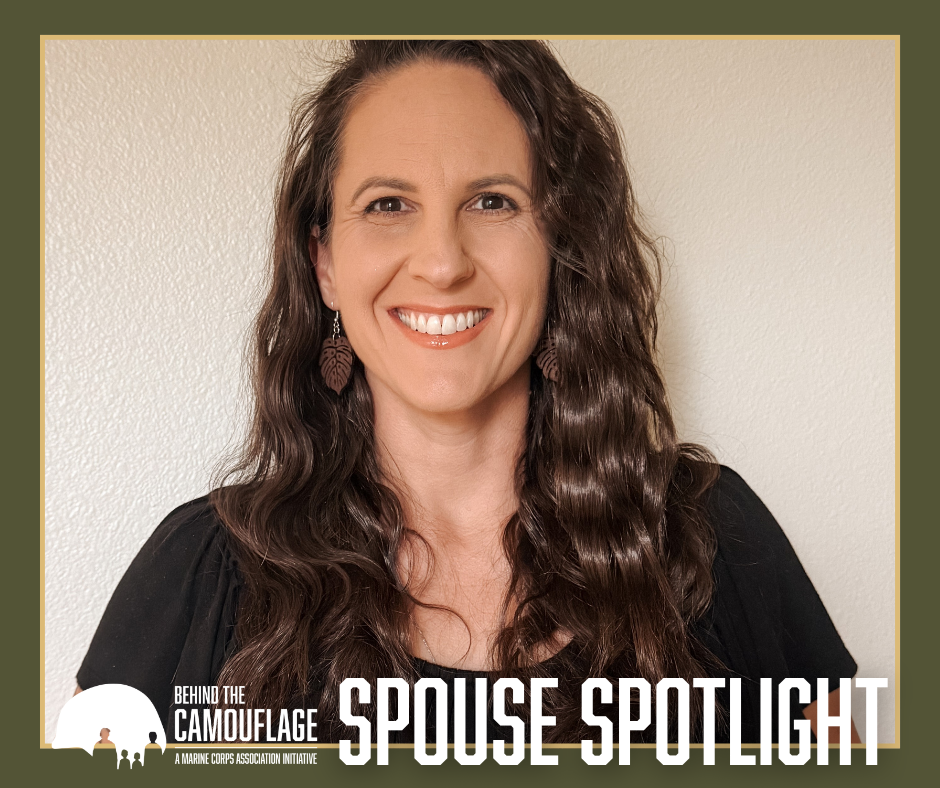
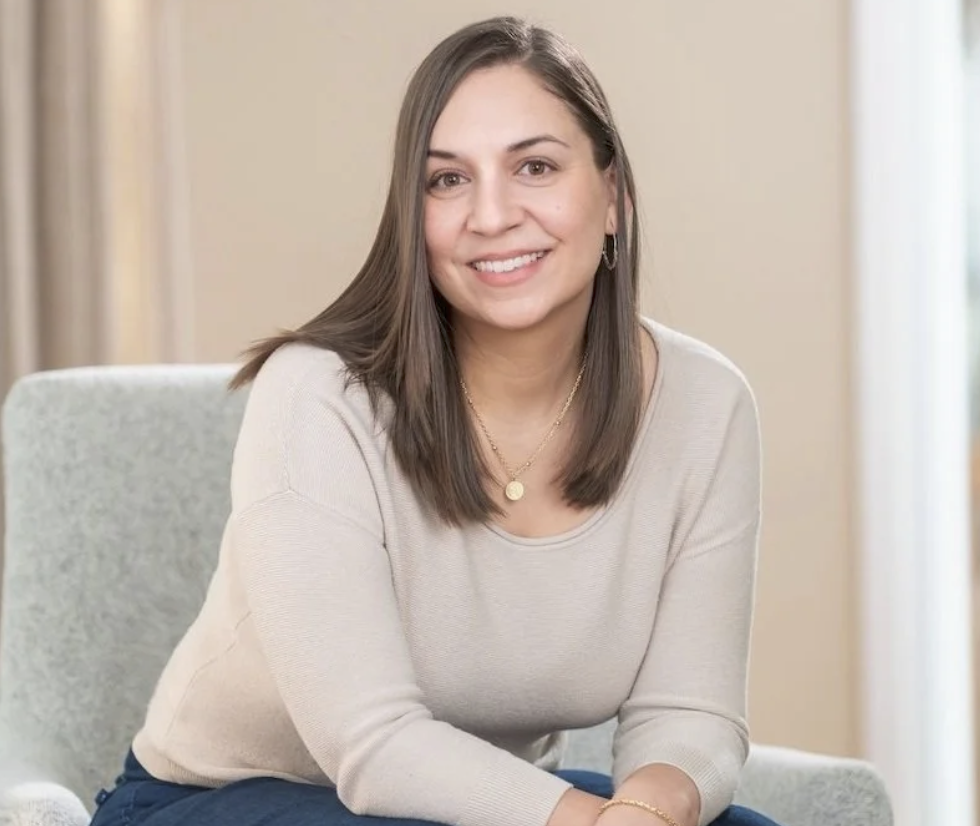
Meet Rachael Kolb, a Marine Corps spouse whose work strengthens readiness by helping families feel informed, connected, and supported. Today, Rachael serves as the Marine Corps Family Team Building Program Manager on Marine Corps Base Hawaii, where she equips Unit Readiness Coordinators with current information, resources, and training so they can better support unit families while balancing their primary military duties. She also helps deliver a diverse class schedule that builds personal readiness and resiliency, with a focus on clear communication and practical tools that strengthen the connection between commands, installation resources, and families.
Alongside her professional efforts, Rachael has invested deeply in building community among spouses through her leadership in the Hawaii kickball leagues. Serving as Kickball Commissioner and later as President for all leagues, she helped lead a program that brings together roughly 140 spouses and active duty participants in an environment that is competitive, supportive, and welcoming. For many spouses, kickball has become a consistent source of joy, connection, and belonging across ranks, ages, and backgrounds, and Rachael’s leadership has been central to sustaining that community.
Rachael is defined by her commitment to improving communication, expanding access to resources, and ensuring families feel confident, connected, and prepared. By strengthening the families who support Marines, she strengthens the mission, and she embodies exactly what the Behind the Camouflage Spouse Spotlight is meant to honor.
Do you have a Spouse you want to submit for a Spouse Spotlight?
Email Heather at [email protected] with the name and contact information of your spouse spotlight!
Welcome to Ask Dr. Monica, a space where real questions from military spouses get honest answers from a licensed therapist who understands the realities of military life.
Dear Dr. Monica,
We’re getting ready for another PCS this summer, and I’m honestly dreading how it’s going to affect my kids. They’ve finally settled in, have good friends, and feel confident at their school. Now I feel like I’m about to pull the rug out from under them…again.
My oldest is already asking why we have to move so much, and I don’t have a good answer beyond “that’s the military.” I worry that all this change is going to impact their friendships, their sense of stability, and even their trust in us.
I try to stay positive, but I’m feeling guilty and a little overwhelmed. How do I support my kids through this without pretending it’s all okay when it’s not?
Sincerely, Trying to Hold It Together During PCS Season
Dear Trying to Hold it Together,
First, the sign-off. Stop trying to hold it together. “Holding it together” is white-knuckling, and white-knuckling is the exact thing your kids will pick up on. They don’t need a mother who’s holding it together. They need one who’s letting it be hard, out loud, and showing them that hard can be survived.
The “stay positive” script is the trap. When we paste a smile over a real feeling, kids don’t get reassured — they get confused. They feel the dissonance in the room and conclude their own gut is broken. That’s the stability erosion you’re worried about. It doesn’t come from the moving truck. It comes from the performance.
So drop it. Try this instead: “Yes, this is hard. Yes, you’ll miss your friends. Yes, I’m sad too. AND we are going to get through it together. You’re going to make new friends. I’m going to help you stay in touch with the old ones.” That sentence — a hard feeling and a steady plan in the same breath — is what developmental psychologists call emotion coaching. And the research on resilience in military children consistently points to one variable above zip code, school quality, or deployment count: a parent who can name a hard thing without flinching.
Your oldest asking “why do we have to move so much?” is not a problem to solve. It’s an invitation. The honest answer — “because of Dad’s job, and I know it’s hard, and you’re allowed to be angry about it” — is more stabilizing than any cheerful spin you could rehearse.
One more thing, because I’ve worn both hats here. I’ve been the spouse at 11pm with the tape gun, wondering if we were doing permanent damage. I’ve also been the clinician sitting across from grown military kids — and what they tell me, without exception, is that what mattered wasn’t the moves. It was whether their parents told the truth during the moves.
Your guilt is not love. Guilt is what happens when we can’t tolerate the discomfort of doing a hard thing for legitimate reasons. Love is what you’re already doing — staying present, asking the question, writing this letter. Don’t confuse the two.
Your kids don’t need a perfect mother. They need a real one.
— Dr. Monica
Dr. Monica Reintjes is a Licensed Professional Counselor, PhD in Educational Psychology with an emphasis in Development and Learning, and military spouse. She is the Clinical Director of Reintjes Counseling & Consulting, specializing in trauma and military family mental health.
When not working, she enjoys traveling, exploring coffee shops, making cheese boards, cooking, and spending time with family and friends.
Disclaimer:
The content provided in Ask Dr. Monica is for general informational purposes and reflects the professional opinion of the author. It should not be considered a substitute for medical, psychological, or mental health care from a licensed provider.
The Marine Corps Association and Behind the Camouflage do not provide clinical services through this column. If you need professional support, please contact a licensed provider or Military OneSource at 800-342-9647.
Hey, Scuttlebutt listeners. Thank you for joining us and your continued support. This week, we welcome Josh Bates to the scuttlebutt. Josh is a retired Marine infantry officer, podcaster, and author of the book, Baghdad Shuffle, a noir crime thriller set in the backdrop of the 2003 invasion of Iraq. It goes without saying that this is a genre-bending story. Josh talks to us about his path to the yellow footprints, serving with his dad, the impetus for writing a book that centers on a geopolitical murder mystery, and how his personal experiences in Iraq shaped the plot of Baghdad Shuffle. One topic Josh shares with us is his experience in getting a book “on the shelves” and the current state of publishing. It was really interesting to get his perspectives on veterans entering the literary world. Also, you can check out more of Josh on the Green Door Podcast, where veterans, innovators, and creatives share stories that bind the battlefield, intelligence, industry, innovation, and creativity.
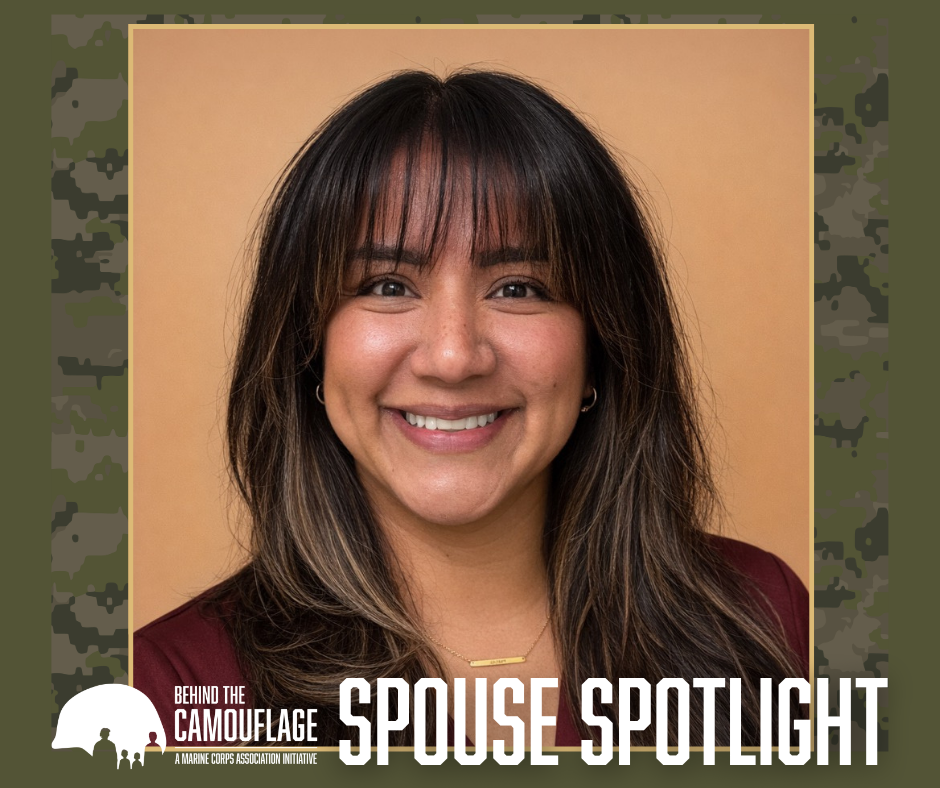
Meet Ingrid Sanchez, a Marine Corps spouse who is deeply committed to building community and showing up wherever the journey leads. Her service spans roles with the Navy-Marine Corps Relief Society from Caseworker to Chair of Volunteers, as well as Family Advocacy, Family Readiness, and mentoring spouses and youth through sports, leadership programs, and small groups. Whether coaching on the field, facilitating leadership spaces, or supporting families through deployments, she invests fully and leads with heart. Guided by her faith, no matter the duty station or length of stay, her focus remains the same: serve well, connect deeply, and leave communities stronger than she found them.
Do you have a Spouse you want to submit for a Spouse Spotlight?
Email Heather at [email protected] with the name and contact information of your spouse spotlight!
Hey, Scuttlebutt listeners. Thank you for joining us and for your continued support. This week, we bring another installment of our new series, Literary Lethality, to the scuttlebutt. In this series, we dive deep into the Commandant’s Professional Reading List, exploring various titles and talking with authors about some of the books on the list. Today, we welcome Kacy Tellessen back to the show. Kacy talks to us about E.B. Sledge’s quintessential war memoir, With the Old Breed. With the Old Breed has been on the Commandant’s Professional Reading List continuously for 14 years and, having his own beautifully written memoir, Freaks of a Feather, Kacy was the perfect person to talk about this book. It was great to hear Kacy’s thoughts on the book and to get a deep dive into literary arts by a literary artist.
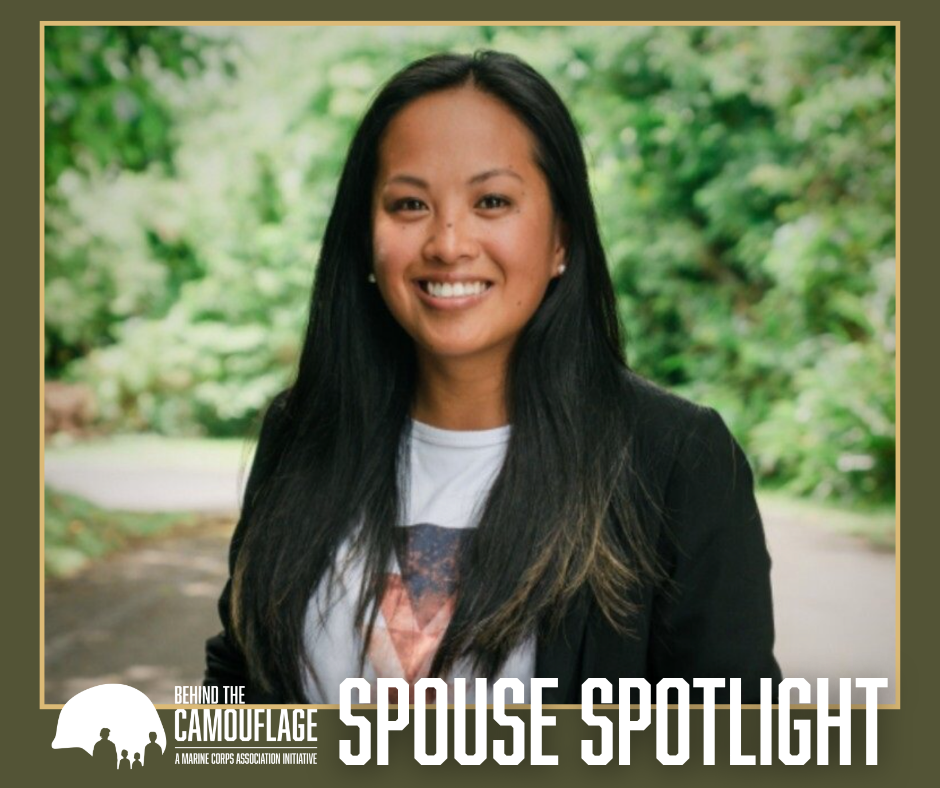
Meet Rei Best, a Marine Corps spouse who was raised in the military community long before marrying her Marine in 2007. Shaped by a lifetime of PCS moves across the U.S. and around the world, Rei has learned that every duty station carries a purpose, sometimes to grow, sometimes to serve, and often to do both. Through education, volunteer leadership, and quiet advocacy, she has consistently created space for other spouses to see their value, find their voice, and move forward with confidence. Rei embodies what it means to be a “villager” in the Marine Corps community, learning from those before her while intentionally building a stronger path for those who come next.
Do you have a Spouse you want to submit for a Spouse Spotlight?
Email Heather at [email protected] with the name and contact information of your spouse spotlight!
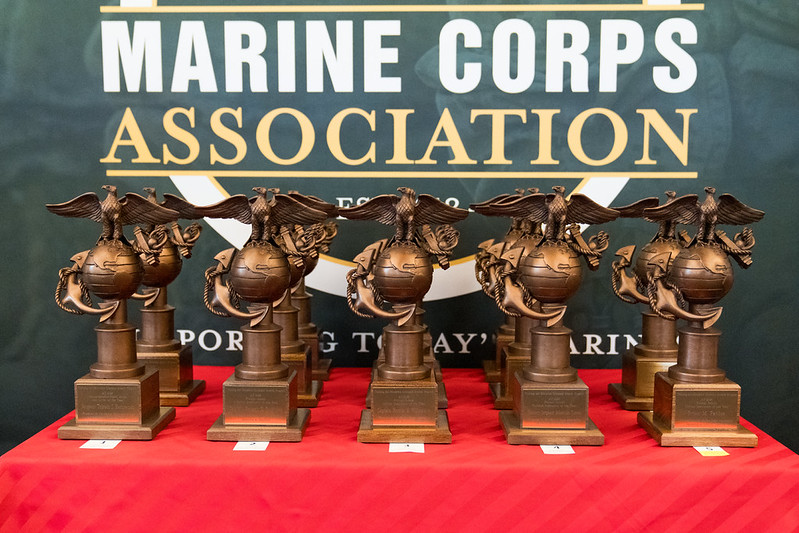
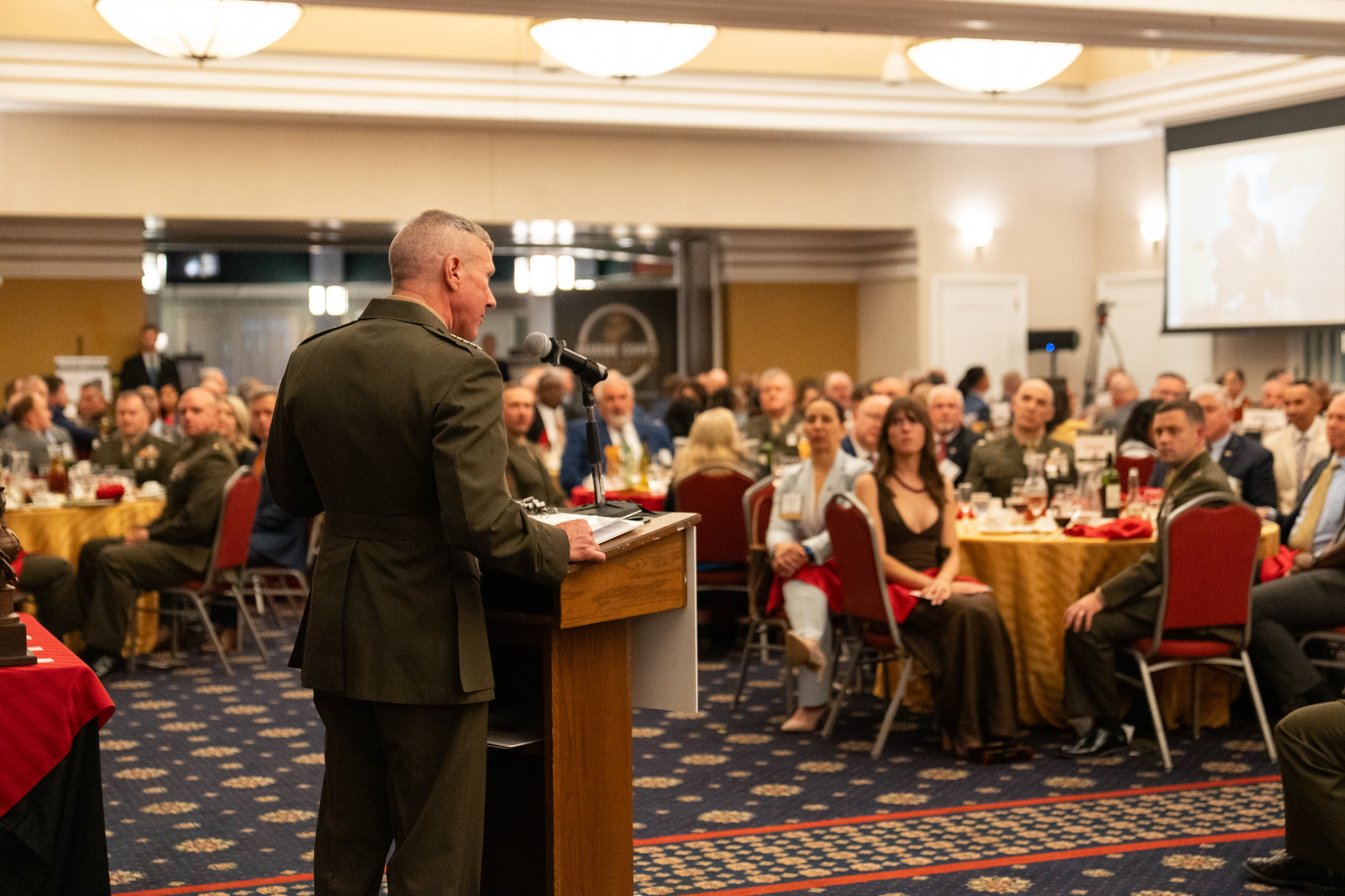
The Marine Corps Association, in partnership with Training and Education Command, hosted the 2026 Training and Education Awards Dinner on May 7 in Quantico, Va. This event recognized outstanding instructors, faculty advisors and exercise controllers whose efforts are shaping the future of the Marine Corps.
The evening brought together senior Marine Corps leadership, Marines, civilians, industry partners and families to honor excellence across the training and education enterprise. Throughout the ceremony, speakers emphasized the critical role instructors and educators play in preparing Marines for the evolving realities of modern warfare.
Lieutenant General Ben Watson, the commanding general of Training and Education Command (TECOM), highlighted the importance of innovation, adaptability and maintaining high standards across the force as the Marine Corps modernizes training environments and prepares Marines for future conflict.
“We built this plan on four lines of effort,” LtGen Watson said. “Making Marines, enhancing lethality, training units to fight, and learning and adapting at speed.”
LtGen Watson also discussed Project Tripoli, TECOM’s modernization initiative focused on creating integrated live, virtual and constructive training environments capable of preparing Marines to operate across increasingly complex and contested domains.
The evening’s guest of honor, General Eric M. Smith, the 39th Commandant of the Marine Corps, reinforced the importance of instructors within the Marine Corps profession and emphasized that the Corps’ greatest warfighting advantage remains the individual Marine.
“It is Marines who win battles,” Gen Smith said. “Not plans, not equipment, not weapons—Marines win those battles.”
The Commandant also stressed the responsibility instructors carry in preparing Marines for future conflict, calling Training and Education Command the “vanguard” of the Marine Corps and emphasizing that every Marine passes through TECOM at some point in their career.
“At the heart of that transformation are our instructors,” Gen Smith said. “They’re teachers, coaches, and most importantly, they’re mentors.”
Throughout the ceremony, leaders repeatedly highlighted the importance of maintaining standards, realistic training and preparing Marines, not only physically, but intellectually, for the rapidly changing character of warfare.
The ceremony recognized outstanding performers from across the training and education enterprise, including instructors from recruit training, formal schools, Marine Corps University, aviation training, MAGTF training programs and the Marine Corps Junior ROTC program.
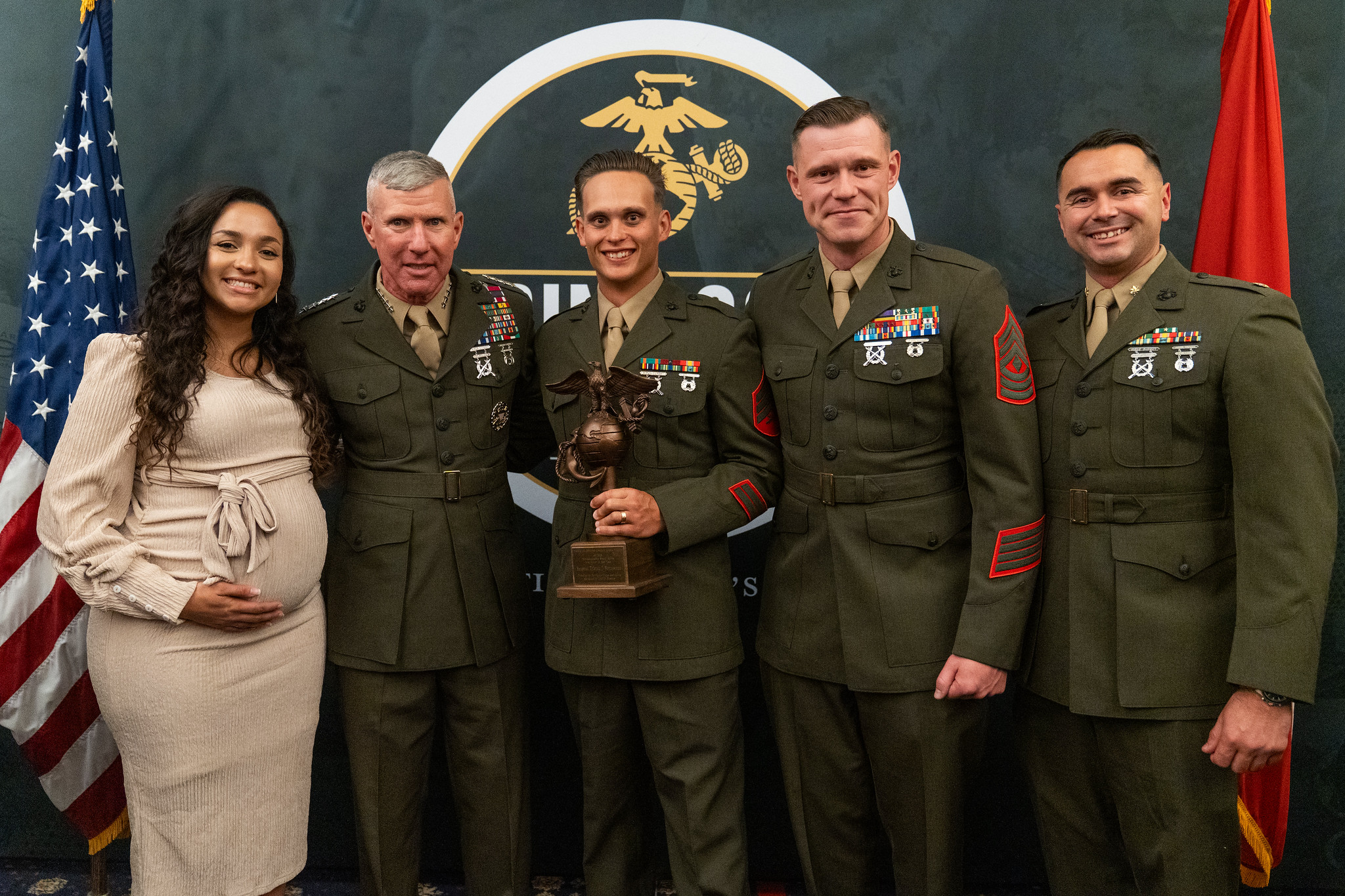
Reflecting on receiving the Marksmanship/Small Arms Instructor of the Year award, Sergeant Tristan J. Hermesman spoke about the importance of mentoring the next generation of Marines.
Sgt Hermesman and his spouse Aamaya Smith pose with the Commandant of the Marine Corps, Gen Eric Smith, at the MCA 2026 TECOM Awards dinner.
“I love what I do,” Hermesman said. “Teaching recruits how to shoot because I love shooting and just being able to teach the next generation of Marines how to shoot is super important to me.”
Hermesman also encouraged Marines and future recruits to stay grounded in their purpose and commitment to service.
“Don’t forget why you joined,” he said. “Whether you do four years or 40 years, you joined for a reason.”
The evening reinforced the Marine Corps Association’s continued commitment to recognizing excellence across the Marine Corps and supporting the professional development of Marines at every stage of their careers. As warfare evolves and operational demands continue to grow, leaders emphasized that the Marines responsible for training and educating the force remain central to preserving the Corps’ warfighting advantage for generations to come.
2026 Award Winners Marksmanship/Small Arms Instructor of the Year: Sgt Tristan J. Hermesman Formal School Aviation Instructor of the Year: Capt Reagan E. Reynolds Formal School Officer Instructor of the Year: Capt Hunter S. Wilbraham Formal School Enlisted Instructor of the Year: GySgt Sebastian Torres Formal School Civilian Instructor of the Year: Brian M. Pavlus Marine Air-Ground Task Force Officer Instructor of the Year: Maj Dylan M. Larmony Marine Air-Ground Task Force Enlisted Instructor of the Year: MSgt Ricki C. Miles Jr. Exercise Controller / Instructor Enlisted Marine of the Year: SSgt Travis L. McKinney Exercise Controller / Instructor Officer of the Year: Capt Nathan X. Adkins Marine Corps University Officer Faculty Advisor of the Year: Maj Russell S. Cox Marine Corps University Enlisted Faculty Advisor of the Year: GySgt Peter M. Goblirsch Marine Corps University Civilian Faculty Advisor of the Year: Nathan Packard Marine Corps Junior ROTC Instructor of the Year: SgtMaj Vincent C. Santiago (Ret)
Vanessa Philips Communications Specialist (703) 640-0111 [email protected] 715 Broadway St Quantico, VA 22310-087
Hey, Scuttlebutt listeners. Thank you for joining us and for your continued support. This week, we welcome David Kneiss and Dennis Mannion to the scuttlebutt. David is the director of the films The Gift and TheSiege at Khe Sanh, and Dennis is a Marine Vietnam veteran and the subject of TheSiege at Khe Sanh. Both The Gift and The Siege are such beautiful films, and David’s skill as a filmmaker is evident in his winning the Marine Corps Heritage Foundation’s Major Norman Hatch Award for The Gift in 2023and this year’s Sergeant William Genaust Award for The Siege at Khe Sanh. When we heard the award announcement, we knew we wanted to get David in studio, so when he suggested we invite Dennis as well, our collective heads almost exploded. And even with the anticipation, the actual interview exceeded our expectations. What a treat. We talk about the movies, David’s vision and how it is that he sees the story in people, David and Dennis’ backstory, and Dennis’ experiences then and now. But honestly, it’s all really good, and I hope you enjoy spending time with these two as we did.
National Bagel Day is January 15, apparently. (Google it.)
So this year, when Military Spouse Appreciation Day showed up on the calendar, I asked: “why is this a thing?”
As it turns out, this day did not show up out of thin air.
Military Spouse Appreciation Day began in 1984, when President Ronald Reagan issued Proclamation 5184 declaring May 23, 1984, as Military Spouse Day. In that proclamation, he recognized the “profound importance” of spousecommitment to the readiness and well-being of service members and to the security of the nation. The observance was later set as the Friday before Mother’s Day, and it is now recognized as part of National Military Appreciation Month. (Reagan Library)
What I noticed is that the original recognition was not only about sacrifice or hardship. It was about contribution.
We aren’t bystanders. We’re part of the larger readiness picture. The Department of Defense’s military family readiness framework exists because family well-being, resilience, and quality of life all support combat readiness. Marine Corps family readiness guidance is even more direct stating “personal and family readiness increases unit readiness.”(Military OneSource)
It means this day isn’t just about saying thank you for “embracing the suck.” It’s about recognizing that we make military life work. We create stability in an unstable lifestyle. We keep families moving through deployments, PCS seasons, school transitions,
and all the everyday logistics that come with this life. And yes, in very real ways, that helps our Marines stay focused, ready, and able to do their jobs. Marine Corps family readiness programs explicitly say the goal is to help Marines focus on the mission knowing their families are supported.
Spouses are often the ones creating the welcome event, organizing the meal train, answering the PCS question, checking on the new spouse, building the group chat, sharing the resource, volunteering at the school, sitting on the committee, and supporting fellow spouses.
That work does not come with rank or ribbons, but it matters. It strengthens families. It strengthens community. And strong families and healthy communities support readiness.
Appreciation is important, but appreciation without connection is incomplete.
So, Happy Military Spouse Appreciation Day to all of you.
We celebrate you because, behind the camouflage, you are the glue, the rock, and the force holding so much together. The readiness you build is not found in training plans or command briefings. It is built in homes, routines, school drop-offs, hard conversations, community, and in the everyday work of keeping families steady through a life that is anything but predictable. ~ And a lot of you are doing all of that while working full time, too.
Cheers! Happy Military Spouse Appreciation Day!
Krista Ickles is the Program Coordinator for the Marine Corps Association’s Behind the Camouflage program, where she is dedicated to supporting and empowering Marine Corps spouses by fostering community connections and providing resources to enhance their personal and professional growth. In this role, she works to ensure that Marine Corps spouses have access to opportunities that strengthen their sense of belonging and engagement within the military community.
Throughout her journey, she has focused on advocacy, operations management, and military family support. Prior to her current role, she served as Operations Manager for AtEase, an online platform providing government-approved lodging for military families during PCS moves. Before that, she was theHeadquarters Lead Advocate for the USMC PCS Advocacy Council, where she worked to improve relocation experiences for Marine families by engaging with senior leadership and driving policy discussions.
In addition to her professional experience, Krista is a mother of four and has been a proud Marine Corps spouse for over 25 years. Her deep connection to the military community fuels her passion for advocating for military families, enhancing spouse networks, and building strong support systems.
Hey, Scuttlebutt listeners. Thank you for joining us and for your continued support. This week, we bring another installment of our new series, Literary Lethality, to the scuttlebutt. In this series, we dive deep into the Commandant’s Professional Reading List, exploring various titles and talking with authors about some of the books on the list. Today, we welcome Max Uriarte to the show. Anyone who joined the Marine Corps post-2010 knows the name. Max is best known for his comic, Terminal Lance, but he is also an author with a book on the CPRL. White Donkey: Terminal Lance is the first and only graphic novel featured on the Commandant’s Reading List, a testament to both Max and the Reading List. We talk about his service and his transition to becoming a professional artist, how Terminal Lance came to be, the genesis behind White Donkey, and his thoughts on having the first graphic novel on the CPRL. This is a conversation I’ve wanted to have since I first laughed my ass off reading three squares in the back of the Marine Corps Times.