

The stoplight that changed everything: My Journey into Military-connected Community Service and Advocacy
Posted on: April 24,2026The beginning- Shaped by family
My journey into community service began long before I realized it. As a child growing up in Jamaica, my parents taught me the power of gratitude, kindness, and giving back. Their words were more than just advice; they were a way of life. I watched as they quietly but powerfully without seeking recognition gave back in numerous ways, whether through providing clothing, food, education or shelter to others, hence I had a front row seat into the qualities of empathy and patience. Because of this, I learned that making a difference in someone else’s life, being a servant leader, was one of the most meaningful ways to live.
My passion for service expanded in every direction even at this young age, whether it was feeding the homeless, volunteering at children’s homes, tutoring or with different clubs and organizations. It started by accompanying my parents as they provided acts of service, being a “brownie” in the girl scouts and as a teenager- a member in the Leo Club. I was drawn to the Leo Club because of the advocacy I saw through my mother with the Lions Club and yearned to do the same.
When I entered the healthcare field, this passion of mine extended to volunteering in the after-school healthcare clinic, doing screenings at Community Health Fairs and traveling abroad for healthcare mission trips and eventually working within the underserved community where my passion for serving others could intersect with my love for the healthcare field.
I was driven by the undeniable truth that the world is filled with countless needs, each seemingly unique and each seemingly urgent. No two experiences were the same, and with each new endeavor, I found myself learning, evolving, and discovering faster and more impactful ways to help.
The Marine Corps- a new world
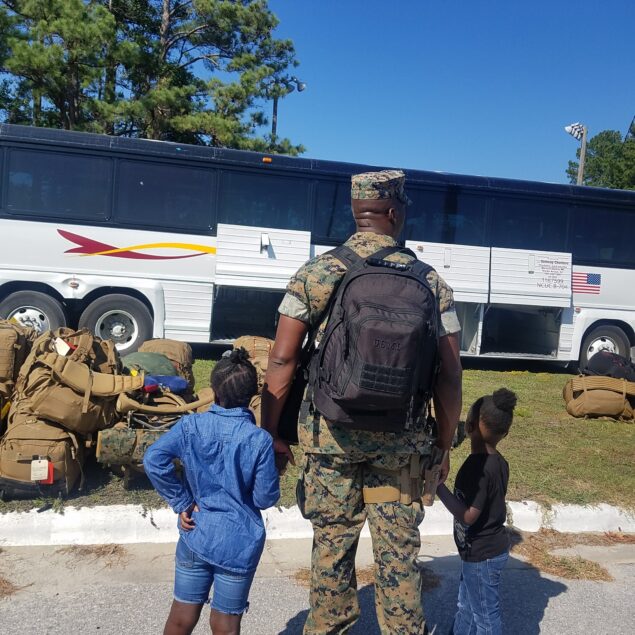
Then came the unexpected. A simple, chance meeting with my husband at a stoplight changed everything (a beautiful story for another day). It was this moment that eventually opened the door to an entirely new world: the Marine Corps.
Raised in my early years in a different culture, I understood the concept of a “soldier”, but in meeting my husband I was quickly corrected and introduced to the distinction of the word that mattered in this community: ‘Marine”.
Through marriage, I was thrusted into a world I knew nothing about, that slightly shifted my trajectory, reshaped my path, redefined what it meant to serve and gave me a new lens through which to see the world. Community service took on new meaning. I began to understand that sometimes, the most life-altering journeys start with the smallest, most unexpected steps.
At the beginning of this journey, I was fortunate to experience the kindness and guidance of a few remarkable military spouses who welcomed me into the community. At the time, I was deeply immersed in my professional work in the Healthcare field and the connected advocacy, but one extraordinary spouse made sure I would not remain on the sidelines. After missing the Welcome Aboard brief, she asked my husband to relay a message to me: “Please tell your wife that if she does not show up to LINKS, I will be coming to her house to meet her.” The message was simple, direct, and unexpectedly powerful. It made me laugh, but more importantly, it made me show up.
I met another spouse at that LINKS meeting who spoke to me about the importance of fusing the community work I was already doing with what needed to be done for Marine Corps families- a blueprint that would allow my passion for service to intersect with the military-connected community. It was then that I received insight into the fact that behind the Marine stood a network of families quietly navigating sacrifice, resilience, and uncertainty. That moment marked the beginning of my involvement in a variety of service roles supporting military families.
Throughout the years, I have served in numerous volunteer capacities, including LINKS Mentor, Unit Volunteer, Family Readiness Assistant, and Family Readiness Command Team Advisor for both local and deployed units and Board member of a Parent Teacher Association at a DODEA school. I have also been involved in Military Spouse leadership seminars, contributing as a volunteer, small-group facilitator, curriculum development team member, speaker, and inaugural chairperson, as well as participating in military spouse clubs and other service roles. Each position offered unique opportunities to learn, grow, and contribute. More importantly, they provided a platform to share knowledge, resources, and support with the many military-connected families navigating this extraordinary way of life.
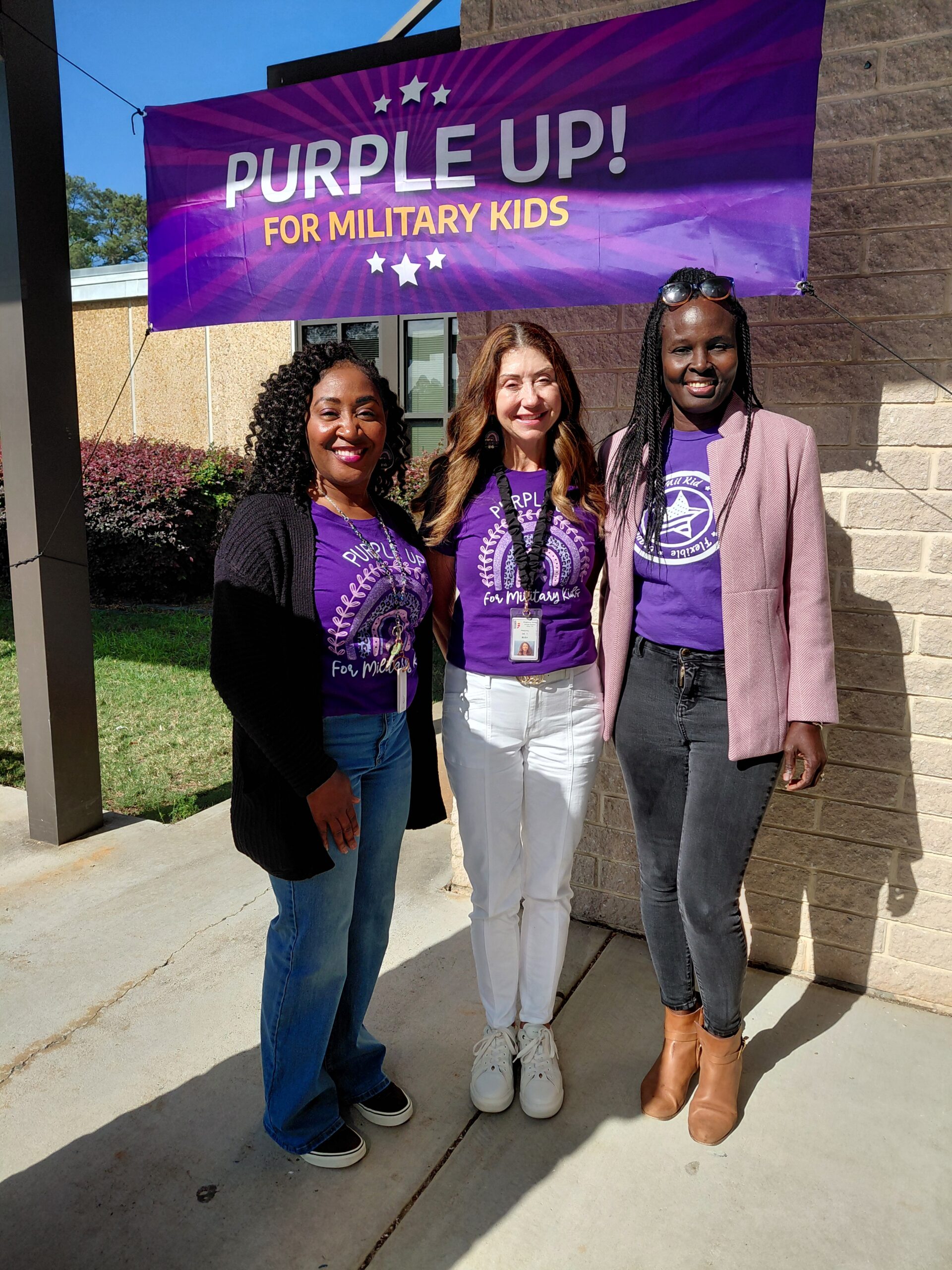
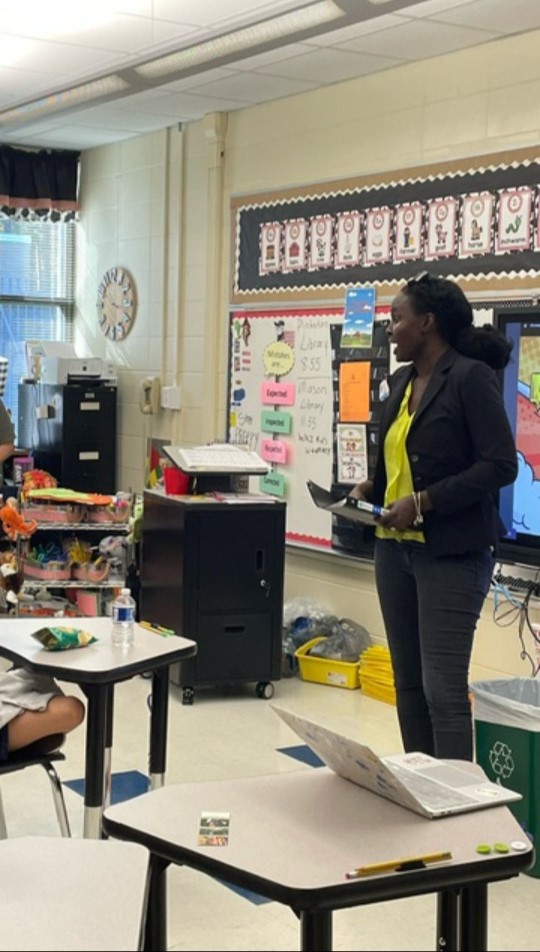
Currently, my volunteer time is limited and is split between being the chairperson for a month of the military and healthcare committees as well as being a military-connected parent volunteer liaison at a local elementary school. In addition, healthcare advocacy in the field of Dentistry in helping research and give input into finding solutions for active-duty dependents, board member of a PTO, as well as the ‘team-mom’ to a local middle school track team along with several other smaller roles when time permits, at other community organizations and events.
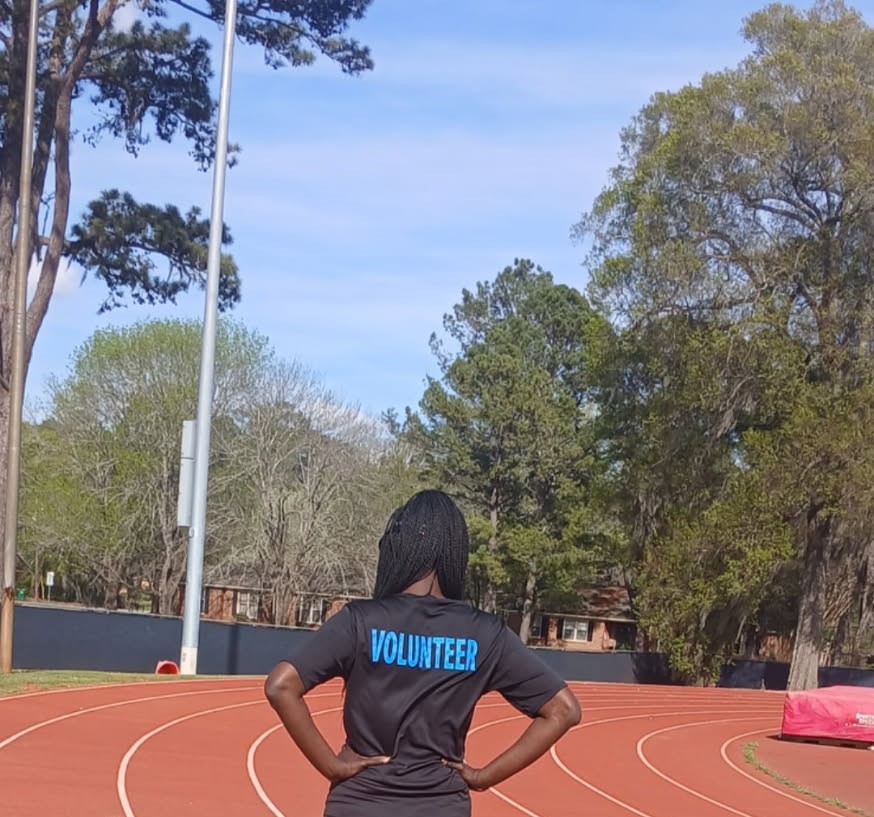
My volunteering activities, over the past 30 years have always been for causes I believed in. As I got deeper, the roles evolved into me doing a lot of problem solving. The first time I can recall, on a larger scale was as a Chief Resident- creating a “how to manual guide” for the incoming Residents because it was something that I saw was needed. My reason at the time was simple- for the next person to have a clear and accurate guide to help them navigate. This was a huge help to others and that feeling of finding solutions made me yearn to do more. In terms of military-connected volunteering, my role as chairperson for the month of the military child committee was ‘born out’ of the need to solve the problem for military-connected students at a local elementary school off base, to feel that same sense of familiarity and welcome that they would if this elementary school was located on base. Also, my role as the inaugural chairperson in recent years for a military spouse leadership seminar was out of a need to bring personal and professional development to military-connected spouses, which I thought was important at that time.
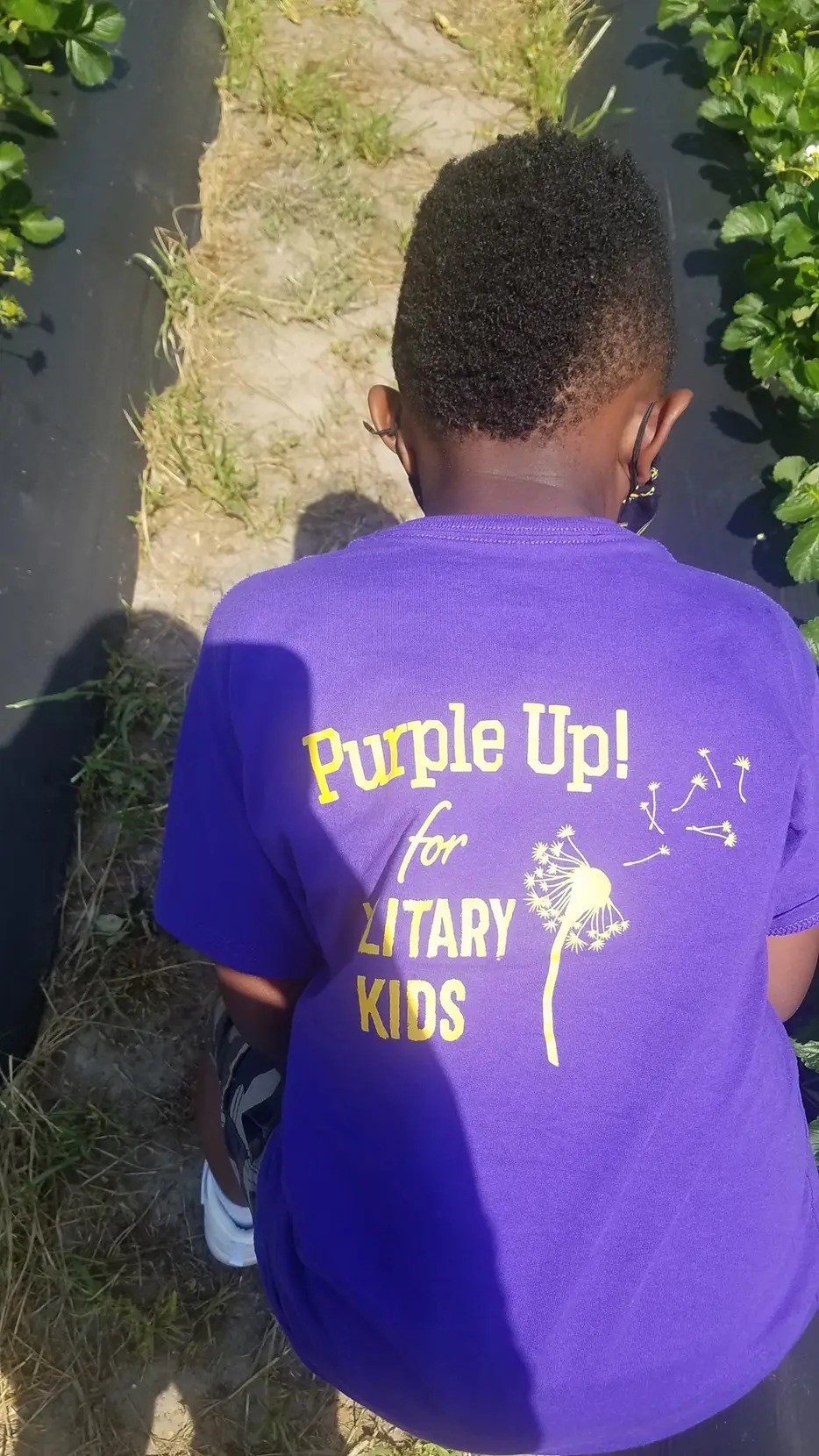
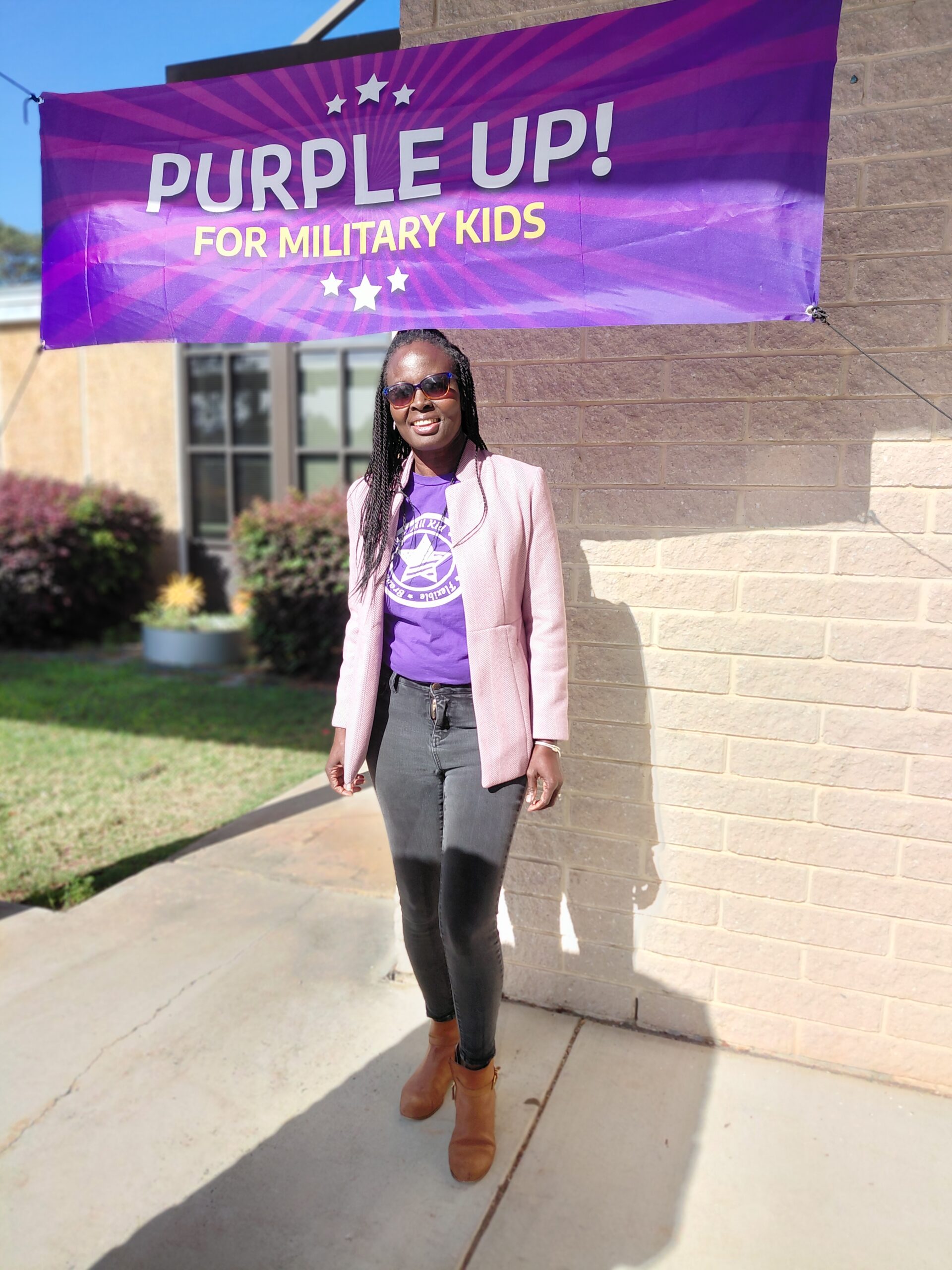
What began as an introduction to a new community evolved into a lasting commitment to service. Community work within the military-connected world is not simply about volunteering; it is about strengthening the support systems that sustain families through constant change and sacrifice.
For the community service over the years, yes there were similarities but many differences, and what worked for me was to understand the volunteer activity or event, my role and to communicate with the volunteers effectively who I would be interacting with, approaching it with faith, an open mind and heart and never forgetting my ‘why’. My intention is usually ‘quiet leadership’ but there were times when I was pulled to the forefront because based on experience for the particular project, the ‘subject matter expert’ in the room was me. Community service has helped with developing leadership skills in several areas and for that I am truly grateful.
Every role I have had the privilege to serve in, whether mentoring spouses, supporting family readiness efforts, advocating for healthcare solutions, or working with military-connected students has reinforced the same truth: strong communities do not happen by chance, they are built through intentional acts of service, collaboration, and care. Today, my work continues to be guided by a deep belief that when we invest in families, we strengthen the entire community. It has both been an honor and a responsibility to contribute to that effort, ensuring that those who serve and the families who stand beside them are supported, connected, and empowered to thrive.

For other spouses trying to navigate leading or being in a volunteer role, here are a few thoughts and a few books to keep in mind:
1. Be Kind to others but also remember to be kind to yourself.
As you pour into others, always remember to do the same for yourself. If you burn out while trying to take care of others, you cannot lead anyone. Remember to take time for you! Selfcare is NEVER selfish. You are worthy!
Read: Who moved my cheese by Spencer Johnson, MD
2. Know Your Why
For each role that you get involved with “ask what is my why?”. Knowing why you got involved in the first place helps with clarity and a goal for leading.
Read: Start with why by Simon Sinek
3. Growth Requires Humility. Ask for help
We all do not have all the answers. Adapt a mindset to be trainable, to seek mentorship leaving the mind open to “growth” instead of being fixed. Open your mind and heart to knowing that you can learn from anyone. You cannot always do it alone. Use the strength of the people around you. Take it one step at a time. I have never been afraid to say I think you are better at this
Read: Mindset by Carol Dweck
4. The Power of Stillness
As a child, my father would repeat a quote to me, “you have two ears and one mouth. In this life make sure you listen twice as much as you speak” . This stayed with me for a long time.
There is power in listening, in stillness, and in being quiet. Quiet leadership can also be transformational.
Read: Quiet: The power of Introverts in a world that can’t stop talking by Susan Cain
5. Relationships Are Built
Community does not magically appear. It starts with “hi.”
That one word can change someone’s entire day and duty station experience. Meet people were they are, as they all will not have the same personalities.
One of the most heartbreaking and successful stories for me that started with the word ‘hi’ was saying ‘hi’ to a fellow spouse in the adjacent vehicle at afterschool car pick up parking lot and giving them a huge smile, finding out later that the ‘hi’ and the ‘smile’ was what changed their decision that day to keep living. That day, because of that ‘hi’ they had found warmth, and hope and someone to tell their story to.
Read: The Next conversation by Jefferson Fisher
6. Boundaries Are Strength
“No” is a complete sentence.
You are allowed to protect your time. Your peace. Your priorities. Be willing to walk away.
Leadership without boundaries can possibly lead to resentment.
Read: Dare to lead by Brene Brown
7. Be Value-Added and Inspire others. Be Inclusive- Talent can be found everywhere
Read: The Energy Bus by Jon Gordon
How to win friends and influence people by Dale Carnegie
8. Do the best you can but remember that “done’ may be good enough
Read: Eat that frog by Brian Tracy
Don’t sweat the small stuff… and it’s all small stuff by Richard Carlson
9. If You Want Change: Start
Problems get solved and change happens when someone starts.
To start, you don’t need a title, just the willingness to begin.
Read: Atomic Habits by James Clear
Who Killed change by Ken Blanchard, John Britt, Judd Hoekstra and Pat Zigarmi
Master of Change: The case for rugged flexibility by Brad Stulberg
Breaking Cover by Michele Rigby Assad
10. To be a Changemaker you will need to have the Courage to be disliked
To truly drive meaningful change, you must embrace the Courage to be Disliked, for transformation may rarely comes without resistance. In a world where opinions are as diverse. Some people might, but not everyone will understand your vision, support your methods, or even agree with your goals. If conflict arises- communicate effectively and solve it quickly. Remember that real progress requires a steadfast commitment to your purpose, even when it means facing criticism, alienation, or rejection. It is in those moments of discomfort that true leadership and resilience are forged.
Read: The Courage to be Disliked by Ichiro Kishimi and Fumitake Koga

Dr. Soyini “Soy” Garvey is a visionary leader whose creativity and determination have transformed the military-connected community in Albany, Georgia. A tireless volunteer and advocate, Soy has dedicated countless hours to strengthening bonds between the base and the surrounding area—often identifying needs that others overlook and turning them into lasting initiatives that serve hundreds of families.
Soy was recognized as the 2025 MCA Community Change Maker of the Year – East Region.