Give No Quarter?

By the Staff of the Center for Law and Military Operations and Headquarters Marine Corps, Judge Advocate Division, International and Operational Law Branch

Situation
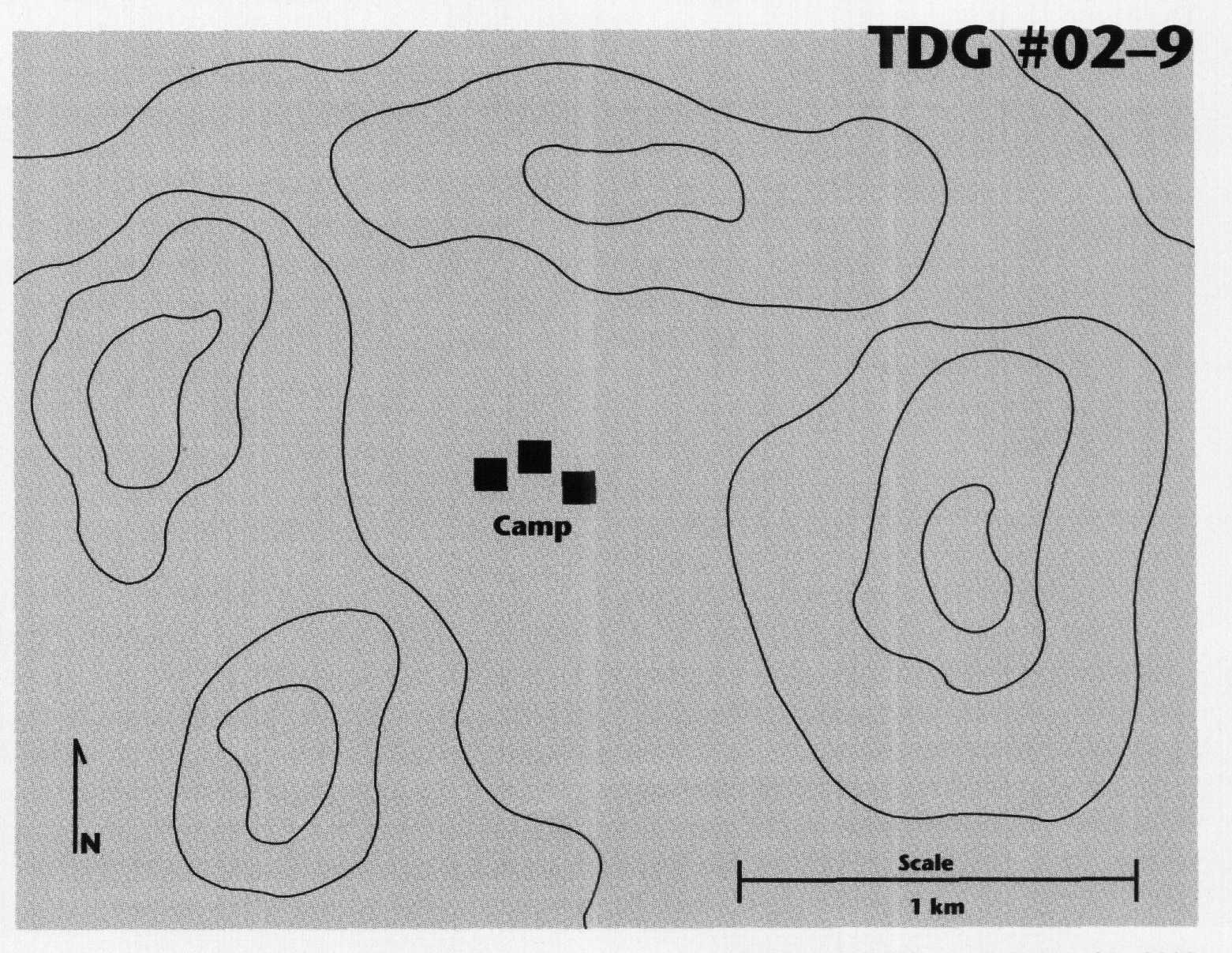
You are an infantry company commander for Fox Company, Battalion Landing Team 2/2, 26th Marine Expeditionary Unit (Special Operations Capable) (MEU(SOC)) operating in the country of Oriole, a known haven for the Al Bimi terrorist group. Your company has been tasked to conduct a heliborne raid to destroy an Al Bimi command and control cell located in makeshift huts at a camp in the foothills of a mountain range. Part of the MEU(SOC) commander’s intent calls for gathering as much intelligence as possible from the site. Al Bimi forces in the vicinity of the camp have been declared hostile. The S-2 (intelligence) reports that approximately 20 to 25 terrorists equipped with former Soviet bloc small arms are on the site.

Other U.S. forces have conducted raids on other Al Bimi camps and have reported that Al Bimi morale is low and that significant numbers have surrendered rather than fight. Of those who chose to fight, however, resistance has been stiff.

On one of the raids a group of three terrorists feigned surrender and then shot at the U.S. forces trying to capture them. The MEU(SOC) commander has emphasized strict adherence to the law of war, specifically that no Marine will intentionally shoot any Al Bimi member who surrenders. He has further emphasized the intelligence value of captured Al Bimi and that he wants every effort made to minimize the likelihood of unintentionally injuring those who surrender.

Following tried and true raid tactics, you put together a basic scheme of maneuver involving a helicopter insert at a landing zone 10 kilometers away and a foot movement to the objective. You task Ist Platoon as a security element to isolate the objective and block enemy ingress and egress. You task 2d Platoon, reinforced with an M2AOG machinegun section from weapons platoon, as a support element to move to a position to provide supporting fires for the assault force, 3d Platoon. After giving your platoon commanders this general guidance, you tell them to develop a detailed plan and to back brief you.

A short while later the 3d Platoon commander comes to you with a troubled look on his face. “Sir, what are we supposed to do when pockets of the enemy are surrendering on different parts of the objective and other pockets are still firing at us? We know that they’ve faked surrender in the past. They’ve been declared hostile. Can’t we just light up a base of fire and sweep across the objective, even if we shoot terrorists who surrender?”

Requirement

In a time limit of 5 minutes, what guidance do you give your platoon commander? Can you rationalize not shooting the surrendering terrorists and potentially putting Marines at risk, or do you concede that sometimes you can intentionally shoot enemy who surrender? Can you make any suggestions regarding tactics? Provide a brief rationale for your guidance and, if it aids in description, a sketch of any tactical suggestions. Submit your solution to Marine Corps Gazette, TDG #02-9, P.O. Box 1775, Quantico, VA 22134, fax 703-630-9147, or e– mail <[email protected]>.
Island Takedown

By Maj Douglas J. MacIntyre

Situation

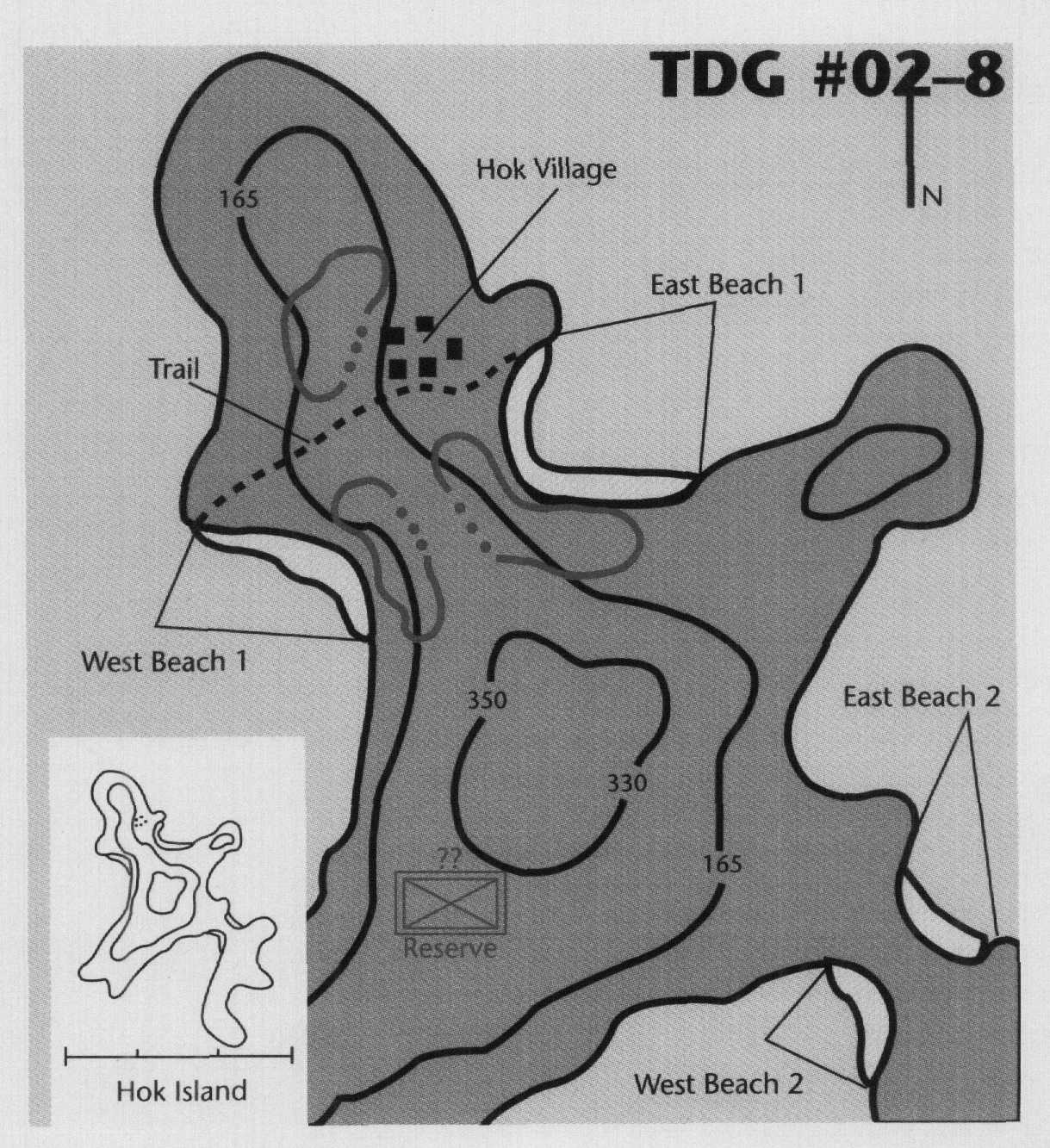
The time is now 1630, Wednesday. You are the battalion commander of 1st Battalion, 2d Marines (1/2), an east coast unit deployment program infantry battalion. Your unit is well trained and is currently preparing to return to the continental United States after over 5 months in theater. As part of the United States’ continuing war on terrorism, the Commander in Chief, Pacific Command has identified a terrorist training camp on Hok Island located 190 nautical miles from Okinawa. Seizure of this island and capture of these terrorists would be seen as a key indicator of U.S. resolve in the region and a major boost for the American public.

Intelligence estimates place the number of rebels on the island as platoon- to company-sized strength with limited small arms capability. Operating mainly in the northern portion of the island, they have established a village base and a trail network connecting the island’s northern beaches. The terrorists have also been seen operating small patrol craft in the bays surrounding the island.

Hok Island is a small, irregularly shaped island, 5 kilometers by 3 kilometers, located in the Philippine Sea. Except for four beaches, a village, and the known trail network, it is primarily covered with dense jungle and rough terrain. The beaches are generally rocky and rise sharply into the jungle. The two eastern beaches (East Beach 1 and 2) and West Beach 2 are suitable for up to a section of CH-53Es, while West Beach 1 can only support single aircraft landings.

At the 1800 planning session, III Marine Expeditionary Force designated 4th Marines as mission commander, HMH-465 as the aviation combat element (ACE), and 1/2 as the ground combat element. The ACE commander turns and tells you that the lift available is 4 CH-53Es (30 passengers each) with a 4-hour round trip flight window. He also states that fixed-wing close air support will be available continuously ofter L-hour (specific hour at which a deployment operation commences) from available Marine F-18 squadrons and a 3-hour window for an AC-130 mission. L-hour is set as 0600, Thursday.

Mission

Within the rapid response planning process that followed, 4th Marines’ operations order tasked you with the following: “Seize, occupy, and search Hok Island.” With this in mind, the battalion’s concept of operations seems clear-long-range helo insert, seize a foothold, multiple waves. As you are discussing this with your operations officer, an intelligence update is brought in via messenger.

Intel Update

“Terrorists on Hok Island appear to have prepared fortified positions surrounding their village and are guarding the two northern beaches. Patrol craft with heavy weapons seen in bay near East Beach 1. Reserve unit of unknown strength seen moving in central portion of the island.”

Requirement

The time is now 2115, Wednesday. In a time limit of 10 minutes, issue the changes to the concept of operations and orders to all companies and supporting arms addressing this updated situation. Provide a brief rationale for your actions and a sketch of your plan. Submit your solution to Marine Corps Gazette, TDG #02-8, P.O. Box 1775, Quantico, VA 22134, fax 703-630-9147, or e-mail <[email protected]>.

ECC at the International School

By Capt Sean P. Smith

Situation

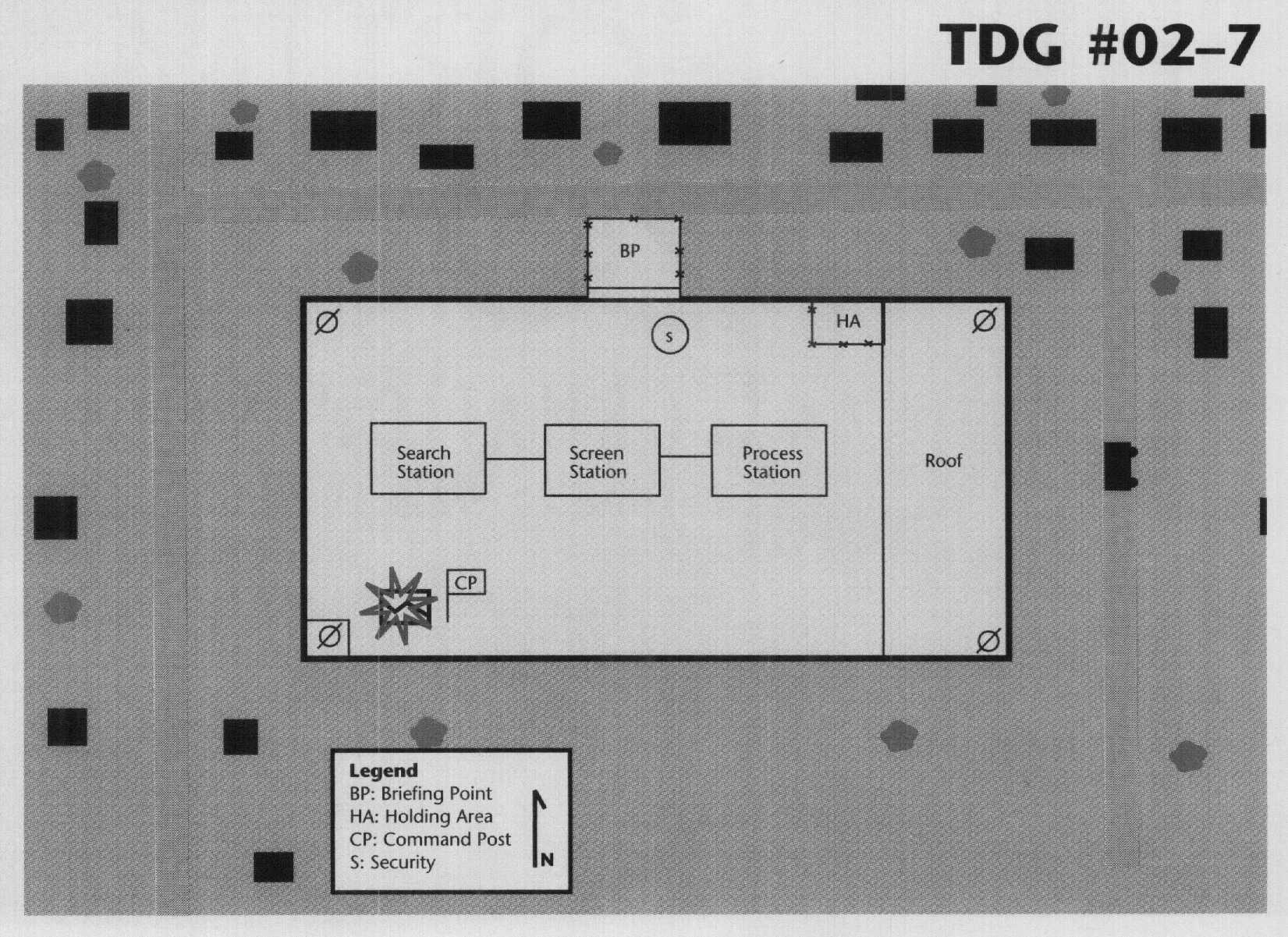
You are assigned to the Marine expeditionary unit (MEU) service support group (MSSG) evacuation control center (ECC) team as one of the section noncommissioned officers in charge (NCOICs). The ECC team has been activated to assist in the orderly and systematic evacuation of U.S. citizens and other individuals friendly to the United States identified by the Department of State (DoS). The MSSG ECC team has been inserted into the International School compound in the city of Noroba, Kurkleshstan in order to conduct ECC operations. Once they are processed they will be flown via helicopter to an airfield for evacuation out of Kurkleshstan.

The DoS estimates that there will be approximately 2,000 people who will need to be evacuated. The International School is located on the edge of the city in an enclosed compound that is roughly the same size as a football field. The compound walls are constructed of reinforced steel bars and concrete 12-feet high and 2-feet thick. You have visibility outside the compound through the steel bars in the wall. There are small outposts in the northwest and southwest corners of the compound. The eastern side of the compound consists of a two-story building (the school itself) that can accommodate one CH-46-sized helicopter at a time on the roof. There is one main gate for the compound located in the north wall. The terrain around the compound consists of dirt roads, mild scrub vegetation, and small, one-story shacks and huts.

The ECC team was inserted via helicopter from the MEU amphibious ready group into the compound at 0500 in order to start processing at 0630. A section of the artillery battery is providing security at the compound. They have one fire team in each corner of the compound situated in the outposts and on the corners of the building rooftop. The remainder of the battery section is augmenting the ECC security and escort teams.

The briefing point is located at the entrance to the compound. The ECC team has set up its security, search, and screening/processing stations in the compound. Staging/embark is located on the second floor of the building. There is a MEU interrogation area located on the first floor of the building. The medical station is also located on the first floor of the building in a separate room. There is a temporary holding area surrounded by barbed wire in the northeast corner of the compound with four people detained in it.

The light armored vehicle platoon is currently in the city center approximately 5 miles away providing security on the main supply route in the vicinity of the U.S. Embassy and is available for backup if needed.

Processing began at 0630 and hasn’t slowed down in the last several hours. Only a small number of individuals were American citizens. They were the first ones evacuated from the compound. The remainder of the evacuees are mostly native Kurkleshstani’s and foreign nationals who were told they would be evacuated out of the country by the DoS. Most of them are legitimate; however, several have appeared on the black lists, and the MEU interrogator-translator team has determined that at least four have ties to the Taliban and Osama bin Laden.

As you look out of the compound, you estimate that there must be at least several hundred people with baggage congregated outside the briefing point wire waiting to be processed. Mixed in with them, and spread outside the compound walls, are hundreds of locals. The crowds are loud, carrying anti-American signs and banners. You begin to hear Muslim chants coming out of a microphone from the crowd north of the compound. You then hear sporadic gunshots off in the distance, and one of the fire teams on the roof reports that an old van drove slowly around the outside of the Embassy and moved out of sight.

Just then an explosion rocks the communications site, killing the ECC site commander and severely wounding the assistant commander and the battery staff NCOIC. The only working communications you have are with the stations and outposts via saber radio. The rooftop outposts report that there are possibly one or more snipers in the adjacent crowd starting to take shots at the compound. Last word was that another helo would not be on the deck for at least another 30 minutes. The crowd is becoming more violent, and more rifle fire is heard. Right now you have 15 evacuees in the compound, and some appear wounded. You realize that you are the senior Marine on the scene.

The security force has M9 pistols, M16s, and squad automatic weapons. They also have two M240G machineguns on the northeast and southeast corners of the rooftop, a limited amount of pepper spray and tear gas (CS) hand grenades/M203 grenade launcher rounds, and four red star clusters. ECC personnel have standard small arms security rounds. The security team has pepper spray, CS grenades, and two red star clusters. Standing MEU rules of engagement include the following provisions: deadly force is authorized if directly fired upon from a known target, and all weapons systems will be in Condition One.

What do you do now, Sergeant ?

Requirement

In a time of 2 minutes, write down your plan on how to handle the situation. Keep in mind all factors involved with the scenario. Be prepared to brief your plan and scheme of maneuver. Submit your solution to Marine Corps Gazette, TDG #02-7, P.O. Box 1775, Quantico, VA 22134, fax 703-630-9147, or e-mail <gazette @mca-marines.org>.

Peace Enforcement in Intolerancia

by Rittmester (Cavalry Captain) Patrik Schaathun, Norwegian Army

Situation

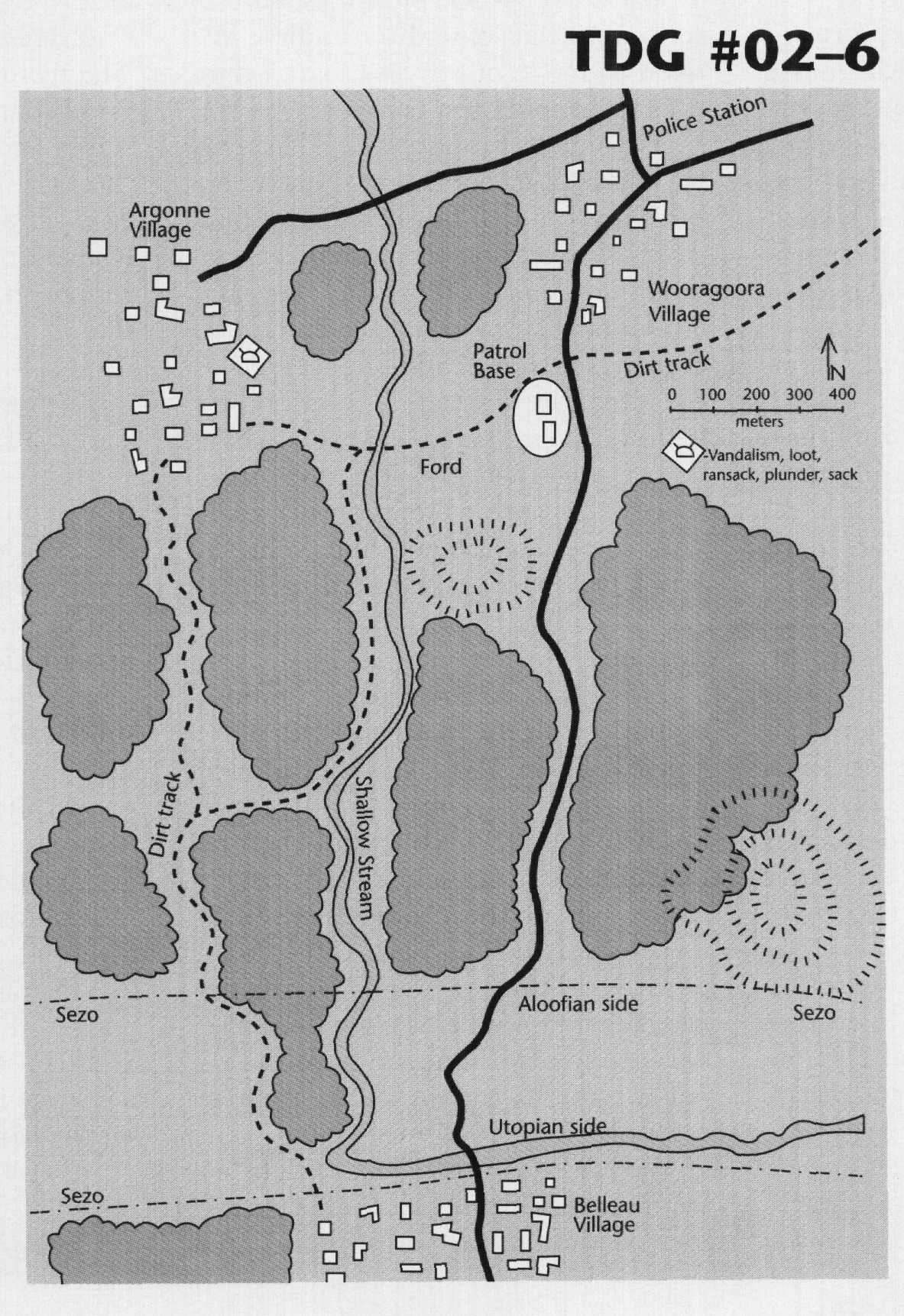
You are the platoon leader of a rifle platoon. Your battalion is part of a multinational peace enforcement (PFOR) mission to Intolerancia, a nation tom apart by civil war. The PFOR intent is to prevent the antagonists from fighting each other. The desired end state is reached when no hostilities occur between the opposing factions-the Aloofians and the Utopians. A peace agreement put an end to the fighting a year ago. Since then there have been clashes between mobs as well as murder threats to civilians on both sides. Rules of engagement allow you to use minimum force against individuals who unlawfully commit or are about to commit acts that endanger life or are likely to cause serious bodily harm.

One of your squads has been detached so you only have two left. Your task is to patrol a border area to prevent weapons and explosives from being transported across the separation zone (SeZo). The former enemies have withdrawn their armed forces across their respective sides of the SeZo. The armed forces have been demobilized as demanded by PFOR. Civilians have complete freedom of movement, although few dare cross the SeZo to the opposing side. Wooragoora is inhabited by Aloofians. Argonne, formerly inhabited by Utopians, is now deserted.

The rest of the battalion is located 1 hour to your north and are tasked with checking weapons sites and patrolling.

You have just taken over the patrol base. The outgoing platoon informed you that unarmed Aloofian civilians have recently been looting Argonne and that the former inhabitants of Argonne, now residing in Belleau, are rather dissatisfied with it. The first looters were sent packing by the outgoing platoon who simply told them to leave. Compliance was instant with few questions asked. However, when the situation was reported through the chain of command, the outgoing platoon was ordered not to interfere since this is a civilian matter and should be taken care of by the international police force (PolInt) and the local police. The battalion tactical operations center emphasized response to military activity and armed civilans only. Since then, looters have been left alone.

The local police in Wooragoora aren’t willing to interfere. The nearest Pollint detachment is 1-hour to your west, and recent incidents have demonstrated their reluctance to respond due to duties elsewhere.

A Utopian spokesman in Belleau has declared that if PFOR is not willing to stop the looting, they will take matters into their own hands in order to protect their homes that they hope to move back to one day. According to the battalion intelligence officer, the civilans on both sides have access to small arms.

It is 1000 and both your squads are within your compound. The sentry informs you that two civilian lorries have just arrived at Argonne and five unarmed civilians can be seen looting.

Requirement

In a time limit of 5 minutes, issue your orders. Provide a rationale for your actions and a sketch of your plan. Submit your solution to Marine Corps Gazette, TDG #02-6, P.O. Box 1775, Quantico, VA 22134, fax 703-630-9147, or e-mail <gazette@mca– marines.org>.

Fight or Flight

by Capt Curtis E. Moore II

Situation

You are the section leader of a pair of AH-lW Super Cobras on an armed reconnaissance mission. Each attack helicopter’s weapons load consists of 2 TOW missiles, 2 Hellfire missiles, 7 2.75-inch high-explosive rockets, 7 2.75-inch flechette rockets, and 400 rounds of 20mm ammunition. While engaging an enemy mechanized column, your wingman is brought down by enemy fire just as you launch your last missile. After confirming no one survived the helicopter crash, you discover your helicopter has lost external radio communications and has fallen below the fuel minimums required to safely return to the forward arming and refueling point (FARP).

Trying not to think about the loss of your squadron mates, you task your copilot, Sean “Dirty” Canahal, to navigate the aircraft through the mountainous terrain to the FARP under the most fuel efficient conditions possible. During the 24-kilometer flight to the FARP site it is not until you make a hard turn through one of the mountain passes that a reflection from behind your aircraft catches your eye. The reflection emanates from the canopy of an enemy Ka-50 Hokum attack helicopter. You cannot be sure how long he has been behind you, but you determine that since he has not attacked yet, even though you are in range of his weapons systems, he may have another motive. Is his goal to discover the location of the FARP site? If compromised, the FARP could be attacked/destroyed by enemy artillery, rockets, or aircraft. A successful attack on the FARP would kill several people and destroy aircraft and other equipment.

While you consider options, the following conversation takes place between you and Dirty over the internal communications system.

Dirty: “&#*!%$ Hobbit, I thought we had air superiority. Where did that guy come from?”

Hobbit: “Obviously the enemy is pulling a few wild cards out of the deck. The S-2 never even mentioned those in their air order of battle.”

Dirty: “Without any radio communications we cannot call the Hornets to help us out on this one. The way I see it we have two options: we can try to make it back to the FARP site, hope our fuel lasts until we get there, risk compromising the site, and pray our Stinger man-portable air defense missile bubbas tag this guy, or we can turn, try to engage, and shoot this guy down. If we go that way, assuming we get him in our sites and destroy him, I am sure we will be out of fuel before we make it back to the FARP site.”

You consider his counsel, take a deep breath, and explain your plan to Dirty.

Requirement

In a time limit of 30 seconds, come up with a plan and be prepared to brief it to your copilot.

Draft a mission statement, intent, and a graphic representation of your proposed course of action. Submit your solution to Marine Corps Gazette, TDG #02-5, P.O. Box 1775, Quantico, VA 22134, fax 703-630-9147, or e-mail <[email protected]>.

Command and Control Fog

By Capt Eric J. Lehman

Situation

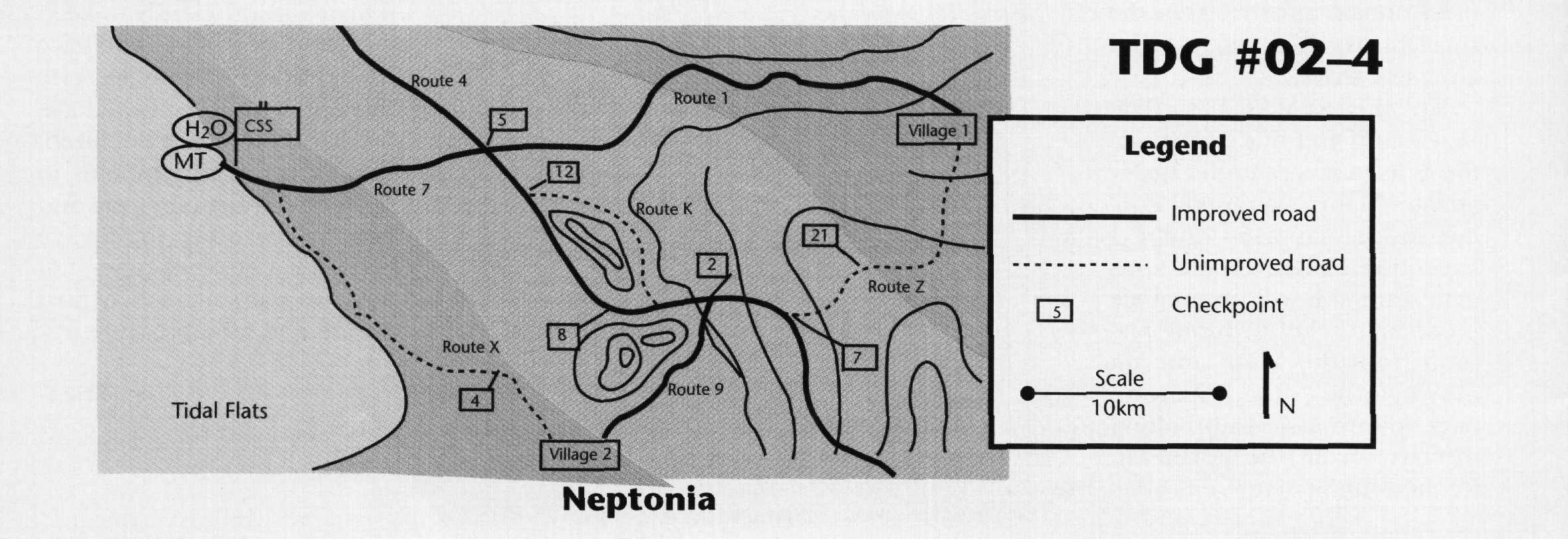
You are commanding a detachment of Marines assigned to a joint task force (JTF) conducting humanitarian relief operations in the drought stricken country of Neptonia. In support of a United Nations (U.N.) task force objective, your mission is to produce potable water and fill local cisterns. The likelihood of terrorist activity in the joint operations area has you operating on a heightened state of alert. Although terrorists have raided cisterns throughout the joint operations area, there have been no cistern raids in your area of operations. (See map.)

The JTF commander is concerned that cistern raids may lead to civil unrest in Neptonia and ultimately upset the balance of power in the region. For diplomatic reasons, the JTF commander decided to follow the U.N. task force’s restricted rules of engagement-individual weapons may be cartied in Condition 1, but JTF personnel may only engage an adversary when fired upon.

Figure 1 contains your force list. Routes 1, 4, 7, and 9 are improved roads, and Routes K, X, and Z are unimproved. The commercial tankers cannot navigate unimproved roads.

For force protection you have limited convoys to 15 vehicles, varied convoy departure times, and directed your engineer company to improve Routes K, X, and Z. Additionally, commercial tankers have been integrated into the convoys, and tactical vehicles with mounted machineguns are in the front and rear of each convoy.

On the 31st day of your deployment, you launch a convoy to Village 2. Your engineer company commander has completed improvements to Route K. He is working in the vicinity of checkpoint 4 and anticipates completing Route X in 5 days. You are located in your command post (CP).

The lead element of the convoy has passed checkpoint 8 and is proceeding east when the convoy commander, a staff sergeant, reports hearing an explosion and seeing a column of heavy black smoke east of checkpoint 2. The excited staff sergeant reports two off-road vehicles (ORVs) approaching the convoy from the north at a high rate of speed. After forcing a tanker off the road and causing it to sink in the loose sand, the ORVs retreated to the hills north of the road. The staff sergeant states that the ORVs appeared to have gun mounts, but he did not see any guns.

While talking to the staff sergeant you hear the unmistakable sound of machinegun fire. The staff sergeant confirms machinegun fire coming from the vicinity of the rear of his convoy but states that he cannot see the rear of his convoy.

Requirement

From your CP 12 kilometers away, in a time limit of 3 minutes, what orders do you give to your subordinates, and what do you tell higher headquarters? Provide the rationale for your actions and a sketch of your plan. Submit your solution to Marine Corps Gazette, TDG #02-4, P.O. Box 1775, Quantico, VA 22134, fax 703-630-9147, or email <[email protected]>.

Lights Out

By Maj Terry Branstetter

General

Yesterday, large-scale power outages occurred throughout metropolitan regions of the United States. Millions of Americans remain without power. The National Security Agency (NSA) has identified the source of these attacks as the Matrix. The Matrix has long been believed to sponsor and lead training for anti-American terrorism. This is their first confirmed cyberattack. The NSA claims that a man called Neo Khalid masterminded this recent attack.

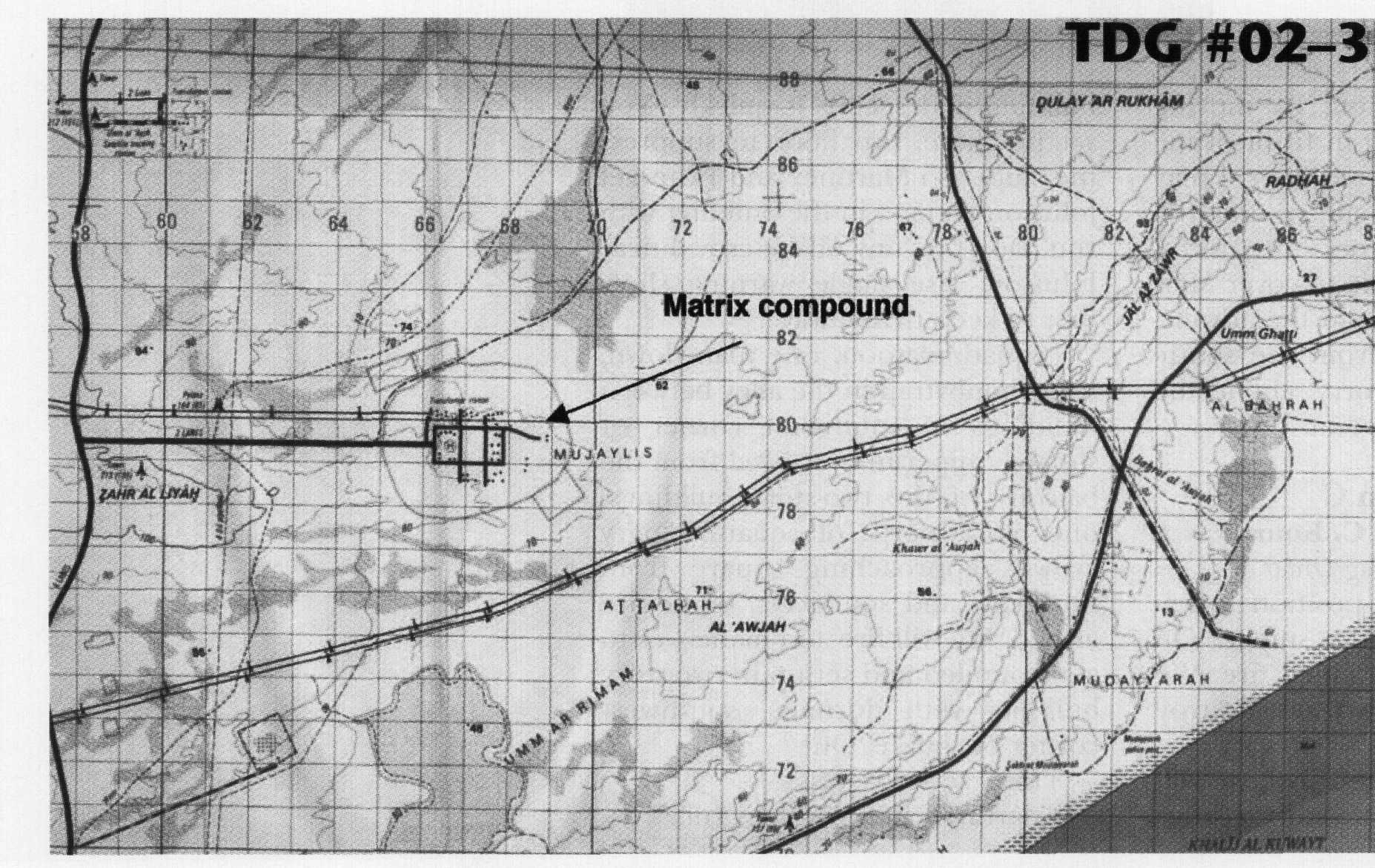
The Matrix has a training compound in the country of Futeria. The Futerian Government has taken no action against Matrix because computer attack is not illegal in Futeria.

The Matrix compound is believed to be a modern training facility. The Matrix is well-sponsored and is believed to have access to a variety of modern light weapons. It is estimated that the compound maintains an active force of about 70 trainers and trainees.

Late today, the State Department persuaded the Futerian President that the Matrix initiated these attacks from his country. He has authorized a restricted retaliation by the United States against the Matrix, specifically to capture Khalid. It is unknown if Khalid knows that he has been discovered as the source of these attacks. National assets indicate that the Matrix compound is in a normal state; however, it must be assumed that the Matrix has prepared for retaliation. The Matrix compound is near the sea and in an isolated part of Futeria.

Situation

You command a Marine expeditionary unit (special operations capable) (MEU(SOC)), currently afloat. You have just received a directive authorizing military action against the perpetrator of these attacks. You and your staff are quite familiar with the Matrix. They have been on your list of possible enemies for some time. Your MEU is the quickest response to prevent further offensive action by the Matrix.

As part of the Department of State agreement with the Futerian President, air delivered munitions may not be employed. Offensive actions are restricted to the immediate compound area. Lastly, you are directed to capture Khalid and other Matrix members and computer or electronic equipment employed in this attack. You are currently 100 miles from the coast of Futeria and the sun is setting.

Requirement

Draft a mission statement, commander’s intent, and a concept of operations to start your staff’s planning. For this operation, assume any standard MEU task organization or propose a nontraditional organization with justification for current/future relevance. Submit your solution to Marine Corps Gazette, TDG #02-3, P.O. Box 1775, Quantico, VA 22134, fax 703-630-9147, or e-mail <gazette @mca-marines.org>.

The War on Drugs–Floating on the River

By Maj Terry Branstetter

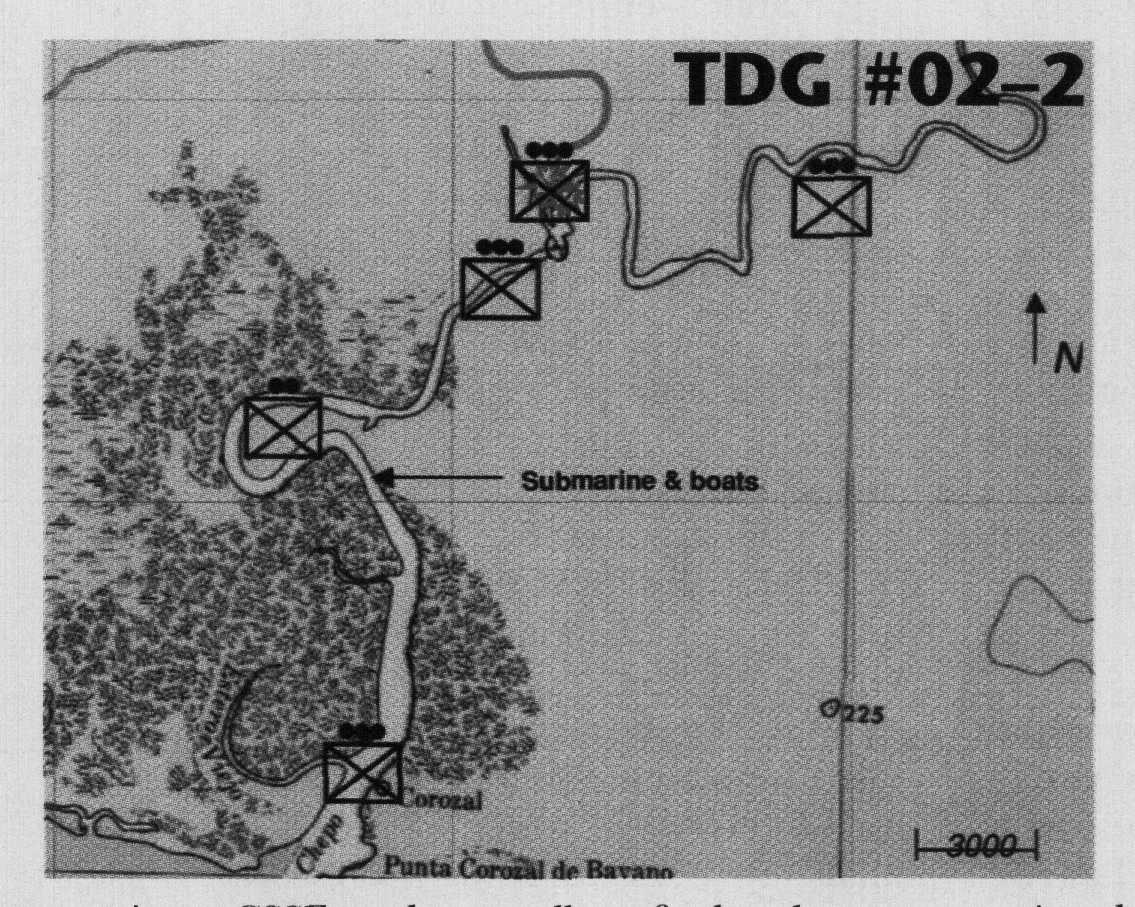
Tactical Decision Game #02-2 General A special purpose Marine airground task force (SPMAGTF) has been deployed to the coastal region of Southlandia to take an active role in America’s war on drugs. The coastal plain of Southlandia is tropical with thick vegetation. Rivers are the major means of transportation and communication. On these rivers narcotic traffickers transport their products from inland camps, where the drugs are manufactured, to the coast where they are exported by sea and air.

The narcotic traffickers in Southlandia have been growing more and more technical in their means of producing and exporting. Manufacturing locations are small, widely dispersed camps that are moved frequently and apparently randomly. While some drugs are driven and some flown from the inland, most are transported via river to the coastal area where ocean and air transportation is more available. There are even rumors that submarines may be incorporated to ship drugs.

The SPMAGTF is based at a small airbase near the third largest village in the province. The command element is augmented with several provincial police, a liaison officer from the U.S. Coast Guard, and a detachment from the U.S. Drug Enforcement Agency. The SPMAGTF is part of a Marine Corps led joint task force located in Southlandia’s capital. The MAGTF is composed of an aviation combat element built around four CH-53Es. The ground combat element (GCE) consists of a lightly equipped infantry battalion and a detachment from the division’s small craft company (two riverine assault craft and six rigid raider craft (RRCs)). Companies conduct operations along the Pacora and Chepo Rivers. The combat service support element (CSSE) provides general support to the MAGTF and provides direct support to the GCE in the form of one forward logistics base supporting riverine operations along the Chepo. Situation

You are an infantry company commander (Hawk 6) conducting counterdrug operations along the coastal plain of Soud-flandia. Your company currently has duty along the Chepo River; you relieved a sister company 3 days ago. You operate from a base camp where a CSSE and a small craft detachment support you. To facilitate operations you have organized your company into four homogeneous platoons. Your company has seen nothing of the volume of river traffic that they had last week. It looks as if the drug traffickers have taken their business elsewhere.

Currently, you have one platoon at the base camp resting and conducting maintenance after returning from a lengthy patrol to the north. A second platoon is patrolling to the east of the Chepo. You are with the third platoon south of the base camp conducting some insertion and extraction drills with three RRCs. The fourth platoon is working with the remaining small craft to patrol the Chepo.

Over the company tactical net you hear the CSS officer in charge calling for help. He says that the base camp is under attack. He reports many wounded and is uncertain they can hold on.

You are near the bow in the river, maybe 15 minutes away. You depart to reinforce the base camp with three RRCs and as much of one platoon as will fit. That leaves you with about a squad and a half of Marines at the river bend.

Nearing the base camp, you hear gunfire and see a lot of smoke. You radio to the camp to coordinate your arrival but get no answer. Then the platoon sergeant leading the Marines left at the bow in the river (remnants of 3d Platoon) reports that they just saw two small boats and what looked like a submarine heading toward the coast. When they attempted to halt the craft the two boats opened fire, and they continued down the river. What now?

Requirement

In a time limit of 2 minutes, issue your orders to your company. Provide the rationale for your actions and a sketch of your plan. Submit your solution to Marine Corps Gazette, TDG #02-2, P.O. Box 1775, Quantico, VA 22134, fax 703-630-9147, or e-mail <[email protected]>.

Under Fire Amid Camera’s Aim

By Andrew H. Hershey

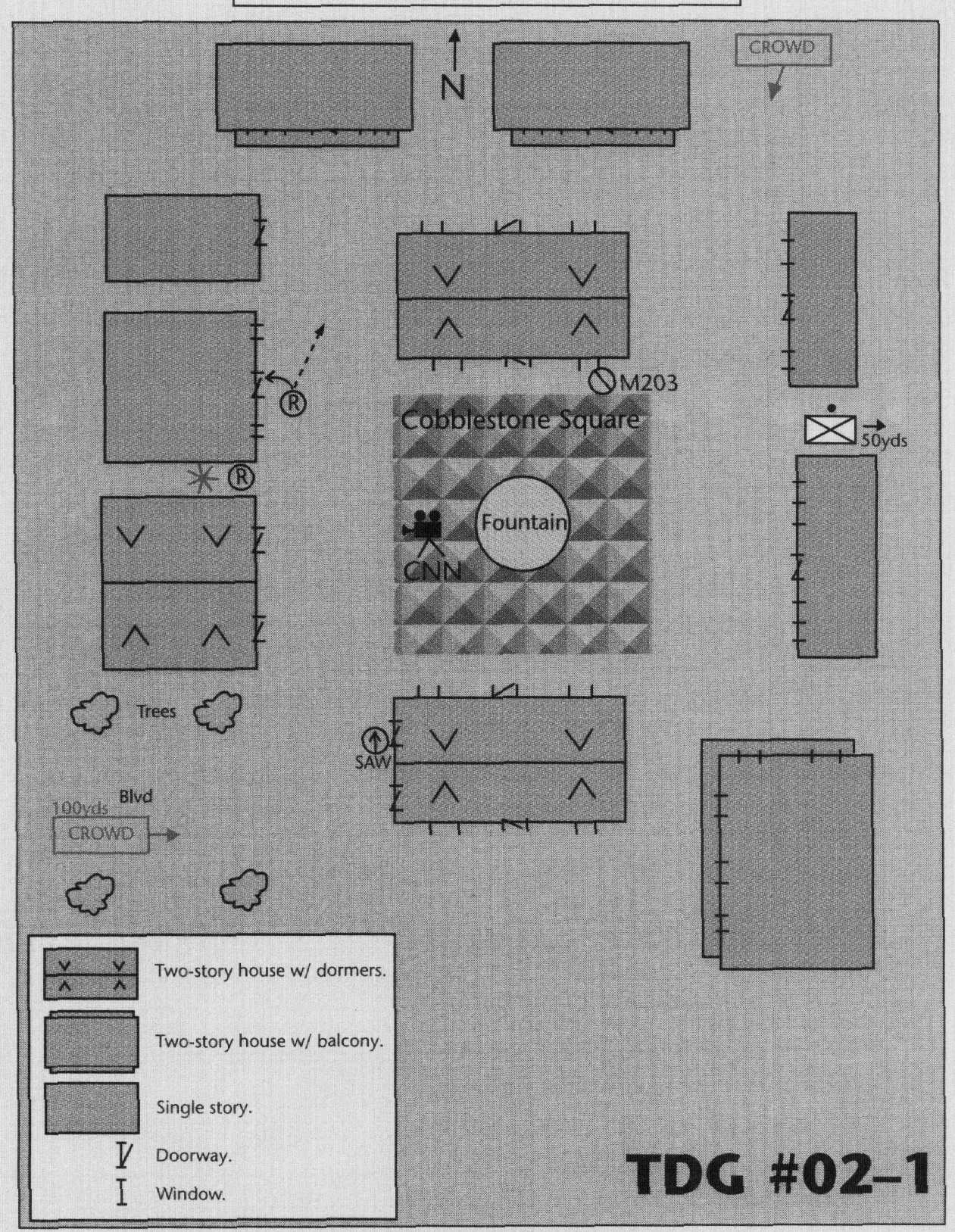
Your fire team is on a peacekeeping assignment in a civil war torn country where a shaky cease-fire is only a few weeks old. Your duties have been a combination of patrolling village streets and community restoration and aid projects. You’re currently assigned to a village whose control was disputed by the contending parties in battle and now is part of tense, ongoing cease-fire negotiations. Marine presence, in any form, is resented in this village by one of the factions. Battalion intelligence believes there is such vehemence because the Marine presence has thwarted the efforts of this one faction to intimidate the opposition in the village into leaving and thereby gaining control for use as a card in the negotiations. While armed exchanges between the feuding groups and Marines have been few, the extensive use of mines and boobytraps during the civil war has meant that such weapons have continued to claim victims on all sides.

Presently, your fire team is on a sweep in the center of the village, which is characterized by debris strewn cobblestone streets, narrow alleyways, and stone buildings in various states of disrepair. The main square of the village is dominated by a large fountain. The square is used by all as a local market. The village’s factional majority has also taken to using the square as a gathering point for its bands to vocalize their dislike of Marines. Such gatherings are not forbidden by your rules of engagement if conducted peacefully and without arms. Trailing your patrol throughout the day, of its own accord, is a U.S. news crew from CNN.

Your fire team has just arrived in the square. In addition to your standard weapons, you have five rounds of tear gas for the M203 (40mm grenade launcher) and a radio that links you to your squad leader and platoon leader. The remainder of your squad on the patrol is located to the east some 50 to 75 yards away. Suddenly, close by, there is a small explosion. You turn and see a cloud of dust to your left rear. A scream of pain reaches your ears. “Johnson tripped a boobytrap in the alleyway.” Immediately the film crew is in action close at hand. You glance quickly over your shoulder to check your front and see villagers, some of them women, marching toward the square. Two men are armed with bolt-action rifles. “Corporal, I’ve got a dozen plus people heading toward me from the west, maybe 100 yards out. They don’t look happy. They’re chanting something, and they have banners with ‘U.S. and Marines Out,'” barks your automatic rifleman. Just then a burst of M16 fire erupts to your left. “Sniper on the balcony to your front!” You see Martinez dive for an open doorway.

What now, Corporal?

Requirement

In a time limit of 30 seconds issue any orders/reports you might make. Provide a sketch of your actions and the rationale behind them. Submit your solution to Marine Corps Gazette, TDG #02-1, P.O. Box 1775, Quantico, VA 22134, fax 703-630-9147, or e-mail <[email protected]>.

Evacuate the Embassy! Friction on the stage

By 1stLt Albano Santiago Luayza, Argentine Marine Corps

You are the company commander of Echo Company, 2d Battalion, 6th Marines. Your company is at its table of organization strength, and it is part of a Marine expeditionary unit (MEU).

As a consequence of recent terrorist attacks against the United States, U.S. forces are being deployed to the theater of operations. An initial attempt to evacuate U.S. Embassy personnel ended in failure when paramilitary forces with ties to several terrorist organizations were able to attack the airfield. They destroyed three commercial aircraft, destroyed the control tower, and damaged several adjacent hangers. During their attack four embassy personnel were seriously wounded. One Marine from the security guard detachment was killed and two were slightly wounded. All personnel were able to get back to the embassy compound.

The MEU has been diverted and instructed to evacuate embassy personnel. The MEU commander’s initial guidance stressed the neutralization of existing enemy antiair assets. Damage to civilian property is to be kept to a minimum.

From intelligence reports you know that:

* While enemy antiair assets have been diminished, he still possesses some antiair capability and can take advantage of the good observation and fields of fire that the higher buildings provide over the embassy.

* The enemy deployed at least two more heavy machineguns (HMGs) into the area.

* The enemy is supposed to have an undetermined number of antiair missile launchers. These are fireand-forget systems.

* Enemy forces have been seen deploying east of the embassy.

* There’s been strong sniper activity. Two more embassy Marines were slightly injured.

* A big demonstration is taking place at the Embassy’s north gate.

* There are 36 people in the embassy including the survivors of the first raid.

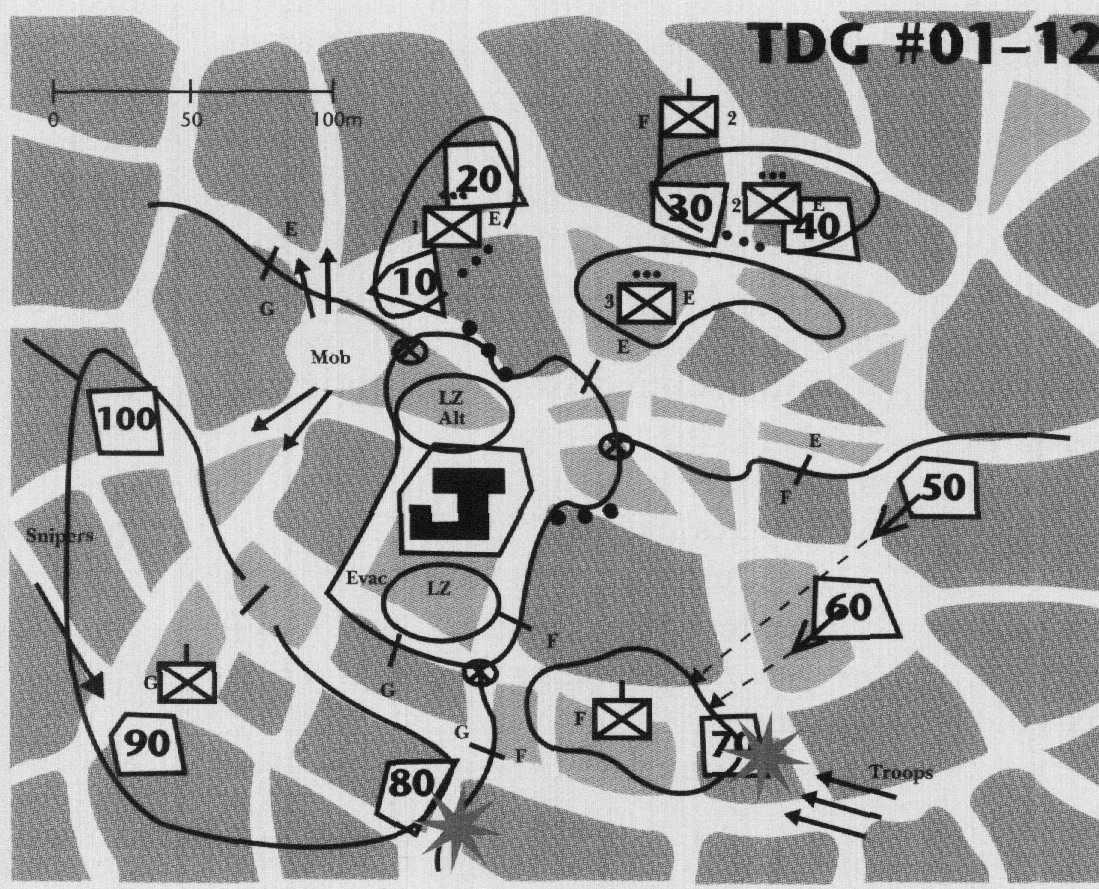
Your company is part of the security element and along with Fox and Golf Companies began the helilift at 0445. You are now nearing the objective. It’s 0500 and the 500-year-old city lays in front of you totally obscured. The embassy is located in the city center. The wavy street pattern reminds you of a spider’s web. The tallest buildings are three- to four-stories high, and they appear to emerge from a sea of small mud houses and green spaces.

At 0530 your company lands and secures the objective with minor enemy resistance and no casualties. Platoon commanders report the destruction of two HMGs and the capture of some prisoners and weapons-six soldiers, a sniper, and one Stinger antiair missile launcher. Suddenly, you hear small arms fighting about 200 meters south.

Suddenly, the Fox Company commander reports that heavy enemy resistance has forced him to land in his alternate landing zone. You can see muzzle flashes and tracers from enemy HMGs being fired from sectors 50 and 60 toward the area where Fox Company is deployed.

The Golf Company commander reports having secured his objective with no casualties but is now receiving heavy enemy fire from the southeast and sniper fire from the west. He says he has seen enemy soldiers jumping from trucks and rushing into the small houses and moving toward Fox Company.

You stop a minute and think. Fox Company reports he is decisively engaged and “mission accomplishment impossible at this time.” Civilians that were standing at the Embassy’s north gate start running to the north and northwest, trying to escape from the fighting. At the same time you hear your commander’s voice on the radio saying that he’ll arrive with the evacuation element 4 minutes later than scheduled. That leaves the security element 14 minutes to accomplish its mission.

Now what, Commander?

Requirement

In a time limit of 2 minutes, describe the actions you will take and the instructions you will give to your subordinates. Provide an overlay and give a brief explanation of the rationale behind your plan. Submit your solution to Marine Corps Gazette, TDG #01-12, P.O. Box 1775, Quantico, VA 22134, fax 703-630-9147, or e-mail <gazette @mca-marines.org>.

Out on Patrol

By Maj Terry Branstetter

General

A special purpose Marine airground task force (SPMAGTF) has been deployed to the coastal region of Southlandia to take an active role in America’s war on drugs. The coastal plain of Southlandia is tropical with thick vegetation. Rivers are the major means of transportation and communication. On these rivers, narcotics traffickers transport their products from inland camps, where the drugs are manufactured, to the coast where they are exported by sea and air.

The narcotics traffickers in Southlandia have been growing more and more technical in their means of producing and exporting. Manufacturing locations are small, widely dispersed camps that move frequently and, apparently, randomly. While some drugs are driven and some flown from the inland, most are transported via river to the coastal area where ocean and air transportation are more readily available. There are even rumors that submarines may be employed to ship drugs. The SPMAGTF is based at a small airbase near the third largest village in the province. The command element is augmented with several provincial police, a liaison officer from the U.S. Coast Guard, and a detachment from the U.S. Drug Enforcement Agency. The SPMAGTF is part of a Marine Corps led joint task force located in Southlandia’s capital. The MAGTF is composed of an aviation combat element built around four CH-53Es. The ground combat element (GCE) consists of a lightly equipped infantry battalion and a detachment from the division’s small craft company. Companies conduct operations along the Pacora and Chepo rivers. The combat service support element provides general support to the MAGTF and provides direct support to the GCE in the form of one forward logistics base supporting riverine operations along the Chepo.

Situation

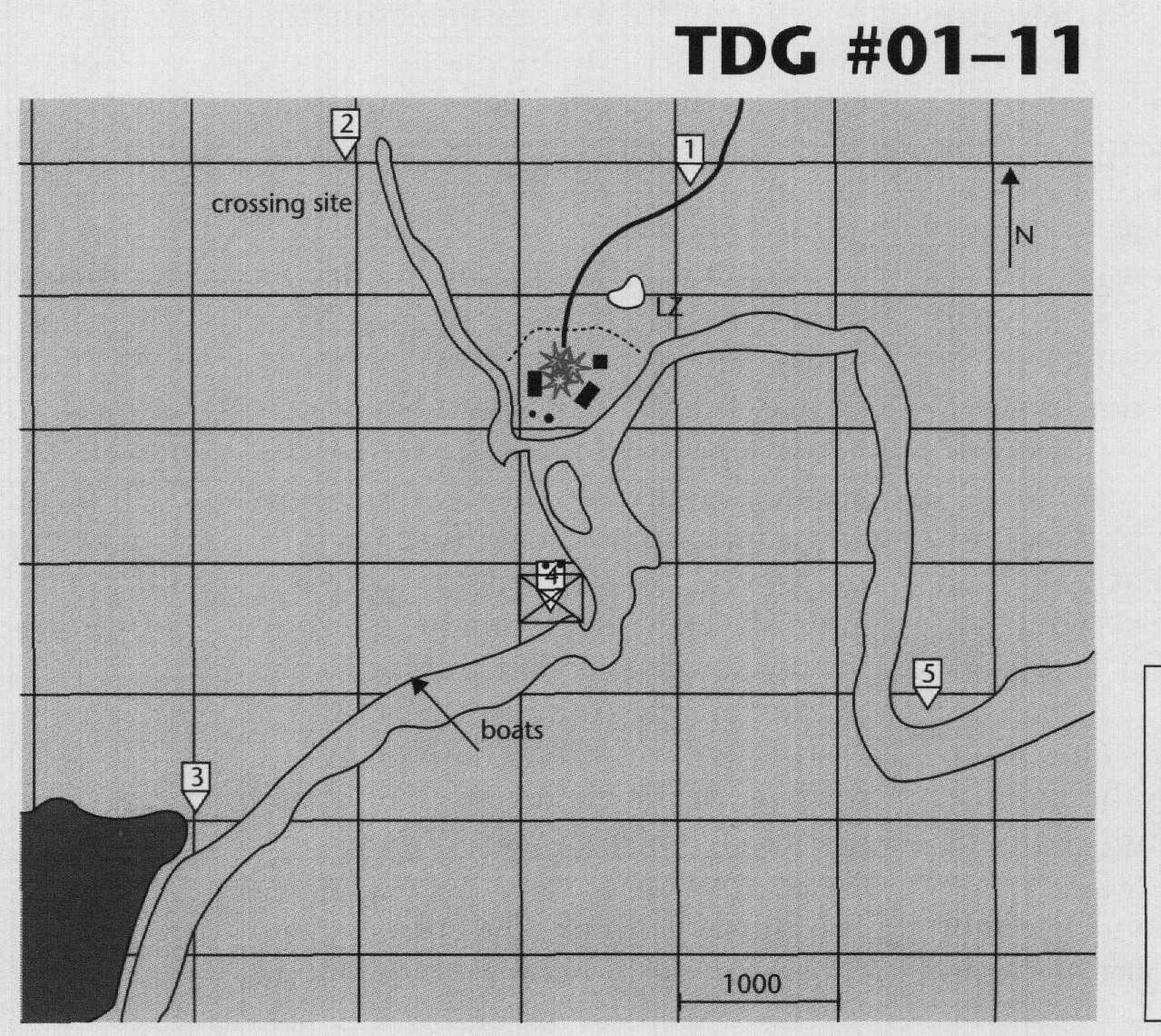
You are a squad leader conducting a security patrol along the Chepo River. The remainder of your platoon is located at the base camp, having just returned from operations up river. The rest of the company is operating on the east side of the river and with small craft (two riverine assault craft and six rigid raider craft) on the river to the south.

Your patrol was inserted by boat near checkpoint 5 (CP 5). From there you moved through the thick, 10-foot high vegetation to CP 1, then to CP 2. As you moved southeast from CP 2 to CP 4, you noticed what looked like a crossing site. You decided that you would report it during your next radio call at the top of the hour. On reaching CP 4, you post security and take 10. While finishing your second canteen, you hear gunfire to the north. You radio back to the base camp, occupied by the rest of your platoon and the combat service support detachment; you get no answer. As the firing intensifies, you are convinced that the base camp is under attack.

As you pull in your men to issue a frag order, you find out that one of them has spotted what looks like two boats a few hundred meters down river. What is your frag order?

Requirement

In a time limit of 2 minutes, issue your orders to your squad. Provide a brief rationale for your actions and a sketch of your plan. Submit your solution to Marine Corps Gazette, TDG #01-11, P.O. Box 1775, Quantico, VA 22134, fax 703-630-9147, or e-mail <[email protected]>.