The Floating Forward Operating Base MEU

A blueprint for the Marine Corps of 2035

Executive Summary
The MEU of 2035 must evolve to remain relevant in the face of precision-strike threats, ubiquitous surveillance, and rapid technological change. This essay proposes the Floating Forward Operating Base MEU (F-FOB MEU), a modular, distributed, and adaptive force dispersed across a swarm of manned, unmanned, and hybrid platforms. The F-FOB MEU is survivable by dispersal, lethal by integration, and persistent by design. Leveraging autonomy, commercial innovation, and resilient command, the F-FOB MEU positions the Marine Corps for dominance in the contested maritime battlespace of 2035 and beyond.

Introduction
Since the end of the Cold War, the MEU embarked on a three-ship Amphibious Ready Group (ARG) has served as America’s forward-deployed, fast-response, flexible tool for power projection and crisis management. The Marine Corps’ adaptability, combined-arms prowess, and ability to kick down the door anywhere on earth have made it a global standard for expeditionary warfare.

Yet, as the United States faces new threats, peer competition, rapid technological change, and battlespaces saturated by unmanned systems and precision weapons, the traditional ARG/MEU may soon become too vulnerable, too predictable, and too limited to dominate future conflict. The 2035 security environment will demand a radical new approach: one that distributes risk, leverages autonomy, and exploits both commercial and military innovation.

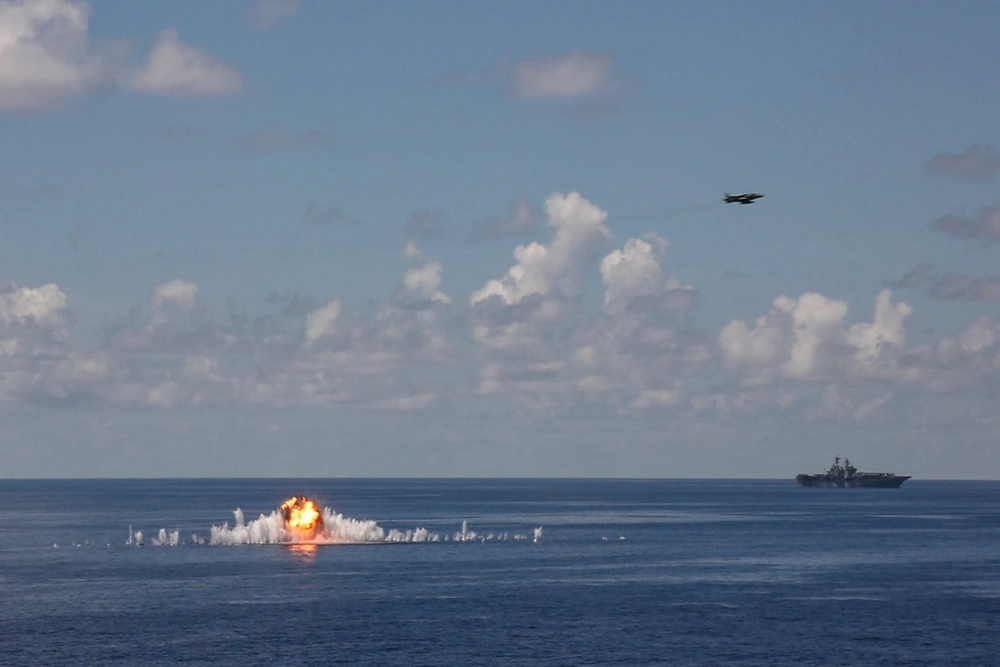
This article presents a bold proposal: the FFOB MEU. This concept disperses Marine combat power, logistics, and command across a floating archipelago of manned, unmanned, and hybrid platforms. Persistent, unpredictable, and modular, the FFOB MEU is not merely an update of the old playbook but a blueprint for Marine relevance and dominance in the next era of maritime warfare.

The Imperative for Change
The Threat Environment of 2035
By 2035, America’s adversaries will have weaponized transparency and precision at sea. China, Russia, and even technologically advanced regional actors will field vast networks of satellites, over-the-horizon radars, persistent ISR drones, and long-range precision missiles. Massed anti-ship cruise and ballistic missiles, cybertools, and sophisticated electronic warfare will make any large, slow, and predictable naval force a target.

Peer competitors will pursue a strategy of high-end denial, making littoral and even blue water zones lethal to U.S. ships and aircraft. The old ARG model, with a big-deck amphibian LPD (Landing Platform, Deck), and a third connector vessel sailing in formation, will likely struggle to survive or operate with freedom of maneuver.

The Technology Revolution
Conversely, rapid advances in autonomy, artificial intelligence (AI), additive manufacturing (3D/4D printing), and commercial shipping are offering new tools for military adaptation. Swarms of unmanned vehicles, on, above, and below the water, can now deliver intelligence, surveillance, and reconnaissance (ISR), strike, deception,andlogistics. Commercial off-the-shelf (COTS)  container ships and barges can be quickly converted into launch platforms, sensor nodes, or floating depots. Secure cloud networking and edge computing are making distributed command and control (C2) a reality.

The Marine Corps of 2035 must harness these tools, dispersing risk and reaping the benefits of autonomy, modularity, and resilience. The F-FOB MEU is the way forward.

The F-FOB MEU: Core Concept
Imagine a MEU not as three tightly grouped warships but as a distributed, adaptive floating archipelago spanning hundreds of miles at sea. This network is composed of a mix of manned, optionally-manned, and unmanned platforms, large unmanned surface vessels (LUSVs), Expeditionary Fast Transports, converted container ships, autonomous barges, and submersibles, each carrying a tailored package of Marines, sensors, weapons, and supplies.

The F-FOB MEU can rapidly regroup, disperse, or reconfigure, denying adversaries the ability to find and fix the force. It becomes a persistent, unpredictable presence, a living system that is survivable by distribution, lethal by integration, and sustainable by design.

How the F-FOB MEU Works
The Platform Swarm

The back bone of the F-FOB MEU is its swarm of platforms:

  • Manned Nodes: A small number of warships and manned transports act as command hubs, C2 nodes, and staging areas for Marines and specialized equipment.
  • Unmanned Surface/Subsurface Vessels: LUSVs and unmanned underwater vehicles act as mobile launchers for missiles, decoys, ISR drones, and logistics containers.
  • Commercial Conversions: COTS cargo ships and tankers can be quickly fitted with modular containers for medical, engineering, supply, or fires roles.
  • Autonomous Barges/Submersibles: These pop up for resupply, then vanish below the surface or scatter to reduce vulnerability.

Each platform carries modular payload pods, missiles, loitering munitions, sensors, small unmanned aerial vehicles, or even additive manufacturing printers for on-demand parts.

Distributed Prepositioning and Pop-Up Basing
Rather than relying on vulnerable supply convoys, the F-FOB MEU prepositions critical supplies, munitions, and equipment across the platform swarm and in autonomous underwater or afloat storage modules. Marines can establish expeditionary advanced bases (EABs) ashore or afloat at the point of need, supplied by unmanned connectors and tiltrotor aircraft. When necessary, these EABs can relocate in hours, keeping the enemy off-balance.

Persistent ISR and Fires
Hundreds of expendables, networked drones, surface, subsurface, and aerial, provide continuous ISR, jamming, deception, and kinetic/non-kinetic fires. Marines access a digital fires grid, allowing them to cue effects from any platform across the archipelago. This persistent ISR/fires mesh creates a cloud of awareness and influence over the battlespace.

Distributed, Virtualized Command Element
The F-FOB MEU C2 is inherently distributed. The command element is split among afloat, ashore, and cloud-based nodes, each linked by quantum-secure, multi-redundant comms. Key functions, fires, logistics, and information operations can be provided by reach-back from CONUS or secure allied locations. This approach minimizes risk to senior leaders and ensures continuity of operations even if nodes are disrupted.

Civil-Military and Partner Integration
Because much of the F-FOB MEU relies on modular, commercial platforms, the force can scale up or down rapidly for humanitarian relief, embassy security, partner training, or major combat operations. Civilian-military hybrid ships, containerized hospitals, and modular engineering pods make the force truly versatile.

Operational Advantages
Resilience by Distribution
The F-FOB MEU has no golden goose. Losing a single node or even a handful of platforms is a tactical setback, not a strategic defeat. The distributed mesh is inherently robust; if one node is hit, others adapt, reposition, or take over its function.

Unpredictability and Adaptability
A constantly moving, modular archipelago confounds enemy targeting and tracking. The F-FOB MEU can have mass effects at a chosen point, disperse when under threat, or reposition to exploit gaps. Pop-up EABs, autonomous logistics nodes, and unmanned decoys further complicate the adversary’s decision making.

Lethality by Integration
By blending manned and unmanned assets, Marines can mass fires, ISR, and EW from any direction, overwhelming enemy defenses and enabling first-mover advantage. The ability to launch synchronized, multi-domain attacks, including kinetic, electronic, and informational, from a distributed force, is a game-changer.

Endurance and Sustainability
With additive manufacturing, distributed prepositioning, and autonomous resupply, the F-FOB MEU can operate for weeks or months in contested areas without major traditional supply lines. Persistent ISR and virtualized C2 further enable continuous around-the-clock operations.

Mission Essential Tasks for the F-FOB MEU
To meet the future, the F-FOB MEU must be proficient in:

  • All-Domain Distributed Operations: Coordinating, fighting, and sustaining in the maritime, littoral, air, space, and cyber domains.
  • Dynamic Expeditionary Basing: Rapidly establishing, relocating, and defending temporary bases afloat or ashore.
  • Persistent ISR and Precision Fires: Maintaining an integrated grid of sensors and shooters, leveraging AI for speed and mass.
  • Rapid Crisis Response: Agilely deploying for humanitarian, partner, embassy, or major combat operations at global speed.
  • Civil-Military Operations: Integrating with civilian, allied, and partner assets for logistics, sustainment, and influence.
  • Resilient C2 and Information Operations: Surviving, adapting, and fighting in the information domain, as well as the physical.

Risks, Mitigation, and Implementation
Risks

  • C2 Complexity: Managing distributed operations requires new comms tech, robust battle management AI, and flexible leaders.
  • Technology Vulnerability: Over-reliance on autonomy and networks must be balanced by hybrid manned-unmanned control and backup systems.
  • Logistics Disruption: Autonomous resupply and pop-up storage must be hardened against cyber, kinetic, and electronic attack.
  • Cultural Resistance: The F-FOB MEU demands new doctrine, training, and mindsets, embracing experimentation, failure, and innovation.

Mitigation

  • Redundant Mesh Networking: Quantum-secure, AI-managed comms keep C2 alive even under attack.
  • Hybrid Manning and Cross-Training: Manned nodes oversee critical functions; Marines train in unmanned ops, rapid adaptation, and cloud C2.
  • Incremental Fielding: Pilot units test and refine F-FOB MEU tactics, techniques, and procedures alongside legacy ARGs.
  • Wargaming and Exercises: Aggressively red-team and challenge the concept against peer threats, evolving the model continuously.

Implementation Path

  • Experimental Unit: Stand up a MEU detachment blending Navy, Marines, industry, and academic partners to prototype the F-FOB approach.
  • Leverage Commercial Innovation: Tap the private sector for COTS platforms, modular payloads, and cloud-based C2.
  • Rapid Iteration: Use lessons learned to scale the model, transitioning from pilot to fleet-wide adoption over a decade.

The Vision Realized
In 2035, the F-FOB MEU is not a fantasy, but a logical extension of current Marine innovation:

  • Unmanned systems and autonomous logistics are rapidly maturing.
  • Navy unmanned surface/subsurface vessels are being fielded now.
  • Expeditionary Advanced Base Operations, stand-in forces, and resilient distributed ops are part of the Corps’ emerging doctrine.
  • Additive manufacturing and containerized payloads are no longer science fiction.

A crisis erupts in the Indo-Pacific. The F-FOB MEU deploys as a living archipelago, hundreds of miles wide. ISR drones saturate the battlespace. Pop-up EABs enable Marines to surge at critical points, then melt away. Autonomous logistics keeps the force supplied. The enemy—overwhelmed by false signatures, networked fires, and unpredictable movement—is forced to react to the MEU’s tempo.

This is not just a new way of fighting, but a new way of thinking, one that marries Marine adaptability with the logic of networks, autonomy, and resilience.

Conclusion
The threats and opportunities of 2035 demand that the Marine Corps move beyond the classic three-ship ARG. The F-FOB MEU is a bold, feasible, and future-proof solution, maximizing survivability, adaptability, and lethality in the most contested maritime regions.

By embracing distributed, modular, and autonomous platforms, leveraging commercial technology, and fostering a culture of relentless innovation, the Marine Corps will remain America’s crisis response force; relevant, ready, and dominant, no matter how the world changes.

The F-FOB MEU is more than a concept. It is the next chapter in the storied legacy of the United States Marines.

>LtCol Papay was the Commanding Officer of VMFA(AW)-533, an F/A-18D Hornet squadron stationed at MCAS Beaufort, SC. His career as a Marine Aviator spanned almost 22 years, logging 198 combat missions and over 5,000 flight hours in the F-4 Phantom and F/A-18 Hornet.
 

Forward, Flexible, Formidable, and Relevant

Today’s Amphibious Ready Group/Marine Expeditionary Unit

Since its inception, the MEU has embarked on an Amphibious Ready Group (ARG) and continues to serve as the preeminent example of the contribution of the Navy-Marine Corps Team to national security. An inherently versatile, agile, and persistent formation, the ARG/MEU is the most responsive and flexible expeditionary power projection option the Navy and Marine Corps can provide the Joint Force. As the Nation’s premier forward-deployed crisis response force, ARG/MEUs provide scalable and rapidly responsive modern combat power in competition, crisis, and contingency, all from sovereign, afloat U.S. territory. As great-power competition, rapid technological change, and instability in the global littorals threaten U.S. interests at home and abroad, the ARG/MEU offers the right tool for the Joint Force during highly complex and dangerous times, following in the footsteps of its highly successful predecessors and bridging to future emerging capabilities as the character of war rapidly changes. This article explains how the current ARG/MEU contributes to homeland defense, deters Chinese coercion, and enables effective burden-sharing among our allies and partners. 

The Strategic Environment
Today’s strategic environment poses multiple threats and demands a correspondingly diverse range of solutions for national leaders. Most acutely and for the foreseeable future, China presents a pervasive danger. The Chinese Communist Party’s military modernization, coercive behavior in Southeast Asia, and expansion of overseas military infrastructure threaten U.S., ally, and partner security and prosperity throughout the Indo-Pacific region. China also presents an increasingly global threat. Xi Jinping’s Belt and Road Initiative has laid the framework for China to project force not just throughout Asia but across the sea to Africa, the Middle East, and Europe. Such efforts are designed to challenge U.S. interests globally and at multiple levels. For example, China’s vast illegal fishing vessels operate throughout the Indo-Pacific and as far as South America and Africa, including recently engaging in violent confrontation with the Argentinian military. These gray-zone activities are used to influence and control vulnerable nations through coercion and demand a U.S. presence to counter. 

As the United States addresses the Chinese Communist Party’s military ambitions, it cannot ignore other threats to U.S. security. Russia’s continued pursuit of its war of aggression in Ukraine underscores its willingness to recklessly undermine European security, including ignoring international borders and indiscriminately attacking civilians. North Korea remains a persistent threat to allies, partners, and the U.S. homeland. In the Middle East, Iranian support of terrorist organizations and proxy groups endangers freedom of commerce in global maritime chokepoints as well as the safety of our citizens and those of our allies and partners. Meanwhile, terrorist groups—some with the capability and intent to attack the United States—destabilize key terrain in multiple regions. 

The proliferation of advanced weapons systems further complicates these regional threats, lowering the bar for entry into modern lethality. Long-range precision weapons, including unmanned systems, expose easily identifiable landbased facilities to new and frequently asymmetric dangers. Cyber and open-source data collection make it increasingly difficult to conceal forces or strike with impunity. 

Agile, Responsive, and Modern
The MAGTF construct, with the organic maritime mobility and sustainment offered by amphibious warfare ships, and the increased lethality provided to our Marines by Force Design, meaningfully meets the demands of our challenging operating environment. Optimized for rapid operational maneuver, versatile employment, and self-sustainment, ARG/MEUs offer a balanced and scalable combined-arms formation that can easily integrate with or support other joint formations. 

The Marine Corps has a Title 10 responsibility to man, train, and equip its forces to fulfill the requirements of combatant commanders. Consistent among these requirements has been the demand signal for continuous ARG/MEU presence. A 3.0 ARG/MEU—
defined as heel-to-toe deployments from the East and West Coast and regular patrols by forward-deployed Naval forces in Japan—is the first step toward meeting the combatant commanders registered, Joint Staff-validated requirements for a 5.0 presence. 

The three-ship ARG provides the optimal structure for the full MEU mission set needed to meet these demands. Embarked on a three-ship ARG, a MEU is a self-sustaining MAGTF that provides the Joint Force with a formation that can conduct unilateral operations across the full range of military operations. Able to move rapidly to and loiter near theater hot spots, these inherently multi-domain formations offer national leadership a full array of sovereign options, including expeditionary strike, sea denial, seizure of advanced naval bases, raids, embassy reinforcement, and non-combatant evacuations. Unlike landbased or rapid-response formations reliant on strategic air mobility, an ARG/MEU operates with reduced requirements for logistical support and access, basing, and overflight. 

The ARG/MEUs can also serve as a force multiplier or provide additional capacity for missions that have, in recent years, been tasked to special operations forces (SOF), including strikes, raids, and non-combatant evacuation. The ARG/MEUs possess the capability to handle conventional crisis response tasks, reducing the burden on SOF. Additionally, the ARG/MEU employs unique capabilities to enhance SOF operations, including long-range sensing and strike, all from an over-the-horizon platform not reliant on access, basing, and overflight. 

Today’s ARG/MEUs benefit from recent modernization, deploying to the joint and combined battlefield with multi-domain sensing and reconnaissance, fifth-generation aircraft, long-range precision fires, and a range of unmanned and counter-unmanned systems. They enable Joint Force operations through advanced command and control and embedded intelligence, surveillance, and reconnaissance, and can conduct strikes into contested environments. A force always on patrol, they are experts at enabling the advanced joint systems and those of our most capable U.S. allies and partners, including nations in NATO, Australia, and East Asia. Such interoperability aligns with current strategic guidance stressing burden-sharing with allies and partners, a framework in which the United States will commit only critical but limited resources to lower-priority regions. 

Most importantly, ARG/MEUs serve as the leading edge of larger MAGTFs. They can reach back to the growing lethality of their parent MEFs or laterally within the MAGTF to the unique capabilities of the Marine Littoral Regiments. So, although ARG/MEUs operate forward, they leverage the full weight of the MEFs as a crisis builds toward conflict. This combination takes a modern and aggressive approach to winning in the littorals. Linking its ship-to-shore capabilities, long-range sensing and fires, and organic aviation with other weapons and sensors designed for denial, the ARG/MEU can impose dilemmas on adversaries seeking to set the theater against the Joint Force or dominate the maritime commons and increase the resolve of allies and partners that can share regional security burdens. The ARG/MEU could enable Joint Force operations against lower-tier threats or steal a march on a peer threat escalating toward conflict and set the theater for larger, more strategic lift-dependent, decisive operations. In economic warfare, this could include controlling key maritime chokepoints, holding at risk adversary forces, and commerce. Overall, only the ARG/MEU can offer the Joint Force this same degree of mobility, sustainment, and range of capabilities.

The ARG/MEU in Action
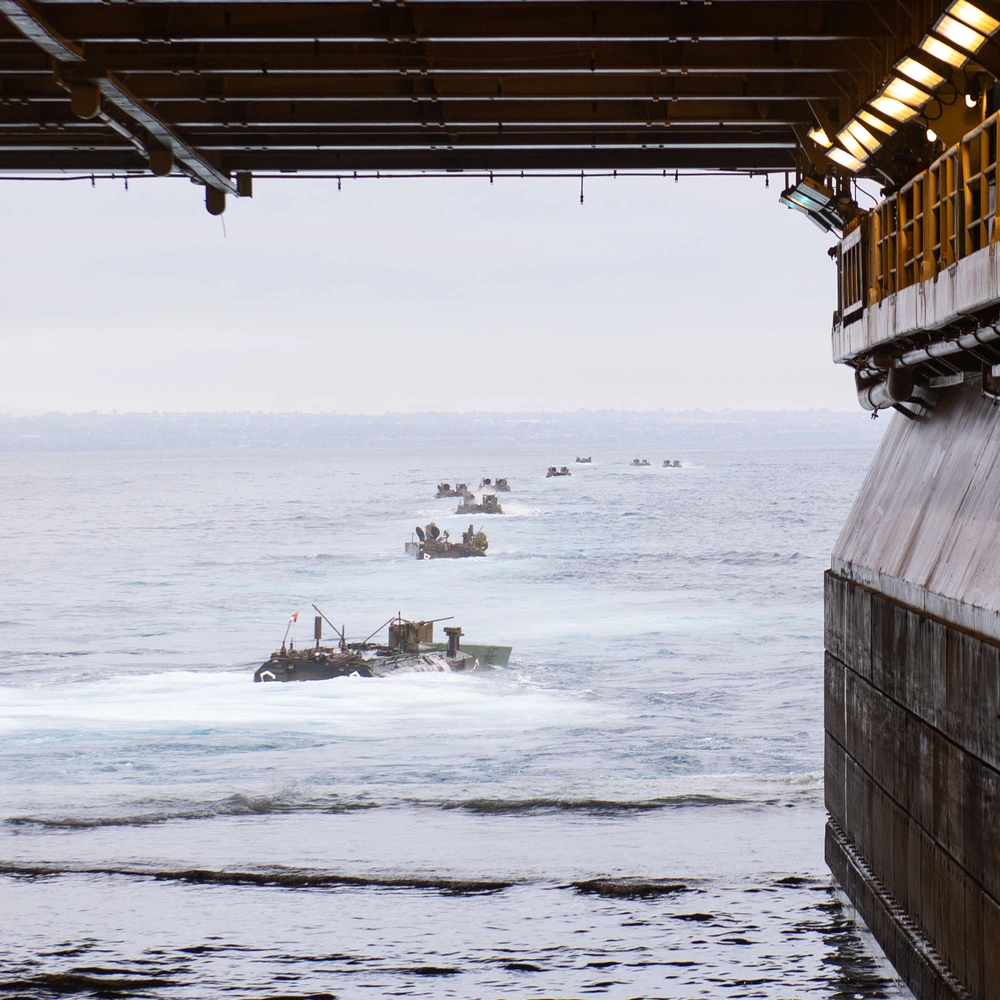
In recent years, the ARG/MEU has demonstrated the relevance of its inherent advantages and new capabilities, most prominently in the Indo-Pacific. From the 31st MEU’s amphibious operations in the Solomon Islands to the 15th MEU’s use of the Amphibious Combat Vehicle and cooperation with the Australian Army, to the 13th MEU’s integration of sensing from expeditionary advanced bases in the Philippines, the MEU has implemented the logic of Force Design using existing platforms and capabilities. The 13th MEU also projected sensing expeditionary advanced bases on four occasions, demonstrating an enhanced MEU mission, born from Force Design. 

The impact of the ARG/MEU in the Indo-Pacific has gone beyond modernization to include dramatic gains in interoperability with the Joint Force and key allies and partners. The ARG/MEUs in the Indo-Pacific regularly lead efforts to develop MAGTFs into a potent joint and combined enabler, detecting threats and passing targeting data from any sensor to any shooter, all while incorporating the capabilities of our allies and partners. During recent exercises like KAMANDAG, BALIKATAN, TALISMAN SABER, and IRON FIST, ARG/MEUs rehearsed coalition operations, clearly demonstrating the interoperability needed to deter aggression by China. In 2023, the USS America ARG and the 31st MEU participated in TALISMAN SABER, embarking troops from Australia, Germany, Indonesia, Japan, South Korea, and the UK before rapidly responding to a disaster relief mission after the eruption of Mount Bagana in Papua New Guinea. In 2024, the USS Boxer ARG and the 15th MEU exercised with the Republic of Korea, the Philippines, and Japan, on the doorstep of China’s anti-access/area- denial systems. This ARG/MEU also integrated the USS Miguel Keith Expeditionary Support Base into MEU exercises and assisted in the disaster response following Typhoon Krathon in the Philippines, providing aid to remote locations throughout the archipelago. This year, the 31st MEU is afloat again operating in the Coral Sea. 

The impact of the ARG/MEU expands beyond the Indo-Pacific. During the Gaza and Iran contingencies, the 26th MEU provided crisis response options in the CENTCOM area of responsibility. Earlier, the 24th MEU supported Sixth Fleet maritime operations and was postured for non-combatant evacuation operations during the Israel-Lebanon conflict. In EUCOM, ARG/MEUs provide the fleet commander with a purpose-built capability designed to respond to crises across multiple combatant commands through maritime, multidomain reconnaissance constructs and activities. In 2022, Exercise NORTHERN VIKING integrated Marines and sailors from the USS Kearsarge ARG and 22nd MEU, the 22nd Naval Construction Regiment, and Navy P-8 Poseidon aircraft, with German, Norwegian, and French warships, United Kingdom Royal Marines, and the Icelandic Coast Guard into a coherent and capable unit. Exercises like these enable burden sharing by ensuring interoperability with our most willing and capable security partners. 

The ARG/MEUs also provide key capabilities to the Joint Force during times of crisis. In 2017, the 11th MEU provided its artillery unit to support SOF in Syria during Operation INHERENT RESOLVE, firing more rounds in combat than any other U.S. artillery unit since the Vietnam War. In 2020 and 2021, the 15th MEU and the USS Makin Island ARG executed amphibious withdrawals to reposition U.S. forces around Somalia while maintaining pressure on violent extremists and enabling partnered forces as part of Operation OCTAVE QUARTZ. And as recently as August of this year, the 22nd MEU supported forward homeland defense operations in the SOUTHCOM area of responsibility, showing the significant operational flexibility of this formation. The ARG/MEUs afloat also provide multi-domain sensing operations in support of the Joint Force through its intelligence enablers and embarked reconnaissance capabilities which are frequently employed to capacity while underway. These examples not only demonstrate the agility and capability of the ARG/MEU but also its unique value proposition: a flexible forward-deployed force, operationally relevant, with multi-domain capabilities. 

An Effective MEU Needs a Ready ARG
Today, a shortage of ready amphibious warfare ships precludes achieving the needed 3.0 ARG/MEU presence. In response, the Marine Corps has employed Special Purpose MAGTFs to fill the resulting gaps. While better than having no force available, this is a sub-optimal solution: lacking organic mobility and sustainment, and the flexibility of acting from a sovereign naval platform without the need for access, basing, or overflight permissions. This loss of mobility requires the MEU to use other Joint Force options and places additional stress on already limited strategic airlift assets. Finally, to be a true replacement for the MEU, an Special Purpose MAGTF requires additional resources to compensate for the loss of naval command and control systems—resources that are already in short supply and high demand for other military operations. 

Both the Navy and the defense industrial base have struggled in recent years to maintain AWS readiness and capacity. Today, leaders from both the Executive and Legislative branches recognize the national security risk of our dilapidated domestic maritime industrial base. Congress continually recognizes the need for AWS construction, and the President’s Restoring America’s Maritime Dominance Executive Order seeks to address shortfalls in commercial and military shipbuilding. Additionally, the bipartisan SHIPS Act, currently working its way through Congress, seeks to address maritime shipping shortfalls. The issues affecting our Nation’s maritime industrial base and the Navy’s maintenance, repair, and overhaul enterprise will not be fixed overnight. Greater long-term investment in AWS, in terms of both new construction and maintenance, would expand leaders’ options for employing MEUs to advance national interests while providing a reinvigorated energy to the American manufacturing sector.

Ready in Hours—Not Days
An ARG/MEU on patrol around the world is the ultimate expression of the Navy/Marine Corps Team and the global reach of U.S. military power. When disaster strikes or conflict brews, Marines must mobilize within hours—not days. From humanitarian assistance in the Philippines, to contingency response in the Eastern Mediterranean, to homeland defense operations in the Caribbean, the ARG/MEU remains the Joint Force’s premier crisis response force: America’s 911 Force. Whether operating independently or as part of an integrated naval expeditionary force, the MEU provides our national leadership and combatant commanders with scalable, mission-tailored, and combat credible forces that are persistently on-scene and contribute to deterrence, crisis response, power projection, and combat operations.

Amphibious forces are multi-domain by nature. We organize at every level for combined arms, fully integrating capabilities in such a way that if the enemy attempts to counteract one, they leave themselves vulnerable to another. Because of their inherent and unique versatility, flexibility, and speed, wherever amphibious forces go, they introduce uncertainty into the calculus of our adversary. We must continue to invest in amphibious capability to ensure consistent deployment of ARG/MEUs, a time-tested asset vital to national security. In competition and conflict alike, the ARG/MEU on amphibious ships remains first to fight—because when the Nation needs a flexible, lethal force in readiness, there is no substitute.