


“History in Motion”: Newly Digitized Film Collection Brings Marine Corps’ Past to Life
By: Abigail ColePosted on December 15, 2025
The theater aboard USS Yorktown (CV-10) at Patriots Point Naval & Maritime Museum in Mount Pleasant, S.C., went dark March 29, National Vietnam War Veterans Day. Archival films of the Vietnam War lit that darkness. In the audience, Medal of Honor recipient Major General James Livingston, USMC (Ret), and other Vietnam War veterans and families watched their shared history.
It was a remarkable opportunity to see their generation of Marines in action—and it’s an opportunity that is increasingly available to all Marines and their families, thanks to a partnership between the Marine Corps History Division and the University of South Carolina Libraries that is preserving and making public over a thousand hours of historic films from the Division’s archives.
The United States Marine Corps Film Repository is one of the most comprehensive archives of its kind, containing thousands of films that span the 20th century. Moving Image Research Collections (MIRC) at the University Libraries is actively in the process of digitizing the films and adding them to a free, search-able database that anyone can access.
The films bring to life the Marine Corps experience in a way that both allows veterans to re-engage with memories and helps their families and friends understand more fully what that experience was like.
MajGen Livingston knows firsthand about living with the memory of a battle that people at home can only ever imagine. He was awarded the Medal of Honor while serving as the commanding officer, Company E, in action against enemy forces in Dai Do, Quang Tri Province in the Republic of Vietnam, according to the award citation.
Livingston visited the MIRC last year to see where the U.S. Marine Corps Film Repository calls home. This wasn’t the first time he had come to see the collection, however. He made the trip to Columbia in 2017 for the ribbon-cutting of the new cold storage vault and digital scanning center that now holds the collection. The vault—both temperature and moisture controlled—is lined with shelves upon shelves of film canisters, each individually labeled and identified by carefully trained hands. At the time of the ribbon-cutting, few of the films had been digitized and even fewer were available to the public.
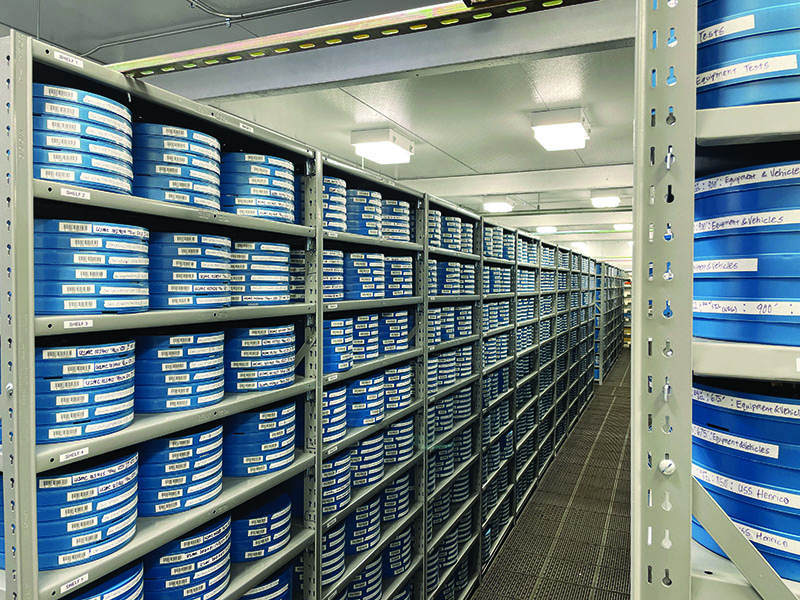
By his second visit in June 2025, thousands of films were available to be digitally sifted through, watched and enjoyed. No longer stuck in preservation-grade canisters, the films brought the history MajGen Livingston and his fellow Marines lived through back to life in front of his eyes. Beyond his own memories, he was able to access the shared endeavor that all Marines embrace when they earn the eagle, globe and anchor.
“The United States Marine Corps Film Collection is more than old films—it’s our history in motion,” he said. “It’s the story of courage and sacrifice told through the lens by those who lived it.”
The films came to the University of South Carolina Libraries when the Marine Corps University reached out to MIRC in 2015, with the goal of finding a permanent storage facility for the canisters, which had been housed at Quantico, Va., for generations. The Marine Corps University wanted to provide the materials with a state-of-the-art home, and the films to be preserved, digitized and shared with the wider community. MIRC’s expertise and experience with archival film made them an obvious choice for the vast collection.
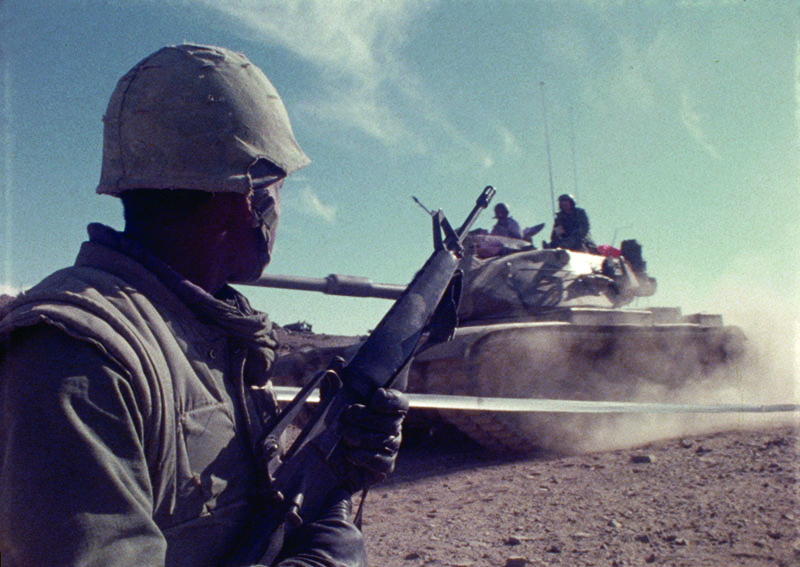
Left: A combat engineer looks on as an M-60 tank rumbles by during a training exercise at Twentynine Palms, Calif., in 1980.
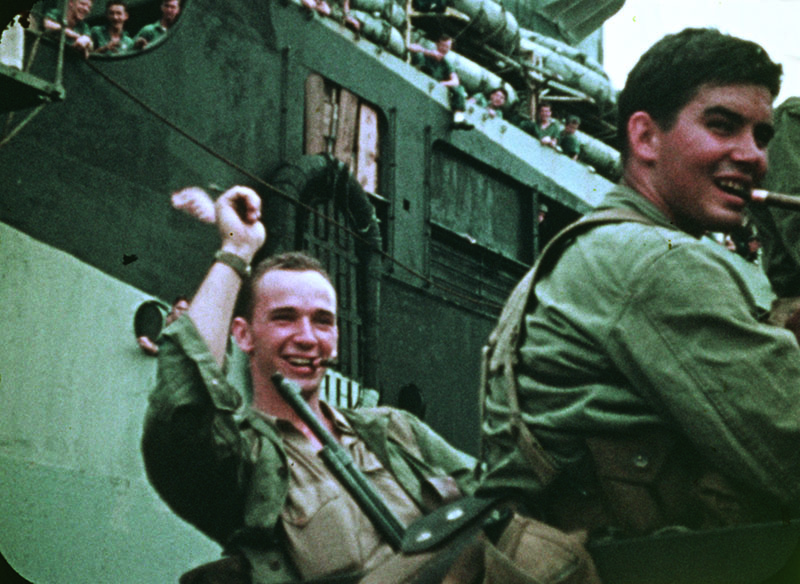
Center: Marines celebrate their return home from Iwo Jima in 1945.
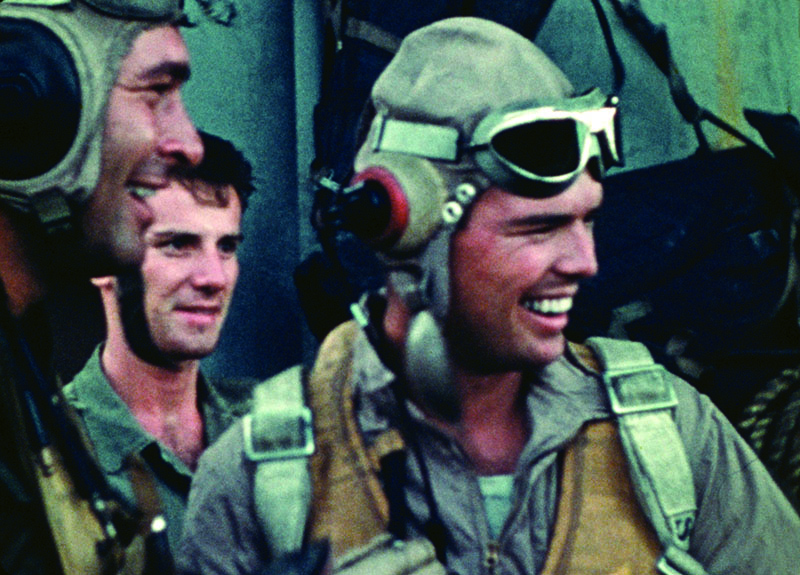
Right: Pilots from VMF-351 celebrate on the decks of USS Cape Gloucester (CVE-109) after a 1945 aerial victory.
USC Libraries’ ultimate task was, and is, to care for and conserve these films. In doing so, they hope to give the public an important piece of their collective history.
The collection captures more than just Vietnam footage. The United States Marine Corps Film Repository is one of the most comprehensive archives of Marine Corps footage in our nation, holding over 19,000 reels of 16 and 35 mm films dating from the 1910s through the 1980s. They document the operations of the Corps throughout the 20th century. Footage includes clips from World War II, the Korean War and the Vietnam War, giving viewers glimpses of what it was like on the front lines of battles that still live in public memory today.
Combat is just one of the many facets of Marine Corps life the films capture. The collection also contains peacetime films of training, testing and public relations activities. These films give detailed insight into the life of soldiers while they’re deployed, from the most routine daily activities to highly specialized training. Viewers see Marines laughing, cooking, joking around, training and conversing with each other as if they were at a barbeque back home.
In fact, one of the most important impacts of the films is the way they humanize our nation’s soldiers and bring them to the forefront of our minds, showing us who they were beyond the battles they fought. Seeing these films allows current and future generations to remember who these Marines were and what they fought for in a way that goes beyond learning about their sacrifice in the two-dimensional world of history books. Now, through USC Libraries’ efforts, the experiences of these American heroes are readily available to any scholar, researcher, student, veteran or casual viewer who wants to see this history for themselves.
While such a vast archive of films capturing several generations of Marine Corps life might seem to present an overwhelming amount of information to the typical viewer, the digital collection is maintained in a specifically organized and curated online platform that is freely available and searchable by the public. That makes it easy for viewers to approach the films in whatever way they’d like, whether it’s dipping in and out of the films at random, exploring a particular time period or researching specific information about a particular battle.
To make this possible, the films go through a multi-step process to conserve the fragile material and ensure they are readily available online, with keyword searching and easy identification on MIRC’s database.
Dr. Greg Wilsbacher, Curator of the U.S. Marine Corps Film Repository, oversees this process as well as the staff who operate it. Various staff members, students and even volunteers assist in conserving such a vast and significant piece of America’s past.
“Being stewards of the Marine Corps’ film heritage is a privilege for all of us in the University Libraries who work on the project—students, staff and volunteers,” said Wilsbacher. “Every day, we see the best of America on film, men and women who have committed themselves to the defense of the nation. Every day, we watch this history unfold in some distant corner of the world or on a base here at home. Every day, we are humbled by the personal sacrifices captured on film. Keeping this history alive and available for all is one way we can honor all Marines, past and present.”
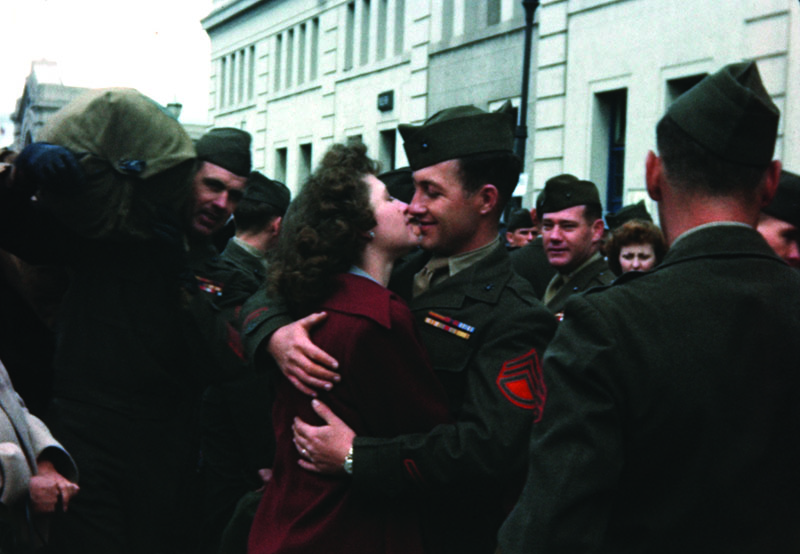
A screenshot from a film of Marines of 1stMarDiv as they are greeted by loved ones upon their arrival in San Francisco, Calif., March 5, 1951.
The processing of each film in the collection begins with an inspection by a careful hand on a film bench to check for and repair any damage that might have occurred to the reel. A protective film leader is added to the beginning and end of each reel to ensure no further damage occurs. Film technicians then assign a new inventory number to the reel and begin to gather basic information about the content of the film so that it can be described in the record. That information contains everything from general location and date, if available, to what can be seen going on in the film, and any other notable identifying information.
Once the film has been generally described and, if necessary, repaired, it is then moved to a preservation-grade film storage can where it gets a new label, barcode and other identifying features. The films are then placed into cold storage in the Lieutenant Colonel James H. Davis Film Vault, named to honor a University of South Carolina alumnus and family member of longtime library supporters Richard and Novelle Smith, who funded the vault.
When the films have been processed, they are ready for digitization. Staff bring the films to the John S. Davis Scanning Center, named after another Marine and South Carolina alumnus of the Smith family. There, they are scanned at 2K resolution. Staff create online streaming copies of the films before reviewing them in their entirety to be catalogued and described in as much detail as possible for the average viewer. Only then are the videos able to be placed online in a keyword-searchable database.
The thorough cataloging process ensures that films can be searched by location, time period, units or topics. If viewers want to see combat footage or public press relating to Iwo Jima, all they need to do is type it into the search bar and let the database retrieve the footage. If a viewer has a family member they know served in the 1st Marine Division, they can search unit specific footage without sifting through thousands of films.
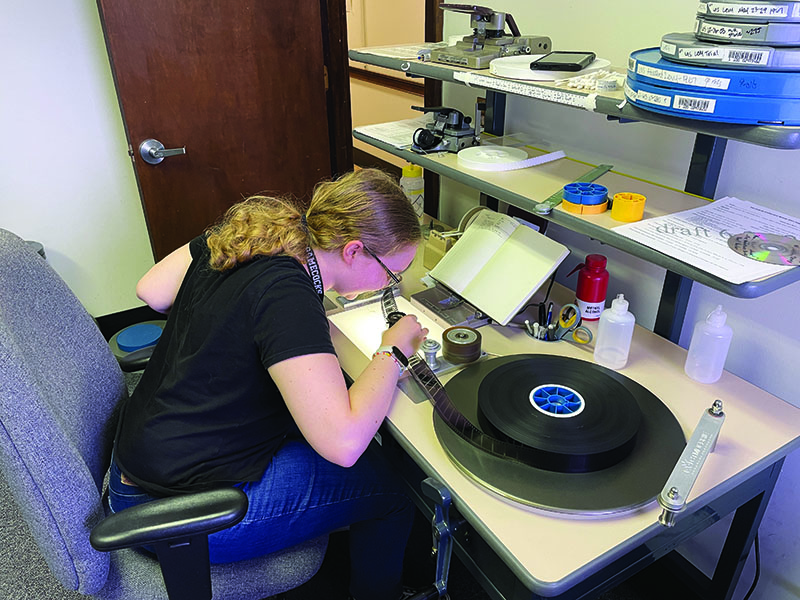
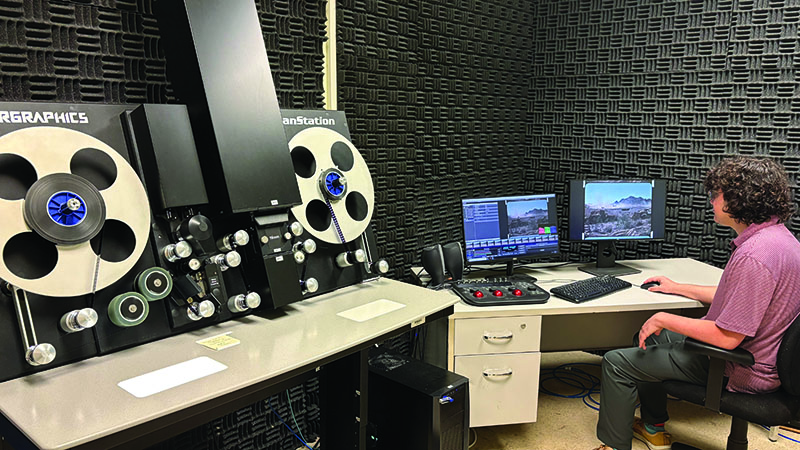
This degree of searchability has been especially helpful for people looking to reconnect with a presumed lost history of their loved ones. A recent visitor to MIRC, retired LtCol Robert Barrow, after leaving the university, went home and spent all afternoon searching through the repository. Barrow ended up finding footage of his father, General Robert H. Barrow, 27th Commandant of the Marine Corps from 1979 to 1983, who passed away in 2008, during his time of service. It’s footage that Barrow never thought he would get the chance to see for himself.
“The tour we had last year was truly inspiring,” said LtCol Barrow. “Just as a test, I asked to see what footage the website might have on my father. To demonstrate the ease of search … in a matter of seconds, [Dr. Wilsbacher] pulled up some footage I never knew existed on Dewey Canyon in Vietnam. I shared one link with my siblings that showed only the hands and watch of a Marine reviewing a map in the field in Vietnam. They all came back with the same conclusion: ‘Those are Dad’s hands and definitely his watch.’ ”
That ability to witness the experience of a loved one whose service may have taken place halfway around the world, or even before the viewer was born, is transformative. Many Marines have lived through extraordinary events, fighting for freedom and liberty on foreign coasts, while their families were at home unable to imagine what their loved ones went through overseas. Often, these memories have remained shrouded in the past, unable to be fully articulated to those who were not there to experience them. The United States Marine Corps Film Repository preserves these stories for generations to come. Now, USC Libraries’ digitization of the films makes them accessible to all and brings them vividly to life for both those who have lived through them and those who have not.
Featured Photo (Top): A Marine holds a slate for PFC Baker of Combat Camera during the filming of a training exercise at Onslow Beach, N.C., August 1952.
Author’s bio:
Abigail Cole is a staff writer and photographer for University of South Carolina Libraries in Columbia, S.C. Her work has appeared in The New York Times.
Executive Editor’s note: These films are available to watch by anyone, anywhere, at any time. Visit digital.library.sc.edu/marinecorps to get access to the Marine Corps Film Repository. To searchthrough the films, click the “Watch the Films” tab at the top of the page. The re–pository is keyword searchable.
Enjoy this article?
Check out similar member exclusive articles on the MCA Archives:
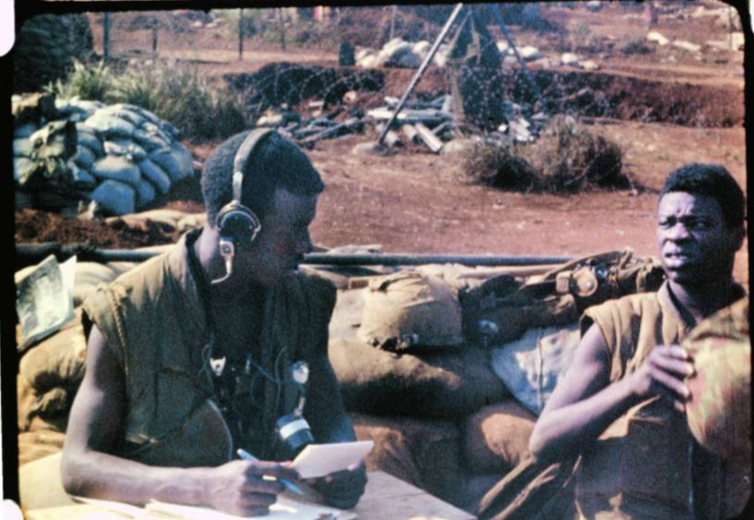
University of South Carolina Works to Preserve Marine Corps’ Film History
Leatherneck
February 2017
By: Megan Sexton


