Is Newest Addition To MCA’s Library of
Audio Content
By Sara W. Bock
When Vic Ruble joined the staff of the Marine Corps Association last year as creative content coordinator and deputy editor of Marine Corps Gazette, he knew he’d be involved in the behind-the-scenes development of the organization’s first-ever podcast. What he didn’t count on was that he would, by default, end up as its host. Initially out of his comfort zone perhaps, but to anyone listening, the role seems a natural fit for the former amtrac officer, a prior enlisted Marine with numerous deployments to Iraq and Afghanistan under his belt. Ruble retired from the Corps as a major in 2018 and then went on to earn a master’s degree in creative writing from American University in Washington, D.C.
With a heavy emphasis on the art of storytelling, “Scuttlebutt: An MCA Podcast” launched its first episodes in September 2021, taking its place among the professional association’s wide array of multimedia resources, which includes audio articles from its flagship publications Leatherneck and Marine Corps Gazette; an impressive “Corps Voices” collection featuring interviews with some of the most revered Marines in history, including Lieutenant General Lewis B. “Chesty” Puller; and recordings of guest speakers from MCA’s professional awards ceremonies and events.
The “by Marines, for Marines” podcast, which releases new installments weekly and is recorded on-site at the MCA headquarters aboard Marine Corps Base Quantico, Va., has quickly gained subscribers, with more listeners tuning in to each subsequent episode. Ruble and the rest of the “Scuttlebutt” production team, which includes MCA Digital Projects Manager Nick Wilson, who had already set up a recording room and procured the necessary equipment before Ruble came on board; Marine Corps Gazette associate editor William Treuting, who recently earned a master’s degree in history; and seasoned journalist and Leatherneck deputy editor Nancy Lichtman, hope that the informal, conversational format they’ve created will invite listeners to learn from the personal stories of others as well as think critically about current events that impact today’s Marines. The podcast comprises a mix of interviews with high-profile guests and conversations amongst the “Scuttlebutt” team as they discuss the interviews, relevant issues and various aspects of Marine Corps history.
From hot topics like COVID-19 vaccination rates among the ranks and the arrival of Afghan refugees in the U.S., to the implementation of the Commandant’s Force Design 2030 and the Corps’ newly announced talent management initiative, “Scuttlebutt” covers it all. But its primary objective is to showcase the stories and experiences of its diverse range of guests who have agreed to spend an hour or two of their time to join in the discussion.
Retired Colonel Andrew Milburn, left, author of “When the Tempest Gathers: From Mogadishu to the Fight Against ISIS, a Marine Special Operations Commander at War,” chats with Vic Ruble, center, and Nick Wilson, right, during the recording of “Scuttlebutt” Episode 16, Jan 12.
“The conversations we will have will explore some of the themes and lessons our guests have taken with them to write their stories, so that you, the listener, will have more tools in your kit when it comes time to write yours,” Ruble said in the promotional “teaser” episode of “Scuttlebutt,” adding that his interviews with podcast guests would be akin to “coffeehouse” chats with friends.
Aptly named in a nod to the Marine Corps’ naval roots—the term “scuttlebutt” can be traced back to an early 1800s term for the cask containing a ship’s daily supply of drinking water, inviting conversation among those gathered around it, and later evolved into a slang term for rumor, gossip or “water cooler talk”—the podcast is informal, engaging and often brings out the witty side of its producers.
Ruble is adept at facilitating relaxed, congenial conversations with podcast guests, who have thus far included names like Marine veteran Miles Vining, who authored the 2020 book “Into Helmand With the Walking Dead”; actor Geoff Stults, who spoke about portraying military servicemembers in film and his work with the Merging Vets and Players organization; and retired Marine Sergeant Major and Navy Cross recipient Justin LeHew, who serves as the chief operating officer for History Flight.
“My goal for the podcast is for it to be a place where stories and narratives outside of the mainstream military mediums are featured and heard,” said Ruble. “Just because someone isn’t a Medal of Honor winner or wasn’t part of some badass special forces task force—which we have some of those folks too—doesn’t mean that what they did and how they contributed was insignificant. I would like it if our listeners got the feeling that ‘Scuttlebutt’ features stories that highlight the many nuances of the Marine Corps and that everyone’s story matters. Oftentimes, it’s the stories that we don’t know about that matter the most.”
The burgeoning podcast and the rest of MCA’s audio offerings are part of an ongoing effort to expand the association’s reach and provide content that goes beyond traditional print media. This is not to diminish the role of the iconic Leatherneck and Gazette, which have been telling the Marine Corps story and inviting professional discourse for more than a century, but rather to enhance and support those efforts.
Justin LeHew, a retired Marine sergeant major, was the first guest on “Scuttlebutt.” His interview, which spans two episodes, covers a variety of topics ranging from advice he received during his Marine Corps career to his work in MIA research, recovery and repatriation as chief operating officer of History Flight.
Not only does audio content provide the consumer with tone of voice, inflection and emotion, which are often difficult to adequately capture in the written word, but its format also allows for multi-tasking, such as listening while driving, exercising or doing household chores. This is particularly desirable among those whose busy schedules don’t necessarily allow them time to sit and read a magazine or book but who want to absorb new information, perspectives and stories.
“We want to be both an entertaining storytelling destination and a somewhat professional resource peering behind the scenes at different aspects of the Marine Corps,” said Wilson. “We were looking to reach an audience that the MCA has struggled to keep in contact with over the years, that being the younger ‘25 to 45’ crowd. Which, as it just so happens, is the crowd that listens to podcasts.”
Podcasts like “Scuttlebutt” have soared in popularity in recent years across a broad range of demographics. According to Edison Research, approximately 80 million Americans, or 28 percent of the U.S. population over the age of 12, listen to podcasts each week, which is a 17 percent increase from those who listened in 2020—and this group also is more diverse than ever before. Additionally, the research company’s 2021 Infinite Dial study found that 62 percent of the population are weekly online audio listeners. It seems safe to conclude that these numbers will only continue to rise.
“The younger generation of Marines is less inclined to read a magazine than their predecessors, so with this format, we can reach those young men and women,” said Lichtman, who says she views the podcast as an audio magazine of sorts, employing some of the same concepts she’s used during her career in print media as she assists in its development. “Ideally, the podcast discussions will lead people to pick up a magazine, either the physical copy or the digital format, to take a deeper dive into Marine Corps history.”
Vic Ruble Creative Content Coordinator and Deputy Editor Marine Corps Gazette
She believes that the podcast format, which allows for a free flow of ideas between guests and hosts, fills a different need than either Gazette or Leatherneck, and helps further the association’s mission to develop leaders and to expand awareness of the traditions, history and spirit of the Marine Corps.
Lieutenant General Charles G. Chiarotti, the association’s CEO, agrees with this sentiment, stating that the “Scuttlebutt” team’s efforts contribute directly to the “rich discussion” that the association seeks to encourage among Marines and friends of the Corps.
“Through the research that they do to prepare for each podcast, to their casual on-air demeanor, they are able to uncover the more humanistic aspects of a story or personal account,” said LtGen Chiarotti, who was the featured guest on the “Scuttlebutt” Episode 6, which was released in conjunction with the 246th birthday of the Corps. “They reach a different level of understanding of an experience or a story than most are willing or able to provide through the written form,” he added.
During his appearance on the podcast, LtGen Chiarotti, who was born and raised in Italy, discussed his unconventional path to becoming a Marine, as well as the importance of professional development and what his priorities are as he takes the helm of MCA.
Prior to the recording of each episode, Ruble writes up a pre-interview show setup with discussion points and questions, and the podcast team meets to give suggestions and feedback. The result is a well thought-out, meaningful conversation that explores what it means to serve and to claim the title “Marine.”
On the MCA website, “Scuttlebutt” listeners can read synopses of each available podcast episode. The team continues to book high-profile guests who are willing to share their own personal experiences and perspectives.
“All of our guests have brought their own unique perspectives and personalities to this project,” said Ruble. “Some have been fun because the guest was charismatic, or I already had a relationship with them, so it really was just two friends hanging out. Others have been super informative, and I’ve just been in ‘receive mode’ the whole time as if I were a listener.”
Treuting, whose historical focus is on American military history, hopes to see “Scuttlebutt” attract both military-affiliated and civilian listeners alike and to serve as a springboard for additional audio and visual content produced by the MCA in the future.
“I want our podcast to be an entryway for civilians to become interested and invested in the Marine Corps and to help diminish the cultural/social gap between civilians and the military,” Treuting said.
There’s something for everyone among the audio resources available on the MCA website, whether it’s an oral history interview of General Frank E. Petersen, the Marine Corps’ first Black aviator, in which he describes a racial incident that occurred at Marine Corps Air Station El Toro, Calif., in 1953, part of the “Corps Voices” collection, or a speech given by Gen James N. Mattis, USMC (Ret), during an October 2019 MCA professional event. Popular Leatherneck articles, many of which are read by the authors themselves, also are easily accessible. And of course, “Scuttlebutt” is sure to attract an audience both young and old, from a variety of backgrounds.
“If someone has any passing interest in the Marines, I think they’ll find a lot to like in Scuttlebutt,” Wilson said. “I only see growth in the future, and it’ll be fun to be a part of it.”
As Afghan Evacuees Arrive at Quantico,
Marines Get Creative to Bridge Cultural Divide
By Sara W. Bock
In 2009, Marine Corps combat artist Kris Battles traveled to Helmand Province, Afghanistan, where he produced numerous works depicting the bond between Marines and local Afghans who assisted them as interpreters and translators or in other vital roles. So, after he made the short drive from the Combat Art Studio at the National Museum of the Marine Corps to the newly formed Upshur Village, located on the western end of Marine Corps Base Quantico, Va., Sept. 8, 2021, he felt a tinge of familiarity as he sat on his three-legged stool, sketchbook in hand, and documented a historic moment in Marine Corps history.
Once an extension of Officer Candidates School and today a commonly used training area for Marine reservists, Camp Upshur had been transformed practically overnight into a temporary home for thousands of America’s Afghan allies and their family members, and Battles needed only to travel to his own backyard to record it.
While the experience was in many ways reminiscent of his deployment more than a decade ago, Battles could sense optimism and hope in the air: a stark contrast, he says, to the troubled environment of a war zone. Just weeks earlier, these Afghan men, women and children, fearing retribution for their association with U.S. troops, fled for their lives as the Taliban seized control of their country—and they were the lucky ones. Now, they awaited a new beginning in a nation with a lengthy history of welcoming newcomers to its shores.
“To sketch them in a more safe and secure environment, to see them already starting to flourish, was a very positive thing,” said Battles, who, now a civilian, has served as the Marine Corps Artist in Residence since 2019.
Working intently with his pencil to paper, Battles created rough sketches of Afghan guests eating meals in the chow hall, waiting in line for medical attention and even merely watching him with curiosity.
A single scene in particular stood out to him during his two-hour visit to the makeshift village—one of eight designated “safe havens” at military installations across the country and the only Marine Corps base on the list—where Afghan evacuees were awaiting processing and eventual resettlement into American communities. A Marine was kneeling to the ground, teaching a group of smiling Afghan children to play the timeless childhood game, “Rock, Paper, Scissors.” While observing the simple activity that requires neither material supplies nor a common language, Battles was struck by the significance of the moment: that interactions like these gave the children a first glimpse of their newfound life in America.
“This young Marine, being a young man himself, not much out of high school, he’s not too far away from ‘Rock, Paper, Scissors’ himself, so he’s sharing his experience which also welcomes them, makes them feel more at home automatically,” said Battles, gesturing toward the aptly named “Rock, Paper, Scissors” oil-on-canvas painting he created based on the sketch. “Games are a great way to build rapport,” he added.
Battles points out some of the nuances in the painting; namely, that the differences in the clothing worn by the two boys gives context clues as to the setting, despite the fact that the monochromatic background does not. One boy is dressed in traditional Afghan clothing and the other is wearing shorts, a T-shirt, and a pair of Crocs that are far too big for his tiny feet.
“People were immediately responding to the call for help and donations,” Battles said in a nod to members of the local community. “It’s in our nature [as Americans] it seems, to help out and to give out of the bounty that we have, so they immediately responded, and of course, the kids are already wearing the T-shirts.”
Indeed, within hours after the news broke on Aug. 26 that MCB Quantico had been selected as a temporary housing site for Afghan evacuees, the base began receiving offers of support from individuals in the surrounding military and civilian communities, local interfaith groups and non-governmental organizations. Posts across social media platforms called for items like pillows, bedsheets, diapers and school supplies to support the arriving guests who had traveled thousands of miles with little more than the clothes on their backs.
“We were just really overwhelmed with the incredible outpouring from the community and the sheer quantity of donations that we were receiving at the outset,” said Major Tara Patton, the deputy operations officer for Task Force Quantico, which was formed in support of Operation Allies Welcome, a whole-of-government effort spearheaded by the Department of Homeland Security (DHS).
Schools and units across MCB Quantico pitched in to help collect supplies during the early days, and as the months have passed, items needed by the guests have continued to pour in. Patton describes the setup of donated goods at Upshur Village as being much like a Walmart store, where Afghan guests can come on their designated days to get the items they need.
According to Danielle Decker, the external affairs officer for Operation Allies Welcome Quantico, the cross-collaborative endeavor to help Afghan evacuees start a new life in America involves the work of multiple agencies and bureaus within DHS, including Federal Emergency Management Agency (FEMA); Customs and Border Protection; and Immigration and Customs Enforcement (ICE), as well as the Department of Health and Human Services, the State Department and the Department of Energy. The effort also relies heavily, said Decker, on the Department of Defense to provide security and staffing at each base. In addition to Quantico, two other locations in Virginia were chosen, Fort Lee and Fort Pickett, and across America, Fort McCoy, Wis.; Fort Bliss, Texas; Joint Base McGuire-Dix, N.J.; Holloman Air Force Base, N.M., and Camp Atterbury, Ind., also made the list.
During a Nov. 9 State Department town hall meeting for Afghan resettlement stakeholders, former Delaware Governor Jack Alan Markell, coordinator for Operation Allies Welcome, said that cultural advisors were assigned to each of the bases to ensure that the efforts of the military members were supplemented with culturally appropriate food and places of worship.
At Quantico, which Decker says was chosen based on its capacity to provide a secure location that could house and meet the needs of guests while providing essential security and support, representatives from each of the participating agencies were present at an on-site Interagency Coordination Cell (ICC). For Maj Patton, who works in the ICC, it was a unique opportunity unlike anything she’s experienced in her Marine Corps career thus far.
The mission to support Operation Allies Welcome also is an out-of-the-ordinary one for Marines from units across 2nd Marine Logistics Group, part of the Camp Lejeune, N.C.-based II Marine Expeditionary Force, who mobilized at a moment’s notice, diverting from a planned humanitarian relief effort in Haiti to a much closer-to-home locale.
According to Patton, on Aug. 24, the first Marines from 2nd MLG were sent to Quantico. “That was actually on about an hour’s notice,” she adds. At the onset, the Marines lived in two-man tents on site as they readied the squad bays at Camp Upshur, formerly used by OCS, to serve as temporary living shelters for the Afghan guests. As the evacuees began to arrive just five days later on the 29th, the Marines facilitated the check-in process and helped them get settled in.
“Initially we were working pretty hard with the base to use the existing infrastructure at Camp Upshur to support billeting Afghan guests,” Patton said. When it was realized that additional accommodations were needed to support an influx of arrivals, the task force summoned 8th Engineer Support Battalion from Camp Lejeune to establish “Pioneer City,” a second temporary housing area. “In 36 hours, working 24-hour ops, they built the site from nothing, on a landing zone, and turned it into a space for about 1,000 Afghan guests. It’s really been interesting to see it evolve over time,” she added.
As of Oct. 21, said Lieutenant Colonel Jacob Hummitzsch, the executive officer of Combat Logistics Regiment 2, 2nd MLG, roughly 900 U.S. servicemembers, primarily Marines and Navy corpsmen, were supporting the mission in various roles like running the donation center, performing site maintenance and repairs, providing medical care as well as visiting with the guests, playing with the children, and helping their temporary accommodations feel a little bit more like home.
“Everyone is really proud to be part of this historic effort,” said Hummitzsch. “The ability to quickly respond like we did, the opportunity to provide the necessary support to the success of Operation Allies Welcome, and to be able to walk around and see all the smiling faces from all the adults, the families, the kids.”
In the Combat Art Studio at the National Museum of the Marine Corps, Kris Battles, the Marine Corps Artist in Residence, prepares to put the final touches on “Rock, Paper, Scissors,” an oil-on-canvas painting he created based on his sketches at Upshur Village, and the cover image for Leatherneck’s February issue.
Recognizing the trauma that many of the Afghan guests went through in order to arrive at Upshur Village, Hummitzsch said, made their smiles even more meaningful to him. “And the Marines and Sailors are doing phenomenal things helping them out every day,” he added.
In October, Decker said that approximately 3,800 Afghan guests were currently living aboard MCB Quantico, adding that some families had at that point been fully processed and were starting their new lives in various locations across the U.S.
“The guests undergo a series of vetting processes throughout their stay with us, and they also undergo intake immigration and biometrics processing and medical screening, and then they’ll ultimately reach their final state of assurance and then ultimately depart camps to their final destination,” Decker said.
During the State Department’s Nov. 9 stakeholders meeting, Nancy Izzo Jackson, who heads the department’s Bureau for Population, Refugees and Migration, explained the intake and resettlement process for those evacuees seeking special immigrant visa (SIV) status or qualify for designation as refugees fleeing persecution, stating that the interagency partners were working around the clock to resettle everyone into their permanent home communities as quickly and responsibly as possible. According to Jackson, after initial administrative processing and health screening on one of the eight military bases designated as temporary safe havens, Afghan guests were being connected with one of nine resettlement agency partners to receive their initial placement and assistance.
“This process takes into account family size and composition, any special medical needs, existing connections to U.S.-based family or friends. It also takes into account the locally available housing, schooling and community resources,” Jackson said, adding, “We want to make sure every Afghan is set up for success in their new home communities.”
As the U.S. continues to deal with a critical housing shortage, making it difficult in many areas to find suitable accommodations, the State Department had to get creative and for the first time in its history, partnered with private sector actors like vacation rental company Airbnb.
“We have never had to resettle so many people so quickly and we have never done it while also facing a global pandemic, a national housing shortage and significant staffing shortfalls. So, we have had to innovate to meet the challenge,” Jackson said. “We are relying on support from local U.S. communities and private sector partners to help us succeed in these efforts, and we have already seen an astonishing outpouring of support, both material and emotional, from individual community organizations, individuals themselves and private companies. It is a true testament to the boundless American capacity for generosity towards those most in need. From New Jersey to Wisconsin to New Mexico, our Armed Forces colleagues and local communities around our military bases have opened their arms and their hearts to our Afghan guests.”
For Maj Patton, who served in Afghanistan, her role with Task Force Quantico afforded her a unique opportunity to see her time there come full circle. During the early months of her assignment at Upshur Village, there was an interaction she won’t soon forget. A 4-year-old girl, who evidently had been observing the Marines’ interactions with each other at Upshur Village, stopped and saluted her as she walked by.
“I just kind of stopped in my tracks and realized that that little girl could be back here in Quantico 20 years from now as a Marine Corps second lieutenant going through [The Basic School]. While that may or may not be in the cards for her, the fact that she’s here and going through this process means that if she wants to, she has that opportunity. There are those little moments that really resonate with you personally and make it a worthwhile endeavor,” Patton said.
As Kris Battles and fellow combat artist Elize McKelvey, a veteran Marine who also is part of the Marine Corps Combat Art Program, observed and sketched at Upshur Village, children played and ran free. At one point, a large group of them gathered around McKelvey’s sketchbook with pens and pencils and began creating doodles of their own. In that moment, Battles could sense that the children felt at home there, and the artists relished the opportunity to connect with them through a shared interest.
“Part of our job as combat artists is to record for posterity in traditional media these stories for 100 years from now, for 200 years from now. This was a great opportunity, very historic, and it happened right on our doorstep,” said Battles. “An added benefit of what we do is bridge building. Combat art builds bridges in America between the military and [civilian] cultures, and we also build bridges to other cultures because art is a universal language.”
LCpl Amir Shinwari, a linguist, sits in prayer with Afghan guests during religious services on MCB Quantico, Va., Oct. 8, 2021.
Editor’s note: On Dec. 23, 2021, just before press time, the Department of Homeland Security announced that the last group of Afghan guests being housed at MCB Quantico had departed the base, making the installation the second safe haven to complete its operations.
LCpl Tyler Zaki, a motor transportation operator with Combat Logistics Battalion 8, 2nd MLG, engages in some outdoor playtime with Afghan children on MCB Quantico, Va., Sept. 18, 2021.
Looking for ways to help support Operation Allies Welcome?
The State Department has partnered with Welcome.US, a nonprofit, nonpartisan initiative created “to galvanize additional private sector support and resources for arriving Afghans and channel the immense goodwill of the American people,” explained Uzra Zeya, State’s undersecretary for civilian security, democracy and human rights, during the department’s Nov. 9 town hall meeting.
Interested individuals, veterans organizations, businesses, religious groups and Afghan American diaspora groups can visit the organization’s website, Welcome.US, and from there can donate airline miles to provide transportation from safe havens to resettlement communities; volunteer to provide temporary housing, or sign up for new community sponsorship opportunities.
Operation Allies Welcome goes far beyond the mobilization of military bases and the servicemembers assigned there and extends to the mobilization of an entire nation to welcome our Afghan allies and honor our nation’s obligation to them—an obligation that those Marines who served in Afghanistan understand well.
Nazanin Ash, CEO of Welcome.US, hopes that the effort will help repair division in the U.S.: “Our ultimate ambition is to unite all Americans in this common cause of welcome,” she said.
“Scarlet and gold” oozes out of every nook and cranny of Bartlett Hall. Sporting a cherished post office box of “1775,” most of the 108 full- and part-timers at the Marine Corps Association’s quaint headquarters at Quantico, Va., aren’t Marines. Yet, they are as much Marine as anyone who has stood on the “yellow footprints” at boot camp or completed The Basic School.
“I love my work here,” said Sherry Linhares, a six-year MCA civilian marketing coordinator and a perky “can do” member of the team. “I love Marines. They are part of my life.”
The Marine Corps will celebrate numerous 100-year anniversaries of its units, installations and battles in the 21st century. Commemorating its 100 years of service this month, the MCA has been around longer than most service organizations. It has more service stripes than every major Marine base, including Quantico, and all of the Corps’ air and ground combat units.
“We have a great gang here who work hard to help Marines,” said retired Marine Major General Edward G. Usher III, current MCA president and CEO. “Many of our key people double-hat in crucial jobs. We have strong players, but no bench.”
Marines formed the MCA in 1913 before the Corps had recruit depots, tin hats, tanks and dive bombers. The nation had barely 10,000 Marines. It was a time when field-hatted Marines sailed in large Navy ships, shot well, marched often and landed in small boats to skirmish in strange places. Back then, who could have imagined 182,200 Marines or fights like Belleau Wood, Wake Island, Iwo Jima, Chosin, Con Thien and Fallujah?
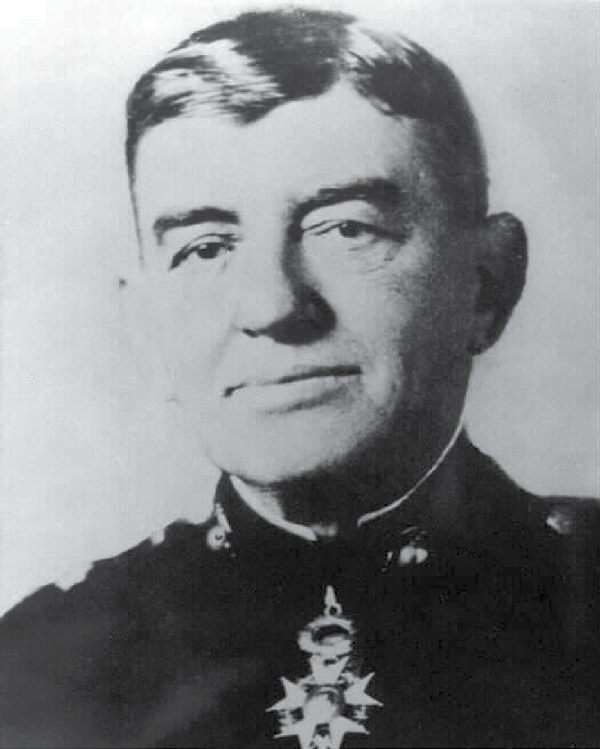
While a lieutenant colonel, LtGen John A. Lejeune, the13th Commandant of theMarine Corps, was a member of the executive committee forming the Marine Corps Association in 1913 and drafting its constitution and bylaws, which remain the cornerstone for MCA&F operations.
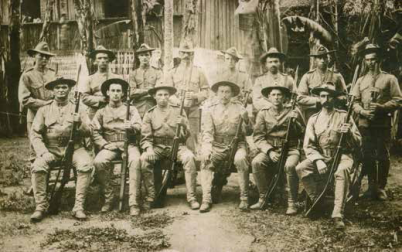
MajGen Usher’s grandfather was an infantry Marine during the early 1900s. As a wandering youth in Cleveland, Private Edward G. Usher enlisted in 1902, trained at Marine Barracks Washington, D.C., fought in the Philippine Insurrection, sailed in the battleship Kentucky, participated in campaigns in China and was discharged in 1906. Buried at Rosecrans National Cemetery in San Diego, the businessman requested that his tombstone simply read: “Edward G. Usher, U.S. Marine.”
“Both my grandfather and father [a career Marine] loved the Marine Corps and were life members of the MCA,” said MajGen Usher. “The Association meant a lot to them, and here I am, running this organization, and we’ve added a Foundation to allow us to do even more to support Marines.”
Since 1913, the Marine Corps and its Association have grown up together. In fact, the Corps controlled and staffed the MCA for 60 years before the Pentagon required that MCA become a private entity in the 1970s. Governing board meetings were held in the Marine Commandant’s office for years, and he was the senior member. Some Commandants even wanted the names of nonmember officers and those delinquent in their membership dues. Those days are long gone.
“For a century now, the MCA has stayed true to Lieutenant General John A. Lejeune’s [13th Commandant’s] vision of providing a forum for Marines of every rank to exchange ideas, preserve our heritage and develop professionally,” said General James F. Amos, the 35th and current Commandant. “The hard work of the MCA staff materially contributes to our mission and the advancement of the Corps’ objectives.”
When Lieutenant Colonel Lejeune commanded the Marine Barracks in Brooklyn, N.Y., from 1911 to 1914, he left his family to make expeditions to Panama, Veracruz, Mexico and Cuba. On Feb. 20, 1913, he sailed with the 2d Provisional Marine Brigade for Guantanamo Bay (Gitmo), a frequent jumping-off spot for Caribbean hot spots.
Two years before, the officers of a similar Marine brigade at Gitmo voted and contributed $5,000 to form the Marine Corps Association, but the action was not formalized.
On April 25, 1913, Lejeune was named head of a three-man executive committee, and the MCA was born. The goal was the professional advancement of Marines and the preservation of the Corps’ history and traditions. Those simple but vital goals remain to this day.
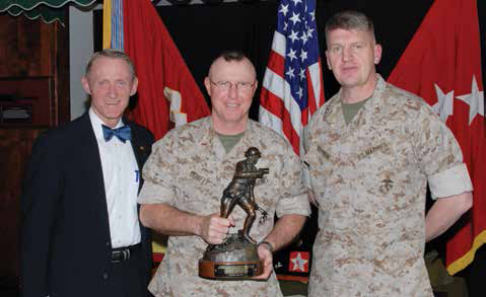
MajGen Edward G. Usher III, MCA&F president and CEO, far right, along with sculptor and artist, Marine veteran Mark Austin Byrd, presents the newly established MCA&F sponsored 1stLt Baldomero Lopez Honor Graduate Award for TBS honor graduates to the TBS commander, Col Dale Alford, in 2012.MajGen Usher, a third-generation Marine, traces his Marine Corps roots to his grandfather, Edward G. Usher (left), fourth from the right, back row, in this photograph of leathernecks in Co E, 2d Bn, 1st Marine Brigade in Zambales, Philippines, circa 1902. (Photo courtesy of the Edward G. Usher Collection, MCA.)
Despite mostly imagined threats to the Marine Corps’ existence in 1913, the MCA’s founders gave it an internal mission of developing Marines. Unlike many service associations, the MCA does not have a political role and never has lobbied Congress.
“It’s my role, with the support of our fine Marines at the Office of Legislative Affairs, to keep Congress informed of our activities, achievements and challenges. I think we have a great relationship with the folks on the Hill,” said Gen Amos. “I see the MCA’s role as supporting the professional development of our Corps through the Gazette and Leatherneck, professional military education (PME), the reading program and other such activities.”
Bartlett Hall is slightly more than three miles from Quantico’s main gate. Nestled barely inside the base, the three-story red-brick building sits next to Quantico town, within easy walking distance of Little Hall, the Marine Corps University and other familiar landmarks.
“If General Lejeune could see today’s operation, he’d be amazed,” said retired MajGen Harry W. Jenkins, who heads the MCA’s Board of Governors. “We are taking care of the troops, and since we added the Foundation in 2009, we can do even more to help the troops.”
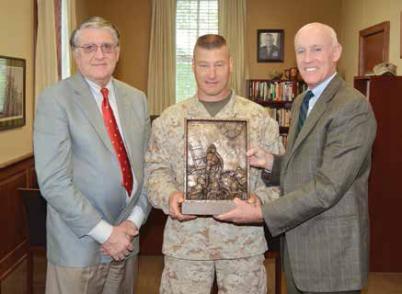
The Hulbert Award for the Marine Gunner of the Year, named after the first Marine Gunner, Henry L. Hulbert, was crafted by former Leatherneck artist and veteran Marine John Chalk. The initial trophy, presented to TBS in 2008 for display by the MCA&F CEO, MajGen Les Palm, USMC (Ret), left, is held by CWO-5 David R. Dunfee, who coordinated the development of the award for the Deputy Commandant, Plans, Policies and Operations, LtGen Richard F. Natonski, right.
LeeAnn Mitchell is the Foundation’s events planner. She coordinates 14 major events a year; many are awards dinners. The MCA&F brings in and hosts Marine honorees and their families at the awards dinners. They are popular, well-attended and growing. More than 400 people attend each dinner, and Gen and Mrs. Amos are frequent guests. Active-duty Marines attend free. Mitchell also recruits and courts the Marine-friendly corporate sponsors who help foot the bill. MCA&F staffers cheerfully do the grunt work.
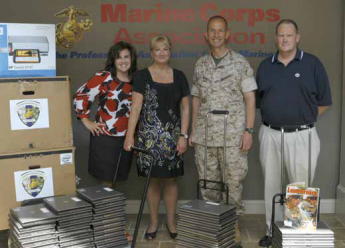
Hewlett Packard laptops are ready for delivery to wounded Marines in 2011. From left: Barbara Lewandrowski, Wounded Warrior Regiment; LeeAnn Mitchell, Director, Events and Corporate Sponsorships, MCA&F, who coordinated the laptop donation; Col John L. Mayer, Commanding Officer, WWR; and Greg Lockett, Hewlett Packard.
“These dinners are the Marine Corps’ dinners, not ours. LeeAnn is their uncompensated event planner,” said Tom Esslinger, the MCA chief operating officer. A successful career lawyer, Esslinger served in Vietnam as a Marine infantry officer and joined the staff in 2008. “One general officer told me, ‘If it wasn’t for you guys paying for these dinners, we’d hand these awards out at lunchtime in the mess hall.’ ”
Shouldn’t the Marine Corps do these things? Yes, it probably should, but laws prohibit the use of appropriated money for certain things. The MCA and its Foundation fills this important gap. It always has been that way.
For example, in 1915, the Corps’ inspector general recommended that the MCA purchase flowers for Marines buried at Arlington National Cemetery. In 1918, the Association bought bronze plaques to place on Navy destroyers named after Marines.
The MCA Foundation was in its infancy when MajGen Usher took over in 2010. It now sponsors programs that help active-duty Marines and attracts the funds to pay for them. In 2012, the Foundation provided 300 unit libraries (mostly books from the Commandant’s Professional Reading List)and more than 8,000 awards to Marines in its significantly expanded Marine Excellence Awards Program.
“The money we take in goes into our programs to support Marines. If a Marine commander comes to me, and I start saying no, we’ve got a problem,” said MajGen Usher.
“We’re also not competing with other Marine organizations. I don’t want to take money away from the Scholarship Foundation or our world-class museum,” said MajGen Usher. “We’re all dedicated to support an institution that we love.
“Nonprofit doesn’t mean we can operate in a deficit. We have to make payroll, recover our costs and provide money for our programs,” said MajGen Usher. “In addition to being the Corps’ professional association, we conduct a successful retail operation. It helps us generate revenue to meet our program needs.”
MCA membership today is about 77,000, mostly active, retired and veteran Marines but with some members from other U.S. Armed Forces. The Association’s charter rules out some individuals who would join to support the Corps. With the creation of the Foundation, nonveteran Marine parents and “friends” of the Marine Corps now can get on board as members of the Foundation, helping ensure a strong MCA&F.
The policy is paying off. The Corps’ “friends” are joining and becoming leading customers in the MCA’s e-commerce trade via the Internet. People place orders with the MCA’s online store and call center in Bartlett Hall. When MajGen Usher completes a planned website improvement effort, it will be even easier to make a purchase, join the Association and Foundation and access Marine-related content.
“In retail, we’ll have a mini-Amazon.com,” predicted MajGen Jenkins. “We’re positioning ourselves to better help the troops for the rest of this century.”
The MCA&F presently has a successful Group Benefits (insurance) program and offers financial planning, banking services and other insurance products through an affinity partnership with USAA. These offerings are a steady source of assurance for Marines who want to ensure their families’ well-being should something happen.
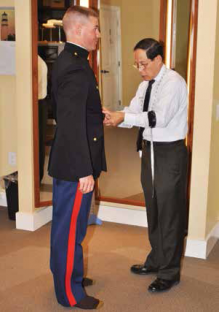
When the well-known source of Marine uniforms and equipment, The MARINE Shop, became available after the death of its founder, retired Major Harry Elms, the MCA, led by its CEO, MajGen Les Palm, stepped in and purchased it in 2007. The popular retail uniform store on the corner of Broadway and Potomac in Quantico town was renovated and now makes it even easier for Marines to wear the best-fitted uniforms.
Master tailor Nhean Keo is one of many world-class tailors who assist Marines at the MCA&F’s The MARINE Shop in downtown Quantico, Va.
The MCA also opened a very popular retail store at MCB Camp Lejeune, N.C., built a new annex to its headquarters in Quantico and initiated a series of professional dinners, including awards dinners, and launched the Marine Corps Association Foundation during MajGen Palm’s tenure as CEO.
The MARINE Shop appeals to all grades, and with The Basic School located at Quantico, many Marine second lieutenants become career-long customers. The MARINE Shop’s expert tailors visit the U.S. Naval Academy, Officer Candidates School and several Naval Reserve Officers’ Training Corps units. In 1972, when the Department of Defense closed out the option of assigning active-duty personnel to military-related associations, the Marine Corps Association shifted from an organization staffed largely by active-duty Marines to a civilian work force, but the focus on supporting Marines continued to gain momentum.
Gen Louis H. Wilson, the future 26th Commandant, was the MCA’s last active-duty leader. He ordered a management study, and retired Marine Colonel Bevan G. Cass became the MCA’s first executive director. The tireless, square-jawed, crew-cut executive had to make the Association profitable in order to continue needed programs supporting the Corps.
“No longer subsidized, the MCA became a pay-as-you-go operation,” recalled retired Marine LtCol Robert W. Smith, the Gazette editor in the late 1970s. “The MCA focused on the business side, and ‘Bev’ Cass was the initial driver.”
Cass improved the MCA Bookstore, procured a printing press and shipped Marine Birthday Ball supplies to Marine units. Operating from an old temporary building near Quantico’s Butler Stadium, he set the business tone for his successors.
“Many people believed that the cost of running the MCA with civilians would be so high that we couldn’t survive. I didn’t believe it then, and I’ve been proven right,” said Gen Wilson when he retired in 1979. “The Association was worth saving to continue its work.”
The Association and the Marine Corps Gazette have been almost synonymous since the Association’s founding. Leatherneck magazine took another course to today. In 1917, two enlisted Marines received permission from Brigadier General Lejeune, the Quantico commander, to publish a paper for Marines. In time, it became Leatherneck magazine.
“While the Gazette is our professional journal, General Lejeune wanted Leatherneck to tell the Marine Corps’ story,” said retired Marine Col Walt Ford, current MCA publisher and editor of Leatherneck since 1999. “General Lejeune placed Leatherneck under the Marine Corps Institute, and both moved to Washington after he became Commandant.”
Leatherneck grew to a colorful 64-page monthly in 1926 with photos, jokes, cartoons, poetry and reports from the field. Its popularity continues to this day. In World War II, the magazine’s notoriety elevated it to a monthly circulation of 300,000. The Leatherneck Association was incorporated in 1943 when it added the professionally enriching, red-covered “Guidebook for Marines” to its offerings.
During the Vietnam War, circulation was at 200,000 monthly. The Leatherneck staff, numbering more than 100 in Washington, received a Meritorious Unit Commendation for its service during the period. The Leatherneck Association moved its offices from Henderson Hall, Arlington, Va., to Quantico in 1975, but, with the loss of its Marine active-duty staff, more dramatic change was needed.
“General Wilson appointed me to study the possibility of merging both associations in 1975 when I was a young brigadier heading the Development Center at Quantico,” recalled retired Gen Paul X. Kelley, 28th Commandant. “It was like being in the middle of two armed camps.”
The Kelley committee discovered that both associations had their own book service, magazine, insurance plan and awards program. Although more people read Leatherneck and the “Guidebook for Marines,” and its insurance program was popular, the Leatherneck Association, by merging with the Marine Corps Association, could obviously support the Corps more effectively.
The current home of the MCA&F, Bartlett Hall, aboard MCB Quantico, Va., was named for former Executive Director BGen George Bartlett and dedicated on Nov. 10, 1986.
We recommended the Leatherneck Association be merged into the MCA in 1976,” said Gen Kelley. “We did the right thing. I’m truly pleased with what our Association is doing today.” When retired BGen George L. Bartlett took over in 1979, the MCA headquarters was located in what is now Butler Hall (Building 1019), not far from Quantico’s railroad station. But this headquarters couldn’t house all of the MCA’s activities.
“Our insurance people worked out of the [top floor of the] Quantico bank, and we had six to eight storage areas scattered around,” recalled BGen Bartlett, still a go-getter at 89. “We had almost nothing in the bank, nothing in our checking account and we couldn’t afford to pay rent even if we had to.”
Operating from his hip pocket, he made things happen. He opened communications with the State Department, shipping Birthday Ball supplies to Marine embassy detachments around the world. The MCA stepped in to run the Marine Corps Marathon for eight years. Then a series of mail campaigns were launched to promote the MCA and its professional magazines to active-duty and other Marine communities. The MCA’s printing press located in Quantico town seldom stopped rolling.
With operations taking off, it was time to consolidate operations under one roof—it was time to build a permanent home.
The Kelley committee recommended that the MCA headquarters be constructed at Quantico. BGen Bartlett handled the detailed negotiations and closely supervised the building project. The building, appropriately named Bartlett Hall, was dedicated in 1986 on the Corps’ 211th Birthday.
“I’m personally thrilled, but halls should be named after heroes,” BGen Bartlett said. “We signed a 25-year lease. It was a good deal for the Corps and the Association.”
The MCA staff, now able to easily conduct staff coordination, became an even more effective team. Initially, the merger was not popular with the Leatherneck staff. Things improved immediately when BGen Bartlett’s talented MCA deputy, retired Marine Col William V. H. White, became Leatherneck’s editor.
“I did more for the Marine Corps in that Association than I ever did as a general officer on active duty. I’m proud to be a part of it,” BGen Bartlett said.
LtGen Anthony “Tony” Lukeman took over in 1989. (His son, BGen James W. Lukeman, currently commands the Second Marine Division at Camp Lejeune.) LtGen Lukeman computerized the MCA and kept the business side going, but he took pride in reading every word before both magazines were published.
“I was thrilled to be in the company of writers. There is nothing more important than informing Marines,” said the soft-spoken retired Marine.
When he departed in 1998, the Gazette staff presented LtGen Lukeman with a bronze plaque of his final Gazette editorial. “In appreciation for the 115 issues that you so diligently proofread. We thought it only appropriate to return the favor—we could find no errors in this editorial.”
“The two magazines were the most important part of my job,” LtGen Lukeman recalled. “You could be 22 or 90 years old, they bound the generations of Marines. That’s what makes us a special breed.”
Today, Leatherneck and the Marine Corps Gazette are still the most popular MCA member benefit. “Probably the majority of our members join to get the magazine[s],” said Esslinger, “but they join for other reasons as well.”
The Marine Corps Gazette has been the professional journal of Marines since 1916. Col Lejeune wrote the first article. Starting as a quarterly and becoming a permanent monthly in the mid-1940s, Marines have exchanged ideas in Gazette before every major Marine Corps advancement—amphibious operations, helicopters, maritime prepositioning, etc.
“We have an ethos of innovation, and the Marine Corps actively seeks input from Marines,” said retired Marine Col John Keenan, the professional journal’s editor.
Shortly after Gen James T. Conway became the 34th Commandant, he visited Keenan’s office. After emphasizing Gazette’s importance, Gen Conway left Keenan with this thought, “If I agree with one-half of the articles and disagree with the other half, you have it exactly right.”
Keenan reads all submissions and personally accepts or rejects most articles. When in doubt, he sends articles to the Gazette editorial board member with subject-matter expertise. The full 14-person board votes on sensitive items and all writing contest submissions.
“The Foundation is elevating our writing awards program to encourage Marines to write,” said MajGen Usher. “We’re dusting off some of the older awards and adding new ones. Winners will now receive cash and a special plaque. Some of those majors, captains and staff NCOs are on to something. We want to get some dialogue going and recognize their efforts.”
Keenan is trying to debunk the myth that Gazette is an officers’ magazine. The Gazette’s diverse active-duty audience begins at the lowest enlisted grade, grows at the NCO level and goes up to the Commandant. Enlisted Marines won several writing contests in recent years, and many had their articles published.
“We can do better this year! I challenge all Marines to ‘stretch their brains’ and submit professional articles for publication,” said Sergeant Major Micheal P. Barrett, 17th Sergeant Major of the Marine Corps and a Gazette subscriber for three decades. “The articles are relevant, current and enhance cognitive fitness. Marines need to exercise their brains constantly. The Gazette helps me stretch mine, and it’s part of my monthly PME.”
One new MCA&F award is the Sergeant Major of the Marine Corps Writing Award that honors the top Gazette article written by an enlisted Marine. SgtMaj Barrett said that with each promotion, Marines spend more time writing, and they must learn to write clearly and persuasively.
“Our Marines need to practice and develop writing skills through daily use. This award recognizes enlisted Marines for that commitment,” he said.
Only a few young Marines read printed newspapers, and most receive their news from smartphones or tablets. The MCA is preparing for this evolution in readership. Digital editions of both Gazette and Leatherneck are available monthly for online readers, and plans are underway to make the digital content even more user-friendly for smartphone and tablet users. The focus will be on providing content attractive to members and other readers and in the format preferred.
“Our younger readers want to read online. Other readers prefer the current paper version, and some will do both. Our challenge is to accommodate everyone,” said Keenan.
Right now, about 14,000 members elected to forego the print editions, reading the digital editions online. The online-only readership will grow in the years ahead, and the magazines are making preparations to meet changing preferences.
“We’re committed to print these magazines monthly. Each will continue to have quality content and the feel of a first-class magazine,” said MajGen Usher. “At some point, there probably will be a shift from predominantly paper to digital. It will be driven by what our readers want.”
The Marine Corps and its professional Association were joined at the hip for the past 100 years. Since the MCA went private, the two have marched side by side, each having the other’s back. That journey should never end. With a recent 17-year lease, the MCA headquarters will remain at Quantico at least through mid-2026. The MCA has the freedom to support Marines in many ways today, and its new Foundation gives it potential to do even more.
What a century! But, the best is yet to come.
“The MCA supports us in many ways each year, and I’m very grateful for everything they do to make our Corps a better warfighting organization,” said Gen Amos. “The staff at MCA should feel pretty good about themselves as they reflect on their 100th anniversary.”