An Amphibious Resurrection

By Kevin L Davies

“For all its undisputed Korean provenance, the name Inchon possesses a wonderfully resonant American quality. It summons a vision of military genius undulled by time, undiminished by more recent memories of Asian defeat.”

– Max Hastings1

“We shall land at Inchon and I shall crush them.”

– GEN Douglas Mac Arthur, 23 August 19502


The landing at Inchon, Korea – Operation CHROMITE – is one of the most important examples of amphibious warfare in history, as it is an example of maneuver warfare par excellence and rescued amphibious warfare from possible oblivion. The purpose of this article is to demonstrate the importance of CHROMITE to the study of amphibious warfare.

On 15 September 1950, the men of the United States X Corps landed at Inchon, the port of Seoul, Korea.3 According to the Korean Institute of Military History, the objective of the assault, named Operation CHROMITE, was as follows:

  • To gain and secure a beachhead at Inchon.
  • To rapidly advance to the inland area to regain and secure Kimp’o Airfield.
  • To cross the Han River and recapture Seoul, the capital city of Korea.
  • To take up positions in the vicinity of Seoul until the time when they could link up with troops of Eighth Army who were supposed to move up north from the Nantong front.4

Not only did the X Corps complete the mission with a minimal number of casualties, but in doing so it also routed the North Korean People’s Army (NKPA) and eliminated the desperate pressure the NKPA was applying on the beleaguered United Nations Command (UNC) forces in Pusan.5 This brilliant example of maneuver warfare demonstrates the need for professional amphibious forces to be maintained, as well as the importance of leadership when undertaking extremely risky operations. CHROMITE also demonstrated the need for commanders to understand the political implications of military operations, especially in a “limited war.”

Operation CHROMITE went ahead due to the leadership of one man, GEN Douglas Shoto MacArthur.6 Despite the initial unanimous opposition of the Joint Chiefs of Staff and several other ranking officers with extensive amphibious warfare experience, MacArthur persevered with his vision. Following a masterful display of argument and rhetoric at the 23 August 1950 meeting with representatives for the Joint Chiefs, he was able to gain their reluctant support for the operation.7 According to COL Donald W. Boose:

MacArthur’s confidence in the operation, in spite of the problems inherent in the landing site, was no doubt the product of his experiences in the Southwest Pacific Area (SWPA) in World War II where he had seen such problems repeatedly overcome.8

At Inchon, MacArthur was taking a massive risk, and he knew it.9 This did not deter him from launching CHROMITE but rather served to motivate him as it meant that, for him, victory meant glory while defeat meant ignominy. The lesson here is that even when confronted with steadfast opposition, an extremely difficult undertaking can be given approval provided there are people with sufficient leadership skills to see such operations through to the end. MacArthur’s behavior after CHROMITE, however, is a different story and beyond the scope of this article.

The Inchon landings occurred at a time when amphibious warfare was deemed obsolete. In testimony to Congress during autumn 1949, approximately 1 year before Inchon, the Chairman of the Joint Chiefs of Staff, General of the Army Ornar Bradley (whose previous commands included being the Commanding General, 1st U.S. Army, during the D-Day invasion) stated, “I predict that large-scale amphibious operations will never occur again.”10 Furthermore, the United States Marine Corps, like the rest of the U.S. military, had suffered enormous cutbacks following the demobilization at the end of World War II and was now operating at less than 16 percent of its World War II size.11 Inchon proved, without a shadow of a doubt, the importance of amphibious warfare and the need to maintain amphibious capabilities so as to be able to take advantage of all that amphibious warfare offers, especially to a maritime power like the United States. According to Jim Dorschner:

Operation CHROMITE did not introduce any fundamentally new aspects to the art of war. Rather, the operation served to reinforce traditional lessons, such as the importance of maintaining trained and ready forces to deter aggression or confront a contingency, the priceless value of sure footed staff work, and tangible benefits of innovation, flexibility and individual resourcefulness.12

Of serious interest to students of the Inchon landing was the fact that Inchon was picked at all. According to Col Robert D. Heinl, Jr.:

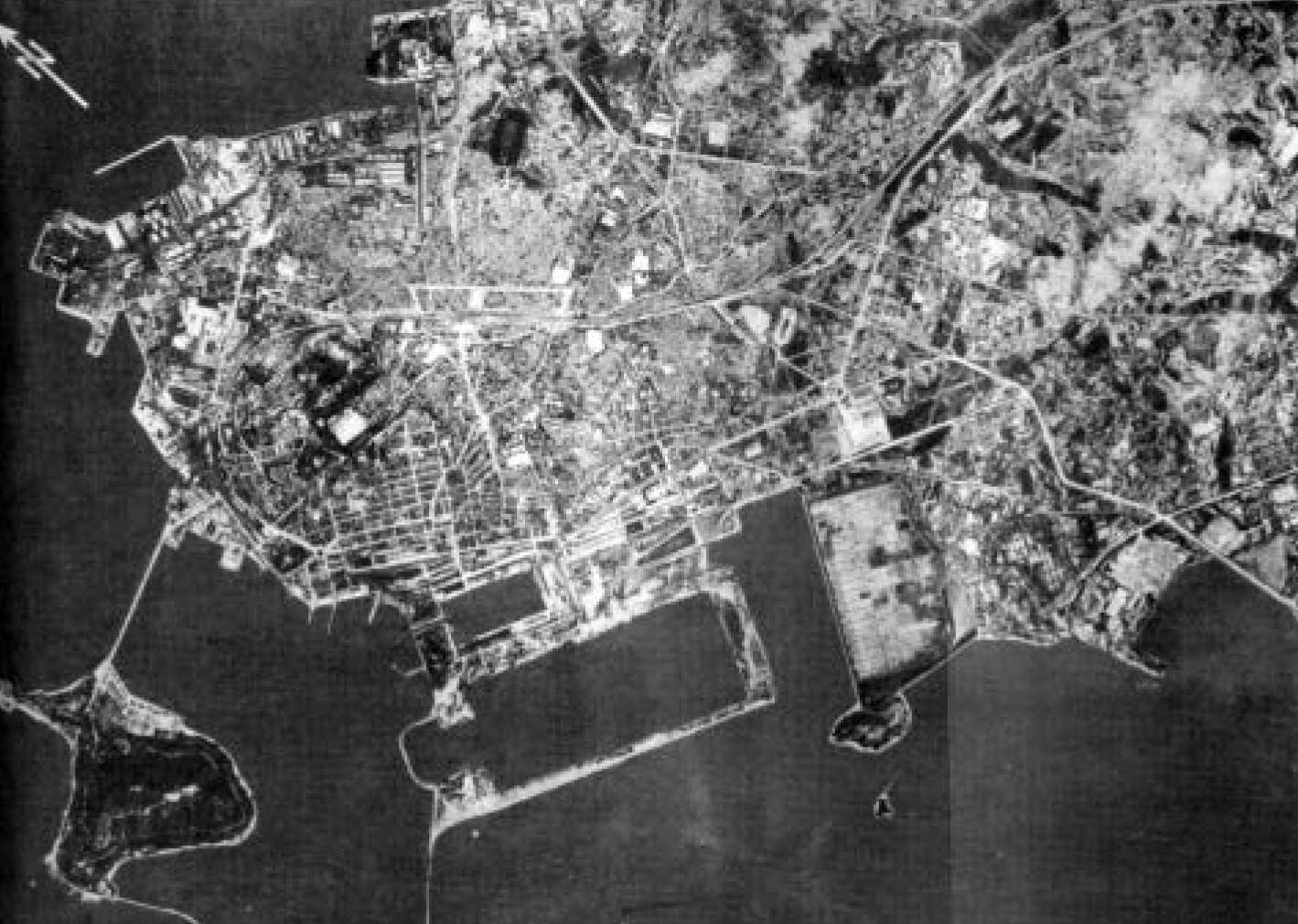
The reasons MacArthur kept Inchon in mind are evident. Inchon is the seaport of Seoul, Korea’s ancient capital and first city. The excellent railroads left by the Japanese fan north and south from Seoul, as do the less excellent highways. The national telephone and telegraphs net radiate from Seoul. Kimpo, Korea’s largest and best airport, lies in between Inchon and Seoul. Inchon, in effect, is to Seoul what Piraeus was to Athens. 13

While the strategic advantages of attacking South Korea’s “Piraeus” were numerous, the tactical problems presented were many. According to Heinl:

The amphibious bible of those days was USF-6 [U.S. Sixth Fleet], predecessor of USF-22A. USF-6 set out seven criteria for a landing area:

  • Ability of naval forces to support the assault and follow up operations
  • Shelter from unfavourable sea weather
  • Compatibility of beaches and their approaches to size, draft, manoeuverability, and beaching
  • Offshore hydrography
  • Extent of minable waters
  • Conditions which may affect enemy ability to defeat mine-clearance efforts
  • Facilities for unloading, and how these may be improved.14

On all these criteria, Inchon rated poorly. According to Heinl:

Inchon produced 32 foot tides twice a day . . . the tidal currents rarely dropped below three knots and, in the main channel, could reach up to 7-8 knots, which was almost the speed of a LCVP (Landing Craft, vehicle and personnel).15

Furthermore Inchon’s approach provided no room for maneuver and was easily minable.16 Inchon also had no beaches, only small stretches of “moles, breakwaters and seawalls.”17 In addition the heights and islands surrounding it were well suited for batteries that could easily pick off minesweepers as they cleared a path for the larger vessels.18 Given this, it is little surprise that GEN Edward Almond, Commanding General, U.S. X Corps, said Inchon was “the worst possible place where we could bring in an amphibious assault.”19

The fact that “the worst possible place” was chosen is interesting, because in a sense, it was the best possible place to launch such a high-risk venture. “There is an ancient Chinese apothegm that ‘the wise general is one who is able to turn disadvantage to his own advantage,'” and MacArthur used this apothegm to its fullest possible extent.20 Inchon was poorly defended precisely because the North Koreans did not expect a major landing there. Because of this, MacArthur sent his forces where they were least expected and thus was able to enter Inchon almost unopposed. Operation CHROMITE demonstrated that, while there may be certain planning guidelines that the amphibious commander ignores at his peril, there are no fixed rules. An experienced commander who is supported by an efficient staff may be able to overcome seemingly insurmountable obstacles. However, this will only be possible if the appropriate knowledge, skills, and equipment are also present.21

“Inchon remains a monument to ‘can do,’ to improvisation and risk-taking on a magnificent scale.”22 This statement has a great deal of truth to it. One of the most amazing aspects about Operation CHROMITE was the speed in which the operation developed from an idea to reality. In about 6 weeks MacArthur was able to create a force of almost 70,000 Marines, regular and Reserve; Army; and Republic of Korea (ROK) units, as well as a 261 strong fleet of American and United Nations vessels.23 In addition, he gathered vital intelligence about Inchon and the forces there and, more importantly, got permission from the Joint Chiefs of Staff and the President. It was fortunate for MacArthur that, although the CHROMITE force was hastily assembled, it contained such a strong reservoir of experience that the operation was feasible without extended rehearsal.24 This emphasizes the need for any country wanting to engage in amphibious warfare to have and, more importantly, to maintain a professional amphibious force, because risky operations, especially amphibious ones like CHROMITE, cannot be undertaken by a force of amateurs.

One of the most important lessons Inchon has brought to the world of military science is the devastating effect maneuver warfare can have on an opponent. Marine Corps Doctrinal Publication 1, Warfighting, defines maneuver warfare as follows:

[Maneuver] warfare is a warfighting philosophy that seeks to shatter the enemy’s cohesion through a variety of rapid, focused, and unexpected actions which create a turbulent and rapidly deteriorating situation with which the enemy cannot cope.25

The effect the landing had up the NKPA was almost immediate and created exactly the “rapidly deteriorating situation” maneuver warfare theorists hope for. With each of the 10 divisions sent across the 38th Parallel reduced to a few thousand exhausted fighters, each and all of them desperately trying to break the U.S. and ROK forces at Pusan, North Korea simply could not “cope” with an attack on its vulnerable flank – exactly as MacArthur expected.26 The Inchon landings are an example of maneuver warfare par excellence and “have certainly acquired mythological status as a classic example of the indirect approach and of manoeuvre warfare.”27 If, as MacArthur later described, North Korea “struck like a cobra,” then MacArthur, using the principles of maneuver warfare he displayed so often during the Pacific campaign in World War II, was like a farmer standing in front of it with a rake, just waiting for the right moment to strike back, and hard.28

On 27 September 1950, 12 days after the landing at Inchon, United Nations and ROK forces liberated Seoul. Caught between the hammer of Inchon and the anvil of Pusan, the NKPA offensive collapsed.

Trapped, the North Korean forces west of Osan were smashed. Those to the east collapsed as they retreated north. Many soldiers took refuge in the Taebaeks and became guerrillas. By the time they were back across the 38th Parallel, the North Koreans had lost over 150,000 men. … The UNC captured 125,000 prisoners. UNC losses in the offensive, including Inchon, were 18,000.29

The devastating effect the Inchon landing had on the NKPA clearly demonstrates the strategic value of amphibious operations in wartime. As for the United States, as so eloquently described by Max Hastings, “In a world in which nursery justice decided military affairs, Operation CHROMITE would have won the war.”30

While at the strategic, operational, and tactical levels Operation CHROMITE was a masterpiece of success, its effects at the grand strategic, or international, level produced extremely serious and negative consequences. Put quite simply: . . . while MacArthur’s manoeuvre warfare was outstandingly effective in annihilating the North Koreans, it did not create a stable basis for peace. Rather the decisiveness of the victory greatly threatened the Soviet Union and the Peoples Republic of China.31

With the NKPA a bleeding shell of its former self and crawling back over the 38th Parallel, MacArthur sent his forces after them with the aim of uniting Korea under the Western-backed government of Syngman Rhee. Unfortunately, the success of Inchon served to blind the UNC to the political consequences of sending soldiers to the Chinese border. For Mao Zedong’s newly established People’s Republic of China, the arrival of UNC forces at the YaIu River, combined with several bombastic comments by MacArthur and the linkage of the conflict to the Taiwan/Formosa issue, posed a severe threat to it.32 On 24 November 1950, Mao Zedong made good on his repeatedly ignored threats to attack, and soon UNC forces were reeling back across the 38th Parallel as the war entered its bloody third stage. What is interesting here is the way in which no operation, no matter how brilliantly conceived and executed, can be undertaken without a full understanding of the geopolitical context that may surround it, especially in a limited war.

One of the lasting lessons Inchon taught was the importance of joint operations in amphibious warfare. Despite the cutbacks suffered by the United States Navy (USN) and Marine Corps following World War II:

… the National Defence Act of 1947 permitted the USN to retain its carrier-borne aircraft and the USMC its organic aviation, armour, artillery and specialist shipping and both the USN and USMC could thus continue training, despite the reduced numbers.33

Additionally, “by having their own integral supporting arms and logistics services, the USMC [was] able to work easily with the USN on well practised drills.”34 This integration paid dividends at Inchon.

While the Inchon landings achieved the intended objectives, and did so with a minimum of causalities, there are three criticisms that can be made about the operation. The first of these, and by far the most serious, was the appalling lack of security displayed by the Americans in the lead up to the landing. As Hastings scathingly writes, “The intention of landing at Inchon was one of the worst-kept secrets of war, the subject of open discussion among thousands of men in Japan and Korea.”35 How this “secret” did not make into the hands of the North Koreans is a mystery, and the poor security shown was completely inexcusable. The Americans should have known better.

Second, there was a frightful lack of intelligence about the conditions of Inchon prior to Operation CHROMITE. Beyond the initial, and understandable, limited intelligence known about the NKPA order of battle at Inchon:

. . . the Japanese maps and hydrographic charts [vital to understanding Inchon’s enormous tides and treacherous coast] were inaccurate, outdated or conflicting …. In addition, aerial photography meant to augment the maps was difficult to interpret due to the different altitudes at which they were taken and could not accurately determine the height of the seawalls.36

MacArthur had had 5 years while he was Supreme Allied Commander, Japan, and Commander-in-Chief, Allied Forces, Far East Command, to gather information regarding the conditions and tides, and he was forced to do it all in 6 weeks. While the desperately needed intelligence was commendably gathered in time, such readily accessible intelligence about Inchon should have been developed well before September 1950.

The final criticism about CHROMITE is that the U.S. forces were far too slow in advancing on Seoul following the landing despite limited opposition, complete mastery of the air and sea and, in the case of the 1st MarDiv, being equipped with “tank, amphibious tractor, motor transport battalions and a fully motorised artillery regiment.” It took 12 days for the Marines and Army to reach the outskirts of Seoul, a distance of only 20 miles and across a well-developed road and rail system.37 The problem lay in the mindset of the 1st MarDiv. Filled with veterans, at all levels, whose knowledge of amphibious warfare was based on the slow, methodical battles of Iwo Jima and Okinawa, it had trouble breaking out of “its Pacific island fortress assault mentality.”38 The slow pace of the advance gave the NKPA in Seoul time to prepare, something that maneuver warfare seeks to prevent.

Conclusion

Operation CHROMITE was a masterful display of military prowess. With a swift blow to the flank, the forces under MacArthur were able to devastate the NKPA and change the course of the Korean War. Inchon demonstrated the important role amphibious warfare still had following the end of World War II. It also showed the importance of having a dedicated amphibious force, as there is no chance such a risky operation could have been undertaken as successfully by anybody other than a professional force. In addition Inchon showed the importance of joint operations and the effect maneuver warfare can have.

MacArthur’s leadership up to and during the landing was nothing short of spectacular. Operation CHROMITE only happened because of his vision and drive. The willingness of MacArthur to even attempt a landing at Inchon, especially given the fact that Inchon was precisely the wrong sort of place to launch an amphibious assault, demonstrates how important leadership is when undertaking such risky operations. While he misunderstood (or ignored) the context surrounding CHROMITE, he deserves full credit for seeing Operation CHROMITE through from conception to its brilliant execution.

The lack of security surrounding the landing was disgraceful, and the failure to gather intelligence in the prewar period was unacceptable. The Marine forces were too slow in their advance on Seoul, but it must be recognised that they were fighting in the memory of the Pacific campaign of World War II. To the veterans of the Pacific, slow and methodical was the only option available to them and that was how they fought at Inchon. Despite this, Inchon was, and forever will be, one of the most important examples of amphibious warfare in history as few other operations have achieved so much, so quickly, and for so little cost.

Notes

1. Hastings, Max, The Korean War, Simon and Schuster, New York, 1987, p. 99.

2. Langley, Michael, Inchon: MacArthur’s Last Triumph, Batsford, London, 1979, p. 53.

3. Different sources have different spellings of Inchon, though the previously mentioned one seems to be the most common and will be thus used in this article.

4. Korean Institute of Military History, The Korean War, Vol. 1, University of Nebraska Press, Lincoln, NE, 2000, p. 597.

5. Total casualties for the X Corps were 521 dead, 63 missing, 2,438 wounded. Gordon L. Rottman, Inch’on 1950: The Last Great Amphibious Assault^ Osprey, Great Britain, 2006, p. 89. Pusan is now called Busan, but the previous name will be used in this article.

6. Rottman, p. 42-43, according to Rottman, the notion of landing at Inchon was not conceived by MacArthur but rather by Donald McB Curtís, a Pentagon staff member who had prepared a contingency plan, SL- 17, days before the North Korean invasion. Nevertheless, it was MacArthur whose leadership and determination saw the plan go into action.

7 Boose, Jr., COL Donald W., USA(Ret), Over the Beach: US Army Amphibious Operations in the Korean War, Combat Studies Institute Press, Fort Leavenworth, KS, 2008, pp. 159-161.

8. Ibid., p. 161.

9. At the 23 August 1950 meeting, MacArthur said of the risk, “I realize that Inchon is a 5000-1 gamble, but I am used to such gambles,” Col Robert D. Heinl, “The Inchon Landing: A case study in amphibious planning,” Naval War College Review, Spring 1998, pp. 117-134.

10. Ibid., p. 118.

11. Hickey, COL Michael, USA(Ret), “The Inchon Landings, Korea – Operation CHROMITE, 15 September 1950,” in Tristan Lovering, Amphibious Assault: Manoeuvre from the Sea, Seafarer Books, Suffolk, England, 2007, pp. 411-420.

12. Dorschner, Jim, “Douglas MacArthur’s Last Triumph,” Military History, September 2005, Joint Chiefs of Staff-Group, accessed at http://www.jsc-group.com/military/warl950/500915inchon.html, 6 October 2010.

13. Heinl, “Inchon, 1950,” in LtCoI Merrill L. Bartlett, USMC(Ret), Assault from the Sea: Essays on the History of Amphibious Warfare, ed., Naval Institute Press, Annapolis, MD, 1983, pp. 337-353.

14. Ibid., p. 340.

15. Ibid.

16. Ibid.

17. Ibid.

18. Ibid.

19. Ibid., p. 341.

20. Ibid., pp. 340-341.

21. Speller, Ian, and Christopher Tuck, Strategy and Tactics: Amphibious Warfare, Spellmount Publishers, Staplehurst, United Kingdom, 2001, p. 37.

22. Hastings, p. 99.

23. Rottman, pp. 31, 39, according to Rottman:

32 LSTs (landing ship, tank) were crewed by Japanese and were on loan to the Shipping Control Administration, Japan to replace the huge numbers of inter-coastal ships lost during the war which were vital to ensure the country’s recovery and development. The use of these Japanese-manned ships was of questionable legality.

24. Hickey, p. 420.

25. United States Marine Corps, Marine Corps Doctrinal Publication 1, Warfighting, United States Government, Washington, DC, 1997, p. 73, accessed at http://www.dtic.mil/doctrine/jel/service_pubs/mcdpl.pdf, 6 October 2010.

26. Rottman, p. 12.

27. Hickey, p. 419.

28. Heinl, “The Inchon Landing,” p. 119.

29. Ibid., p. 27-28.

30. Hastings, p. 99.

31. Malkasian, Carter, Essential Histories, The Korean War, 1950-1953, Osprey Publishing, Oxford, Great Britain, p. 28.

32. Hastings, p. 128-146.

33. Hickey, p. 414.

34. Ibid., p. 419.

35. Hastings, p. 103.

36. Ibid., p. 51.

37. Stolfi, Rüssel H., “A Critique of Pure Success: Inchon Revisited, Revised and Contrasted,” The Journal of Military History, Lexington, VA, April 2004, pp. 505-525.

38. Ibid., p. 515.

Implications From Operation IRAQI FREEDOM for the Marine Corps

By F J “Bing” West & MajGen Ray L Smith, USMC(Ret)

MajGen Richard C. Schulze Memorial Essay

Geopolitics

At the broad level of geopolitics, the significance of Operation IRAQI FREEDOM (OIF) was an increase in what may be called “the deterrent quotient”; that is, nations antithetic to the United States will tread more cautiously. Defeat encourages aggression, and victory discourages aggressors. The speed and ease of the televised American victory in Iraq impressed the global audience. Conversely, after Saigon fell in 1975, the United States experienced a bout of national dyspepsia, and for a period of about 7 years we were challenged by the Soviet Union, China, Cuba, and even by Iran and Nicaragua. On the other hand, after Baghdad fell in April, Iran, North Korea, and Syria—to name but a few—reacted by avoiding actions that would antagonize the United States. Secretary of Defense Donald H. Rumsfeld growled at Syria, which hastily expelled some of the Iraqi supporters of Saddam who had fled to Damascus. The military leaders of nations hostile to the United States will counsel against their governments openly supporting terrorists because they know this President has the will and possesses an array of weapons with which to strike. OIF abetted rather than diverted from the war on terrorists.

Conversely, by demonstrating convincingly our martial superiority, the campaign against Saddam’s army probably strengthened the determination of countries like Iran to follow the lead of North Korea and acquire nuclear weapons as their deterrent against any potential American attack intent on regime elimination. Indeed, a principal reason for the war was to remove Saddam before he gained a nuclear capability. So, on balance, the war in Iraq altered national security priorities away from large-scale conventional war and toward combating terrorists—especially preventing the use of weapons that produce mass casualties—and dealing with the nuclear ambitions of North Korea and Iran.

Overall Conventional Power

America emerged from the war as the world’s military colossus, able and willing to employ overwhelming force unilaterally. The panoply of arms illustrated that the United States can strike any country with a combination of lethal blows. To the extent that Operation DESERT STORM (ODS) in 1991 was remembered for its air campaign, OIF will be remembered for its ground campaign. America can win a war by leading with air or by leading with land forces. With unassailable air superiority, American fixed-wing aircraft pounded both Baghdad command centers and military vehicles outside Baghdad. Having learned from ODS, a large percentage of Iraqi crews abandoned their armor and their vehicles at the outset of the war. This flight was followed by a second wave of desertions as the American armored convoys approached. American artillery provided fire support while their counterbattery radars nullified Iraqi indirect fires. As in ODS, the Abrams tank was unstoppable. The combination of direct firepower, maneuver, indirect supporting arms, and rapid resupply exceeded expectations.

The Iraqi Army did not fight with cohesion or determination, either because they wouldn’t, or as we have postulated here, they couldn’t. Either way, the highly publicized and lengthy buildup to the war psychologically unhinged the Iraqi armed forces. They had decided they were beaten before the war began. In all wars there comes a tipping point when the weight of the moral to the physical weapons systems becomes exponential. Often when Napoleon appeared on the battlefield his mere presence caused the opposing army to believe defeat was inevitable, prompting Napoleon to declare that the moral was to the physical in battle as 3 to 1. In Iraq it was 20 to 1. It certainly is in our interest to maintain that air of invincibility both for deterrent and for warfighting purposes.

OIF was more a demonstration of America’s martial capabilities than a two-sided battle against a tenacious foe. We do not know how the body politic will respond when American casualties are significant—which will inevitably happen in some future war. Nonetheless, when casualties occur unexpectedly, a commander must keep his focus on the mission and not halt to take counsel of his fears. In peacetime an accident always results in an investigation and often relief of commands all the way up the immediate chain of command. In wartime risks must be run, and some decisions will be wrong. Marines at all leadership levels must beware of hesitancy due to casualties.

When casualties and setbacks occurred during 23 to 25 March, the press turned from highly positive to highly negative in the space of a few days. There were reports about U.S. forces bogged down in the desert and a flawed Pentagon strategy. While these stories were coming in, Baghdad fell. The dizzying speed with which the press can report from the battlefield and the alacrity with which individual battles are headlined as overall trends suggest that when our forces do suffer heavy casualties, the fortitude and patience of our elected leaders will be tested.

Marine Role at the Operational Level

The major observation is that maneuver warfare worked. The Iraqi order of battle in the I Marine Expeditionary Force (I MEF) zone included numerous irregular forces (fedayeen, Ba’ath Party special police, and militias), six regular army divisions, and two Republican Guard divisions. Two divisions were deployed forward near the Kuwaiti border defending the oilfields and the Euphrates crossings. The others were disposed in depth along the Basra to Baghdad highway that parallels the Tigris River and is the historic invasion route for armies attacking from the Gulf.

Before the war, LtGen James T. Conway, the I MEF commander, and MajGen James N. Mattis, commanding the 1st Marine Division (1st MarDiv), had plotted an aggressive strategy that provided a roadmap throughout the campaign. Col Joseph Dunford’s 5th Marines Regimental Combat Team (5th RCT) attacked 9 hours ahead of the war plan’s schedule in order to secure the oilfields before they could be torched. The 7th Marines seized their portion of the oilfields the next day. The destruction of the 51st Iraqi Division in the oilfields suggested the coalition’s main attack was directed east toward Basra and then up the Tigris. Instead, the 1st MarDiv then swung 70 kilometers to the west to pick up the highways leading to Baghdad. This sideslip allowed the 1st MarDiv to bypass five Iraqi regular Army divisions and one Republican Guard division that were held in place by the 3d Marine Aircraft Wing (3d MAW), Task Force Tarawa, and the British (UK) division (part of the MEF).

Confusion and hesitation at An Nasiriyah cost the 1st Marine Regiment a day, but the 5th and 7th Marines moved their convoys north on schedule, thanks to the logistics light, or LogLite, supply system of the division. For a brief time (23 to 24 March) at the city of An Nasiriyah, it looked like the Iraqi tactic of mobile teams firing rocket propelled grenades from cities would significantly slow down the convoys. However, a few days later at the city of Diwaniyah, where the fedayeen posed a threat to the western flanks of the convoys, Marine infantry advanced and cleared the trench lines. There were no further attacks from that city, illustrating that the threat of the fedayeen to logistics lines had been overblown. While Task Force Tarawa and the UK forces secured the southern portion of Iraq, the 1st MarDiv marched on Baghdad.

The 5th RCT had reached Route 27 and was turning northeast to the Tigris on 27 March when an unfortunate and widely denied “pause” ordered by the Coalition Land Forces Component Commander halted the division for several days. When the attack resumed, the 5th RCT feinted as if intending to charge straight north up Highway 1. Instead, the 5th RCT suddenly cut northeast and crossed the Tigris at a seam in the artillery fans between the two Special Republican Guard divisions on the east bank. MajGen Mattis drove to the front, surveyed the fighting, and ordered a “run and gun” sprint for 120 kilometers in 2 days with 36 tanks in the lead as the hammer, and 3d Battalion, 5th Marines (3/5) flushing the fedayeen from the culverts along the highway. The major resistance occurred during 3 to 4 April along Route 6 near Baghdad. The tanks and hardbacked HMMWVs of 5th RCT led the way in a running fight, while again it was dismounted infantry who delivered the coup de grâce. The vast majority of the enemy’s main forces were behind them and irrelevant. Nothing stood between them and Baghdad but the Diyala River.

Once at the Baghdad bridge over the Diyala River, Col Steven Hummer’s 7th Marines took the lead, and 3/4, 1/7, and 3/7 charged across the Diyala River, followed by Col John Toolan’s 1st Marines. The overall war plan called for raids into Baghdad, but the division “forgot” to include withdrawal plans after each raid, and on 9 April the Marines and Iraqis tore down Saddam’s statue near the Palestine Hotel symbolizing the end of sustained military resistance.

The Iraqi regular forces did not put up much of a fight, just as they didn’t in Kuwait in 1991. However, one should not dismiss them as fighters. They didn’t put up much of a fight because our combined arms power, coupled with a brilliant maneuver-oriented plan, made a cohesive defense impossible. The bypassed divisions were placed on the horns of a dilemma. If they left their prepared positions to counter the maneuver of the division, the pilots of 3d MAW (and the Navy and Air Force) would pounce on them. Any Iraqi armor surviving the air onslaught would be in the open terrain and at the mercy of the superior range and optics of the M1A1s and light armored vehicles (LAVs).

The Iraqi regular forces, if attacked in their fixed defenses, tried to fight. For instance, the 51st Division, supposed to be unreliable, fought as well as any other division the MEF faced. In operational terms, the attack on the 51st Division was frontal and with only a few hours “shaping” in order to achieve tactical surprise and seize the oilfields intact. As a result the effects of maneuver, deception, and combined arms that the rest of the Iraqis suffered did not apply to the 51st Division. Had we pounded our way from Basra to Baghdad, as the Iraqis expected and we might have done in the past, we suspect the reputation of the Iraqis as fighters might be better today than it is.

The culture of the Marine Corps, given the losses in the trenches of World War I and in storming the beaches in World War II, had led in Vietnam to an unreflecting acceptance of high casualty rates. After Vietnam the Marine Corps embraced the theory of maneuver warfare, and OIF was the first major war fought according to that doctrine. Employing three RCTs as its fighting core, the 1st MarDiv advanced on two routes, 7 and 1, and then converged onto Highway 6 on the east bank of the Tigris for the final sprint to Baghdad. To pin down and bypass major Iraqi forces, the division first feinted toward Basra and later feinted toward driving straight up Route 1 into Baghdad. The division split the seams between major Iraqi forces, conclusively engaging by direct fire only three of the eight Iraqi divisions in its area of operations. In contrast, the 3d MAW attacked those divisions incessantly, delivering 6 million pounds of high explosives and shredding their equipment.

The march up to Baghdad and on to Tikrit, the longest expedition in the history of the Marine Corps, was a remarkable achievement in maneuver, endurance, and supply. The LogLite austerity combined with the determination of the crews in the convoys, C-130s, assault amphibious vehicles (AAVs) LAVs, and tanks to eke out the last gallon of fuel and to keep moving the three armored columns (the three RCTs), each stretching 100 kilometers in length.

If the helicopter was the signature piece of equipment in Vietnam, the tank was the premier fighting machine in OIF, and the night vision goggles (NVGs) that permitted 24-hour driving were the “new best thing.” Without the NVGs the pace of the campaign would have been unsustainable. While the convoys rolled 24 hours a day, each night the battalions would coil, and the battalion commander and the sergeant major were the leaders, dealing directly with the company commanders and the first sergeants. ODS in 1991 was described as a “generals’ war” because the campaign was orchestrated from the top. In contrast, OIF was a colonels’ war because the rolling convoys—best pictured as discrete sets of battlewagons—attacked under the direct leadership of the regimental and battalion commanders.

Operational Implications for Marines

Missions becoming more joint leads to larger staffs far in the rear with larger information technology (IT) budgets. In OIF the movement toward Baghdad outpaced the planning cycle of the staffs in the rear. ITs yielded self-licking ice cream cones, with senior staffs using chat rooms on the computer networks to fan each other’s predilections or fears. The lesson should be that senior staffs, such as the Coalition Land Forces Component Command, should focus on coordination before the battle and thereafter issue mission-type orders, relying on the commanders on the battlefield to fight the battle. The problem is that as the size of the staffs off the battlefield increases and as communications enable them to believe they understand what is going on, then those staffs will, with good intentions, issue authoritative orders not reflective of battle conditions. Gobbledygook and over-the-top rhetoric about the marvels of “network-centric warfare” overlooked a central fact: networks transmit the same messages simultaneously only to everyone on the network, and those at the front doing the fighting weren’t on the highly touted “net.”

From battalion on down in the Marine Corps, communication is primarily by radio and by voice, and the distances were too long for reliable radio relay to the rear while on the move. On the other hand, the major feeds at higher joint headquarters in the rear are primarily digital and rely upon computers, supplemented by satellite photos, teleconferencing, television, and video streamed from unmanned aerial vehicles. However, on fast-moving battlefields like OIF, these digital technologies lag far behind the battles, where voice communications are employed and no one is taking the time to type in reports.

A singular irony of OIF was that the embedded press became a major source of information to the higher staffs. The reporters, with better technologies than the battalions, are trained to speak and type succinctly and to convey with clarity the information within the limits of what they understood; that is, they did not speculate; they reported what they were seeing. Early in the war, for instance, I MEF received from 3d Light Armored Reconnaissance Battalion (3d LAR) the radio code word “slingshot,” meaning the unit was being overrun. As the staff was scrambling to divert attack aircraft, a reporter from Fox News popped up on television, and his narration showed that the LAR was overrunning the enemy, not the other way around. And, when the 7th Marines entered Baghdad, a main feed showing what they were doing and showing the friendly crowds was CNN (Cable News Network). I MEF adapted its plan on the spot as the live pictures were seen in the command center.

The press, however, is not an acceptable military communications system, and the distances—sometimes even in one convoy—were too great for the PRC-119 radios. Significant use was made of commercial satellite cell phones and the Army’s blue force tracker—a vehicle-mounted monitor displaying via satellite communications the locations of friendly units across the battlefield. Of the Marine budget for IT, 40 percent goes to garrison and such gargantuan and controversial projects as the Navy Marine Corps Intranet. Another 40 percent goes to support Marine air-ground task force activities above the battalion. Only 20 percent goes to the battalion and below, and most of that is for the SINCGARS. The current trends point to a digital-based communications and information system from Washington to the combatant commander to corps, division and, perhaps, the regiment, and a voice/radio system at the fighting level. A major lesson from OIF is that the Marine Corps must put together a review panel, mainly of noncommunicators, whose members do not have loyalties to the current IT program. Marine IT at the dismounted and mounted fighting level from battalion on down needs a radical new look.

So, too, does the V-22—not in terms of the program but rather of reaffirming that the aircraft will be employed in concert with maneuver warfare. Rotary-wing transport aircraft played a marginal role in OIF due to the nature of the battlefield. In the Vietnam War the jungle and the close terrain demanded the extensive employment of helicopters. In OIF, as in ODS, the open terrain lent itself to vehicular movement. The V-22 can assure advance lodgements far in front of the main force, an impossibility with the wornout CH-46. The V-22 will open up a new dimension in maneuver warfare—if it is not treated as an asset too valuable to be employed radically. Marine frugality mitigates against objective risk-reward calculus. For the V-22 to live up to its advertising, those who control the Osprey must be willing to risk its loss.

Similarly, the long-distance overland movement of the AAV must be ensured. The AAVs during OIF performed very well indeed, and great credit goes to the crews who night after night performed maintenance and repairs even when they were physically exhausted.

In preparing for the next expedition, the Marines must ask what the terrain will be as well as the nature of the enemy. The wisdom of a balanced force, just like a balanced stock portfolio, is manifest. The advocacy 20 years ago of generals to establish a mounted infantry force training center at Twentynine Palms in the mid-1980s deserves applause. Over the next decade, a review of the usual suspects for conflict—North Korea or Iran—suggests building upon the RCT. Key to maneuver warfare is speed, agility, and ruthlessness to shatter the enemy’s cohesion, even while leaving most of his forces physically intact. The infantry’s instinct to close with and destroy the enemy at the point of attack must remain at the forefront of training.

The tactic needing most refinement is the proper alignment of the firepower of the tank and AAV with the maneuver and closure of the infantry. The firepower provided by a section of AAVs with the up gunned weapons station has brought a great leap forward for mechanized operations. More effort is needed to “meld” the infantry/AAV team in tactics, techniques, and procedures. Also, organizing “bite-sized” packages that can be refueled and resupplied on the move needs development. The spongy ground between the Euphrates and Tigris Rivers severely restricted off-road maneuver, and so the three RCTs were strung out along two highways. If a battalion dropped its supply train to attack with only one or two companies, it risked the vehicles left behind becoming ensnarled in gigantic traffic jams.

To “repackage” battalions so that they can be resupplied and fight in smaller, self-contained packages is a daunting challenge. But it is also an opportunity. Every Marine is a rifleman and wants to be part of the action when deployed on an expedition. In OIF, supply was more than 50 percent of the challenge, and everyone in a convoy was equal—and equally needed. This is the model for the future battlefields, and it means that the logisticians should have a center seat in the design of operational plans and force packages.

Overall, OIF indicated that the Marines have the proper balance for the next 10 years and that the doctrine of maneuver warfare is the proper framework for preparing for the next war.

Joint Implications

At the joint level, four issues require addressal.

First, disturbing to all Marines in OIF was the incautious driving of Iraqi civilians who persisted in driving during combat conditions. Due to the constant but statistically improbable threat of a suicide car bomber, this phenomenon resulted in tragic casualties. The research and development community should work hard to develop a non- lethal means of signaling to, and perhaps startling, civilian drivers so they will not persist in driving into life-threatening situations.

Second, combat initiatives below company and battalion level were few in this war due to the open terrain. The battalion and company commander could see his subordinates, and independent patrolling was scant, so the small unit leaders were usually operating under the command of the company commanders and above. At the same time, during OIF the Special Operations Command (SOCom) performed credibly in separate task forces and worked well with everybody, albeit at a measured pace. On the other hand, force reconnaissance (recon) appears to have been superceded by SOCom for the more risky and independent missions for which they trained for so many years. For instance, although recon was ready and standing by, joint command relations were such that it was special operations units—including Army Rangers and Navy SEALS—that rescued PVT Jessica Lynch from a hospital inside the center of the Marine operating area. On balance, the trends indicate that while Marine doctrine encourages initiative at the lower levels, it appears that SOCom will become the actual repository of small unit operations. SOCom is the first congressionally legislated military organization to take jointness to its logical conclusion and remove the Services from the operating forces. In OIF there were 14,000 SOCom troops deployed. Such a large number suggests that units like force recon will migrate to SOCom for missions such as training against terrorists in the Philippines or sending teams into the mountains of Afghanistan.

Although the history of the Marine Corps has been a history of small unit independent leaders—the Smedley Butlers and Presley N. O’Bannons—in the future such small unit actions may be done by SOCom. The possibility is that the niche of the future Marine Corps will be in expeditions at the battalion, regiment, and division level. This is not an altogether salutary trend. As SOCom becomes the tip of the spear, many young men attracted to the Marine Corps will contemplate an alternative Service as the stepping stone into SOCom, with institutional loyalty and career path determined by that organization and not by the parent Service.

Third, after the war there is a period of considerable turbulence in adjusting to a peacekeeping force. It is in our interest to have a written, joint doctrine for actions after a war. In 3 months the Army suffered 50 killed in action and the Marines 1. This is ticklish to delineate as there are clearly demographic differences between the operating areas of the Army and the Marines.

However, 80 percent of the casualties have occurred in vehicles. The Army forces—driven by their force structure-conduct most of their patrols mounted. The Marines are almost exclusively patrolling dismounted. The dismounted Marine patrols assault into the ambush force. It seems apparent that a mostly mounted force is at a distinct disadvantage in an urban guerrilla environment. But it is difficult to hammer out a joint doctrine for peacekeeping when the on-the-ground experiences have differed dramatically based upon different demographics, different operational philosophies, and different force structures. That said, it is hard to argue with success, and the decentralized, constant patrolling and presence approach of I MEF in the Shi’ite south deserves being chronicled and studied for application elsewhere.

Lastly, from OIF it is manifest that there is not a joint concept for seizing a city. Baghdad was not taken in a seriously contested fight. Before that city fell the concept of the Army was to encircle and to raid, attacking in and out with columns of tanks. This was a tactic of attrition based on superior firepower. The Marine concept was to seize and hold, employing armor protected by dismounted infantry. The stark contrast in the two approaches was in part driven by the difference in force structure—the Army being mainly armor and vehicular mounted and the Marines with proportionately many more dismounted infantry. The UK chose yet a third approach at Basra where they surrounded and wore down the defenders by psychological pressure as well as by firepower. There was no reconciliation among these three strategies before or after OIF. This is a serious subject that requires joint addressal.

Conclusion

OIF was a remarkable military victory. What stood out were the speed and the logistics movement. Potential adversaries of America took note, and deterrence was enhanced. The Marines demonstrated innovation in planning and tenacity in execution, completing a campaign that will be studied for years to come. Maneuver warfare moved from being a theoretical doctrine to a real battlefield where it proved itself.