



Books Reviewed
Posted on May 15, 2026
Piloting Life: One Man’s Reflections on Life and the Lessons He Learned.
By Carey Hobbs with Melinda Seibert.
Published by CJ Books. 440 pages.
“Piloting Life: One Man’s Reflections on Life and the Lessons He Learned” are the reminiscences of Carey Hobbs, a former Marine aviator who leveraged the lessons he learned from flying jets into a very successful business career.
Hobbs entered the Naval Aviation Cadet program in 1958. Graduating in the top 10 percent of his preflight class, Hobbs was “given the option to choose either the Navy or the Marine Corps”—and chose the Marine Corps. “I opted for the Marines, believing my chances of flying jets were better there since they had fewer helicopters and helicopter pilots compared to the Navy at that time.”
He flew the A-4 Skyhawk, a single-engine Navy and Marine Corps light attack aircraft. To me, the most interesting part of Hobbs’ book is how dangerous it was to fly military jets in peacetime during the early 1960s. Twice, Hobbs was on the verge of ejecting. The first time, he was flying toward San Francisco when his engine lost power. Right before ejecting, his engine suddenly spun up, and he made it back safely. The other time, he was practicing low-altitude ground support in Yuma, Ariz. His cockpit heated up so much that he could feel heat when he touched the left console. Though worried the “ejection seat might cook off at any minute, and [he’d] be launched out,” he safely made it back to Marine Corps Air Station El Toro, Calif. A hose had come loose, and “700-degree bleed air from the engine was seeping into the cockpit.”
Additionally, one morning, two of Hobbs’ squadron mates were killed when they collided with a 700-foot mountain at the end of the El Toro runway, resulting in both planes exploding. In another incident, Hobbs was “the designated leader” for a flight returning from “air-to-air gunnery training” when he glanced over his left wing and “saw a massive ball of black smoke rising into the sky.” The pilot “had attempted a roll, which led to the fatal accident.” Keep in mind these were all peacetime accidents in the United States during routine training.
What made Hobbs a successful jet pilot also made him a successful businessman. He wrote that being a successful Naval aviator “demands risk, resilience, and the willingness to make course correc-tions along the way,” and he utilized these attributes to build his business career. For over 50 years, he was successful in a variety of industries, including air filters, “producing insulation for outer-wear,” manufacturing acoustic and thermal insulation for vehicles,” producing “quilt batting” (the internal material in a quilt) and trucking. He was not 100 percent successful—one time a trusted employee turned him into OSHA and other times suppliers and/or buyers reneged on promises and contracts. But by focusing on quality and building personal relationships rather than profits, Hobbs’ company was able to adapt and reinvent. “When one market failed,” he wrote, “we moved on to the next opportunity.”
“Piloting Life: One Man’s Reflections on Life and the Lessons He Learned” is worth reading for anyone interested in Marine attack aviation in the early 1960s or those who want to read about how one Marine leveraged his military experience into a successful civilian career.
Maj Skip Crawley, USMCR (Ret)
Reviewer’s bio: Maj Skip Crawley was an infantry officer assigned to 1st Battalion, 7th Marines, in Desert Shield/Desert Storm. He is currently the Marine for Life Central Region Network Coordinator based in the Dallas-Ft. Worth area.
USMC Tank Markings in the Pacific.
By Romain Cansiere.
Casemate Publishers. 160 pages.
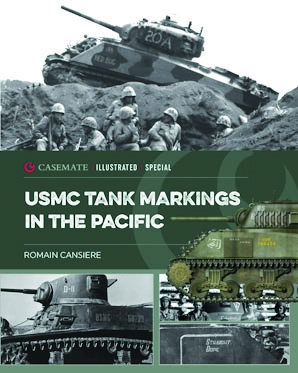
Deciphering Marine Corps vehicle markings has been a challenge for many historians, hobbyists and enthusiasts pretty much since the end of World War II. Romain Cansiere’s “USMC Tank Markings in the Pacific” is the first comprehensive look at Marine tank markings ever compiled, and Mr. Cansiere has hit a home run with it.
With each unit having its own chapter, he addresses all the Marine tank units that saw combat in WW II, not just the six numbered tank battalions. From the elephant-marked M4A2 Shermans of Company C, I Marine Amphibious Corps’ medium tank battalion that landed on Tarawa to the Tank Company, 4th Marines, Cansiere leaves no stone unturned.
The book is well illustrated with many never before published images of Marine tanks. Most photos are in black and white, but there are color photos interspersed throughout to give a bit of original color where possible. In addition to the photos, each chapter has artist renderings of the unit’s tanks in accurate colors and markings.
The book also gives a concise oper-ational history of each unit. It covers their major operations, their transitions between tank types and the improved capabilities that came with those new tanks. Although only appearing in a few chapters, one of the best features in the book is the inclusion of tables that outline tactical numbers, names and where the tanks were assigned within the unit. The 4th Tank Battalion information is absolutely outstanding.
The appendices cover Marine tank unit organization for light and medium tank companies and battalions, as well as aerial recognition markings used by Marine tanks in combat. Overall, this book is a phenomenal resource that fills in the blanks not only on Marine tank markings but the organization and structure of Marine armored units from WW II. I cannot recommend this book highly enough for Marine tank enthu-siasts, modelers and WW II buffs.
Jonathan Bernstein
Reviewer’s bio: Jonathan Bernstein is the arms and armor curator at the National Museum of the Marine Corps. He is the 2023 winner of the Marine Corps Heritage Foundation Robert D. Heinl Jr. Award for Marine Corps History. In addition to a 35-year museum career, he also served as an aviation officer in the 1st Battalion, 104th Aviation Regiment, as an AH-64 pilot from 2006-2012 and focuses his research on the evolution of close air support and combined arms warfare. He lives in Virginia with his wife and two sons.
@SemperRead Recommends…
“Armies Afloat: How the Development of Amphibious Operations in Europe Helped Win World War II.”
By John M. Curatola. Published by University Press of Kansas. 376 pages. Military History/World War II.
Most people think of D-Day and picture the landing itself. Curatola focuses on what had to happen before that moment was even possible. “Armies Afloat” is less about one famous beach and more about the long, hard process of teaching the U.S. Army, Navy and Army Air Forces how to work together in amphibious war. He shows us that Normandy was not just courage under fire. It was the product of years of trial, failure, adaptation and coordination.
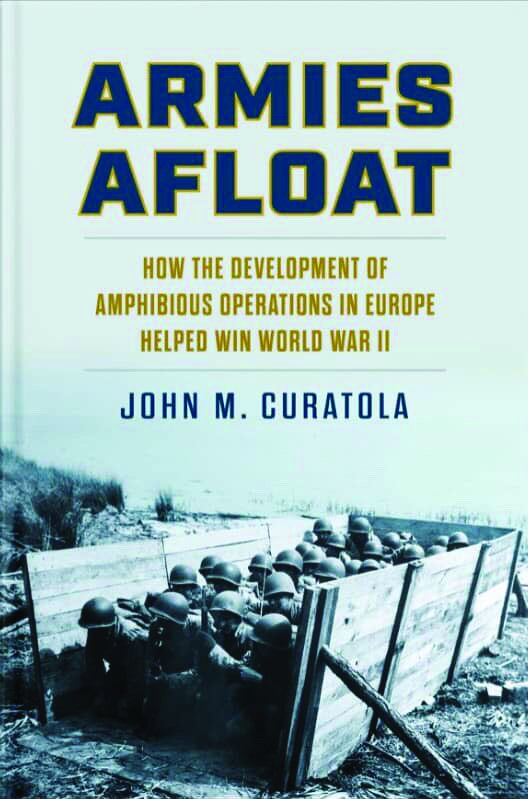
Curatola tracks the war from North Africa to Sicily, Salerno, Anzio, Normandy, and southern France, showing how each operation exposed weaknesses in command relationships, ship-to-shore movements, naval gunfire, air support, beach organization, logistics and communication. The Army may not get the same attention as the Marines in conversations about amphibious warfare, but this book makes clear just how much of that burden it carried in Europe.
Landing craft, naval fires, air cover, engineers, beach parties and follow-on logistics all had to come together under pressure. Curatola does a solid job of showing how rough some of the early efforts were and how quickly the American forces adjusted.
“Armies Afloat” reads as both history and a study in adaptation. It reminds you that success on the beaches was earned by a willingness to persevere—long before the ramps dropped.
“D-Day in the Pacific: The Battle of Saipan.”
By Harold J. Goldberg. Published by Indiana University Press. 276 pages. Military History/World War II.
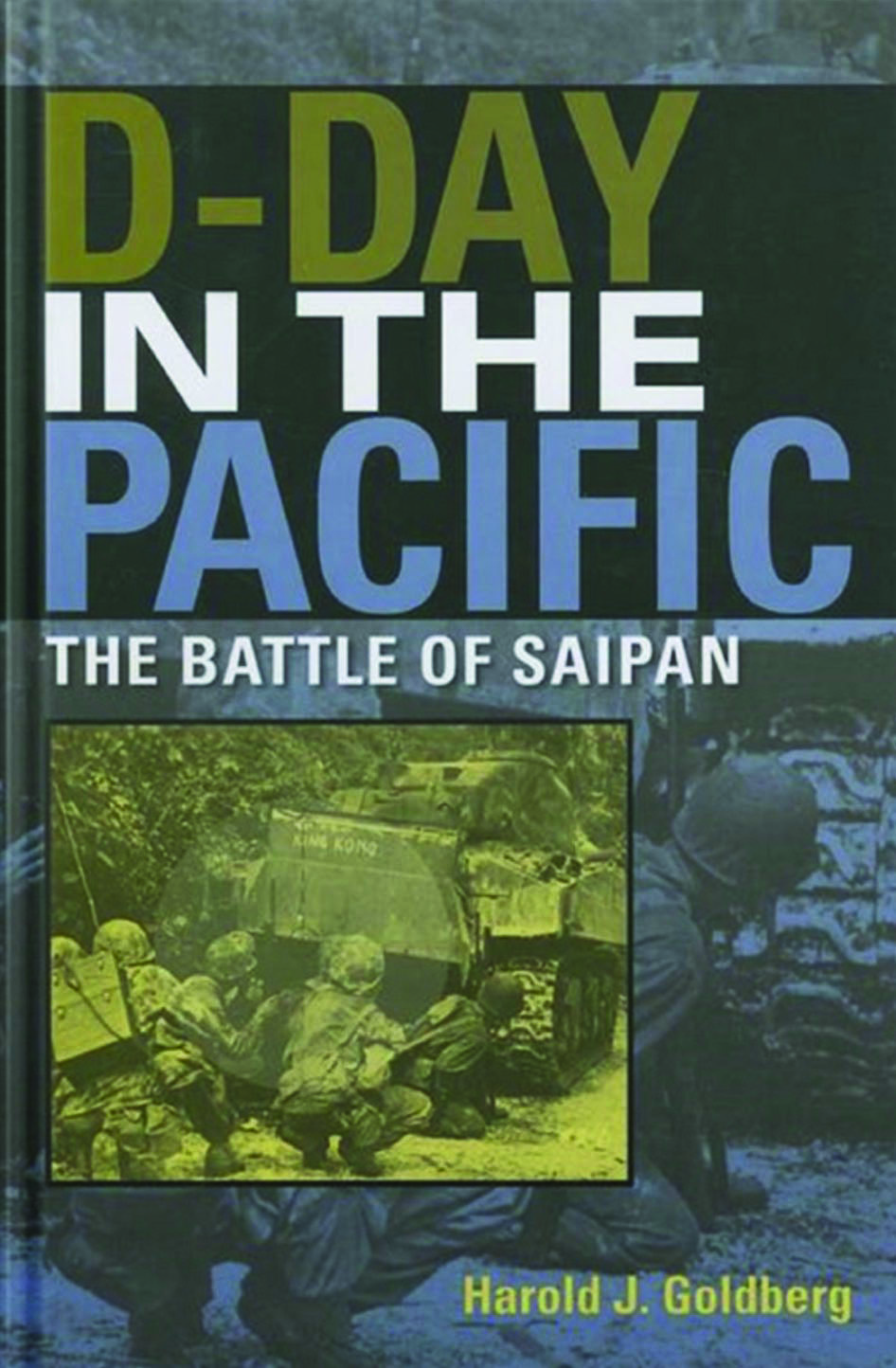
Harold J. Goldberg’s “D-Day in the Pacific” shifts the spotlight away from Normandy and places it where it equally belongs: Saipan. While the world watched Europe in June 1944, Marines and soldiers in the Pacific were fighting a battle that would quietly decide the fate of the war against Japan.
Goldberg does a solid job of showing why Saipan mattered. It was part of Japan’s inner defense line, and its loss forced Japanese leadership to confront something they had avoided for years: Defeat was no longer a distant possibility. For the United States, capturing Saipan and nearby Tinian opened the door for B-29 bombers to reach the Japanese homeland. From that point forward, the war was no longer contained to distant islands.
This book captures the brutal nature of amphibious warfare; the coordination between sea, air and ground forces; and the relentless resistance from Japanese defenders who understood exactly what was at stake.
This account is a reminder that while one D-Day dominates public memory, another was unfolding across the Pacific, one that brought the war to Japan’s doorstep and changed its outcome for good.
2ndLt Steven Ramirez is the Marine behind the Instagram account @SemperRead. The self-described “unofficial librarian” for the Marine Corps, Ramirez is sharing reviews of some of his favorites with Leatherneck readers in his new regular department, @SemperRead Recommends. This month’s recommendations highlight the invasion of Normandy and the Battle of Saipan, both of which were fought 82 years ago this month.
Double Knot.
By Mac Caltrider.
Published by Dead Reckoning Collective. 175 pages.
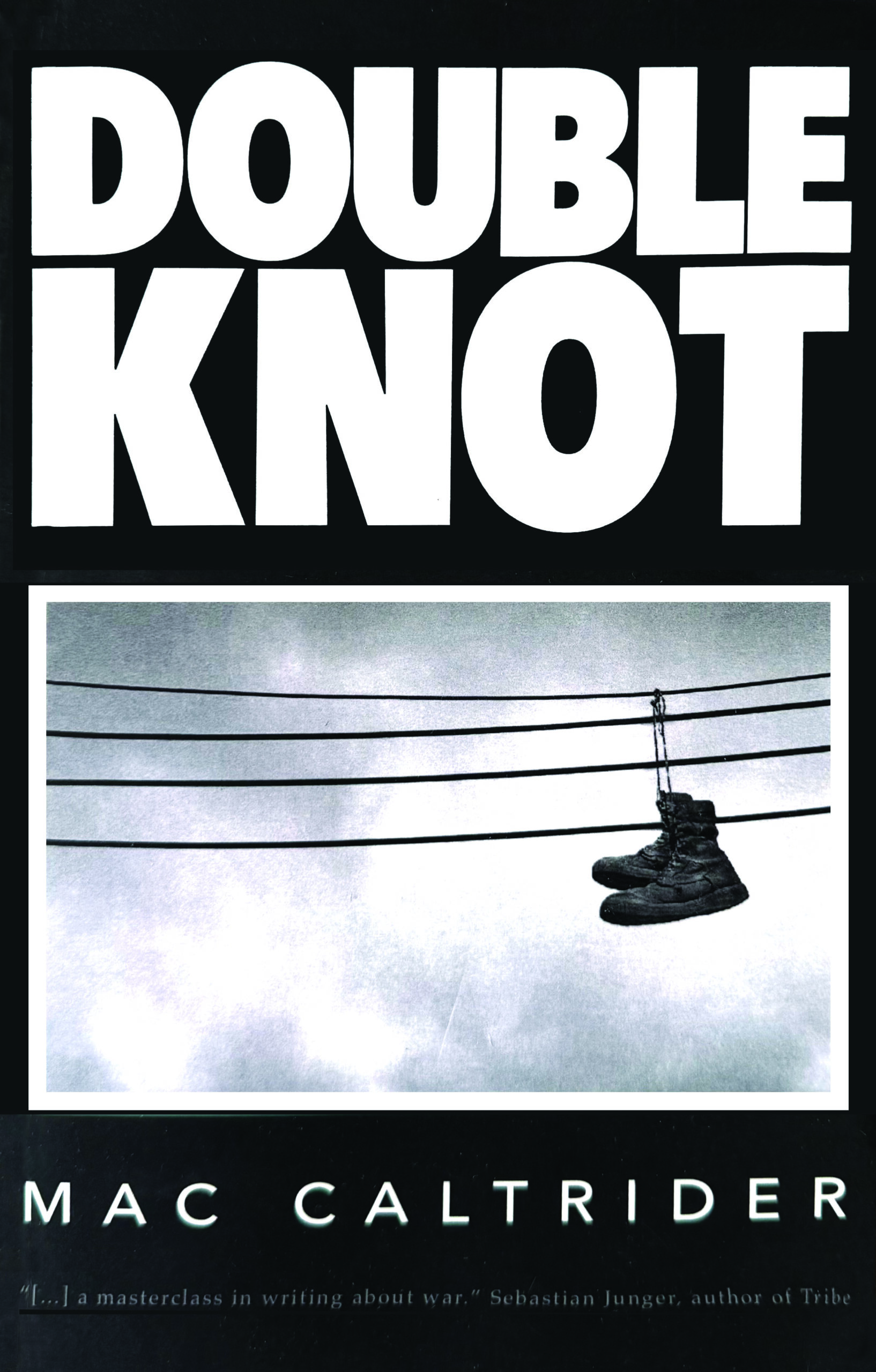
Throughout the global war on terror the publishing world experienced a deluge of veteran memoirs and biographies as publishers and bookstores frenzied to monetize there-I-was storytelling from the loose wallets of insatiable combat voyeurs. There are books written by those who served in Iraq, Afghanistan, Iraq again, Afghanistan again and in Iraq again-again during the fight against ISIS. There are so many, a ChatGPT search may not give you a definitive number. Some are good, a few are great, but most … not so much. Of these in the majority category, the primary theme being examined is the desire to advertise how badass they or their unit were. A very small number dare to explore themes that go beyond combat and the establishment of a post-military career as a podcast host. “Double Knot” by Mac Caltrider is one of them.
First and foremost, “Double Knot” is beautifully written. Caltrider sets it apart from other memoirs because of its interiority and willingness to be introspective. Not in a performative way, but in a way that shows the complexity of life. In a way that does not confine itself to a good-versus-evil narrative by showing us dy-nam-ic characters thriving and strug-gling in chaos. It also shows us how war con-tinues to be omnipresent in someone’s life once it is introduced.
It is clear Caltrider is trying to move beyond simply retelling his experiences into a space that explores the totality of the human experience of combat: what it does to someone before, during, and after, and to ask the question, What does the axiom “combat changes you” actually mean? In the last chapter, “Going Cigaretting,” Caltrider recalls an evening with one of his favorite authors. “Most military memoirs, he points out, are really just combat books. They tell stories of men under fire, the hardships they endure and the sacrifices they make. But combat is just a fraction of the machine. A real war book must include more. It can’t ignore the destroyed families and the wasted youth swept up in war’s category five winds.”
“Double Knot” breaks the war memoir paradigm at every turn, including the form. Most tend to have a single, chronological narrative that follows the development of the protagonist as a young, testosterone-filled rapscallion who just needs to feel part of a team into the consummate team player who is able to achieve individual glory while still hav-ing the humility to acknowledge they owe everything to their buddies (but they’re keeping the medals). Caltrider presents his story as seven essays that interweave his pre-Marine Corps life with his time on active duty with his life after serving. Each essay can stand alone, but they are also in conversation with one another. For example, his friend Cavalier appears in multiple essays, and although it is not necessary to have read the previous essays to understand the context, the full impact of Cavalier in Caltrider’s life is much more significant when following him through each one.
“Double Knot” offers something to active-duty servicemembers and veterans alike. Caltrider skillfully overlays the mundane onto the chaotic in his depictions of combat while tracing its continued influence in his life as a Baltimore police officer on the beat, journalist cov-ering a USO tour and backpacker attempting to summit Mount Rainier. He takes readers on a journey where they will find themselves laughing, gasping and crying—often on the same page. Ultimately, “Double Knot” may not resolve the tensions it presents, but it does not need to; its value lies in forcing the reader to sit with them.
Maj Vic Ruble, USMC (Ret)
Reviewer’s bio: Maj Vic Ruble, USMC (Ret), is the deputy editor of Marine Corps Gazette and the host of the MCA’s Scuttlebutt podcast.
Enjoy this article?

Ichabod Crane, The Marine
Leatherneck
Org. October 1959
By: Edwin Turnbladh

A Furious Fight: An Artillery Marine’s Account Of The Assault On Iwo Jima
Leatherneck
March 2024
By: Andrew Biggio
Dispatches from the Pacific: The World War II Reporting of Robert L. Sherrod
Leatherneck
June 2018
By: Bob Loring