



Quitter’s Day and the Leadership Skill We Don’t Talk About Enough
Posted on: January 21,2026By the second Friday in January the jokes start flying. Quitter’s Day. The gym is quieter. The planners are already half ignored. The big New Year energy has faded and people start asking themselves if the goals they set were realistic at all.
As a Marine Corps spouse I see this moment a little differently.
We live in a culture that prizes endurance. We move when told. We adapt constantly. We hold things together through deployments, PCS seasons, unpredictable schedules, and long stretches of carrying more than our fair share. Quitting is not something we are encouraged to talk about. We are taught to push through. Make it work. Figure it out.
And often that mindset serves us well.
But sometimes it does not.
Quitting is not the same as giving up
There is a difference between quitting because something is uncomfortable and quitting because something is no longer right.
Military spouse life is full of hard things that are worth sticking with. Building community again after a move. Finding purpose when your career has been interrupted. Showing up when it would be easier to retreat inward. Those challenges shape us.
But there are also things we hold onto simply because we always have. A role that drains us. A volunteer commitment that no longer fits our season. An expectation we never agreed to but somehow inherited. Staying in those spaces out of guilt or habit is not resilience. It is exhaustion.
Knowing when to let go is not weakness. It is judgment.
Why I recommend Quit
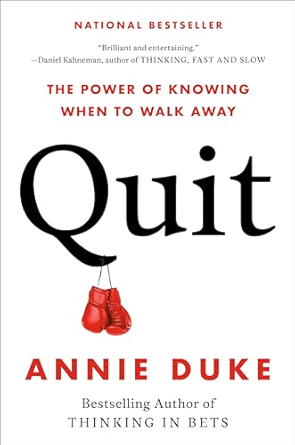
This is why I often recommend Quit by Annie Duke. The book helped me put language around something many spouses quietly wrestle with. Persistence is not automatically virtuous. Quitting is not automatically failure. What matters is whether continuing still aligns with your values, your capacity, and your long term goals.
A few ideas from Quit that especially resonate in the spouse space
• Past effort does not obligate future sacrifice
• Identity can trap us into roles that no longer fit
• Staying busy is not the same as staying purposeful
• Quitting well creates space for better yeses
This is not about opting out of service. It is about choosing where your service actually matters.
Questions worth asking this January
If Quitter’s Day hits a nerve this year, pause before you judge yourself. Ask a few honest questions instead
• Am I doing this because it still serves my family or because I would feel guilty stopping
• Does this role reflect who I am now or who I was five duty stations ago
• If a newer spouse came to me with this situation, what advice would I give her
• What could I say yes to if I let this go
Those answers usually tell the truth faster than motivation speeches ever will.
A different kind of reset
January does not need to be about grinding harder or proving toughness. Military spouses already know how to endure. What we sometimes need is permission to be strategic.
Sometimes the right answer is recommitment.
Sometimes it is adjustment.
And sometimes it is a clear, calm decision to quit something with no bitterness and no apology.
Quitter’s Day does not have to be a joke. It can be a checkpoint.
Letting go of the wrong thing can feel scary. Letting go of the right thing can feel like relief.
That is not failure.
That is leadership.

Marta Sullivan is a veteran and spouse of an active-duty Marine. She is passionate about programs and initiatives that support and promote the well-being, quality of life, professional development, and economic opportunity of military spouses, veterans, and their families. She currently serves as Vice President, Marine and Spouse Programs at the Marine Corps Association.


