


The Marine Corps Reserve at 110: A Conversation With LtGen Len Anderson IV, USMCR
By: LtCol Joel Searls, USMCRPosted on July 15, 2026
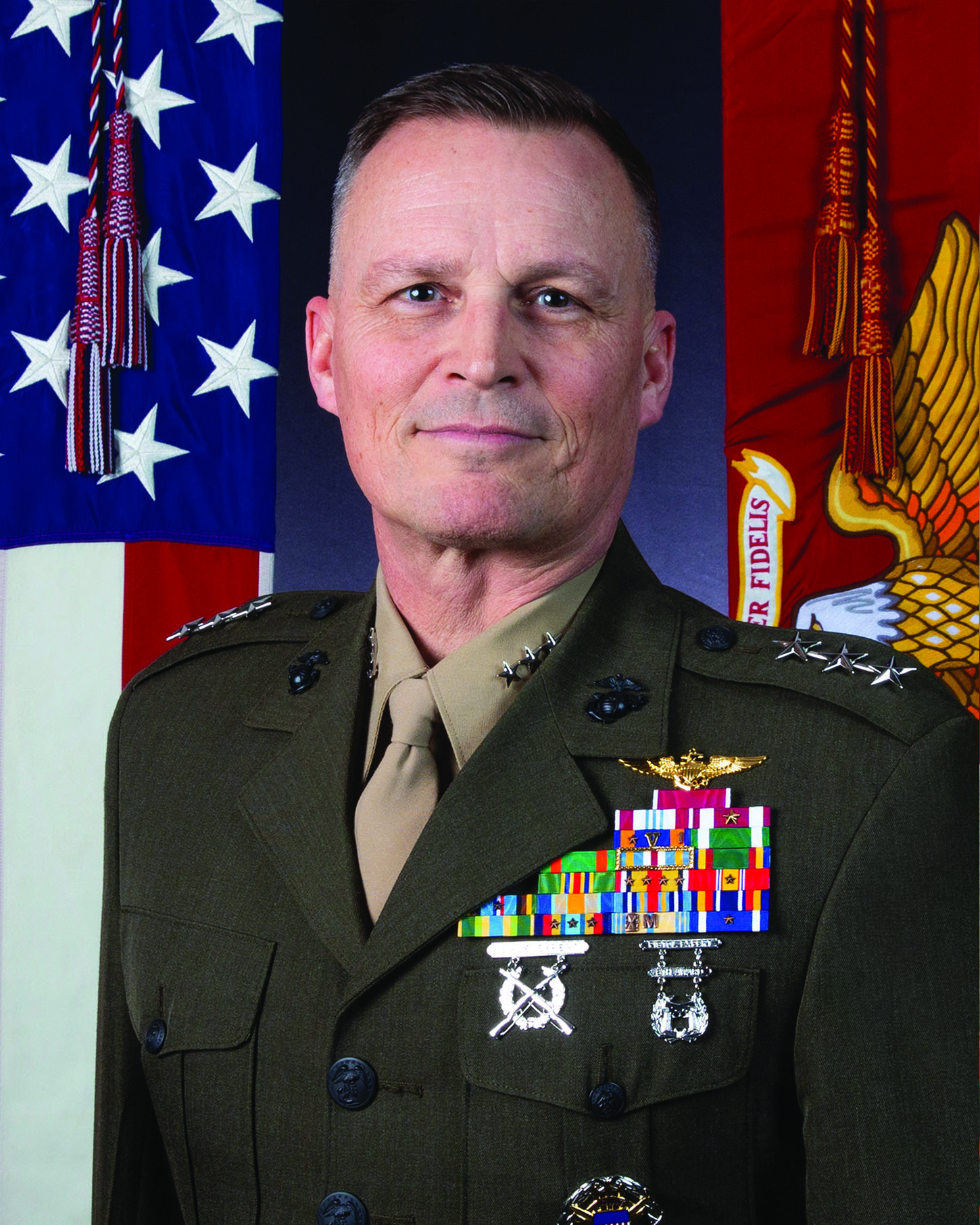
Lieutenant General Len “Loni” Anderson IV has served in top-tier Marine Corps units and key leadership positions throughout his career. He is the current Commander, Marine Forces Reserve (MARFORRES) and Marine Corps Forces South, as of March 21, 2024.
Anderson joined the Corps in 1993 and was designated a naval aviator in 1995. As an F/A-18 Hornet pilot he worked with a number of different operational units, including the Blue Angels. He then transferred to the Reserve in 2006, joining the 4th Marine Air Wing as the assistant wing commander and deploying in joint service in support of Operation Inherent Resolve. In his civilian career, he has been a pilot for FedEx and an actor. He was inspired by the original “Top Gun” to become a fighter pilot and has acted in movies such as “Captain Phillips” and “13 Hours.”
In a recent interview with Leatherneck magazine, LtGen Anderson covered the upcoming 110th anniversary of the Marine Corps Reserve and the current status of the Reserve.
What is the significance of the USMCR celebrating its 110th anniversary this year?
I was in the Reserve for the 90th, I was in for the 100th [and] I’m still here for the 110th. Just to imagine that … over a century’s worth of Marine Reserve service to our Corps, and where it’s come from that time until today, all the cycles that we’ve gone through. I would say we are at a time now in the Reserve that not only do we have the most opportunity but [it’s] the most exciting and dynamic time to be a Marine reservist. There [are] multiple domains that have changed for … your average Marine, whether active or reserve … from the time we started, [a Marine] has to think in many more domains … today than we did back then.
Can you discuss the importance of Marine Forces Reserve, what you’re doing presently and its future relevance?
We are fortunate at a time right now, under Commandant General Smith, who is focused on maximizing the potential of the Reserve. … We are no longer just a ‘break glass in case of emergency’ type of formation. We’re part of a Total Force that’s planned in; we have planned rotations [and] rotate on schedule. Some of this is not only due to efficient Marine Corps planning, but it’s also what I was trying to drive home, to get to reservists being able to plan their life, have predictable, repeatable deployments, and then for the Marine Corps’ side, have them budgeted. It’s not a surprise bill that happens in the middle of a budget cycle. It’s something that we’ve looked at for years on end. Reservists can see the horizon when they join a unit, and it keeps us much more efficient that way in a much more ready Marine Corps when we are deploying. It’s not a state of emergency; it is normal ops. …
I could foresee a Marine Corps Reserve that is even more in demand, as our active component continues to modernize, as we continue to move ahead with Force Design [and] through our learning experiences of what we need in combat. Our Reserve formations fall right in there. … My goal is to modernize and equip concurrently with the active component for those units that are heading forward, whether it’s in the first island chain or in another combatant commander’s AO [area of operation]. That might be cyber, that might be space as well. … My goal as a leader for the years going forward is to set the Marine Forces Reserve up to be part of that equation. …
Over the last five years or so, as we’ve really grown the force on the tech side with a Marine Innovation Unit, or as we stand up VMU-4 [Unmanned Aerial Vehicle Squadron 4] again. We’re going to get back into the unmanned business, we’re [going to] get back into the low-altitude air defense business. There is a lot coming toward MARFORRES in the next five years as we grow the force. … We finished a little bit over 1% over our goal last year. We’re on tap to do the same this year. It’s a whole team effort. …
We have been given millions of dollars, over $20 million last year alone in bonuses and incentives to keep enlisted Marines reenlisting, having them choose where they would want to serve in the Reserve. We’re providing them [with] that option. And I think that whole team of effort across the service is really what’s got us to the health that we are today. There’s no magic number to it. … I’d be remiss if I didn’t include the Marine Corps Recruiting Command. They have not only grown in size but understand our challenges recruiting in the Reserve, as they are out with recruiting stations and finding those new, young Marine reservists that need to come into our formations. And they’ve done an excellent job, organized across the nation, you know, growing our forces that are getting ready to deploy. …
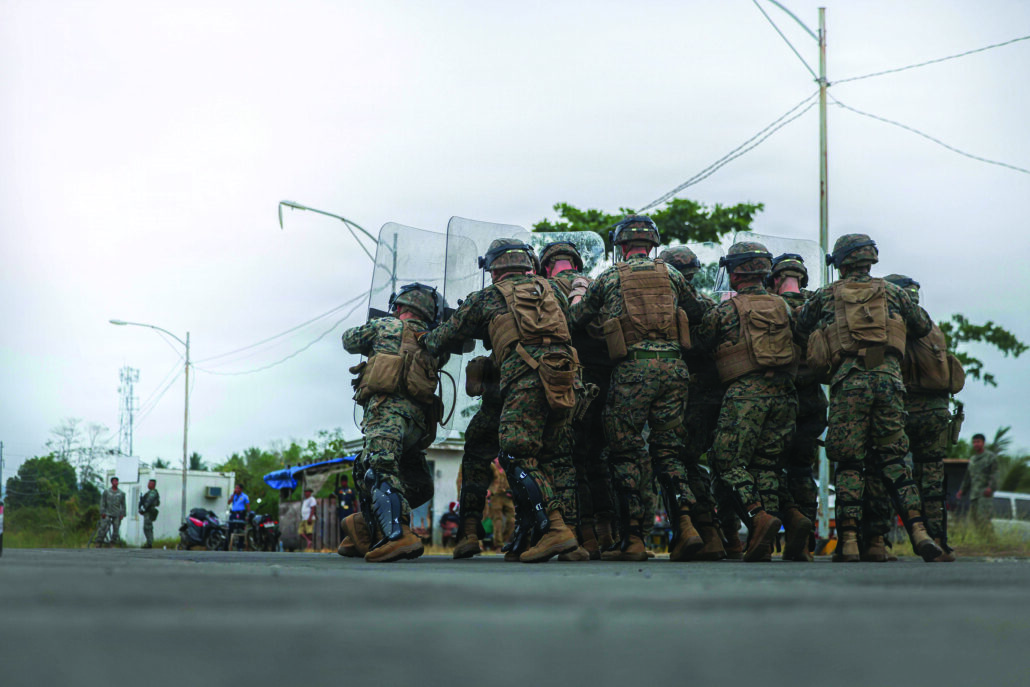
Next year, we’ll be approaching 10% of our reserve force that will be forward deployed, and that’s the most significant amount that we’ve had forward deployed since 2013. And the demands will still continue to grow. … When I talk present, my focus as a commander is saying yes to whatever I can take off of the active component’s plate, or assist the Commandant in balancing out where we’re going to conduct our missions. Some of those might be the southern border. Some of that might be down in Guantanamo Bay, Cuba, and all these things are great opportunities for the Reserve. Whether or not it’s engineers, logisticians or our Marine Wing Support Squadron Marines, it’s a great opportunity for us to become a better force. …
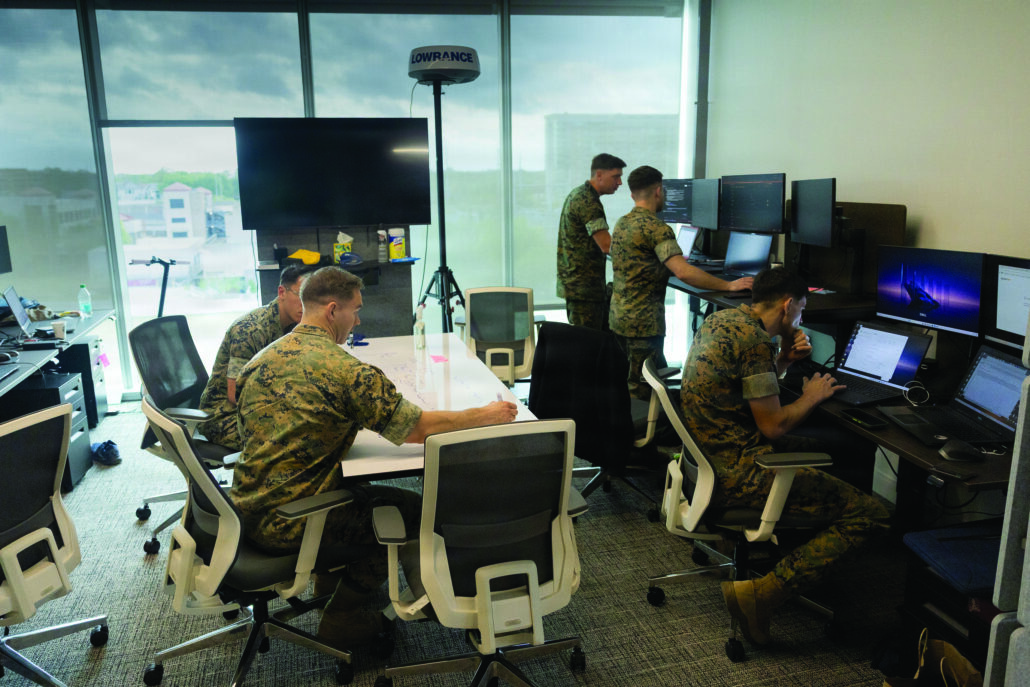
We are conducting all those missions and will be here for the foreseeable future. … As we look to the future and … some of these bespoke critical capabilities that we have, whether or not it’s our personnel recovery platoons or it’s our advisor companies that are across the globe with our partners and allies right now, today [we’re] learning how to defeat the adversary. As an example, maybe a couple of months ago, we had cyber Marines, and there was an intrusion on the network and we had [to respond] within 72 hours. Ten of our Reserve cyber operators [were] on orders on the keyboard defending networks. [It’s] something that [we] can respond to, assist and beat back the adversary. Again, in whatever domain, it’s really a great thing to see. And Marines reservists want to do this. They step forward, leave whatever tech jobs they’re in, to come on in and fight for the Marine Corps. It’s a great thing to see, and I see more of that happening in the future. … There’s a good group of these types of individuals working in and amongst our formations, and I really do believe in that model, short work for our exquisite skills, whether it’s space, cyber, even intel Marines. …
What I’m really excited about nowadays is the team that we have in New Orleans. We’ve got an AI task force that’s working on these things to try to predict what our reserve modernization and what reserve readiness looks like. … So, it’s, again, an exciting time to kind of be able to take a look at the future. … The introduction of AI and its use is certainly an exciting time for us in the headquarters, as well.
I think when you look at current operations today, I think CENTCOM [U.S. Central Command] has done a really good job in the information environment to just post truth … and they’ll put a big post just as truth, and then, you know, beat back … this false narrative that’s being driven, and we really have to learn again … how to maneuver in that space as well. I’m fascinated by the information environment. I think there’s definitely more we can do. I’m excited that we are standing up a MIG [Marine Expeditionary Force Information Group], and get[ting] that up and running … and get[ting] Marines thinking about operations in the IE. … I’ve seen a lot of great work with II MIG out of [Camp] Lejeune here recently, wearing my other hat as Marine Forces South [Commander] … conducting our operations in South America. II MEF has really led to the information problem set, and it’s a great thing to see.
We have a USMCR Connect app; … we invested in it [and] we update it. There are opportunities that are listed right there for either individual augmentees or job postings for SMCR [Selected Marine Corps Reserve]. It can all be done on your phone. There are certainly a ton of other resources that are on there, too. Whether or not it’s medical, dental [or] psychiatric health, you name it. It’s kind of a one-stop shop for USMCR Connect. We’re doing the best we can to find a way to connect with our reserve force that is so dispersed. …
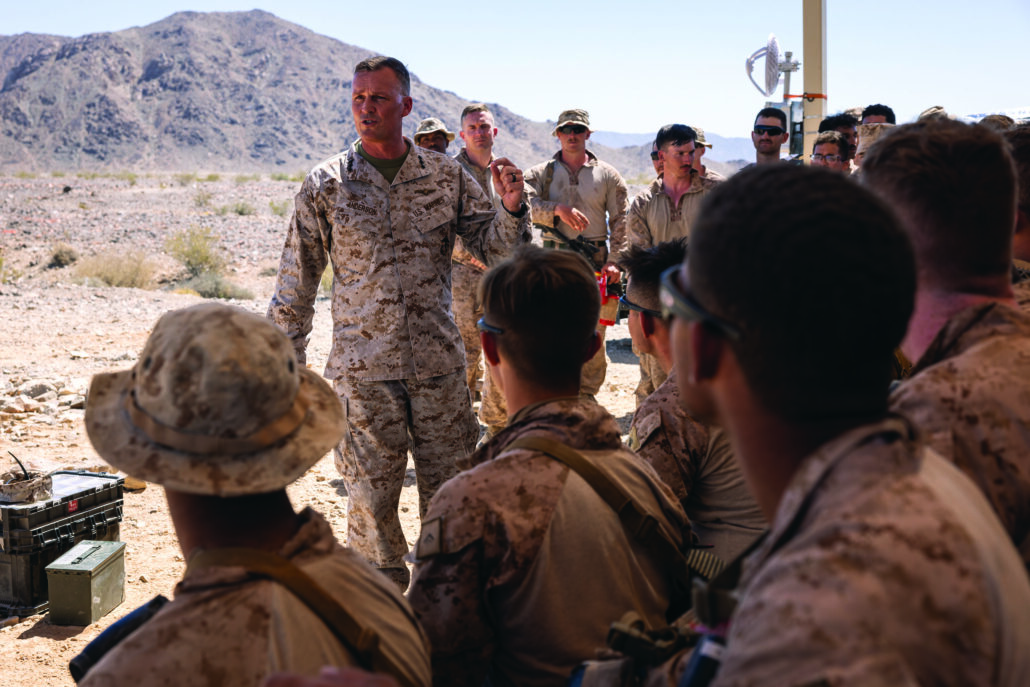
If there’s something that I’ve tried to share with my active component general compadres, it’s that a reservist deployment starts at mobilization or at activation. … That’s when the workup starts. They leave their home from the middle of the United States, they go out to Twentynine Palms, they’re training for two to three months and then they deploy forward. And then they don’t come back for another month until after the deployments end. So, it’s a really long time to be away from home, and we’re trying to keep that family connection going and make sure that family readiness is at the top of our priority as well. I want Marine reservists to know that we understand their life. I think that’s one of the benefits of having a reservist, even though on active duty now, as the commander of Marine Forces Reserve.
I’ve lived that life for over 20 years, and I understand what it means when you deploy away from your family, and they’re out on an island somewhere. They’re not in base housing with a big community. There might not be another Marine on their block or in their city. It’s a really kind of lonely time to be a family member when a reservist is deployed, and the importance of family, even with all the digital opportunities to connect with them. If you don’t know where your loved one is, it’s always going to weigh on your mind.
Can you describe your responsibilities as the commander of Marine Forces Reserve?
It’s a continuous education across the force on the capabilities and capacity of our Reserve. To make sure that the Reserve is in the conversation, i.e., JLTV [joint light tactical vehicle] purchases, with the next generation of plate carrier or high-cut helmets. You wouldn’t believe some of the things that we have to make, where it’s, ‘Oh yeah, it’s not just buying it for … these battalions on the West Coast. We’ve got all these reserve units that we need to mix into and modernize their formations, as well.’ So, it’s not that we’re forgotten, it’s just, as we have such limited resources in the Marine Corps, we’re using every dime we can to modernize as fast as we can while maintaining the readiness. …
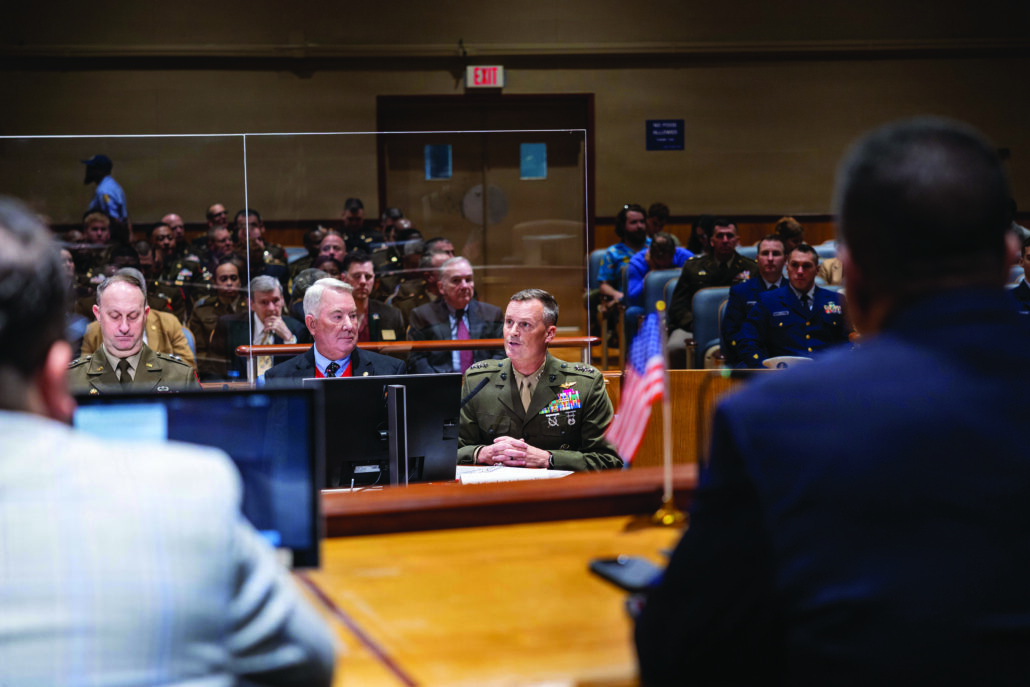
How do we make it better for reservists to get to drill? That includes things just like we’ve seen with the increased travel budget, you know, up to $750 for travel for those who are living outside the 150 [mile radius of their unit]. … I do congressional visits … office calls on Capitol Hill, whether it’s staff members or actual congressional members, to let them know not only what our Marine Forces Reserve is doing, but what support they can provide. … Most everybody in Washington, D.C., wants to know how they can help. That’s what’s been a refreshing thing for me to see. It’s always good to see Congressman [Jack] Bergman [retired Marine lieutenant general and former Commander, Marine Forces Reserve] in there. We’ve got some other actual Marine reservists. As you know, Senator [Dan] Sullivan [a retired USMCR colonel] just retired from the Marine Corps Reserve not too long ago, but there’s a lot of Navy and Marine Corps synergy in the building, and I think we’re very fortunate to have that.
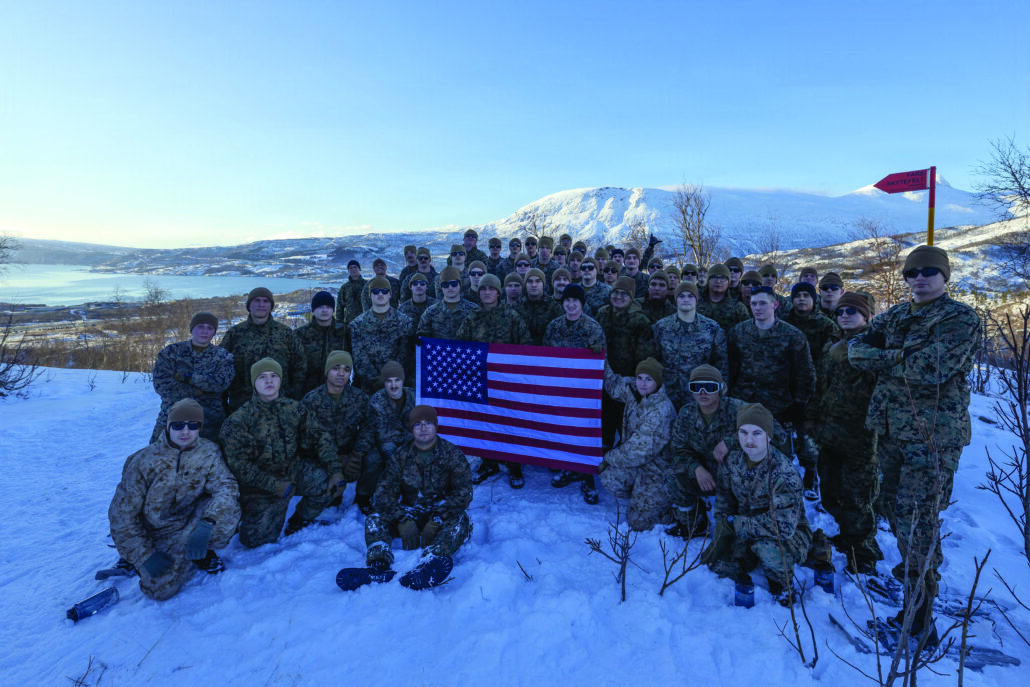
The Marine Corps is first to fight, and we’ve shown that over the last year and a half. Certainly, whatever taskings have come our way, the Marine Corps has been there first. I’m going to make sure that we’re still able to support that as a Marine Corps Reserve, but alongside that, certainly from our appropriators and from our civilian oversight, the fact that we are on our third consecutive clean audit … has certainly gained us some favor in and across Congress. We know where our money’s going. We know where our stuff is. You give us a dollar, we know exactly where it’s going.
The one last thing I’d say, and it is posted on the MARFORRES website, it’s easy to access from the USMCR Connect app. My campaign plan is written there (https://www.marforres.marines.mil/About/#guidance-documents). I just ask Marines to take a look at the priorities, what we are looking to do in MARFORRES and the comprehensive resources. It’s the whole Marine. It’s the family. How are we going to be ready to go? Forecasting what that might look like, what our nation looks like in the event of a mass mobilization and being ready to have those thoughts. We need to start thinking through these procedures again to make sure that we’re ready to go.
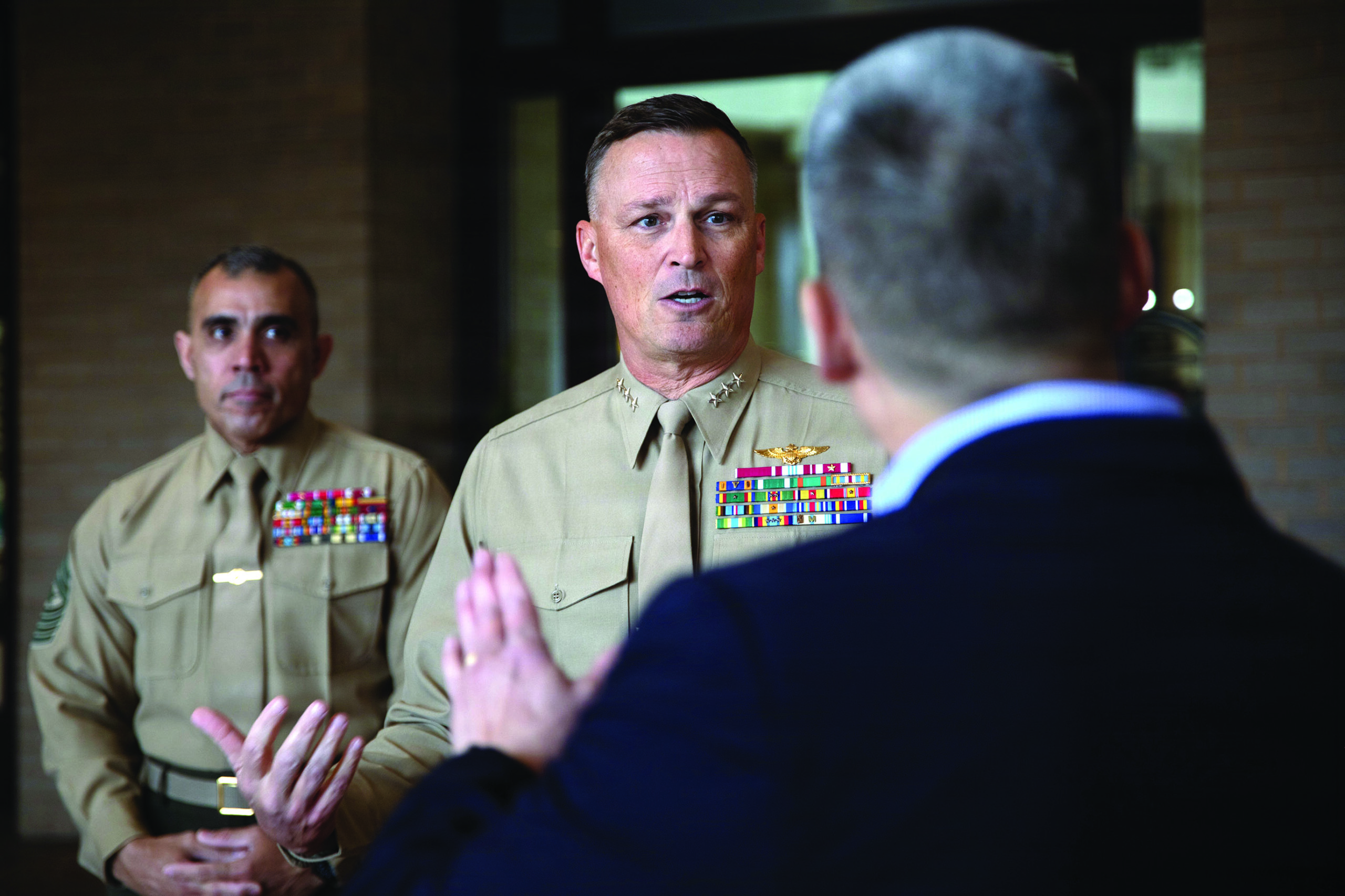
Featured Photo (Top): LtGen Anderson and SgtMaj Edwin A. Mota meet with then-Undersecretary of the Navy Hung Cao during an Individual Ready Reserve muster in Arlington, Va., in March. These events are vital to the Reserve’s mission of maintaining a ready force capable of reinforcing the active component when needed. (Photo by Cpl Orion St. Pierre, USMC)
About the Author
LtCol Joel Searls, USMCR, is a journalist, writer and creative who serves in intelligence for the Marine Corps Reserve. He has completed the Writers Guild Foundation Veterans Writing Project, is a produced playwright, a commissioned screenwriter and an entertainment consultant. His most recent feature film-producing project is “Running with the Devil,” and his most recent TV series-producing project is “Top Combat Pilot.” He is a graduate of The Ohio State University.
Enjoy this article?
Check out these similar Leatherneck and Scuttlebutt features:
Homefront Heroes: Marines Recall Lifesaving Actions During Hurricane Katrina
Leatherneck
September 2025
By: Kyle Watts
From Corps to Comedy
Leatherneck
October 2025
By: Joel Searls

Toys for Tots: 75 Years of Delivering Joy to Children
Leatherneck
December 2022
By: Jennifer Castro