

Forging Decision Dominance with an Artificial Intelligence (AI) Warfighting Teammate
By: Elizabeth Ruggles and LtCol Marianne CarlsonPosted on April 15,2026
A Transformative Journey for Marine Aviation
The character of war is changing, and the speed of decision making has become the critical axis of victory. To maintain its edge, Marine Aviation is embarking on a transformative journey—an evolution, not a revolution—to accelerate its operational tempo to machine speed. Marine Aviation’s Artificial Intelligence (AI) Strategy is a comprehensive plan to embrace, equip, and enhance the force by integrating cutting-edge AI and machine learning (AI/ML) into aviation sustainment, maintenance, and operations. This effort complements broader modernization initiatives outlined in the 2026 Marine Aviation Plan and supports the Service’s transition toward a more data-centric and data-informed force.
The problem is a familiar one: a reactive culture in maintenance and supply, labor-intensive manual processes, and disconnected data systems that hinder readiness and the ability to sustain distributed aviation operations. Marine Aviation’s AI Strategy tackles this head-on, aiming to shift the enterprise from a reactive posture to a predictive, data-informed force capable of generating sustained combat power on demand.
The Vision: Meet “Agent Alfred”
At the core of the transformation is Agent Alfred, an AI-powered warfighting teammate that integrates seamlessly into a Marine’s workflow. Named in honor of Alfred A. Cunningham, the first Marine Corps aviator, this AI agent serves as a pathfinder, starting with back-office tasks and progressively earning its place in more complex and critical environments. By rapidly synthesizing large volumes of operational, maintenance, and logistics data, Alfred enables Marines and commanders to make faster, more informed decisions in increasingly complex operational environments.

The vision for Alfred is not to replace Marines but to augment them. As described in the initiative’s foundational documents, Alfred is envisioned as a multi-modal, ambient, contextual, and emergent teammate. Automating repetitive, data-heavy tasks frees Marines to focus on what humans do best: critical thinking, leadership, and complex problem-solving. The end state is a force where AI-driven decision support is ubiquitous—operating in the ready room, on the flight line, in the field with our enablers, and ultimately in the cockpit.
The Blueprint: Initial Lines of Operation
The theory of victory for Marine Aviation’s AI Strategy is to sustain combat readiness and increase lethality by transforming the aviation enterprise from a reactive system into a predictive, data-informed force capable of generating combat power at the speed of modern warfare. This strategy is broader than any single initiative. The lines of operation (LOO) described below represent the initial focus areas where AI-enabled capabilities can begin delivering immediate operational value while the broader strategy continues to mature across the aviation enterprise.
• LOO 1: Dynamic Aviation Supply. This effort aims to transform the logistics footprint from a reactive system to one that anticipates demand. By leveraging AI to analyze historical data and operational tempo, we can forecast the need for parts and resources.
• LOO 2: Predictive Maintenance. This approach focuses on moving beyond the current reactive maintenance culture. Instead of fixing aircraft after a component fails, AI will analyze a longitudinal history of aircraft behavior to forecast failures before they occur. The failure prediction allows maintenance officers to proactively schedule what is typically unscheduled maintenance ahead of detachments and cross-country movements, or in conjunction with phase maintenance, reducing maintenance hours and increasing readiness.
• LOO 3: Optimized Operations. This LOO focuses on using AI to enhance every facet of operational planning, from optimizing daily flight schedules to managing pilot training. Artificial intelligence will provide commanders with data-informed insights to accelerate and improve decision making.
• Future LOOs. Additional development efforts for aviation workflows will be added iteratively as technology improves and appropriate use cases expand to areas such as enhanced maintenance staffing, improved command safety, and other future use cases. The intent of all such efforts is not adoption of technology for technology’s sake, rather they are part of our deliberate approach of adopting a digital data culture advancing our decision-making advantages at speed.
The Rollout: A Phased Approach to Integration
The implementation of Marine Aviation’s AI Strategy is a deliberately phased, iterative journey, designed to build trust and demonstrate value at each step. The approach ensures that technology is adopted in a way that enhances, rather than disrupts, existing processes.
• Phase 1: Aggregate Data. The initial, foundational step focuses on identifying, accessing, and cleaning maintenance, supply, and operations data from the myriad of disparate systems where it currently resides. The outcome is clean, analysis-ready data, the essential fuel for any AI system.
• Phase 2: Apply AI. With aggregated data, we can begin applying AI algorithms for analysis. This phase involves creating the predictive capabilities central to the vision, such as forecasting part demands and identifying aircraft likely to experience component failures. This provides the data-informed insights necessary for dynamic aviation supply and predictive maintenance.
• Phase 3: Ensemble AI Tools. The final phase integrates these individual AI tools into a comprehensive, user-friendly solution. The goal is to deploy Alfred on a common compute platform, creating a comprehensive operational planning tool that provides a holistic view of aviation operations, from sustainment and maintenance to staffing, ultimately yielding improved readiness with the capacity for future growth of other agentic workflows.
Together, these phases enable Marine Aviation to transition from fragmented data environments to an integrated decision-support ecosystem that improves readiness forecasting and operational planning. This rollout will begin with Alfred assisting with low-risk, high-impact “back-office” tasks in the ready room, such as drafting training plans and flight schedules. Alfred will “earn its quals” by demonstrating value and reliability. From there, its capabilities will expand to the flightline, assisting maintainers with failure predictions and parts tracking to the field, where it will act as a collaborative planning partner in complex, distributed exercises. This crawl-walk-run methodology ensures a smooth, effective, and trustworthy integration of a powerful new teammate into the MAGTF.
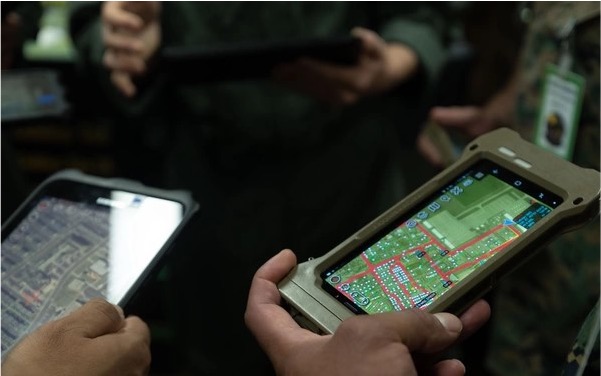
Marine Aviation’s ability to generate and sustain combat power has always depended on the ingenuity and professionalism of its Marines. Marine Aviation’s AI Strategy builds upon that foundation by providing Marines with the tools necessary to operate at the speed of modern warfare. By integrating AI/ML into aviation sustainment, maintenance, and operational planning, Marine Aviation is creating a more predictive, data-informed enterprise capable of supporting distributed aviation operations and enabling faster decision making. This evolution ensures that as victory becomes a race of decision making, Marine Aviation is not merely keeping pace but setting the pace, delivering lethal effects for the Marine on the ground at the speed of relevance.
ABOUT THE AUTHOR
>Ms. Elizabeth Ruggles is an Aerospace Engineer. She is currently assigned as the AI/ML Integration lead for the Deputy Commandant for Aviation.
>LtCol Carlson is a UH-1Y Pilot. She is currently assigned as the Aviation Strategy and Plans Officer for Headquarters, Marine Corps Department of Aviation.