

 MCA RECOMMENDS
The Wingmen: The Unlikely, Unusual, Unbreakable Friendship Between John Glenn and Ted Williams
Adam Lazarus
It was 1953, with the Korean War in full throttle, when two men—already experts in their fields—crossed the fabled 38th Parallel into Communist airspace aboard matching Panther jets. John Glenn was an ambitious operations officer with fifty-nine World War II combat missions under his belt. His wingman was Ted Williams, the two-time American League Triple Crown winner who, at the pinnacle of his career, had been inexplicably recalled to active service in the Marine Corps. Together, the affable flier and the notoriously tempestuous left fielder soared into North Korea, creating a death-defying bond. Although, over the next half century, their contrasting lives were challenged by exhilarating highs and devastating lows, that bond would endure.
Through unpublished letters, unit diaries, declassified military records, manuscripts, and new and illuminating interviews, The Wingmen reveals an epic and intimate portrait of two heroes—larger-than-life and yet ineffably human, ordinary men who accomplished the extraordinary. At its heart, this was a conflicted friendship that found commonality in mutual respect—throughout the perils of war, sports dominance, scientific innovation, cutthroat national politics, the burden of celebrity, and the meaning of bravery. Now, author Adam Lazarus sheds light on a largely forgotten chapter in these legends’ lives—as singular individuals, inspiring patriots, and eventually, however improbable, profoundly close friends.
CASEY Award Finalist for Best Baseball Book of the Year
Purchase Here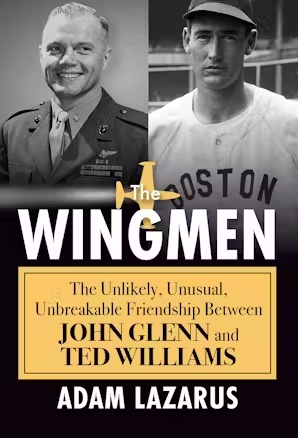
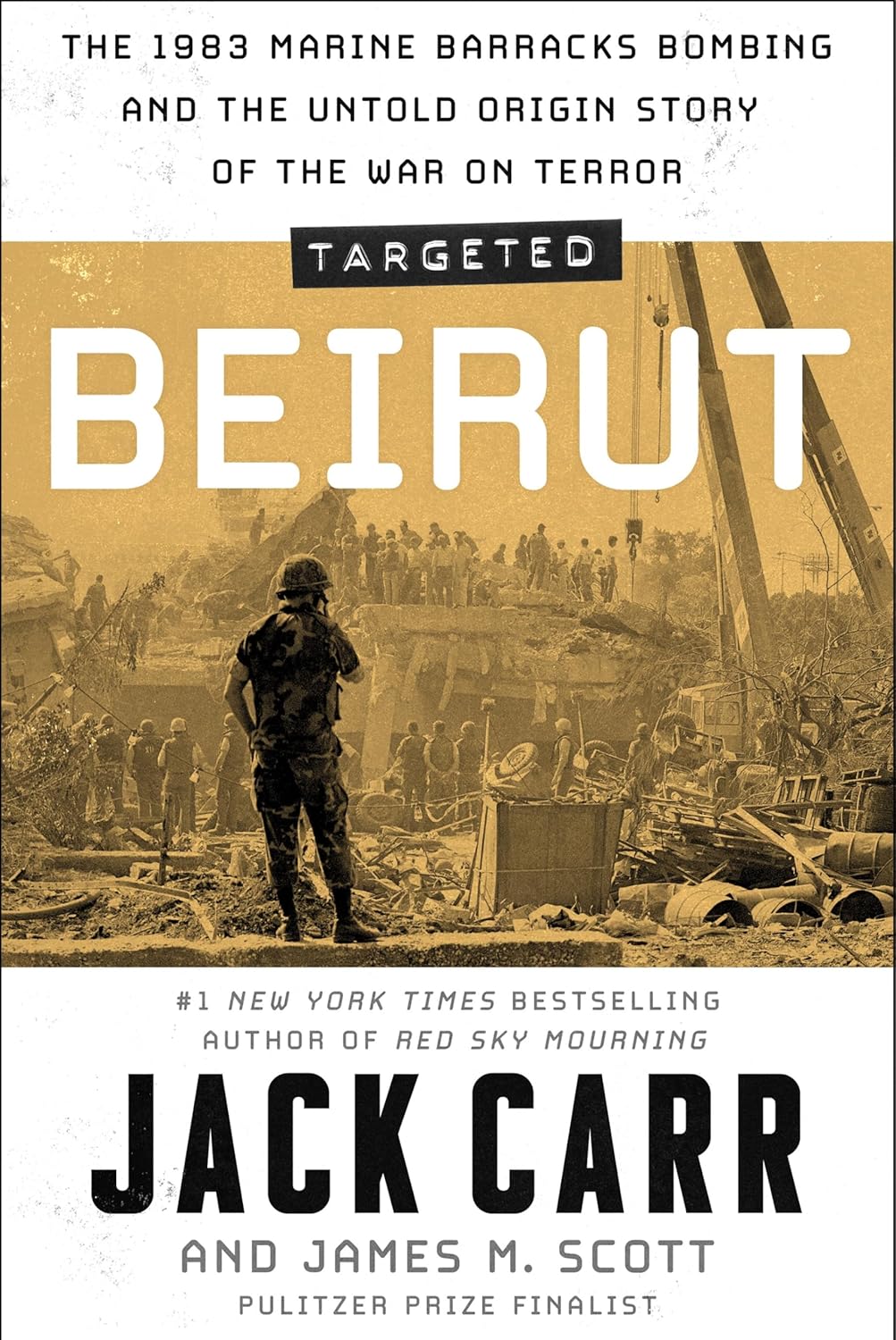
Targeted: Beirut: The 1983 Marine Barracks Bombing and the Untold Origin Story of the War on Terror
Jack Carr and James M. Scott
Targeted Beirut traces the events that led up to the destruction of the Battalion Landing Team Headquarters on October 23, 1983. Jack Carr and James M. Scott present the tactical, operational, and strategic view of the costliest day in Marine Corps history since World War II.
Carr and Scott make use of letters, situational reports, interviews, journals, and other sources to build the tactical picture of what the Marines on the ground faced. With a mission that was not clearly defined, the Marines relied on one another, even as men began to be killed in August 1983. The strategic picture reveals the political struggles in Washington that prevented the operational commander, Col Geraghty, from being provided with a clear end state and handed him a mission that completely relied on his ability to maintain American neutrality. The authors continue to show the interplay between the three levels of warfare as they demonstrate the events that put targets on the backs of the Marines, culminating in the bombing on 23 October.
One of the things that sets Targeted Beirut apart is the humanization of the event through narration. This history is not told through exposition but through the eyes, pens, and mouths of the men who lived it. This makes it extremely personal, easy to follow and very hard to put down. As America and the Marine Corps very publicly pivot to great-power conflict once more, it is important to remember the wisdom that comes through experience, and the experience of the Marines in 1983 was the opening salvo of the War on Terror. Have we already forgotten the lessons that experience gave to us?
- credit to 1stLt Gavin Mattiace, USMC for writing this synopsis
Washington’s Marines: The Origins of the Corps and the American Revolution, 1775-1777
MajGen Jason Q. Bohm, USMC (Ret.)
The fighting prowess of United States Marines is second to none, but few know of the Corps’ humble beginnings and what it achieved during the early years of the American Revolution. Jason Bohm rectifies this oversight with his eye-opening Washington’s Marines: The Origins of the Corps and the American Revolution, 1775–1777.
The story begins with the oppressive days that drove America into a conflict for which it was ill-prepared, when thirteen independent colonies commenced a war against the world’s most powerful military with nothing more than local militias, privateers, and other ad hoc units. The Continental Congress rushed to form an army and placed George Washington in command, but soon realized that, to win its freedom, America would need men who could fight on the sea and on land. Enter the Marines. Bohm artfully tells the story of the creation of the Continental Marines and the men who led them during the parallel paths followed by the Army and Marines in the opening years of the war and through the early successes and failures at Lexington and Concord, Bunker Hill, Canada, Boston, Charleston, and more.
As General Washington struggled to preserve his command after defeats in New York and New Jersey in 1776, the nascent U.S. Navy and Marines deployed the first American fleet, conducted their first amphibious operation, and waged a war on the rivers and seas to block British reinforcements and capture critically needed supplies. Desperate times forced Congress to detach the Continental Marines from the Navy to join the embattled army as Washington sought an “important stroke” to defeat his adversary.
Washington’s Marines joined their fellow soldiers in a protracted land campaign that culminated in turning-point victories at Trenton, Assunpink Creek, and Princeton. This chapter of the Continental Marines ends in Morristown, New Jersey, when Washington granted Henry Knox’s request to leverage the Marines’ expertise with naval guns to fill the depleted ranks of the army’s artillery during the “Forage War.”
Washington’s Marines is the first complete study of its kind to weave the men, strategy, performance, and personalities of the Corps’ formative early years into a single compelling account. The sweeping prose relies heavily on primary research and the author’s own extensive military knowledge. Enhanced with original maps and illustrations, Washington’s Marines will take its place as one of the finest studies of its kind.
Purchase Here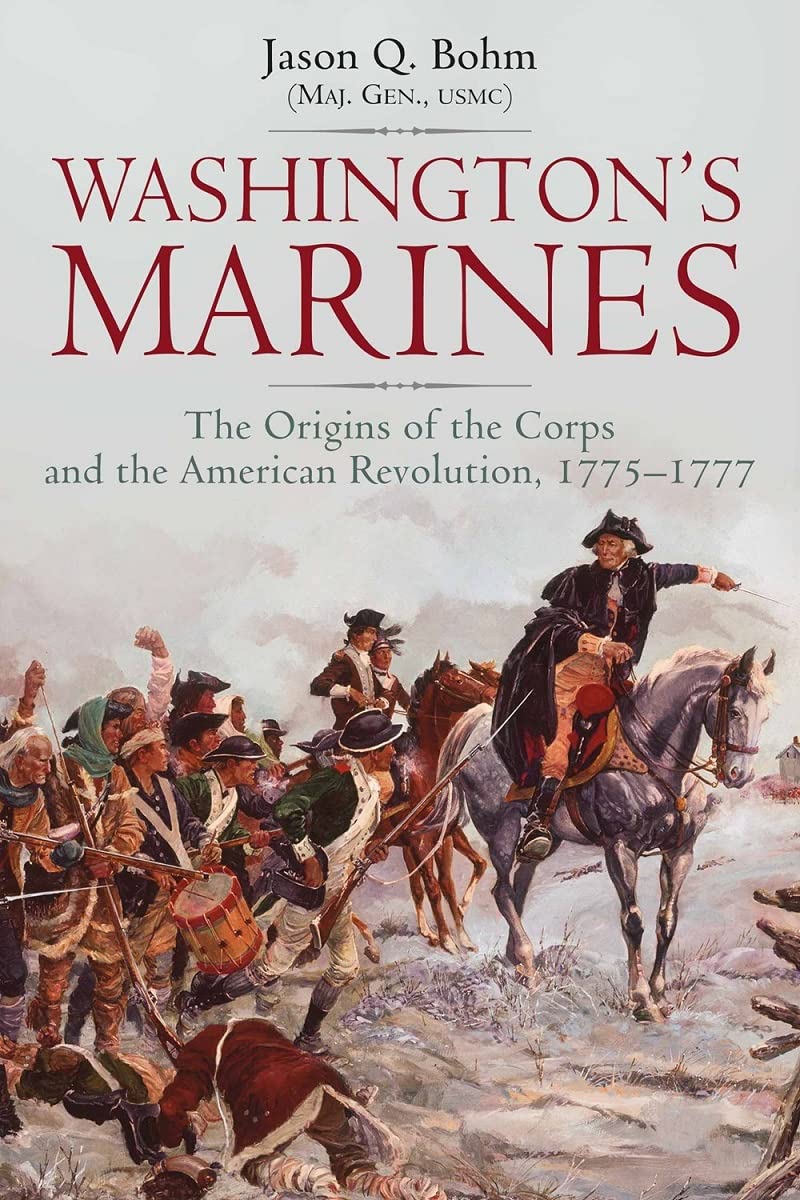
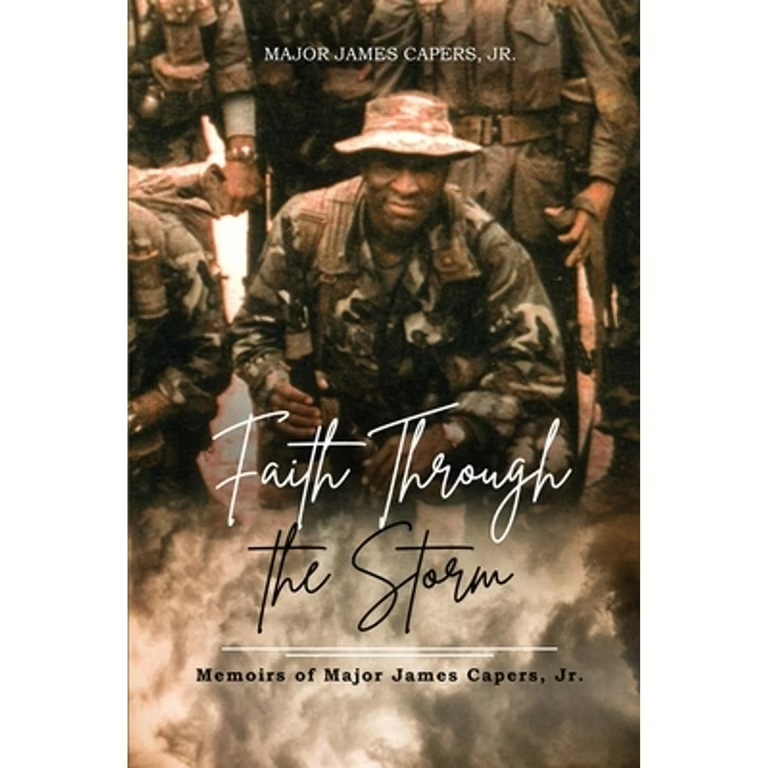
Faith Through the Storm: Memoirs of Major James Capers, Jr.
Maj James Capers, Jr. USMC (Ret.)
This is the story of a warrior’s faith in the face of struggle and losses few people face in today’s world. Major James Capers Jr. was born in South Carolina in the late 1930s. As a child in a family of sharecroppers in the segregated South, he had few advantages other than his faith in God and his tenacity and drive. He and his family would allow no obstacles to stand in the way of a better life. Enlisting in the Marines after high school he would serve in the elite 3rd Force Reconnaissance Battalion and become the first African-American Marine to receive a battlefield commission. His heroism in the crucible of special operations in Vietnam was truly remarkable and in 2008 he was recommended for the award of the Congressional Medal of Honor by Representative Ralph Norman of South Carolina. From March 31 to April 3, 1967, in the vicinity of Phu Lac, Vietnam, Capers, then a second lieutenant, led a patrol during a reconnaissance mission in which his team, code named “Broadminded,” supported Company M, 3rd Battalion, 26th Marine Regiment. On the final day, the nine-man patrol was ambushed and every man wounded. Despite severe shrapnel wounds to his lower body, Lt Capers continued to direct his team in a hasty defense while calling for supporting arms and arranging their evacuation. He personally ensured all of his team made it out alive.
The first African-American Marine officer to appear on a Marine recruiting poster, recognized in the Commando Hall of Honor; awarded the Bronze and the Silver Stars, this book describes a man who personifies the word “hero” although he himself would never use this word. A humble warrior and quiet professional, Maj Capers is a family man who endured tragedies in his professional and personal life, trusting in his faith to weather any storm.
Learn more about the inspiring story of this remarkable Marine here:
www.dvidshub.net/video/783442/major-james-capers-jr
www.capersthedoc.com/biography
Purchase Here