

Warrior-Scholar Project Helps Servicemembers Transition Into Higher Education
By: Jenna BiterPosted on January 15, 2026
Each year, 115,000 servicemembers transition from the military into higher education. Warrior-Scholar Project (WSP) exists to help the enlisted veterans among them make informed choices about what comes next.
Founded in 2012 by three Yale University students, WSP aims to prepare enlistees for success in college and beyond. The nonprofit’s flagship program is a series of free, one-week academic boot camps hosted at leading universities across the United States. At their core, the boot camps are rigorous college prep courses designed to equip enlisted servicemembers and veterans with the knowledge, attitudes and behaviors for classroom success.
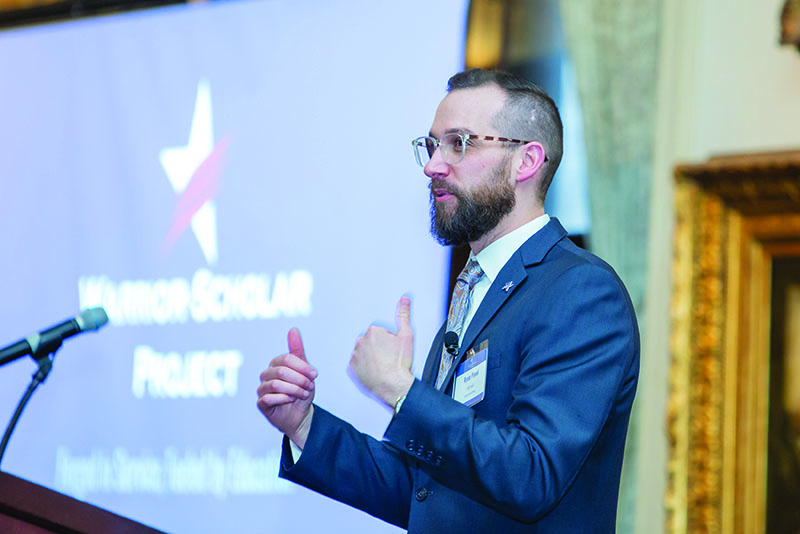
“Yes, you can be here,” said CEO Ryan Pavel. “Here’s what you go through to not only put together a successful application but also kick a– in the classroom.”
It’s a transition that Pavel navigated on his own. He applied to college and was rejected, so he enlisted in the Marine Corps and served five years with two non-combat deployments to Iraq. After separating from the military, he reapplied to college and was rejected again. Finally, after attending community college, he was able to transfer to the University of Michigan.
After graduating, Pavel taught high school and earned his law degree from the University of Virginia. During that time, he also learned about WSP. He helped bring a licensed version of the project to the University of Michigan and trained program directors.
“My winding path of being a sort of a very average Marine, a very average teacher, an average lawyer, right?” said Pavel. “All three of those pieces of my life, none of which were going to be the long-term thing for me, they actually come into play in this work that I’m very privileged to do.”
Pavel has been at the helm of WSP since 2019. Together with the rest of the nonprofit’s team, he aims to help servicemembers navigate separation with a better road map than he had. And it seems to be working.
“We’re very proud. About 90% of our folks go on to complete their degrees, which blows the overall college com-pletion rate out of the water,” said Pavel. The completion rate for enlisted veterans who are using their post-9/11 GI Bill benefits is 47%, according to at least one published study.
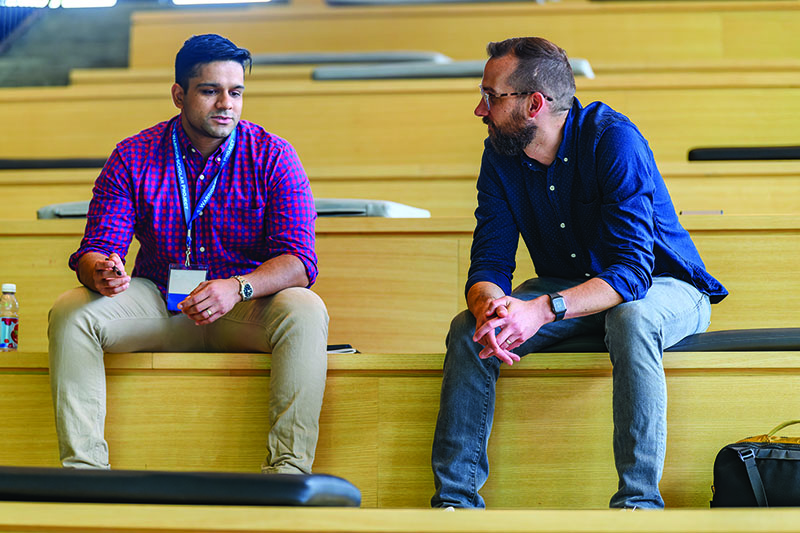
Hunter Eggleston, 27, is a WSP boot camp grad and success story. After serving as a Navy corpsman for five years, Eggleston separated from the military in January 2023. He began applying for college and, after learning about WSP on Instagram, completed a boot camp at the University of Notre Dame. Now he’s three years into a five-year double major in electrical engineering and Chinese at the University of Vermont.
“Doing WSP is what made me confident enough to do the double major in the first place,” Eggleston said. “They taught me, hey, this is how you can be successful in an academic environment after being out of an academic environment for the past five years of [your] life.”
As a WSP alumnus, Eggleston keeps in touch with other academic boot camp grads. He also volunteered as a fellow in the summer of 2024, paying his good experience forward by mentoring other WSP participants in college readiness at a boot camp like the one he attended. More than likely, Eggleston said, he’ll volunteer again.
“If anybody is hearing about WSP for the first time, don’t hesitate to jump full force into it. It’s a super welcoming community,” said Eggleston. “I couldn’t recommend the program enough.”
Eggleston isn’t alone in his full-throated recommendation of the project. Every year, hundreds of participants attend WSP boot camps for free at roughly 20 colleges and universities across the United States. According to the nonprofit’s exit surveys, 99% of participants would recommend the program to other veterans and servicemembers.
Since its inception, WSP has prepared 2,500 veterans for higher education. Pavel estimated 50% of participants are separated veterans, 40% are active-duty servicemembers and 10% are in the National Guard or Reserve.
“If I had my druthers, everybody would go through WSP six to 18 months before they transition out,” said Pavel. This way, newly separated veterans would be more likely to know who they are and where they’re going.
“We beat up on the Transition Assistance Program all the time, and … rightly so, it needs to get better,” said Pavel.
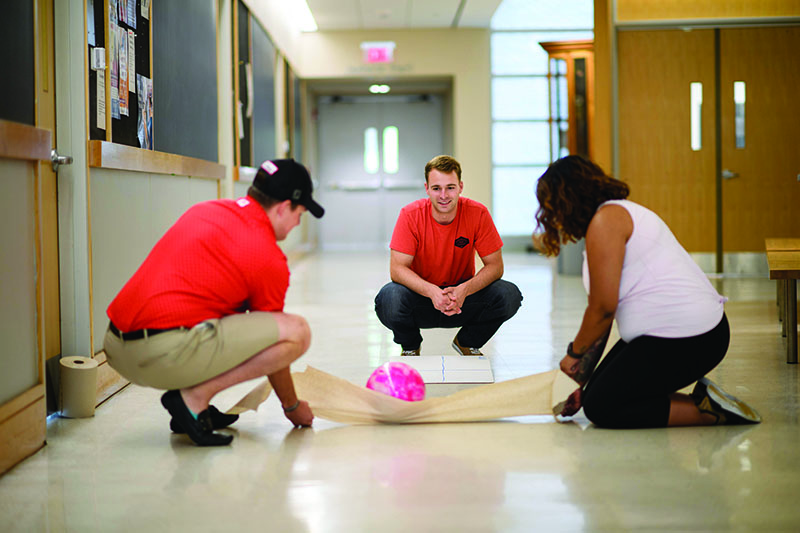
“But even if you assume it’s a perfect government-run [program] … there’s still no way a broad program can meet the needs of an individual if that individual isn’t willing to do deep identity work, right? If you’re not spending time seriously thinking and answering, ‘Who am I right now? Who was I at the time of enlistment? What do I want to become? Can higher education help me achieve those goals?’ ”
WSP programming aims to help veterans answer those questions. The academic boot camps work like this. Applicants must be enlisted servicemembers or veterans, typically without an undergraduate degree. Pavel qualified that some applicants, say, with a 15-year-old degree that hasn’t been dusted off and applied might be accepted into a boot camp on a case-by-case basis. Interested individuals can find and fill out an interest form on WSP’s website, warrior-scholar.org. After submission, a member of the WSP outreach team will connect with them for a live conversation.
“If there’s alignment, then they get the full application,” Pavel said. “They’re not screening for academic qualities or merit. They’re finding out: Does this person really want to pursue higher education? Could they benefit from Warrior-Scholar? If yes, they find you a slot for one of the programs.”
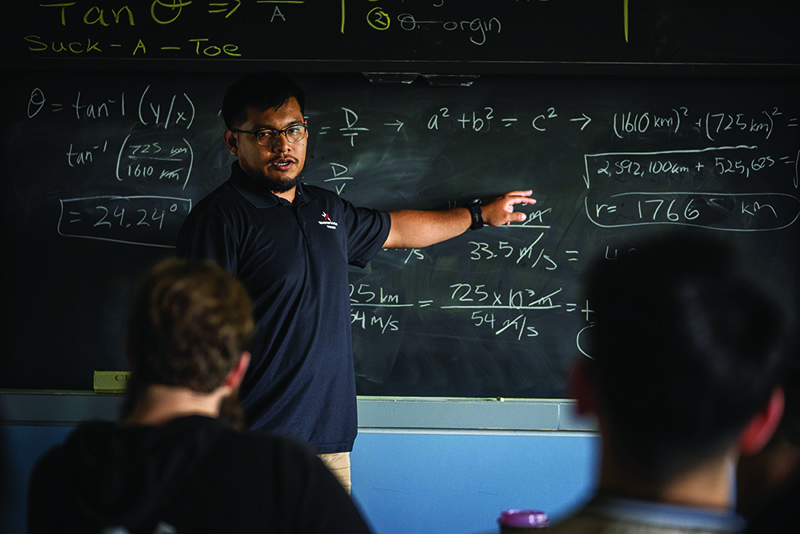
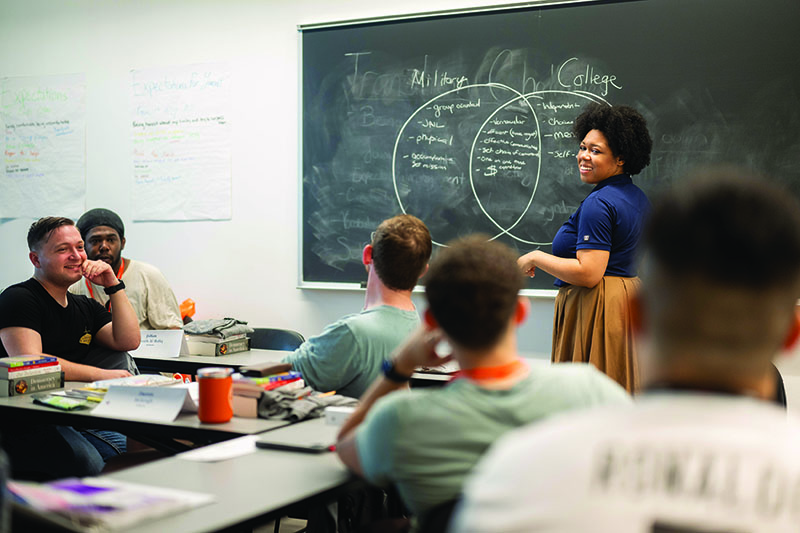
Participants can attend an academic boot camp in one of three tracks: business, STEM or college readiness, which used to be called humanities. The cohorts are intimate, with only 10 to 15 participants and a student-to-instructor ratio of 2-to-1.
“That’s what really makes this function … that people know they’re cared for and we can help them every single step of the way,” said Pavel.
Instructors sort into three types. University faculty teach participants as if they’re university students enrolled in a college course. Fellows, like Eggleston, are academic boot camp graduates who mentor participants on what it takes to be successful college students. Contractors teach specific subject matter, such as writing, research and problem-solving or business case studies.
Participants arrive on Saturday and leave one week later.
“Saturday night, you’re reading. Sunday morning, you’re up early, and we start the process of actually going through it,” Pavel said. The boot camps are immersive and intensive, totaling 75 hours of work for no grade and no credit.
“As you start reading [Alexis de] Tocqueville’s ‘equality of conditions’ argument and you get really frustrated about that, it sort of opens the mind when somebody says, ‘OK, well, here’s actually how we unpack that to go into the college discussion.’ And then it’s empowering when somebody comes out the other end and says, ‘Oh my goodness, I can contribute.’ And then you get to start to build a sense of belonging.”
“If I had my druthers, everybody would go through WSP six to 18 months before they transition out.”
—Ryan Pavel, CEO,
Warrior-Scholar Project
He added, “By the middle of the course, you understand that it’s not actually just about the academics, right? It is actually the power of it—that community side—that nobody has to go at this thing alone.”
After an end-of-course reception, instructors encourage participants to sustain their enthusiasm for education as they head home and plan for civilian life.
Besides the weeklong boot camps, WSP offers one-day college success workshops at community colleges as crash courses to meet veterans where they are.
“So many enlisted veterans have the courage, the wherewithal, to start at the community college level but still don’t see themselves succeeding on the four-year side,” said Pavel.
WSP offers support to their alumni through the Career Pathways Initiative, which helps bridge the gap between education and a career with a five-month professional development cohort. The nonprofit also offers the Graduate Path-ways Initiative Scholars program to assist alumni contemplating graduate or professional school.
But that’s not all, Pavel teased. “There are some other alumni services that we’re cooking up that we’ll be launching in the next 18 months or so.” WSP leadership is also aiming to expand the academic boot camp footprint. “We really want a lot more active duty using Warrior-Scholar Project to make informed choices about what comes next.”
One brand-new initiative should help with that. WSP launched an on-demand version of the college success portion of the boot camps in the online learning platform Coursera. The course was four years in the making.
“I’m buzzing with energy and excitement over it,” Pavel said. “The idea for that is just to be able to have more people that can go through and at least get some dose of what we talk about in the full class and … make more informed choices. And then if that’s valuable, come to the full boot camp.”
Featured Photo (Top): Marine Corps veteran Ryan Pavel has served as CEO of Warrior-Scholars Project (WSP) since 2019. For his work with WSP, Pavel was awarded the Marine Corps University Foundation’s inaugural General Alfred M. Gray Jr. National Award for Service and Education in 2025. (Photo by Violetta dominek for Warrior-Scholar Project)
About the Author
Jenna Biter is a proud military spouse and writer with a master’s degree in national security. Her writing has appeared in Reserve + National Guard, Military Families, Coffee or Die Magazine, The National Interest and more.
Enjoy this article?
Check out these similar Leatherneck and Scuttlebutt features..


