


Precision Weapons Section
By: Sam LichtmanPosted on March 15, 2026
Keeping the Marine Corps Competitive On the Range and On the Battlefield
Since 1775, the U.S. Marine Corps has prided itself on the martial skill of its members. The Marine has long been revered as an expert marksman, capable of precision on the battlefield surpassing that of any foe. Just as important, however, is the long arm itself. No amount of training and skill can fully compensate for a substandard weapon. For the Marine Corps’ renowned snipers and competitive shooters, nothing less than the finest equipment will suffice. Located on Marine Corps Base Quantico, Va., the Precision Weapons Section (PWS) is tasked with building and maintaining a fleet of such arms for the Marine Corps’ most elite.
PWS is a versatile organization that ably fulfills a wide range of responsibilities related to small arms. It is a one-of-a-kind unit whose accordingly unique mission requires a select team of specially trained technicians, true experts with skills far in excess of what would be expected from any 2111 (small arms repairer) in the fleet. The Marines of PWS hold the military occupational specialty of 2112 (precision weapons repairer), equivalent in the civilian world to a master machinist specializing in gunsmithing.
To fill its own ranks, PWS runs four overlapping six-month sessions per year called the Precision Weapons Repair Course (PWRC) to train existing 2111s in the technical skills needed to build and maintain the Marine Corps’ finest small arms. Marines are recruited annually for the course; to apply, a 2111 holding the rank of corporal or sergeant must have just reenlisted and must be eligible for a permanent change of station to MCB Quantico. Applicants are screened for knowledge and aptitude; prior civilian experience as a machinist is not required. The most difficult part of the recruiting process, according to CWO5 Joseph Bering, former officer in charge (OIC) of PWS, is to find applicants with the proper qualifications. Many units find that Marines with the requisite knowledge are too valuable to give up.
New students in the PWRC begin by using older, manually operated machines such as lathes, mills and drill presses to manufacture their own tools to use throughout the course. Not just a cost-saving measure, this process teaches students how to perform basic machining operations without the aid of computer control.
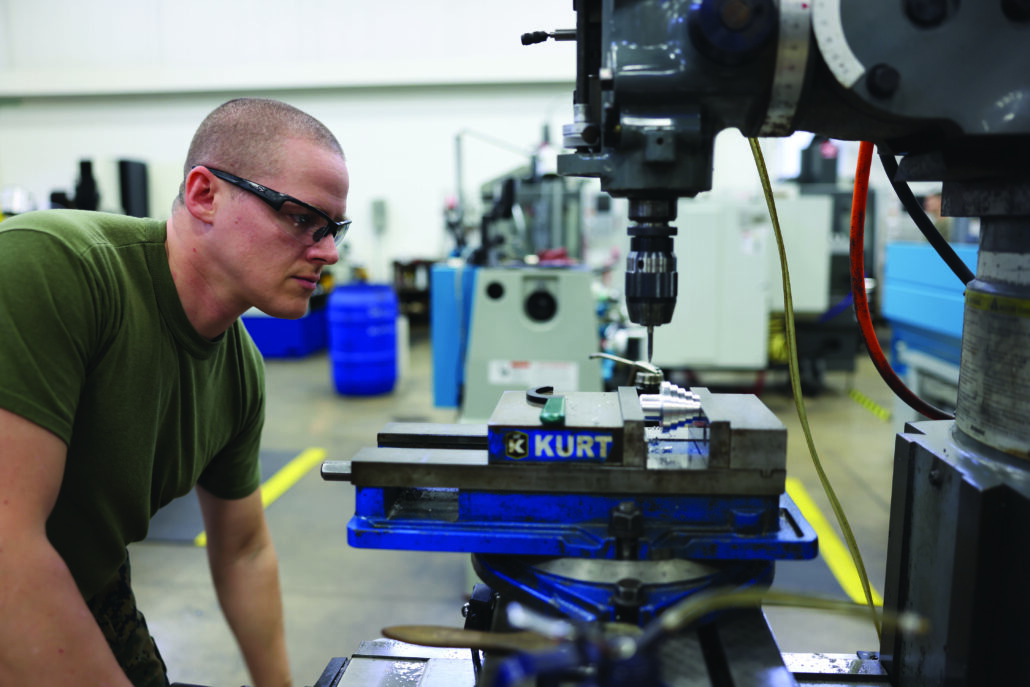
“The main value in manual machining is a thorough understanding of the process and the capability to do it,” explained Master Gunnery Sergeant Joseph Kennedy, the current staff noncommissioned OIC at PWS. Even in the age of computer numerical control (CNC) manufacturing, those skills are still essential. “A CNC can, and in some cases does, do the lion’s share of the work,” Kennedy said, “but when you are taking components from various manufacturers, all with their own tolerances, and trying to get the best product out of it, sometimes the best way is by hand.”
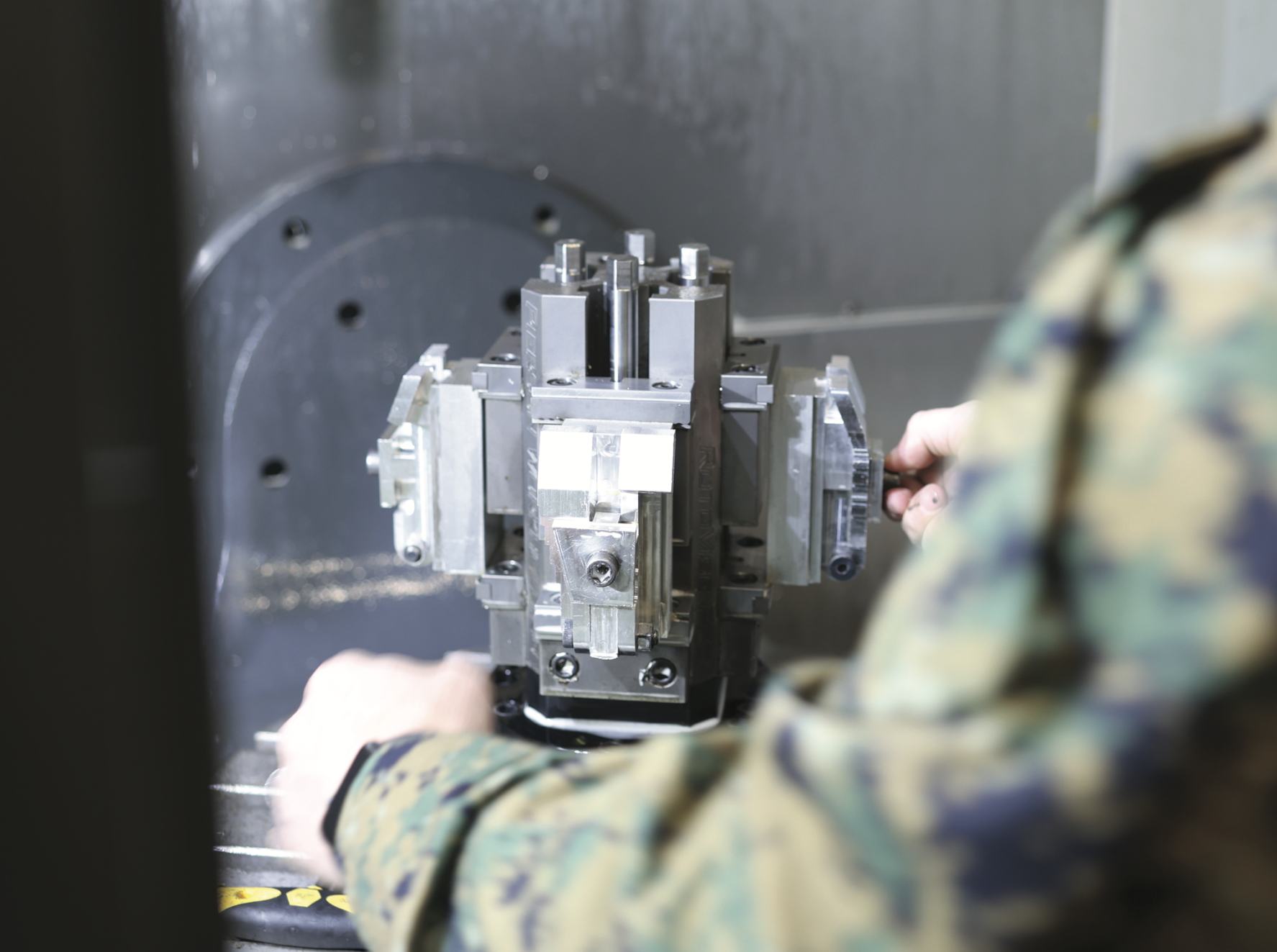
After mastering manual machining, students learn to program and operate the mammoth 5-axis CNC mill, the wire electrical discharge machining (EDM) machine, anodizing baths and other sophisticated equipment. Students use computer-aided design software to digitally model an object, then run it through a second piece of software called a slicer to convert the virtual object into G-code, a set of instructions that tell the machine how to turn a raw block of metal into a complete part.
Upon successfully completing the PWRC, a newly minted 2112 will work at PWS for the remainder of his or her three-year assignment before being sent back out to the fleet to manage a battalion arms room at any large base around the world. While at PWS, though, 2112s work on a variety of manufacturing projects which make full use of their extensive training: A Marine might spend one day at a lathe recycling scrap barrels into muzzle devices for competition rifles and the next day at a computer designing unmanned aircraft system (UAS) parts for 3D printing.
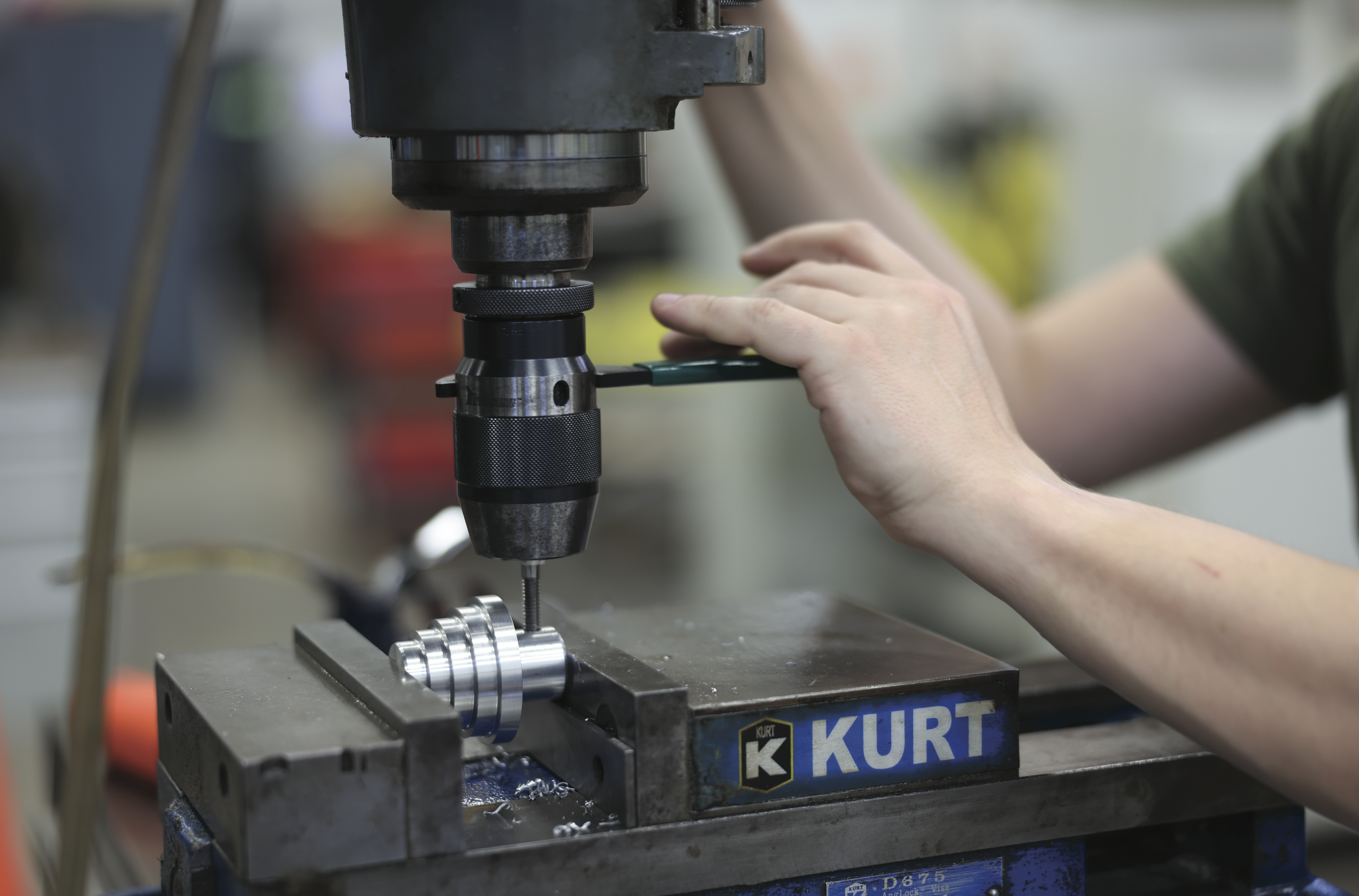
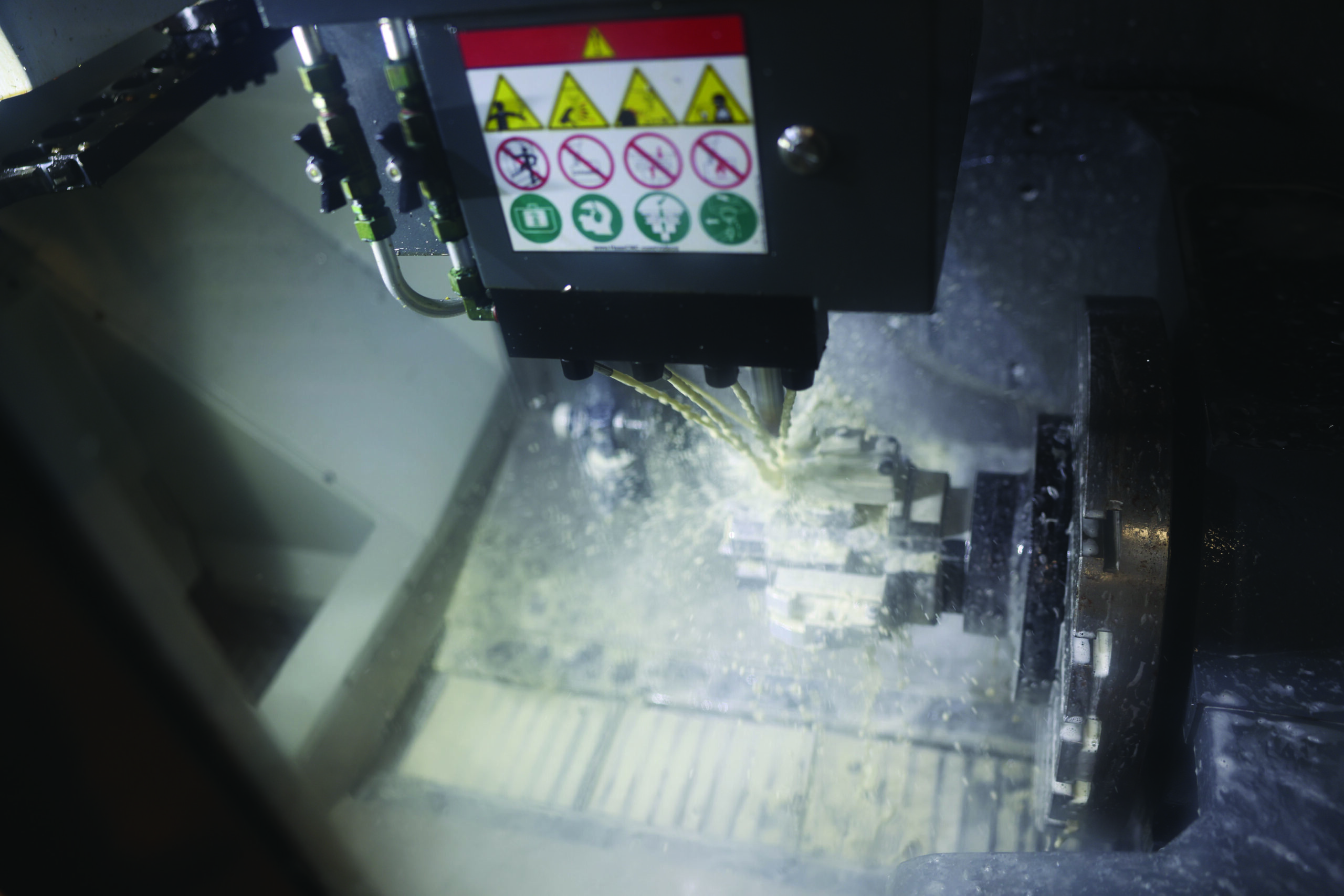
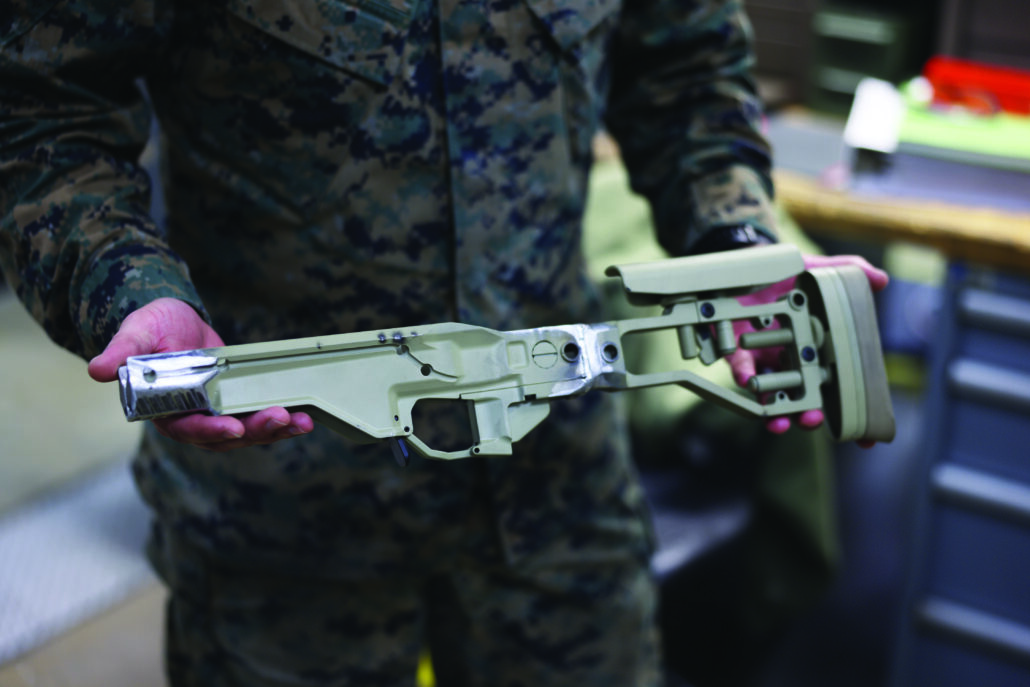
In the Precision Weapons Repair Course, Marines hone their skills on manual machines (above left) before learning to program complex toolpaths on the 5-axis CNC mill (above right). The CNC mill’s tool head sprays water on the workpiece to cool it from the intense friction of machining and wash away metal chips. (Photos by LCpl David Brandes, USMC)
Inside the Job of a 2112
Harlee Hall, PWS’ headquarters on MCB Quantico, is a veritable gunsmith’s playground: In addition to arms rooms like one might find at any Marine Corps base, it contains a fully equipped machine shop with the capability to assemble, maintain and manufacture parts for all the small arms in the Marine Corps’ arsenal. There, 2112s can transform a solid block of material into a finished product ready for the field. In addition to the equip-ment taught at the PWRC, the machine shop holds a high-pressure water jet that can quickly and precisely cut complex shapes for flat parts. Soon, PWS expects to begin 3D printing in metal via wire arc additive manufacturing as well.
Such advanced manufacturing capabilities, though, would be useless without the ability to test the firearms. To evaluate the weapons built and modified there, PWS also operates a highly sophisticated shooting range which in some ways functions like a laboratory. Operators use a recoiling test sled to stabilize a weapon and eliminate human error, then fire out into a field next to the building. This range uses no physical targets; instead, as each bullet passes through a rectangular window downrange, an array of microphones detects and records the shot’s “impact” on a virtual grid. To perform reliability testing and collect ballistic data in a wide range of environmental conditions, the facility also includes a freezer and an oven.
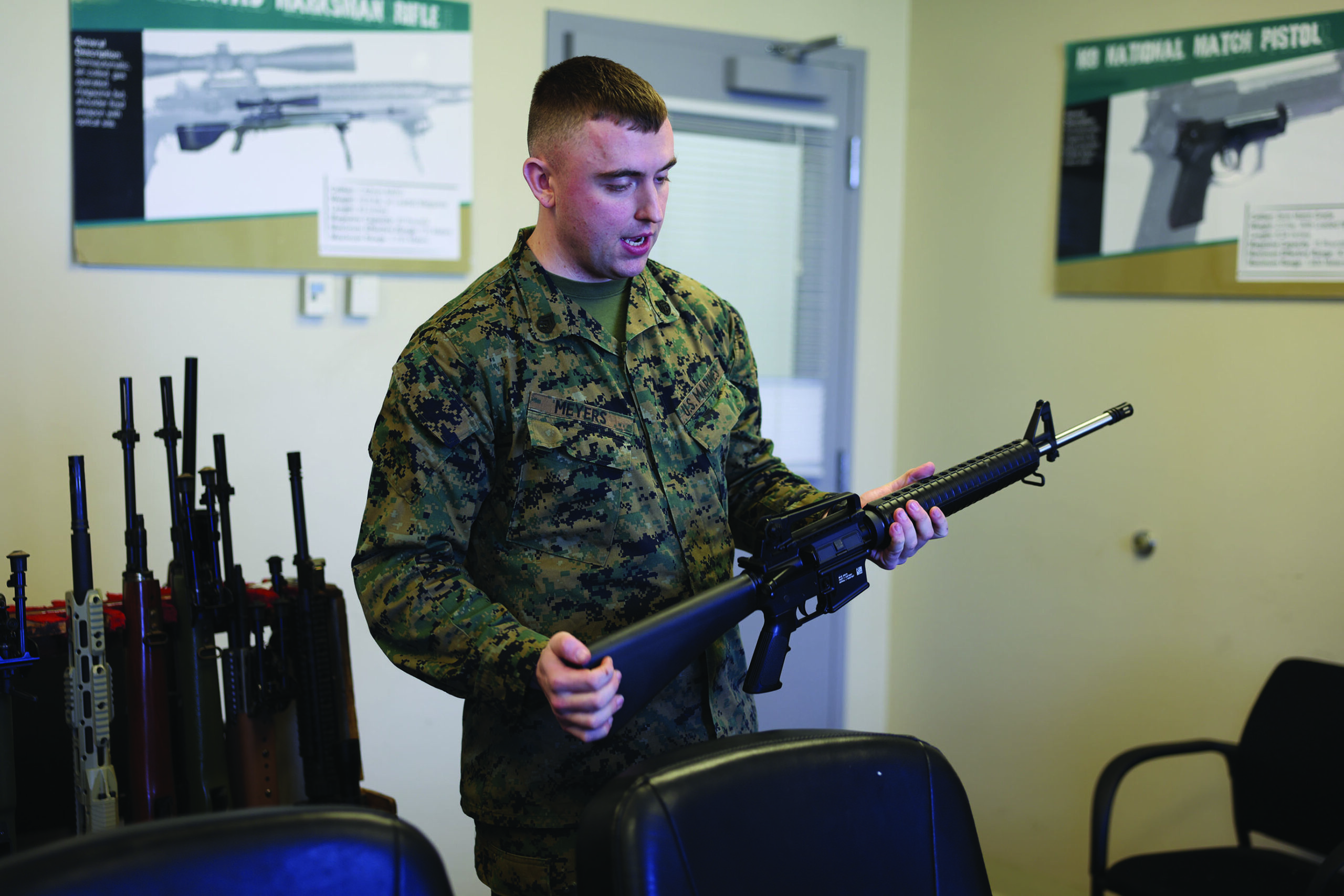
All this complex testing equipment is necessary in part because PWS is responsible for building and maintaining the Marine Corps shooting teams’ arsenals. Supporting just one military shooting team would be a full-time job, but PWS rebuilds pistols, rifles and shotguns for the shooting teams at every Marine Corps installation around the world. Competitive marksmanship arose out of a desire to hone military riflemen’s skills with their service weapons, but mass-produced rifles and ammunition are simply not up to the task. While sufficiently accurate for combat use, the M16A4 must be significantly reworked to enhance its accuracy and add the features necessary to turn it into a viable competition rifle.
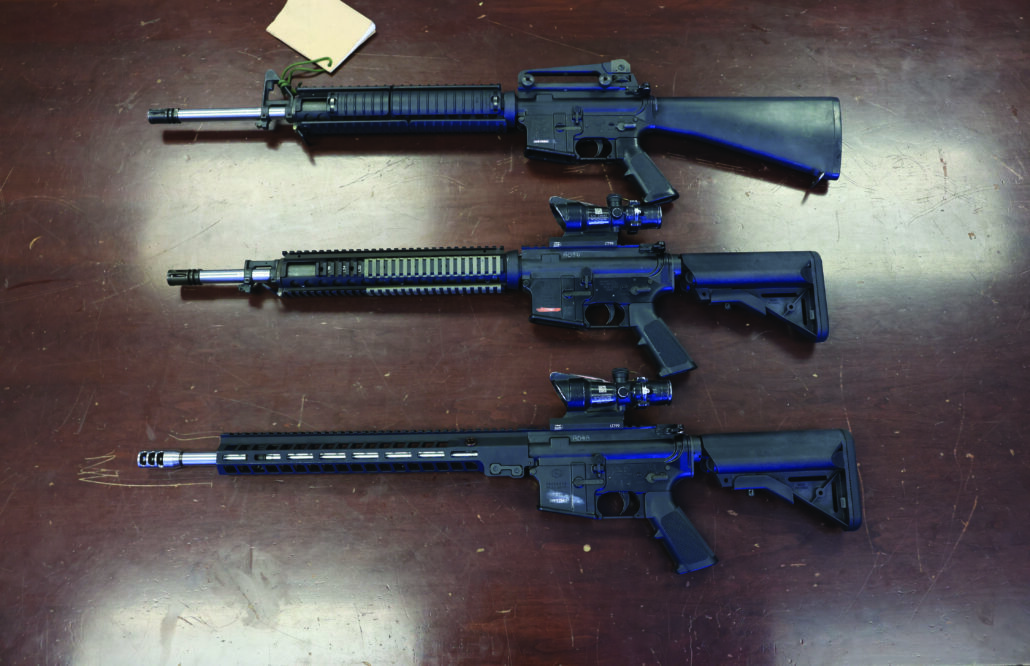
Marine Corps shooting teams have historically used the National Match M16A4, a standard service rifle rebuilt for competition at PWS. Lead weights are added to the fixed stock and rail system, the mil-spec trigger is exchanged for a match-grade replacement made by Geissele, and the typical chrome-lined carbon steel barrel is replaced by a heavy stainless match barrel of the same length. PWS armorers machine each barrel individually from a rifled blank—they cut the chamber, turn down the profile, crown and thread the muzzle and mount and headspace a barrel extension for the bolt to lock into. The end result of this Cinderella-like transformation is a weapon that outwardly appears nearly indistinguishable from any other M16A4 but weighs twice as much and is capable of far superior accuracy. The National Match M16A4’s 17-pound bulk helps keep the weapon steady when it is fired from a fixed position, as is required for the Highpower Rifle shooting sport.

Since its inception, competitive rifle shooting has had a very slow, deliberate pace, with a strong emphasis toward long-range accuracy on bull’s-eye targets. A typical stage might give the shooter 10 minutes to fire just 10 rounds at a circular target hundreds of yards away. This type of shooting hones the fundamentals of marksmanship and allows the shooter to make the most of his or her rifle, but it has not been representative of typical combat engagements since at least the 19th century. Beginning in about the 1950s, the world of competitive shooting began to embrace “practical shooting”—faster-paced matches taking place at much shorter distances. Informed by military and law enforcement experience, practical shooting, also known as action shooting, emphasizes speed and agility in addition to accuracy. PWS has developed an upgrade package to allow Marine Corps shooting teams to remain competitive, exclusively using parts already in the military logistics system so that armorers can upgrade National Match M16s in inventory to the new Combat Match M16 standard.
Taking cues from the civilian competition circuit, the Combat Match M16 is significantly lighter and more compact than both its predecessor and the standard M16A4 from which both are derived. The 20-inch heavy-profile barrel is cut down to 18 inches and reprofiled to reduce weight, the fixed stock is replaced with an ergonomic adjustable one, and the A-frame front sight tower is milled down to provide a clear line of sight when using magnified optics. All in all, the Combat Match M16 measures 34 inches long with the stock fully collapsed, and it tips the scales at just 7.7 pounds—less than half the weight of the National Match rifle. Despite all the weight reduction, accuracy isn’t substantially impaired; the new rifle can still shoot better than 1.5 minutes of arc even with service ammunition. The Combat Match M16’s resemblance to the M27 infantry automatic rifle is intentional—competitive shooters in the fleet now have a match rifle with similar performance and handling characteristics to their service weapons.
Competitive shooting helps to advertise for the Marine Corps and can serve as a training aid. PWS and Weapons Training Battalion have made efforts to apply lessons learned from dynamic competitive shooting to the way Marines train, enhancing their performance in combat. PWS pays close attention to trends in the competition world to inform its work; for example, a stage that forces the shooter to move around and engage targets at various unknown distances on a timer is the best way to simulate the physiological and psychological stress of combat without placing anyone in actual danger. That environment can therefore be used as an impromptu testing ground for new ideas. Although competitive shooting formats have changed over the years, the relation-ship between the competition world and the operational Marine Corps via PWS is an old one.
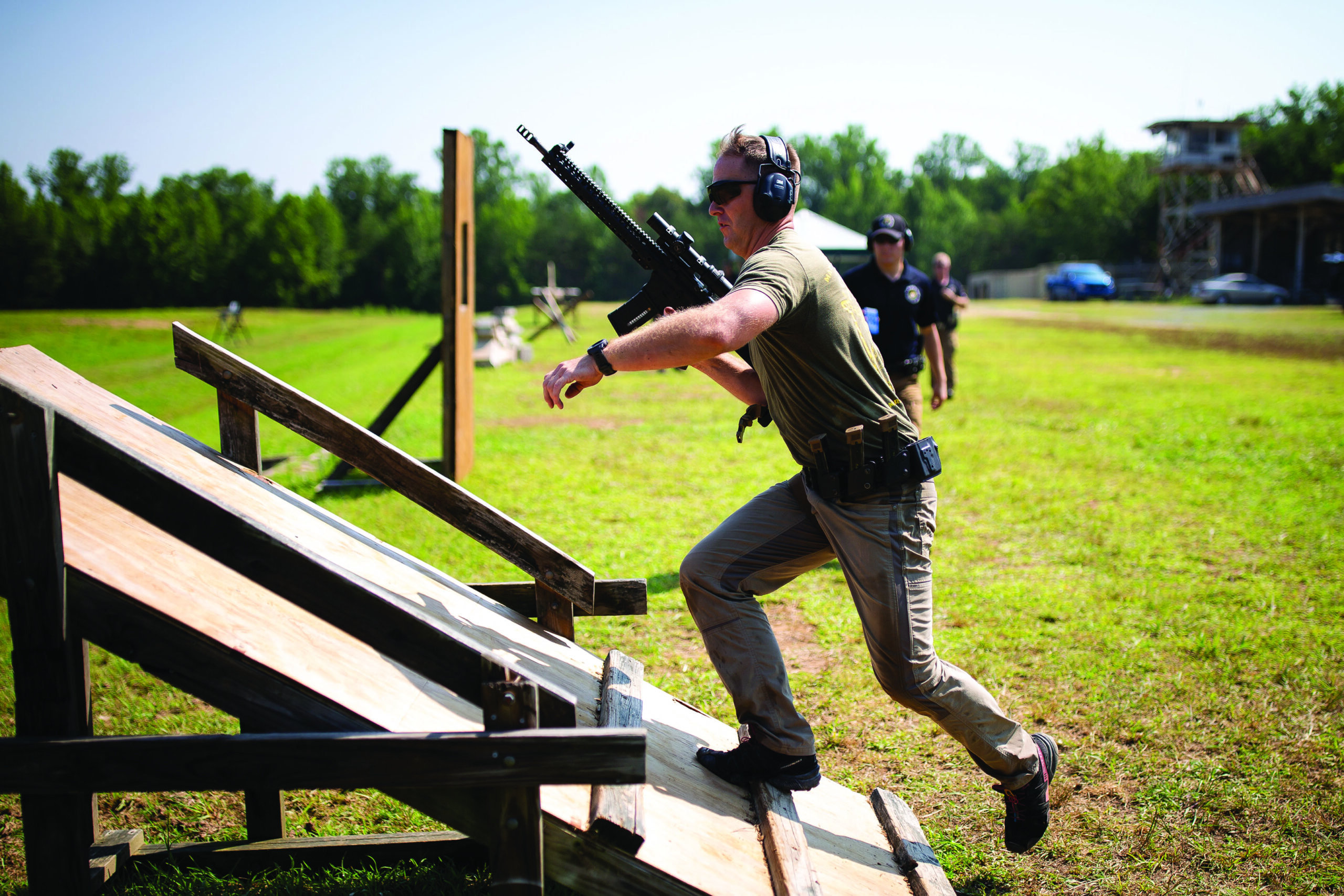
1stLt Scott Ambridge, a member of the Marine Corps Shooting Team, trains at MCB Quantico, July 27, 2021. As PWS adapts to the modern battlefield, it has transitioned from traditional bull’s-eye targets to practical shooting formats that emphasize speed and agility. (Photo by Tia Dufour)
The History of PWS
PWS traces its lineage back to 1966 with the foundation of the Rifle Team Equipment Section, which, as the name suggests, existed to support the Marine Corps shooting teams. They also provided some advanced gunsmithing training, but not through a formalized course of instruction like the modern-day PWRC.
The Rifle Team Equipment Section began providing equipment to the op-erational side of the Marine Corps in the early 1970s, prompted by problems experienced with the M40 in Vietnam. The original M40 was the first sniper rifle not based on an existing service weapon, instead starting life as a com-mercially produced Remington Model 40-X. Like the M14, the M40’s walnut stock tended to swell and warp in the humid jungle climate of southeast Asia, interfering with barrel harmonics and diminishing accuracy. In response, the Rifle Team Equipment Section began upgrading M40s to the M40A1 standard, using fiberglass stocks molded individually in the garage of one Gale McMillan, whose company is now one of the industry leaders in fiberglass rifle stock manufacturing. In 2003, the M40 platform was further upgraded with the M40A3, built on all new receivers and barrels, and equipped with improved McMillan stocks with adjustable cheek risers. Combat experience in Iraq and Afghanistan led later M40A3s to be equipped with Schmidt & Bender 3-12x illuminated scopes, superior to the old 3-9x Redfield models, and rails for clip-on night vision devices. The M40A5, introduced in 2009, had the addition of a muzzle brake with a quick-attach mount for a sound suppressor. And 2013 saw the M40A6, equipped with a barrel five inches shorter, mounted in a Remington Accessory Chassis System with a folding stock. These changes made for a much more compact rifle, allowing Marines to ruck with it in their packs. Every M40 from the M40A1 in 1977 until the platform’s replacement with the MK 22 Advanced Sniper Rifle in 2024 was hand-built and tuned by the 2112s at PWS.
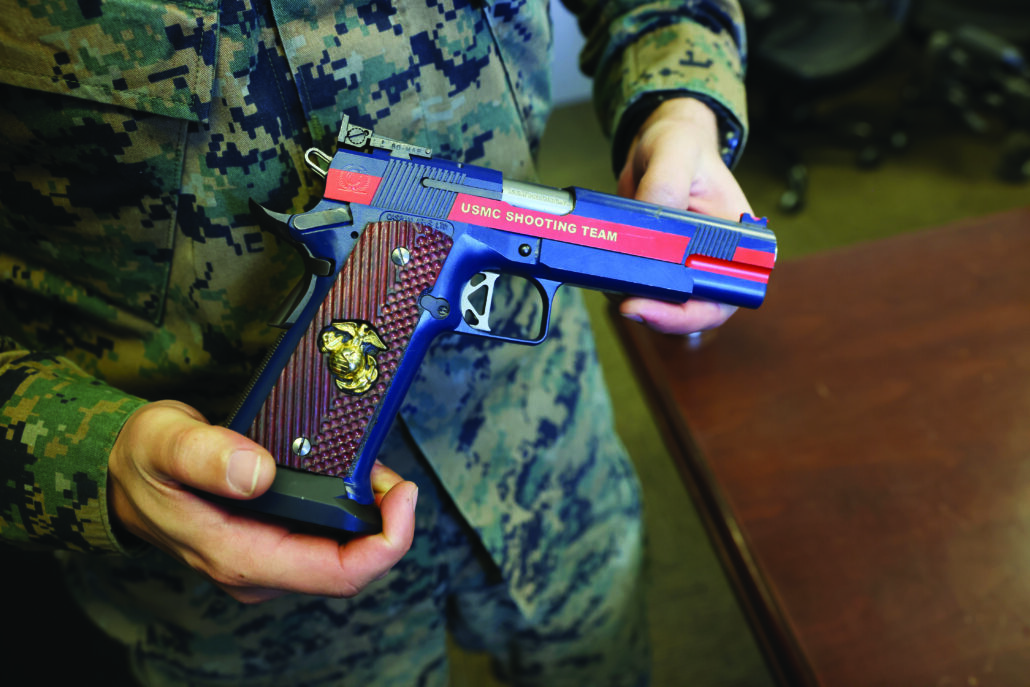
The section also has a long history of upgrading M14s into precision rifles. While the M14 looks on paper like an appealing base for a highly capable semi-automatic precision rifle, the platform suffers from inherent accuracy problems which require extensive modification to address. Starting with the National Match M14’s double-lug receiver, which improves the consistency of the bedding between itself and the stock, PWS developed the M14 Designated Marksman’s Rifle (DMR) with a McMillan stock and a fixed 10x. It entered the service in 1998 and was later replaced by the Enhanced Marksman’s Rifle, with a modular aluminum chassis and the same Schmidt & Bender scope as contemporary M40A3s. During the global war on terrorism, the enhanced M14s were eventually phased out in favor of the M110 and SAM-R, the latter of which was the last model of firearm that PWS produced for the operational side of the Marine Corps.
With the scout sniper program defunct and the M36 filling the DMR role, one might imagine that PWS is now redundant, but nothing could be further from the truth. As the Marine Corps’ clearinghouse for precision machining expertise and a unit with a knack for doing more with less, PWS has expanded its mission to offer more support of Marine Corps Systems Command’s (SYSCOM’s) efforts. When SYSCOM identifies a need, instead of going through the arduous process of wrangling the private sector to solve it, they can draw from the well of problem-solving talent at PWS. The section aims to “give the Program Office other avenues to get their equipment up and running” instead of waiting months or years for a defense contractor to develop a solution, said MGySgt Kennedy. In recent years, that rapid innovation capability has allowed PWS to help the Marine Corps adapt to new battlefield technologies, learning how to work with and against them before the shooting starts.
As the war in Ukraine has shown, small UASs and rapid prototyping technologies to produce them more rapidly have radically changed the face of peer/near-peer warfare. To that end, PWS is making great strides in validating those technologies for the Marine Corps. Gunnery Sergeant Gregory Brown has been working with the Marine Corps Attack Drone Team for more than a year now, designing and building small UASs to demonstrate the technology and help the Marine Corps learn more about their employment. Brown builds UASs using carbon fiber laminate, 3D-printed parts and commonly used electronics, allowing for greater flexibility in the designs and a much lower unit cost. Whereas a Neros Archer first-person view drone might cost $2,000 plus another $1,300 for the electronic safe and arming device that allows it to deploy explosives, Brown can build a somewhat less-capable but similar unit for training for approximately $400. While not authorized to carry weapons due to its use of foreign electronics, the latter allows Marines to study small UASs and learn how to integrate them into small unit tactics.
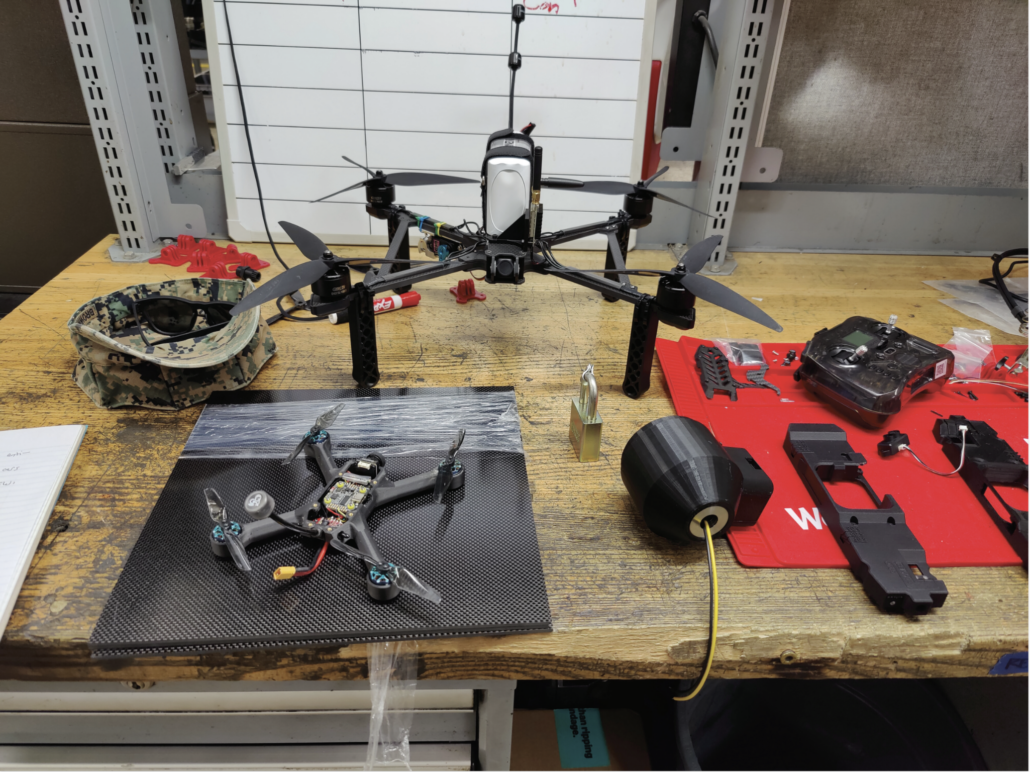

3D printing allows Marines on deployment to do onsite manufacturing of replacement parts and new equipment according to immediate needs. Instead of waiting weeks or months for a part to be delivered thousands of miles, a Marine with an expeditionary fabrication manufacturing kit and a few spools of plastic filament can produce almost any physical object on demand in just a few hours, or, for small parts, less than an hour. Part of PWS’ work is to redesign essential hard-ware for 3D printing and validate those designs so a Marine in the field can print them at the press of a button, without needing to perform calibration or iterative design work. The unit has an eclectic collection of 3D printers from a variety of brands, so they can validate each design on hardware used by the Marine Corps. Whereas Chinese brands Creality and Bambu Lab are the most popular for hobbyists, hardware security and reliability concerns mean the Marine Corps relies on machines from Markforged, LulzBot and Prusa
On the modern battlefield, the integration of small UASs and additive manufacturing in expeditionary environments are no longer advantages, they are necessities. As PWS builds its knowledge base in those areas, it sends personnel out to share that knowledge with Marines in the fleet.
“Any corporal, any sergeant can do what I can do in just a few days’ training,” GySgt Brown said of his work building attack drones. “Any NCO can learn to build, automate and fly drones in just a few days.”
To that end, the true value of PWS is not in its ability to produce sniper rifles that are accurate beyond 1,000 meters, tune service weapons to win national matches or inexpensively produce replacement parts for essential equipment. Its true value is its ability to creatively solve the Marine Corps’ most pressing problems. PWS takes Marines with innate talent for figuring out new and better ways to do things, puts them in front of all the tools they need to make their ideas a reality and instills in them the technical know-how to connect the two. It’s been a long time since the unit’s job was to put accurized Remington 700s into fiberglass stocks, but PWS continues to expand its capabilities to keep the Marine Corps at the cutting edge. As new technology continues to change the way Marines fight, PWS will still be hard at work solving tomorrow’s problems today, as MGySgt Kennedy says, “just using good old NCO creativity.”
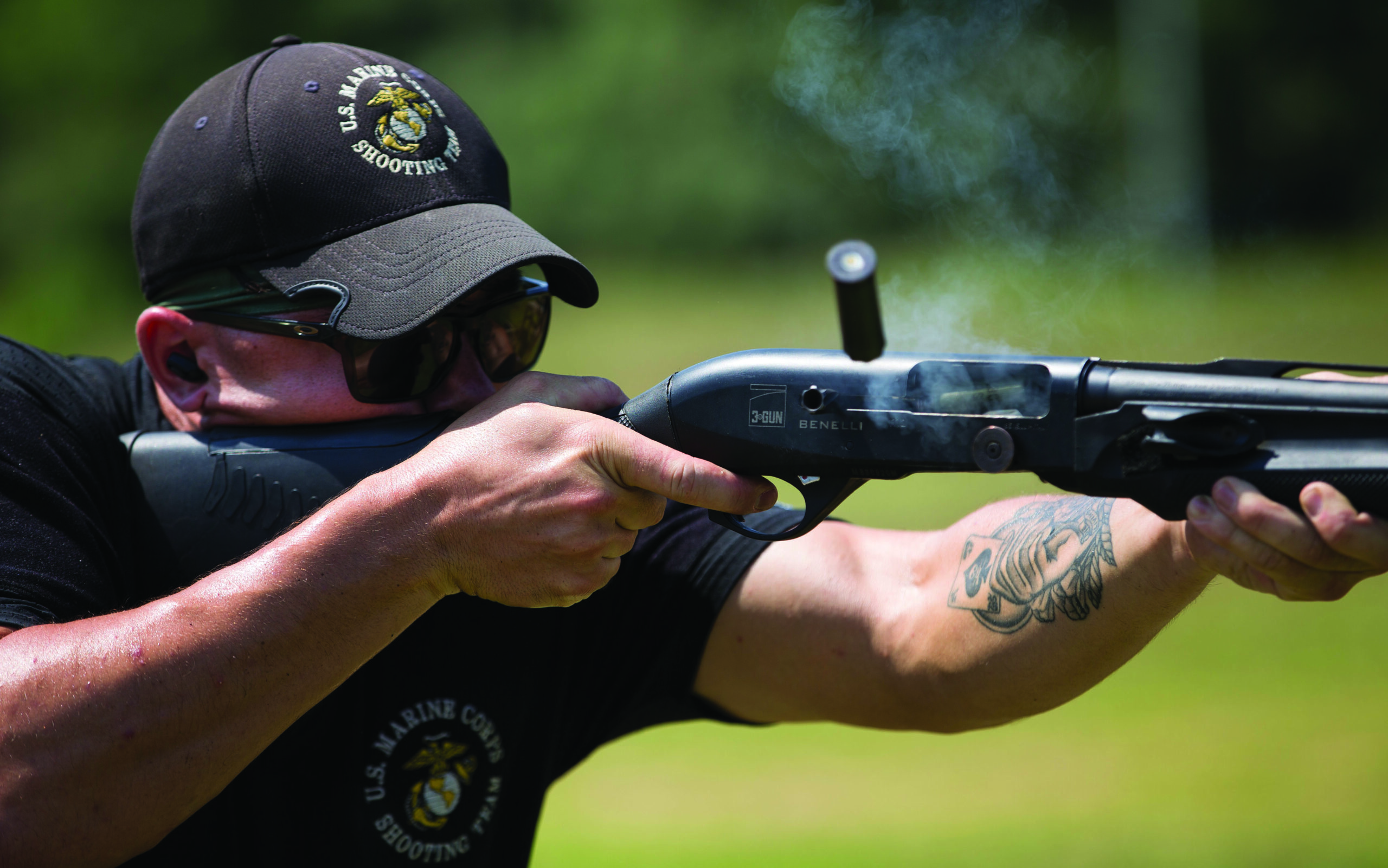
Featured Photo (Top): Using its state-of-the-art machine shop, PWS customizes all types of firearms for use by the Marine Corps’ top competitive marksmen. According to user preference, semiautomatic shotguns have their loading ports enlarged, magazine tubes extended and factory grip checkering replaced with silicon carbide (the “sand” in sandpaper), all to help shooters achieve high scores. (Cpl Sean Potter, USMC)
About the Author
Sam Lichtman is a free-lance writer and editor who specializes in small arms technology and military history. He has a weekly segment on Gun Owners Radio. He is a licensed pilot who lives in Virginia.
Enjoy this article?
Check out similar member exclusive articles on the MCA Archives:
Office Of Naval Research: Preparing The Marine Corps For Battlefields Of The Future
Leatherneck
July 2023
By: Sam Lichtman
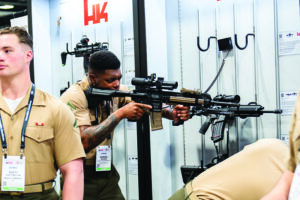
Modern Day Marine
Leatherneck
September 2022
By: Sam Lichtman
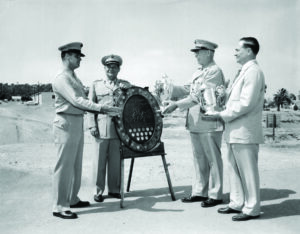
The Life Of Lauchheimer: The Man Behind The Corps’ Top Shooting Trophy
Leatherneck
April 2025
By: Col Dwight H. Sullivan


