


The Biddle Tap Root
By: LtCol Bradley Anderson, USMC (Ret), and Mrs. Katie CashwellPosted on June 15,2026
An enduring legacy of the Marine Corps warrior ethos
Despite advances in the Information Age, the core reality of warfare endures: Marines must still be prepared for brutal, close-quarters combat. While technology rapidly changes, the fight—AI, drones, and lasers now shape modern battlefields—and the timeless need for warriors to face one another remains. Calls for boots on the ground mean hand-to-hand fighting is always possible, particularly in complex environments such as the subsurface of cities. The recent example of uranium in the hands of the Iranians within a subterranean complex proves this point. As we celebrate our Nation’s 250th anniversary, it is fitting to revisit a foundational figure who shaped the warrior ethos still instilled in close-combat arenas: Col Anthony Joseph Drexel Biddle, Sr., USMCR. Though not widely known, Biddle was instrumental in forging the modern warrior spirit and deserves renewed recognition.
A century ago, highlighted during the 1926 Sesquicentennial International Exposition in Philadelphia to celebrate the Nation’s 150th birthday, Biddle pioneered a philosophy of close combat that remains relevant and influential today. He introduced an early form of mixed martial arts to the Marine Corps and developed many techniques that remain in use today. Biddle’s training method saved lives in both World Wars by preparing Marines for the realities of close combat. In his earliest days, this meant trench warfare, and later, fighting amongst pillboxes.
He was recognized by senior leaders for having equipped fighters for many historic battles, including Belleau Wood, Makin Island, and Tarawa, having laid the foundation for the warrior ethos now institutionalized in the modern Marine Corps Martial Arts Program (MCMAP). Despite this legacy, few today fully appreciate his fundamental impact on Marine Corps culture. Without a doubt, the modern-day U.S. Marine Forces Special Operations Command, the 4th, 5th, 6th, and 11th Marine Regiments, and the Marine Corps Martial Arts and Fitness Center of Excellence all owe a part of their martial training legacies to him. Yet, surprisingly, Col Biddle’s legacy is not well known today.

There may be many reasons why Biddle’s name is not in our common lexicon. He had an unusually long name incorporating two last names from prominent families. There are no running cadences bearing his name, nor is he emphasized in professional military education. There are no photos of him in the hallways of the League Island Navy Yard Marine Barracks, where he served so faithfully. He never won any “titled” professional championships. He was not heroically decorated, nor was he seen in photographs wearing awards that he might have earned. Instead of martial arts belts, he wore a simple khaki shirt and trousers to train, sometimes with ties or his service uniform complete with barracks cover. He did not serve a full active-duty career, despite his activation for both World Wars. Yet, he still volunteered to support and train Marines on his own time, frequently without pay.
Despite all of that, Biddle is no less worthy of having a place in the Marine Corps’ collective memory than the iconic Leathernecks of his time. The Marines he instructed went on to achieve heroic deeds in what Teddy Roosevelt would call “mighty things.”1 As recounted by Biddle’s daughter Cordelia in 1955, one of his proudest moments was when he read a New York newspaper article that claimed, “it was the American bayonet skill which enabled the Fifth and Sixth Marines, fighting without artillery, to rise from their foxholes in Belleau Wood and turn back the German thrust with cold steel.”2 She also recalled his pride when he read a letter written to him by Gen Julian Smith just after the 1943 battle of Tarawa. In the letter, he stated, “You are as much responsible for the triumph as if you had been in battle yourself.”3
Despite Col Biddle’s obscurity today, he is the martial “tap root” that nourishes every Marine’s warfighting spirit in training and on battlefields ever since his time.4 He is considered the father of Marine Corps close-quarters combat, and by extension, MCMAP.5 At Bayonet Assault Courses (BACs), hip tosses in rubber mulch pits, or in overhead smashes inside pugil stick octagons, wherever Marines learn to face their internal fears and fight another human being up close, Biddle is still there. Despite his passing in 1948 at 73, elements of his techniques are now formally required to earn each MCMAP belt and instructor tab.
This year, it is dually fitting that we recognize Col Biddle’s contributions, especially as MCMAP approaches its own 25th anniversary. The MCMAP’s early implementation began in 2000, based upon guidance promulgated in 1999 creating the program by the 32nd Commandant of the Marine Corps, Gen James L. Jones. The program did not approach full capability until 2002, when Marine Corps Order 1500.54 was published, and took years to fully equip and resource enterprise-wide. In the order, MCMAP “aims to strengthen the mental and moral resiliency of individual Marines through realistic combative training, warrior ethos studies, and physical hardening.”6 The MCMAP is now an integral part of Marine Corps Total Fitness. The MCMAP training motto, “One Mind, Any Weapon,” with crossed rifle and K-Bar fighting knife, is stenciled on every martial arts instructor or instructor trainer’s shirt.
Extracting only the best, most effective combat-proven techniques, MCMAP sought to incorporate all previous forms of traditional Marine Corps combatives. The program absorbed existing line training and Judo, but then expanded to include other mixed martial arts, such as Brazilian Jiu-Jitsu and ground fighting, as well as a Karate-style five-color belt system. In Biddle’s day, the approach to integrating multiple forms of martial arts was simply called “judo and dirty tricks.”7 He taught his students how to fight to win, not necessarily to be a gentleman. Eye gouging? Game. Rifle butt-stroke to the groin? Game. Catastrophic joint breaks? Game, and, of course, killing. Many of the techniques absorbed within today’s MCMAP trace to Biddle’s pioneering work. But who exactly was this man?
One of the best modern sources for an orientation on his life is in Robert H. Sabet’s book, Anthony Joseph Drexel Biddle Sr.: Pioneer of Combatives in the U.S.A., published in 2023.8 Much of what follows is credited to this source and recommended for any Marine’s professional library.
Anthony Joseph Drexel Biddle Sr. was born in Philadelphia in 1874 to a wealthy family of bankers. The Biddles were well known and influential not only in Philadelphia but nationally. His distant cousin was MajGen William Phillips Biddle, a Spanish-American War, Boxer Rebellion, and Banana Wars veteran, who was the 11th Commandant of the Marine Corps from 1911 to 1914.9 The young Tony Biddle had considerable resources to pursue his interests. One source cited him as having benefited from an inheritance from his grandfather.10 Regardless of generational wealth, he used the resources to pursue a lifestyle designed for mental, physical, and spiritual growth, much like MCMAP instills in Marines today.
Tony Biddle traveled abroad extensively, explored theatrics, wrote about nature, and participated in a mix of athletics and religion.11 He became a prolific writer and penned several books between 1894 and 1901. The genres reflected his evolving interests and included travels to the North Atlantic’s Madeira Islands, recommended improvements in lifestyle, promoted adventure, and explored fictional mysteries and drama. During this period, he began a disciplined commitment to athletics, religion, and a growing fascination with the sport of boxing.12

At the turn of the 20th century, Biddle immersed himself in amateur boxing. He fought a two-round exhibition match with Bob Fitzsimmons in 1893, and, in 1908, a four-round exhibition against Jack O’Brien.13 He is said to have sparred with Teddy Roosevelt during these years.14 He became a staunch advocate for formalized boxing competition and assisted in legalizing the sport in New York.15
During this period, he opened a military training facility that specialized in combative techniques, including boxing, in Lansdowne, PA, west of Philadelphia.16 He devoted his time not only to the sport but to spiritual development through biblical studies and men’s groups in Christianity. Given the context of his day, spiritual development included Bible study. In his facility, he is estimated to have trained over 4,000 men in boxing and close combat, including fencing, dagger use, and Savate and Jiu-Jitsu.17
Then, in 1917, the advent of war changed his life’s trajectory. Biddle enlisted in the Marines at the age of 41, by his own account, immediately after the war was declared.18 Within three months of enlisting, he received a commission as a captain in the reserves and was assigned to the Marine Barracks, Port Royal, SC.19 The Marine Corps made ample use of his experience, having gained attention for his time as an amateur boxer and running his own training camp. Recruit training leadership assigned him to lead an early form of combatives, where he quickly gained momentum to broaden close combat instruction.
Biddle became disappointed with the techniques he saw in practice and argued that the bayonet techniques were “crude and amateurish” and “outmoded.”20 After an unsuccessful attempt to convince his immediate leadership to change, he approached the commanding general and requested that he be permitted to travel to Britain and France to study their bayonet fighting techniques. He reasoned that he could bring back relevant practice picked up from battlefields in France that could benefit Marines in the United States.21 Approved, he then proceeded to Gondrecourt, France, and adopted training techniques to teach Marines headed to the front.22
He also convinced Marine Corps leadership to institutionalize boxing, arguing that the sport would help to build recruit self-confidence.23 He developed a philosophy that through boxing, students would learn the “ability to receive punishment without wincing or losing the temper, which is the secret of success in many things.”24
After the war, Biddle returned in 1919 to his home city of Philadelphia. He was released from active duty at the rank of major.25 He continued honing his skills, instructing boxing techniques, wrestling, Savate, and Jiu-Jitsu, and developed specializations using cutlery, including machetes, sabers, daggers, and bayonets. He continued to travel, perfecting his art. He credited former American fencing champion Maj William J. Herrmann for his knowledge of bayonet and knife movements, and LtCol Samuel G. Taxis, with his knowledge of Jiu-Jitsu.26
Then, in December 1925, America approached its 150th anniversary of the 1926 Sesquicentennial International Exposition, Biddle volunteered to return to active duty for the six-month-long event. He resumed training Marines stationed at Philadelphia’s League Island Navy Yard and showcased his techniques to the public during live demonstrations. Period photographs show training Marines in front of the barracks decked out in varying forms of personal protective equipment for the day: an umpire-like padded chest protection, fencing masks, helmets, and padded gloves.
The Marines constructed a tent city named Camp Samuel Nicholas on a small plot of the 450-acre complex within easy sprinting distance to the Navy Yard. The camp served as a living space to showcase history, traditions, drills, and uniform pageantry. The main attraction was a replica Tun Tavern built to the east of the Marine tent city with material and labor support from Col Cyrus Radford, commanding officer of the Marine Corps Depot of Supplies. Biddle led a close combat troupe for the purpose of these exhibitions.
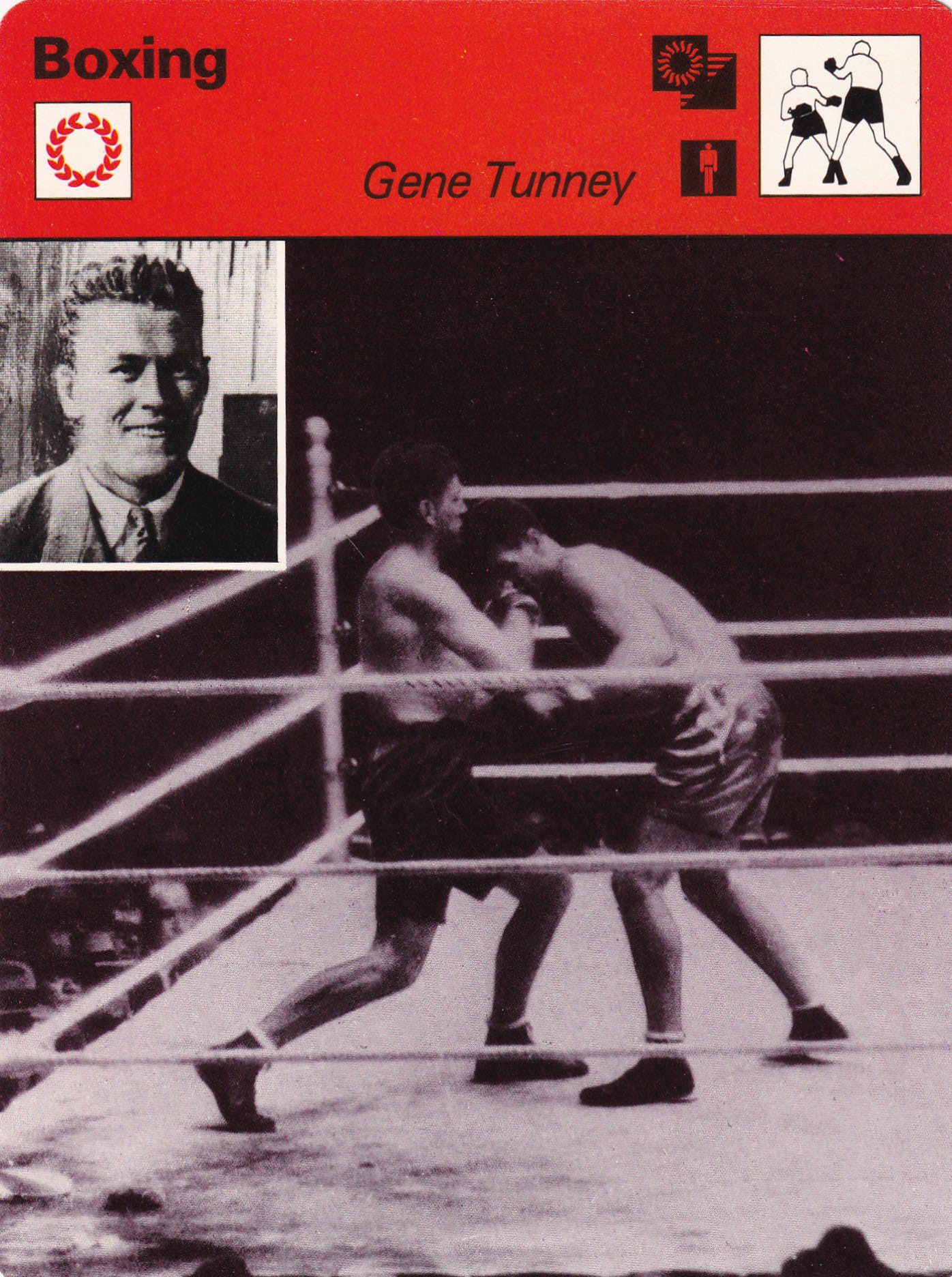
Sesqui featured a heavyweight championship match much like the Ultimate Fighting Championships planned for the 250th Semiquincentennial in Washington. On 1 September 1926, the Marines welcomed one of Biddle’s star pupils from World War I, James Joseph “Gene” Tunney, a famed boxing champion. He challenged the seven-year-reigning heavyweight champion Jack Dempsey for his crown, scheduled three weeks later.
Gene Tunney was well known in his day as the “Fighting Marine.” Analysis of muster logs shows that Biddle would have met Tunney and taught him boxing while they both were assigned to Quantico in September 1918, while the latter prepared to deploy.27 Tunney was assigned to C Company (then known as “Model” Company), much like The Basic School has Mike Company for temporary holding.28 Biddle was assigned to the Officer Training School under the command of the Marine Barracks but expanded training to include deploying Marines.29
Tunney’s wartime service with the 11th Mar took him to the Rhineland during the 1919 German occupation. He did not see combat but spent most of his time developing skills in an early interservice boxing team while assigned from the 11th Mar to the U.S. Army Athletic Subsection 14.30 He became the U.S. Expeditionary Forces light heavyweight champion during the Inter-Allied Games in 1919, immediately after the war. They were held at the Pershing Stadium near Paris from June to July and featured eighteen Allied nations that competed in a variety of team and individual sports.31 Tunney’s win served as a springboard that would propel him into a career as a professional boxer.
Tunney’s 1926 challenge match to Dempsey at Sesqui drew visitors far and wide. By fight night, 23 September, he benefited from the home-team advantage delivered by his fellow Marines dispersed among the crowd. He was reported to have landed so many right hooks upon Dempsey that by the tenth round, Dempsey’s left eye was swollen shut.32 Dempsey would later admit to his wife that he “forgot to duck.”33 Despite the friction caused by rainy seasonal downpours, Tunney defeated Dempsey in front of a crowd of over 120,000 spectators. A wave of national celebrity soon followed.

The day after his victory, Tunney received a commission as a first lieutenant in the Volunteer U.S. Marine Corps Reserves. Five days later, the Commandant of the Marine Corps, MajGen John A. Lejeune, congratulated him in a personal letter, writing, “We all felt that you would put it over, and I personally was confident that the Marine Corps spirit which filled your heart would carry you through the combat successfully.”34
Notoriety would not always follow him in positive ways, given the mystique associated with his national recognition as the Fighting Marine. Media and news outlets would mistakenly report him as a World War I combat veteran, which drew a flurry of inquiries from congressmen, journalists, veterans, and educators asking for the Marine Corps Headquarters to verify his service records.35 Although there are no records that Tunney himself ever falsely asserted combat experience, popular fervor of the time tended to sensationalize his record.
Despite the misaligned platitudes, Tunney remained focused on his professional boxing career. A year after Sesqui, Dempsey challenged him to a rematch. Their next fight was conducted at Soldier Field in Chicago. During this fight, Dempsey knocked Tunney down, but due to new rules requiring the boxer to return to his corner before the count began, Tunney gained a few more seconds to regain his composure before the count of ten. Tunney went on to win the match based on technical merit. History remembers this bout as the “Long Count” fight, given these new rules. Tunney held the title until his voluntary retirement in 1928.
Gene Tunney’s success as a professional boxer was attributed, by his own assertions, in part to the instruction he received from “Tony” Biddle during World War I. Tunney credited Biddle with his first boxing lesson and claimed, “I think Major Biddle could have been a boxing champion had he elected to follow the game professionally.”36 In period photographs taken at Camp Samuel Nicholas, they are seen reunited just before the fight. Photographs show them posed with Model 1903 Springfield rifles with M1905 bayonets fixed. Their relationship would show the results not only of good coaching but of the mentorship that comes from a solid life guide and the potential that can be brought about.
After Sesqui, Biddle returned to civilian life to resume teaching, training, and traveling. He continued to advance in the Marine Corps Reserves and was promoted to lieutenant colonel in 1934. Three years after his promotion, he published his eighth book, entitled Do or Die: A Manual on Individual Combat.37 In this manual, Biddle provided step-by-step instructions in what he called the three Bs: bayonet, Bowie knife, and bare hands. Period photographs throughout his 108-page book show him demonstrating techniques in bayonet “fencing,” knife fighting, Jiu-Jitsu, boxing, and Savate. This book was the first of its kind to codify the mechanics of the Marine Corps close combat techniques.
Martial arts students today would recognize the same methodology illustrated in Bruce Lee’s, Tao of Jeet Kune Do, published in 1975, 38 years following Biddle’s work.38 Like Bruce Lee, Biddle distilled multiple mixed martial arts techniques down to basic close-quarters fighting designed to kill, disable, or paralyze an opponent.
In today’s MCMAP, Marines have the benefit of accessing like-material online. Biddle would recognize many of the techniques and even equipment still in use today. Take the green belt lesson designator log, for example. Bayonet techniques, muscular gouging, counters to strikes, shoulder throws, unarmed manipulations, knife techniques, and martial culture were all explained, demonstrated, and performed back then right there at League Island Navy Yard, and in front of the Marine Barracks with Biddle performing the role of martial arts instructor. In place of the mokuju, for example, a Japanese wooden rifle with a blunt tip used in training bayonet-do, Biddle would also use the actual weapon itself.40

To demonstrate an advancing attack with commands, “Left Parry–Butt Strike–Cut Down–Pass By” to guide the movements, Biddle’s training featured an upper cut rifle butt stroke to the groin, a leaping left foot movement with a diagonal slash, and a shuffling break away to engage additional opponents.41 Biddle emphasized the importance of canting the rifle with the bayonet flat toward the opponent, permitting easy entry between the ribs. This technique could be demonstrated with or without the weapon sheathed. Speed and a quick recovery were of the essence.
Biddle was well known for unsheathing the “cold steel” of a fixed bayonet in training. To demonstrate how to disarm an opponent, he would openly challenge a student demonstrator to thrust at him with full force, only to be quickly deflected and flipped onto his back.42 This practice was not always successful, however, and likely would not survive an operational risk management worksheet today. Biddle’s daughter Cordelia later recounted that he sustained 23 separate bayonet scars on his upper abdomen, chest, and forearms from the practice.43
During the interwar period, Biddle expanded his training audience to include “G-Men” (FBI agents) in close-quarters defensive tactics, due in part to a relative who was the attorney general under Franklin D. Roosevelt.44 He had not only emerged as a recognized combative expert within the Marine Corps but also among those across the interagency. Then, as tensions rose again in both European and Pacific Theaters, Biddle was recalled again to the Marine Corps at the age of 67. By then a full-bird colonel, he resumed teaching close combat to Marines preparing to deploy.
There is a particularly entertaining story recounted by one of LtCol Evans Carlson’s Raiders as they trained for missions in the Pacific in 1942. Carlson had invited Biddle to train his men in hand-to-hand fighting techniques. As recounted by Pvt Darrell A. Loveland, Biddle attached a bayonet to his rifle, dropped down to his knees, and “bellowed” out to a crowd of seasoned veterans, “Pull your scabbards off your bayonets, and anybody that can draw blood on me will get a three-day pass.”45 Many tried; all failed. Loveland recalled years later, “Not a damn soul got a pass. He knew what he was doing. It was sort of like in the movie, The Dirty Dozen.” Biddle was clearly the Chuck Norris of his day.
Sadly, in 1944, two years later, while demonstrating Judo techniques in Quantico, Col Biddle suffered a stroke that effectively ended his lifetime passion. Four years later, unable to fully recover, he suffered a cerebral hemorrhage and passed away at the age of 73.
In the opening chapter of Do or Die, Robert H. Myers asserted that one of Biddle’s proudest possessions was a letter he received from Secretary of the Navy Frank Knox. Presented to him upon his release from active duty, the citation read:
Beginning with the first World War and continuing almost unbrokenly to the present time, you have contributed in an outstanding degree to the training of Marine Corps personnel in hand-to-hand combat. This was made possible, first through the perfection in that art which you yourself attained through years of constant study and application; second, an unusual ability to impart to others the benefit of your expert knowledge and experiences; and third a most generous giving of your time and energies, without expense to the government, and without regard to the personal sacrifices and long hours of intensive physical exertion involved.46
If Biddle had performed these same deeds today, a Legion of Merit or higher would have been well justified.47 In fact, on 30 November 1942, the 17th Commandant of the Marine Corps, then LtGen Thomas Holcomb, recommended Biddle for the Navy Distinguished Service Medal, but the Awards Board ruled the decoration did not meet sufficient legal requirements and recommended denial.48
Today, tools of Biddle’s legacy remain on display at Martial Arts and Fitness Center of Excellence headquarters at The Basic School in Quantico, VA. Exhibits on loan from the National Museum of the Marine Corps emphasize close combat from Carlson’s Raiders in World War II. Among these exhibits is the venerable M1905 bayonet, the same model used by Biddle to train with. This imposing weapon features a sixteen-inch steel blood-grooved blade with a four-inch wooden handle capable of affixing to M1903 Springfield and M1 Garand rifles used in both World Wars, respectively.
At the National Museum of the Marine Corps, there is a famous oil painting depicting hand-to-hand combat in Belleau Wood, illustrated by Sgt Tom Lovell, USMCR. The painting is based on a 1918 version painted by Frank E. Schoonover called “The Jack.” Both works feature a Marine in the chaos of close combat, as he prepares to thrust the weapon’s tip into an entrenched German soldier’s throat. The soldier desperately tries to fend off his attacker from the ground while on his back, grasping the blade with his left hand, in a brutal fait accompli. There is a very high probability that the unnamed Marine depicted would have received training from Biddle’s techniques.
Col Biddle’s thoughts below reveal his training philosophy, still applicable today:
There’s no time to sharpen your sword when the bugle blows the charge, says the old proverb. When the fight starts, and the excitement of the fray grips you, you are in no mood for cool, deliberate planning. Things happen at terrifying speed. Openings come and go as rapidly as the patterns change in a kaleidoscope, and there is little chance to predict from the last combination what the next will be. But the man who has made a study of the fighting style of his opponent knows that through faults, certain openings are sure to occur frequently in the defense he must solve. He makes up his mind just what course of action will enable him best to take advantage of these openings and maps a plan of action.49
These are timeless words. Before we had Col John Boyd’s OODA, there was Col Tony Biddle’s fighting methods, and a martial philosophy well ahead of his time.50
Gen Joseph Dunford, the second Marine general officer to hold the office of Chairman of the Joint Chiefs of Staff, would agree. While serving as the Chairman, he wrote about the “Boxer’s Stance” in the face of future adversaries.51 The position, he asserted, would provide the Joint Force a “foundational posture from which all offensive and defensive movements flow.”52 In other words, from this stance, the Joint Force would be agile, ready, and resilient; a well-centered balance to mount responses to any adversarial action. He wrote that the stance consisted of four elements: first, to develop and maintain a balanced inventory of joint capabilities and capacities; second, an agile and resilient stance requiring geographic prioritization and allocation of resources to manage risks by Russia, China, Iran, North Korea, and violent extremists; third, the family of joint concepts that propose new approaches to address compelling operational challenges; and fourth, human capital, as the ultimate hedge against future uncertainty.53

Ultimately, all four elements together enable the entire Joint Force to parry, block, blunt, or counter any aggressive action meant to do our nation harm. Nearly a decade ago, this approach provided focus for all Services at all levels of war, and became the impetus behind the 2018 National Military Strategy. This remains true today and will for the enduring future.
For the next 250 years, human capital will remain the most important of all four “Boxer’s Stance” elements, just as it always has been. It takes another human to outpace and overmatch another thinking opponent to create the conditions to adapt and to win. Any combat veteran or student of modern warfare would agree that once the lead (or lasers) start flying, and the fictitious T-1000’s start to manifest themselves, the battle space will degrade rapidly into unpredictable chaos. The resilience and the lightning-fast responsiveness instilled in every Marine at entry-level training, conditioned throughout career progression, sharpened by personal study, and strengthened throughout his/her career are what matter the most. Anything less risks what no Marine will ever do, and that is fail. The last two Marine Corps Commandants agree on this position.
In the 2025 Marine Corps University Press publication entitled Evolution on Demand, Dr. James “Pigeon” Fielder asserted, “both (Gens Berger and Smith) argue that wargames hone the mental agility and adaptability that carry over to the myriad of challenges that Marines face across multiple and increasingly long-range challenges.”54 When interviewed for Scuttlebutt podcast #232, Marine Corps Commandant Gen Eric Smith asserted that even the first Marine corporals observing newer recruits emerging from Tun Tavern saw the need for change in their day; that Force Design was less a destination than a journey. So, in the Marine Corps, the need for change and process improvement remains, and that is a good thing.
So, as we celebrate America’s 250th quarter-millennium birthday this year and approach MCMAP’s quarter-century milestone, we remember an unsung hero and the warrior ethos he worked so hard to instill. Col Anthony Joseph Drexel Biddle Sr.’s tap root martial legacy helped not only Marines to win two World Wars but also provided branches and sequels to every Marine who has earned the Eagle, Globe, and Anchor since his day. As the first blows of the next battles are delivered and the inevitable chaos ensues, Col Biddle reminds Marines at all levels, “He who does not plan is little better than a floating log which drifts where the current takes it.”55
ABOUT THE AUTHOR
>LtCol Anderson is a 33-year veteran of combat operations from Operation DESERT STORM to Operations ENDURING and IRAQI FREEDOM. He is a distinguished graduate of the U.S. Army War College and a Joint Qualified Officer, the former Commanding Officer of Camp Mujuk, S. Korea, and served his final staff tours as the Joint, Interagency and Multinational Branch Head for Training and Education Command G-3 and as the Assistant Chief of Staff G-4 for Training Command.
>>Mrs. Cashwell is a veteran Marine and a graduate of the University of Mary Washington with a degree in historic preservation. She spent decades providing research to recover America’s Missing in Action. She was instrumental in helping to find the lost graves of Tarawa that are still being recovered, identified, and repatriated with their families over eight decades after the battle.
Notes
1. Theodore Roosevelt, “The Strenuous Life,” Voices of Democracy: The U.S. Oratory Project, March 26, 2026, https://voicesofdemocracy.umd.edu/roosevelt-strenuous-life-1899-speech-text. Reference to Theodore Roosevelt’s speech delivered in Chicago on April 10, 1899, where he said, “Far better it is to dare mighty things, to win glorious triumphs, even though checkered by failure, than to take rank with those poor spirits who neither enjoy much nor suffer much, because they live in the gray twilight that knows not victory nor defeat.”
2. Robert H. Sabet, Anthony Joseph Drexel Biddle Sr.: Pioneer of Combatives in the U.S.A. (Martial History, 2023).
3. Ibid.
4. According to the Oxford Dictionary, a “tap root” is the straight, tapered root that forms the center from which all other rootlets spring. The term appeared in Robert H. Sabet’s book, Anthony Joseph Drexel Biddle Sr.: Pioneer of Combatives in the U.S.A. He cited a June/July 1994 issue of Gung Ho Chuan Association newsletter Snapping In with an article entitled, “A.J. Drexel Biddle: The Tap Root of the Marine Corps Reserve.” In this article’s context, the term broadens that assertion and connects modern-day Marines to A.J.D. Biddle’s martial arts combatives teachings, particularly MCMAP.
5. Will Dabbs, “Joseph Drexel Biddle: Father of Marine Corps Close Quarters Combat,” Guns America, July 13, 2025, https://gunsamerica.com/digest/joseph-drexel-biddle-the-father-of-marine-corps-close-quarters-combat.
6. Headquarters Marine Corps, Marine Corps Martial Arts Program (MCMAP), MCO 1500.59A (Washington, DC: Department of the Navy, 2010), https://www.marines.mil/Portals/1/Publications/MCO%201500.59A.pdf.
7. Sabet, Anthony Joseph Drexel Biddle Sr.
8. Disclaimer: caveat this recommendation with due caution, as some content contains language, observations, attitudes, and biases characteristic of that time that could be offensive to some readers.
9. Jennifer Mazzara, Shared Experience: Organizational Culture and Ethos at the U.S. Marine Corps Basic School, 1924–1941 (Quantico, VA: Marine Corps University Press, 2023) and Marine Corps University, “Major General William P. Biddle, USMC (Deceased),” March 29, 2026, https://www.usmcu.edu/Research/Marine-Corps-History-Division/People/Whos-Who-in-Marine-Corps-History/Abrell-Cushman/Major-General-William-P-Biddle.
10. Paul Hicks, “Fabulous Fighter: Anthony J. Biddle, Master of Hand-to-Hand Combat,” Leatherneck 31, no. 9 (September 1948).
11. “Anthony Joseph Drexel Biddle Sr.,” Wikipedia, last modified March 23, 2026, https://en.wikipedia.org/wiki/Anthony_Joseph_Drexel_Biddle_Sr.
12. Hicks, “Fabulous Fighter.”
13. Sabet, Anthony Joseph Drexel Biddle Sr.
14. Albert Arsenault, “Col Biddle and the Bayonet,” Marine Corps Gazette 67, no. 3 (March 1983).
15. Sabet, Anthony Joseph Drexel Biddle Sr.
16. Joseph R. Svinth, “Anthony J. Drexel Biddle, USMC CQB Pioneer,” Journal of Non-lethal Combatives, December 2001, https://ejmas.com/jnc/jncart_Svinth_1201.htm.
17. “Col Biddle, Now 67, Trains Men Again,” New York Times, February 15, 1942, https://www.nytimes.com/1942/02/15/archives/col-biddle-now-67-trains-men-again-marine-corps-calls-him-back-to.html, and Sabet, Anthony Joseph Drexel Biddle Sr. Savate means “Old Shoe,” or a pet name for the French version of kickboxing.
18. Sabet, Anthony Joseph Drexel Biddle Sr.
19. Sabet, Anthony Joseph Drexel Biddle Sr. The Marine Barracks Port Royal is now the Marine Corps Recruit Depot, Parris Island, SC.
20. Sabet, Anthony Joseph Drexel Biddle Sr.
21. Svinth, “Anthony J. Drexel Biddle.”
22. Anthony J. Drexel Biddle, Do or Die: A Manual on Individual Combat (Leatherneck Association, 1937; 1944).
23. Svinth, “Anthony J. Drexel Biddle.”
24. Sabet, Anthony Joseph Drexel Biddle Sr.
25. Hicks, “Fabulous Fighter.”
26. Biddle, Do or Die.
27. U.S. National Archives, U.S. Marine Corps Muster Rolls, 1893–1958: James J. Tunney—Official Miscellaneous Correspondence and Orders Jacket, Record Group 127, National Archives, Washington, DC.
28. Svinth, “Anthony J. Drexel Biddle.”
29. U.S. National Archives, U.S. Marine Corps Muster Rolls, 1893–1958: Anthony Joseph Drexel Biddle Sr., Record Group 127, National Archives, Washington, DC.
30. U.S. National Archives, Tunney—Official Miscellaneous Correspondence and Orders Jacket.
31. National WWI Museum and Memorial, “Inter-Allied Games,” accessed March 23, 2026, https://www.theworldwar.org/learn/about-wwi/inter-allied-games.
32. “The Dempsey-Tunney Fight of 1926,” Philly History Blog, accessed March 22, 2026, https://blog.phillyhistory.org/index.php/2009/01/the-dempsey-tunney-fight-of-1926.
33. Ibid.
34. U.S. National Archives, Tunney—Official Miscellaneous Correspondence and Orders Jacket.
35. Ibid.
36. Sabet, Anthony Joseph Drexel Biddle Sr.
37. Biddle, Do or Die.
38. Bruce Lee, Tao of Jeet Kune Do (Burbank, CA: Ohara Publications, 1975).
39. U.S. Marine Corps, Marine Corps Martial Arts Training Log, NAVMC 2933 (Washington, DC: Headquarters Marine Corps, March 25, 2026), https://www.marines.mil/Portals/1/Publications/NAVMC%202933.pdf.
40. Tozando, “Jukendo Mokuju – For Training,” accessed April 1, 2026, https://tozandoshop.com/products/jukendo-mokuju-for-training.
41. Biddle, Do or Die.
42. In today’s MCMAP fighting, this role is called the “Uke,” pronounced “ookee”—Japanese for the practice for a student to assume a counter to the technique executed in training.
43. Cordelia Biddle Duke, My Philadelphia Father (New York: Pocket Books, 1955).
44. Sabet, Anthony Joseph Drexel Biddle Sr.
45. John Wukovits, American Commando: Evans Carlson, His WWII Marine Raiders, and America’s First Special Forces Mission (New York: New American Library, 2009), 51, https://archive.org/details/americancommandoOOwuko.
46. Biddle, Do or Die.
47. This is the opinion of the authors and not of the Marine Corps Gazette, Marine Corps Association, or the U. S. Marine Corps writ large.
48. U.S. National Archives, Colonel Anthony Joseph Drexel Biddle, Sr., USMCR Official Military Personnel File, Record Group 127, National Archives, Washington, DC, https://catalog.archives.gov/id/299715.
49. Sabet, Anthony Joseph Drexel Biddle Sr.
50. OODA: observe, orient, decide, and act; a four-step expedient decision-making framework developed by U.S. Air Force Col John Boyd during the Vietnam era to increase pilot reaction time in aerial combat. His method is applicable in any contested warfighting domain and widely taught in U.S. Marine Corps career progression schools.
51. Joseph F. Dunford Jr., “From the Chairman: Maintaining a Boxer’s Stance,” Joint Force Quarterly 86 (3rd Quarter 2017), https://ndupress.ndu.edu/Media/News/News-Article-View/Article/1218381/from-the-chairman-maintaining-a-boxers-stance.
52. Dunford, “Maintaining a Boxer’s Stance.”
53. Ibid.
54. James Fielder, Evolution on Demand: The Changing Roles of the U.S. Marine Corps in Twenty-First Century Conflicts and Beyond, in Innovation in PME Wargaming for Innovation in Warfare, ed. Joanna Siekiera (Quantico, VA: Marine Corps University Press, 2025).
55. Sabet, Anthony Joseph Drexel Biddle Sr.