

 CPRL: STRATEGY
Ground Combat: Puncturing the Myths of Modern War
by Ben Connable
A challenge to common assumptions about the future of land warfare
Ground Combat reveals the gritty details of land warfare at the tactical level and challenges today’s overly subjective and often inaccurate approaches to characterizing war. Ben Connable’s motivation for writing the book is to offer an evidence-based approach to examining the future of war.
Connable created and analyzed an original dataset of more than four hundred global ground combat cases, showing that there was an evolutionary rather than revolutionary shift in the characteristics of ground combat from World War II through the early 2020s. Despite advances in military technology, tanks, artillery, and infantry remain central to how war is waged on land. This book asks readers to stop and think about the implications of these findings for force planning and future predictions about military-technical revolutions.
Purchase Here Audio Book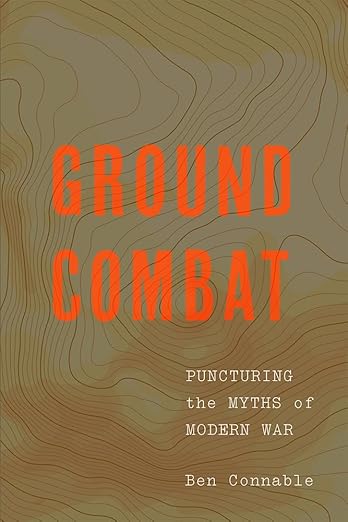
The Generals' War: The Inside Story of the Conflict in the Gulf
by Michael Gordon and Bernard Trainor
Taking readers behind the scenes, the chief Pentagon correspondent for the New York Times and a retired three-star general explain the allied coalition’s military strategy and analyze what went right and wrong.
Purchase Here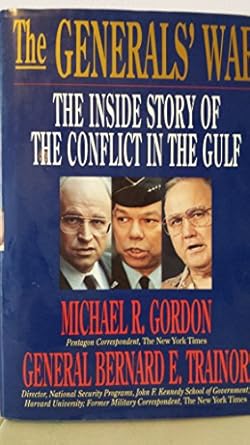
The Russian Way of Deterrence: Strategic Culture, Coercion & War
by Dmitry Adamsky
From a globally renowned expert on Russian military strategy and national security, The Russian Way of Deterrence investigates Russia’s approach to coercion (both deterrence and compellence), comparing and contrasting it with the Western conceptualization of this strategy. Strategic deterrence, or what Dmitry (Dima) Adamsky calls deterrence à la Russe, is one of the main tools of Russian statecraft. Adamsky deftly describes the genealogy of the Russian approach to coercion and highlights the cultural, ideational, and historical factors that have shaped it in the nuclear, conventional, and informational domains. Drawing on extensive research on Russian strategic culture, Adamsky highlights several empirical and theoretical peculiarities of the Russian coercion strategy, including how this strategy relates to the war in Ukraine. Exploring the evolution of strategic deterrence, along with its sources and prospective avenues of development, Adamsky provides a comprehensive intellectual history that makes it possible to understand the deep mechanics of this Russian stratagem, the current and prospective patterns of the Kremlin’s coercive conduct, and the implications for policymakers on both sides of the Atlantic.
Purchase Here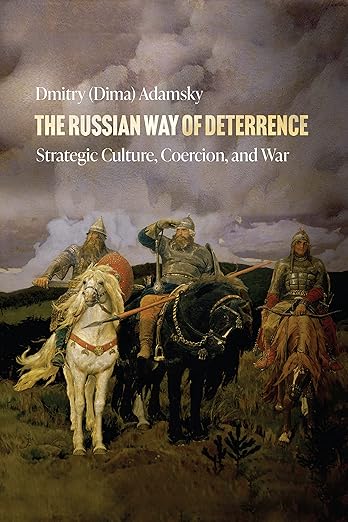
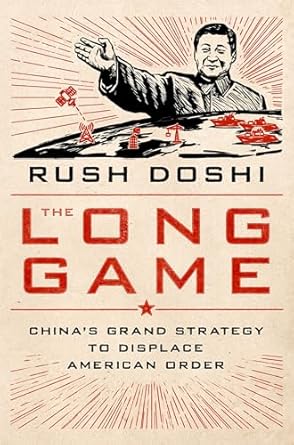
The Long Game: China's Grand Strategy to Displace American Order
by Rush Doshi
In The Long Game, Rush Doshi draws from a rich base of Chinese primary sources, including decades worth of party documents, leaked materials, memoirs by party leaders, and a careful analysis of China’s conduct to provide a history of China’s grand strategy since the end of the Cold War. Taking readers behind the Party’s closed doors, he uncovers Beijing’s long, methodical game to displace America from its hegemonic position in both the East Asia regional and global orders through three sequential “strategies of displacement.” Beginning in the 1980s, China focused for two decades on “hiding capabilities and biding time.” After the 2008 Global Financial Crisis, it became more assertive regionally, following a policy of “actively accomplishing something.” Finally, in the aftermath populist elections of 2016, China shifted to an even more aggressive strategy for undermining US hegemony, adopting the phrase “great changes unseen in century.” After charting how China’s long game has evolved, Doshi offers a comprehensive yet asymmetric plan for an effective US response. Ironically, his proposed approach takes a page from Beijing’s own strategic playbook to undermine China’s ambitions and strengthen American order without competing dollar-for-dollar, ship-for-ship, or loan-for-loan.
Purchase Here Audio Book