


 CPRL: INNOVATION
THE ORIGINS OF VICTORY: HOW DISRUPTIVE MILITARY INNOVATION DETERMINES THE FATES OF GREAT POWERS
by Andrew F. Krepinevich, Jr.
This book shows how militaries that successfully pursue disruptive innovation can gain a major advantage over their rivals, while those that fail to do so risk exposing their countries to great danger.
Purchase Here Audio Book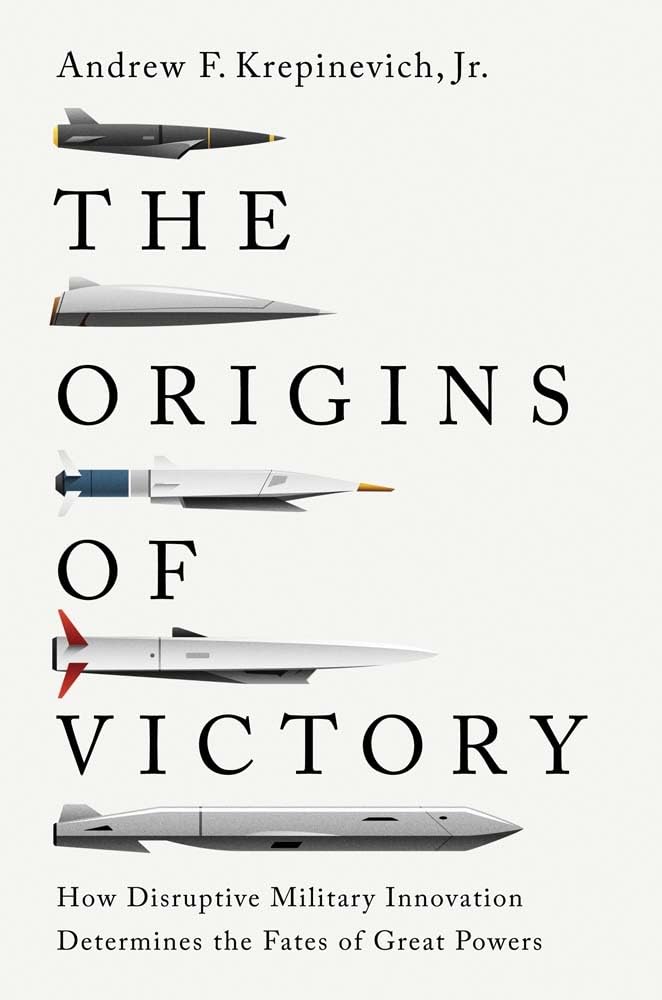
WHERE GOOD IDEAS COME FROM: THE NATURAL HISTORY OF INNOVATION
by Steven Johnson
A deep-dive on innovation, this book identifies the seven key patterns behind genuine innovation, and traces them across time and disciplines.
Purchase Here Audio Book
A Game of Birds and Wolves: The Ingenious Young Women Whose Secret Board Game Helped Win World War II
by Simon Parkin
By 1941, Winston Churchill had come to believe that the outcome of World War II rested on the battle for the Atlantic. A grand strategy game was devised by Captain Gilbert Roberts and a group of ten Wrens (members of the Women’s Royal Naval Service) assigned to his team in an attempt to reveal the tactics behind the vicious success of the German U-boats. Played on a linoleum floor divided into painted squares, it required model ships to be moved across a make-believe ocean in a manner reminiscent of the childhood game, Battleship. Through play, the designers developed “Operation Raspberry,” a counter-maneuver that helped turn the tide of World War II.
Combining vibrant novelistic storytelling with extensive research, interviews, and previously unpublished accounts, Simon Parkin describes for the first time the role that women played in developing the Allied strategy that, in the words of one admiral, “contributed in no small measure to the final defeat of Germany.” Rich with unforgettable cinematic detail and larger-than-life characters, A Game of Birds and Wolves is a heart-wrenching tale of ingenuity, dedication, perseverance, and love, bringing to life the imagination and sacrifice required to defeat the Nazis at sea.
Purchase Here Audio Book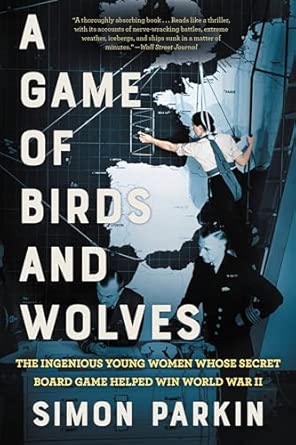
Playing War: Wargaming and U.S. Navy Preparations for World War II
by John M. Lillard
Between the First and Second World Wars, the U.S. Navy used the experience it had gained in battle to prepare for future wars through simulated conflicts, or war games, at the Naval War College. In Playing War John M. Lillard analyzes individual war games in detail, showing how players tested new tactics and doctrines, experimented with advanced technology, and transformed their approaches through these war games, learning lessons that would prepare them to make critical decisions in the years to come.
Recent histories of the interwar period explore how the U.S. Navy digested the impact of World War I and prepared itself for World War II. However, most of these works overlook or dismiss the transformational quality of the War College war games and the central role they played in preparing the navy for war. To address that gap, Playing War details how the interwar navy projected itself into the future through simulated conflicts. Playing War recasts the reputation of the interwar War College as an agent of preparation and innovation and the war games as the instruments of that agency.
Purchase Here
Evolution on Demand: The Changing Roles of the U.S. Marine Corps in Twenty-first Century Conflicts and Beyond
by Joanna Siekiera
The future battlespace promises to be complex, unpredictable, and multifaceted. To answer its challenges, military professionals must think deeply and innovatively about warfare’s evolving character and how to gain decisive advantage across a hotly contested global landscape. Evolution on Demand: The Changing Roles of the U.S. Marine Corps in Twenty-first Century Conflicts and Beyond, featuring the work of nonresident fellows of the Brute Krulak Center for Innovation and Future Warfare, offers critical insights into the challenges and opportunities that lie ahead. Drawing on a range of perspectives and areas of expertise, they explore the strategic, operational, and technological factors that will shape military conflict in the years to come. Each chapter not only provides an in-depth analysis of specific challenges but also offers practical recommendations for how the Marine Corps and its allies can prepare to win the future fight. The contributions in this volume underscore the need for militaries, particularly the U.S. Marine Corps, to adapt to these changes and remain at the cutting edge of innovation and strategy.
Purchase Here
7 Seconds to Die: A Military Analysis of the Second Nagorno-Karabakh War and the Future of Warfighting
by John F. Antal
The Second Nagorno-Karabakh war—fought between Armenia and Azerbaijan between September 24 and November 10, 2020—was the first war in history won primarily by unmanned systems.
This 44-day war resulted in a decisive military victory for Azerbaijan. Armenia was outfought, outnumbered, and outspent and lost even though they controlled the high ground in a mountainous region that favored traditional defense. Azerbaijan’s alliance with Turkey, and close technological support from Israel, strategically isolated Armenia. In addition, Turkey’s posturing influenced the Russians not to intervene to support Armenia. That Azerbaijan attacked Armenia during the pandemic was an additional factor. The fact that Azerbaijan won the war is not extraordinary, considering the correlation of forces arrayed against Armenia. What is exceptional is that this was the first modern war primarily decided by unmanned weapons. In this war the Turkish-made BAYRAKTAR TB2 Unmanned Air Combat Vehicle (UCAV) and the Israeli-made HAROP Loitering Munition (LM) dominated the fighting and provided Azerbaijan with a war-winning advantage.
Purchase Here Audio Book