


We Can Do Hard Things
Posted on: March 20,2026The Arty Paty +1 recently released a new podcast called “Well, That Was Hard.” We chatted about the kinds of hard things Marine Corps spouses go through all the time. The moves that go wrong. Trying to go back to work – or keep working. What it’s like to make new friends at new duty stations. The moments that are frustrating enough to laugh about later, but not always funny while we’re living them.
The point of the podcast was pretty simple: We do hard things.
Today I have been thinking about hard in a different way.
Maybe it was fate or maybe it was the internet algorithms, but I came across a clip from Duke women’s basketball coach Kara Lawson where she talked about hard things in a way that stuck with me. She basically said that so many of us are waiting for things to get easier, when really, the goal is to become someone who handles hard better.
Well, okay then.
If I’m honest, I probably spend a lot of my life thinking that if I could just get through this one thing, then things would settle down. If I could just make it through this move, this season, this challenge, then maybe life would finally feel easier.
But that is not really how it works.
The hard stuff does not go away. Sometimes it changes shape. Sometimes it lets up for a little while. Sometimes a new kind of hard stuff takes its place. But what I realized is that the real growth is not in waiting for life to get easier. It’s in becoming a person who can carry hard things better than she used to.
I don’t mean that hard stuff stops being hard. I don’t mean I have some magical mindset where everything rolls off my back. I don’t mean I enjoy the hard parts or welcome them. I do not.
But I can look back on my life and see that the things that once would have completely undone me don’t hit me the same way anymore. Not because life got softer, but because I got better at doing hard things.
I think this life teaches that lesson whether we ask for it or not.
There is always some version of hard. A goodbye. A move. A missed holiday. A changed plan. A season of loneliness. A season of uncertainty. A moment where you realize no one is coming to make it easier, and somehow, you have to figure out how to move through it anyway.
And over time, I think that does something to a person.
It builds grit. It builds perspective. It builds a kind of confidence that doesn’t come from having an easy life, but from knowing you have already done hard things before.
I can do hard things.
Not always gracefully. Not always with a great attitude. Not always without tears or frustration or a little bit of sarcasm. But I have done them. And when I look back, I can see that the greatest change was not always in my circumstances. The greatest change was in me.
I handled it better than I used to.
I’m not waiting for life to get easier. I’ll just try to handle hard better than I did the last time.
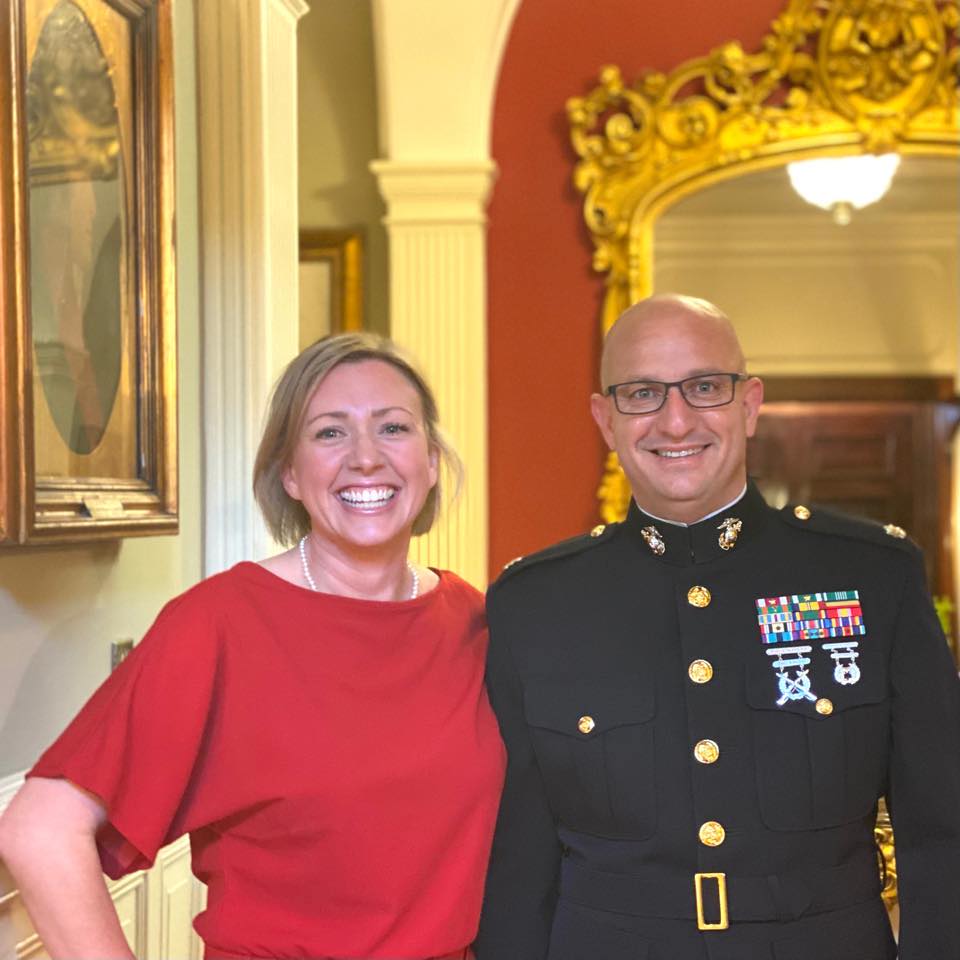
Krista Ickles is the Program Coordinator for the Marine Corps Association’s Behind the Camouflage program, where she is dedicated to supporting and empowering Marine Corps spouses by fostering community connections and providing resources to enhance their personal and professional growth. In this role, she works to ensure that Marine Corps spouses have access to opportunities that strengthen their sense of belonging and engagement within the military community.
Throughout her journey, she has focused on advocacy, operations management, and military family support. Prior to her current role, she served as Operations Manager for AtEase, an online platform providing government-approved lodging for military families during PCS moves. Before that, she was theHeadquarters Lead Advocate for the USMC PCS Advocacy Council, where she worked to improve relocation experiences for Marine families by engaging with senior leadership and driving policy discussions.
In addition to her professional experience, Krista is a mother of four and has been a proud Marine Corps spouse for over 25 years. Her deep connection to the military community fuels her passion for advocating for military families, enhancing spouse networks, and building strong support systems.


