

Walking Among Giants: Fallujah 20 Years Later and a Birthday to Remember
By: Kyle WattsPosted on October 15, 2024
Well before dawn, on Nov. 10, 2004, Hospitalman Alonso Rogero tossed and turned. The Marines surrounding Rogero seemed just as restless. Nights in Fallujah grew bitterly cold, and Rogero had left his blanket behind when they pushed into the city two days earlier. Lance Corporal Erick Hodges lay nearby.
“Dude, you gotta let me borrow your blanket,” Rogero pleaded. “I’m freezing my ass off.”
Hodges scooted closer and unwrapped part of his blanket. The Marine and the Navy corpsman shared their warmth and snacks from MREs as the night droned on. Outside, the incessant wailing of colicky babies and cats in heat echoed through the streets. A U.S. Army Psychological Operations team trailed the Marines to the front line with a creative collection of unsettling tracks and directional speakers focused toward the enemy. The noise ricocheted off every building and returned to torment the Marines. Only daylight would bring relief, and a resumption of their mission to kick down every door in their path.
Captain Andrew McNulty gathered his warriors from “Kilo” Company, 3rd Battalion, 5th Marines, after first light. Rogero, Hodges, and the rest of 1st Platoon knelt or stood alongside the remainder of the unit, nearly 200 strong. McNulty turned the PSYOPs speakers around and addressed his Marines and Sailors through the microphone.
“On November 10, 1775, a Corps of Marines was created by a resolution of Continental Congress. Since that date many thousand men have borne the name ‘Marine.’ In memory of them it is fitting that we who are Marines should commemorate the birthday of our Corps by calling to mind the glories of its long and illustrious history.”
McNulty proclaimed the Marine Corps Birthday message while the grunts reflected on the day ahead. What part would they play in that illustrious history? Many were veterans of the 2003 invasion of Iraq, already witness to history in the making. Now, after two days in Fallujah, the company had exploded out of the gate, trouncing any enemy resistance and suffering no casualties. How long could such a streak last?
“The current battlefields of the Global War on Terror are linked to the storied campaigns of our past,” McNulty continued, reading the Commandant’s 229th birthday message which had been published that same week. The Commandant listed Belleau Wood, Iwo Jima, Chosin Reservoir, and other battles fought by Marines. He named only one battlefield from present day.
“Now, in places like Fallujah, Marines have consistently demonstrated a dedication to duty, a commitment to warfighting excellence, and a devotion to each other that has instilled a fierce determination to overcome seemingly impossible challenges.”
How many times had Marines at the front been told the fight they waged would be recognized in the line of storied campaigns defining our history? How many battles achieved such prominence as Belleau Wood, Iwo Jima, or the Chosin Reservoir when they had only just begun? As the Marines considered their mission, they placed confidence in their dedication to duty and war fighting excellence, but especially in their devotion to each other. No challenges seemed impossible to overcome in the company of the men standing to their left and right.
The Corps’ experience in Fallujah earlier that year, perhaps, compelled the Commandant to highlight the seemingly impossible challenges Marines were about to face. On April 4, the 1st Marine Expeditionary Force (I MEF) kicked off Operation Vigilant Resolve, the first large-scale American effort to capture Fallujah from insurgent forces. Intense fighting raged for six days. Reporting on the battle was decidedly biased as the enemy’s propaganda machine published stories of American atrocities and photos of dead civilians. Under pressure from the provisional Iraqi government, Coalition leaders ordered a ceasefire on April 9 and officially concluded Vigilant Resolve at the end of the month. Marines withdrew, leaving the city in the deceitful hands of the “Fallujah Brigade.” Former Iraqi soldiers who served under Saddam Hussein made up the Iraqi unit, harboring nothing but hatred for their American occupiers. The Fallujah Brigade dissolved within weeks, its members and resources joining the insurgent ranks flooding into the city. By the fall of 2004, Fallujah gained notoriety as the worst city in the worst province in the entire country. It could not be ignored. I MEF once again received the task to secure the city in November, this time decisively.
McNulty finished his birthday message readings. He dismissed the Marines to their day’s work with a final exhortation.
“Slow is smooth, and smooth is fast. Today, I expect the enemy to stand and fight. Kill him and kill him twice. Oorah, Semper Fi, and Happy Birthday.”
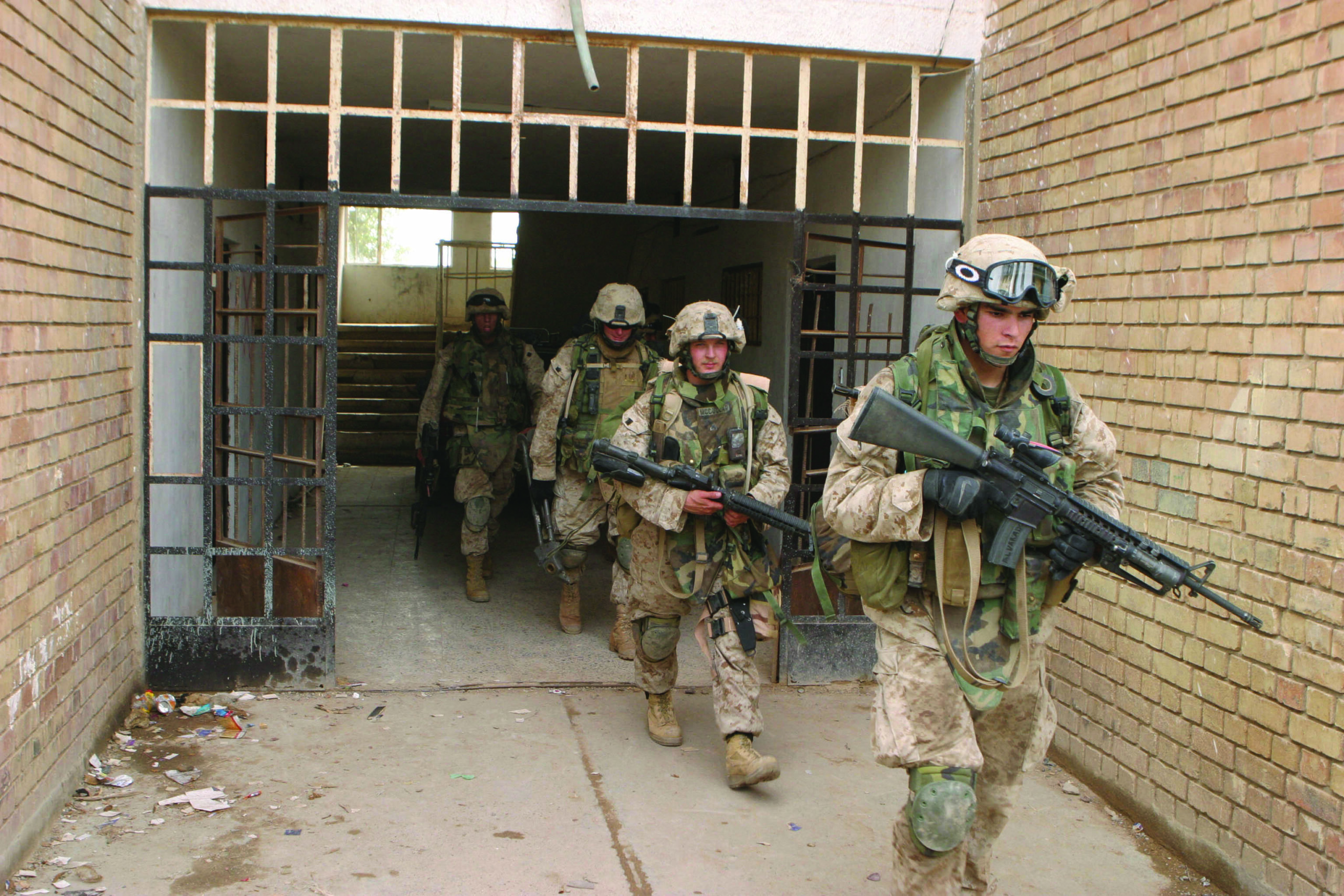
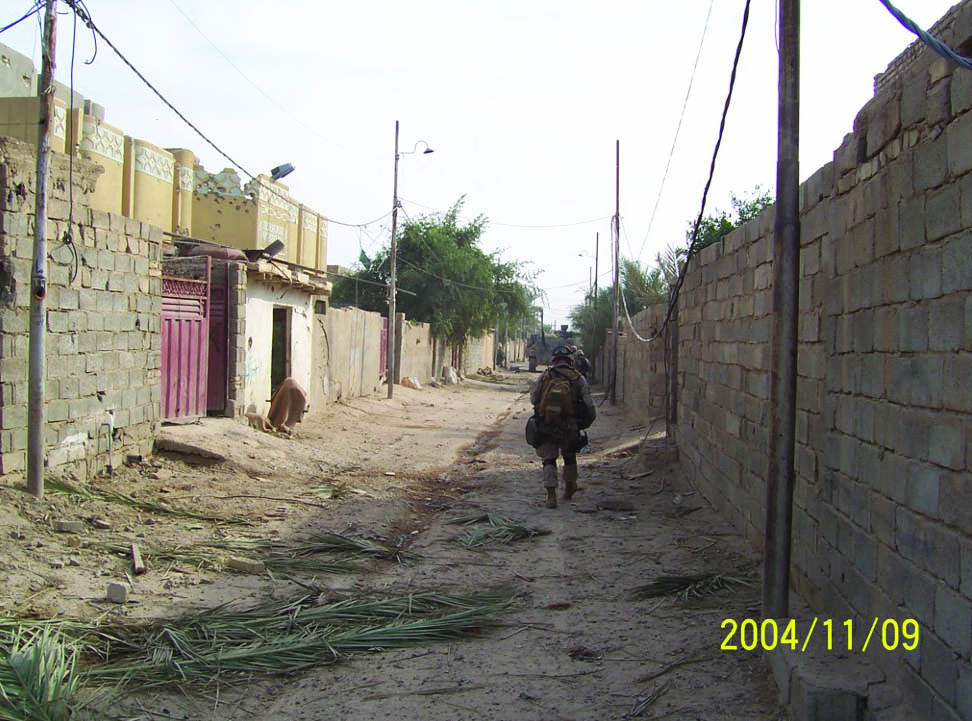
The mission for Nov. 10 placed “Kilo” Company at the center of the battalion’s line, resuming the southern sweep through Fallujah’s Jolan District. The enemy scattered their fighting positions, weapons caches, bomb-making materials and torture chambers throughout the city. Through two days of fighting, the Marines kicked in every door, searched every closet, flipped every bed, opened every drawer. An abundance of other Marine or Army units attacked concurrently into the city from multiple directions, blocking the enemy’s every avenue of withdrawal. For the grunts clearing house to house through the urban maze, an up close and brutal fight loomed.
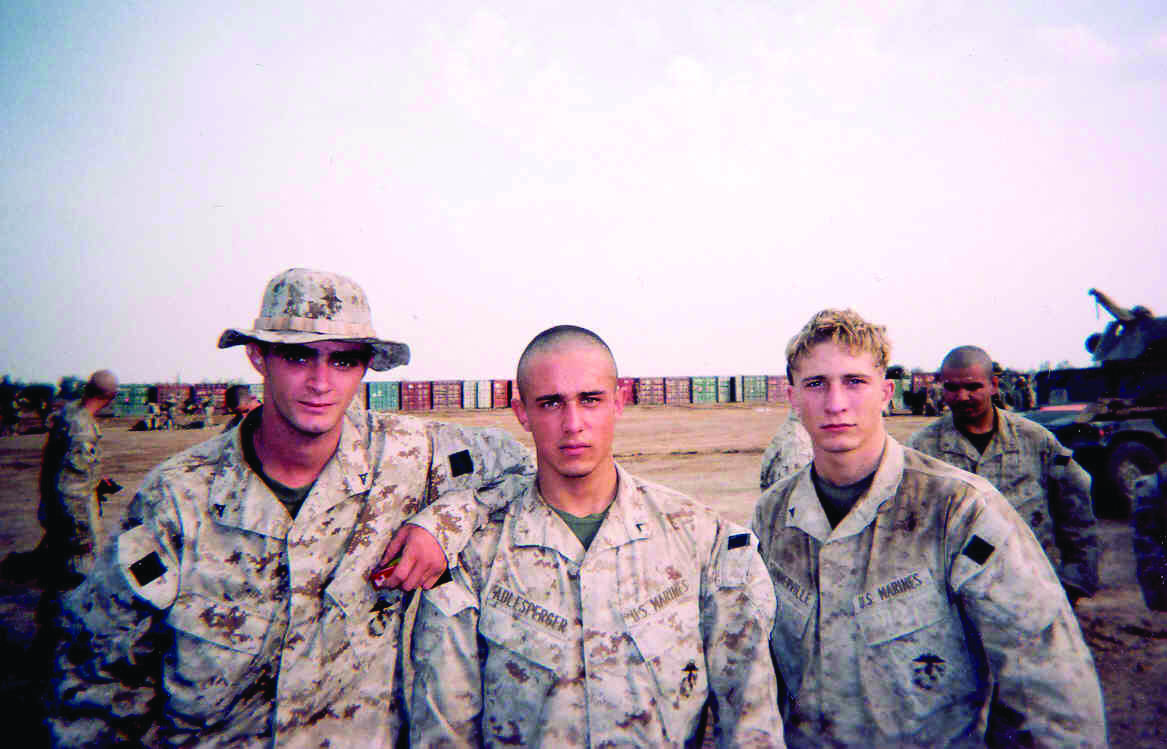
Doc Rogero fell in with Hodges’ fireteam. While Rogero knew all three Marines well on a professional level, the others were best friends. Lance Corporal Ryan Sunnerville served as fire team leader, with Hodges carrying the team’s Squad Automatic Weapon. Private First Class Christopher Adlesperger filled out the team as rifleman. Barely 20 years old and one of the junior Marines in the company, Adlesperger still caught the eyes of even the battalion’s senior leadership with his charismatic personality and gung-ho spirit. He loved his family, loved his brothers in arms and loved being a United States Marine.
First platoon crossed the line of departure with 3rd platoon on their flank. Sergeant Kenneth Distelhorst led his squad from 3rd platoon from house to house.
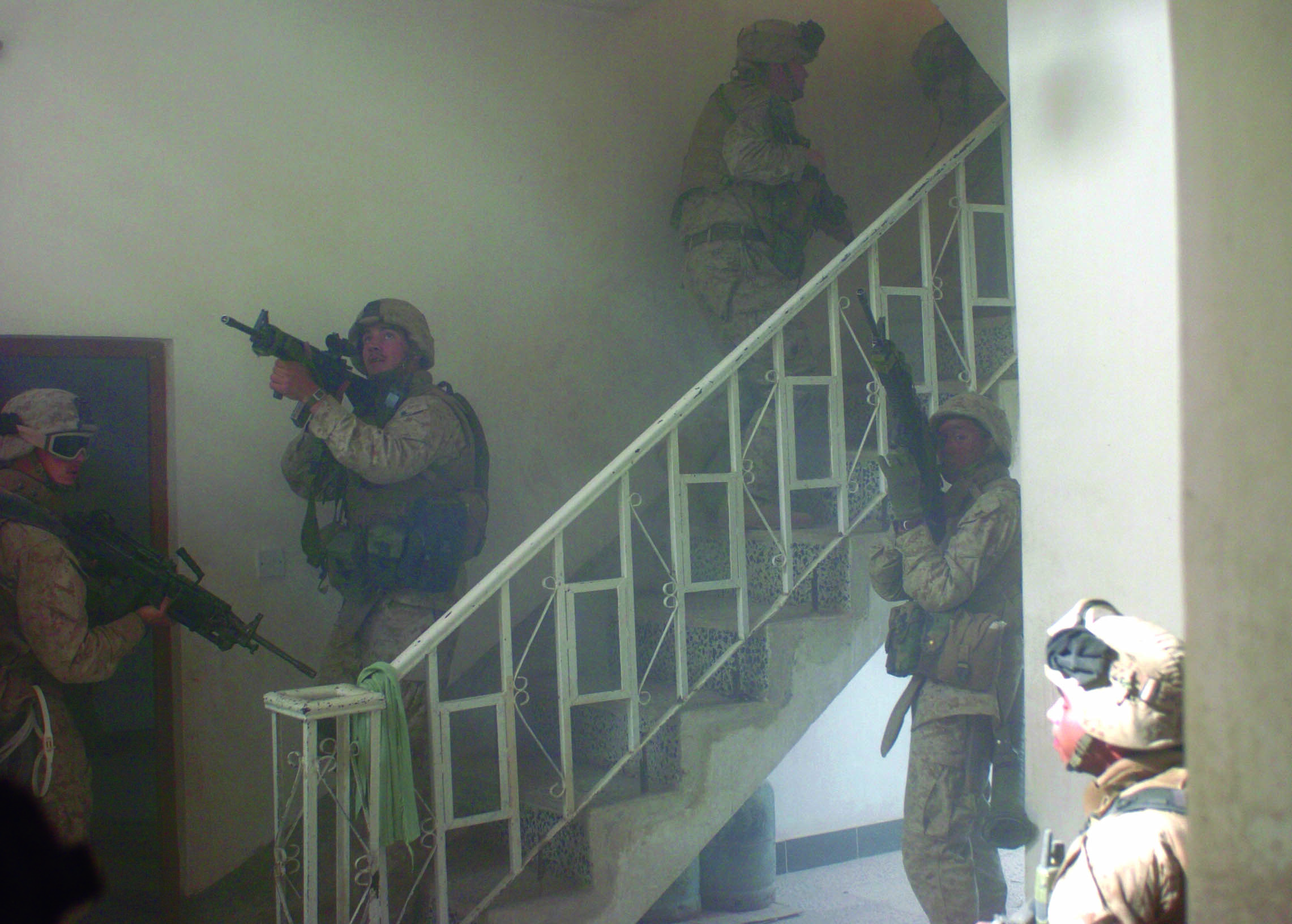
“PSYOPS was following us around playing their messages throughout the city, but that morning they came up with their speakers and just blasted ‘The Marines’ Hymn,’ ” he remembered. “It was pretty motivating. You could hear it throughout the entire city as we were kicking down doors.”
Distelhorst’s Marines worked closely with another 3rd platoon squad led by Sgt Jeffrey Kirk. Like Chris Adlesperger, Kirk was another magnetic personality who drew the attention of everyone around him. McNulty regarded Kirk as the standard bearer for the rank of sergeant, both in 2004 and as a point of comparison throughout McNulty’s career. A combat veteran from 3/5’s deployment the year before, formerly serving as a Marine Security Guard, and qualified as a Military Operations in Urban Terrain (MOUT) instructor, Kirk seemed effortlessly exceptional in every way.
“He was truly a Marine’s Marine,” Distelhorst said today. “The valor I witnessed in Fallujah was just unbelievable; Marines being Marines, everyone was courageous. But Kirk was another level. His Marines loved him. They would do anything for him. Anything. And he was hard on his Marines. He was firm, but fair, and they loved him for it.”
By early afternoon, Kilo progressed through several blocks. 1st and 3rd platoons encountered multiple enemy observation posts (OPs) manned by one or two insurgents. In each case, they fought to the death. The engagements painted a picture of the enemy’s defenses laid out directly in Kilo’s path.
Around 1 p.m., Adlesperger, Hodges, and the rest of their squad discovered a blood trail leading into a building. They made entry and worked from room to room, finally encountering a single insurgent armed with a Rocket Propelled Grenade (RPG). Sunnerville’s fire team worked together to kill the insurgent before he could fire. They uncovered a large weapons cache but found no signs of additional enemy. The insurgent served as yet another one-man OP, left to die as an early warning for others somewhere nearby.
Less than one block away, Distelhorst and Kirk paused with their squads inside a ruined building. Dead bodies littered the floor while gunfire echoed through the street outside. The two sergeants surveyed a row of nearby houses they intended to clear next. They planned to leapfrog through each structure to the end of the street; one squad clearing a house, then using the building as an overwatch position for the other squad clearing the next house. While his Marines rested, Kirk departed to conduct a leader’s recon. Unwilling to let Kirk venture out alone, Distelhorst grabbed Corporal Will Silcox, a fire team leader in Kirk’s squad, and the two followed Kirk down the street.
A machine-gunner from Lima Company operating on 3rd platoon’s right flank lay behind his gun at the street corner unleashing his weapon at something out of sight. On the left flank, a furious roar of gunfire erupted from somewhere nearby where 1st platoon pushed through the adjacent block. Kirk, Distelhorst and Silcox decided to clear the first house themselves, affording their Marines a bit more time to recuperate.
They approached the two-story structure, closed off by a tall wall surrounding the house and a large courtyard. A locked gate blocked their access. Silcox drew a sledgehammer from his breaching kit and smacked the gate. It didn’t budge. He struck again, but the gate refused to yield. The Marines took turns hammering the gate nearly a dozen times. Finally, Kirk bent down and grabbed the bottom of the gate. With minimal effort, he lifted up and pulled it out enough for a man to fit through.
“Well, shit,” he said smiling.
Kirk led into the courtyard. The firefight in 1st platoon’s area raged on unseen in the distance. On the porch, Kirk peeked through a window. A barricaded machine gun sat unmanned just inside, pointed toward the door. Distelhorst and Silcox backed off the porch with rifles aimed upward covering the second-story windows. Kirk silently checked for tension on the doorknob and other indicators that the door might be boobytrapped.
“By the grace of God, Sgt Kirk was getting ready to open the door, but he looked down and shouted, ‘Sgt D, grenade!’ ” Remembered Distelhorst. “I looked down and there was an old WW II-style pineapple grenade sitting right between my feet.”
The Marines scattered. The explosion stitched Distelhort’s lower half and left hand with shrapnel. Adrenaline carried him seemingly uninjured back through the gate. As fast as lightning, Kirk scaled the outer wall and was already back to the rest of the platoon gathering more Marines to take down the house. Silcox had not made it out. Distelhorst looked back through the gate and saw him lying motionless in the courtyard. He shouted to Silcox, but the wounded Marine could not move. Distelhorst forced himself back into the courtyard again. A large chunk of metal tore a gnarly gash in Silcox’s thigh. Distelhorst helped him up and staggered toward the gate. An enemy fighter appeared at the front door spraying them with fire. Dirt kicked up around the Marines as they moved toward the gate. One round hit Silcox in the leg. Distelhorst fired a full magazine into the front of the house, driving the insurgent inside long enough to get Silcox on the other side of the courtyard wall. Kirk returned with additional firepower. He stacked up Marines at the gate, taking point for the charge into the teeth of the enemy occupying the house.
Back down the street, Adlesperger’s squad left the site of the OP and weapon’s cache and moved to the next structure. An “L” shaped courtyard closely mirrored the dimensions of the “L” shaped house, married together forming a rectangle barely 50 feet from one corner of the building to the opposite corner of the courtyard. A tall wall with two gates, one on the long axis of the courtyard and one on the short axis, masked the courtyard and exterior of the building. Two doors also led into different sections of the house. One door led from the courtyard into the short axis near the right angle at the center of the “L.” The other lay around the corner, leading into the end of the long axis.
Cpl Jeremy Baker led another fire team in Adlesperger’s squad. Baker’s Marines covered the gate on the short axis while, Adlesperger, Hodges, Sunnerville and Rogero made entry. They proceeded directly toward the closest door at the end of the building. Adlesperger and Rogero cleared an outdoor bathroom while Hodges and Sunnerville tried the door. It was locked. A stairwell extended down from the roof right next to the door. The Marines first decided to try accessing the house from the other door. Hodges and Sunnerville rounded the corner into the open courtyard. The wall in front of them held the door and a barred window, with both access points closed. A small hole was carved out of the wall between the door and window. Through the hole, hiding in the shadows, an enemy machine-gunner lay waiting behind his weapon.
The insurgent opened up through the firing port. Bullets tore through Hodges, killing him immediately, and struck Sunnerville in his right leg. Adlesperger jumped out into the courtyard trading rifle fire with the machine-gunner. His shooting interrupted the enemy long enough for Sunnerville to move back around the corner to cover. Cpl Baker seized the opportunity to rush through the gate. The machine gun resumed firing, preventing additional Marines from reinforcing those trapped in the courtyard.
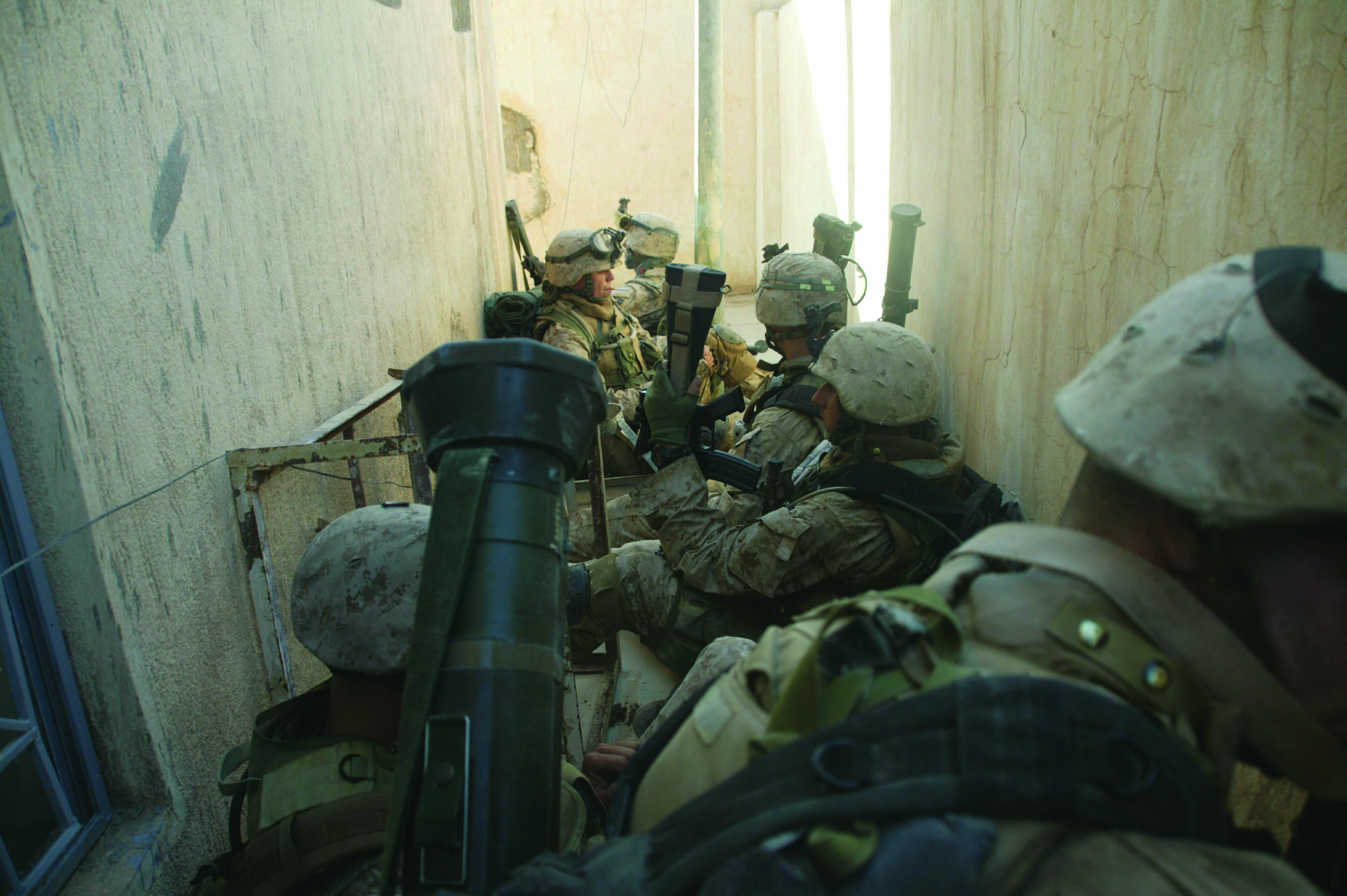
Rogero and Baker treated Sunnerville while Adlesperger remained partially exposed at the corner returning fire. The enemy machine gun roared with an uninterrupted stream of bullets, firing at Adlesperger and the Marines piled into the alcove around the corner, the Marines sheltering outside the gate, and into Hodges’ lifeless body. One bullet struck Rogero, passing through the side of his body armor into his chest. More insurgents inside the house tossed grenades into the courtyard. Adlesperger ducked behind the corner as they exploded, but shrapnel ripped across his face. He ignored the wounds and continued engaging the enemy machine gun.
“At first, I didn’t even realize I had gotten shot,” Rogero said today. “My priority was caring for Sunnerville, he had been shot in the knee. I kept thinking about Hodges. I didn’t know what I could do or how I could get to him in the situation we were in. I remember looking through a little gap under the door that was next to us there where we were taking cover and seeing the insurgents inside scrambling around. I told the guys we needed to get out of there because we were about to get shot through that door too.”
Baker traded places with Adlesperger and ordered him up the stairwell to the roof in search of another way out. He climbed the stairs alone and cleared the roof, discovering a high wall separating the house from the roof of another adjoining structure. He returned to the courtyard and helped Baker and Rogero carry Sunnerville up the stairs. Getting through that wall proved their best hope.
Almost simultaneously, Sgt Kirk was advancing into the courtyard a block away with rifle at the ready. The enemy machine gun behind the door barked to life, spraying rounds out the front of the house. Grenades thudded into the dirt around Kirk’s feet. The Marines fell back to the gate, returning rifle fire and grenades as they withdrew. Kirk formed his squad once again and led the stack through the gate a second time. Enemy fire erupted. Kirk pushed through it, unfazed, and reached the front porch. An insurgent hidden inside the window opened up, shooting Kirk in the buttocks. Still, Kirk remained on the front porch. He threw a grenade through the front door. The explosion stunned the insurgents inside. Kirk took aim and killed the enemy machine-gunner with his rifle before enemy fire resumed, driving him back to the gate once again.
“We were trying to get a medevac going for Silcox, and I remember looking up and Kirk was stacked up trying to make his way inside that courtyard” said Distelhorst. “Every time he tried to get inside of that house, they would throw another grenade or shoot that machine gun. To watch him push through all of that and take that first guy out, it was just a beautiful thing to witness. Kirk went into a straight slaughter. They killed everyone in that house.”
The Marines stacked up for a third time. Kirk refused medical treatment and resumed his point position. The Marines sprinted across the courtyard. Finally, Kirk burst through the front door. The Marines cleared room after room, finding and killing several more insurgents lodged inside. They emerged onto the rooftop with a view down the street toward the house where Hodges lay dead and Adlesperger fought to save the rest of his fire team.
On the roof, Adlesperger peered over the parapet into the courtyard. A hail of bullets impacted the wall in front of him. He loaded the M203 grenade launcher attached to his rifle and lobbed grenades toward the barred window.
After several shots, he scored a direct hit through the bars, detonating a grenade inside the machine-gun nest. Multiple insurgents streamed out the door rushing past Hodges’ body toward the stairwell. Adlesperger moved to the top of the stairs and shot dead the first enemy to appear. He tossed down a grenade at two more insurgents accessing the stairs, forcing them out the gate where additional Marines cut them down in the street. He relocated back to the parapet, feeling the battle’s momentum turning in his favor.
Marines entering the courtyard later witnessed the results of Adlesperger’s fury and skilled marksmanship. As insurgents poured out of the house, the PFC dropped them one by one. Several fell with well-aimed headshots.
Adlesperger crossed the rooftop multiple times to Baker and the others, rearming his grenades and rifle magazines. His deadly fire alone obliterated the enemy occupying the house.
“I remember hearing people trying to come up the stairs and Adlesperger just lighting every one of them up without thinking twice about it,” said Rogero. “I was just sitting there trying to gather what was happening. It was a very surreal experience, almost like a movie. I started having shortness of breath and thought I was having a panic attack. When I felt like I couldn’t breathe any more, I reached up inside my flak jacket where it was hurting and sure enough my hand was covered in blood.”
Rogero pulled a homemade occlusive dressing from his medical kit and applied it to his sucking chest wound. At the same time, banging sounds rose over the adjoining wall from the roof next door. With much effort, another 1st platoon squad breached the wall, bashing down a section large enough to evacuate the casualties. Adlesperger provided security as the others moved to safety. He was the last one off the roof.
McNulty stood outside the compound coordinating the efforts of his entire company. For 20 minutes prior, he held a front row seat to Adlesperger’s actions, observing the PFC’s fight from an adjacent rooftop while working through the chaos to bring a host of reinforcements to Adlesperger’s aid. He met Adlesperger and Baker in the street when they evacuated the roof. Both Marines were covered in sweat and blood, either their own or that of Sunnerville and Rogero. McNulty learned for the first time of Hodges’ fate and that his body still lay in the courtyard. Despite the wounds to his face, Adlesperger refused to let anyone else lead the effort to recover his friend. McNulty relented, allowing Adlesperger to take point and stacked up behind him with Baker and 1st platoon’s platoon sergeant, Staff Sergeant Paul Starner.
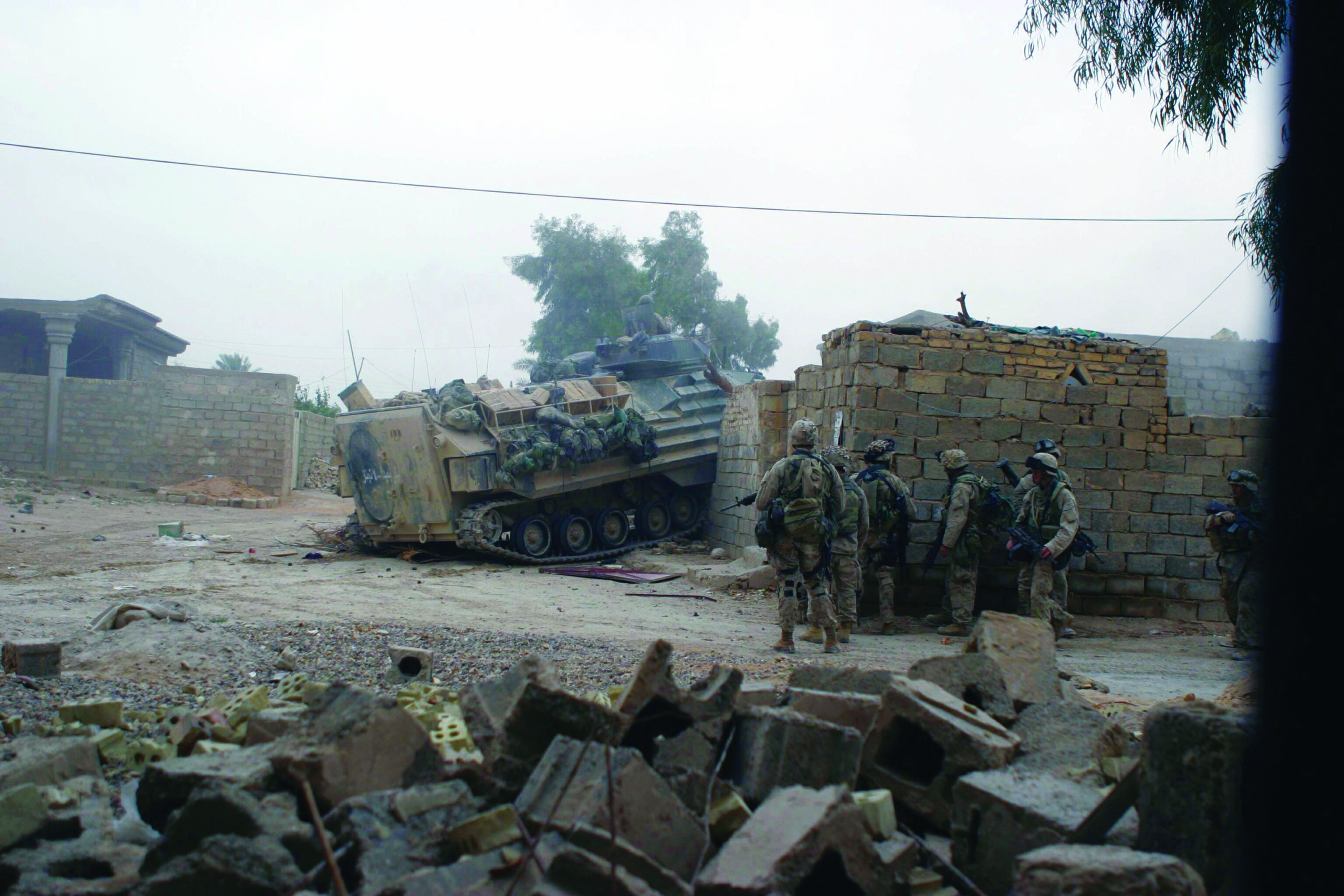
The enemy machine-gunner who started the ambush remained stubbornly barricaded in the room, still firing. The four Marines donned gas masks as they prepared to suffocate the enemy and charge in. Adlesperger, Starner and Baker lobbed high concentrate smoke grenades over the wall, obscuring the gunner’s line of sight. McNulty followed up with fragmentation grenades, finally silencing the gun. An Amphibious Assault Vehicle rammed through the gate into the courtyard, toppling part of the wall. Adlesperger stormed through the opening. One of the insurgents he’d wounded earlier tried to raise his rifle.
Adlesperger finished him off before he could pull the trigger. Another Marine in the stack killed two more insurgents protecting the machine gun. The Marines searched for Hodges, finding him amidst the carnage buried beneath a portion of the collapsed wall. The compound fell silent. The bodies of 11 insurgents littered the house, courtyard, and street. One Marine PFC almost single-handedly eliminated the largest enemy element encountered by Kilo Company that day, saving the lives of his fire team. The position was later assessed by higher headquarters to be a command and control node for the enemy.
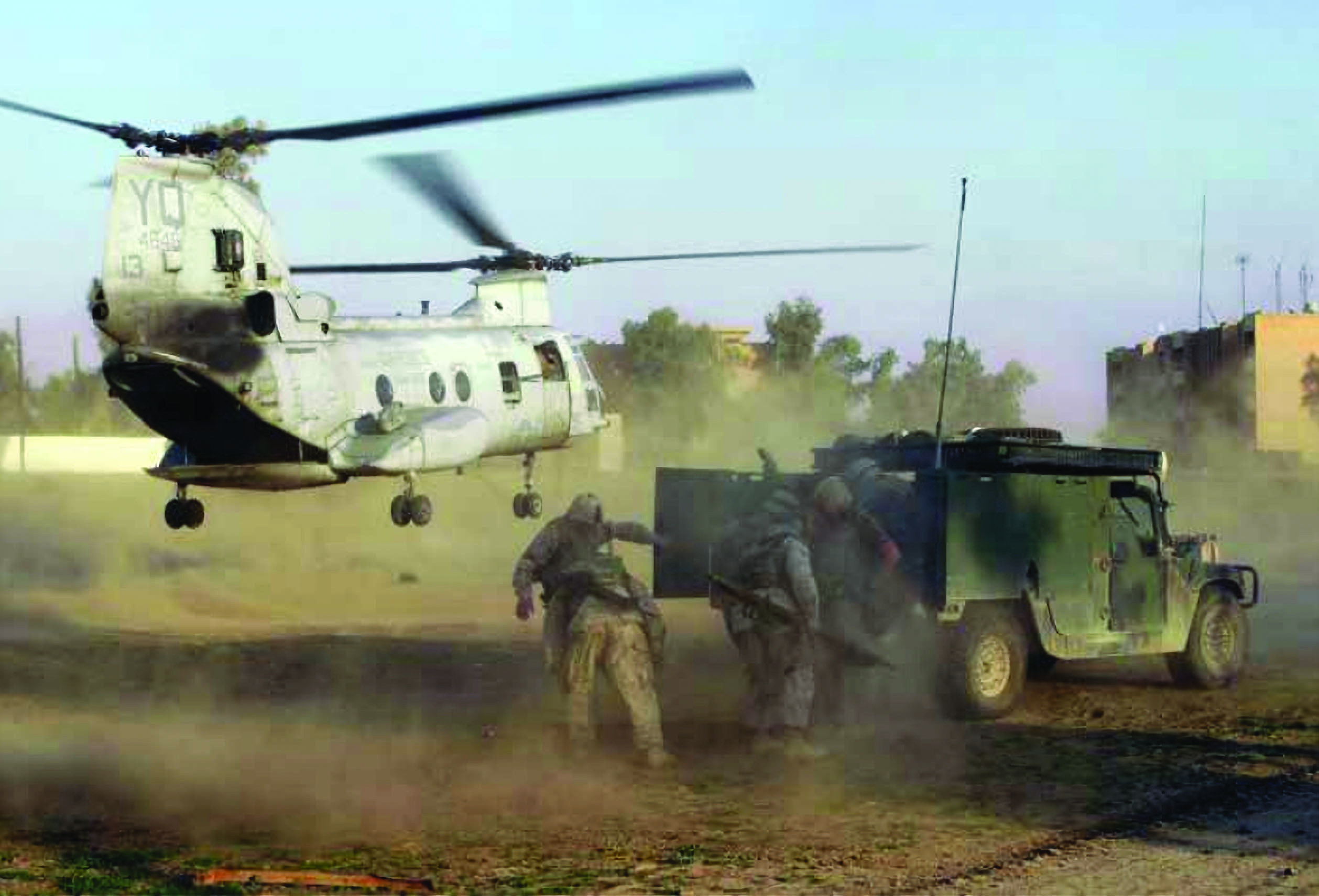
Kilo Company spent the remainder of Nov. 10 clearing the Jolan District. By the end of the day, 50 enemy lay dead in its wake. Kilo suffered 14 wounded that day and Hodges killed. Adlesperger remained at the front after being treated for the shrapnel wounds to his face. Kirk relented to medical treatment for his gunshot wound and was evacuated to a hospital at Camp Baharia, just outside Fallujah. Due to the severity of their ijuries, Distelhorst, Silcox, Rogero, and Sunnerville were evacuated to the United States.
That night, while planning the next day’s assault, the company gunnery sergeant appeared with cake for Marines to celebrate the birthday. As the planning finished and cake was being eaten, immediately behind the leadership the mortar section began digging in. An enemy fighter slipped through the lines, opened fire with an AK-47, and was cut down by the mortarmen, finally ending the bloodshed for the day. The intense fighting experienced on the Marine Corps birthday continued through the rest of the month. On Dec. 2, Kilo Company paused to meritoriously promote Adlesperger to Lance Corporal.
“When I pinned his new rank on at the ceremony, he had bullet holes through his collar near his neck,” said Patrick Malay, a lieutenant colonel in 2004 and the commanding officer of 3/5.
In addition to the promotion, the officers in Adlesperger’s chain of command took further steps to recognize his heroism, filling out the required paperwork and witness statements recommending him for the Medal of Honor.
While Adlesperger remained at the front, Kirk begrudgingly convalesced at the hospital.
“After I made it home to the States, Kirk called me from Iraq to see how I was doing,” said Distelhorst. “He was still sitting on a donut trying to heal his ass up. I told him, ‘hey man, I never got a chance to tell you this, but you saved my life by calling that grenade out.’ He just said, ‘yeah, whatever dude. I got shot in the ass and now they’re making me just sit here.’”
Kirk complained about the people around him saying he received a “million dollar wound,” giving him a ticket home. A full magazine of rounds lodged in his butt could never have kept him from returning to the fight. The doctors finally released Kirk back to combat. In the meantime, Kirk’s chain of command submitted his actions on Nov. 10 to be recognized with a Navy Cross.
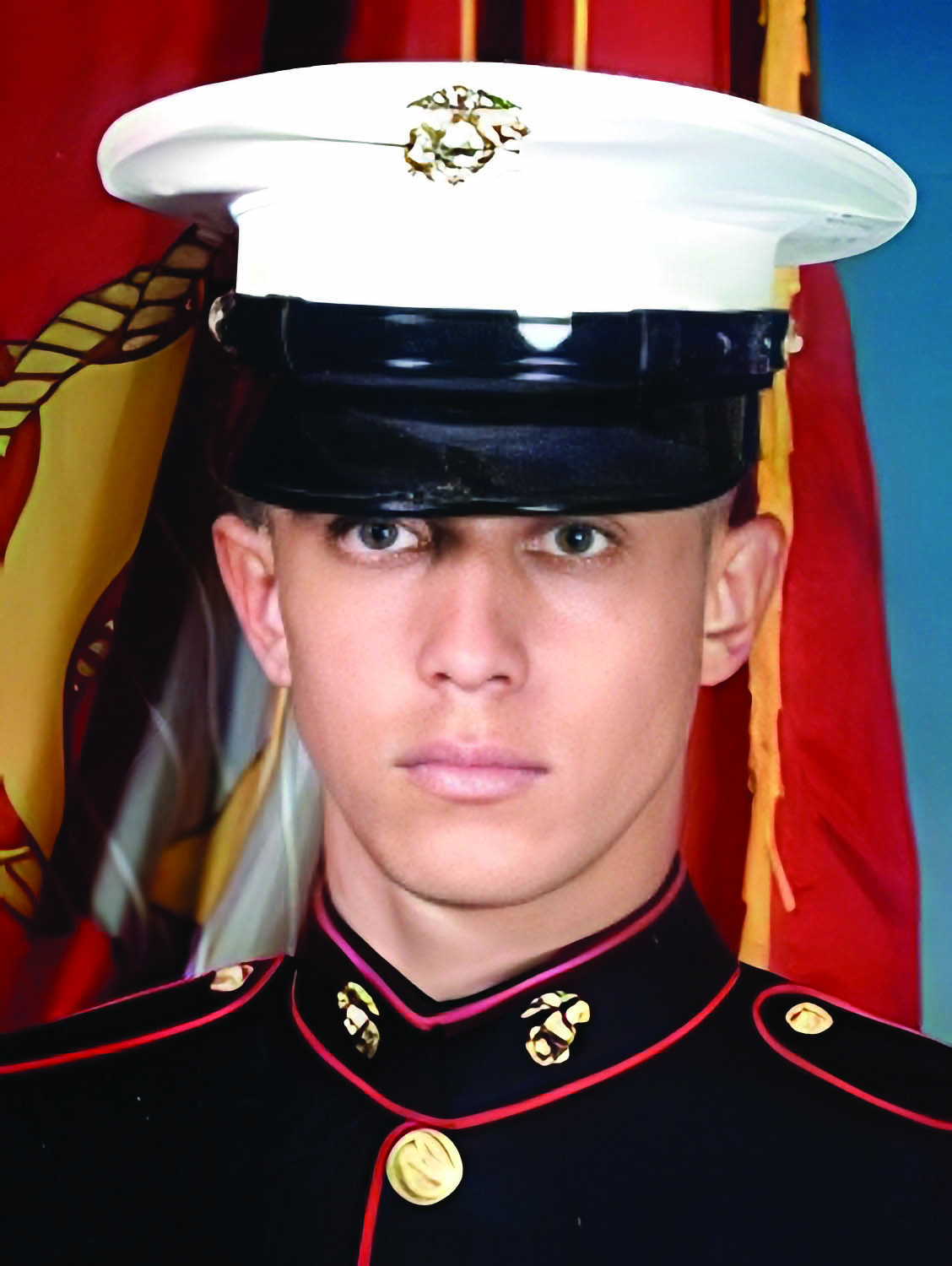
Over the following weeks, 3/5 progressed out of the Jolan District to other areas of the city. To the Marines’ great dismay, they discovered other units took a different approach, leaving portions uncleared as they swept forward; 3/5 would reap the tragic consequences.
The battalion assumed responsibility for an area of operation from a different unit pulling out of Fallujah. Flavored by his experience in Jolan, Malay organized a detailed back clearing of the areas supposedly already cleared, while removing the extensive ammunition and weapon stockpiles found throughout 3/5’s area of operations.
“When we got done with the Jolan District, it looked like something out of Berlin in 1945. It was such a mess from us ripping it apart.” remembered Malay. “Going into that new AO was one of the more eerie moments for us. It had not been cleared. There were entire houses that had not even been opened up.”
The back clearing operation, dubbed Task Force Bruno, commenced in late November. The battalion executive officer, Major Todd Desgrosseilliers, led the task force as it worked back through the Jolan District and eventually into other areas now under the responsibility of 3/5. Meanwhile, Kilo and India companies went on the assault to “reclear” the new area they were to assume. On the morning of Dec. 9, newly promoted LCpl Adlesperger led his fire team.
“We crossed the line of departure that morning to begin the detailed back clearing,” Malay stated. “Less than 20 minutes later, Adlesperger was dead.”
When Adlesperger’s squad made entry into a courtyard, he and another Marine proceeded toward the front door. An enemy machine gun hidden inside opened fire as the Marines came into view, along with other enemy fighters positioned in an L shaped ambush. Bullets struck Adlesperger’s body armor, spinning him around. More bullets penetrated his chest, striking heart and lungs as they passed through. Adlesperger fell, mortally wounded, the Marine behind him severely wounded. Others fought to recover them. Four more Marines were wounded before successfully reaching the casualties and isolating the house. The company fire support team brought in air support to demolish the house and those in the immediate vicinity. The company commander cleared the strikes, some only 62 meters away, demolishing the building where the ambush was positioned, and the enemy fighters with it.
Three days later, on Dec. 12, Kilo Company endured further tragedy, suffering greatly at the hands of the insurgents remaining in the supposedly cleared zone. While 1st platoon and the company’s tanks and fire support team were temporarily retasked to support Task Force Bruno as they back-cleared an area immediately adjacent to where Adlesperger had been killed, 2nd and 3rd platoons repositioned to clear another section of the city. The day wore on and dusk approached. With the lateness in the day, McNulty ordered the Marines to set up for the night in a school. The unit previously responsible for the zone utilized the school as its command post for the duration of their time in that area. A long row of tightly packed houses lay directly across the street. One of McNulty’s platoon commanders ordered his Marines to go through the houses in search of additional bedding before the temperature dropped after dark instead of unloading the packs out of the trucks and amtraks.
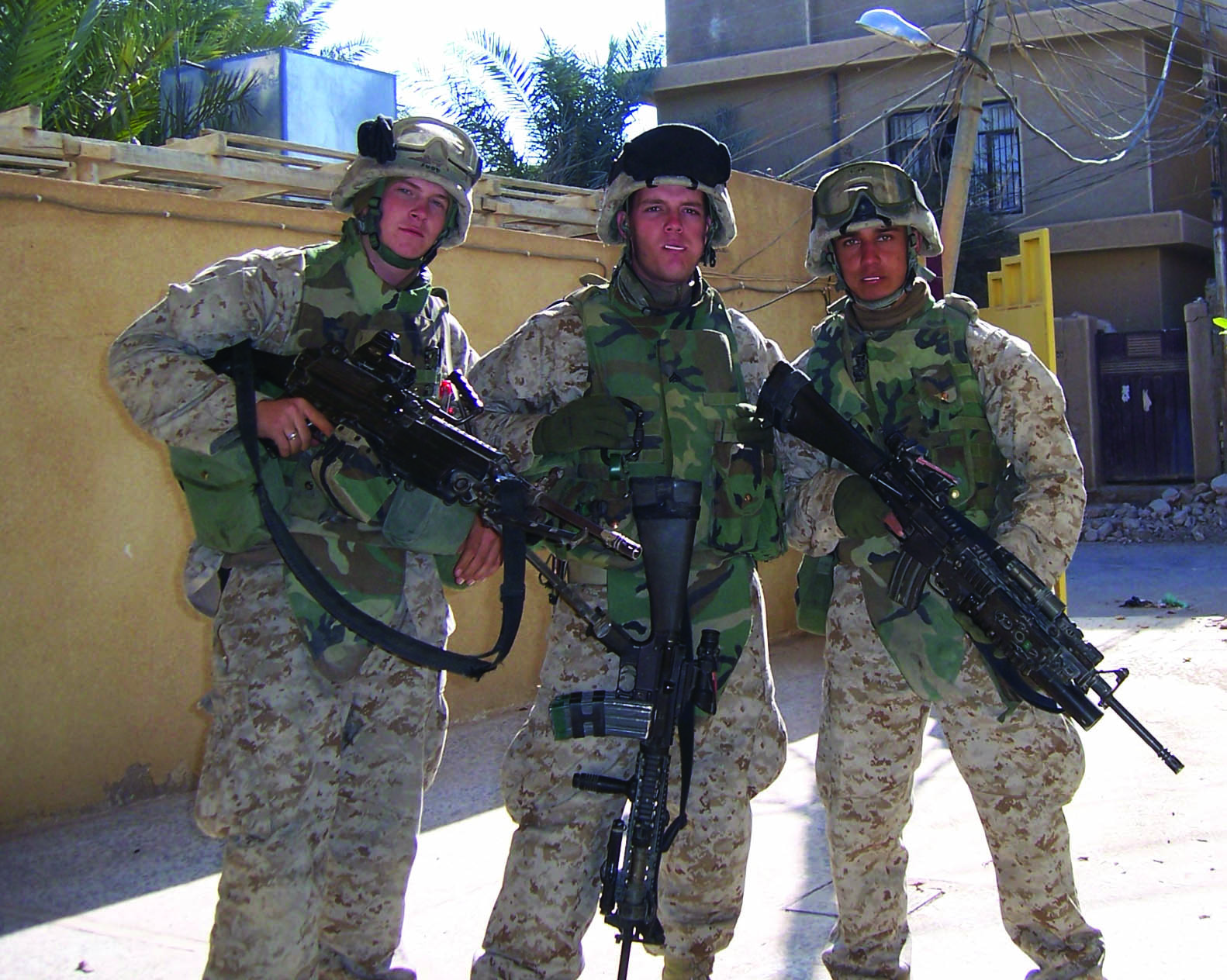
Sgt Kirk had just returned to 3rd platoon following more than a month out of action. After voicing his concern to his peers, knowing the buildings hadn’t been cleared, Kirk led his squad across the street. The Marines split up between two houses next to each other. As Kirk searched through one structure, gunfire rang out next door. When one of his Marines, Cpl Ian Stewart, ascended a staircase to the second floor, enemy bullets immediately cut him down. The remaining Marines in the house ran up after Stewart. A hail of fire from 11 holed up insurgents greeted them.
The majority of Kilo Company descended on the row of houses, encountering more than 40 fighters. When the guns began to sound, Kirk left the structure he was in to search for another way into the contact house next door. He exited into a narrow alley between the two buildings. An insurgent guarding the alley from above shot Kirk in the head, killing him instantly.
The firefight descended further into a bloody and chaotic mess. Heroism abounded as Marines unhesitatingly charged time and time again into the insurgents’ guns to recover their fallen comrades. Five Marines died in the battle. One of these, Corporal Jason Clairday, would posthumously receive the Navy Cross for his outstanding resolve and selfless efforts to recover his fellow Marines, leading to his own death. Twenty more Marines were wounded, with 15 of those suffering gunshots or shrapnel wounds severely enough they had to be medically evacuated.
On Dec. 14, Kilo Company suffered its last KIA. The following day, with the enemy’s backs to the desert in the last section of the city Kilo was to clear, fighting raged continuously for hours before a U.S. Air Force F-15 Strike Eagle checked in on station. The company’s fire support team gave the pilot an enemy-filled box to blanket with ordnance. Within five minutes, the aircraft dropped nine bombs, killing dozens of fighters that would be dug out from the rubble in the weeks that followed, undoubtedly saving countless Marines and Sailors.
Kilo Company began running patrols and the city slowly repopulated with civilians. For Task Force Bruno, the battle dragged on through the end of December. Even with the city officially declared “secure,” Marines routinely encountered enemy resistance. Many of the “civilians” allowed back into Fallujah, clothed and fed by the Americans, worked by day to clean up the destruction. At night, however, they linked up with insurgent pockets hiding throughout the city to help them escape the American cordon. The USMC History Division publication detailing the battle credits 3/5 Marines in Task Force Bruno with conducting the battle’s last major action on Dec. 23, defeating the final group of insurgents left in the city. This culminating fight cost the battalion three more killed and 18 wounded. The Marines and soldiers clearing house to house won a resounding but costly victory over the insurgents, who fought to the very end.
Before the Marines even left the city, they began experiencing the struggle known to all combat veterans coming off their high and reacclimatizing to peace.
“We performed exceptionally well in combat,” remembered Mike Cragholm, a recently retired infantry officer who served as Adlesperger’s platoon commander. “You tell Marines, ‘hey, you see that building over there? Raze it to the ground.’ Boom, that’s easy. But, afterword, you tell them they have to be nice and kind to everybody and not do things like shoot the dogs in the city that are attacking them, that’s more difficult. To me, there seemed to be a complete inability for some people to understand you can’t just flip that switch. We were rabid pit bulls. We were trained like rabid pit bulls leading up to the battle, we were told we were rabid pit bulls during the battle, and that’s the way we fought. The issue became that as soon as it was over, and once we got home, everyone expected us to be labradors.”
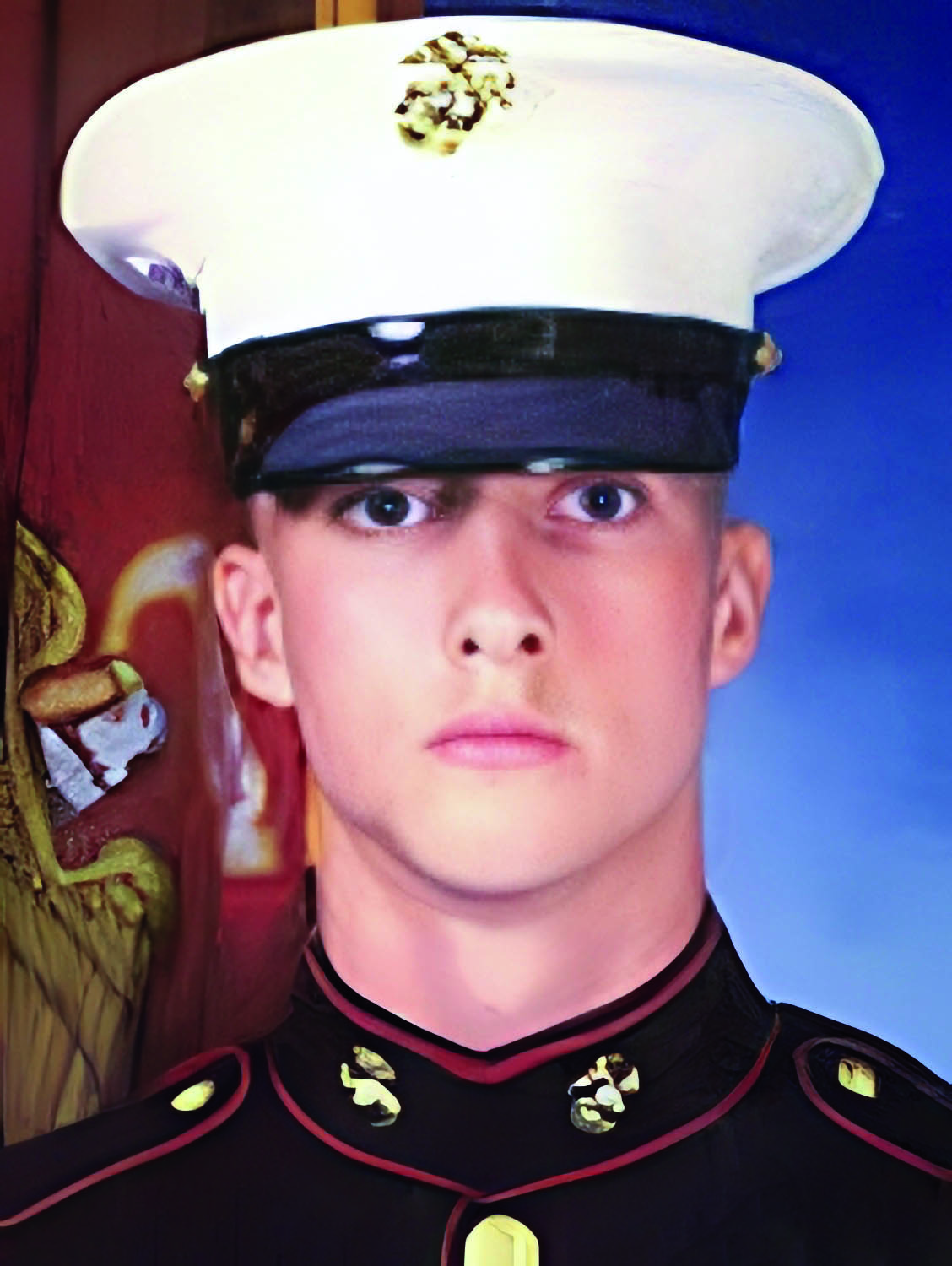
The gears of military bureaucracy churned slowly, processing the stream of personal awards flowing out of the battle. After two and a half years, Adlesperger and Kirk were finally recognized for their heroism. Inexplicably, both Marines received downgraded medals. Kirk received a Silver Star in March 2007, presented posthumously to his widow, Carly, at Camp Pendleton. At the ceremony, Carly read aloud the last letter she received from her husband before he died.
“I hope that if I do go, then I went with honor and courage. I hope that I died leading my Marines against the enemy…There are some fine Marines under my charge, and I want to go knowing that I did the best I could for them. Honor and courage —they deserve it, and I hope to give it to them.”
Adlesperger’s family travelled to Camp Pendleton the following month, where the Marine Corps presented them with Christopher’s posthumous Navy Cross. Mike Cragholm spoke to the assembled crowd.
“I told his family that day, ‘Christopher is the warrior the Marine Corps will remember.’ And he is. I’ve had people contact me often over the years because they want to hear about him. But the thing is, it’s not just about him. There are so many other men that performed admirably, we just couldn’t award them all.”
Today, the warriors who fought in Fallujah are regarded with legendary status. The survivors recall their brothers lost and the chaotic urban combat in vivid spurts of detail, each shedding a completely unique light on what Marines experienced there. For some, the intervening time has made the memories more palatable.
“I can sit and think about it now, but if I think about it too long my heart starts racing,” said Distelhorst. “It’s just crazy, the level of heroism. We walked among giants, like Sgt Kirk. But when I think about days like November 10th, I don’t want to sit and dwell on it. It will drive you crazy if you dwell on it too much. I think it’s sad the way we eventually left, letting ISIS take over Fallujah like it was all for nothing. But, at the same time, the terrible things we saw in that city like the torture chambers and things like that, at the end of the day, we got to kill a lot of evil men, and that makes it worth it.”
“I think people deserve to know what we went through,” reflected Rogero, who survived his sucking chest wound after being medevaced to the States. “If we don’t talk about it, people will forget about it. We were all just kids with guns. We really didn’t know what we were getting ourselves into. Any time I think about it, it fills me with a lot of emotion. Any time I’m having a bad day, I think about the guys who didn’t have the opportunity to be here. I’ll be 41 this year. These guys were kids when they died, just 19 or 20. There’s no day I don’t go without thinking about them. It’s almost like we’re living for them because they didn’t get to. Because of them, we get to be here.”
The battle indeed achieved the level of prominence predicted in the Commandant’s birthday message 20 years ago, recognized as a modern day equivalent to the Global War on Terror that Inchon or Chosin was to Korea, or Con Thien was to Vietnam. Names like Adlesperger and Kirk stand alongside the host of forerunners who wore the eagle, globe and anchor and are remembered for exemplifying the best of what Marines should be. Every young PFC has the potential to be the next Adlesperger. Every NCO is promoted with the daunting expectation they will recognize and foster those outstanding qualities. Leaders like Kirk provide the example for them to follow.
“I remember when I was just a young Marine, I was reading stories in Leatherneck magazine about the Old Breed at Peleliu and across the Pacific,” said Malay, now a retired colonel. “Now, it dawns on me that here we are talking about our stories, and some young Marine is going to be reading this. I hope they will figure out that, one day, it’s going to be their turn for their story to be told, and they need to pay attention.”
Author’s bio: Kyle Watts is the staff writer for Leatherneck. He served on active duty in the Marine Corps as a communications officer from 2009-2013. He is the 2019 winner of the Colonel Robert Debs Heinl Jr. Award for Marine Corps History. He lives in Richmond, Va., with his wife and three children.